Brake Booster Check Valve Symptoms: 7 Signs It’s Going Bad
A brake booster check valve is a small but important component in a vacuum-assisted braking system. Its main job is to allow vacuum to flow in the correct direction while helping the brake booster retain vacuum when the engine is off.
When the check valve fails, the booster may lose its stored vacuum too quickly. This can reduce power brake assistance and make the brake pedal harder to press, especially after the vehicle has been sitting or after several brake applications.
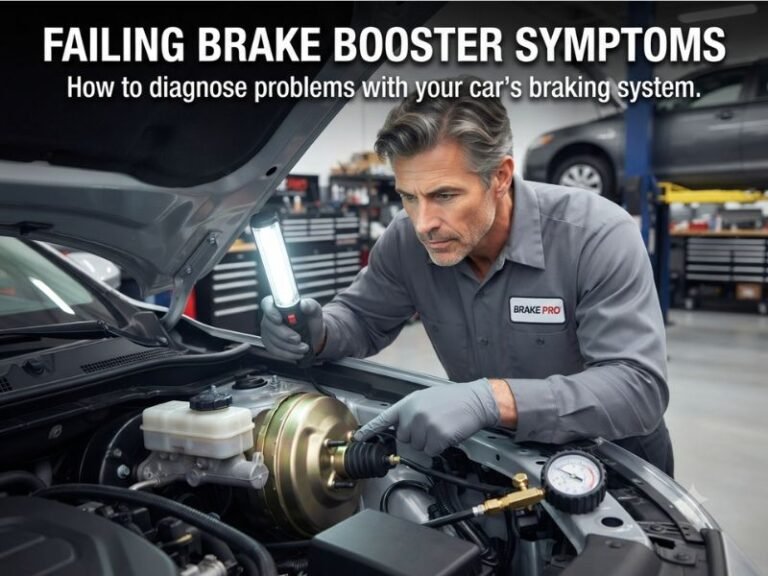
Recognizing the brake booster check valve symptoms can help you determine whether the check valve is causing the problem instead of replacing the entire brake booster unnecessarily. However, a damaged vacuum hose or failing booster can produce similar symptoms, so proper testing is important.
Brake Booster Check Valve Symptoms: What to Know
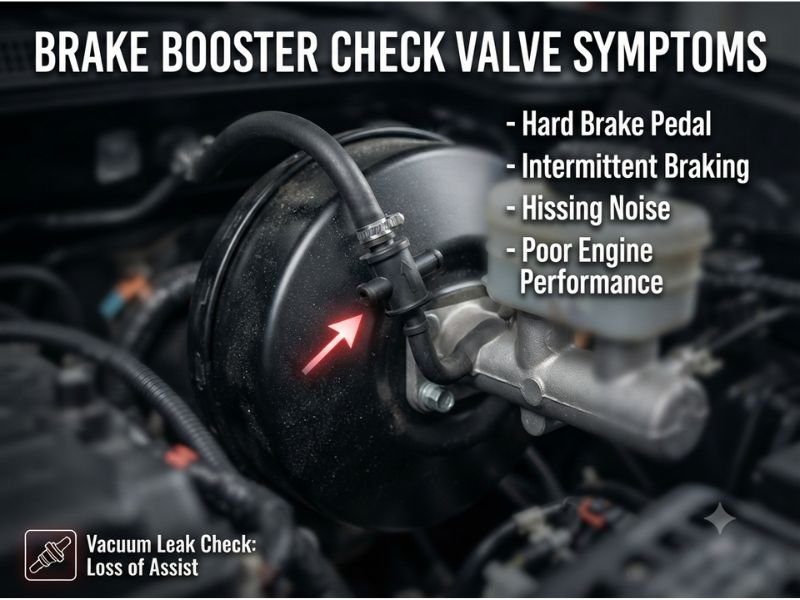
The check valve helps maintain vacuum inside the booster when the engine is not producing vacuum.
When it fails, you may notice:
- Hard brake pedal after the vehicle sits
- Brake pedal becoming hard after repeated presses
- Hissing noise around the booster
- Loss of brake assist
- Rough engine idle or other vacuum symptoms
- Changing brake pedal feel
- Booster losing vacuum too quickly
The symptoms can vary depending on whether the valve is stuck open, leaking, blocked, or physically damaged.
7 Common Brake Booster Check Valve Symptoms
1. Hard Brake Pedal After the Vehicle Sits
One of the most useful clues is a hard brake pedal when you first start the vehicle after it has been sitting.
A functioning check valve helps preserve vacuum inside the booster after the engine is switched off. This stored vacuum can provide some brake assistance for a limited period.
If the valve allows the vacuum to escape, the booster may not have enough stored vacuum when you return to the vehicle.
As a result, the brake pedal can feel harder than expected during the first few applications.
This symptom is particularly useful when the pedal feels normal after the engine has been running but becomes noticeably harder after the vehicle has been parked.
2. Brake Pedal Becomes Hard After a Few Presses
A faulty check valve may cause the brake booster to lose its stored vacuum too quickly.
You may notice that the first brake application feels relatively normal, but the pedal becomes progressively harder after pressing it several times with the engine off.
This happens because each brake application uses some of the vacuum stored inside the booster.
If the check valve is working properly, the booster should retain some vacuum after the engine is turned off. A leaking valve can allow that vacuum to escape.
3. Hissing Noise Around the Brake Booster
A hissing noise can indicate a vacuum leak.
If the check valve is damaged or not sealing properly, air can move through the valve when it should not.
The sound may come from:
- Brake booster
- Check valve
- Vacuum hose
- Hose connection
Hissing does not automatically mean the check valve is bad because an internal booster leak or damaged hose can create the same sound.
If the hissing changes when you press the brake pedal, the vacuum system deserves closer inspection.
4. Loss of Brake Assist
A failing check valve can cause the booster to lose vacuum and therefore reduce power brake assistance.
You may notice that the brake pedal requires more force than normal.
The hydraulic brakes may still function, but the pedal can feel increasingly firm as available vacuum assistance decreases.
If the loss of assistance is significant, braking can become much more difficult, particularly during emergency stops.
5. Engine Vacuum Symptoms
A faulty check valve can sometimes contribute to engine vacuum problems, particularly if it leaks in a way that allows air to enter the intake system.
Depending on the vehicle and severity of the leak, you may notice:
- Rough idle
- Unstable RPM
- Engine hesitation
- Engine vibration
- Possible stalling
These symptoms are not specific to the check valve. Many other vacuum leaks and engine problems can produce similar behavior.
However, engine symptoms combined with brake-pedal changes can point toward a problem in the brake booster vacuum system.
6. Brake Pedal Feel Changes Between Stops
A bad check valve can cause inconsistent brake assistance.
For example, the brake pedal may feel normal during the first few stops but become harder after repeated braking or after the vehicle has been sitting.
This can happen because the booster is not maintaining vacuum as it should.
Intermittent symptoms can be more difficult to diagnose because the brake system may appear to work normally under some conditions.
7. Booster Loses Vacuum Too Quickly
The check valve is designed to help prevent vacuum from flowing backward out of the booster.
If it fails to seal, the booster can lose vacuum much faster than expected.
You may notice that:
- Stored vacuum disappears quickly
- The pedal becomes hard sooner than expected
- Brake assistance is reduced after the engine is turned off
- Repeated pedal presses quickly make the pedal firm
A vacuum test can help determine whether the check valve is failing to maintain the required vacuum.
What Does a Brake Booster Check Valve Do?
The check valve is essentially a one-way valve in the booster vacuum system.
Its job is to allow vacuum to reach the brake booster while preventing unwanted reverse airflow.
This is important because the booster needs to retain vacuum for power assistance.
When the engine is running, engine vacuum is supplied to the booster.
When the engine is turned off, the check valve helps keep the stored vacuum inside the booster rather than allowing it to escape back toward the engine.
This stored vacuum can provide limited brake assistance even after the engine has stopped.
Without a properly functioning check valve, the booster may lose that stored vacuum too quickly.
What Causes a Brake Booster Check Valve to Fail?
Several conditions can cause the check valve to stop working correctly.
Age and Normal Wear
Like other rubber and plastic components, a check valve can deteriorate over time.
Repeated exposure to engine heat and temperature changes can cause internal materials to become brittle or lose their sealing ability.
Cracked or Damaged Valve
Physical damage can prevent the valve from sealing properly.
A cracked housing or damaged internal mechanism can allow air to flow in both directions.
Contamination or Debris
Dirt or contamination can interfere with the valve’s internal mechanism.
If the valve becomes stuck partially open or closed, it may not control airflow correctly.
Damaged Vacuum Hose or Connection
Sometimes the check valve itself is not the problem.
A cracked vacuum hose, loose connection, or damaged grommet can create similar symptoms.
This is why the surrounding components should be inspected before replacing the valve.
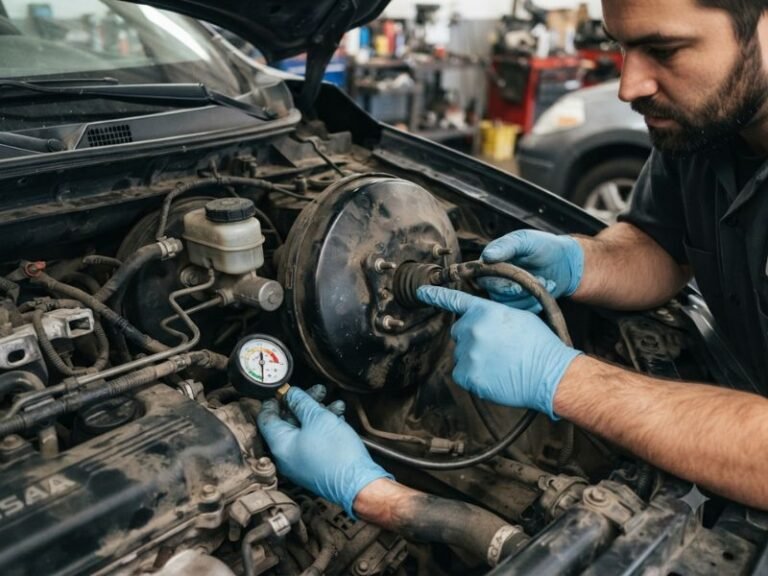
How to Test a Brake Booster Check Valve
Testing methods can vary depending on the vehicle and valve design. A basic inspection can still provide useful information.
Remove and Inspect the Check Valve
If the vehicle’s service procedure allows the valve to be removed, inspect it carefully.
Look for:
- Cracks
- Physical damage
- Contamination
- Loose fittings
- Damaged seals
Do not force or damage the valve during removal.
Test Airflow Through the Valve
A check valve should allow airflow in one direction while restricting airflow in the opposite direction.
If air passes freely in both directions, the valve may not be sealing correctly.
The exact test procedure depends on the design of the valve, so the vehicle manufacturer’s service information should be followed.
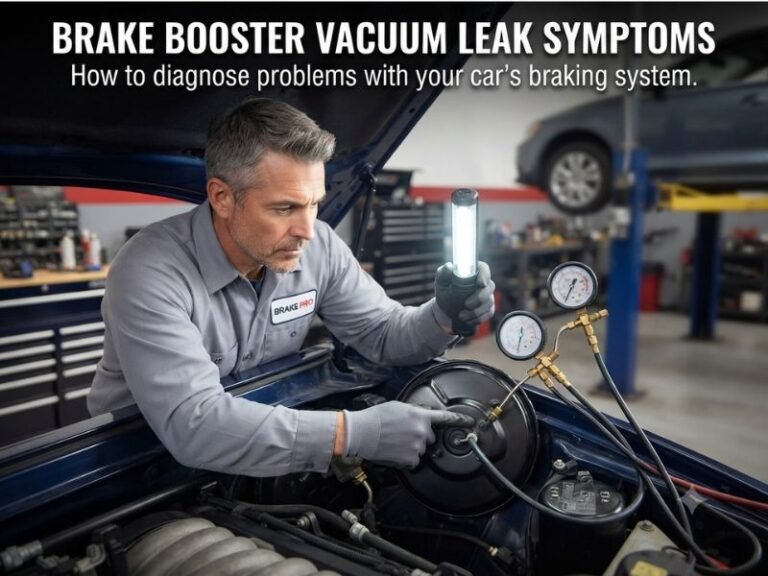
Check Whether the Booster Holds Vacuum
A vacuum test can help determine whether the system is maintaining vacuum correctly.
If vacuum disappears rapidly, the problem could be:
- Check valve
- Vacuum hose
- Booster
- Connection or seal
Testing the complete system is important because a vacuum-loss result does not automatically identify the check valve as the failed component.
Inspect the Vacuum Hose
Check the hose connecting the engine, check valve, and booster.
Look for:
- Cracks
- Splits
- Brittle rubber
- Loose connections
- Damaged fittings
A damaged hose can mimic a faulty check valve and is often easier to identify visually.
Bad Brake Booster Check Valve vs. Bad Brake Booster
The symptoms of a failed check valve and a failed booster can overlap.
| Symptom | Bad Check Valve | Bad Brake Booster |
| Hard pedal after sitting | Common | Possible |
| Hard pedal after repeated presses | Common | Possible |
| Hissing | Possible | Possible |
| Loss of stored vacuum | Common | Possible |
| Rough idle | Possible | Possible |
| Engine stalling | Possible | Possible |
| Valve fails airflow test | Yes | No |
| Internal booster leak | No | Possible |
One important distinction is that a faulty check valve can cause the booster to lose stored vacuum even when the booster itself is mechanically healthy.
That is why replacing the entire booster without testing the check valve can result in an unnecessary repair.
Can a Bad Check Valve Cause a Hard Brake Pedal?
Yes.
A faulty check valve can allow stored vacuum to escape from the brake booster.
Without sufficient vacuum assistance, the brake pedal can become harder to press.
The problem may be especially noticeable:
- After the vehicle has been sitting
- When the engine is off
- After several brake pedal applications
- During repeated stops if vacuum is not being maintained properly
However, a hard pedal can also be caused by a failed booster, vacuum hose, or other power-assistance problem.
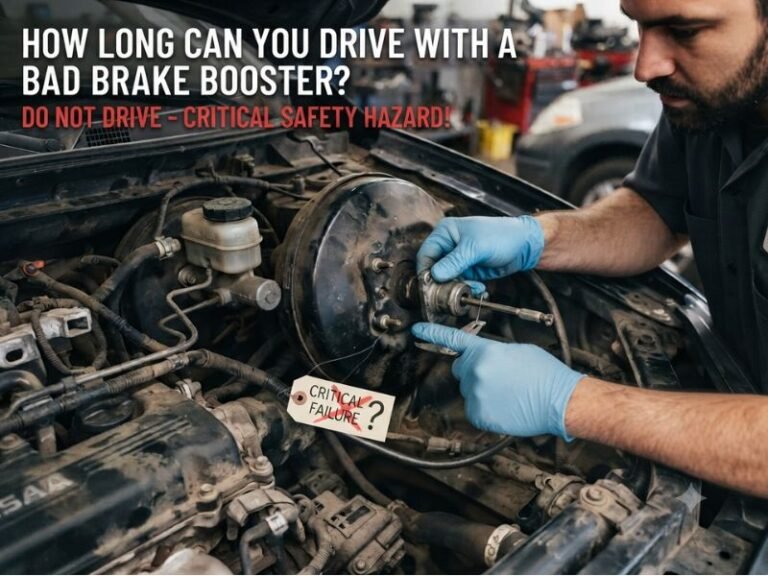
Can You Drive With a Bad Brake Booster Check Valve?
Driving with a faulty check valve is not recommended if it has caused a noticeable loss of brake assistance.
The vehicle may still have hydraulic braking, but the pedal can become significantly harder to press.
This can make emergency braking more difficult.
Avoid driving if:
- The pedal is extremely hard
- Braking requires excessive force
- Brake assistance is inconsistent
- Stopping performance has noticeably changed
- The engine stalls when braking
- You are unsure whether the vehicle can stop safely
If braking assistance is seriously compromised, having the vehicle inspected or towed is safer than continuing to drive.
How Much Does a Brake Booster Check Valve Replacement Cost?
Replacing a check valve is generally less involved than replacing the entire brake booster, although the actual cost depends on the vehicle and the design of the braking system.
The repair may involve:
- Check valve
- Vacuum hose
- Grommet or seal
- Labor
- Diagnostic testing
If the vacuum hose is damaged rather than the valve, only the hose may need replacement.
Because the symptoms overlap, diagnosis is important before purchasing a new booster.
Frequently Asked Questions
What are the most common brake booster check valve symptoms?
Common symptoms include a hard brake pedal after the vehicle sits, rapid loss of stored vacuum, increased pedal effort, hissing noise, inconsistent brake assistance, and sometimes engine vacuum symptoms.
How do I know if my brake booster check valve is bad?
A check valve becomes more suspicious when the booster loses stored vacuum quickly or the pedal becomes hard after the vehicle has been sitting. An airflow or vacuum test can help confirm the problem.
Can a bad check valve cause a hard brake pedal?
Yes. If the valve fails to retain vacuum inside the booster, power assistance can be reduced and the pedal can become harder to press.
Can a bad brake booster check valve cause a vacuum leak?
Yes. A damaged or improperly sealing valve can allow unwanted airflow through the vacuum system.
Can a bad check valve cause engine stalling?
It can, particularly if the valve or connected vacuum system creates a significant vacuum leak. However, engine stalling has many possible causes and requires proper diagnosis.
How do you test a brake booster check valve?
A basic test checks whether air can pass through the valve in the correct direction and whether it is restricted in the opposite direction. A vacuum test can also help determine whether the booster system maintains vacuum.
Is a brake booster check valve easy to replace?
On many vehicles, the check valve is relatively straightforward to access, but the exact procedure varies. Some designs integrate the valve with the vacuum hose or use a specific mounting arrangement, so the vehicle’s service procedure should be followed.
Final Thoughts on Brake Booster Check Valve Symptoms
The most important brake booster check valve symptoms are a hard pedal after the vehicle sits, rapid loss of stored vacuum, increased pedal effort, hissing, and inconsistent brake assistance.
A faulty check valve does not necessarily mean the entire brake booster has failed. A damaged vacuum hose or internal booster leak can create very similar symptoms, so testing the complete vacuum system is important before replacing expensive components.
If the brake pedal has become unusually hard or braking assistance has noticeably decreased, treat the problem seriously. Have the check valve, vacuum hose, booster, and other brake-system components inspected before relying on the vehicle for normal driving.