What Are the Symptoms of a Bad Brake Caliper? 12 Key Signs
A bad brake caliper can cause uneven braking, pulling to one side, excessive wheel heat, grinding or squealing noises, uneven brake pad wear, brake fluid leaks, and a burning smell.
In more severe cases, a sticking caliper can keep a brake partially applied even when your foot is off the pedal, making the vehicle feel sluggish and potentially overheating the rotor and surrounding components.
Knowing what are the symptoms of a bad brake caliper is important because caliper problems do not always begin with an obvious brake warning light or dramatic loss of braking. A seized piston, corroded slide pin, damaged piston seal, or restricted brake hose can gradually make one wheel behave differently from the others.
Some symptoms appear mainly while braking, while others are noticeable during normal driving. You may hear unusual sounds, notice the steering wheel pulling, smell overheated brakes, or discover that one wheel produces much more brake dust than the others.
Below, you will learn the most common bad brake caliper symptoms, what they feel and sound like, how front and rear caliper problems can differ, how to inspect a suspected caliper, and how to separate a caliper fault from similar brake problems.
What Are the Symptoms of a Bad Brake Caliper?
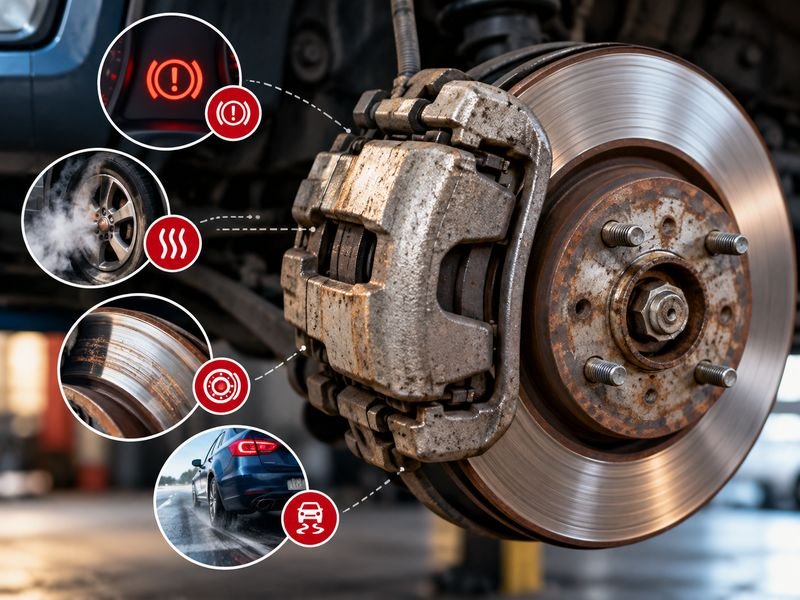
The most common symptoms of a bad brake caliper are vehicle pulling, brake drag, excessive heat, uneven brake pad wear, abnormal noises, fluid leakage, increased brake dust, burning odors, and reduced or inconsistent braking performance.
Exactly what you notice depends on how the caliper is failing.
A caliper can fail in several different ways. The piston may seize in its bore, the slide pins may bind, a seal may leak, or the parking-brake mechanism inside some rear calipers may stick. Because of these different failure modes, one damaged caliper can create very different symptoms from another.
Here are the most important signs of bad brake calipers to watch for.
1. The Vehicle Pulls to One Side When Braking
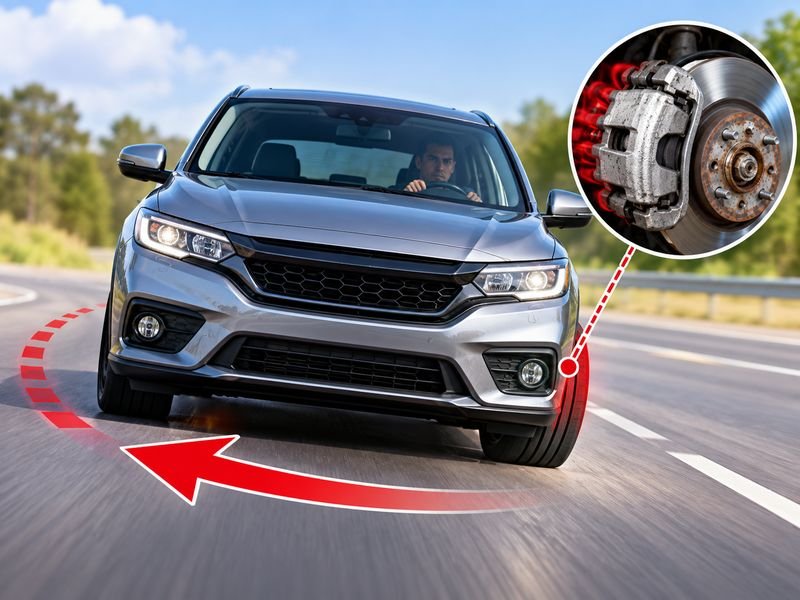
One of the most recognizable brake caliper problem symptoms is a vehicle that pulls left or right when you press the brake pedal.
Braking should normally be reasonably balanced from one side of an axle to the other. If one caliper does not apply properly, the opposite wheel may provide more braking force, causing the vehicle to pull toward the stronger side.
The opposite situation can also occur. A caliper that remains partially applied may create drag on one wheel and cause the vehicle to wander or pull even when you are not braking.
Keep in mind that pulling can also result from:
- Tire pressure differences
- Wheel alignment problems
- Uneven tire wear
- Suspension problems
- Contaminated brake pads
- A restricted brake hose
Therefore, pulling is a strong clue but not proof by itself that the caliper is bad.
2. One Wheel Becomes Much Hotter Than the Others
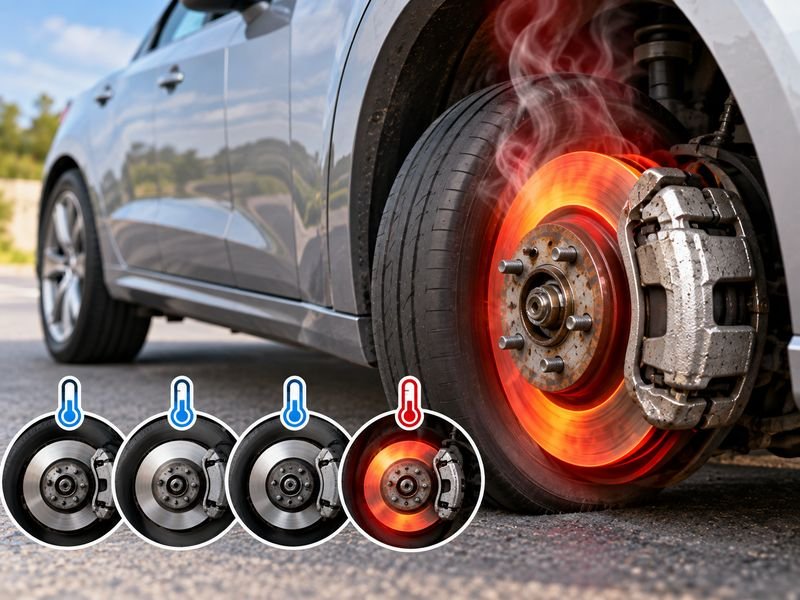
A sticking brake caliper often keeps the brake pads in contact with the rotor after the brake pedal has been released.
That constant friction converts energy into heat. After driving, the affected wheel may become noticeably hotter than the wheel on the opposite side of the same axle.
You may also notice heat radiating from the wheel area.
Never touch the brake rotor or caliper immediately after driving to check its temperature. A dragging brake can become hot enough to cause serious burns.
A safer inspection involves comparing wheel-area temperatures without touching the braking surfaces or using a suitable non-contact temperature measuring tool.
Unusually high heat at one wheel can be caused by a sticking caliper, but a restricted brake hose, parking-brake problem, or other brake hardware issue can sometimes create similar symptoms.
3. The Car Feels Like It Is Being Held Back
One of the more noticeable bad caliper symptoms while driving is increased rolling resistance.
The vehicle may feel as though something is lightly holding it back. You might need more accelerator input than usual to maintain speed, and the car may not coast as freely when you release the accelerator.
This happens when the caliper fails to release completely.
A dragging brake creates continuous friction between the brake pad and rotor, which can:
- Increase brake temperature
- Accelerate pad wear
- Damage the rotor
- Reduce efficiency
- Produce excessive brake dust
Severe brake drag should be inspected promptly because continued driving can overheat brake components.
4. Uneven Brake Pad Wear
Brake pad wear can reveal a great deal about the condition of a caliper.
If the pads on one wheel are significantly thinner than those on the opposite wheel, that caliper may have been dragging. A problem with the piston or slide pins can also cause the inner and outer pads on the same wheel to wear at different rates.
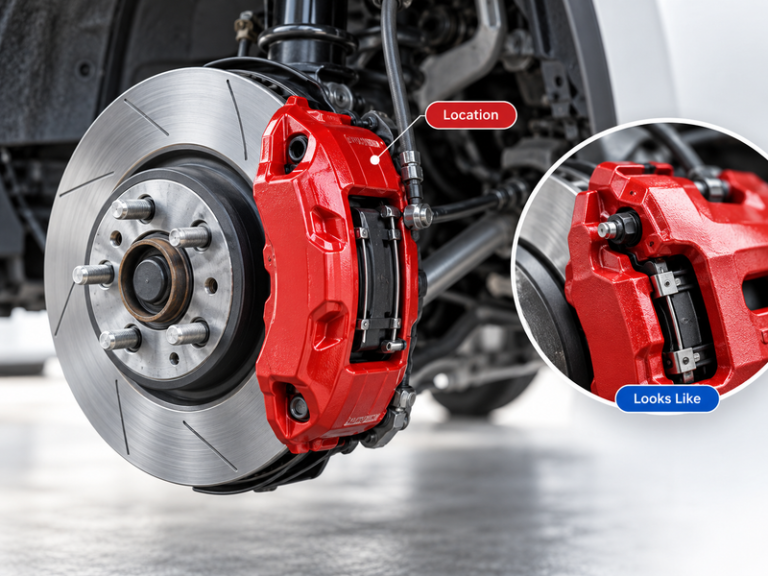
On a typical floating caliper, the piston presses one pad against the rotor while the caliper slides to bring the opposite pad into contact.
If the caliper slide pins seize, the caliper may not move correctly. This can result in one pad doing much more work than the other.
Uneven pad wear can also result from incorrect installation, contaminated hardware, damaged pad guides, or rotor problems, so the whole brake assembly should be inspected rather than replacing the pads alone.
5. Squealing, Scraping, or Grinding Noise
People often ask, what do bad calipers sound like?
There is no single sound that confirms a failed caliper. Depending on the problem, you may hear:
- Squealing
- Scraping
- Grinding
- Metallic rubbing
- Clicking or clunking
- A constant rubbing sound while driving
A common bad brake caliper noise is a continuous scraping or rubbing sound caused by a pad remaining against the rotor.
If a sticking caliper wears a brake pad down excessively, the pad’s friction material may eventually become very thin. That can allow metal components to contact the rotor, creating a harsher grinding noise.
A loose caliper or damaged mounting hardware can sometimes create a clunking noise, particularly when braking or traveling over rough surfaces.
Do not diagnose a caliper from noise alone. Worn pads, rotor shields, wheel bearings, loose brake hardware, and debris around the rotor can produce similar sounds.
6. Burning Smell Near One Wheel
A burning or unusually hot smell near one wheel is another warning sign of brake drag.
When a caliper stays applied, the brake pad continuously rubs against the rotor. Temperatures can rise quickly, particularly during extended driving or highway use.
The smell may resemble:
- Hot friction material
- Burning rubber
- Hot metal
- A sharp chemical odor
If you notice a strong burning smell or smoke near a wheel, stop driving as soon as you can do so safely.
Continuing to drive with an severely overheated brake can damage the pads, rotor, seals, wheel bearing, and other nearby components.
7. Excessive Brake Dust on One Wheel
Brake dust is normal, but one wheel producing dramatically more dust than the matching wheel on the other side may indicate abnormal brake pad wear.
A dragging caliper keeps the pads rubbing longer than they should. The extra friction can wear the pad material more quickly and create additional dust.
You may notice one front wheel becoming dirty much faster than the other.
Excessive dust alone does not prove that the caliper is defective. Brake pad compounds, previous repairs, and uneven component wear can also affect dust levels.
However, excessive dust combined with heat, pulling, or rapid pad wear makes a sticking caliper more likely.
8. Brake Fluid Around the Caliper
The brake caliper contains hydraulic seals designed to keep pressurized brake fluid inside the system.
If a piston seal, bleeder screw area, brake hose connection, or another hydraulic point leaks, fluid may appear around the caliper.
Depending on the design and location of the leak, you may see:
- Wetness around the piston area
- Fluid around the caliper body
- Dampness at the brake hose connection
- Fluid running down the wheel or suspension components
Brake fluid leaks are serious because the hydraulic braking system depends on maintaining pressure.
A leak near the caliper does not always mean the caliper itself is responsible. The brake hose, banjo fitting, bleeder screw, or another connection should also be inspected.
Do not continue normal driving with a known brake fluid leak.
9. Soft or Unusual Brake Pedal Feel
A defective caliper does not always cause a soft brake pedal, but certain caliper problems can affect pedal feel.
For example, a hydraulic leak can allow fluid to escape and may eventually reduce braking pressure.
You might notice:
- Increased pedal travel
- A softer-than-normal pedal
- Inconsistent braking response
- The need to press harder than usual
However, these symptoms can have many other causes, including air in the brake lines, a failing master cylinder, hydraulic leaks elsewhere, or problems with the brake system.
A soft or sinking pedal should therefore be treated as a general brake-system warning rather than a caliper-specific diagnosis.
10. Reduced Braking From One Wheel
A caliper piston that becomes stuck in the retracted position may not press the brake pads firmly enough against the rotor.
The vehicle can still stop because the other brakes continue operating, but braking force may become uneven.
Possible clues include:
- Pulling during braking
- Longer or less confident stops
- Uneven pad wear
- One rotor showing less contact or wear than expected
Modern braking systems are designed with redundancy, but losing proper braking contribution from even one wheel can affect vehicle stability and stopping behavior.
11. The Wheel Is Difficult to Turn by Hand
When the vehicle is safely raised and supported, a wheel with a severely dragging brake may be noticeably harder to rotate than the wheel on the opposite side.
Some resistance is normal because brake pads sit very close to the rotor, and drivetrain components can also add resistance.
However, a wheel that is significantly harder to rotate may indicate:
- A seized caliper piston
- Sticking slide pins
- A restricted brake hose
- A parking-brake mechanism that is not releasing
The amount of normal resistance varies depending on vehicle design, drivetrain layout, and transmission configuration, so compare sides carefully rather than assuming any resistance means failure.
12. Smoke Coming From the Wheel Area
Smoke is one of the more severe bad brake caliper symptoms.
It typically means friction has generated an extreme amount of heat. A caliper that is locked or heavily dragging can overheat the pads and rotor enough to produce visible smoke.
If smoke is coming from a wheel:
Pull over safely and stop driving the vehicle.
Do not immediately touch the wheel, rotor, or caliper. Allow the brake assembly to cool naturally and arrange for the braking system to be inspected before continuing normal use.
How to Tell If Brake Caliper Is Bad
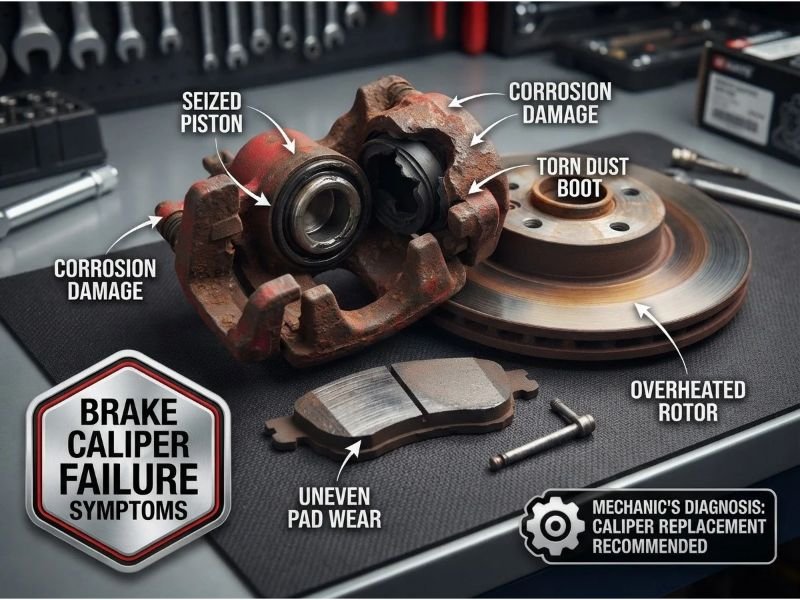
If you are trying to determine how to tell if brake caliper is bad, do not rely on only one symptom. Look for a combination of heat, pad wear, wheel resistance, leakage, and abnormal braking behavior.
A practical diagnosis generally involves several checks.
Compare Both Sides of the Same Axle
Brake components should normally behave similarly from left to right.
Compare:
- Brake pad thickness
- Rotor appearance
- Brake dust
- Heat
- Wheel rotation
- Caliper movement
A significant difference can help identify which side requires closer inspection.
Inspect the Caliper for Leaks
Look around the caliper body, piston area, bleeder screw, and brake hose connection.
Brake fluid typically leaves a wet or oily-looking surface rather than the dry dust normally found around brakes.
Any active hydraulic leak needs immediate attention.
Check the Brake Pads
Remove the wheel only if you can do so safely.
Look at the inner and outer brake pads. Dramatically uneven wear may indicate a piston, slide pin, or hardware problem.
Pads that have been severely overheated may also appear glazed, cracked, or otherwise heat damaged.
Inspect the Slide Pins
Many vehicles use floating brake calipers that depend on lubricated slide pins to move freely.
If a slide pin is corroded, dry, bent, or seized, the caliper may apply unevenly or fail to release correctly.
The proper lubricant and service procedure depend on the brake design, so manufacturer service information should be followed.
Check Piston Movement
A sticking piston is another common caliper fault.
The piston should move according to the brake design and retract enough to prevent excessive pad drag when hydraulic pressure is released.
Testing or retracting a caliper piston requires care. Rear calipers with integrated parking-brake mechanisms may require a specific procedure, special tool, or electronic service mode.
Do not force a piston without confirming the correct procedure for the vehicle.
Sticking Brake Caliper vs. Seized Brake Caliper
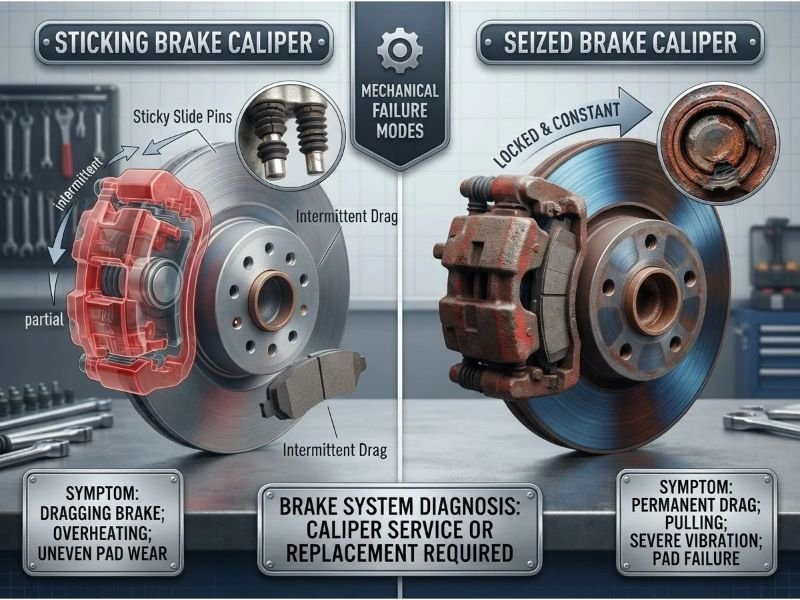
The terms “sticking” and “seized” are often used interchangeably, but the severity can differ.
A sticking caliper may move poorly or fail to release completely. The symptoms can initially be intermittent.
A seized caliper may have little or no usable movement. It may remain applied or may fail to apply properly at all.
Both conditions can result from:
- Corrosion
- Damaged piston seals or boots
- Contamination
- Seized slide pins
- Long-term moisture exposure
- Mechanical parking-brake problems
Whatever the cause, the important issue is whether the caliper can apply and release correctly.
Bad Rear Brake Caliper Symptoms
The basic bad rear brake caliper symptoms are similar to front caliper problems, but rear brakes can have additional complications because many rear calipers are connected to the parking-brake system.
Symptoms can include:
- One rear wheel becoming unusually hot
- Burning smell from the rear wheel area
- Excessive rear brake dust
- Uneven rear pad wear
- Vehicle drag
- Rear brake noise
- Parking brake failing to release
- Parking brake failing to hold properly
Some rear calipers incorporate a mechanical parking-brake mechanism directly into the caliper piston. Others work with an electronic parking brake.
A fault in the parking-brake mechanism can therefore appear similar to a hydraulic caliper problem.
On vehicles with electronic parking brakes, the correct service procedure may require putting the system into a manufacturer-specified maintenance or service mode before retracting the rear caliper piston.
Bad Caliper Symptoms While Driving
Some caliper problems are easiest to notice once the vehicle has been driven long enough for heat and friction to build.
Common bad caliper symptoms while driving include:
- The vehicle pulling to one side
- The car feeling slower to coast
- Steering that requires small corrections
- A burning smell after driving
- Grinding or rubbing from one wheel
- Increased brake pedal effort
- Vibration during braking
- One wheel becoming significantly hotter
- Reduced fuel efficiency from severe brake drag
Symptoms that worsen as the vehicle heats up can be particularly useful clues.
For example, a brake may seem normal when cold but begin dragging after repeated braking. Expansion from heat or a hydraulic restriction may contribute to this pattern.
What Causes a Brake Caliper to Go Bad?
Brake calipers operate in a harsh environment. They are constantly exposed to heat, moisture, road grime, and contamination.
Several problems can eventually interfere with their operation.
Corrosion
Corrosion can form on the caliper piston, piston bore, slide pins, or mounting hardware.
When corrosion prevents smooth movement, the caliper may stick.
Damaged Piston Boot
The rubber dust boot around the caliper piston helps keep dirt and moisture away from the piston surface.
If the boot tears, contamination and corrosion can reach the piston and eventually interfere with movement.
Worn or Damaged Hydraulic Seal
The internal piston seal helps contain brake fluid and assists with normal piston movement.
A damaged seal may allow leakage or improper caliper operation.
Seized Slide Pins
A floating caliper must move smoothly on its guide or slide pins.
Loss of lubrication, corrosion, damaged boots, or contamination can make the pins bind.
Restricted Brake Hose
Sometimes the caliper is blamed when the real problem is the flexible brake hose.
A damaged hose can potentially restrict hydraulic fluid movement. Pressure may apply the brake but fail to release normally, making the caliper appear seized.
Parking-Brake Mechanism Failure
Rear calipers with integrated parking-brake mechanisms contain additional moving components.
Corrosion, cable problems, actuator faults, or internal mechanical failure may prevent the rear brake from releasing fully.
Bad Brake Caliper Noise: What Should You Listen For?
A bad brake caliper noise can change depending on what part of the assembly is malfunctioning.
Constant Scraping
A constant scraping sound while moving may occur when a brake pad remains in contact with the rotor because the caliper is dragging.
Squealing
Squealing may come from a dragging or unevenly worn pad, although brake pads can squeal for many reasons unrelated to the caliper.
Grinding
Grinding should be investigated immediately. It can indicate severely worn friction material, metal-to-metal contact, or damaged brake components.
Clicking or Clunking
Movement from loose caliper mounting components or damaged hardware can occasionally create a clicking or clunking sound.
Because several brake and suspension components can make similar noises, inspection is necessary before replacing the caliper.
Bad Caliper vs. Bad Brake Pads
Brake pads and brake calipers can produce overlapping symptoms.
| Symptom | Bad Caliper | Worn Brake Pads |
| Pulling while braking | Common | Possible |
| One wheel excessively hot | Common with dragging caliper | Less typical by itself |
| Uneven pad wear | Common | Possible |
| Squealing | Possible | Common |
| Grinding | Possible | Common when badly worn |
| Brake fluid leak | Possible | No |
| Wheel remains difficult to turn | Common with brake drag | Usually not from pad wear alone |
| Burning smell | Possible | Possible if overheated |
A worn brake pad can therefore imitate part of the symptom pattern, but fluid leakage, significant brake drag, and major side-to-side differences often suggest that the problem extends beyond normal pad wear.
Bad Brake Caliper vs. Warped or Uneven Brake Rotor
Brake vibration is sometimes blamed on the caliper when the rotor is the actual issue.
A rotor with excessive thickness variation or surface irregularity may cause:
- Pedal pulsation
- Steering-wheel vibration
- Shaking during braking
A sticking caliper, however, may contribute to rotor overheating and uneven wear over time.
That means the two problems can occur together.
If one rotor repeatedly develops heat damage or abnormal wear, the caliper and hydraulic system should be inspected rather than simply installing another rotor.
Bad Brake Caliper vs. Wheel Bearing
A failing wheel bearing can create humming, grinding, vibration, or wheel-area noise that may be mistaken for brake trouble.
A wheel bearing problem often changes with:
- Vehicle speed
- Cornering load
- Road speed rather than brake application
A brake caliper problem is more likely to be accompanied by excessive brake heat, uneven pad wear, brake drag, or changes when the brake pedal is applied.
Proper inspection is still necessary because symptoms can overlap.
Can a Bad Brake Hose Look Like a Bad Caliper?
Yes. A restricted brake hose can create symptoms that strongly resemble a sticking caliper.
When the brake pedal is pressed, hydraulic pressure pushes fluid toward the caliper. If an internally damaged hose restricts return flow, pressure may remain trapped after the pedal is released.
The brake can then stay partially applied.
This distinction matters because replacing the caliper alone will not solve the problem if hydraulic pressure is being trapped by the hose or another part of the system.
Can a Bad Brake Caliper Cause Vibration?
A defective caliper can contribute to vibration, although vibration is not always a direct caliper symptom.
A dragging caliper can overheat the rotor and cause uneven friction surfaces or uneven pad deposits. The result may be vibration or pulsation during braking.
Other common causes of braking vibration include:
- Rotor thickness variation
- Uneven friction material transfer
- Worn suspension components
- Wheel or tire problems
- Loose steering components
The full brake and suspension system should be checked rather than assuming the caliper is responsible.
Can a Bad Caliper Damage the Rotor?
Yes. A sticking caliper can keep the brake pad pressed against the rotor for an extended period.
Continuous friction creates heat and can cause:
- Rapid pad wear
- Rotor surface damage
- Grooving
- Heat discoloration
- Uneven rotor wear
When a failed caliper has caused substantial overheating, replacing only the caliper may not be enough. The pads, rotor, brake hose, and surrounding components should also be inspected.
Can a Bad Caliper Affect Fuel Economy?
A severely dragging brake can increase rolling resistance.
Because the engine has to overcome that extra resistance, fuel consumption can increase.
However, a change in fuel economy alone is not enough to diagnose a brake caliper problem. Tire pressure, driving conditions, engine problems, weather, and many other factors also influence fuel use.
If reduced efficiency appears together with a hot wheel, burning smell, or vehicle drag, brake inspection becomes much more important.
Can You Drive With a Bad Brake Caliper?
Driving with a suspected bad caliper is not a good idea, particularly if the brake is dragging, leaking, overheating, grinding, or affecting vehicle control.
A caliper problem can worsen and may damage:
- Brake pads
- Rotors
- Brake hoses
- Wheel bearings
- Nearby seals
- Other brake hardware
More importantly, it can create uneven or unreliable braking.
If the vehicle is pulling strongly, producing smoke, leaking brake fluid, making severe grinding noises, or has a noticeably abnormal brake pedal, the safer option is to stop driving and have the vehicle transported for inspection.
How to Inspect a Suspected Bad Brake Caliper Safely
A visual brake inspection can provide useful clues, but brakes are safety-critical components.
Park on a Stable, Level Surface
Choose a solid, level location and make sure the vehicle cannot roll.
Follow the vehicle manufacturer’s jacking instructions if a wheel must be removed.
Never Depend on a Jack Alone
If the vehicle needs to be raised, support it properly with jack stands at manufacturer-approved lifting points.
Never work underneath or place body parts beneath a vehicle supported only by a hydraulic or mechanical jack.
Allow Hot Brakes to Cool
If you suspect a dragging caliper, assume the brake assembly may be extremely hot.
Do not touch the rotor, caliper, or wheel hardware immediately after driving.
Compare Left and Right Sides
Look for differences in:
- Pad thickness
- Rotor condition
- Brake dust
- Fluid leakage
- Caliper hardware
- Heat-related discoloration
Comparing components on the same axle can make abnormal wear easier to identify.
Inspect the Brake Hose Too
Do not overlook the flexible hose.
Look for cracking, damage, twisting, leakage, or other visible deterioration. Internal restrictions cannot always be identified visually, so additional hydraulic diagnosis may be necessary.
Should You Replace Both Brake Calipers at the Same Time?
Brake calipers are not automatically required to be replaced in pairs on every vehicle.
The decision depends on:
- The condition of the opposite caliper
- Vehicle age
- Corrosion
- Mileage and service history
- Cause of the failure
- Manufacturer recommendations
Brake pads on the same axle, however, are normally serviced as an axle set so braking remains balanced.
If one caliper has failed because of severe age-related corrosion, inspecting the opposite side carefully makes sense because it has been exposed to similar conditions.
Common Mistakes When Diagnosing a Bad Brake Caliper
Replacing Pads Without Finding Why They Wore Unevenly
Uneven pads are often a symptom rather than the root cause.
Installing new pads without correcting a sticking piston, seized slide pin, or hydraulic restriction may cause the new pads to wear quickly.
Assuming Every Hot Wheel Means the Caliper Is Bad
The caliper is a common cause, but the brake hose, parking-brake system, or hardware can also keep a brake applied.
Diagnosis should identify why the brake is not releasing.
Touching a Hot Rotor to Compare Temperatures
A dragging brake can reach dangerous temperatures.
Never use your hand to test whether a rotor is hotter than the others.
Forcing a Rear Caliper Piston
Many rear calipers use special mechanical or electronic parking-brake mechanisms.
Trying to force the piston backward without following the correct service procedure can damage the caliper or parking-brake system.
Ignoring the Opposite Side
Brakes work as a system. When one side has unusual wear, always inspect the other side for comparison.
When Should a Brake Caliper Be Replaced?
A brake caliper may require replacement or professional rebuilding when it can no longer operate safely and smoothly.
Replacement may be appropriate if there is:
- A seized or heavily corroded piston
- Hydraulic leakage from the caliper
- Damaged caliper threads or mounting points
- Severe internal corrosion
- A failed integrated parking-brake mechanism
- Physical damage to the caliper body
Some caliper problems, such as dry slide pins or damaged external hardware, may be repairable without replacing the entire caliper if the caliper itself remains serviceable.
The correct decision depends on the brake design and condition of the components.
FAQs About What Are the Symptoms of a Bad Brake Caliper
What is the most common symptom of a bad brake caliper?
A vehicle pulling during braking or one wheel becoming unusually hot are two common warning signs. Uneven pad wear, brake drag, noise, and excessive brake dust may appear at the same time.
How do I know if my brake caliper is sticking?
A sticking caliper often causes one wheel to run hotter, creates brake drag, and wears the pads unevenly. The vehicle may also pull or feel like it does not coast normally.
What do bad calipers sound like?
Bad calipers may cause scraping, grinding, squealing, rubbing, clicking, or clunking sounds depending on the failure. Noise alone cannot confirm a caliper problem because pads, rotors, bearings, and brake hardware can create similar sounds.
Can a bad brake caliper make the car shake?
Yes, a bad caliper can contribute to shaking if it causes uneven braking or excessive rotor heat. Rotor problems, tires, wheel balance, and suspension faults can also cause vibration.
Can a bad brake caliper cause pulling when I am not braking?
Yes, a caliper that remains partially applied can make the vehicle pull even with the brake pedal released. Tire, alignment, and suspension problems should also be ruled out.
What are bad rear brake caliper symptoms?
Bad rear brake caliper symptoms can include a hot rear wheel, brake drag, uneven pad wear, noise, excessive dust, or parking-brake problems. Rear calipers with integrated parking brakes can develop additional mechanical or electronic faults.
Will a bad brake caliper cause a burning smell?
Yes, a dragging caliper can generate enough friction to create a strong burning smell. Smoke or an intense burning odor is a reason to stop driving and have the brake inspected.
Can a bad brake caliper leak brake fluid?
Yes, damaged caliper seals or hydraulic connections can leak brake fluid. A leaking brake system can reduce braking performance and requires prompt repair.
Can a brake caliper fail without making noise?
Yes, a caliper can begin sticking or applying unevenly without producing an obvious sound. Heat, uneven pad wear, pulling, and excessive brake dust may be the first clues.
How serious is a bad brake caliper?
A bad brake caliper can become a serious safety problem because it can reduce braking, cause brake drag, or overheat the wheel assembly. Symptoms such as fluid leakage, smoke, heavy pulling, severe grinding, or abnormal pedal feel should not be ignored.
Conclusion
Understanding what are the symptoms of a bad brake caliper can help you recognize a brake problem before excessive heat or uneven wear damages additional components. The biggest warning signs include pulling during braking, one wheel running much hotter than the others, unusual scraping or grinding, rapid or uneven pad wear, excessive brake dust, a burning smell, brake fluid leakage, and a vehicle that feels as though a brake is constantly dragging.
The most important point is that these symptoms can overlap with problems involving the brake hose, pads, rotors, wheel bearings, slide pins, and parking-brake system. A proper inspection should therefore confirm why the brake is applying or failing to release rather than assuming the caliper itself is always responsible.
If you notice severe bad brake caliper symptoms such as smoke, a strong burning smell, fluid leakage, major pulling, or loss of normal braking performance, avoid continued driving until the braking system has been inspected and repaired.