Dirty Brake Fluid Symptoms: 7 Signs Brake Fluid Is Contaminated
Dirty brake fluid symptoms can include dark or cloudy fluid, visible debris in the reservoir, a soft brake pedal, brake fade, and inconsistent braking performance. These signs do not always mean the fluid itself is the only problem, but they are good reasons to inspect the hydraulic brake system.
Brake fluid can become dirty from moisture, corrosion, old rubber components, dirt entering during service, or chemical contamination. Common fluids such as DOT 3, DOT 4, and DOT 5.1 are also hygroscopic, which means they can absorb moisture over time.
As a brake technician, I do not assume dark fluid automatically means a major brake failure. I look at the fluid condition, service history, pedal feel, leaks, and the condition of the master cylinder, calipers, hoses, and ABS hydraulic system.
What Does Dirty Brake Fluid Mean?
Dirty brake fluid can mean several different things.
Sometimes the fluid is simply old and has absorbed moisture. In other cases, it may contain rust particles, rubber debris, dust, or other contamination from inside the brake system.
Chemical contamination is more serious. Petroleum products such as engine oil, power steering fluid, transmission fluid, or grease should never enter the brake fluid reservoir because they can damage rubber seals.
It is also important to understand that dark brake fluid is not always the same as badly contaminated fluid. Brake fluid can naturally darken as it ages.
I look for more than color. Cloudiness, particles, unusual separation, or changes in braking performance are more concerning.
7 Common Dirty Brake Fluid Symptoms
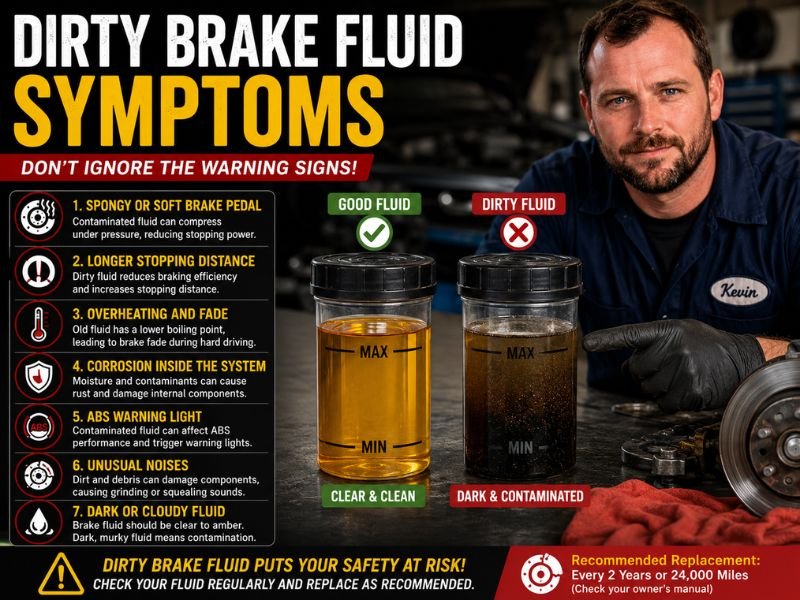
1. Dark or Cloudy Brake Fluid
One of the easiest things to notice is a change in fluid appearance.
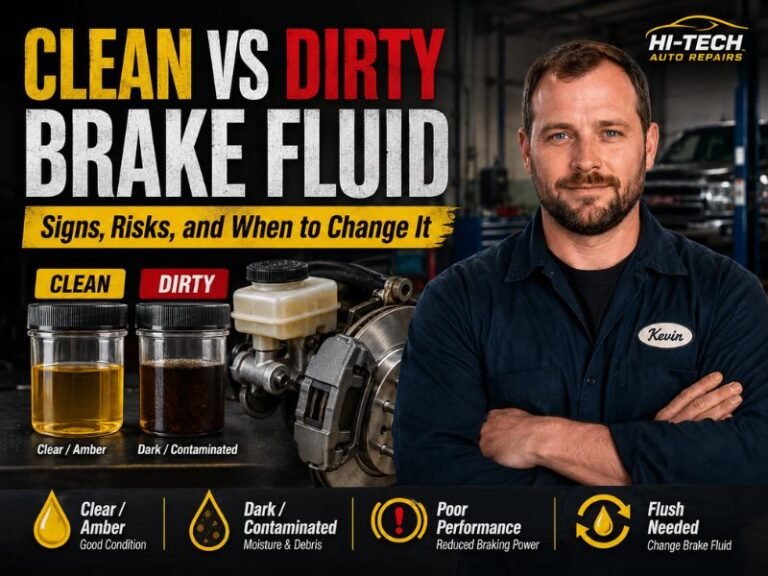
Fresh brake fluid is often clear to light amber, depending on the product. Older or contaminated fluid may become brown, dark amber, or cloudy.
A darker color alone does not prove the fluid has failed. However, if the fluid looks extremely dark, murky, or noticeably different from new fluid, I consider the service history and check for contamination.
Cloudy brake fluid deserves more attention because moisture or foreign material may be present.
2. Visible Particles or Sediment
Brake fluid should not normally contain floating debris or visible sediment.
If I see black particles, rust-colored material, or dirt sitting at the bottom of the reservoir, I look for internal deterioration.
Possible sources include old rubber seals, corrosion inside hydraulic components, or contamination introduced during previous repairs.
Visible particles are a stronger warning sign than dark color alone.
3. Soft or Spongy Brake Pedal
A soft or spongy brake pedal can be connected to contaminated brake fluid, especially when moisture in the fluid becomes hot enough to form vapor.
Vapor compresses more easily than liquid brake fluid, which can make the pedal feel less firm.
However, dirty fluid is not the only possible cause.
Air in the brake lines, a hydraulic leak, a failing master cylinder, or improper brake bleeding can create the same symptom.
If the pedal suddenly becomes soft, I inspect the entire hydraulic system instead of recommending a fluid flush without diagnosis.
4. Brake Fade Under Heavy Use
Brake fade means braking performance becomes weaker as the brakes get hotter.
Moisture-contaminated brake fluid can contribute because water lowers the fluid’s boiling performance.
This is more likely to become noticeable during towing, mountain driving, repeated hard stops, or heavy stop-and-go traffic.
If the pedal starts feeling softer after the brakes get hot, I take that seriously.
Mechanical brake fade from overheated pads or rotors can also happen, so the fluid should not be blamed automatically.
5. Inconsistent Brake Pedal Feel
A healthy brake pedal should feel predictable.
If the pedal feels firm during one stop and softer during another, something in the hydraulic system may not be working correctly.
Contaminated fluid can be one factor, especially under changing temperatures.
I also check for air, leaks, hose problems, caliper issues, and master cylinder faults.
Inconsistent pedal behavior is a symptom I never recommend ignoring.
6. Reduced or Unpredictable Braking Performance
Dirty brake fluid may contribute to braking that feels less consistent, especially when the system gets hot.
A driver may notice that the car takes more effort to slow down or that the brakes do not feel the same from one stop to another.
Still, many other components affect stopping performance.
Worn brake pads, damaged rotors, poor tires, sticking calipers, and hydraulic leaks can all produce similar complaints.
That is why I inspect both the hydraulic and mechanical brake systems before deciding what needs repair.
7. Corrosion or Hydraulic Component Problems
Moisture and contamination can contribute to corrosion inside the brake system over time.
The affected parts may include the master cylinder, brake calipers, wheel cylinders, steel brake lines, and ABS hydraulic unit.
Internal corrosion can eventually lead to sticking valves, leaking seals, poor piston movement, or expensive component failure.
This type of damage may not be visible when you look at the reservoir, which is why regular brake fluid maintenance matters.
What Does Dirty Brake Fluid Look Like?
Dirty brake fluid can appear darker, cloudy, or contaminated with particles.
Normal fresh fluid is usually clear or light amber, though the exact color depends on the brand and specification.
Questionable fluid may look dark brown, murky, or unusually hazy. You may also see sediment at the bottom of the reservoir.
I never diagnose brake fluid condition using color alone.
A better evaluation includes the fluid’s age, service history, moisture level, visible contamination, and how the brakes are behaving.
If the fluid contains obvious debris or has an unusual oily appearance, I investigate further.
What Causes Brake Fluid to Get Dirty?
Moisture absorption is one of the most common causes.
DOT 3, DOT 4, and DOT 5.1 brake fluids can absorb moisture over time, even in a closed hydraulic system.
Internal corrosion can also introduce particles into the fluid.
Old hoses, seals, and other rubber components may deteriorate and release small amounts of material into the system.
Poor service practices are another cause. Dirt can enter when the reservoir cap is removed or when contaminated tools are used.
The most serious type is petroleum contamination.
Engine oil, power steering fluid, transmission fluid, or grease should never be added to the brake fluid reservoir.
Can Dirty Brake Fluid Cause a Soft Brake Pedal?
Yes, it can contribute to a soft pedal.
Moisture-contaminated fluid can have lower boiling performance. Under high brake temperatures, vapor may form and make the pedal feel soft or spongy.
However, a soft pedal should always be diagnosed carefully.
Air in the lines, a leak, a damaged brake hose, or a failing master cylinder can produce the same symptom.
If the pedal suddenly changes, I do not assume a simple flush will solve it.
Can Dirty Brake Fluid Damage the ABS or Master Cylinder?
Long-term contamination can contribute to internal hydraulic damage.
Moisture may promote corrosion inside the master cylinder and ABS hydraulic control unit.
Foreign particles can also interfere with small valves and passages.
Chemical contamination is even more serious because it may damage seals throughout the system.
That does not mean dark-looking fluid automatically means the ABS unit or master cylinder is already damaged.
It means contaminated fluid should not be ignored.
How I Check Dirty Brake Fluid
I start by inspecting the brake fluid reservoir.
I check the level, color, cloudiness, and any visible debris.
Next, I review the service history. If nobody knows when the fluid was last changed, I pay closer attention to its condition.
When needed, I use moisture or boiling-point testing to get more useful information than color alone.
I also inspect the complete brake system, including the pads, rotors, hoses, calipers, lines, and master cylinder.
A fluid problem may exist alongside another brake fault.
Should You Flush Dirty Brake Fluid?
A brake fluid flush may be appropriate if the fluid is genuinely contaminated, has absorbed excessive moisture, or is due for service according to the manufacturer.
A standard fluid exchange can remove old fluid and replace it with the correct fresh specification.
However, severe chemical contamination may require much more than a flush.
If petroleum fluid has entered the system, rubber seals and hydraulic components may already be damaged.
A brake fluid flush does not repair damaged brake parts.
I always identify the type of contamination before deciding what repair is needed.
When Should You See a Brake Technician?
I recommend a professional brake inspection if the pedal becomes soft, sinks toward the floor, or feels inconsistent.
Other warning signs include visible fluid leaks, a reservoir that keeps losing fluid, obvious debris in the fluid, a brake warning light, or reduced stopping performance.
A wheel that becomes unusually hot or a vehicle that pulls while braking also needs attention.
If dirty fluid appears together with a braking problem, I inspect the full system instead of treating it as simple maintenance.
FAQs About Dirty Brake Fluid Symptoms
Is dark brake fluid always bad?
No. Dark color is only one clue. Service history, moisture, contamination, and braking behavior matter more.
Can dirty brake fluid cause brake failure?
Severe contamination can reduce hydraulic reliability and damage components, but the complete brake system should be diagnosed.
Can dirty brake fluid cause a warning light?
Not usually just because it is dirty. Low fluid or another hydraulic fault may trigger the light.
Can I just top off dirty brake fluid?
No. Adding fresh fluid does not remove contamination already inside the system.
Will a brake fluid flush fix a soft pedal?
Only if fluid condition is actually the cause. Air, leaks, or component failures may require additional repair.
Conclusion
Recognizing dirty brake fluid symptoms can help you catch contamination before it contributes to expensive hydraulic brake problems.
Dark or cloudy fluid, visible particles, a soft pedal, brake fade, and inconsistent braking are all signs worth investigating.
As a brake technician, I look at more than fluid color. I check moisture, contamination, service history, pedal feel, and the condition of the master cylinder, calipers, hoses, brake lines, and ABS hydraulic system.
If the fluid contains visible debris or braking performance has changed, I recommend diagnosing the complete system before assuming a basic brake fluid flush will fix the problem.