Can You Grind Down Brake Calipers: Clear Answers and Key Facts
People often assume a brake caliper can be ground down like any other metal part when clearance is tight. In reality, removing material from a caliper can weaken a safety-critical component, damage its hydraulic sealing surfaces, or create uneven brake operation. In most cases, the correct solution is to identify the interference and use a compatible caliper, bracket, wheel, rotor, or pad.
If you are asking, “can you grind down brake calipers,” the short answer is: only in very limited circumstances, and generally not as a normal repair. Never grind the piston bore, piston, sealing areas, mounting ears, bridge, or any part that contains hydraulic pressure.
Is grinding a brake caliper safe?
Grinding a brake caliper is usually unsafe unless the vehicle manufacturer or caliper manufacturer specifically permits the modification. A caliper is not merely a metal housing. It supports the brake pads, holds or guides the piston, contains pressurized brake fluid, and transfers braking force to the rotor through its mounting points.
Removing material can cause several problems:
- It can reduce the strength of the caliper body or mounting structure.
- It can expose or weaken an internal fluid passage.
- It can distort the piston bore and cause the piston to leak or stick.
- It can change pad alignment and produce tapered or uneven wear.
- It can reduce clearance to the rotor, wheel, or brake hose in an unpredictable way.
- It can leave cracks, sharp edges, or abrasive debris near moving brake parts.
Because the caliper is part of the vehicle’s primary braking system, a modification that appears small may have consequences that are difficult to inspect visually. A caliper should not be modified simply because it almost fits.
What parts of a caliper must not be ground?
Several areas should be treated as strictly non-removable. If any of these locations interfere with another component, stop and correct the underlying fitment problem instead of grinding the caliper.
Piston bores and seal grooves
The piston bore must remain round, smooth, and correctly sized. Its surface works with the square-cut piston seal to control piston movement and retract the piston slightly after braking. Grinding or sanding the bore can create grooves, taper, or an incorrect diameter.
The same warning applies to the seal groove and dust-boot groove. Damage in these areas can allow brake fluid leakage, let contamination reach the piston, or prevent the dust boot from staying seated.
Mounting ears and bolts
The mounting ears carry the force generated when the pads clamp the rotor. Removing material from an ear can reduce its load-bearing area or alter how the caliper sits over the rotor. It may also reduce thread engagement or change bolt alignment.
Do not grind around mounting bolts to make a caliper fit. A caliper that cannot mount squarely and fully against its specified surface is not correctly installed.
The bridge or pressure-containing body
On a fixed caliper, the bridge connecting the two sides helps resist spreading under hydraulic pressure. On many floating calipers, the main body still contains internal passages and carries substantial loads. Grinding the bridge, outer wall, or any thick structural section can weaken the part or expose a fluid passage.
Pad guides and abutment surfaces
Brake pads must slide or locate correctly in their intended guides. Grinding pad contact surfaces can create excessive movement, crooked pad loading, rattling, or binding. It can also remove a corrosion-resistant surface treatment.
If a pad does not fit its guide, confirm that the pad number, caliper, bracket, and hardware are correct. Do not assume the pad needs to be reshaped.

Can a small amount be removed from the outside?
Some performance or custom applications include a minor clearance modification to an external, non-structural portion of a caliper. However, this is acceptable only when the caliper manufacturer, vehicle manufacturer, or a qualified brake specialist has identified the exact area and approved the amount of material to remove.
That approval matters because an area that looks like unused casting may be close to a hydraulic passage, piston cavity, mounting reinforcement, or heat-sensitive section. The safe limit cannot be determined reliably by appearance alone.
A general rule is to avoid grinding a caliper to solve wheel clearance unless documented fitment information specifically supports that modification. A proper brake-clearance check should confirm clearance through the entire range of wheel and suspension movement, not only with the vehicle parked.
Why does the caliper need clearance?
The location of the interference helps identify the correct fix. A caliper may appear not to fit for several different reasons, and grinding is not the answer to most of them.
Wheel spoke interference
If the wheel spokes touch the caliper, the wheel design, offset, diameter, or spoke profile may be incompatible with the brake package. Two wheels with the same diameter and width can have very different spoke clearance.
Use a wheel known to clear the specific caliper and rotor combination. Wheel spacers may change clearance in some applications, but they also affect hub engagement, stud or bolt engagement, scrub geometry, and legal or manufacturer requirements. They should never be used as an automatic substitute for correct fitment.
Rotor or hat interference
If the caliper touches the rotor hat or the rotor does not sit centrally inside the caliper, the rotor diameter, thickness, offset, hub fit, bracket, or caliper may be incorrect. A rotor that is wrong for the application can place the friction surface outside the pad or leave the caliper misaligned.
Do not grind the caliper to compensate for an incorrect rotor. Verify the complete brake combination using the manufacturer’s part numbers and dimensions.
Pad interference
A pad that is too thick, too long, or incorrectly shaped may bind in the caliper or bracket. Common causes include the wrong pad set, missing hardware, corrosion under pad abutment clips, or a mismatched caliper and bracket.
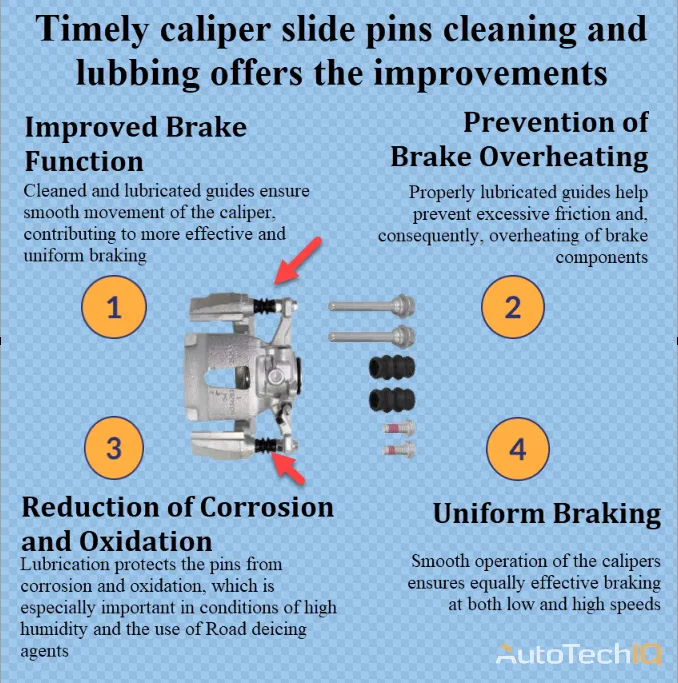
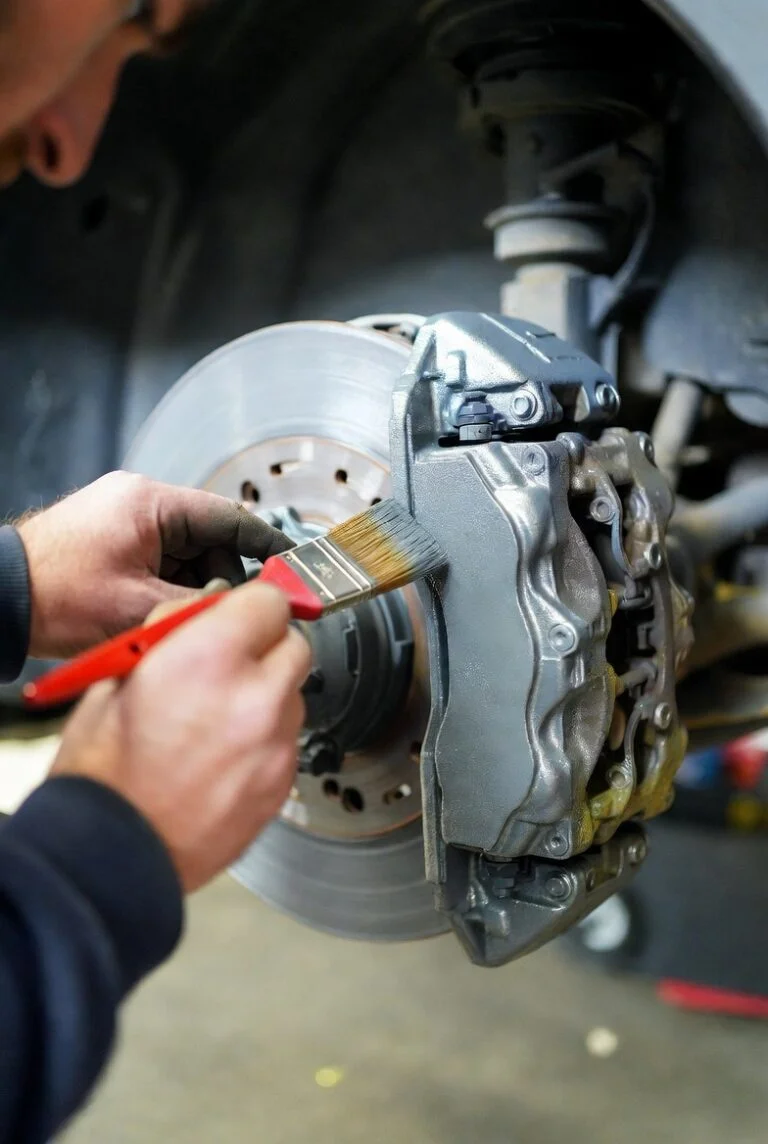
Remove rust and contamination only as part of a proper brake service, using methods that preserve the original pad seating surfaces. Do not remove substantial metal from the caliper or bracket to force a pad into place.
Suspension or brake-hose interference
A caliper, hose, or fitting that contacts a suspension component can indicate an incorrect caliper orientation, damaged hose routing, wrong hardware, or a mismatched assembly. The steering should be checked from lock to lock, and suspension movement should be considered where appropriate.
A brake hose must not be stretched, twisted, sharply bent, or allowed to rub. Grinding the caliper does not correct a hose-routing problem.
How to check the interference correctly
Before considering any modification, inspect the complete assembly with the vehicle supported safely and the correct components installed. The goal is to identify exactly what touches what.
- Confirm the caliper, bracket, rotor, pads, hardware, and wheel are the correct parts for the vehicle and configuration.
- Check that the rotor is fully seated against a clean hub and is centered correctly within the caliper.
- Verify that the caliper is mounted in the correct position and that all bolts seat properly at their specified locations.
- Look for contact marks on the wheel, caliper, rotor, pad, bracket, hose, and suspension components.
- Check wheel clearance around the spokes and inner barrel, not just at one stationary point.
- Turn the steering through its usable range and inspect for hose or suspension contact.
- Measure the gap using the brake manufacturer’s or wheel manufacturer’s required clearance, rather than relying on visual judgment.
Do not rotate a wheel or brake assembly with loose components, missing fasteners, or an unsecured vehicle. If the source of the interference is not obvious, stop and have the assembly inspected by a qualified brake technician.
What should be done instead of grinding?
The correct repair depends on the contact point and the parts being used. Common solutions include replacing the incorrect part with the correct application, selecting a wheel designed for the brake package, using the correct rotor or caliper bracket, replacing damaged hardware, or correcting pad and hose installation.
If a replacement caliper does not match the original configuration, compare more than its overall appearance. Check the piston size, mounting style, pad shape, rotor thickness, rotor diameter, bleeder position, hose connection, and bracket dimensions. A caliper that physically bolts on may still produce poor brake balance or improper pad coverage.
For custom brake conversions, use a complete, engineered combination rather than mixing parts based only on available space. The caliper must align with the rotor, the pads must contact the intended friction surface, and the wheel must clear the entire assembly.
What if the caliper has already been ground?
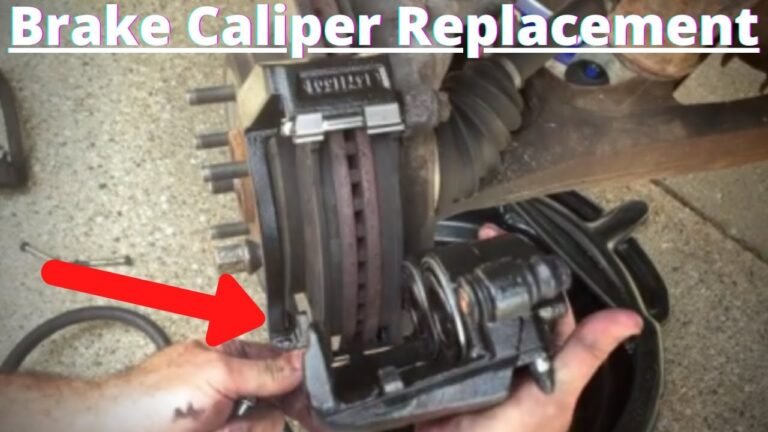
Do not automatically reinstall a caliper that has been modified. Inspect it for deep gouges, cracks, exposed passages, damaged threads, distorted mounting surfaces, and contact with the piston cavity or seal areas. Also check whether grinding dust entered the hydraulic system or contaminated the pads and rotor.
A qualified technician or the caliper manufacturer should determine whether the part remains serviceable. If material was removed from a structural or hydraulic area, replacement is usually safer than attempting to restore the part. Do not fill a ground area with weld, epoxy, or body filler as a brake repair.
After any approved brake component work, the system must be assembled with the correct hardware, inspected for fluid leaks, and checked for proper pedal feel and wheel clearance. A soft pedal, uneven braking, pulling, dragging, abnormal noise, or fluid loss requires immediate inspection. The vehicle should not be driven until the braking system operates correctly.
When is replacement the safest choice?
Replacement is the safest choice when the caliper needs grinding to fit a wheel or rotor, when the interference involves a mounting or hydraulic area, or when the origin of the caliper is uncertain. It is also the right choice when the caliper has been cracked, deeply gouged, overheated, corroded at a sealing surface, or modified without documented approval.
Brake calipers are available in many visually similar designs with different dimensions and internal specifications. Matching the correct part number and complete brake setup is more reliable than altering a part that was not designed for the application.
Conclusion
So, can you grind down brake calipers? In general, no: do not remove material from the caliper unless a qualified authority has approved a precisely identified, non-structural clearance area. For ordinary wheel, rotor, pad, or hose interference, find and correct the fitment problem or replace the mismatched component. Since a caliper is a safety-critical hydraulic part, preserving its original strength, alignment, and sealing surfaces should take priority over making it fit by force.