7 Best Brake Pads for Trucks That Handle Weight, Heat and Hauling
As an Amazon Associate, we earn from qualifying purchases made through links in this post, at no extra cost to you.
The wrong brake pads can make a heavy truck feel nervous, noisy, or slow to stop. A poor fit may leave you redoing the job, dealing with uneven wear, or returning parts that looked right but did not match the caliper, rotor, axle, or trim package.
Truck brake pads need more than a familiar brand name. Fitment, friction material, heat handling, included clips, dust, noise, and the kind of load you carry all affect whether the brake job feels dependable or becomes another afternoon under the truck.
Here, you’ll learn:
- Which sets are aimed at towing, hauling, daily driving, or a specific truck family.
- Why front and rear pads must be matched to the correct axle and brake hardware.
- How ceramic and semi-metallic materials differ in noise, dust, and heat behavior.
- What to check before installation, bedding, cleaning, and regular inspection.
Quick Picks
-
Best For Truck and towing duty

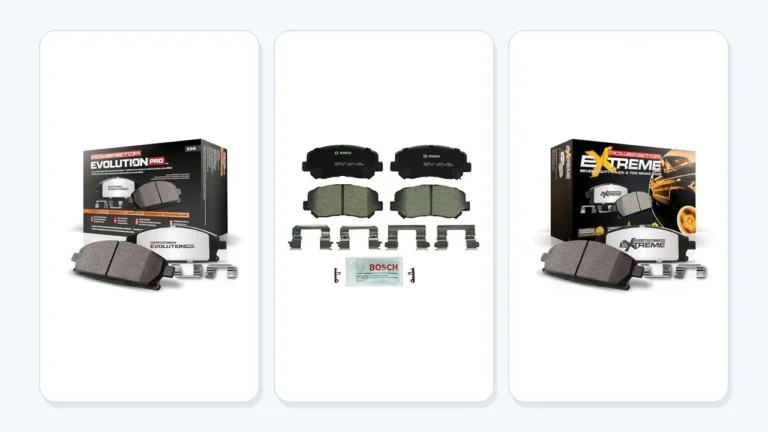
PowerStop Z36 Truck & Tow Brake Pads
Carbon-fiber ceramic pads and included hardware help manage towing heat for Silverado, Tahoe and Yukon owners.
-
Best For Ram heavy-duty trucks
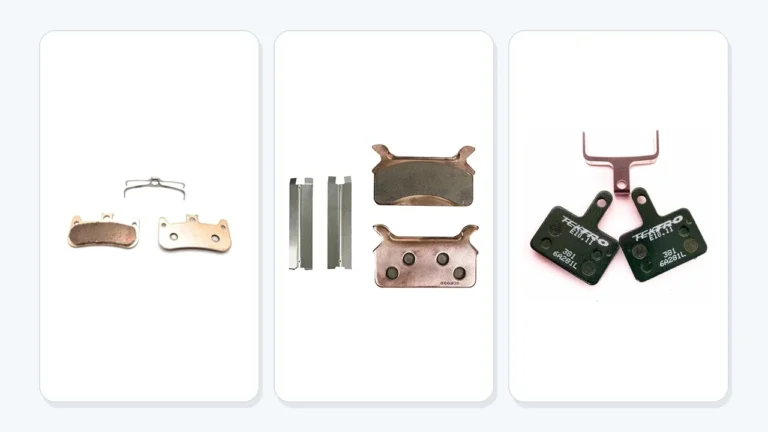
PowerStop Z36 Truck & Tow Brake Pads VTSS
Truck-and-tow carbon-fiber ceramic pads provide a direct-fit front upgrade for select Ram 2500 and 3500 applications.
Top 7 Brake Pads for Trucks at a Glance
PowerStop Z36 sets deserve the first look from truck owners who tow, haul, drive in mountains, or use a lifted 4×4. The other choices lean toward everyday replacement, specific GM applications, or a narrow Ford fit, so the biggest separators are vehicle compatibility, axle position, friction material, and intended load.
| Product image | Product name | Check product |
|---|---|---|
| 1 |
PowerStop Z36 Truck & Tow Brake Pads | Check Price |
| 2 |
PowerStop Z36 Truck & Tow Brake Pads VTSS | Check Price |
3 |
ACDelco Silver Front Brake Pad Set 14D369MX | Check Price |
| 4 |
PowerStop Z36 Truck & Tow Brake Pads 8JHM | Check Price |
5 |
Front Semi-Metallic Brakes Pads Set Fit for | Check Price |
6 |
Bendix Premium SBC1363 Ceramic Front Brake Pads | Check Price |
7 |
Ceramic Front Brake Pads for Ford F-150 | Check Price |
7 Best Brake Pads for Trucks: Detailed Reviews
When I chose the best brake pads for trucks, I paid attention first to fitment, friction material, axle position, hardware, and heat use. Those details prevent the most expensive beginner mistakes, such as ordering rear pads for a front axle or assuming every Silverado package uses the same shape.
I kept heavy-duty carbon-fiber ceramic options near the top for towing and hauling, then included semi-metallic and ceramic replacements for more ordinary driving. Looking at the choices side by side helps you separate a broad truck-and-tow design from a set that only makes sense for a specific year, trim, or brake configuration.
1. PowerStop Z36 Truck & Tow Brake Pads
Carbon-fiber ceramic pads and included hardware help manage towing heat for Silverado, Tahoe and Yukon owners.
- ColorStainless-Steel
- Number Of Items1
- UPGRADED STOPPING POWERCarbon-fiber ceramic Truck & Tow Z36 brake pads deliver increased stopping power compared to OE replacement brake p
- WeightNot listed; check details
PowerStop Z36 Front Pads are front brake pads for compatible Chevrolet Silverado 1500, Chevrolet Tahoe, and GMC Yukon applications, especially when towing or hauling is part of the routine.
The carbon-fiber ceramic compound is the friction material that presses against the rotor to slow the wheel. PowerStop says the Z36 material is designed for truck and SUV braking, so this set is aimed at added stress from towing, hauling, mountain driving, and lifted trucks.
That matters because repeated braking with a trailer or loaded bed creates more heat than an empty daily driver. A pad designed for that type of use can be a more sensible starting point than a basic replacement, though the whole braking system still depends on the rotor, caliper, tires, suspension, and load.
This front set includes two carbon-fiber ceramic brake pads and installation hardware. Hardware means the clips or related pieces that help the pads sit and move correctly in the caliper, which can save you from reusing tired clips during a brake job.
PowerStop also describes the pads as quiet and designed to reduce brake fade. Brake fade is the temporary loss of braking strength after excessive heat, so that description matters most to people who descend hills, tow often, or carry heavy cargo.
Fitment is the major watch point. The listing names several Chevrolet and GMC applications, but truck brakes can vary by year, engine, axle, wheel package, and trim, so confirm the vehicle details before ordering.
Pros:
- Carbon-fiber ceramic material, aimed at truck and SUV braking.
- Front axle set, with installation hardware included.
- Designed for towing, hauling, and mountain driving.
- Product description addresses noise and brake fade.
- Limited warranty terms are listed by the manufacturer.
Cons:
- Listed for specific Chevrolet and GMC applications.
- Front pads do not replace a needed rear-axle set.
- Exact truck fitment still needs confirmation before purchase.
Buy it if: you tow, haul, or drive a compatible Silverado, Tahoe, or Yukon, because the carbon-fiber ceramic compound and included hardware suit heavier braking duty.
Skip it if: you need rear pads or drive a vehicle outside the listed applications, because the axle and fitment do not match, and a correctly sized replacement set would suit you better. For another fit, consider Powerstop or Acdelco.
I’d pick the PowerStop Z36 Front Pads first for a compatible GM truck that regularly carries weight. The material choice and hardware make the intended use clear without forcing you to assemble a mixed set of parts. Double-check the exact axle and brake package before buying, since a strong pad that does not fit is just an expensive paperweight.
This set is best for a GM truck owner who wants a truck-and-tow front upgrade.
2. PowerStop Z36 Truck & Tow Brake Pads VTSS
Truck-and-tow carbon-fiber ceramic pads provide a direct-fit front upgrade for select Ram 2500 and 3500 applications.
- ColorStainless-Steel
- Number Of Items1
- UPGRADED STOPPING POWERCarbon-fiber ceramic Truck & Tow Z36 brake pads deliver increased stopping power compared to OE replacement brake p
- WeightNot listed; check details
PowerStop Z36 Ram Pads are front carbon-fiber ceramic brake pads for listed Dodge Ram 2500 and Ram 3500 applications, with towing and heavy-duty use in mind.
The carbon-fiber ceramic material creates friction against the rotor while aiming to keep noise low. For a heavy Ram, the important point is not a flashy label, but whether the pad material and complete brake system suit the truck’s regular weight, trailer load, and driving conditions.
This set includes two front pads and installation hardware. The hardware can support a cleaner installation because the retaining clips and related pieces are part of the brake-pad job, rather than an afterthought in a dusty box of old parts.
PowerStop describes the Z36 design as suitable for towing, hauling, mountainous driving, 4×4 use, and lifted trucks. Those conditions create repeated heat and extra work for the brakes, so the advertised focus is more relevant to a Ram 2500 or 3500 than to a light commuter car.
The listing also describes reduced brake fade and quiet operation. Those are useful goals, but your result still depends on rotor condition, caliper movement, correct installation, proper bedding, tire grip, and staying within the truck’s rated limits.
The main limitation is fitment. Ram trucks can have different brake packages, and a part number that fits one 2500 or 3500 configuration may not fit another, so use the vehicle confirmation tool and read qualifier notes carefully.
Pros:
- Carbon-fiber ceramic compound for listed Ram applications.
- Front pads and installation hardware included together.
- Intended for towing, hauling, and mountain driving.
- Designed for trucks, SUVs, and 4×4 vehicles.
- Listed warranty terms provide a defined coverage period.
Cons:
- Limited to listed Dodge Ram 2500 and 3500 applications.
- Front-axle set does not cover rear brake replacement.
- Fitment notes may vary by brake package and year.
Buy it if: you own a compatible Ram 2500 or Ram 3500 that works hard, because the truck-and-tow compound and included hardware target heavy braking demands.
Skip it if: your truck has a different axle package or you need rear pads, because the application and position are wrong, and a matching axle-specific set would suit you better. Powerstop and Acdelco are worth a closer look instead.
What I like here is the clear match between the intended vehicle class and the friction material. PowerStop Z36 Ram Pads make sense for an owner who would rather choose a towing-focused compound than a generic daily-driver replacement. Confirm the exact Ram year, axle, and brake package before paying.
Pick this set when a compatible heavy-duty Ram spends real time hauling or towing.
3. ACDelco Silver Front Brake Pad Set 14D369MX
The catalog lists Safe and Reliable Brakes: Engineered for durability with semi-metallic and nonferrous materials to deliver con. Compare fit and care needs before choosing.
- Number Of Items1
- WeightNot listed; check details
- DimensionsNot listed; check details
- MaterialNot listed; check details
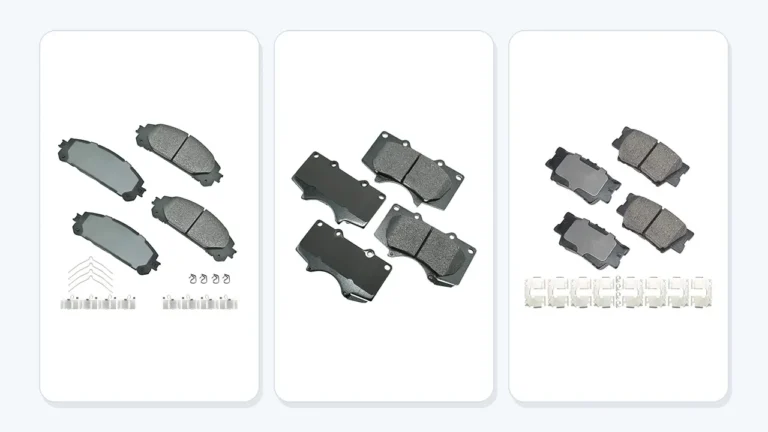
ACDelco Silver Front Pads are semi-metallic front brake pads for selected cars, trucks, SUVs, and many GM applications where a straightforward replacement is the goal.
Semi-metallic material uses metal fibers mixed into the friction compound. That design can provide steady braking and heat handling, while the trade-off may be more noise or dust than a ceramic compound in some driving conditions.
The set uses chamfers, slots, and shims. A chamfer is a shaped edge, a slot is a groove across the pad face, and a shim is a thin layer that helps manage vibration, so these parts work together to reduce squeal, harshness, and unwanted movement.
ACDelco says the pads need no curing or machining and include hardware clips. That can simplify the parts list, but it does not mean every installation is effortless. Rusted brackets, seized slide pins, worn rotors, and damaged caliper boots still need attention.
The semi-metallic and nonferrous materials are described as resistant to rust and corrosion, with an emphasis on lower dust and noise. These qualities may make the set attractive for normal street use, yet the broad vehicle list makes fitment checking especially important.
The limitation is that this is not presented as a truck-and-tow-specific design. A compatible truck used mostly for commuting may suit the ACDelco Silver set, while a truck that frequently pulls a heavy trailer may call for a more load-focused choice.
Pros:
- Semi-metallic and nonferrous materials support regular braking.
- Chamfers, slots, and shims address noise and vibration.
- Hardware clips are included with the front pad set.
- No curing or machining is listed as necessary.
- Broad application coverage for selected vehicles.
Cons:
- Not positioned specifically for heavy towing duty.
- Broad fitment range requires careful vehicle confirmation.
- Semi-metallic material may not suit every noise preference.
Buy it if: you need front pads for a compatible truck used mainly on the street, because the included hardware and noise-control features support a simple replacement job.
Skip it if: your truck regularly handles a heavy trailer or steep grades, because a general replacement focus may not match that workload, and a truck-and-tow pad type would suit you better. If those trade-offs rule it out, PowerStop Z36 Truck & Tow Brake or PowerStop Z36 Truck & Tow Brake may suit you better.
ACDelco Silver Front Pads earn this rank because they cover a useful middle ground for ordinary truck driving. The hardware, chamfers, slots, and shims show attention to the small parts that affect daily brake feel. I would still verify the VIN and axle before ordering, especially with the wide application list.
Choose this set when your truck needs a sensible front replacement rather than a towing-focused upgrade.
For a broader look at friction materials and driving needs, brake pad buying basics can help you sort ordinary street use from heavier demands.
4. PowerStop Z36 Truck & Tow Brake Pads 8JHM
The catalog lists PLEASE CONFIRM YOUR FITMENT: Using the Amazon Confirmed Fit bar at the top of the page or check the Product De. Compare fit and care needs before choosing.
- ColorStainless-Steel
- Size1 Count (Pack of 1)
- Number Of Items1
- UPGRADED STOPPING POWERCarbon-fiber ceramic Truck & Tow Z36 brake pads deliver increased stopping power compared to OE replacement brake p
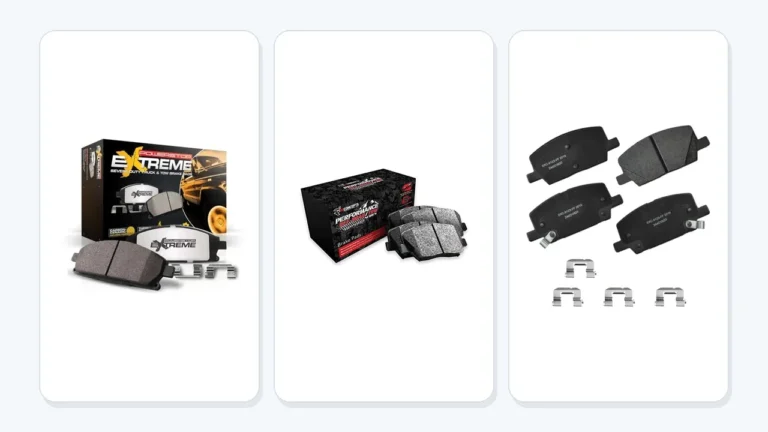
PowerStop Z36 Rear Pads are rear carbon-fiber ceramic brake pads for listed Chevrolet Silverado 1500, Chevrolet Tahoe, and GMC Yukon applications.
The rear axle helps control the truck during braking, even though the front axle usually handles more of the stopping work. Correct rear pads keep the braking balance close to the vehicle’s intended design and prevent the common mistake of treating front and rear shapes as interchangeable.
PowerStop describes the Z36 compound as suited to towing, hauling, mountain driving, lifted trucks, SUVs, and 4×4 vehicles. That makes the rear set a logical companion for a compatible truck that works hard, provided the front and rear parts match the same vehicle configuration.
This set includes two rear carbon-fiber ceramic pads and installation hardware. Hardware helps the pads sit securely in the caliper bracket, but the installer still needs to inspect the bracket, slide pins, rotor, parking-brake parts, and caliper operation.
The listing also mentions quiet operation and reduced brake fade. Heat control is useful during repeated stops, but brake fade cannot be solved by pads alone if the rotors are thin, the calipers drag, the truck is overloaded, or the driver descends a grade without managing speed.
The key watch point is position. This is a rear set, and the listed Chevrolet and GMC applications still need confirmation by year, trim, wheel setup, and brake package.
Pros:
- Rear carbon-fiber ceramic pads for listed GM applications.
- Installation hardware included with the two-pad set.
- Intended for towing, hauling, and 4×4 use.
- Designed to address heat and brake fade.
- Pairs with the same general truck-and-tow family.
Cons:
- Rear position makes ordering the wrong axle easy.
- Listed applications do not cover every GM truck.
- Full braking performance depends on front brakes and rotors.
Buy it if: you need rear pads for a compatible Silverado, Tahoe, or Yukon used for towing or hauling, because the compound and hardware suit the rear axle’s role.
Skip it if: your vehicle needs front pads or uses another rear brake package, because the axle position and shape may not match, and a correct front or rear replacement type would suit you better.
PowerStop Z36 Rear Pads make sense when the rear axle needs attention on a compatible GM truck that already sees serious work. I like the fact that the listing identifies the rear position clearly and includes hardware. Verify the parking-brake arrangement and exact fitment before buying, since rear brake layouts can vary.
This set belongs on the shortlist for compatible GM truck owners replacing the rear pads.
5. Front Semi-Metallic Brakes Pads Set Fit for
The catalog lists Compatibility:Fit for Cadillac Escalade/ESV 07-20, Escalade EXT 07-13, XTS 13-19, Chevy Avalanche 07-13 (Excep. Compare fit and care needs before choosing.
- Number Of Items4
- MaterialTips:This product includes 4 brake pads. Please confirm the material and quantity to meet your needs before pu
- WeightNot listed; check details
- DimensionsNot listed; check details
Front Semi-Metallic GM Pads are a four-pad front set for listed Chevrolet, GMC, Cadillac, and related applications from the stated model years.
The semi-metallic friction material uses metal content to create braking force and help move heat away from the pad surface. For normal driving, that can provide a familiar balance of braking response and cost, though exact noise and dust levels depend on the vehicle and rotor condition.
The set contains four brake pads and hardware. Four pads normally cover both front calipers on a vehicle using the matching pad shape, but you should never assume quantity alone proves fitment. The listing includes many exceptions, including certain base models and engine configurations.
The broad compatibility notes are both helpful and demanding. Silverado 1500, Sierra 1500, Tahoe, Yukon, Escalade, Avalanche, Express, and Savana applications are listed, yet the exceptions mean the vehicle year and trim need close attention.
The seller describes quieter operation, heat dissipation, and a one-year warranty service. Those statements may fit a daily driver’s needs, but this set is not described with the same truck-and-tow focus as the Z36 options.
The biggest limitation is the long fitment list. Beginners can easily see a familiar truck name and stop reading before reaching an exception, which is how a seemingly cheap brake job turns into a return.
Pros:
- Four front semi-metallic pads included in the set.
- Hardware included for the front installation.
- Broad GM and related vehicle coverage listed.
- Designed for quiet operation and heat dissipation.
- One-year warranty service is listed.
Cons:
- Numerous year, trim, and engine exceptions apply.
- Not specifically described as a heavy-towing compound.
- Material and quantity must match the exact brake setup.
Buy it if: you drive a listed GM vehicle mainly on ordinary roads, because the four-pad set and hardware cover a typical front replacement when fitment is confirmed.
Skip it if: you tow heavy loads often or dislike reading long application notes, because the fitment exceptions and general-use focus may not suit you, and a clearly matched truck-duty set would be better.
This set earns its place for buyers who need four front pads for a compatible GM-family vehicle and want a basic semi-metallic replacement. The application list is broad, while the exceptions are the part that deserves your full attention. Check the year, trim, engine note, and front axle before ordering.
Pick these pads for confirmed everyday use, not as an automatic towing upgrade.
6. Bendix Premium SBC1363 Ceramic Front Brake Pads
The catalog lists OE REPLACEMENT: Designed and engineered to OE specifications for fit, form, and function. OEM Equivalent Part . Compare fit and care needs before choosing.
- ColorMetallic
- Size1 Count (Pack of 1)
- Release Date2017-08-07T00:00:01Z
- Number Of Items1
Bendix Premium SBC1363 is a ceramic front brake-pad set for selected Cadillac, Chevrolet, and GMC vehicles, including several Silverado, Sierra, Tahoe, Yukon, and Escalade applications.
Ceramic friction material is designed to create braking force with an emphasis on low noise and lower visible dust than many traditional metallic compounds. That can appeal to a truck owner who spends most of the time commuting and wants cleaner wheels, though the vehicle’s approved application still comes first.
Bendix describes the set as an OE replacement. OE means original-equipment style fit, form, and function, so the goal is to match the vehicle’s intended design rather than turn a daily truck into a racing machine.
The listing also describes resistance to wear and corrosion, plus reduced brake fade. Those are useful aims for street driving, but they should not be read as a substitute for properly maintained rotors, working calipers, good tires, or safe load limits.
The application range includes many GM-family vehicles from different years. That range can be convenient, yet the exact part number, axle, and brake package still need confirmation. The listed OEM-equivalent part number may help a mechanic compare the part, but it does not replace vehicle-specific fitment checking.
This set is less clearly aimed at repeated towing than the Z36 choices. A truck owner who pulls a trailer often should examine the complete brake setup and driving demands before choosing a daily-use ceramic replacement.
Pros:
- Ceramic material for selected GM-family front applications.
- Designed to OE specifications for fit and function.
- Application list includes trucks and SUVs.
- Described as resistant to wear and corrosion.
- Aims to reduce fade during consistent braking.
Cons:
- Exact application varies across many model years.
- Not specifically marketed as a truck-and-tow pad.
- Front set does not cover rear brake service.
Buy it if: you own a compatible GM truck used mainly for daily driving, because the ceramic compound and OE-style design fit ordinary street priorities.
Skip it if: your main concern is repeated heavy towing, because the listing focuses more on OE-style daily replacement, and a towing-oriented brake-pad type would suit you better.
I’d choose Bendix Premium SBC1363 for a confirmed GM application where quiet street manners matter more than a specialized towing focus. The ceramic material and OE-style description make the intended role easy to understand. Check the complete application list and axle position before buying, especially if the truck has unusual brakes.
This set is a sensible daily-driver option for the matching vehicle.
7. Ceramic Front Brake Pads for Ford F-150
The catalog lists Product Fitment: for Ford F-150 2004 New Body Style 6 or 7 Lug Rear Disc Brake, for F-150 2005-2008; for Linco. Compare fit and care needs before choosing.
- SizeD1083
- Number Of Items1
- Quiet & Smooth Stopping PowerEngineered with advanced ceramic formulas to minimize noise and vibration. These brake pads deliver responsive, smo
- WeightNot listed; check details
Ford F-150 D1083 Pads are ceramic front brake pads for listed Ford F-150 and Lincoln Mark LT applications from the stated model years.
The ceramic compound is intended to reduce noise, vibration, and visible dust during daily driving. Cleaner wheels and quieter stops can matter to a family truck that spends most of its time on paved roads rather than pulling a trailer through mountain grades.
The listing identifies the pad size as D1083. A pad code is useful because it gives you a specific shape to compare, but the code alone is not enough when Ford trucks have different rear axles, body styles, lug patterns, and brake packages.
The fitment notes identify the 2004 new body style F-150 with six- or seven-lug rear disc brake details, F-150 models from 2005 through 2008, and Lincoln Mark LT models from 2006 through 2008. Those details make this a narrow application, not a general Ford truck set.
The listing says the pads are made to meet or exceed OEM specifications and describes impact, wear, and fatigue testing. Those are manufacturer claims, not a guarantee that every truck will stop the same way after installation. Rotor condition, caliper service, tire traction, and proper bedding still matter.
The main limitation is the narrow vehicle range. A buyer with a newer F-150 or a different brake layout should not treat the D1083 code as a universal match.
Pros:
- Ceramic material aimed at quieter daily braking.
- Low-dust design helps keep wheels cleaner.
- Specific D1083 size is listed for comparison.
- Ford and Lincoln applications are clearly stated.
- Front pad position is identified.
Cons:
- Narrow fitment range for older Ford applications.
- Not described as a heavy-towing brake compound.
- Lug and rear-disc details require close checking.
Buy it if: you own a listed 2004-2008 F-150 or 2006-2008 Lincoln Mark LT, because the D1083 ceramic set targets those specific daily-driving applications.
Skip it if: your Ford has a different year, body style, or brake layout, because the narrow fitment makes a mismatch likely, and a vehicle-specific Ford pad type would suit you better.
Ford F-150 D1083 Pads rank seventh because the fitment is much narrower than the other choices. That narrow range can be a strength when your truck matches exactly, since the material and size are clearly identified. Verify body style, lug setup, year, axle, and pad code before ordering.
Choose this set only when those details line up.
How to Choose the Best Brake Pads for Trucks
The best brake pads for trucks match the vehicle, axle, load, heat, and driving surface before material preference enters the discussion. Start with the truck’s year, make, model, trim, engine, axle, wheel package, and current brake configuration.
Confirm the exact fitment
Fitment means the pad’s shape, thickness, backing plate, and hardware match the caliper and bracket. Use the vehicle confirmation tool, compare the part number, and read every qualifier note instead of stopping at the first familiar truck name.
A useful check includes:
- Vehicle year and body style.
- Make, model, trim, and engine.
- Front or rear axle.
- Two-wheel drive or four-wheel drive.
- Lug count and brake package when listed.
- Rotor and caliper details if the truck has been modified.
A truck with a lift, larger wheels, replacement axles, or an aftermarket brake kit may need more careful checking than a stock truck.
Choose the right axle
Front pads and rear pads do different jobs and usually have different shapes. Most vehicles use separate front and rear part numbers, so a front listing cannot replace a rear set simply because both are called truck brake pads.
Read the title, product description, and package quantity together. A two-pad count may represent one axle-side pair or a set intended for a complete axle, while a four-pad set commonly covers both sides of one axle. Confirm the package details before opening the box.
Match the friction material to your use
Ceramic pads are often chosen for quieter operation and lower visible dust during street driving. Semi-metallic pads use metal content and can offer a useful balance for ordinary braking, though noise, dust, and rotor wear vary by design.
Truck-and-tow compounds are aimed at the extra heat and load created by towing, hauling, steep grades, lifted trucks, and repeated stops. They do not remove the need to stay within the vehicle’s towing rating or maintain the rotors and calipers.
For a heavy-duty truck used for commercial loads or frequent trailers, heavy-duty truck pad guidance can help you think through load, heat, and axle demands before ordering.
Think about heat, not only stopping distance
Brake heat comes from turning the truck’s motion into heat at the rotor and pad. A loaded truck or trailer creates more heat, especially during repeated downhill braking, stop-and-go traffic, or mountain driving.
Look for a friction material and brake setup that match the work. Also inspect rotor thickness, surface condition, caliper slide pins, brake fluid, tires, and cooling airflow, because a new pad cannot repair a dragging caliper or a damaged rotor.
Check hardware and rotor condition
Brake hardware includes clips, shims, springs, and related pieces that help control pad movement and noise. New hardware can make sense when the old clips are rusty, bent, weak, or missing.
Rotors should be inspected for deep grooves, cracks, hot spots, severe corrosion, and thickness below the maker’s limit. A new pad against a poor rotor may wear unevenly or make noise, even when the pad itself is correct.
Consider dust and noise honestly
Low-dust ceramic pads may keep wheels cleaner, while semi-metallic pads can offer a different balance of heat response and feel. No material is silent and dust-free in every truck, because rotor condition, installation, weather, wheel design, and driving style all affect the result.
A quiet daily driver and a heavily loaded work truck may need different priorities. Choose the compound for your actual use instead of picking a material only because the word sounds more advanced.
Read warranty and package details
Warranty terms can differ by listing and may require correct installation, fitment, or proof of purchase. Read the conditions before buying, especially if the set is intended for a work truck that sees high mileage.
Also check whether the package includes only pads or pads plus hardware. Do not assume a complete brake service kit includes rotors, grease, wear sensors, or caliper parts unless the listing says so.
How to Use Brake Pads for Trucks for the Best Results
Good brake-pad performance starts with correct installation and gentle bedding, followed by regular inspection. Do not rush directly from the driveway into heavy towing or emergency-style stops after installation.
- Confirm the pads match the front or rear axle before removing the old parts.
- Inspect the rotor, caliper, bracket, slide pins, boots, and brake hose.
- Clean rust from the pad contact points without damaging the bracket.
- Install clips, shims, and pads in the correct positions.
- Make sure the pads move freely in the bracket without excessive looseness.
- Pump the brake pedal before moving the truck so the pads contact the rotor.
- Drive slowly in a safe area and check for pulling, grinding, or unusual pedal feel.
- Follow the pad maker’s bedding directions, using moderate stops rather than repeated hard braking.
- Allow the brakes to cool after bedding before towing or carrying a full load.
Bedding transfers a controlled layer of friction material to the rotor. Skipping that process can lead to uneven braking feel, noise, or confusion about whether a new set is working correctly.
If you tow regularly, plan braking room before you need it. Keep a larger following distance, reduce speed before a downhill section, and avoid riding the pedal continuously because constant light pressure can build heat.
For trailer-heavy use, towing brake pad advice is useful because trailer weight changes how quickly the whole combination creates heat.
How to Make Your Truck Brake Pads Last Longer
Brake pads last longer when the truck is not overloaded, the calipers release fully, and the driver avoids turning every downhill section into a long pedal-hold. Maintenance matters as much as the friction material.
Inspect the pads at every tire rotation or oil-service interval, especially if the truck tows, hauls, drives on salted roads, or travels in steep terrain. Measure remaining friction material with the wheel removed or have a qualified technician inspect it when access is limited.
Keep the caliper slide pins clean and properly lubricated with brake-safe lubricant. A seized slide pin can keep one pad pressed against the rotor, causing heat, uneven wear, pulling, and premature replacement.
Watch for changes in pedal feel, steering shake, grinding, squealing that does not go away, a burning smell, or the truck pulling to one side. These signs can point to rotor, caliper, tire, suspension, or hydraulic problems rather than ordinary pad wear.
Wash road salt and mud from the wheels and brake area when practical. Do not spray a cold rotor with a high-pressure stream immediately after severe braking, since sudden cooling can stress hot components.
Use engine braking or a lower gear on long descents when appropriate for the truck and road. That reduces the amount of speed control demanded from the friction brakes, though it does not replace normal brake use when traffic requires it.
A lifted truck with large tires may place different demands on the braking system. Read lifted truck brake guidance before assuming a stock replacement pad is the only part worth considering.
Common Mistakes to Avoid When Buying and Using Truck Brake Pads
Most brake-pad problems begin with a mismatch, rushed installation, or an assumption that new pads can cover for worn hardware. These mistakes are avoidable with a few extra checks.
Mistake: Buying by truck name only
A Silverado, Ram, F-150, or Sierra can use different brakes across years and trims. Fix the mistake by confirming the full vehicle details, axle, engine note, wheel package, and qualifier notes.
Mistake: Ordering front pads for the rear axle
Front and rear shapes are commonly different, and the package may clearly identify only one position. Fix the mistake by matching the listing’s axle position to the work order before checkout.
Mistake: Ignoring trim and engine exceptions
Broad fitment lists often contain exclusions for base models, hybrid versions, engine sizes, or body styles. Fix the mistake by reading every exception instead of relying on the first matching year.
Mistake: Reusing badly worn hardware
Rusty or bent clips can hold a pad crooked or prevent smooth movement. Fix the mistake by replacing damaged hardware and cleaning the bracket contact points during installation.
Mistake: Installing pads on damaged rotors
Deep grooves, cracks, hot spots, or excessive corrosion can prevent even pad contact. Fix the mistake by measuring and inspecting the rotors before deciding that pads alone are enough.
Mistake: Skipping the bedding process
New pads need controlled early stops to establish a stable contact layer. Fix the mistake by following the maker’s bedding instructions and avoiding heavy towing until the brakes have cooled.
Mistake: Expecting pads to solve an overloaded truck
A friction upgrade cannot make an unsafe load safe or replace the truck’s rated towing capacity. Fix the mistake by staying within the truck and trailer ratings and maintaining tires, suspension, trailer brakes, and brake fluid.
Mistake: Using off-road assumptions on street pads
Mud, dust, water, and steep grades can change how brakes behave away from pavement. If trails are part of your routine, off-road brake pad considerations can help you think about contamination, heat, and cleaning before choosing parts.
How to Set Up Truck Brake Pads
Brake-pad setup is not difficult for an experienced technician, but the safety stakes are high. If you lack a secure lifting surface, correct tools, or confidence with brake work, use a qualified mechanic.
- Park on a firm, level surface and secure the truck with wheel chocks.
- Loosen the wheel fasteners slightly before lifting, because a loose wheel is easier to remove safely.
- Support the truck with correctly rated stands, not only the jack.
- Confirm the new pad shape, axle position, and hardware against the removed parts.
- Remove the caliper without hanging it by the brake hose.
- Clean the bracket and inspect slide pins, boots, rotor faces, and piston movement.
- Install the new clips and pads, keeping friction surfaces free of grease.
- Refit the caliper and wheel, then tighten fasteners to the vehicle’s required torque.
- Pump the pedal until firm before shifting into gear.
- Test at low speed, listen for abnormal noise, and complete the bedding process.
The common stumbling point is confusing pad lubricant with friction material. Lubricant belongs only on approved metal contact points, never on the pad face, rotor, tire, or rubber parts.
Common Questions About Truck Brake Pads
Are ceramic brake pads good for trucks?
Ceramic brake pads can be good for trucks used mainly on the street, especially when lower visible dust and quiet operation matter. Heavy towing, hauling, steep grades, and lifted-truck use may call for a compound specifically described for those conditions. Fitment and the complete brake system still matter more than the material label alone.
Are semi-metallic pads better for towing?
Semi-metallic pads can work well in some towing applications, but the word semi-metallic does not guarantee a particular heat rating or load capability. Check the maker’s intended use, then inspect rotors, calipers, tires, trailer brakes, and vehicle load limits. A towing pad should be matched to the truck and axle, not chosen by material alone.
How often should truck brake pads be replaced?
Truck brake pads should be replaced when friction material reaches the vehicle maker’s service limit or when damage, uneven wear, or contamination appears. Mileage varies widely with load, traffic, terrain, trailer use, driving habits, and pad material. Inspect them at routine service instead of waiting for grinding or a warning sound.
Do new truck brake pads need new rotors?
New rotors are not automatically required with every pad change, but the existing rotors must be within specification and free from serious grooves, cracks, hot spots, and uneven wear. A technician should measure them and check the surface. New pads cannot create even contact on a rotor that is badly damaged or too thin.
Can I replace only the front brake pads?
You can replace only the front pads when the rear pads remain serviceable and the front axle is the part that needs attention. The front and rear axles use separate wear checks, so inspect both rather than replacing parts by guesswork. Always replace pads as a complete axle set, not one side at a time.
Are truck brake pads difficult to install?
Truck brake-pad installation is manageable for a properly equipped person who understands safe lifting, caliper support, hardware placement, and brake inspection. The job becomes risky when the truck is supported poorly, the brake hose is strained, or the pedal is not checked before driving. Use a qualified technician if any step is uncertain.
Make the Brake Job Match the Truck
Start by writing down the truck’s year, make, model, trim, axle position, engine note, and whether it has been lifted or modified. Then confirm the pad shape and package contents before ordering, inspect the rotors and hardware during installation, and bed the brakes before returning to towing or heavy loads.