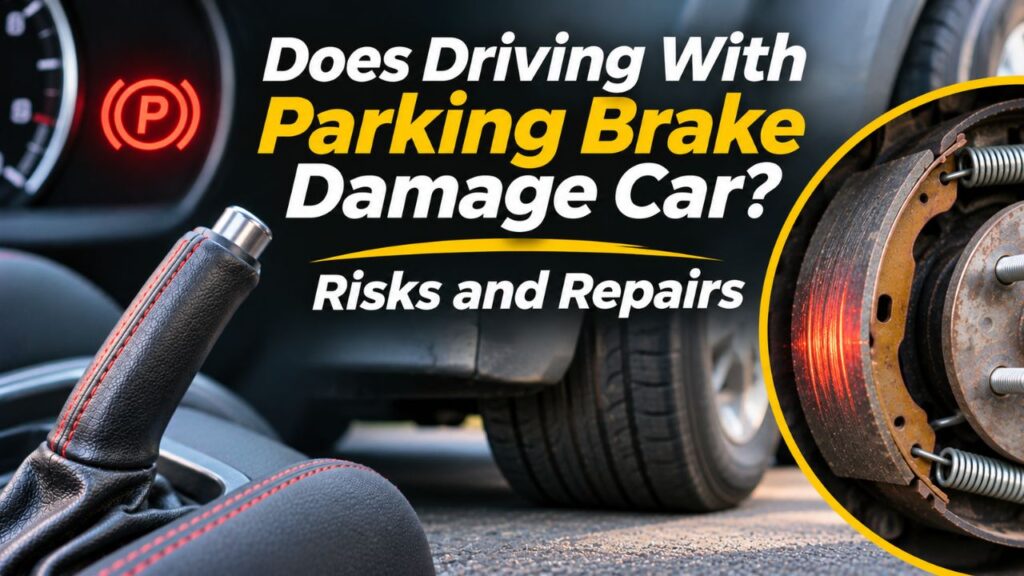
Does Driving With Parking Brake Damage Car? Risks and Repairs
Yes, driving with the parking brake engaged can damage your car, particularly the rear brake pads, shoes, rotors, drums, and related components. The damage occurs because the parking brake creates continuous friction while the wheels rotate. However, driving a very short distance with the brake lightly engaged does not automatically cause permanent damage.
The severity depends on how tightly the parking brake was applied, how fast you drove, how far you traveled, and the type of braking system installed in your vehicle.
Some drivers accidentally leave the parking brake partially engaged and notice nothing more than sluggish acceleration or a dashboard warning. Others experience burning smells, overheated brakes, unusual noises, or reduced stopping performance.
The important question is whether the mistake caused temporary friction or enough heat to damage the braking components.
This guide explains what happens when you drive with the parking brake on, which parts can be damaged, how to recognize overheating, and what to do after realizing your mistake. It also covers short-distance driving, electronic parking brakes, repair decisions, and practical ways to prevent unnecessary brake damage.
Does Driving With Parking Brake Damage Car? How It Happens
Driving with the parking brake applied creates resistance against wheel rotation. The engine may still have enough power to move the vehicle, but the braking components continue generating friction as the wheels turn.
Under normal operation, brakes apply friction when the driver wants to slow down. Once released, the friction components separate enough to let the wheels rotate freely.
When a parking brake remains engaged, that friction continues instead of stopping.
The result is additional heat and accelerated wear.
According to NAPA Auto Parts’ guide to driving with the parking brake on, short-distance driving may produce only minor additional wear, while traveling farther with the brake engaged can cause substantial damage to the rear braking components.
The main concern is overheating, not simply the fact that the parking brake was accidentally left on.
A brief mistake may have no lasting consequences. Continued driving with substantial braking force applied is much more concerning.
What Happens When You Drive With the Parking Brake On?
The effects usually begin with increased resistance and can progress to overheating and reduced braking performance.
Continuous Friction Generates Excessive Heat
Most passenger-car parking brakes act on the rear wheels.
Depending on the design, the mechanism presses brake shoes against a drum or brake pads against a rotor.
When the vehicle moves with those components engaged, the friction surfaces continuously rub together.
This generates heat that normally would not be present during steady driving.
The longer the friction continues, the greater the opportunity for temperatures to rise.
A lightly engaged parking brake may produce gradual heating, while a strongly applied brake can create substantial resistance almost immediately.
Brake Friction Materials Wear Faster
Brake pads and shoes contain friction materials designed to withstand repeated braking.
However, they are not intended to remain continuously applied throughout an extended drive.
Constant friction can accelerate material loss and change the condition of the braking surfaces.
Overheating may cause glazing, where friction material develops a hardened, smooth surface that can reduce effective braking friction.
In severe cases, the lining may crack, deteriorate, or separate from its backing.
This is why apparently normal braking after a short mistake does not always rule out damage from serious overheating.
Braking Performance May Decrease
When friction components become excessively hot, their ability to generate predictable braking force can decrease.
This condition is commonly called brake fade.
Brake fade may cause reduced stopping effectiveness, requiring greater pedal effort or producing longer stopping distances.
On systems where the parking brake shares components with the hydraulic service brakes, severe heat can also affect calipers, wheel cylinders, and nearby brake fluid.
If brake fluid becomes hot enough to vaporize, the brake pedal may feel unusually soft because vapor compresses more readily than liquid.
A vehicle showing these symptoms should not be driven until the brake system has been inspected.
What Parts of Your Car Can Be Damaged?
The affected components depend on the parking brake design and the amount of heat generated.
Rear Brake Pads and Shoes
Brake pads and shoes are usually the first components exposed to abnormal friction.
Some vehicles use the regular rear brake pads for parking. Others have dedicated parking brake shoes inside a small drum mechanism.
Driving with the brake engaged can wear these friction materials prematurely.
A technician may discover glazing, cracking, uneven wear, or heat-related deterioration.
If the friction material has been seriously damaged, replacement is generally necessary.
Brake Rotors and Drums
Excessive heat can also affect metal braking surfaces.
Brake rotors and drums are designed to tolerate high temperatures during ordinary stopping, but sustained friction can exceed their normal operating conditions.
Potential problems include:
- Heat-related surface discoloration
- Uneven friction deposits
- Scoring or abnormal wear
- Surface cracking in severe cases
- Brake vibration caused by uneven friction or dimensional changes
A rotor or drum should not automatically be replaced because it became warm. Its condition must be evaluated against the manufacturer’s inspection and service limits.
Brake Calipers and Wheel Cylinders
On vehicles where the parking brake operates through the regular rear calipers, excessive heat may affect caliper seals and dust boots.
Rubber components can deteriorate after extreme thermal exposure.
Rear drum brake systems may also transfer heat toward wheel cylinders and surrounding hardware.
Damaged seals can eventually contribute to leakage or sticking components.
These problems are more likely after substantial overheating than after a brief, lightly engaged parking brake.
Parking Brake Cables and Mechanisms
A cable-operated parking brake may experience additional stress when the vehicle is driven with the brake applied.
The cable itself is not normally the primary source of friction heat, but overheated brake hardware can affect surrounding components.
Parking brake adjustments or mechanical operation may also be affected by excessive wear.
After the incident, the system should still apply securely and release fully.
Brake Fluid and Nearby Components
Severe brake overheating can transfer heat into adjacent hydraulic components.
Depending on the braking system, this may affect brake fluid, rubber seals, protective boots, and other nearby parts.
Overheating can also place additional stress on wheel-end components in extreme situations.
However, this does not mean every short drive with the parking brake engaged causes widespread damage.
The amount of heat and the specific brake design determine the actual risk.
How Far Can You Drive With the Parking Brake On Before Damage Occurs?
There is no universal distance that guarantees your brakes will remain undamaged.
The outcome depends on several factors.
Distance and Driving Speed
Driving a few feet with a lightly engaged parking brake is very different from traveling several miles at road speed.
As distance and speed increase, the friction surfaces experience more sustained work and heat.
However, driving speed alone cannot predict damage.
A heavily applied brake can generate substantial heat even during a relatively short drive.
How Tightly the Parking Brake Was Engaged
A handbrake raised only slightly may create less braking force than one pulled firmly into its fully engaged position.
Less applied force often means less friction and heating, although the amount varies.
The Royal Automobile Club of Western Australia’s explanation of driving with the handbrake on notes that damage depends on both the distance traveled and how tightly the parking brake was applied.
The organization also explains that lightly engaged brakes over short distances often result in minimal damage, while burning smells can indicate a problem requiring inspection.
Vehicle Weight and Operating Conditions
Vehicle weight and road conditions also affect the amount of work required to keep the car moving against the brake.
A heavily loaded vehicle may place greater demands on the drivetrain and braking components.
Driving uphill, accelerating repeatedly, or continuing at higher speeds can increase the severity of the situation.
| Driving Situation | Possible Damage |
| Very short, slow movement with brake lightly engaged | Often minimal wear |
| Short drive with brake partially applied | Additional wear and possible heating |
| Longer drive with noticeable resistance | Increased risk of overheating and friction damage |
| Extended drive with strong brake engagement | Potentially serious brake component damage |
| Any drive followed by smoke or reduced braking | Immediate inspection required |
These are general risk levels, not guaranteed safe distances.
Signs You Damaged Your Car by Driving With the Parking Brake On
The most useful clues are changes in vehicle behavior, brake temperature, noises, and stopping performance.
Burning Smell From the Rear Wheels
A sharp burning odor can indicate overheated friction materials.
The smell may become noticeable after stopping or while driving slowly.
Do not assume a burning smell is harmless because the parking brake has been released.
If the odor is strong or accompanied by smoke, stop safely and have the vehicle inspected.
Sluggish Acceleration
A partially engaged parking brake creates resistance against the drivetrain.
The vehicle may feel heavier, slower, or less responsive when accelerating.
You might need more throttle than usual to maintain speed.
However, sluggish acceleration alone does not confirm brake damage.
If acceleration returns to normal after the parking brake is fully released, the immediate resistance may be gone, but severe overheating still warrants inspection.
Unusual Brake Noise
Overheated or damaged friction components may produce squealing, scraping, grinding, or other unusual sounds.
These noises can also result from unrelated brake wear.
If the sound begins after driving with the parking brake engaged, it deserves attention.
Grinding or persistent scraping is particularly concerning because damaged or excessively worn friction material may be involved.
Brake Pedal Feels Different
An unusually soft, inconsistent, or longer-travel brake pedal can indicate a serious braking-system problem.
If overheating affected brake fluid or hydraulic components, stopping performance may be compromised.
Do not continue driving to determine whether the pedal will return to normal.
Vehicle Pulls or Vibrates During Braking
Uneven brake damage can contribute to pulling, vibration, or inconsistent stopping.
These symptoms can also originate from other brake, tire, or suspension issues.
A technician should inspect the relevant components before deciding which parts require replacement.
What to Do After Accidentally Driving With the Parking Brake On
The immediate priority is preventing additional heat and determining whether the brakes remain safe.
Step 01: Stop the Vehicle Safely
If you realize the parking brake is engaged while driving, reduce speed carefully and move to a safe stopping location.
Avoid unnecessary acceleration or abrupt maneuvers.
Keep sufficient distance from other traffic because braking performance may already be affected.
Bring the vehicle to a complete stop before inspecting the situation.
Step 02: Release the Parking Brake Completely
With your foot on the regular brake pedal, release the parking brake using the correct control.
For a conventional handbrake, press the release button and lower the lever fully.
For a foot-operated brake, use its designated release procedure.
For an electronic system, follow the manufacturer’s instructions.
Check the dashboard indicator to confirm release.
If the parking brake refuses to disengage, do not force the vehicle to move.
Step 03: Look for Signs of Overheating
After stopping, check for obvious smoke, unusual odors, or other signs of brake overheating.
Do not touch the brake rotors, drums, calipers, or wheels to judge their temperature.
These components can become hot enough to cause serious burns.
Do not pour water onto overheated brakes.
If there is visible smoke, strong burning odor, or suspected fire, keep a safe distance and arrange the appropriate emergency or roadside assistance.
Step 04: Allow the Brakes to Cool
If the brakes have become unusually hot, allow them to cool naturally while the vehicle remains safely secured.
Do not resume driving simply because the burning smell begins to disappear.
Heat-related damage can remain after the components cool.
If the vehicle experienced severe drag, smoke, or abnormal braking, arrange professional inspection or towing.
Step 05: Check Whether Brake Operation Is Normal
If the incident involved only a very short, slow movement with no indications of overheating, inspect the warning indicators and confirm the parking brake releases correctly.
Brake pedal response should remain normal, and there should be no unusual noises or resistance.
Do not conduct a high-speed test to determine whether the brakes were damaged.
If any warning sign remains, have the system professionally inspected before returning to normal driving.
Can Driving With the Parking Brake On Damage the Engine or Transmission?
The rear brakes are generally at greater risk than the engine or transmission.
When the parking brake remains engaged, the engine must overcome additional resistance to move the vehicle.
This can increase fuel consumption and place extra load on the drivetrain.
However, briefly driving with the parking brake engaged does not automatically damage the engine or transmission.
Extended operation against significant braking resistance may place unnecessary stress on drivetrain components, depending on the vehicle and operating conditions.
Still, the most direct and common damage involves the brakes themselves.
If the car develops transmission slipping, abnormal drivetrain noises, overheating warnings, or continuing acceleration problems, have those symptoms evaluated separately.
Do not assume the drivetrain has failed solely because the parking brake was accidentally left on.
Does Driving With an Electronic Parking Brake Damage the Car?
Electronic parking brakes can reduce the likelihood of this mistake on some vehicles.
Many systems automatically disengage when the driver prepares to move, provided certain conditions are met.
However, automatic release is not universal.
Some vehicles require the driver to operate the parking brake switch manually.
Others may refuse to release because of a battery, actuator, or control-system fault.
If an electronic parking brake remains engaged while the vehicle moves, overheating and mechanical damage are possible.
Also, operating an electronic parking brake switch while driving may trigger a manufacturer-designed emergency braking function. That is different from accidentally driving with the parking brake continuously engaged.
Never test this behavior intentionally.
When Should You Have the Brakes Inspected?
An inspection is especially important when the vehicle was driven a substantial distance with the parking brake applied or when unusual symptoms appeared afterward.
According to Ford’s official 2025 Transit parking brake warning guidance, driving extended distances with the parking brake engaged can damage the brake system. The manual also advises checking the system when a brake warning remains active after the parking brake is released.
During an inspection, a technician may check:
- Brake pad or shoe thickness and condition
- Heat damage or glazing
- Rotor or drum surface condition
- Rear caliper and wheel cylinder operation
- Parking brake cables or electronic actuators
- Brake fluid and hydraulic component condition
- Proper parking brake engagement and release
Not every overheated brake requires complete replacement. Repairs should depend on the actual damage and the manufacturer’s service limits.
If the brakes are severely overheated or pedal response is abnormal, towing is preferable to driving to the repair facility.
How to Avoid Driving With the Parking Brake Engaged
A consistent departure routine helps prevent this problem.
Before moving, keep your foot on the regular brake pedal and release the parking brake completely.
Check the instrument cluster for the parking brake indicator.
If the vehicle has a mechanical handbrake, make sure the lever is fully lowered.
For electronic systems, confirm that the parking brake has released rather than assuming the automatic function activated.
Pay attention to unusual resistance when the vehicle begins moving.
If the car feels sluggish or a parking brake warning sounds, stop and identify the cause.
Never ignore a red brake warning that remains illuminated after parking brake release, because it may indicate a separate braking-system problem.
FAQs About Does Driving With Parking Brake Damage Car
Will Driving One Mile With the Parking Brake On Damage My Car?
It can, but permanent damage is not guaranteed. The outcome depends on speed, brake engagement, vehicle weight, and heat buildup. Have the brakes inspected if you noticed burning smells, unusual resistance, or abnormal braking.
Can Driving With the Parking Brake On Cause a Fire?
In extreme cases, severely overheated braking components may create a fire risk, particularly when nearby combustible materials are exposed to excessive heat. Smoke or strong burning odors require immediate attention.
Does Driving With the Parking Brake On Ruin Brake Pads?
It can accelerate wear and cause glazing or heat damage. Whether replacement is necessary depends on the condition of the friction material after inspection.
Can You Drive After Accidentally Leaving the Parking Brake On?
If the mistake was brief, the parking brake fully releases, and there are no indications of damage, continued operation may be possible. However, any smoke, strong odor, abnormal pedal feel, or persistent brake drag requires professional inspection before driving.
Will the Parking Brake Damage the Transmission?
A short incident does not usually cause direct transmission damage. The main risk is brake overheating, although significant sustained resistance can place additional load on the drivetrain.
Does the Parking Brake Turn Off Automatically While Driving?
Some electronic parking brake systems offer automatic drive-away release, but others require manual operation. Mechanical parking brakes generally remain engaged until released by the driver.
Protect Your Brakes After Accidentally Driving With the Parking Brake On
For anyone asking does driving with parking brake damage car, the answer is yes, but permanent damage depends on the circumstances. A short, slow drive with the parking brake lightly engaged may cause little additional wear, while longer or faster driving can overheat friction materials and damage brake components.
The most important warning signs are burning smells, smoke, unusual noises, sluggish acceleration, and changes in braking performance. Releasing the parking brake stops the unwanted friction, but it does not reverse damage that has already occurred.
If the incident was brief and the vehicle shows no abnormal symptoms, major repairs may not be necessary. However, when there is any sign of overheating or reduced braking performance, have the system inspected before driving again. Protecting the brakes and confirming their safe operation matters more than assuming everything is fine because the car still moves.