What Happens If You Drive With Your Parking Brake On? Damage
Driving with your parking brake on makes the rear brakes drag, creating friction and heat that can wear out brake shoes or pads, damage rotors or drums, and reduce braking performance. How serious the damage becomes depends on how firmly the brake was applied, how far and fast you drove, and the type of parking brake fitted to your vehicle.
If you moved only a short distance and noticed immediately, there may be little more than extra wear. A longer drive can overheat the rear brakes, causing a burning smell, smoke, or weak braking. The absence of these symptoms does not guarantee that every component is undamaged.
Many drivers first notice sluggish acceleration or a red parking-brake warning light. Others discover the mistake only after stopping and smelling hot brakes. Either way, the right response is to stop safely rather than trying to make up for the resistance by pressing harder on the accelerator.
This guide explains what happens inside the braking system, how the symptoms vary, what to do immediately, when inspection is needed, and why electronic parking brakes may behave differently.
What Happens If You Drive With Your Parking Brake On?
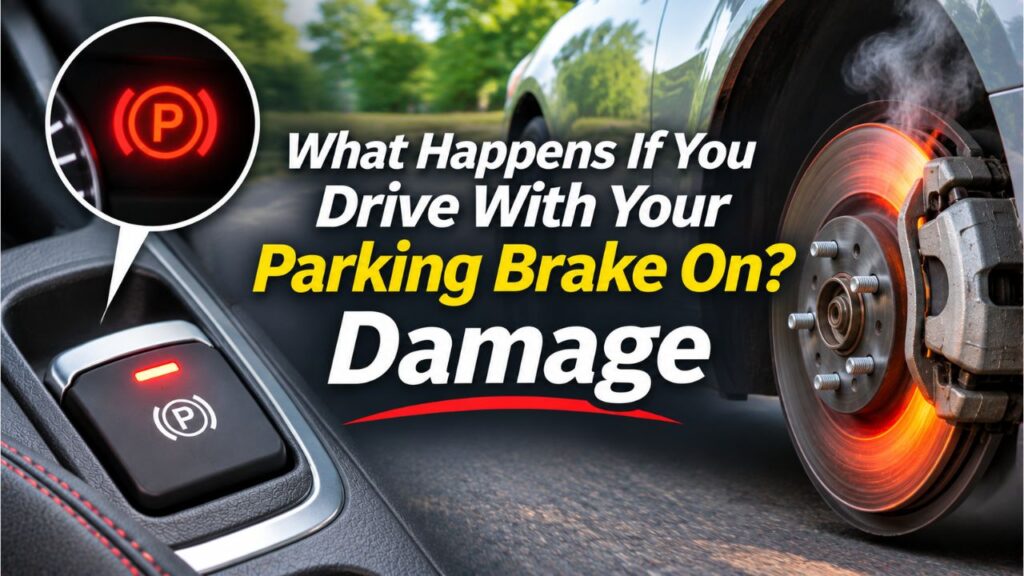
A parking brake is designed primarily to hold a stationary vehicle. In most passenger cars, it applies friction at the rear wheels through cables or electric actuators. When the vehicle moves before that friction is released, the wheels must turn against the brake shoes or pads.
The Rear Brakes Generate Excessive Heat
Friction turns the vehicle’s motion into heat. Normal service brakes are designed to dissipate heat between braking events, but an engaged parking brake can maintain contact throughout the drive. This constant rubbing can drive temperatures higher than the parts would otherwise reach.
The NAPA Know How guide to driving with the parking brake applied explains that short accidental movement may create only minor wear, while driving farther can damage rear brake components through sustained friction and heat. There is no universal safe distance: a firmly applied brake can become hot much faster than a lightly dragging one.
Pads, Shoes, Rotors, and Drums Can Wear or Overheat
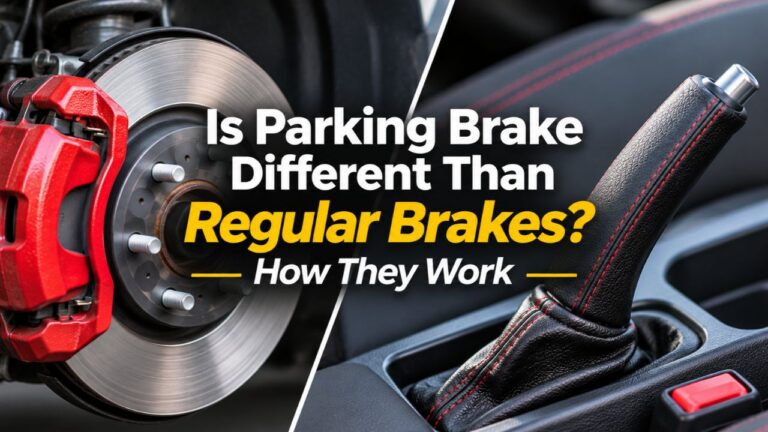
The affected parts depend on the design. A drum parking brake uses shoes against the inside of a drum. A rear disc brake may have a small separate parking-brake drum inside the rotor, or a caliper mechanism that clamps the regular rear pads.
Heat can glaze friction material, reduce its grip, accelerate lining wear, and discolor metal braking surfaces. More severe overheating can produce hot spots or distortion that leads to vibration and uneven contact. Damage is not inevitable after every short mistake, and appearance alone cannot establish whether parts still work correctly.
The Vehicle Works Harder and May Become Less Stable
You may feel slow acceleration, hesitation, or a dragging sensation because the engine or electric drive system must overcome the applied brake. Fuel or energy use may increase while the resistance continues. A strongly applied brake can prevent movement altogether.
If one rear wheel drags more than the other, handling may feel uneven. During a turn or on a slippery surface, unwanted rear braking can affect stability. Do not accelerate harder to overcome the resistance; doing so adds heat and can make the situation worse.
Signs You Have Been Driving With the Parking Brake Engaged
Not every vehicle gives the same warning. Some have a noticeable drag, while others can move with a partially applied parking brake and little obvious resistance.
Burning Smell or Smoke Near the Rear Wheels
A hot, sharp smell can come from overheated brake lining or surrounding components. Firestone Complete Auto Care’s guide to burning brake smells identifies driving without releasing the parking brake as a possible cause of excessive heat and odor.
Smoke, visible discoloration, or a smell that persists after stopping requires prompt attention. Never touch a wheel, rotor, drum, or caliper to see whether it is hot. These parts can burn skin even after the vehicle has stopped.
Warning Light, Chime, or Heavy Acceleration
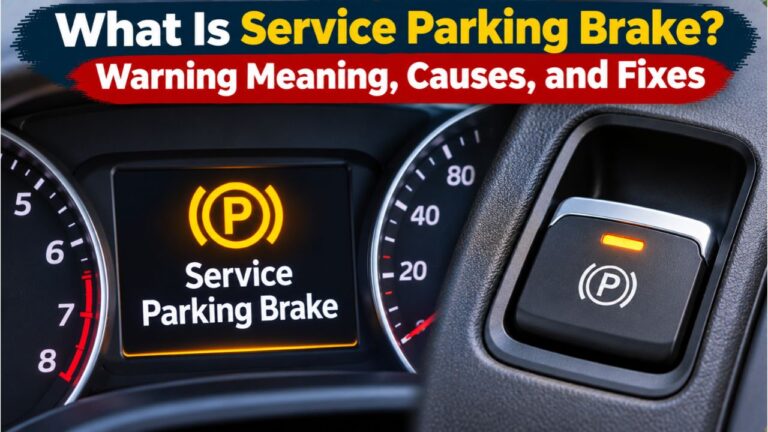
The dashboard may show a red BRAKE symbol, a parking-brake indicator, or a message that the brake remains applied. Some vehicles also sound a chime once they begin moving. A brake warning light can indicate other hydraulic or electronic faults, so it must not be ignored if it remains on after release.
A car may also feel sluggish, require unusual accelerator pressure, or resist rolling on level ground. Those symptoms can overlap with a seized caliper or other brake problem.
Unusual Noise or a Change in Pedal Feel
Scraping, squealing, or rubbing from the rear wheels may appear as the brakes heat up. Braking may become weaker if the friction material overheats, and a longer or softer pedal can signal a serious hydraulic issue on some designs.
If the regular brake pedal feels different, the vehicle pulls, or braking takes more effort or distance than normal, do not continue driving. A parking brake that has been released should no longer create constant drag.
What to Do After Driving With Your Parking Brake On
The safest response depends on whether you noticed the problem during movement, how severe the symptoms are, and where you can stop. These steps are for a vehicle that has been driven accidentally with the parking brake applied, not instructions for testing it while driving.
Step 01: Pull Over and Stop in a Safe Location
Reduce speed smoothly, signal, and move out of traffic to a safe level area as soon as practical. Do not stop in an active lane simply to investigate a warning light. If braking feels weak, give yourself extra stopping distance and use the regular brake pedal carefully.
Once stopped, secure the vehicle using Park or the appropriate gear and any necessary precautions against rolling. Turn on hazard lights if the location warrants them. Avoid further driving just to see whether the smell or drag disappears.
Step 02: Release the Parking Brake and Check the Indicator
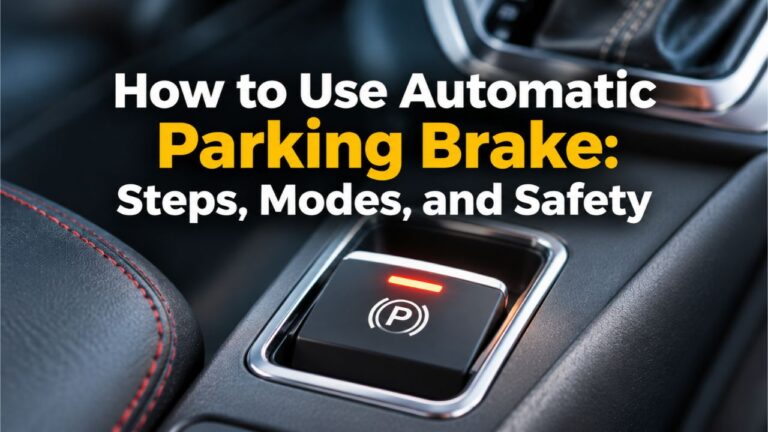
Follow your vehicle’s instructions to release a hand lever, foot pedal, or electronic parking-brake switch. Confirm that the control has fully returned and the indicator switches off. Some foot-operated parking brakes need a separate release handle or a second press.
If the warning remains lit, the parking brake will not release, or the car still resists movement, treat this as a possible brake fault. Do not force the vehicle forward. A light that stays on may also indicate low brake fluid or another system problem.
Step 03: Give the Rear Brakes Time to Cool Naturally
If you smell burning material, see smoke, or suspect substantial overheating, switch off the vehicle once safely parked and allow the brakes to cool without touching them. Keep people away from the hot wheel area. If smoke becomes heavy or flames appear, move to safety and call emergency services.
Never pour water on hot rotors or drums. Sudden cooling can damage hot components, while splashing water or steam can injure you. Cooling is not a repair: parts that were overheated can still need inspection after the smell disappears.
Step 04: Look for Warning Signs Without Touching Hot Parts
From a safe distance, note smoke, visible fluid, an unusual smell, or a wheel that appears damaged. After the vehicle has cooled, check whether the parking brake control releases normally and whether any warning remains. Do not place your hand near a wheel to compare temperatures.
A visual check cannot reveal glazed shoes hidden inside a drum, damage under a rotor, or all hydraulic problems. Record roughly how far you drove and whether the brake was fully or partly applied; this helps a technician decide what to inspect.
Step 05: Decide Whether the Vehicle Needs Towing or Inspection
Arrange a tow rather than driving if there was smoke, a strong burning odor, altered pedal feel, persistent drag, unusual noise, a brake-system warning, or doubt about stopping performance. Have the rear brakes and parking-brake mechanism inspected before returning to the road.
If you moved only a few feet, released the brake immediately, and there is no smell, warning, drag, or change in braking, serious damage is less likely. There is still no guaranteed distance below which damage is impossible. If you are uncertain about the amount of heat or the vehicle’s condition, a professional brake check is the safer choice.
How Much Damage Depends on Distance and Brake Engagement
Distance alone is a poor predictor of damage. A brake fully engaged during a short, forceful attempt to move may generate substantial heat, while a barely engaged brake on a gentle maneuver can cause less. Vehicle weight, road speed, hills, and brake hardware also change the outcome.
| Situation | Possible Outcome | Sensible Response |
| Moved a few feet, noticed immediately | Little extra wear may occur | Release fully and check for abnormal symptoms |
| Drove a short distance with mild drag | Heat buildup and increased lining wear are possible | Check warning signs; seek inspection if uncertain |
| Drove farther or faster with resistance | Significant overheating and damaged friction parts become more likely | Stop, let brakes cool, and arrange inspection |
| Smoke, severe smell, or weak braking at any distance | Potentially unsafe brake condition | Do not drive; arrange towing and repair |
There is no trustworthy fixed mileage or time cutoff that tells you the brakes are safe. The actual brake condition matters more than a rule such as “one mile is fine.”
Which Parking Brake Parts May Need Repair?
A technician generally checks the friction parts and the mechanism that applies and releases them. The repair depends on what overheated and whether the brake remains partially engaged after release.
Parking-Brake Shoes, Pads, and Metal Surfaces
For drum-in-hat designs, the small parking-brake shoes and inside rotor surface are important inspection points. On integrated rear calipers, the ordinary rear pads and rotor may have absorbed the extra heat. Separate drum-brake designs require inspection of the shoes, drum, springs, and adjusters.
Overheated linings may be glazed, worn unevenly, cracked, or contaminated. Metal surfaces should be checked for hot spots, scoring, and distortion. Replacing parts should follow measured condition and manufacturer limits, not smell alone.
Cables, Caliper Levers, and Electric Actuators
A cable or mechanical lever may stay partly engaged because of corrosion, poor adjustment, or binding hardware. That can explain why the brakes continued to drag even after the driver lowered the lever. Correct the underlying release fault before installing new friction parts.
Some electronic parking brakes use motors on the rear calipers; others use an electric actuator to pull cables. Continued drag may require electronic fault checks and a manufacturer-specified service procedure. Do not attempt to force an electronic caliper mechanism backward.
Hydraulic Brakes and Nearby Components
Severe overheating can also affect nearby hydraulic caliper seals, fluid, and rubber components, depending on the arrangement. A technician should check for leaks, damaged boots, and proper service-brake operation if the heat was substantial.
Brake-fluid boiling or bearing damage should not be assumed from a short incident, but serious heat exposure deserves a broader inspection. Replacing the parking-brake shoes alone may not address all consequences.
What Happens With an Electronic Parking Brake?
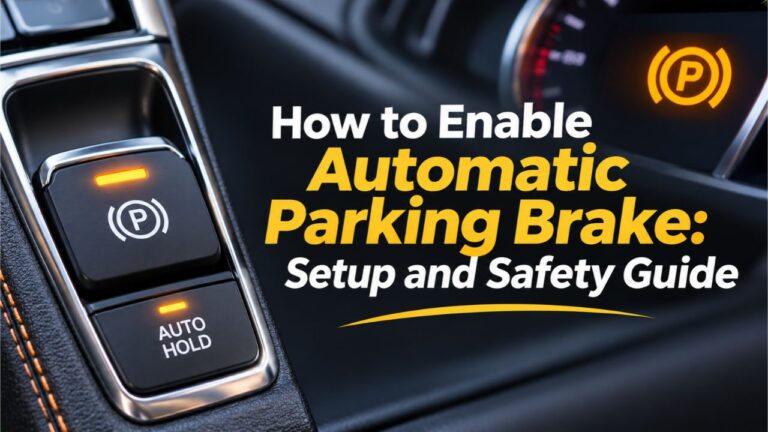
Some vehicles automatically release their electronic parking brake when the driver selects a gear and accelerates under the correct conditions. Others require an explicit release, especially if a door is open, a fault is present, or the system’s release conditions are not met.
A Lincoln owner manual’s electric parking brake instructions describe an automatic drive-away release under specified conditions and warn against driving with the brake applied. That behavior is specific to the documented system, not a promise for all electronic parking brakes.
An electronic parking brake may also have a separate emergency-braking function while the car is moving. Do not experiment with that function to check whether the brake works; follow the owner’s manual. A fault message or failure to release needs diagnosis.
How to Avoid Driving Away With the Parking Brake On
Make the parking-brake indicator part of your normal departure check, alongside confirming the gear selection and that the service brake feels normal. Fully release the hand lever or foot pedal before accelerating, and verify the switch status on electronically controlled systems.
If the parking-brake warning remains on, stop and investigate instead of assuming the switch is faulty. Do not rely on automatic release unless your vehicle is designed for it and the required conditions are met.
Continue using the parking brake when parking as directed by the manufacturer. The solution to accidentally driving with it engaged is a consistent release check, not abandoning a safety feature that helps keep a parked vehicle secure.
FAQs About What Happens If You Drive With Your Parking Brake On
Will Driving With the Parking Brake On Ruin My Brakes?
Not necessarily. A very short accidental movement may cause only minor wear. Sustained driving, heavy engagement, and signs of overheating increase the likelihood of damage that needs professional inspection or repair.
Can You Drive a Mile With the Parking Brake On?
A vehicle may be able to move that far, but it is not a safe distance to aim for. Heat buildup depends on how strongly the brake is engaged and other driving conditions. Stop as soon as you notice the problem.
Will the Parking Brake Release Automatically When I Drive?
Some electronic systems have an automatic drive-away release, but not all vehicles do. Traditional cable brakes generally require you to release the control manually. Consult the owner’s manual rather than assuming the feature exists.
Why Does My Car Smell Like Burning Rubber Afterward?
Overheated brake linings and nearby materials can create a sharp burning odor that may resemble rubber. Do not assume the exact source from smell alone. Park safely, allow the brakes to cool, and arrange inspection if the odor is strong or persistent.
Can Leaving the Parking Brake On Damage the Transmission?
The primary risk is damage to the dragging brakes. Extra resistance also increases the load required to move the vehicle, but transmission damage is not automatic. If the vehicle was forced to move or now behaves abnormally, have the full driveline and brakes evaluated.
Make Sure the Brakes Are Safe After an Accidental Drive
Understanding what happens if you drive with your parking brake on starts with friction: the applied rear brakes turn motion into heat and may wear or damage the shoes, pads, drums, or rotors. The outcome ranges from minor extra wear after immediate release to serious overheating after continued driving.
If you notice the mistake, stop safely, release the parking brake, and let overheated components cool naturally. Watch for smoke, burning odor, persistent warnings, drag, and changes in braking response. Do not continue driving when these signs appear.
A short incident without symptoms may not have caused significant damage, but distance alone cannot confirm that. When heat exposure or braking performance is uncertain, have the rear brakes inspected before driving again.