How to Use Automatic Parking Brake: Steps, Modes, and Safety
To use an automatic parking brake, stop completely, keep your foot on the brake pedal, and confirm the electronic parking brake (EPB) has engaged before leaving the vehicle. On many cars, you can apply it by pulling a small switch, release it by pressing that switch while holding the brake pedal, and use an automatic mode that applies or releases it under certain conditions.
The exact controls differ between vehicles. Some apply the parking brake whenever you select Park, others engage it when you switch off the engine, and some require you to enable that behavior. Automatic release may depend on the driver’s seat belt, doors, transmission position, and other safety checks. An EPB is also different from Auto Hold, which keeps a stopped car from creeping in traffic.
Knowing these differences prevents two serious mistakes: assuming the brake applied when it did not, and pressing the accelerator against a parking brake that has not released. This guide covers the controls, detailed operating steps, automatic settings, hill parking, warning messages, and situations that call for a different procedure.
How to Use Automatic Parking Brake: Step-by-Step Instructions
These steps describe common electronic parking brake systems, not a universal sequence for every make or model. Use your owner’s manual for the exact switch operation and automatic-mode settings. Practice on level ground before relying on a feature in a tight parking space or on a slope.
Step 01: Identify the Parking Brake System in Your Vehicle
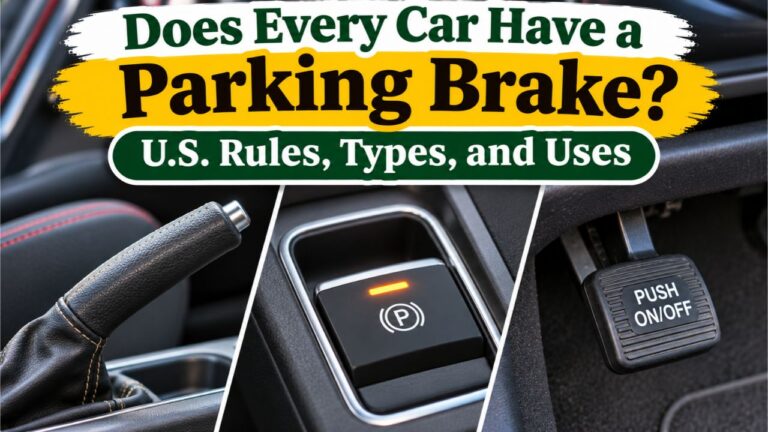
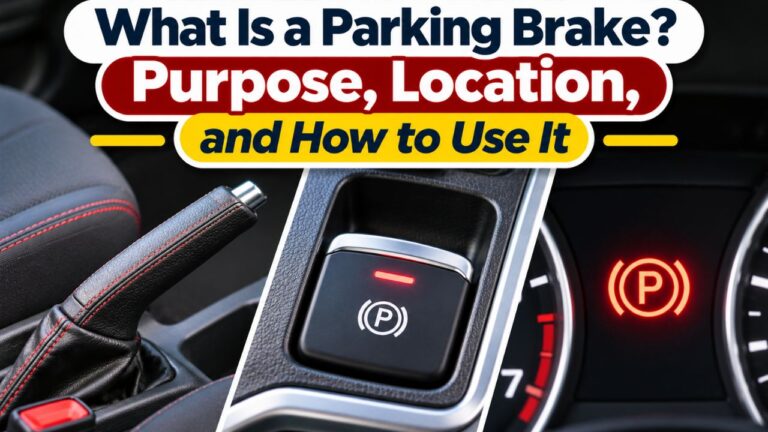
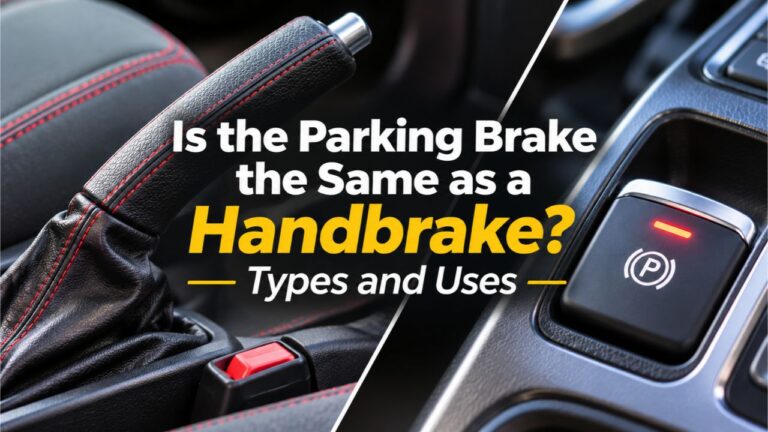
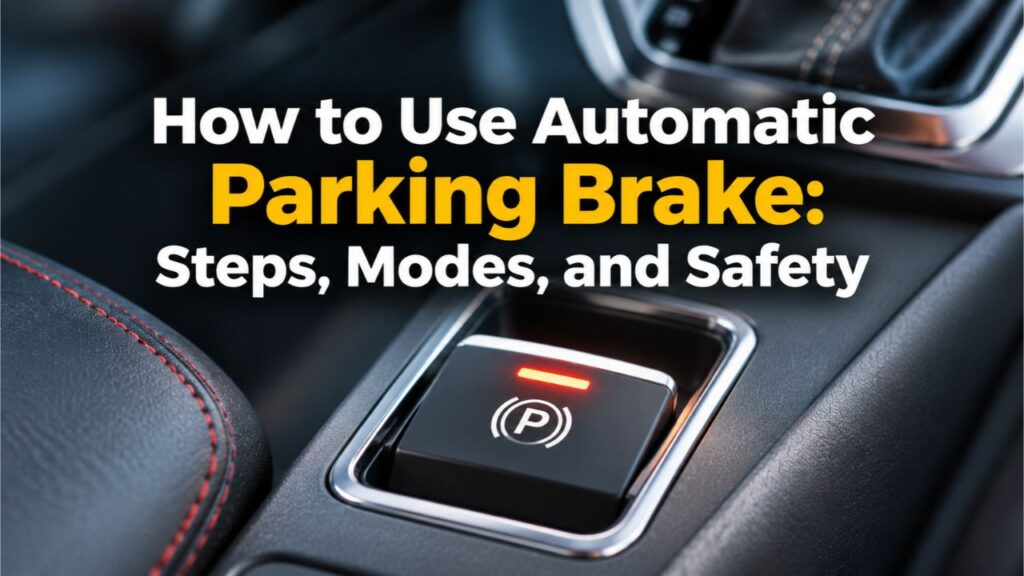
Look for a small switch marked with a circled P or a parking-brake symbol, usually near the shifter or lower dashboard. Pulling or pressing this switch operates an electric motor that applies the parking brake. A manual hand lever or foot-operated parking brake is different and does not follow these instructions.
Check your owner’s manual for the terms electric parking brake, automatic parking brake, and automatic release. Having an EPB switch does not guarantee that automatic application is enabled.
Also, check whether the car uses a conventional automatic transmission, manual transmission, or electronic gear selector, because release conditions may differ.
Step 02: Secure the Car and Check the Warning Indicators
Choose a flat, unobstructed location away from people and traffic. Sit in the driver’s seat, fasten your seat belt, start the vehicle or select the required power mode, and firmly press the regular brake pedal. Keep the car stopped.
Find the parking brake indicator on the instrument cluster. A red P in a circle or similar symbol commonly confirms that the brake is applied.
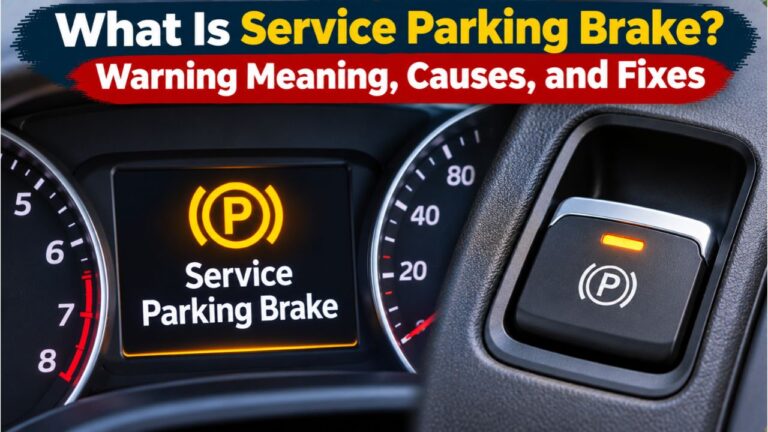
An amber EPB warning or flashing message may mean a problem rather than normal engagement. The exact symbols are explained in the vehicle’s manual; identify them before practicing.
Step 03: Apply the Parking Brake Manually With Its Switch
With the car completely stopped and your foot still on the brake pedal, pull the EPB switch upward if your vehicle uses the common pull-to-apply arrangement. Some models use a different motion, so follow the label and manual.
A brief motor or clicking sound from the rear brakes is often normal.
Wait for the parking brake indicator to show that the system has engaged. Do not assume that touching the switch worked if the light flashes or a warning message appears.
If you cannot confirm that the brake is set, keep your foot on the service brake and resolve the issue before leaving the vehicle.
Step 04: Put the Transmission in Its Correct Parked Position
Continue holding the foot brake, shift an automatic transmission to P (Park), and confirm the gear indicator.
On a manual transmission, follow the manufacturer’s parking instructions for the appropriate gear. Apply the parking brake as specified rather than relying on the transmission alone.
Then switch the engine or power system off and verify the parking brake’s status. Some vehicles automatically engage it during this sequence; others will not.
On a hill, use the recommended wheel orientation and chocks where appropriate, particularly when parking on a steep grade. Do not change EPB settings while moving.
Step 05: Check Whether Automatic Application Is Enabled
Look in the vehicle settings or parking-brake section of the manual for an automatic mode.
Watch what happens when you shift into Park or switch the vehicle off under the conditions described for your model. The indicator should confirm engagement if the system is designed to apply automatically.
For example, Toyota’s official parking brake operating instructions describe a supported automatic mode that sets the brake when shifting into P and releases it when shifting out of P.
This is a Toyota-specific operating arrangement, not proof that every car with an EPB behaves the same way.
Step 06: Enable or Disable Automatic Mode as Specified
Some vehicles let you change this setting through a touchscreen. Others use a timed switch sequence and an audible confirmation.
Do not experiment with long switch presses or copy button combinations from another model.
The Toyota instructions mentioned above, for instance, describe pulling and holding the parking brake switch while stopped until a buzzer and dashboard message confirm that automatic mode is on.
The method for switching it off is different and requires the conditions listed in that manual. Your vehicle may not support user adjustment at all.
Step 07: Release the Parking Brake Manually Before Moving
Sit in the driver’s seat, fasten your belt, and hold the regular brake pedal.
Turn the ignition or vehicle power to the position required for EPB release. On the common pull-to-apply, push-to-release arrangement, press the parking brake switch downward while keeping your foot on the brake.
Check that the red parking brake indicator goes out before moving.
Do not press the accelerator to overcome resistance if the brake stays applied. Read the displayed message, repeat the correct manual-release procedure only as the manual permits, and seek service if it fails.
Step 08: Use Automatic Release When Your Vehicle Allows It
Automatic release can occur when the driver selects Drive or Reverse with the brake pedal depressed, or when the driver begins to accelerate gently.
Different vehicles use different triggers, and some require the belt to be fastened and all relevant doors or panels to be shut.
Hyundai’s electronic parking brake instructions describe automatic release after shifting from P or N to a driving position when stated conditions are met. They also advise checking that the parking brake warning light goes out.
Keep your foot on the brake until you intend to move, and use manual release if the automatic function does not operate as expected.
Step 09: Start Moving Smoothly and Verify Full Release
Once the transmission is in the intended driving position and the parking brake indicator is off, look around the vehicle and move away slowly.
On cars with accelerator-triggered release, gentle accelerator input may be required, but only follow that process when the manual confirms it and the path ahead is clear.
If the car feels restrained, a brake warning appears, or the system keeps trying to apply itself, stop immediately.
Driving with the parking brake dragging can overheat components and cause damage. Never treat extra throttle as a solution to a brake that refuses to release, especially when reversing near a wall, garage door, or pedestrian.
Step 10: Practice Parking and Leaving on a Gentle Slope
Use a safe, open area with a gentle slope, not a steep driveway.
Stop with the regular brake and hold the car still. Apply the EPB, select the required parking position, and check that the warning light confirms engagement.
To leave, fasten the belt, start the vehicle, hold the service brake, select the intended gear, and release the EPB by the approved manual or automatic method.
Use gentle acceleration only after you are ready to move. If the car rolls unexpectedly, stop and consult the manual.
Step 11: Confirm the Brake State Every Time You Exit
Before opening the driver’s door, verify that the vehicle is fully stopped, the transmission is secured, and the parking brake is engaged.
Check the indicator rather than relying solely on motor noise, a memory of the last setting, or the fact that the engine is off.
Automatic behavior can change when settings or operating modes change. Automatic operation does not replace this check.
Take the key with you, and never leave children alone with access to vehicle controls.
How Automatic Parking Brake Operation Differs From Auto Hold
Automatic parking brake and Auto Hold are related but serve different purposes.
The parking brake secures a vehicle when parked. Auto Hold is a convenience function that maintains braking at a temporary stop, such as a traffic light, after the driver releases the foot pedal. Some systems then transfer braking to the EPB.
| Feature | Electronic Parking Brake | Auto Hold |
| Main purpose | Keep a parked vehicle stationary | Hold a vehicle during short stops |
| Common control | Switch marked with a circled P | Button labeled AUTO HOLD or BRAKE HOLD |
| Typical release | Parking brake switch or approved automatic release | Accelerator input when ready to move |
| Safe to rely on for unattended parking? | Yes, when correctly engaged with the transmission secured | No |
Honda’s Automatic Brake Hold instructions describe its use at temporary stops and specifically warn against relying on it to park or hold a vehicle on a steep or slippery surface.
Some cars automatically transfer from Auto Hold to EPB when a time or safety condition is met; do not assume every vehicle does so.
Using Auto Hold at Traffic Lights
When equipped, fasten your belt and activate Auto Hold according to the manual.
Brake to a complete stop and wait for the hold-active indicator, which may differ from the feature’s standby light. Only then should you release the foot brake.
Press the accelerator gently when traffic moves, provided the system allows automatic release.
Auto Hold is not a substitute for selecting Park and applying the parking brake when you leave the vehicle.
If traffic will remain stationary for an extended period or a warning appears, use the regular brake and the manufacturer’s parking procedure.
Why the Automatic Parking Brake May Not Release
A parking brake that fails to release is not always mechanically stuck.
Modern EPB controllers check conditions before allowing movement. Read the displayed message first.
Seat Belt, Door, Gear, or Power Conditions
Automatic release may be blocked if the driver’s seat belt is unfastened, a door or liftgate is open, the transmission is in an unsupported position, or the ignition is not in the required mode.
Some vehicles also monitor the hood or brake-pedal input. Correct the displayed condition while keeping your foot on the brake.
Never bypass a safety sensor.
If all conditions are satisfied but the brake remains applied, try the manufacturer’s permitted manual-release method.
Weak Battery or EPB Fault Message
An electric parking brake needs sufficient electrical power for its actuator.
A discharged 12-volt battery may prevent application or release. Avoid improvised power connections and do not force a rear caliper mechanism.
A flashing indicator, amber EPB light, or persistent fault message calls for diagnosis.
Some systems temporarily restrict repeated operation to protect the motor from overheating.
Allow the vehicle-specific recovery procedure or arrange professional service rather than cycling the switch repeatedly.
Special Situations That Change Automatic Parking Brake Use
Conveyor Car Washes and Vehicle Towing
A conveyor wash may require the wheels to roll freely in Neutral, with Auto Hold and automatic parking-brake engagement disabled.
Follow both the vehicle instructions and the car wash’s procedure before entering.
Shifting into Neutral does not guarantee that an electronically controlled car will stay in Neutral or keep its EPB released.
Towing requirements also vary. Some vehicles need a special tow mode or flatbed transport, and a malfunctioning EPB may leave wheels locked. Do not drag a vehicle with the parking brake applied.
Freezing Weather and Rear Brake Service
In severe freezing conditions, moisture around parking brake components may freeze.
Follow the manufacturer guidance for parking and wheel chocking rather than automatically disabling an essential safety system. Do not defeat the EPB on a slope.
During rear pad or caliper replacement, many EPB systems require an electronic maintenance or service mode.
Do not force an electrically driven caliper piston inward without the required procedure; doing so may damage the actuator.
Emergency Use While the Vehicle Is Moving
The EPB switch is primarily for parking, not for routine slowing or stopping.
Some manufacturers permit a controlled emergency braking function by pulling and holding the switch if the normal brake pedal fails.
The action and braking force vary, and stopping distances may increase.
Do not test this function on public roads or operate the switch while moving except in a genuine emergency and as described by your manual.
FAQs About How to Use Automatic Parking Brake
Does the Automatic Parking Brake Turn On When I Put the Car in Park?
On some vehicles, yes, but not all.
The feature may require automatic mode to be enabled, and some models apply it when the vehicle shuts off instead. Confirm using the indicator and manual.
Do I Need to Press the Brake Pedal to Release the EPB?
Manual release commonly requires the service brake pedal to be depressed while pressing the EPB switch.
Automatic release may instead occur during an approved gear change or gentle acceleration, provided safety conditions are met.
Can I Drive With the Automatic Parking Brake On?
No. A warning light that confirms the brake is applied should go out before driving.
If the brake remains engaged, stop and correct the fault rather than accelerating against it.
Is Auto Hold the Same as an Automatic Parking Brake?
No. Auto Hold temporarily keeps a stopped vehicle from creeping.
The electronic parking brake is intended to secure the vehicle when parked, alongside the proper transmission setting.
Will the Automatic Parking Brake Work With a Dead Battery?
Not reliably. Applying or releasing an EPB normally requires electrical power, and a dead 12-volt battery can prevent operation.
Consult the manufacturer’s approved recovery or towing instructions.
Make Automatic Parking Brake Use Part of Every Safe Stop
Understanding how to use automatic parking brake features begins with three habits: stop completely, confirm that the EPB has engaged before exiting, and verify that it has released before driving. Learn your vehicle’s automatic application and release conditions instead of assuming the same switch or gear sequence works in every car.
Use the EPB for secure parking and Auto Hold only for the temporary stops it is designed to handle. If a warning appears or the brake does not engage or release normally, keep the vehicle safely stationary and have the problem checked before relying on the system again.