Can a Bad Brake Booster Cause Brakes to Lock Up? Causes & Fixes
Yes, a bad brake booster can cause brakes to lock up or remain applied, particularly when an internal valve sticks, the booster pushrod prevents the master cylinder from returning fully, or the pedal mechanism fails to release. However, most brake booster failures cause a hard brake pedal and reduced power assistance rather than locked brakes.
When a booster-related problem prevents hydraulic pressure from releasing, the brake pads can remain pressed against the rotors even after the driver releases the pedal. This may cause brake drag, overheating, reduced acceleration, and, in severe cases, wheels that become difficult to turn.
Not every brake lockup problem originates inside the booster. A sticking caliper, restricted brake hose, blocked master cylinder compensation port, or faulty pedal adjustment can produce similar symptoms.
Understanding the difference is important because replacing a functioning brake booster will not correct a separate hydraulic or mechanical problem.
This article explains how booster failures can cause brake lockup, the warning signs to recognize, how to distinguish booster problems from other brake faults, and which repairs may be necessary.
Can a Bad Brake Booster Cause Brakes to Lock Up?
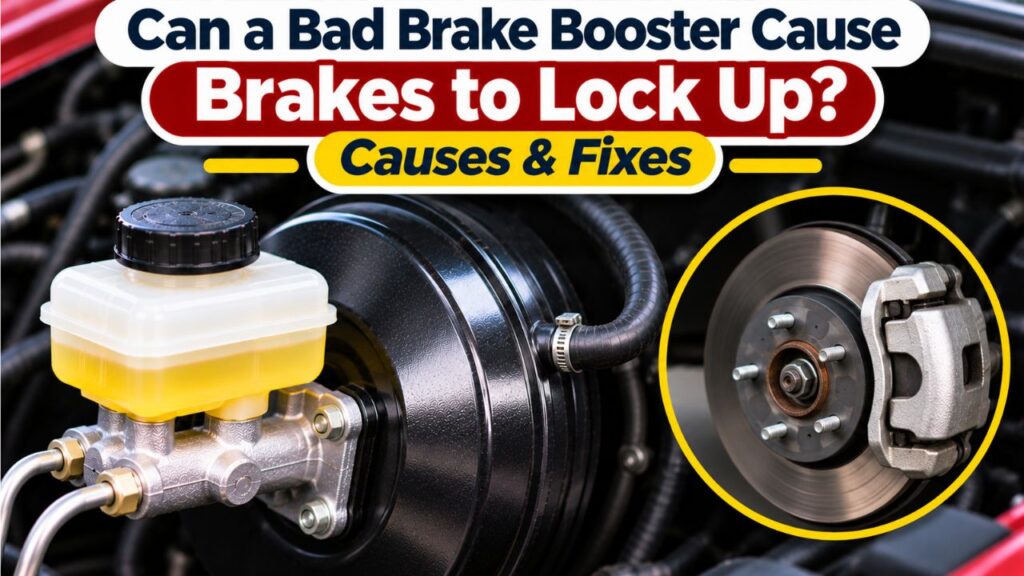
A defective brake booster can cause the brakes to remain applied, but this is less common than losing power assistance.
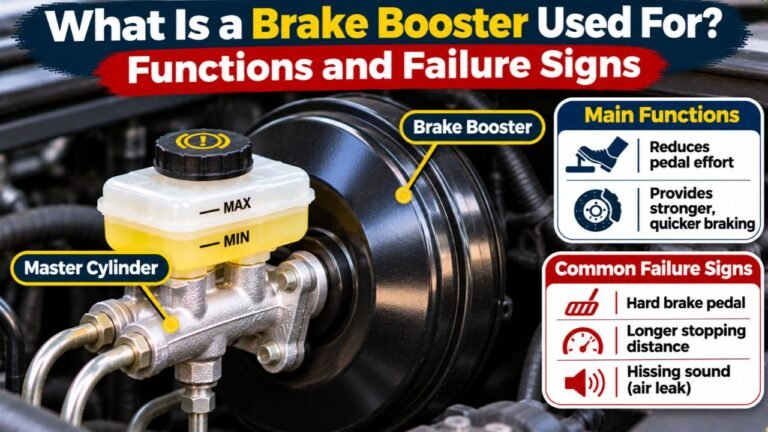
A conventional vacuum brake booster uses engine vacuum or a vacuum pump to reduce the force required at the brake pedal. It works through a diaphragm or piston arrangement connected to the master cylinder.
When the driver releases the brake pedal, the booster and master cylinder should return to their resting positions, allowing hydraulic brake pressure to decrease.
If the booster mechanism continues applying force to the master cylinder, the brakes may not release properly.
Two conditions are particularly important:
- Brake drag: The brakes remain partially applied, creating continuous friction.
- Brake lockup: The braking force becomes strong enough to prevent a wheel from rotating normally.
A booster fault can also make the brakes unusually sensitive, causing an abrupt or excessively strong response when the pedal is pressed.
These conditions differ from ordinary wheel lockup during hard braking on a slippery road, which may involve tire traction and ABS operation rather than a defective booster.
How a Bad Brake Booster Can Cause Brakes to Lock Up
Several mechanical problems involving the booster and its connections can prevent normal brake release.
Incorrect Brake Booster Pushrod Length
The booster output pushrod transfers assisted force to the master cylinder piston.
It must have the correct relationship with the master cylinder when the brake pedal is released.
If the pushrod is too long, it can hold the master cylinder piston slightly forward.
This may prevent the piston from uncovering the compensation port, which allows brake fluid to return to the reservoir as the brakes release.
Residual hydraulic pressure can then keep the calipers applied.
As the brakes generate heat, the trapped fluid can expand and increase the unwanted braking force.
Ford’s official 1993 Mustang workshop manual specifically identifies an excessively long booster pushrod as a cause of incomplete hydraulic pressure release and brake drag.
The manual also explains that insufficient pushrod length can increase pedal travel.
These instructions apply to the specified Ford booster configuration. Other vehicles may have factory-set, nonadjustable pushrods.
Sticking Internal Brake Booster Valve
A vacuum booster contains a control valve that regulates the pressure difference responsible for brake assistance.
Under normal conditions, this mechanism changes state when the driver applies or releases the pedal.
If an internal valve sticks or a mechanical component jams, booster assistance may not decrease correctly.
This can allow continued force on the master cylinder.
The result may be brakes that remain partially applied or release slowly.
Internal sticking is different from an ordinary vacuum leak, which more commonly reduces braking assistance.
Damaged Internal Booster Components
Certain booster designs can develop problems involving the reaction mechanism, internal hub, or other components controlling assisted force.
These defects may make the brakes unusually sensitive or produce excessive assistance.
For example, MBM Brakes’ brake booster diagnostic guide identifies a cracked internal hub as a possible cause of sudden brake grabbing in applicable booster designs.
A small pedal movement may then produce an unexpectedly strong braking response.
This does not mean every cracked or damaged booster behaves identically. The exact symptom depends on the component and booster design.
Brake Pedal or Booster Linkage Not Returning
The brake pedal linkage must permit the booster to return fully after the driver releases the pedal.
Problems can develop when:
- The pedal linkage binds or is incorrectly assembled.
- A return spring is damaged or disconnected.
- The brake light switch interferes with pedal movement.
- The booster input rod is incorrectly adjusted.
- Replacement parts do not match the original configuration.
If the pedal remains slightly depressed, the booster may continue operating the master cylinder.
This can produce brake drag even when the booster’s internal diaphragm and vacuum system are functioning normally.
Symptoms of Brake Booster Problems That Can Cause Lockup
Brake lockup usually produces noticeable changes in vehicle behavior before the problem becomes severe.
Brakes Remain Applied After Releasing the Pedal
The vehicle may continue slowing even after the driver removes their foot from the brake.
In some cases, the brakes release after a delay.
This suggests that friction components or hydraulic pressure are not returning to their normal released condition.
A booster or pushrod problem is one possibility, particularly when several brakes are affected.
Vehicle Feels Sluggish While Accelerating
Brakes that remain partially applied create resistance against wheel rotation.
The engine must work harder to move the vehicle, and acceleration may feel weaker than usual.
The symptom can become more noticeable after repeated braking.
However, sluggish acceleration alone is not enough to diagnose the booster.
Brake Rotors Become Excessively Hot
Continuous brake friction produces heat even when the driver is not intentionally braking.
An affected wheel may develop a hot smell, smoke, or unusually high brake temperatures.
Severe overheating can damage pads, rotors, seals, and nearby components.
Never touch a rotor or caliper to check its temperature after suspected brake drag. The parts may cause serious burns.
Brake Pedal Does Not Return Normally
A pedal that stays below its normal resting position can indicate binding linkage, incorrect adjustment, or another mechanical problem.
The driver may notice that the pedal rises slowly or requires assistance to return.
This symptom deserves attention because the master cylinder may not be releasing completely.
Brakes Become Progressively Tighter
Some vehicles initially drive normally but begin dragging after several brake applications.
As heat builds, the resistance may increase.
This pattern can occur when hydraulic pressure cannot return through the master cylinder compensation port.
It can also occur with certain defective brake hoses and other hydraulic restrictions.
Other Brake Problems That Can Cause Lockup
A brake booster should not be blamed until other likely causes have been checked.
| Possible Cause | Typical Clue |
| Incorrect booster pushrod clearance | Brake drag after booster or master cylinder replacement |
| Sticking brake caliper | One wheel remains applied or becomes unusually hot |
| Restricted flexible brake hose | Affected brake releases slowly or traps pressure |
| Blocked master cylinder compensation port | Pressure remains after pedal release |
| Binding brake pedal linkage | Pedal does not return fully |
| ABS hydraulic control fault | Abnormal pressure release in an affected circuit |
| Parking brake mechanism sticking | Rear brakes remain applied |
Seized Brake Caliper Pistons or Guide Pins
A sticking caliper is an important alternative explanation, especially when only one wheel is affected.
The caliper piston may seize because of corrosion or damage. Sliding calipers can also bind when their guide pins no longer move freely.
These conditions prevent the brake pads from releasing normally.
HELLA’s technical guide to diagnosing brake problems identifies sticking caliper pistons and guide components as causes of overheating, uneven wear, and poor braking operation.
Restricted Brake Hoses
Flexible brake hoses can deteriorate internally.
In some cases, damaged inner material restricts fluid returning from a caliper.
The brake may apply under pedal pressure but fail to release promptly.
This can resemble a booster-related hydraulic pressure problem, although the restriction is located farther down the circuit.
Master Cylinder Compensation Port Problems
A blocked compensation port prevents normal pressure equalization.
Contamination, internal damage, incorrect seal positioning, or incomplete piston return may be responsible.
The last condition can involve the booster pushrod, but the blockage may also originate within the master cylinder itself.
Correct diagnosis requires identifying why the pressure remains trapped.
How to Tell if the Brake Booster Is Causing Brake Lockup
Begin with noninvasive checks. More advanced diagnosis should be performed by a qualified technician using the vehicle’s service information.
Step 01: Identify Which Brakes Are Staying Applied
Determine whether the problem affects one wheel, both wheels on an axle, or multiple wheels across the vehicle.
A single dragging wheel often points toward a localized problem, such as a caliper or flexible hose.
Several wheels remaining applied may suggest a shared hydraulic component, booster linkage, or master cylinder problem.
However, modern split hydraulic circuits can complicate this pattern.
Do not assume that all four brakes must lock simultaneously for a booster-related problem to exist.
Step 02: Check Brake Pedal Return
With the vehicle stationary and the engine off, inspect the pedal’s resting position.
Press and release the pedal gently.
It should return freely without binding or remaining partially depressed.
Look for an obstructing floor mat, damaged linkage, or unusual resistance around the pedal mechanism.
If the pedal does not return normally, the linkage and related adjustments need inspection before replacing the booster.
Step 03: Evaluate Normal Brake Booster Assistance
For a conventional vacuum booster, switch off the engine and press the brake pedal several times to exhaust stored vacuum assistance.
Hold moderate pressure on the pedal, then start the engine.
A functioning system normally allows the pedal to move downward slightly as assistance becomes available.
If the pedal remains unusually hard, there may be a vacuum supply or booster problem.
This test checks power assistance; it does not prove whether the booster is causing brake lockup.
A booster can provide assistance and still have a separate return or adjustment fault.
Step 04: Inspect the Vacuum Hose and Check Valve
Examine the vacuum hose for cracks, collapsed sections, loose connections, or incorrect routing.
Check whether the one-way valve is installed correctly and meets the manufacturer’s test requirements.
A faulty check valve generally causes loss of stored vacuum assistance rather than directly trapping hydraulic brake pressure.
Therefore, replacing the valve should not be treated as a guaranteed solution for brake drag.
If the vacuum system appears normal, additional mechanical and hydraulic diagnosis is necessary.
Step 05: Have Pushrod Clearance and Hydraulic Pressure Checked
If the brakes started dragging immediately after replacing the booster or master cylinder, pushrod clearance deserves particular attention.
A technician can use the specified measuring tools to determine whether the master cylinder piston returns completely.
Some applications require a special gauge, and certain pushrods are not adjustable.
The technician may also perform controlled hydraulic pressure-release tests to distinguish trapped pressure from a mechanically seized caliper.
These tests can involve opening pressurized brake fittings, so they should not be attempted casually.
Incorrect procedures can cause brake fluid injury, contamination, and loss of braking capability.
How to Fix Brake Lockup Caused by a Bad Booster
The appropriate repair depends on whether the problem involves adjustment, internal booster damage, or another brake component.
Correct an Improper Pushrod Adjustment
If the vehicle has an adjustable booster output rod and measurement confirms incorrect clearance, follow the manufacturer’s adjustment procedure.
The pushrod must allow full master cylinder piston return without creating excessive pedal travel.
Do not shorten or lengthen the rod by guessing.
Some modern booster assemblies use nonadjustable pushrods. If their dimensions are incorrect, the specified repair may require replacing the assembly.
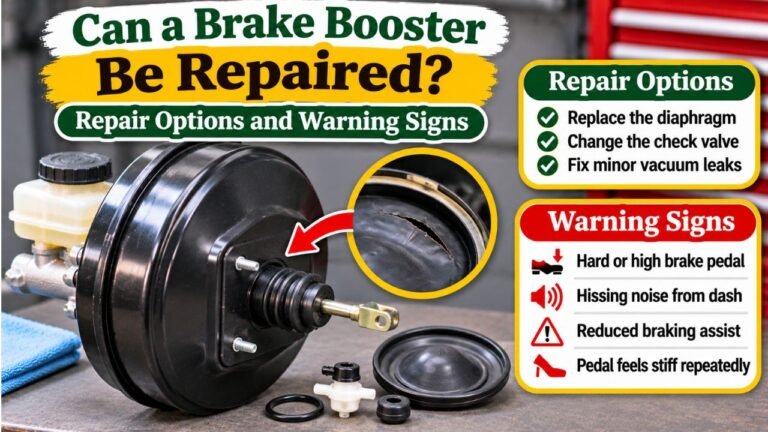
Replace a Defective Brake Booster
A booster with confirmed internal valve, return mechanism, or other non-serviceable damage usually requires replacement.
Many passenger-car vacuum boosters are supplied as complete assemblies rather than individual internal repair components.
Select the replacement using the correct vehicle application and part identification.
Inspect the master cylinder for leaks before installing the new booster, because brake fluid contamination may affect the replacement.
Repair the Actual Hydraulic Fault
If the booster tests normally, the repair may involve replacing a restricted brake hose, damaged master cylinder, sticking caliper, or another defective component.
The braking system must be inspected for damage caused by overheating.
Brake pads and rotors exposed to severe temperatures may need replacement even after the original sticking problem has been corrected.
Whenever hydraulic lines are opened, follow the proper brake bleeding procedure.
Finally, verify normal pedal travel, full brake release, and safe braking performance before returning the vehicle to service.
Is It Safe to Drive With Brakes That Keep Locking Up?
No. A vehicle with brakes that unexpectedly lock, drag severely, or fail to release should not be driven until the problem is corrected.
Continued driving can overheat the brakes, damage friction components, reduce stopping performance, and cause a sudden loss of vehicle control.
If the problem occurs while driving, avoid unnecessary acceleration or abrupt steering inputs. Move to a safe stopping location if the vehicle remains controllable.
If the wheels lock unexpectedly or the vehicle becomes difficult to control, prioritize stopping safely rather than continuing to a repair shop.
Do not attempt to cool overheated brakes by pouring water onto hot rotors.
Arrange towing and have the complete braking system inspected.
A repair is not complete until the brakes apply and release correctly under the manufacturer’s required checks.
FAQs About Can a Bad Brake Booster Cause Brakes to Lock Up
Can a Bad Brake Booster Cause All Four Brakes to Lock Up?
Yes, a booster or pushrod problem can prevent the master cylinder from releasing pressure properly and affect multiple wheels. However, the exact wheels involved depend on the hydraulic circuit design and the location of the fault.
Can a Brake Booster Cause Only One Wheel to Lock Up?
It is less typical. When one wheel stays applied, a sticking caliper, restricted hose, or local mechanical problem is generally a stronger possibility. The affected circuit should be diagnosed before replacing the booster.
Can a Bad Brake Booster Check Valve Cause Brakes to Lock?
A failed vacuum check valve usually reduces power assistance and produces a harder pedal. It does not normally trap brake fluid pressure. Other booster or hydraulic faults should be investigated when the brakes remain applied.
Can a New Brake Booster Make Brakes Lock Up?
Yes. Incorrect pushrod clearance, improperly installed pedal linkage, or an incompatible replacement booster can create brake drag or excessive braking response. This is especially relevant when the problem begins immediately after installation.
Will Disconnecting the Brake Booster Vacuum Hose Release Locked Brakes?
Not reliably. Removing vacuum assistance does not necessarily release hydraulic pressure trapped in the brake lines. Disconnecting the hose is not an appropriate roadside fix for locked brakes.
Can Brake Booster Problems Cause Brakes to Drag When Hot?
Yes. If incorrect pushrod clearance prevents hydraulic pressure from releasing, heat can make dragging progressively worse. Similar symptoms can also result from restricted brake hoses or other hydraulic faults.
Prevent Brake Lockup by Identifying the Actual Booster Problem
If you’re asking, can a bad brake booster cause brakes to lock up, the answer is yes, particularly when the booster mechanism sticks or incorrect pushrod clearance prevents the master cylinder from releasing pressure. However, most ordinary vacuum booster failures cause reduced assistance and a hard pedal rather than locked brakes.
The most useful diagnostic clues are whether one or several wheels are affected, whether the brake pedal returns fully, and whether the problem started after booster or master cylinder replacement. These observations help distinguish booster-related faults from sticking calipers, restricted hoses, and master cylinder problems.
Never continue driving with brakes that remain applied or lock unexpectedly. Confirm the underlying cause, repair the defective component, and verify complete brake release before putting the vehicle back on the road.