Can a Bad Brake Booster Cause Brakes to Drag? Causes and Fixes
Yes, a bad brake booster can cause brakes to drag if it prevents the master cylinder or brake pedal from returning completely after you release the pedal. An overly long booster pushrod, a sticking booster control mechanism, or a binding pedal linkage can leave hydraulic pressure in the brake lines and keep brake pads or shoes against their friction surfaces.
However, brake drag is not the most common sign of booster failure. A leaking vacuum diaphragm typically causes reduced power assistance and a hard pedal, not brakes that remain applied. Sticking calipers, restricted brake hoses, and master cylinder problems are other possibilities, especially when only one wheel drags.
The pattern matters: are several wheels binding, does the problem begin after braking, and did it start after replacing the booster or master cylinder? Those details separate booster faults from wheel-end problems. This guide explains the mechanisms, symptoms, safe checks, professional diagnosis, and repairs.
Can a Bad Brake Booster Cause Brakes to Drag While Driving?
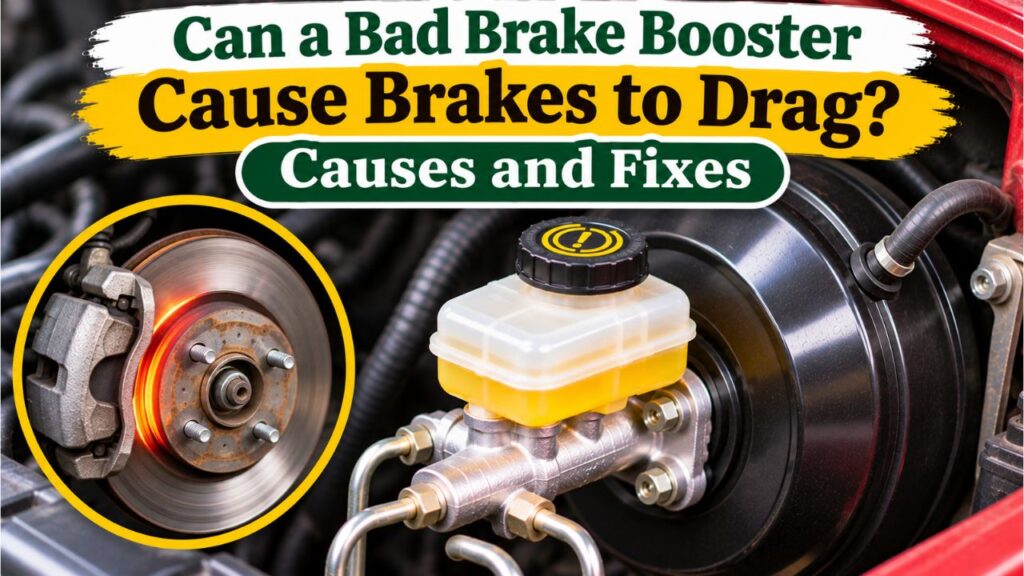
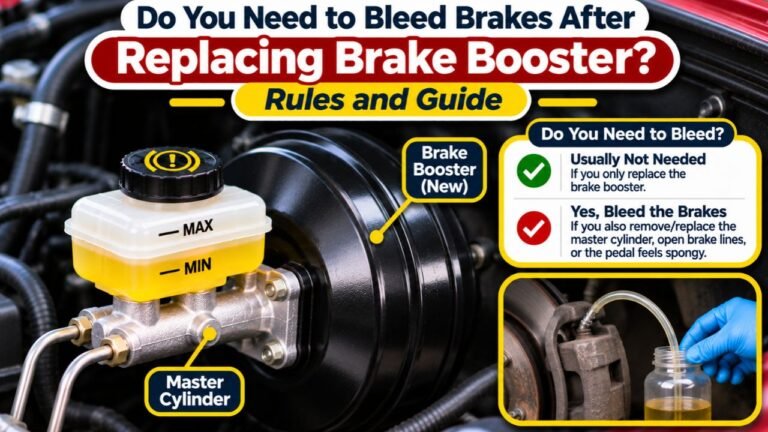
A conventional vacuum brake booster sits between the pedal linkage and the master cylinder. It uses vacuum to assist the force you apply to the pedal. When you release the pedal, the booster mechanism and master cylinder pistons must return to their resting positions so hydraulic pressure can fall.
If the booster output pushrod continues pressing the master cylinder piston, even slightly, the piston may fail to uncover its compensating port. That small passage normally allows fluid to return toward the reservoir as pressure releases and temperature changes. With the passage blocked, residual pressure can hold the brakes on. As the fluid warms and expands, dragging may become more noticeable.
The 1993 Ford Mustang workshop manual’s booster pushrod instructions specifically identify excessive pushrod length as a cause of brake drag. That manual applies to a particular booster design, but the underlying relationship between pushrod clearance and master cylinder release is an important diagnostic principle.
Key distinction: A booster can contribute to drag through unwanted application or inadequate release. Losing vacuum assistance by itself generally does not create trapped hydraulic pressure.
How a Brake Booster Can Keep the Brakes Applied
An Overextended Booster Pushrod Blocks Pressure Release
The booster output rod contacts the master cylinder piston. Its length and clearance must match the master cylinder installation. If the rod is too long, installing and tightening the master cylinder can hold its piston partially depressed before anyone touches the brake pedal.
This may appear immediately after a replacement or develop as the brakes heat up. The rod may be adjustable on certain older designs, but many modern boosters have factory-set or nonadjustable dimensions. An owner should not turn an adjustment screw or add homemade spacers without a verified vehicle-specific procedure.
A Sticking Internal Valve or Booster Mechanism Delays Return
Internal booster valves control assistance. If they fail to return correctly, braking force may remain after pedal release. This is less common than a vacuum leak but is documented on certain vehicles.
A GM service bulletin for certain 2016 Chevrolet Malibu vehicles describes brakes dragging, grabbing, or pulling when the booster does not return properly or leaves residual hydraulic pressure. The bulletin applies only to the stated vehicle population; it is an example of a confirmed failure mode, not proof that every dragging brake has a defective booster.
Pedal Linkage or Brake Light Switch Prevents Full Return
A problem near the pedal may look like a bad booster even if the booster itself is serviceable. An incorrectly adjusted pedal stop or brake light switch, a binding pivot, damaged linkage, or interference from equipment under the dashboard can hold the pedal slightly down.
That small movement may also keep the booster output rod engaged. The brake lights might remain illuminated, but they can operate normally even with some kinds of mechanical interference. Inspecting pedal return is therefore useful; the light switch alone is not a reliable diagnostic test.
Symptoms That Point Toward Booster-Related Brake Drag
Booster-related drag often affects multiple wheels because the restriction occurs upstream of the individual calipers or wheel cylinders. The exact pattern depends on the vehicle’s split hydraulic circuits and brake-control system.
Watch for these complaints:
- Brakes stay applied after pedal release: The vehicle may feel held back or resist rolling normally.
- Drag increases as the vehicle warms: Trapped fluid pressure can worsen as temperature rises, especially after repeated stops.
- More than one wheel becomes unusually hot: Multiple hot brakes suggest a shared pressure or release problem, although they do not identify the booster by themselves.
- The pedal does not return fully: Binding linkage or incorrect adjustment may be involved.
- The problem begins after brake work: Incorrect pushrod fit, a replacement master cylinder, or disturbed pedal components deserve attention.
- Burning odor or reduced acceleration: Friction from continuously applied brakes can overheat pads, rotors, and nearby parts.
Never touch a potentially overheated rotor or caliper. Pulling or one hot wheel suggests a localized caliper, hose, or parking brake fault.
How to Check Whether the Brake Booster Is Causing Drag
Start with observations that do not open the hydraulic system or require driving an unsafe vehicle. The later checks require professional equipment and manufacturer service information.
Step 01: Stop Driving and Record When the Drag Happens
If the vehicle resists moving, smells hot, pulls sharply, or has a brake warning, park somewhere safe and arrange an inspection rather than continuing a road test. Do not attempt to free the brakes by accelerating against them.
Record whether the problem occurs immediately at startup, after pressing the pedal, or only when the vehicle is warm. Note any recent booster, master cylinder, switch, or caliper replacement. Recent work raises suspicion of fit or adjustment errors without proving them.
Step 02: Inspect the Pedal Area for Return Problems
With the vehicle secured, engine off, and parking brake applied, look around the pedal arm. Check for a floor mat, wiring, aftermarket accessory, or damaged trim interfering with its movement. Observe whether the pedal rests against its intended stop without being held down.
Do not unhook the pedal, bend the linkage, or change the brake light switch setting as a trial fix. A correct adjustment depends on the pedal design. If the pedal feels stuck or does not return normally, have the linkage inspected before the car is driven.
Step 03: Check for Visible Booster and Master Cylinder Installation Issues
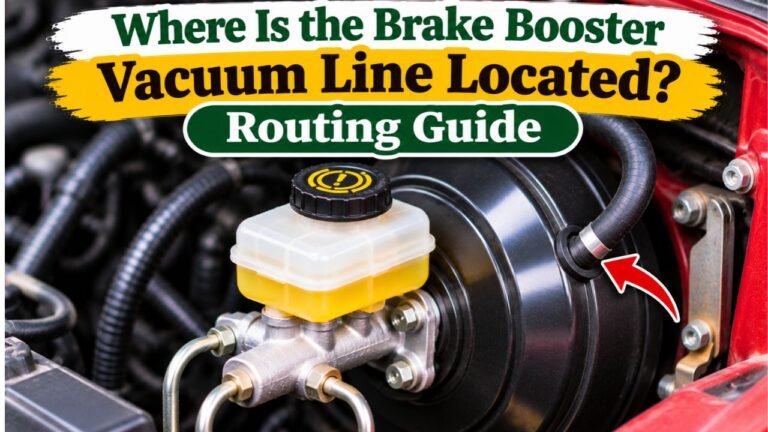
Look under the hood at the booster behind the master cylinder. Check for visibly crooked mounting, missing or loose hardware, or parts installed under tension. Inspect accessible vacuum hoses for damage, but remember that a vacuum leak is more likely to reduce assistance than produce drag.
If the trouble began after replacement, compare the part numbers and installation details with the exact vehicle specifications. A physically similar master cylinder can have a different piston depth, changing how it meets the booster pushrod.
Step 04: Have a Technician Identify Which Wheels Are Binding
A qualified technician can safely support the vehicle, reproduce the fault using the approved procedure, and check wheel rotation and temperatures with suitable tools. Multiple dragging wheels may indicate retained pressure from a common upstream component. One wheel dragging makes a localized fault more likely.
Circuit design matters: systems may be front/rear split, diagonally split, or electronically controlled. Compare affected wheels with the factory diagram before drawing conclusions.
Step 05: Test Pushrod Clearance and Master Cylinder Release
This is a workshop-level diagnostic check, not a reason to loosen brake components in a driveway. The technician may use the manufacturer’s approved method to determine whether the master cylinder piston is being held forward. This can involve measuring booster pushrod height against the cylinder’s required clearance and checking the relationship between the pedal, booster, and master cylinder.
Centric Parts’ brake drag diagnostic bulletin explains that some vehicles drag once warm after master cylinder replacement because the pedal mechanism or booster pushrod keeps the cylinder slightly applied. It describes a controlled separation check by a technician to help confirm that source of preload.
The master cylinder must be properly supported so its rigid brake lines are not bent or strained. On some vehicles the adjustment is fixed, so incorrect dimensions may require replacement of the mismatched or defective component.
Step 06: Confirm the Repair With the Required Brake Tests
After correcting the confirmed fault, the shop should verify full pedal return, proper booster assistance, free wheel rotation, absence of residual pressure, and no leaks. Any opened hydraulic circuit needs the manufacturer’s specified bleeding procedure; certain ABS and powered systems require specialized equipment.
A controlled post-repair test is appropriate only after the static checks pass. Normal pedal feel alone does not prove that the brakes fully release as temperatures change.
Bad Brake Booster or Another Brake Drag Problem?
Not every sticking brake is caused by the booster. The distribution of the drag and the repair history are often more informative than a single symptom.
| Possible Cause | More Typical Pattern | Useful Diagnostic Clue |
| Excessive booster pushrod length | Multiple brakes drag, sometimes more when warm | Often follows booster or master cylinder work |
| Sticking booster or pedal mechanism | Brakes remain partly applied after release | Pedal return or assist behavior is abnormal |
| Seized caliper piston or slide pins | Often one wheel | Localized heat and uneven pad wear |
| Internally restricted flexible brake hose | Often one wheel | Pressure may reach the brake but release slowly |
| Faulty master cylinder return or blocked port | One or more hydraulic circuits | Residual pressure without proper piston return |
| Sticking parking brake cable or hardware | Usually rear brake or brakes | Drag relates to parking brake operation |
| ABS hydraulic control fault | Depends on system and failure | Requires model-specific electronic and hydraulic diagnosis |
A seized caliper can still produce substantial braking force even after hydraulic pressure is released. A hose damaged internally may act as a restriction that slows fluid return. Those faults are not repaired by replacing the booster.
Conversely, both front brakes dragging after a master cylinder replacement should prompt inspection of shared hydraulic and mechanical causes before buying calipers. A technician may use approved pressure-release tests to distinguish trapped hydraulic pressure from a purely mechanical wheel-end problem. Opening brake fittings without proper controls can spray fluid, admit air, and make the vehicle unsafe.
Can a Vacuum Leak Make the Brakes Drag?
A typical brake booster vacuum leak causes a hard brake pedal or reduced power assist, not brake drag. The booster depends on a controlled pressure difference to multiply pedal force. A cracked hose, failed check valve, or leaking diaphragm usually reduces that available assistance.
A hissing sound and rough idle when pressing the brake pedal can support a vacuum-leak diagnosis on engines using intake-manifold vacuum. Yet these symptoms do not prove the same fault is keeping hydraulic pressure applied.
An abnormal internal valve that fails to release assistance is different from a simple leak. That is why a technician should diagnose how the booster is failing rather than treating every booster complaint as the same problem.
How to Fix Brakes Dragging Because of a Bad Booster
The correct repair depends on the confirmed source of unwanted pressure. If a recently installed, adjustable booster pushrod has the wrong clearance, a qualified technician can set it to the exact manufacturer specification, where adjustment is permitted. A nonadjustable booster with incorrect geometry or an internal mechanism that sticks may require replacement.
If the pedal linkage, switch, or stop prevents full return, repair that component according to the service manual. If the master cylinder has a damaged return mechanism or incompatible piston depth, address that instead of making an unapproved modification to the booster.
Before reuse, inspect brakes that have overheated. Excessive heat can damage pads, rotors, seals, fluid, and other components, even after the source of drag has been removed. The repair is incomplete until the affected hardware is checked and the brake system passes functional tests.
Is It Safe to Drive With Dragging Brakes?
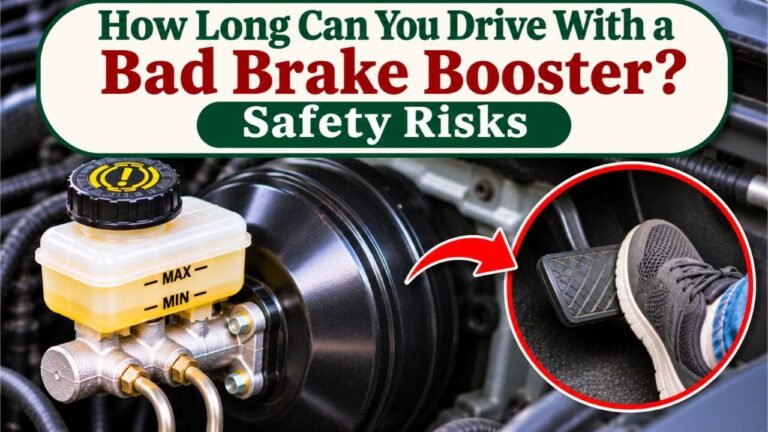
No. Do not continue driving a vehicle with suspected brake drag. Constant friction can cause overheating, reduced braking performance, damaged wheel-end components, and in severe cases brake failure. The vehicle may also pull unexpectedly or become difficult to control.
Allow the components to cool without touching them, and arrange towing or professional assistance. Do not disconnect a vacuum line, loosen a brake bleeder, or adjust a booster pushrod to temporarily free the wheels and then drive. Those actions can leave the brakes without adequate assist or introduce a new hydraulic fault.
FAQs About Can a Bad Brake Booster Cause Brakes to Drag
Can a Bad Brake Booster Make All Four Brakes Stick?
Yes, depending on the failure and hydraulic layout. A booster that keeps the master cylinder partially applied can affect multiple circuits. However, all-wheel drag also has other possible causes, including pedal or master cylinder faults.
Why Do My Brakes Drag Only After the Car Warms Up?
Trapped hydraulic pressure may increase as brake fluid heats and expands. This can happen when an incorrect pushrod setting prevents the master cylinder’s compensating port from opening fully. A technician should also check for other heat-related brake faults.
Can a Brake Booster Pushrod Be Adjusted to Stop Dragging?
Only on boosters designed for adjustment, and only to the vehicle’s specified measurement. Many units are factory-set or nonadjustable. Guessing the clearance can create brake drag or excessive pedal travel.
Does a Bad Brake Booster Usually Cause a Hard Pedal or Sticking Brakes?
A hard pedal is more typical, particularly with a vacuum leak or loss of assistance. Sticking brakes can occur when the booster or its related linkage fails to release correctly, but that needs specific diagnosis.
Can a Bad Master Cylinder Look Like a Bad Booster?
Yes. A master cylinder piston that does not return or a blocked compensating port can trap pressure and cause similar drag. The technician must determine whether the cylinder itself is defective or the booster is holding it partially applied.
What to Do When Booster Problems Keep the Brakes Applied
So, can a bad brake booster cause brakes to drag? Yes. An overextended pushrod, sticking booster mechanism, or binding pedal linkage can keep the master cylinder from releasing pressure. Still, a normal vacuum leak is more likely to cause a hard pedal, while an individual dragging wheel often points to a caliper, hose, or parking brake problem.
The best approach is to stop driving, identify which brakes are affected, and have the booster-to-master-cylinder clearance and related components checked against the vehicle’s service information. Fix the confirmed cause and verify the entire brake system before returning the car to the road.