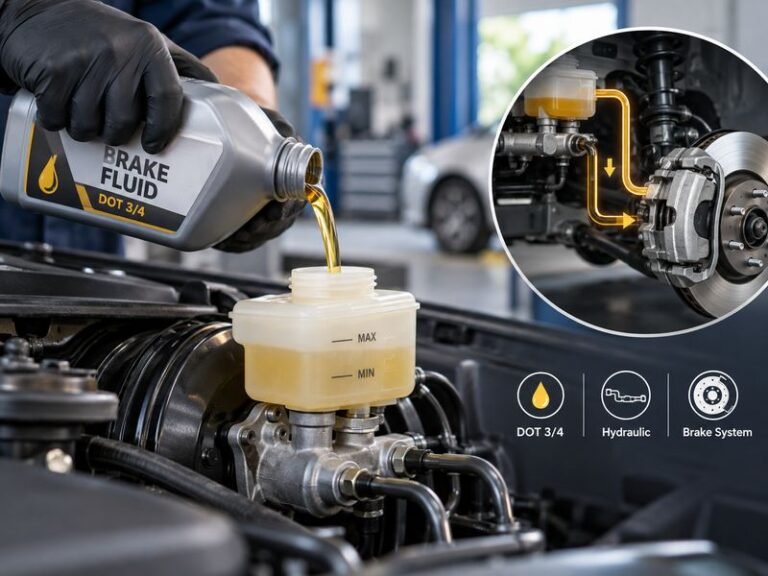
Why Must Brake Fluid Be Hygroscopic: Clear Answers and Key Facts
Brake fluid must be hygroscopic because its chemical composition is designed to absorb moisture from the air, which lowers its boiling point and prevents dangerous vapor lock while also protecting metal brake components from corrosion. This property is not a flaw; it is a deliberate engineering trade-off that allows your braking system to function safely under extreme heat and pressure. The rest of this article explains why this moisture-attracting trait is essential, how it affects brake performance over time, and what it means for your maintenance routine.
Think about the last time you pressed the brake pedal and felt a slight sponginess that was not there before. The fluid reservoir under your hood looked full, and you had not noticed any visible leaks on the driveway, so you might have assumed everything was fine. In reality, the problem was likely invisible: water molecules had slowly entered the sealed hydraulic system and changed the physical properties of the fluid itself.
This scenario happens to thousands of drivers every year, and it illustrates a central truth about brake systems: what you can see rarely tells you the whole story about the condition of your brake fluid.
The Core Reason: Boiling Point Protection
The single most important reason brake fluid is hygroscopic relates to heat. When you apply the brakes, the friction between the brake pads and rotors generates enormous amounts of heat. That heat transfers directly into the calipers, wheel cylinders, and the brake fluid contained within them.
Under hard braking, such as descending a long mountain grade or stopping suddenly from highway speed, the fluid temperature can easily exceed 200°F, and in severe cases, it can climb much higher.
Brake fluid works because it is a liquid, and liquids do not compress. When you press the pedal, the fluid transmits that force instantly to the brake calipers. However, if the fluid reaches its boiling point, it turns into a gas.
Gases are compressible, which means the pedal will travel further toward the floor before any braking force is applied. This condition is called brake fade, and it can be terrifying because you lose most of your stopping power.
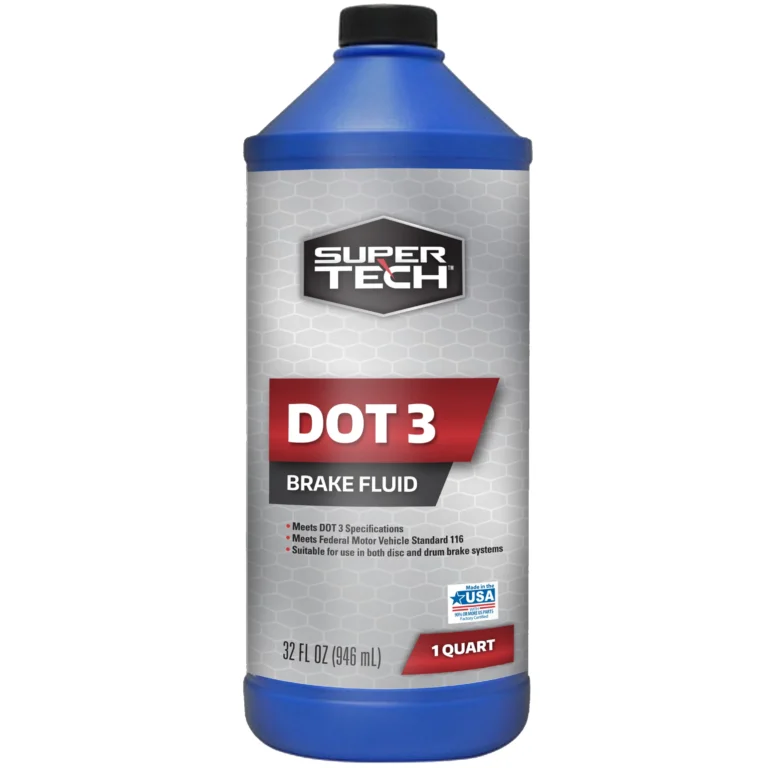
A hygroscopic fluid absorbs water vapor from the air, and water has a much lower boiling point than the glycol-ether compounds that form the base of most brake fluids. Pure DOT 3 or DOT 4 fluid has a dry boiling point above 400°F, but even a small amount of absorbed water can drop that number dramatically. The wet boiling point, which is the temperature at which fluid containing about 3.7% water will boil, is significantly lower.
By absorbing moisture, the fluid’s boiling point decreases, which seems counterproductive at first glance.
The key is that hygroscopic fluid absorbs moisture gradually and predictably. This means the boiling point drops in a measurable way over time, allowing engineers to set maintenance intervals and warning thresholds. If the fluid were non-hygroscopic, water would pool in low spots within the brake lines, creating localized pockets of steam that could cause sudden, catastrophic brake failure without warning.
The hygroscopic nature ensures that moisture is distributed evenly throughout the system, which makes the degradation predictable and manageable.
Corrosion Prevention and Internal Protection
Another critical reason for the hygroscopic property is internal corrosion protection. The metal components inside your braking system, including the master cylinder, caliper pistons, and steel brake lines, are highly susceptible to rust and pitting when exposed to water. If moisture were allowed to pool in one area, that spot would corrode rapidly, leading to seized calipers, leaking seals, or even complete line failure.
Because hygroscopic brake fluid absorbs moisture and holds it in suspension, the water does not have a chance to settle against metal surfaces. The fluid acts as a carrier, keeping the water molecules dispersed throughout the system. Additionally, brake fluid contains corrosion inhibitors that are specifically designed to protect the metal parts as long as the fluid is in good condition.
These inhibitors work best when the moisture content remains relatively low and evenly distributed.
This is why you should never use silicone-based DOT 5 fluid in a system designed for glycol-based fluid. DOT 5 is non-hygroscopic, meaning it repels water rather than absorbing it. While this sounds like an advantage, it actually causes water to pool in the lowest points of the brake system.
Over time, this pooled water leads to severe internal rust and premature component failure. The deliberate hygroscopic nature of DOT 3, DOT 4, and DOT 5.1 fluids is what keeps the internal surfaces protected.
The Sealed System Myth
Many drivers assume that because the brake system is sealed, no moisture can ever enter. This is a dangerous misconception. The brake fluid reservoir has a vent cap that allows air to enter as the fluid level drops, preventing a vacuum from forming.
That vented air contains humidity, and every time the cap is opened for inspection or topping off, fresh moist air enters the system.
Even without opening the cap, moisture can enter through the microscopic pores in rubber hoses and seals. Over time, the flexible brake hoses that connect the rigid lines to the calipers allow tiny amounts of moisture to permeate through the rubber. This is a slow process, but it is continuous.
The hygroscopic nature of the fluid ensures that whatever moisture enters is quickly absorbed and distributed, rather than collecting in the lowest caliper and causing a localized problem.
The condition of your brake fluid is therefore directly tied to the ambient humidity where you live. If you live in a humid climate like Florida or the Gulf Coast, your brake fluid will absorb moisture faster than if you live in a dry desert climate like Arizona. This is why many manufacturers recommend more frequent brake fluid flushes in humid regions, even if the vehicle is not driven hard.
Signs That Moisture Has Compromised Your Fluid
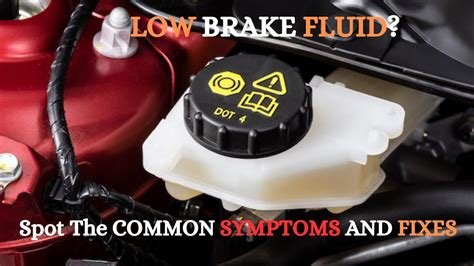
Because you cannot see the moisture content of brake fluid with the naked eye, you must rely on symptoms and regular testing to determine its condition. One of the most common signs of water-contaminated brake fluid is a soft or spongy brake pedal. This occurs because the moisture lowers the boiling point, and even moderate braking can cause localized boiling in the calipers.
The resulting gas bubbles create a compressible pedal feel.
Another sign is a brake pedal that gradually sinks toward the floor while you are stopped at a traffic light. This indicates that the fluid is boiling internally or that the moisture has caused internal corrosion that is damaging the master cylinder seals. You might also notice a pulsation in the pedal or a pulling sensation when braking, which can indicate that one caliper is sticking due to corrosion while others operate normally.
Professional mechanics use a simple electronic tester that measures the electrical conductivity of the fluid. Because water conducts electricity and brake fluid does not, higher conductivity indicates higher water content. Many experts recommend replacing brake fluid when the water content exceeds 3%, which is the threshold used to determine the wet boiling point rating.
Some high-performance driving schools recommend flushing the fluid if the water content exceeds 2%, because track conditions generate much higher brake temperatures.
The Maintenance Implication
The hygroscopic nature of brake fluid creates a clear maintenance requirement: periodic fluid replacement. Unlike engine oil, which becomes contaminated with combustion byproducts, brake fluid degrades primarily through moisture absorption. This degradation is time-dependent rather than mileage-dependent, which is why many manufacturers specify a brake fluid flush every two years regardless of how many miles you drive.
If you only drive your vehicle occasionally or live in a dry climate, you might be tempted to extend the interval. However, the moisture absorption continues even when the vehicle is parked, because the system is still exposed to air through the reservoir vent. A vehicle that sits in a humid garage for several years will have severely degraded brake fluid even if it has very low mileage.
The cost of neglecting brake fluid maintenance is significant. Replacing corroded brake lines, a seized caliper, or a failed master cylinder is far more expensive than a simple fluid flush. More importantly, brake failure due to vapor lock is a serious safety hazard that can lead to a crash.
The hygroscopic property of the fluid is what makes this maintenance necessary, but it is also what makes the system safe when properly maintained.
Exceptions and Performance Fluids
There is one notable exception to the hygroscopic rule: DOT 5 silicone-based brake fluid. This fluid is non-hygroscopic and is primarily used in classic cars, military vehicles, and some motorcycles where the vehicle is stored for long periods. Because it does not absorb water, it does not damage paint finishes as glycol-based fluids do, and it has an indefinite shelf life when stored properly.
However, DOT 5 fluid is not suitable for modern vehicles equipped with anti-lock braking systems. The ABS modulator contains small orifices and valves that can become clogged by the air bubbles that tend to form in silicone fluid. Additionally, because DOT 5 does not absorb moisture, any water that enters the system will freeze in cold weather, potentially blocking brake lines.
For these reasons, DOT 5 is rarely recommended for daily drivers.
High-performance DOT 4 and DOT 5.1 fluids have higher dry and wet boiling points than standard DOT 3 fluid. These fluids are still hygroscopic, but they are formulated with different additives that provide a higher margin of safety under extreme heat. Racing teams often flush their brake fluid before every event because they know that even the best hygroscopic fluid will absorb enough moisture to degrade performance within a few months of hard use.
Why Regular Testing Matters
The only way to know the actual condition of your brake fluid is to test it. Visual inspection is not sufficient because clean-looking amber fluid can still contain dangerous levels of moisture. The fluid darkens as it ages and absorbs contaminants, but the color change is not a reliable indicator of water content.
Some fluid can look dark due to normal wear particles from the master cylinder seals, while still having an acceptable moisture level.
Test strips and electronic testers are inexpensive and widely available. If you are comfortable performing basic car maintenance, you can test your own brake fluid in less than a minute. If the test indicates more than 3% water content, you should schedule a brake fluid flush as soon as possible.
If you are not comfortable doing this yourself, any reputable repair shop can perform the test during a routine oil change or tire rotation.
Conclusion
Brake fluid must be hygroscopic because this property allows it to absorb and distribute moisture evenly throughout the braking system, preventing localized corrosion and making the inevitable boiling point reduction predictable and manageable. This design choice means that brake fluid is not a lifetime component; it requires regular replacement to maintain its protective and hydraulic properties. The major limitation of this system is that moisture absorption is continuous and invisible, so you cannot rely on appearance or pedal feel alone to judge fluid condition.
The practical next step is to have your brake fluid tested at least once a year, or every two years at a minimum, and to replace it whenever the moisture content approaches the 3% threshold. This simple maintenance habit will protect your brake components from corrosion and ensure that your braking system delivers reliable stopping power when you need it most.