Do You Put Brake Fluid in the Master Cylinder? How to Add It
Yes, brake fluid belongs in the brake master cylinder’s hydraulic system, but on most cars you add it through the reservoir mounted on or connected to the master cylinder—not by opening the cylinder body. The reservoir supplies fluid to the master cylinder, which creates hydraulic pressure when you press the brake pedal. Use only the fluid specified in the owner’s manual or on the reservoir cap.
Before adding anything, check the level against the MIN and MAX marks. The level can gradually decline as disc brake pads wear, and topping it up is not always necessary. A level below MIN, a rapid drop, or repeated need for fluid may indicate a leak requiring repair. Adding fluid cannot restore a failing master cylinder or remove air trapped in the brake lines.
If the brake pedal feels spongy, sinks toward the floor, or braking performance has changed, do not drive until the problem is diagnosed.
In this article, I explain where brake fluid goes, how the reservoir and master cylinder work, and how to check and top up fluid safely. I also cover DOT fluid compatibility, overfilling, leaks, and the difference between a top-up and a complete brake fluid change.
Do You Put Brake Fluid in the Master Cylinder or the Reservoir?
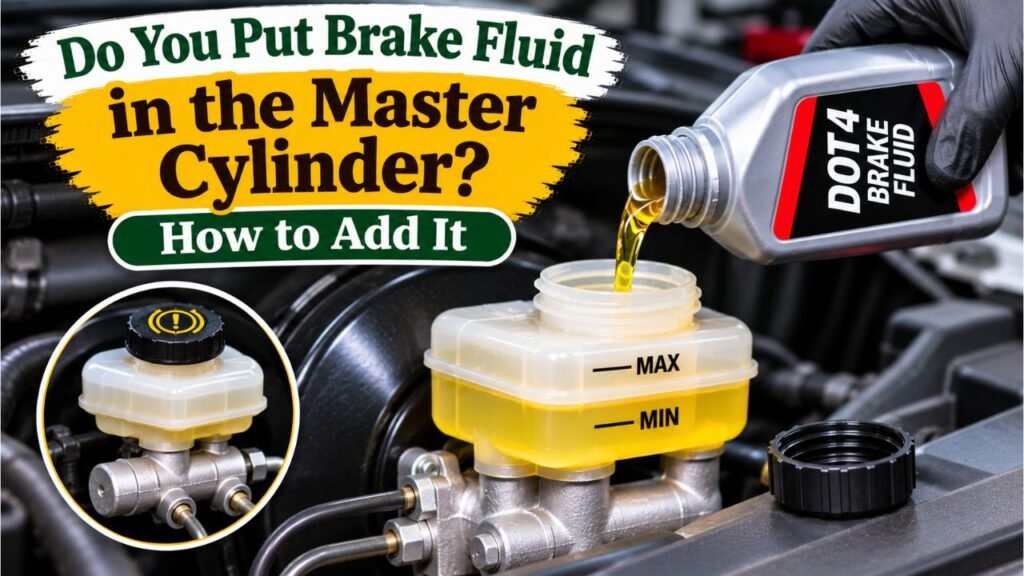
You add brake fluid to the master cylinder reservoir, not directly into the internal hydraulic chambers of the master cylinder.
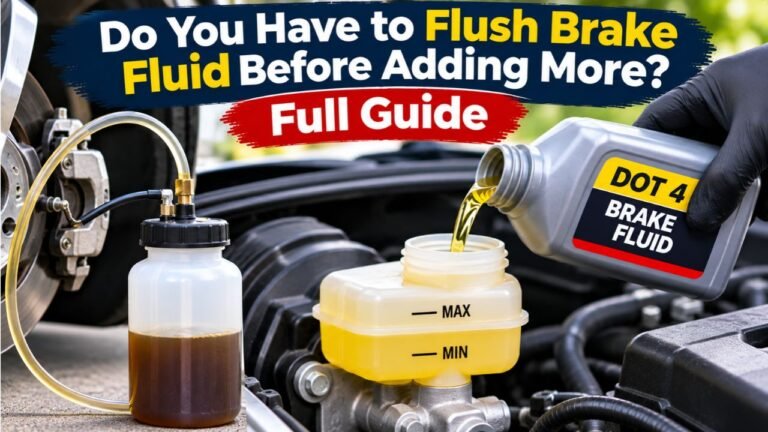
On most modern vehicles, the brake fluid reservoir is a translucent plastic container mounted on top of the master cylinder.
It supplies hydraulic fluid to the master cylinder through internal passages.
When the driver presses the brake pedal, the master cylinder uses this fluid to generate hydraulic pressure.
The pressure travels through brake lines and hoses to the wheel brakes.
The reservoir serves as the normal filling and inspection point.
You do not need to disassemble the master cylinder or disconnect brake lines to perform a routine fluid-level check.
Master Cylinder vs. Brake Fluid Reservoir
| Component | Main Function | Do You Add Fluid Here? |
| Brake fluid reservoir | Stores and supplies hydraulic brake fluid | Yes, when appropriate |
| Master cylinder body | Generates hydraulic pressure | No direct filling during routine maintenance |
| Brake lines | Carry pressurized brake fluid | No |
| Flexible brake hoses | Connect hydraulic components | No |
| Brake calipers | Apply disc brake pads | No |
| Wheel cylinders | Operate drum brake shoes | No |
| ABS hydraulic unit | Helps regulate braking pressure | Not a normal fluid-filling location |
Some older vehicles have a metal reservoir integrated into the master cylinder.
Other vehicles have remotely mounted reservoirs connected by hoses.
The reservoir may look different, but its purpose remains the same.
Key Takeaway: When someone says to put brake fluid in the master cylinder, they usually mean adding the correct fluid to the master cylinder’s reservoir.
Where Is the Brake Master Cylinder Located?
On many conventional cars, the master cylinder is located near the rear of the engine compartment, close to the firewall.
The firewall is the structure separating the engine compartment from the passenger cabin.
The master cylinder is commonly positioned on the driver’s side and attached to the brake booster.
However, the exact location depends on the vehicle.
Some modern hybrids, electric vehicles, and vehicles with integrated braking systems use different arrangements.
How to Identify the Brake Fluid Reservoir
Look for a container with these characteristics:
- Located in the engine compartment or another manufacturer-specified service location
- Often made from translucent plastic
- Marked with MIN and MAX level indicators
- Usually fitted with a labeled cap
- Commonly connected to or mounted above the master cylinder
- May have a brake-system warning symbol
The cap may specify DOT 3, DOT 4, or another required brake fluid.
Do not confuse it with the power steering, coolant, or windshield washer reservoir.
If you cannot confidently identify the correct container, check the owner’s manual before opening anything.
Is the Reservoir Always on Top of the Master Cylinder?
No.
Although this is common, some vehicles use remotely mounted reservoirs or integrated brake-system assemblies.
The location and checking procedure can differ.
The correct method is always the one specified for the vehicle.
How Does Brake Fluid Work in the Master Cylinder?
The master cylinder converts brake pedal force into hydraulic pressure.
This pressure operates the brakes at the wheels.
According to Firestone Complete Auto Care’s explanation of the brake master cylinder, the master cylinder contains pistons that pressurize brake fluid supplied by the reservoir.
That pressure travels through the hydraulic lines to operate the braking components.
What Happens When You Press the Brake Pedal?
In a conventional hydraulic system:
- The driver presses the brake pedal.
- A pushrod transfers force to the master cylinder.
- The master cylinder pistons move.
- Hydraulic pressure develops.
- Brake fluid transmits that pressure through the brake lines.
- Calipers or wheel cylinders apply the friction components.
- The pads or shoes contact the rotors or drums.
- Friction slows the wheels.
When the pedal is released, hydraulic pressure decreases and the braking components return toward their normal released positions.
Why Does the Reservoir Need Fluid?
The reservoir supplies the fluid needed for normal hydraulic operation.
It also accommodates changes in fluid volume as the brake components move and wear.
For example, as disc brake pads wear, caliper pistons extend farther.
More fluid occupies the space behind those pistons.
The reservoir level may gradually decrease.
This does not automatically mean brake fluid is leaking.
Can the Master Cylinder Work Without Brake Fluid?
No conventional hydraulic master cylinder can operate normally without an adequate supply of suitable brake fluid.
If the system loses fluid, it may be unable to maintain the pressure required for effective braking.
Air may also enter the hydraulic circuits.
Since air is compressible, the brake pedal may become soft or travel farther than normal.
Severe hydraulic problems can result in partial or complete brake failure.
How to Check the Brake Fluid Level in the Master Cylinder
Checking the reservoir is usually straightforward on a conventional vehicle.
However, the procedure can vary depending on the brake system.
A fluid-level check is not a substitute for diagnosing an abnormal brake pedal or a suspected leak.
Step 1: Park on Level Ground
Park the vehicle on a firm, level surface.
Switch off the engine.
Follow the manufacturer’s instructions for the required vehicle operating condition.
Some hybrid and electronically controlled braking systems have special procedures.
Do not assume that every brake system should be inspected or serviced in exactly the same way.
Step 2: Open the Hood
Locate the brake fluid reservoir.
On many vehicles, it sits near the firewall on the driver’s side.
Consult the owner’s manual if its location is unclear.
Step 3: Find the MIN and MAX Markings
Most modern translucent reservoirs have level indicators.
Common markings include:
- MIN
- MAX
- LOW
- FULL
Look at the fluid level through the reservoir wall.
You usually do not need to remove the cap.
Step 4: Compare the Level With the Markings
The fluid should be within the range specified by the manufacturer.
A level between MIN and MAX may be normal.
The exact target can depend on the vehicle and brake pad condition.
Avoid assuming that every reservoir must remain filled to the MAX line at all times.
Step 5: Check for Warning Signs
Look for:
- Fluid below the specified minimum
- A sudden decrease in level
- Visible leakage
- Damage around the reservoir
- A brake warning light
- Abnormal brake pedal behavior
If the level is below MIN, a leak is suspected, or braking performance has changed, do not drive until the cause has been assessed.
Step 6: Determine Whether Fluid Is Actually Needed
A slightly lower level may reflect normal brake pad wear.
An unexpectedly low level may indicate a hydraulic leak.
Have the cause identified before treating the issue as a simple refill.
According to AutoZone’s guide to checking brake fluid, the level should be checked against the reservoir markings, and low fluid may indicate worn brake pads or a leak.
The guide also emphasizes checking the correct fluid specification before topping off.
How to Put Brake Fluid in the Master Cylinder Reservoir
If an inspection confirms that a top-up is appropriate, use the manufacturer’s specified brake fluid.
The following steps describe a general procedure for conventional, serviceable brake fluid reservoirs.
They do not apply to every vehicle, particularly systems requiring specialized service procedures.
Do not use a top-up procedure to compensate for a suspected brake leak or an abnormal pedal.
Step 1: Confirm the Correct Brake Fluid
Read the owner’s manual.
Also check the reservoir cap for the required fluid specification.
Common examples include:
- DOT 3
- DOT 4
- DOT 5
- DOT 5.1
These are not all interchangeable.
Use the exact fluid type approved for your vehicle.
Step 2: Prepare the Supplies
For a permitted top-up, you may need:
- Correct, fresh brake fluid
- Clean lint-free cloth
- Protective gloves
- Eye protection
- A clean, compatible funnel if required
Use a funnel dedicated to compatible brake fluid rather than one previously used for engine oil or coolant.
Step 3: Clean Around the Reservoir Cap
Before removing the cap, clean the surrounding area.
Dirt and debris must not enter the hydraulic system.
Avoid using a dirty rag that could introduce particles or fibers.
Step 4: Remove the Cap Carefully
Open the reservoir according to the manufacturer’s instructions.
Do not leave it exposed unnecessarily.
Many brake fluids absorb moisture from the atmosphere.
Water contamination can reduce the fluid’s performance.
Step 5: Add Brake Fluid Slowly
Pour the approved fluid carefully into the reservoir.
Use a suitable clean funnel if necessary.
Monitor the level while adding fluid.
Do not fill beyond the manufacturer’s specified limit.
Step 6: Stop at the Correct Level
Follow the vehicle’s fill-level instructions.
The required level may depend on brake pad wear or the stage of a maintenance procedure.
Do not automatically fill to MAX if an inspection indicates that the lower level reflects normal pad wear.
Step 7: Reinstall the Cap
Replace the cap securely.
Ensure the sealing surface is clean and the cap is properly seated.
Avoid introducing moisture or debris.
Step 8: Clean Any Spills
Brake fluid can damage painted surfaces and certain materials.
Clean spills promptly using the methods recommended by the vehicle and fluid manufacturers.
Do not allow brake fluid to contact brake pads, rotors, or other friction surfaces.
Step 9: Verify the Fluid Level
Check the reservoir again.
Make sure it is within the specified range.
Inspect the area for leakage.
Step 10: Confirm the System Is Safe
A fluid top-up does not confirm that the braking system is working correctly.
If the level was unexpectedly low, continue with the necessary inspection or professional diagnosis.
If the pedal is soft, sinks, or braking performance is reduced, do not attempt to fix the problem by repeatedly adding fluid.
Arrange professional repair.
How Much Brake Fluid Do You Put in the Master Cylinder?
There is no universal amount of brake fluid to add.
The quantity depends on:
- Vehicle model
- Reservoir capacity
- Existing fluid level
- Brake pad condition
- Hydraulic system design
- Maintenance procedure
For an appropriate top-up, add only the amount required to reach the manufacturer’s specified level.
Should You Fill the Reservoir to MAX?
Not automatically.
Some manufacturer maintenance procedures call for filling to MAX.
However, fluid level naturally changes as brake pads wear.
If the pads are worn and the reservoir has already been topped off to MAX, pushing the caliper pistons back during pad replacement can cause the reservoir to overflow.
For this reason, identify the cause of the lower fluid level before adding more.
Can You Put Too Much Brake Fluid in the Master Cylinder?
Yes.
An overfilled reservoir can overflow during brake service or under certain operating conditions.
Excess brake fluid may contact painted surfaces.
Overfilling may also interfere with the correct operation or servicing of certain brake systems.
Follow the manufacturer’s fill specification.
What Happens if the Reservoir Is Overfilled?
If the reservoir is above the specified maximum, the excess should be addressed using the correct vehicle-specific procedure.
Do not remove fluid with contaminated tools.
If the brake fluid level is significantly incorrect, have a qualified technician inspect the system.
Which Brake Fluid Goes in the Master Cylinder?
The correct fluid depends on the manufacturer’s requirements.
There is no single DOT fluid suitable for every vehicle.
DOT 3 Brake Fluid
DOT 3 is a conventional glycol-based brake fluid.
It is used in many automotive hydraulic braking systems.
However, a vehicle requiring DOT 4 or a specialized formulation should not automatically receive DOT 3.
DOT 4 Brake Fluid
DOT 4 is also generally glycol-based.
It has different minimum performance requirements from DOT 3, including boiling-point specifications.
Some vehicles specifically require DOT 4.
Use the approved formulation.
DOT 5 Brake Fluid
DOT 5 is generally silicone-based.
It is different from conventional glycol-based DOT 3 and DOT 4 fluids.
It must not be treated as interchangeable with them.
Do not add DOT 5 unless the vehicle manufacturer explicitly specifies or approves it.
DOT 5.1 Brake Fluid
DOT 5.1 is generally glycol-based despite its similar name to DOT 5.
It has its own performance classification.
A higher DOT number does not automatically make a fluid suitable for every brake system.
Brake Fluid Compatibility Chart
| Brake Fluid | Common Base Chemistry | Main Rule |
| DOT 3 | Glycol-based | Use when specified or approved |
| DOT 4 | Glycol-based | Use when specified or approved |
| DOT 5 | Silicone-based | Not interchangeable with conventional glycol-based fluid |
| DOT 5.1 | Glycol-based | Use when specified or approved |
| Specialized manufacturer fluid | Varies | Follow the exact vehicle specification |
Some DOT 3, DOT 4, and DOT 5.1 fluids can be chemically compatible, but that does not mean every substitution meets the vehicle’s requirements.
Always follow the owner’s manual.
Why Does the Master Cylinder Brake Fluid Level Get Low?
Brake fluid is not normally consumed like gasoline.
The braking system is designed to retain its hydraulic fluid.
However, the reservoir level can change because of brake wear, leakage, or a service-related issue.
Normal Brake Pad Wear
As disc brake pads wear, the caliper pistons gradually move outward.
This increases the amount of fluid occupying the calipers.
Consequently, the reservoir level may decrease.
This is one reason a lower reading does not automatically mean fluid is leaking.
However, the pads should be inspected when their condition is uncertain.
Brake Line Leakage
Metal brake lines can corrode or become damaged.
A hydraulic leak may cause fluid to escape when pressure is applied.
An active leak is a serious safety problem.
Brake Hose Leakage
Flexible brake hoses may deteriorate, crack, or become damaged.
If fluid escapes, the hydraulic system may lose pressure.
A damaged hose requires proper repair or replacement.
Leaking Brake Caliper
Brake calipers contain pistons and seals.
A damaged seal can allow fluid to escape.
A caliper leak may also contaminate the brake pads or rotors.
Wheel Cylinder Leakage
Vehicles with drum brakes may have hydraulic wheel cylinders.
Damaged wheel cylinder seals can allow fluid to leak inside the brake drum.
This may not immediately create a visible puddle beneath the car.
Master Cylinder Leakage
The master cylinder itself can develop external leaks.
Its internal seals can also deteriorate.
An internal seal failure may cause pressure loss even when the reservoir remains full.
Why Repeated Topping Off Is a Warning
If the brake fluid level repeatedly drops after being filled, the cause must be identified.
According to NAPA’s guide to checking brake fluid, gradual changes may reflect brake pad wear, while a rapid drop can indicate a leak requiring immediate attention.
Repeatedly adding fluid without repairing the cause can hide a dangerous problem.
Can You Add Brake Fluid if the Master Cylinder Is Empty?
An empty master cylinder reservoir requires immediate investigation.
It may indicate substantial hydraulic fluid loss or an improperly completed repair.
Do not simply refill the reservoir and assume the brakes will work normally.
What Happens When the Reservoir Runs Empty?
If the reservoir becomes empty, air can enter the hydraulic system.
Air is compressible.
This can interfere with the transmission of hydraulic pressure.
The result may include:
- Spongy brake pedal
- Excessive pedal travel
- Reduced braking response
- Partial brake failure
- Severe loss of braking ability
Will Filling an Empty Master Cylinder Restore the Brakes?
Not necessarily.
Adding fluid may restore the reservoir level, but trapped air can remain inside the hydraulic circuits.
A leak may also continue.
The system must be inspected, repaired as necessary, and properly bled.
Do You Need to Bleed Brakes After the Reservoir Runs Dry?
If air has entered the hydraulic system, appropriate bleeding is necessary.
Some ABS-equipped vehicles require specialized bleeding procedures and diagnostic equipment.
The exact method depends on the vehicle.
A qualified technician should handle a system that has lost significant fluid or braking pressure.
Do not drive a vehicle with an empty reservoir, suspected hydraulic leak, or abnormal brake pedal.
Can a Bad Master Cylinder Have a Full Reservoir?
Yes.
A full brake fluid reservoir does not guarantee that the master cylinder is functioning correctly.
The master cylinder contains internal seals.
These seals help generate and maintain hydraulic pressure.
If they deteriorate, fluid may bypass internally rather than maintaining the required pressure.
Symptoms of a Failing Master Cylinder
Possible warning signs include:
- Brake pedal slowly sinking while pressure is applied
- Soft or inconsistent pedal feel
- Reduced braking performance
- Visible fluid leakage
- Unusual changes in pedal travel
- Brake warning light
However, these symptoms can also result from other braking-system problems.
Professional diagnosis is necessary.
Does Adding Fluid Fix a Bad Master Cylinder?
No.
Adding fluid does not repair worn internal seals or a damaged cylinder bore.
If the master cylinder cannot maintain pressure, the faulty component must be repaired or replaced according to the manufacturer’s requirements.
Does a Full Reservoir Mean the Brakes Are Safe?
No.
A vehicle may have full brake fluid but still experience problems involving:
- Master cylinder failure
- Air in brake lines
- Brake booster problems
- Caliper problems
- Worn pads
- Damaged rotors
- Other mechanical or electronic faults
Brake system condition cannot be determined from fluid level alone.
Do You Need to Bleed the Brakes After Adding Fluid?
Not always.
If an appropriate top-up was performed without allowing air into the hydraulic system, bleeding may not be necessary.
However, a top-up is different from repairing a system that has lost pressure or run dry.
When Bleeding May Be Necessary
Brake bleeding may be required after:
- Replacing a master cylinder
- Opening hydraulic brake lines
- Repairing a hydraulic leak
- Replacing certain hydraulic components
- Allowing air into the system
- Performing a brake fluid exchange
The exact procedure depends on the vehicle.
Why Is Bleeding Important?
Bleeding removes trapped air from the hydraulic system.
Air can create a spongy brake pedal because it compresses when pressure is applied.
Brake fluid does not eliminate trapped air simply because the reservoir has been filled.
Can You Bleed Brakes Through the Master Cylinder Reservoir?
The reservoir supplies fresh fluid during bleeding.
However, the air is usually removed through designated bleeding points or manufacturer-specific service procedures.
Simply removing the reservoir cap and pressing the pedal does not constitute proper brake bleeding.
Adding Brake Fluid vs. Changing Brake Fluid
Adding brake fluid and replacing brake fluid are different maintenance procedures.
Topping Off Brake Fluid
Topping off involves adding a small amount of approved fluid to reach the required level.
It does not remove the existing fluid from the hydraulic system.
It is only appropriate when the reason for the fluid level and the manufacturer’s requirements have been established.
Brake Fluid Replacement
Brake fluid replacement involves exchanging old fluid for new fluid throughout the appropriate hydraulic circuits.
A proper procedure may involve:
- Removing old fluid
- Adding fresh specified fluid
- Following the vehicle’s bleeding procedure
- Removing trapped air where necessary
- Verifying hydraulic operation
Simply removing old fluid from the reservoir and adding fresh fluid does not replace the fluid throughout the entire braking system.
Comparison Table
| Maintenance Task | Adds Fresh Fluid? | Removes Old Fluid? | Addresses Air in Lines? |
| Brake fluid level check | No | No | No |
| Routine top-up | Yes | No | No |
| Reservoir-only fluid exchange | Yes | Only reservoir contents | No |
| Proper brake fluid replacement | Yes | Yes, from required hydraulic circuits | When performed using appropriate procedures |
| Brake bleeding | Yes, as needed | Some fluid may be removed | Yes |
| Hydraulic leak repair | May require fluid | Depends on repair | May require bleeding |
The correct service depends on the vehicle and the condition of the braking system.
Should You Replace All the Brake Fluid When Filling the Master Cylinder?
Not necessarily.
If the brake fluid is within its recommended service interval and the system is in good condition, a complete fluid replacement may not be due.
However, old or contaminated fluid should not be treated as renewed merely because fresh fluid was added to the reservoir.
How Often Should Brake Fluid Be Changed?
The recommended interval varies.
Some manufacturers specify replacement approximately every two or three years.
Other vehicles have different schedules.
Follow the exact maintenance requirements for your vehicle.
Can Old Brake Fluid Damage the Master Cylinder?
Conventional glycol-based brake fluid absorbs moisture over time.
Excess moisture can reduce its boiling point and contribute to corrosion within hydraulic components.
Deteriorated fluid may also lose some of its intended protective properties.
Replacing the fluid according to the manufacturer’s schedule helps maintain the braking system.
Does Dark Brake Fluid Always Mean It Must Be Changed?
Dark fluid may indicate contamination or deterioration.
However, color alone does not determine every aspect of fluid condition.
A proper assessment should consider the manufacturer’s maintenance schedule and suitable testing where appropriate.
If fluid contains visible debris or appears severely contaminated, the system should be inspected.
What Happens if You Put the Wrong Fluid in the Master Cylinder?
Adding an incompatible fluid can seriously damage the braking system.
Brake master cylinders, hoses, calipers, and other components use seals designed for particular hydraulic fluids.
The wrong product may cause those seals to swell, soften, or deteriorate.
Can You Put Power Steering Fluid in the Master Cylinder?
No.
Ordinary power steering fluid is not a substitute for brake fluid.
Using an incompatible petroleum-based fluid in a brake system designed for glycol-based brake fluid can damage rubber components.
Can You Use Transmission Fluid?
No.
Automatic transmission fluid is not a substitute for conventional automotive brake fluid.
Do not add it to a brake master cylinder reservoir unless a highly specialized system explicitly requires a different hydraulic fluid under its manufacturer specifications.
Can You Use Engine Oil?
No.
Engine oil is not designed for conventional hydraulic braking systems.
It can damage incompatible seals and interfere with safe braking.
Can You Use Water?
No.
Water is not a substitute for brake fluid.
It does not provide the required boiling-point and corrosion-protection characteristics.
What Should You Do After Adding the Wrong Fluid?
If an incorrect fluid has entered the reservoir:
- Do not drive the vehicle.
- Do not pump the brake pedal unnecessarily.
- Identify the product that was added.
- Contact a qualified brake technician.
- Arrange inspection and appropriate repair.
Do not attempt to correct incompatible fluid contamination by adding more of the proper brake fluid.
The affected seals and hydraulic components may need replacement.
Can Overfilling the Master Cylinder Cause Brake Problems?
Yes.
The reservoir has a specified operating level.
Overfilling can create problems, particularly during brake servicing.
Brake Pads and Fluid Level
When brake pads wear, the caliper pistons extend farther.
The reservoir level may fall.
When new pads are installed, the technician pushes the pistons back.
This returns fluid to the reservoir.
If too much fluid was added earlier, the reservoir may overflow.
Can Brake Fluid Overflow Damage Paint?
Yes.
Many conventional brake fluids can damage automotive paint and certain plastics.
Spilled fluid should be addressed promptly using the appropriate cleaning procedure.
Can Overfilling Cause Brakes to Lock Up?
Overfilling alone should not automatically be assumed to cause brake lockup.
Brake dragging can result from several problems, including blocked hydraulic return, incorrect component adjustment, damaged hoses, or caliper faults.
An incorrectly filled or assembled system may also have operating problems depending on its design.
A brake system that drags or fails to release requires professional inspection.
Can You Drive With Low Fluid in the Master Cylinder?
Do not assume that a vehicle is safe to drive because some brake fluid remains in the reservoir.
The fluid level must be evaluated in context.
Slightly Lower Level but Still Within Range
A level between the manufacturer’s MIN and MAX markings may be normal.
However, a noticeable change should be considered alongside pad wear, service history, and pedal feel.
Fluid Below MIN
A level below the specified minimum can indicate excessive brake wear, a leak, or another issue.
Do not drive until the cause has been evaluated.
Fluid Level Dropping Rapidly
A rapid decline is a serious warning.
An active hydraulic leak can worsen unexpectedly.
Stop using the vehicle and arrange professional inspection.
Soft or Sinking Brake Pedal
A soft pedal, unusually long pedal travel, or sinking pedal can indicate a hydraulic problem.
Even a full reservoir does not make the vehicle safe under these conditions.
Do not drive until the braking system is diagnosed and repaired.
Common Mistakes When Adding Brake Fluid to the Master Cylinder
Several mistakes can create unnecessary maintenance problems or serious safety hazards.
1. Adding Fluid Without Checking the Level
A fluid top-up should be based on the manufacturer’s requirements and an assessment of the system.
Do not add fluid simply because the reservoir is not completely full.
2. Filling Above MAX
Overfilling can cause fluid to overflow during brake service.
Use the specified level.
3. Using the Wrong DOT Fluid
Brake systems have specific fluid requirements.
Check the cap and owner’s manual.
4. Mixing DOT 5 With Glycol-Based Fluid
DOT 5 silicone-based fluid is not a general substitute for DOT 3, DOT 4, or DOT 5.1.
Incorrect mixing can create compatibility problems.
5. Allowing Dirt Into the Reservoir
Dirt and debris may contaminate hydraulic components.
Clean the cap area before opening it.
6. Using Old or Contaminated Fluid
Conventional glycol-based brake fluid absorbs moisture.
Use appropriate fresh fluid from a clean container.
7. Ignoring a Leak
Repeatedly adding fluid does not repair a damaged hose, line, caliper, or master cylinder.
8. Assuming a Top-Up Removes Air
Adding fluid does not automatically remove trapped air from hydraulic circuits.
A proper bleeding procedure may be needed after repair.
9. Spilling Fluid on Painted Surfaces
Brake fluid can damage paint.
Handle it carefully and clean spills promptly.
10. Assuming the Reservoir Is the Master Cylinder’s Only Important Part
A full reservoir does not prove that the master cylinder’s internal seals, pistons, or other components are functioning correctly.
How to Maintain the Master Cylinder and Brake Fluid Reservoir
Routine inspection helps identify problems before they become serious.
Follow the Maintenance Schedule
Check the owner’s manual for brake fluid inspection and replacement intervals.
Inspect the Reservoir
Look for:
- Unexpected fluid level changes
- Damage to the cap
- Cracks in the reservoir
- Leakage around hydraulic connections
- Visible contamination
Check Brake Pad Wear
Pad condition can influence reservoir level.
Brake pads should be inspected according to the manufacturer’s schedule and service limits.
Address Hydraulic Leaks Immediately
Brake fluid leaks can result in dangerous pressure loss.
Have the affected components repaired before driving.
Use Approved Fluid
Only use the manufacturer’s specified brake fluid.
Do not substitute unrelated automotive fluids.
Keep the Reservoir Sealed
Avoid unnecessary exposure to moisture and contamination.
Ensure the cap is properly installed.
Pay Attention to Brake Pedal Feel
A sudden change in pedal travel or resistance is a warning that should not be ignored.
If braking performance is compromised, stop driving and arrange a professional inspection.
Conclusion
So, do you put brake fluid in the master cylinder? Yes, but for most vehicles, you add it through the brake fluid reservoir mounted on or connected to the master cylinder.
The reservoir supplies hydraulic fluid to the master cylinder, which generates the pressure needed to operate the brakes.
Before adding fluid, check the level against the manufacturer’s markings and verify the required DOT fluid specification.
A slightly reduced level may be normal as brake pads wear. However, a level below the specified minimum, repeated need for fluid, or a sudden drop requires investigation.
I recommend avoiding unnecessary top-ups and never using brake fluid as a temporary solution for a suspected hydraulic leak.
Adding fluid does not repair damaged seals, remove air from the brake lines, or replace old fluid throughout the braking system.
If the brake pedal feels abnormal or braking performance is reduced, do not drive until the system has been inspected and repaired.
Correct fluid, proper maintenance, and timely repairs are essential for reliable hydraulic braking.
FAQs About Do You Put Brake Fluid in the Master Cylinder
Do You Pour Brake Fluid Directly Into the Master Cylinder?
For routine maintenance, you add brake fluid to the reservoir mounted on or connected to the master cylinder.
You do not normally open the master cylinder body or disconnect hydraulic lines to add fluid.
Follow the vehicle-specific procedure.
Where Do You Put Brake Fluid in a Car?
Brake fluid goes into the brake fluid reservoir.
On many vehicles, this reservoir is located near the firewall on the driver’s side of the engine compartment.
Its exact position varies by model.
Check the owner’s manual if you cannot identify it.
Should the Brake Master Cylinder Be Full of Fluid?
The hydraulic system must contain the correct amount of fluid, but the reservoir should not be filled above its specified level.
Many reservoirs have MIN and MAX markings.
The appropriate level depends on the manufacturer’s instructions and brake component condition.
Can You Just Add Brake Fluid Without Bleeding the Brakes?
Yes, if an appropriate top-up is permitted and no air has entered the hydraulic system.
However, adding fluid does not remove existing air.
If the reservoir ran empty, a leak occurred, or hydraulic components were opened, proper bleeding may be required.
What Happens if You Put Too Much Brake Fluid in the Master Cylinder?
Excess fluid can cause the reservoir to overflow, particularly when caliper pistons are pushed back during brake service.
Brake fluid can also damage painted surfaces.
Keep the level within the manufacturer’s specified range.
Why Is My Master Cylinder Losing Brake Fluid?
Possible causes include brake pad wear, leaking brake lines, damaged hoses, caliper leaks, wheel cylinder leaks, or a master cylinder problem.
A sudden or repeated loss requires prompt diagnosis.
Can You Put DOT 4 Brake Fluid in a DOT 3 Master Cylinder?
Only if the vehicle manufacturer permits DOT 4 for that specific braking system.
Although conventional DOT 3 and DOT 4 fluids are generally glycol-based, compatibility with a particular vehicle must be verified.
Follow the owner’s manual.
Will Adding Brake Fluid Fix a Soft Brake Pedal?
Not necessarily.
A soft pedal may result from trapped air, a hydraulic leak, a master cylinder problem, or another fault.
Adding fluid does not automatically correct these conditions.
Do not drive with abnormal pedal feel until the problem has been diagnosed.
Can a Master Cylinder Have Brake Fluid but Still Be Bad?
Yes.
A master cylinder can have damaged internal seals that allow pressure to bypass.
The reservoir may remain full while the brake pedal sinks or hydraulic pressure becomes inadequate.
Professional inspection is necessary.
How Often Should You Add Brake Fluid to the Master Cylinder?
There is no normal recurring top-up schedule.
Brake fluid is not consumed during ordinary braking.
The reservoir level may gradually decrease with brake pad wear, but repeated fluid additions can indicate a leak or another problem.
Inspect the system and follow the manufacturer’s maintenance recommendations.