Does Brake Fluid Go Bad in a Sealed Container? Shelf Life Guide
Yes, brake fluid can go bad in a sealed container, although it generally lasts much longer than brake fluid stored in an opened bottle. Depending on the manufacturer, packaging, and storage conditions, unopened brake fluid may have a recommended shelf life of approximately two to five years. However, there is no universal expiration period for every DOT 3, DOT 4, or DOT 5.1 product.
A factory-sealed bottle helps prevent moisture and contaminants from reaching the fluid. Still, brake fluid packaging isn’t always completely impermeable to environmental moisture, and prolonged exposure to heat, humidity, or sunlight can affect storage life.
For example, some manufacturers specify two years for unopened bottles, while certain products are rated for up to five years under controlled storage conditions.
Using old brake fluid without verifying its condition can be risky because moisture contamination reduces boiling-point performance and may affect hydraulic braking reliability.
In this article, I explain whether brake fluid goes bad in a sealed container, how long unopened DOT 3 and DOT 4 fluids can last, and why storage conditions matter. You’ll learn how to check manufacture dates, recognize questionable packaging, compare opened and unopened shelf life, and decide when replacing an old bottle is the safest choice.
Does Brake Fluid Go Bad in a Sealed Container?
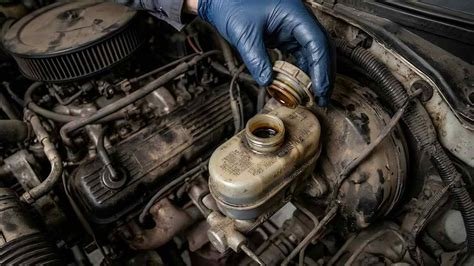
Brake fluid can deteriorate during storage even when the original bottle has never been opened. However, a properly sealed container significantly reduces the risk of moisture contamination.
The actual shelf life depends on the manufacturer’s formulation, container construction, closure design, and storage conditions.
Most conventional automotive brake fluids are glycol-based and hygroscopic, meaning they absorb moisture.
When moisture enters the fluid, the boiling point may decrease.
This matters because brake systems can become extremely hot during heavy or repeated braking.
Brake Fluid Shelf Life: Manufacturer Examples
| Manufacturer or product | Unopened shelf life | Conditions |
| TotalEnergies brake fluid, small packs | 2 years | Original unopened container with intact foil seal, proper storage |
| Motul brake fluids | 2 years | Normal storage; shorter in extreme heat and humidity |
| ATE Super DOT 4 | Up to 5 years | Original sealed container, −20°C to 40°C storage range |
These figures are manufacturer-specific recommendations, not universal DOT standards.
According to TotalEnergies’ brake fluid handling guidelines, unopened small containers with their original foil seal intact have a recommended shelf life of two years under suitable storage conditions.
Other products may have longer or shorter limits.
Does Sealed Brake Fluid Expire Automatically?
Not necessarily on one exact day.
A manufacturer’s shelf-life date generally marks the period during which the product’s stated performance can be supported under specified storage conditions.
The fluid doesn’t suddenly become completely ineffective at midnight on its expiration date.
However, after the recommended period, the manufacturer may no longer guarantee that the product meets its original specifications.
Because brake fluid is a safety-critical material, replacing an expired bottle is generally more sensible than attempting to use it.
Key Takeaway: Sealed brake fluid isn’t guaranteed to last forever. Check the specific manufacturer’s shelf-life recommendation rather than assuming all unopened bottles are good for the same number of years.
How Long Does Unopened Brake Fluid Last?
Unopened brake fluid may remain usable for several years when properly packaged and stored.
However, the specific time limit matters more than a broad industry estimate.
Does Brake Fluid Last Two Years Unopened?
Yes, many products have a recommended unopened shelf life of approximately two years.
For example, TotalEnergies specifies two years for small unopened containers under its recommended storage conditions.
Motul also declares a two-year shelf life for its brake fluids.
These are examples of product recommendations rather than a universal limit for every brand.
Does Brake Fluid Last Three Years Unopened?
Some products may have a three-year shelf life.
However, a three-year-old bottle should not automatically be considered acceptable.
Check its manufacture date and product documentation.
If the manufacturer specifies two years, a three-year-old bottle has already exceeded that recommendation.
Does Brake Fluid Last Five Years Unopened?
Certain products are rated for up to five years.
For example, ATE’s Super DOT 4 technical data sheet specifies storage life of up to five years in original sealed containers at temperatures ranging from −20°C to 40°C (−4°F to 104°F).
However, this applies to the specified ATE product.
It doesn’t establish a five-year guarantee for every DOT 4 brake fluid.
Can Sealed Brake Fluid Last Ten Years?
A bottle may still contain fluid after ten years without being opened.
However, that doesn’t establish that the fluid still meets its original braking-performance specifications.
Most of the manufacturer guidance discussed here does not support using an unopened bottle that old.
If you have a ten-year-old bottle, replacing it with fresh, correctly specified fluid is the safer choice.
What if the Brake Fluid Has No Expiration Date?
Some bottles display a batch code or production date rather than a clearly labeled expiration date.
You may need to contact the manufacturer or consult its product documentation to establish the shelf life.
No printed expiration date does not mean unlimited shelf life.
Why Does Brake Fluid Go Bad Even When Sealed?
A factory seal is designed to limit exposure to outside air and moisture.
However, long-term storage quality also depends on the packaging materials and surrounding conditions.
1. Moisture Can Gradually Enter Through Packaging
Glycol-based brake fluids are hygroscopic.
Some plastic packaging materials allow small amounts of moisture vapor to pass through over time.
The rate depends on the container material, wall thickness, seal quality, and environmental conditions.
Therefore, a closed bottle isn’t always completely protected from moisture indefinitely.
2. Container Seals Can Deteriorate
A damaged or poorly fitted closure may allow moisture to enter.
Potential problems include:
- Cracked caps.
- Loose closures.
- Damaged foil seals.
- Deformed bottle openings.
- Leaking containers.
- Damaged packaging after transportation.
A bottle that looks unopened may no longer be properly sealed.
3. Heat Can Affect Storage Life
High temperatures can accelerate certain deterioration processes and increase stress on packaging.
A bottle stored in a hot vehicle or exposed outdoor area may not retain its quality for the full recommended shelf life.
4. Humidity Increases Moisture Exposure
High humidity creates more opportunity for moisture to enter through imperfect seals or packaging materials.
This is particularly important in hot, humid climates.
5. Sunlight Can Affect Packaging
Direct sunlight can heat the bottle and contribute to deterioration of some packaging materials.
Manufacturers generally recommend protected storage.
6. Fluid Formulations Differ
DOT 3, DOT 4, and DOT 5.1 fluids aren’t necessarily made with identical chemical formulations.
They may contain different additives and have different performance characteristics.
Shelf life must therefore be based on the specific product rather than the DOT classification alone.
Does Hot or Humid Storage Shorten Brake Fluid Shelf Life?
Yes, it can.
Heat and humidity are important factors in brake fluid storage.
What Happens in Hot Weather?
High ambient temperatures can affect the bottle and its contents over time.
The impact depends on the product formulation, container, and length of exposure.
A bottle stored in a temperature-controlled room may remain within its recommended storage conditions longer than one kept in a very hot garage.
What Happens in High Humidity?
Moisture exposure becomes more important when the storage environment remains humid.
Even a bottle with a screw cap may rely on a separate foil seal for additional moisture protection.
Motul explains in its official brake fluid date-code and shelf-life guidance that its declared two-year shelf life may be reduced to approximately 12 months under extremely hot and humid conditions.
Motul also emphasizes the importance of keeping the metallic foil seal intact.
Is Brake Fluid Safe After Being Stored in a Hot Garage?
It depends on the temperatures reached, storage duration, and product-specific recommendations.
If the bottle has spent years in excessive heat or humidity, don’t assume that an intact cap guarantees acceptable fluid quality.
Compare its age and storage history with the manufacturer’s instructions.
Can Brake Fluid Be Stored in a Car?
A vehicle is generally not an ideal long-term storage location.
The interior or trunk may experience significant temperature fluctuations.
For long-term storage, a clean, cool, dry indoor area is usually preferable.
Key Takeaway: Proper sealing and moderate storage conditions are both important. A factory-sealed bottle exposed to extreme heat or humidity may have a shorter usable shelf life.
How Long Does DOT 3 Brake Fluid Last in a Sealed Container?
DOT 3 brake fluid is generally glycol-based and hygroscopic.
When stored in its original unopened packaging, its shelf life depends on the manufacturer’s recommendations.
Does DOT 3 Have an Expiration Date?
It may.
Some manufacturers provide a production date, expiration date, or batch identification code.
Others specify a general shelf-life period in their product documentation.
Check the exact brand and product.
Can You Use Three-Year-Old DOT 3?
Possibly, if the manufacturer’s stated shelf life covers that period and the bottle was stored correctly.
However, if the product has a two-year recommended shelf life, a three-year-old bottle should generally be replaced.
Can DOT 3 Absorb Water Through a Sealed Bottle?
Small amounts of moisture may enter over long periods depending on the packaging and environmental conditions.
The original seal reduces this risk but doesn’t necessarily eliminate it forever.
Should You Use Old DOT 3 for a Brake Fluid Top-Off?
If its age or storage condition is uncertain, use a fresh bottle of the correct specification.
Also determine why the brake fluid level is low before adding fluid.
An unexpected decrease may indicate worn brake components or a hydraulic leak.
How Long Does DOT 4 Brake Fluid Last Unopened?
DOT 4 is also generally glycol-based.
Its unopened shelf life varies by manufacturer and formulation.
Does DOT 4 Last Longer Than DOT 3?
Not necessarily.
DOT 4 has higher minimum boiling-point requirements, but that doesn’t automatically mean it has a longer storage life.
Packaging and manufacturer specifications are more important when determining shelf life.
Is Five-Year-Old DOT 4 Still Good?
For some products, five years may be the upper end of the specified unopened shelf life.
For example, ATE rates its Super DOT 4 for up to five years in the original sealed packaging under the conditions stated in its technical data sheet.
Other DOT 4 fluids may have shorter recommended limits.
Can You Use Expired DOT 4?
It’s generally better not to.
Once the stated shelf life has passed, the manufacturer may no longer guarantee the required performance.
A replacement bottle is inexpensive compared with the consequences of compromised braking-system performance.
What About DOT 4 LV?
DOT 4 LV refers to a low-viscosity brake fluid formulation.
Certain modern braking systems require particular low-temperature fluid characteristics.
If the vehicle specifies DOT 4 LV or another specialized standard, use fresh fluid meeting the complete specification.
Do not assume ordinary DOT 4 is an acceptable substitute.
Does DOT 5 Brake Fluid Go Bad in a Sealed Container?
DOT 5 is different from the conventional glycol-based brake fluids.
It is silicone-based.
Is DOT 5 Hygroscopic?
Silicone-based DOT 5 does not absorb moisture in the same way as glycol-based DOT 3, DOT 4, and DOT 5.1.
However, that doesn’t mean DOT 5 has unlimited shelf life.
Can Sealed DOT 5 Deteriorate?
Yes, depending on storage conditions, packaging integrity, and product formulation.
Contamination and other storage-related issues can still affect the product.
Follow the manufacturer’s shelf-life instructions.
Is DOT 5.1 the Same as DOT 5?
No.
DOT 5.1 is generally glycol-based, while DOT 5 is silicone-based.
The two fluids should not be confused.
Can You Mix DOT 5 With DOT 3 or DOT 4?
No.
Silicone DOT 5 should not be mixed with conventional glycol-based DOT 3, DOT 4, or DOT 5.1.
Always use the complete specification required by the vehicle manufacturer.
Sealed vs. Opened Brake Fluid: Shelf Life Comparison
The condition of the packaging makes a major difference.
Brake Fluid Storage Comparison
| Container condition | General shelf-life guidance | Recommended approach |
| Factory sealed, within manufacturer shelf life | Typically usable if correctly stored | Confirm fluid specification and packaging |
| Factory sealed, beyond manufacturer shelf life | Performance no longer guaranteed | Prefer replacement |
| Cap closed but foil seal removed | Considered opened | Follow shorter opened-fluid guidance |
| Opened a few weeks ago | Depends on handling and storage | Use only within product guidance |
| Opened several months ago | Greater risk of moisture exposure | Fresh fluid is generally preferable |
| Opened more than a year ago | Often unsuitable for safety-critical reuse | Replace |
| Bottle leaking or seal damaged | Packaging integrity compromised | Do not use |
Does Tightening the Cap Restore the Original Shelf Life?
No.
Once the inner seal is broken, the fluid has been exposed to the surrounding atmosphere.
Tightening the cap reduces further exposure, but it doesn’t restore factory-sealed conditions.
How Long Does Opened Brake Fluid Last?
Manufacturers commonly recommend using opened brake fluid promptly.
For example, TotalEnergies recommends consuming the contents within a few months after opening.
Motul notes that opened brake fluid may become compromised within approximately six months, depending on environmental conditions.
These recommendations differ, so follow the specific product’s instructions.
Can You Store Half a Bottle of Brake Fluid?
You can physically reseal it, but you should not assume the remaining fluid will remain suitable for an extended period.
For a safety-critical brake fluid replacement, using a fresh sealed bottle is often the better approach.
Is an Unopened Bottle With a Loose Cap Still Sealed?
Check whether its original inner foil seal remains completely intact.
An undamaged foil seal may provide protection even if the outer cap has been loosened.
However, if the foil seal is broken, missing, or damaged, treat the product as opened.
How to Check the Expiration Date on Brake Fluid
Brake fluid containers may display several kinds of date markings.
Not every printed date is an expiration date.
1. Find the Manufacture Date
Look for printed or stamped information on:
- The bottle neck.
- The cap.
- The rear label.
- The bottom of the container.
- The side of the bottle.
Some manufacturers identify the production or filling date directly.
2. Check the Batch Code
A batch code helps identify the manufacturing batch.
It may include the filling date.
However, there is no universal batch-code format across all manufacturers.
Do not assume that a code can be interpreted using another brand’s system.
3. Look for an Expiration or Best-Before Date
Some products may include a clearly printed expiration date.
If one exists, follow the manufacturer’s guidance.
4. Check the Technical Data Sheet
A technical data sheet may identify the product’s storage life.
Make sure the document applies to the exact brake fluid formulation.
5. Contact the Manufacturer if Necessary
If the bottle date is unclear, provide the manufacturer with the batch code and product name.
This can help determine the fluid’s age.
Example: Calculating an Unopened Shelf Life
Suppose a brake fluid bottle was manufactured in January 2025.
If its manufacturer specifies a two-year unopened shelf life, that recommended period would generally run to approximately January 2027 under the stated storage conditions.
However, unusually poor storage may reduce the usable period.
This calculation should be based on the actual product’s instructions.
Key Takeaway: Brake fluid shelf life normally depends on when the product was manufactured or filled—not merely when you purchased it.
How to Tell if Sealed Brake Fluid Has Gone Bad
A sealed bottle may appear normal even when its age or storage history makes it unsuitable.
Visual inspection helps identify obvious problems, but it cannot verify all performance characteristics.
Check the Packaging
Inspect the container for:
- Cracks.
- Leaks.
- Damaged caps.
- Broken inner seals.
- Bulging or deformation.
- Significant corrosion on metal packaging.
- Evidence of tampering.
Don’t use fluid from damaged or questionable packaging.
Check the Manufacture Date
Compare the manufacturing or filling date with the product’s shelf-life guidance.
If the fluid is older than recommended, replacing it is the safest practical option.
Check for Visible Contamination
If the bottle is opened for legitimate use, the fluid should appear consistent with the manufacturer’s description.
Warning signs may include:
- Unusual cloudiness.
- Visible particles.
- Sediment.
- Unexpected separation.
- Obvious contamination.
However, these signs are not comprehensive.
Does Dark Brake Fluid Mean It’s Expired?
Not necessarily.
Brake fluid color varies by formulation.
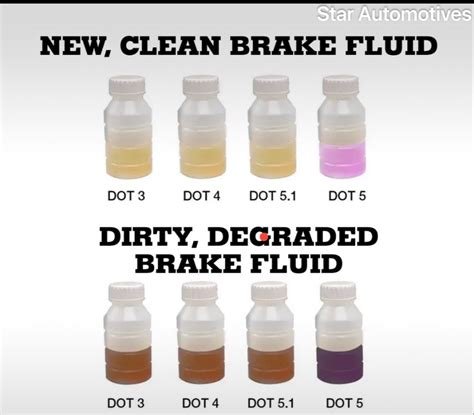
Color alone cannot establish moisture content, boiling point, or storage suitability.
Likewise, clear-looking fluid isn’t guaranteed to be safe.
Can You Smell Bad Brake Fluid?
Odor isn’t a reliable method of determining brake fluid quality.
Do not deliberately inhale brake fluid fumes to assess its condition.
Use the manufacturer’s instructions and appropriate testing methods instead.
Can You Shake the Bottle to Check?
No.
Shaking the bottle doesn’t establish whether the fluid meets its required specifications.
A normal appearance after shaking doesn’t prove the product is still suitable.
Can You Test Old Sealed Brake Fluid Before Using It?
Testing may be possible, but it has practical limitations.
Moisture Testers
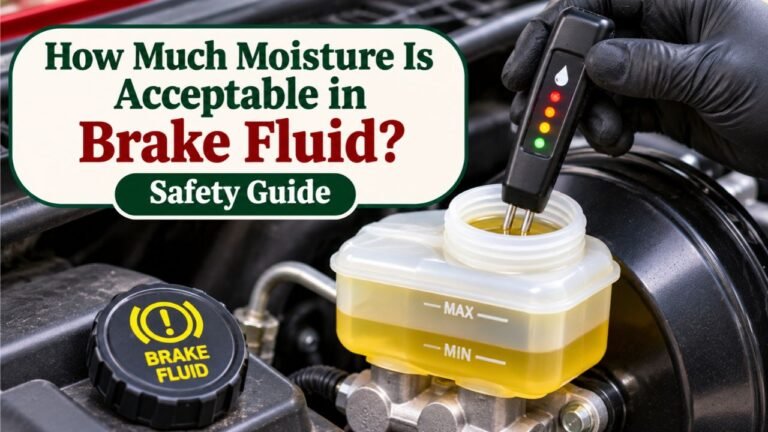
Some electronic brake fluid testers estimate water contamination.
However, the readings can depend on fluid chemistry.
Not all inexpensive testers measure moisture directly.
A favorable result doesn’t automatically prove the fluid meets every required specification.
Boiling-Point Testing
Professional equipment can evaluate brake fluid boiling-point performance.
This provides more relevant information about its ability to withstand heating.
However, testing requires opening the container.
The process also introduces handling and contamination considerations.
Can a Test Prove Old Brake Fluid Is Safe?
Not completely.
A single test may evaluate one characteristic without confirming every requirement related to viscosity, chemical stability, corrosion protection, and other performance properties.
For an old, inexpensive bottle, buying new brake fluid is usually more practical than paying for laboratory analysis.
Should You Use a Ten-Year-Old Bottle if It Passes a Moisture Test?
I wouldn’t recommend relying on a simple moisture test to justify using decade-old brake fluid.
The product may be well beyond its manufacturer-supported shelf life.
A fresh, properly specified bottle is the more dependable choice.
How to Store Brake Fluid Properly for Maximum Shelf Life
Good storage helps maintain the quality of an unopened bottle.
1. Keep It in the Original Container
Manufacturers design and select packaging for the product.
Avoid transferring brake fluid into ordinary plastic bottles, glass jars, or unidentified containers.
Some materials may be unsuitable or contaminated.
2. Leave the Factory Seal Intact
Do not open the bottle until you’re ready to use the fluid.
The inner foil seal provides an additional barrier against environmental moisture.
3. Store It in a Cool, Dry Location
Choose a protected area with reasonably stable temperatures.
A dry storage cabinet can be suitable.
Avoid excessively hot areas.
4. Keep It Away From Direct Sunlight
Store the bottle in a shaded location.
Avoid leaving it on windowsills or outdoors.
5. Avoid Excessive Humidity
High humidity can reduce storage reliability, particularly over long periods.
Keep the bottle away from water leaks, damp floors, and condensation.
6. Keep It Away From Petroleum Products
Store brake fluid separately from:
- Engine oil.
- Power steering fluid.
- Transmission fluid.
- Fuel.
- Other automotive chemicals.
This reduces the risk of accidental mixing or contamination.
7. Keep the Container Clearly Labeled
Don’t remove the product label.
You should be able to identify:
- Brand.
- DOT specification.
- Product name.
- Batch number.
- Manufacture or expiration date, when available.
8. Avoid Repeatedly Opening the Bottle
Every time a bottle is opened, the contents may be exposed to atmospheric moisture.
Use appropriately sized containers to reduce leftover fluid.
Brake Fluid Storage Checklist
- Keep the original container.
- Leave the foil seal intact.
- Store away from direct sunlight.
- Avoid prolonged excessive heat.
- Protect the bottle from humidity.
- Keep it away from incompatible fluids.
- Check for leaks and packaging damage.
- Record the manufacture date when known.
- Follow the product-specific shelf-life limit.
- Replace questionable fluid rather than guessing.
Is It Safe to Use Brake Fluid That Has Been Sitting for Years?
The answer depends on the bottle’s age, packaging, storage history, and manufacturer.
One-Year-Old Sealed Brake Fluid
A one-year-old factory-sealed bottle is often within the stated shelf life of many products.
However, confirm that it was stored correctly and matches the required fluid specification.
Two-Year-Old Sealed Brake Fluid
Two years is the stated shelf life for some manufacturers.
A bottle at this age may be approaching or reaching its recommended storage limit.
Check the exact product.
Three-Year-Old Sealed Brake Fluid
Some products may remain within their specified shelf life after three years.
Others may already be past their limit.
Do not decide based on age alone.
Five-Year-Old Sealed Brake Fluid
Certain products are rated for up to five years under suitable storage conditions.
However, a five-year-old bottle of an unknown product should not automatically be considered usable.
Ten-Year-Old Sealed Brake Fluid
A ten-year-old bottle is well beyond the published shelf-life examples discussed here.
For ordinary automotive brake service, replace it with fresh fluid.
Brake Fluid With an Unknown Age
If the manufacturer, production date, or storage history cannot be established, buying a new bottle is generally the safest option.
The cost of fresh brake fluid is small compared with the potential cost of hydraulic brake system problems.
Does Sealed Brake Fluid Lose Its Boiling Point Over Time?
It can.
The main concern with glycol-based brake fluid is moisture contamination.
What Is Dry Boiling Point?
Dry boiling point refers to the boiling-temperature performance of new brake fluid tested under specified conditions.
DOT classifications establish minimum requirements.
What Is Wet Boiling Point?
Wet boiling point measures the performance of brake fluid after standardized moisture conditioning.
As glycol-based fluid absorbs moisture, its boiling point generally decreases.
Minimum Brake Fluid Boiling Points
| Brake fluid | Minimum dry boiling point | Minimum wet boiling point |
| DOT 3 | 401°F (205°C) | 284°F (140°C) |
| DOT 4 | 446°F (230°C) | 311°F (155°C) |
| DOT 5.1 | 500°F (260°C) | 356°F (180°C) |
These are classification minimums, not the actual test results of every fluid.
A particular product may exceed them.
Why Does a Lower Boiling Point Matter?
Brake fluid can experience high temperatures during:
- Repeated hard braking.
- Long downhill driving.
- Heavy vehicle use.
- Performance driving.
- Certain towing conditions.
If the fluid boils, vapor bubbles may form inside the hydraulic system.
Unlike liquid fluid, vapor can compress.
This may cause a soft pedal, increased pedal travel, or reduced braking effectiveness.
Can Moisture Cause Corrosion?
Yes.
Moisture contamination can contribute to internal corrosion of hydraulic components.
This may affect brake lines, calipers, master cylinders, and other parts.
Proper brake fluid maintenance helps reduce these risks.
Does Brake Fluid Expire Faster After You Open It?
Yes, the original moisture protection is reduced once the container is opened.
Why Opened Fluid Has a Shorter Shelf Life
Removing the seal exposes the fluid to atmospheric moisture.
Even when the cap is replaced tightly, the container no longer has its original factory-sealed condition.
Repeated opening makes the situation less predictable.
Can You Use Brake Fluid Opened a Month Ago?
Possibly, depending on the manufacturer’s instructions and storage conditions.
However, the safest practice is to use fresh, sealed fluid for critical brake maintenance whenever practical.
Can You Use Brake Fluid Opened Six Months Ago?
Some manufacturers warn that brake fluid can become compromised within approximately six months after opening, particularly under unfavorable conditions.
If the product has been exposed to heat or humidity, replacing it is advisable.
Can You Use Brake Fluid Opened a Year Ago?
A one-year-old opened bottle is not a good default choice for brake service.
Even if the cap was replaced, moisture exposure may have affected the contents.
Use fresh fluid instead.
Can You Store Leftover Brake Fluid in a Smaller Bottle?
Avoid transferring brake fluid to another container.
The replacement packaging may not provide suitable moisture protection or chemical compatibility.
It can also introduce contamination.
Keep fluid in its original packaging and follow the manufacturer’s storage instructions.
Does Expired Brake Fluid Damage Your Car?
Not every expired bottle causes immediate damage.
However, using a product that no longer meets the required specifications can increase risk.
Reduced Heat Resistance
Moisture-contaminated fluid may boil at a lower temperature.
Under demanding braking, this can reduce braking performance.
Internal Corrosion
Moisture may contribute to corrosion inside hydraulic components.
ABS System Concerns
Modern anti-lock braking systems can contain sensitive valves and hydraulic passages.
Using fluid that doesn’t meet required chemical or viscosity specifications can create performance concerns.
Hydraulic Component Problems
Contaminated fluid can contribute to deterioration within the brake system.
However, not every brake problem is caused by old fluid.
A proper diagnosis is important.
Can Expired Brake Fluid Cause Immediate Brake Failure?
Not necessarily.
However, a lack of immediate symptoms doesn’t prove the fluid is safe.
Brake fluid performance becomes especially important during high-temperature braking.
Do not rely on expired or questionable fluid for safety-critical maintenance.
Can You Use Expired Brake Fluid Just for a Top-Off?
It’s generally better not to.
A brake fluid top-off introduces the product into the same safety-critical hydraulic system as a full replacement.
Why Using Old Fluid Is Risky
If the bottle has absorbed moisture or otherwise deteriorated, adding it can compromise the overall fluid condition.
The small amount added doesn’t guarantee that the risk is negligible.
What if the Reservoir Is Low?
Check why the level has dropped.
Possible causes include:
- Brake pad wear.
- Hydraulic leaks.
- Damaged brake hoses.
- Master cylinder problems.
- Other brake system faults.
Don’t assume the level is low simply because fluid needs replacing.
What if You Have Only an Old Sealed Bottle?
If the product has exceeded its stated shelf life or its condition is uncertain, obtain fresh fluid meeting the vehicle’s required specification.
If a hydraulic leak is suspected or braking performance is abnormal, do not drive the vehicle.
Arrange professional inspection.
Should You Mix Old and New Brake Fluid?
Avoid using questionable old fluid.
Even when products are chemically compatible, the mixture isn’t guaranteed to meet the vehicle’s requirements.
Use fresh, approved fluid.
Sealed Bottle Shelf Life vs. Brake Fluid Replacement Interval
These are two different concepts.
Shelf Life
Shelf life describes how long unused brake fluid can be stored in its container under specified conditions.
It depends on:
- Manufacturer.
- Formulation.
- Packaging.
- Storage temperature.
- Humidity.
- Seal integrity.
Service Life
Service life describes how long brake fluid remains in a vehicle’s hydraulic system before replacement is required.
The manufacturer may specify a time-based interval, mileage interval, or maintenance reminder.
Comparison Chart
| Factor | Unopened bottle | Fluid inside a vehicle |
| Environment | Factory-sealed packaging | Hydraulic brake system |
| Moisture exposure | Limited by packaging | Gradual exposure through system materials and service |
| Main guidance | Fluid manufacturer’s shelf life | Vehicle manufacturer’s maintenance schedule |
| Typical time basis | Product-specific, often measured in years | Vehicle-specific, often time- or mileage-based |
| Important risks | Storage deterioration, packaging damage | Moisture, heat, contamination, corrosion |
Can You Use a Four-Year-Old Bottle in a Car With a Two-Year Fluid Interval?
Only if the unopened bottle is still within its manufacturer-supported shelf life and meets the vehicle’s specification.
The vehicle’s two-year service interval doesn’t determine whether a four-year-old unused bottle is suitable.
These are independent requirements.
Does a Fresh Brake Fluid Change Reset the Shelf Life?
No.
Once new fluid is installed in the vehicle, it follows the vehicle manufacturer’s service schedule.
The unopened-bottle shelf-life period no longer applies.
Key Takeaway: Don’t confuse the age of stored brake fluid with the maintenance interval for fluid already inside the braking system.
How to Dispose of Old or Expired Brake Fluid
If brake fluid has exceeded its shelf life or become contaminated, dispose of it responsibly.
Don’t Pour It Down a Drain
Brake fluid should not be poured into:
- Household drains.
- Storm drains.
- Soil.
- Rivers or streams.
- Regular trash containers where liquid waste isn’t permitted.
Follow local hazardous household waste requirements.
Keep Waste Fluid in a Suitable Container
Use appropriate labeled packaging.
Avoid mixing brake fluid with engine oil, gasoline, coolant, or other chemicals.
Mixed waste may be more difficult to recycle or dispose of correctly.
Contact an Approved Disposal Facility
Possible options include:
- Household hazardous waste collection programs.
- Authorized automotive waste facilities.
- Repair shops that accept qualifying automotive fluids.
- Local environmental waste services.
Acceptance rules vary.
Confirm that the facility handles brake fluid before delivering it.
Can You Recycle Brake Fluid?
Some specialized waste-processing services may accept brake fluid.
However, it doesn’t belong in ordinary used motor oil recycling unless the collection program explicitly allows it.
Common Mistakes When Storing Brake Fluid
Assuming a Sealed Bottle Lasts Forever
Factory sealing slows moisture exposure but doesn’t create unlimited shelf life.
Using One Universal Five-Year Rule
Some products are rated for five years, while others have shorter recommendations.
Check the exact formulation.
Confusing the Purchase Date With the Manufacture Date
A bottle bought recently may have spent a long time in storage before purchase.
Check production information when available.
Leaving Fluid in a Hot Garage
Heat and humidity can reduce storage life.
Choose a protected location.
Assuming the Screw Cap Equals the Factory Seal
A bottle with a broken foil seal is no longer factory-sealed, even if the cap is tight.
Using Fluid Because It Still Looks Clear
Appearance doesn’t prove that boiling-point or viscosity requirements are satisfied.
Relying on a Cheap Moisture Tester Alone
A basic tester may not accurately determine all relevant fluid characteristics.
Mixing Different Brake Fluid Specifications
Use the vehicle manufacturer’s exact required formulation.
DOT 5 must not be confused with glycol-based DOT 5.1.
Keeping Opened Bottles Indefinitely
Opened fluid can absorb moisture from the atmosphere.
Follow manufacturer guidance and replace old leftovers.
Using Expired Fluid to Save Money
The cost of fresh brake fluid is low compared with the potential consequences of compromised braking performance.
Conclusion
Brake fluid can go bad in a sealed container, but an intact factory seal and proper storage can preserve its quality for several years.
There is no universal expiration period for every brake fluid. For example, TotalEnergies specifies two years for certain unopened small containers, while ATE rates its Super DOT 4 product for up to five years under the stated storage conditions.
High temperatures, humidity, damaged seals, and unsuitable packaging can shorten shelf life.
Once a bottle has been opened, its remaining usable storage period is generally much shorter because the fluid can absorb moisture from the surrounding air.
I recommend checking the product’s manufacture date, original seal, storage history, and manufacturer-specified shelf life before using an older bottle. If the product has expired or its condition is uncertain, replace it with fresh fluid that meets your vehicle’s complete specification.
For safe brake maintenance, use a fresh, properly sealed bottle whenever possible rather than relying on old fluid of uncertain quality.
FAQs About Brake Fluid Going Bad in a Sealed Container
Does Brake Fluid Go Bad if Never Opened?
Yes, it can.
An unopened bottle is protected from direct atmospheric exposure, but long-term storage conditions and packaging properties can affect fluid quality.
Follow the manufacturer’s shelf-life recommendations.
How Long Does Brake Fluid Last in a Sealed Container?
Some manufacturers specify approximately two years, while certain products are rated for up to five years.
The correct period depends on the exact product, packaging, and storage conditions.
Does Unopened DOT 3 Brake Fluid Expire?
It can.
DOT 3 is hygroscopic, and its storage life depends on the manufacturer’s formulation and packaging.
Use the stated shelf-life limit rather than assuming unopened DOT 3 lasts indefinitely.
Does Unopened DOT 4 Brake Fluid Expire?
Yes, it may exceed its recommended storage period.
Some DOT 4 products have two-year shelf-life guidance, while ATE Super DOT 4 is rated for up to five years under specified conditions.
Is Five-Year-Old Brake Fluid Still Good?
Possibly for certain products, but not universally.
If the fluid is outside the manufacturer’s recommended shelf life or its storage history is uncertain, buying a fresh bottle is the safer option.
Is Ten-Year-Old Sealed Brake Fluid Safe to Use?
It’s not recommended.
Ten years is well beyond the published shelf-life examples discussed in this article.
Even if the bottle appears intact, its performance may no longer meet the original specification.
Does Brake Fluid Expire if the Foil Seal Is Intact?
It can.
An intact foil seal provides important moisture protection, but the product still has a manufacturer-defined shelf life.
Storage conditions also matter.
How Long Does Brake Fluid Last After Opening?
Manufacturers often recommend using opened brake fluid within a few months.
Actual limits vary by product and storage conditions.
A bottle opened for six months or longer may no longer provide reliable performance.
Can You Use Brake Fluid That Was Opened a Year Ago?
It’s generally better not to.
An opened bottle may have absorbed moisture even if the cap was replaced.
Fresh fluid is preferable for brake system maintenance.
Does Brake Fluid Absorb Moisture Through Plastic Bottles?
Small amounts of moisture vapor may pass through certain packaging materials over extended periods.
The rate depends on the plastic, container wall thickness, seal, and environment.
Is Brake Fluid Better Stored in Metal Containers?
Not necessarily.
Metal packaging may provide different moisture-barrier properties, but metal containers can have other storage and corrosion considerations.
Use the original container selected by the manufacturer and follow its instructions.
Can You Store Brake Fluid in a Hot Car?
It’s not recommended for long periods.
Vehicle interiors can experience extreme temperatures.
A cool, dry, protected storage area is generally preferable.
Can You Tell if Brake Fluid Is Bad by Its Color?
Not reliably.
Cloudiness or particles can indicate a problem, but normal-looking fluid may still be unsuitable.
Check the product age, packaging, storage history, and manufacturer guidance.
Does Brake Fluid Lose Its Boiling Point While Sealed?
It can if moisture enters or the product’s condition deteriorates.
However, the amount of change depends on the formulation, packaging, and storage conditions.
Does DOT 5 Brake Fluid Have a Shelf Life?
Yes, manufacturers may specify a shelf life for silicone-based DOT 5 products.
Although DOT 5 is not hygroscopic in the same way as glycol-based fluids, it should not be assumed to last forever.
Is Expired Brake Fluid Dangerous?
It can be.
If it no longer meets the required performance specifications, it may reduce braking safety margins, especially under high-temperature conditions.
Use fresh, correctly specified fluid.
Can You Add Expired Brake Fluid to the Reservoir?
It’s better not to.
A brake fluid top-off still introduces the product into the hydraulic braking system.
If the fluid’s age or condition is uncertain, use a fresh bottle.
Should I Throw Away Old Unopened Brake Fluid?
If it has exceeded the manufacturer’s stated shelf life or its storage condition is doubtful, replacement is advisable.
Dispose of the old fluid according to local automotive chemical waste requirements.