Wear Indicators on Brake Pads: Types, Sounds, and Warning Signs
Brake pad wear indicators warn you before the friction material becomes dangerously thin. Depending on the vehicle, the warning may come from a small metal tab that squeals against the rotor, an electronic sensor that triggers a dashboard message, or a service-monitoring system. The alert means the brakes should be inspected soon rather than ignored until grinding begins.
Brake pads gradually become thinner every time the brakes are applied. Without some form of inspection or warning, a driver may not notice the loss of friction material until the backing plate reaches the rotor.
The scale of routine brake maintenance is large in the United States. Federal Highway Administration data show about 298 million registered motor vehicles in 2024, up from roughly 285 million in 2023.
Wear indicators on brake pads are designed to give drivers an earlier signal. HELLA identifies two main systems: mechanical acoustic indicators and electronic wear indicators.
Not every vehicle uses the same design. Some have a metal squealer, some have electrical contacts, some monitor only selected pads, and some combine sensors with a vehicle service-monitoring system.
A wear warning is also different from the harsh grinding sound created after the friction material is nearly or completely gone. Brembo describes a squeal as a possible wear-indicator warning, while a loud metallic grinding noise can mean the pad backing is contacting the rotor.
What Are Wear Indicators on Brake Pads?
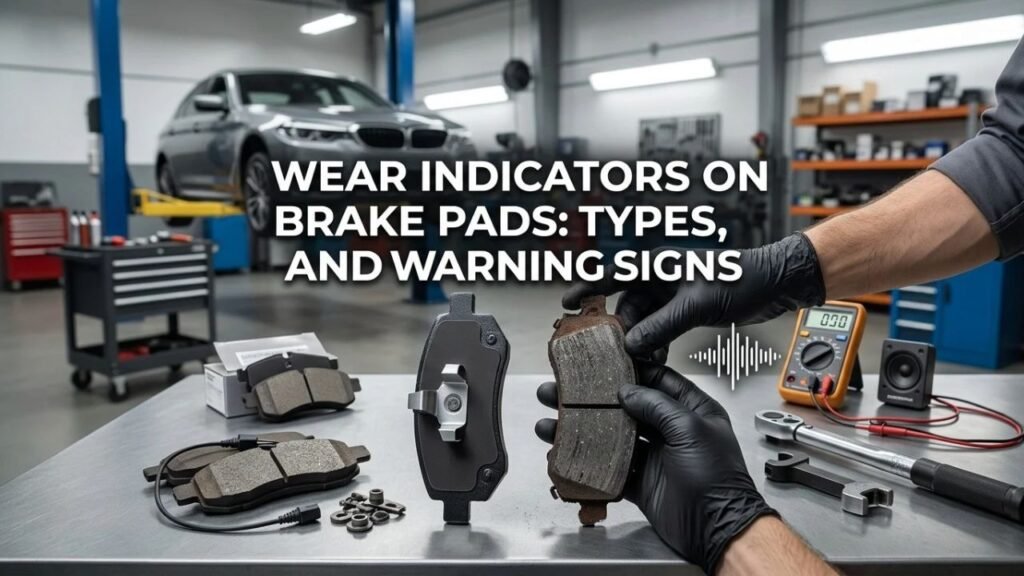
A brake pad wear indicator is a device that alerts the driver when the pad reaches a predetermined level of wear.
The indicator does not create braking force. Its job is to signal that the remaining friction material is near its service limit.
Mechanical Wear Indicator
A mechanical wear indicator is often called a:
- Squealer
- Wear tab
- Warning tab
- Acoustic indicator
It is a small metal piece attached to the brake pad backing plate.
As the friction material becomes thinner, the tab moves close enough to the brake rotor to make contact.
The spinning rotor then causes the metal tab to produce a sharp squealing or screeching noise.
HELLA describes this system as a scratch plate mounted to the brake pad backing plate. Once the wear limit is reached, the plate contacts the rotating disc and creates an audible warning.
Electronic Brake Pad Wear Sensor
An electronic system uses a sensor or electrical contact in or near the brake pad.
Once the friction material wears to the sensor level, the sensor changes the electrical circuit and causes a warning on the instrument panel.
Bosch states that its brake wear sensors activate a dashboard warning once lining wear reaches its limit.
The sensor may be:
- Built into the pad
- Clipped into the pad
- Supplied as a separate replacement component
- Connected through a wire harness near the caliper
Some sensors are destroyed as part of the wear-detection process and need replacement along with the pads.
Not Every Groove Is a Wear Indicator
Brake pads may also have slots molded or cut into their friction material.
Do not assume every slot is a wear gauge.
Slots can serve other functions, including managing friction behavior, noise, gases, or debris. Bosch, for example, lists slotted friction material and wear indicators as separate brake-pad design features.
If you are using a groove to judge pad life, verify that the pad manufacturer identifies it as a wear marker.
Key Takeaway: Brake-pad warnings are commonly mechanical squealers or electronic sensors. A groove in the friction material should not automatically be treated as a wear gauge.
How Wear Indicators on Brake Pads Work
The basic goal is the same across systems: produce a warning before the pad wears beyond its intended service range.
How a Mechanical Squealer Works
A new pad has enough friction material that the wear tab sits away from the rotor.
As the pad becomes thinner, the distance closes.
At the designed wear point, the tab reaches the rotating brake disc.
That metal-to-metal contact creates the warning squeal.
The sound may be most obvious:
- During light braking
- At lower speeds
- With the window open
- When driving beside a wall or parked cars that reflect the sound
The exact behavior varies with indicator placement and brake design.
The squealer itself is meant to touch the rotor. That is different from the pad’s heavy steel backing plate grinding against the disc after the friction material has been used up.
How an Electronic Sensor Works
An electronic wear sensor uses an electrical circuit.
HELLA explains that the warning contact is embedded in the brake pad on suitable systems. Once pad wear reaches that contact, the braking process acts on the sensor and triggers the warning circuit.
Bosch describes a similar system in which wear at the sensor interrupts the electrical circuit and lights the dashboard warning.
The exact circuit strategy varies by vehicle.
That is why a sensor from one brake system should not be treated as electrically interchangeable with another merely because it physically resembles it.
Service-Monitoring Systems Can Use Sensor Data
Some vehicles combine physical wear sensors with software that estimates remaining brake-pad service life.
HELLA describes BMW’s Condition Based Service system as monitoring front and rear brake-pad wear using sensors and vehicle operating data. On the cited BMW application, the warning contacts must be replaced with the brake pads for the service calculation and reset process to function correctly.
This type of system can display:
- Brake-pad warning
- Service due message
- Estimated remaining mileage
- Front or rear brake service information
The vehicle-specific service procedure still needs to be followed after repair.
Key Takeaway: Mechanical indicators create a sound through rotor contact, while electronic systems change an electrical circuit and trigger a warning. Some vehicles use those sensors as part of a larger maintenance-monitoring system.
What Does a Brake Pad Wear Indicator Sound Like?
A mechanical wear indicator usually creates a high-pitched metallic squeal or screech.
It is intentionally unpleasant so the driver notices it.
High-Pitched Squealing
The classic wear-tab sound is:
- Sharp
- Metallic
- High-pitched
- Repetitive
- Often more obvious at lower speed
HELLA states that rotor contact with the acoustic indicator creates an unpleasant screeching sound once the wear limit has been reached.
A wear squeal should trigger an inspection rather than months of continued driving.
Brake Squeal Does Not Always Mean Worn Pads
Brakes can squeak for other reasons.
Possible causes include:
- Moisture
- Surface rust after parking
- Pad vibration
- Pad material characteristics
- Glazed friction material
- Rotor surface condition
- Missing or damaged brake hardware
- Contamination
A squeal alone cannot prove pad thickness.
The pads need to be inspected.
Grinding Is More Serious
A deep grinding or scraping noise is not the normal sound you want from a wear indicator.
Brembo notes that a loud metallic noise can indicate that the friction material has been consumed and the metal backing is scraping against the disc.
At that point, rotor damage may already be occurring.
Driving should be minimized until the brake system is checked.
Key Takeaway: A wear tab generally creates a high-pitched metallic squeal. Harsh grinding can mean the pads have worn beyond the warning stage and metal components are contacting the rotor.
What Does the Brake Pad Wear Warning Light Mean?
Vehicles with electronic sensors may display a brake-pad symbol or service message instead of producing a squeal.
The exact icon and wording vary by manufacturer.
The Sensor Has Reached Its Wear Point
A warning commonly means the pad at the monitored location has worn far enough to activate its sensor.
It does not automatically mean the vehicle has zero braking material left.
The sensor is designed to provide time for service before the pad wears into its backing plate.
Do not use that reserve as a reason to postpone inspection.
The Warning Can Also Point to a Sensor Problem
A dashboard brake-pad warning does not always prove that the friction material is worn out.
Bosch notes that wear-sensor warnings can also be associated with problems such as damaged wiring, overheating at the sensor, or incorrect installation.
Inspection should therefore include:
- Pad thickness
- Sensor condition
- Sensor wiring
- Connector condition
- Harness routing
The Sensor May Need Replacement
Some electronic wear sensors are sacrificial.
Once worn through or removed during pad service, they should be replaced.
HELLA’s BMW service information states that a new warning contact is required when replacing the pads on the cited system and that the brake service reset should be performed only after the repair has been completed.
Other vehicles use reusable or differently constructed sensors.
Check the service information for the exact model.
Key Takeaway: A brake-pad warning light usually means the monitored pad has reached its sensor point, but wiring or sensor faults can also trigger a warning. Inspect the mechanical brakes as well as the electrical circuit.
How Much Brake Pad Is Left When the Indicator Comes On?
There is no single thickness that applies to every passenger vehicle.
HELLA states that the wear limit for disc-brake pads is often around 2 mm in the systems it describes. Ferodo describes one mechanical indicator arrangement that begins warning at around 4 mm.
That difference shows why a universal number should not be used for every car.
Sensors May Warn Before the Absolute Limit
The purpose of a warning system is to create a service window.
A vehicle maker may place the wear sensor above the minimum usable friction thickness so the driver has time to schedule pad replacement.
Minimum Thickness Is Vehicle-Specific
Use:
- Vehicle service information
- Brake manufacturer specifications
- Pad manufacturer specifications
rather than one generic thickness rule.
Brake pads should also be replaced before the friction material reaches the backing plate, regardless of the presence of a working warning device.
Measure Friction Material, Not the Backing Plate
When checking pad thickness, distinguish between:
- Friction material
- Steel backing plate
The thick metal backing should not be included in the remaining friction-material measurement.
A visual glance through the wheel can give a rough idea, but a direct measurement is better when the pad is difficult to see.
Key Takeaway: Some systems warn around 2–4 mm, but there is no universal activation thickness. Use the specification for the vehicle and measure the friction material itself.
Can You Rely Only on Brake Pad Wear Indicators?
No.
Wear indicators are useful, but they are not a replacement for brake inspection.
A Vehicle May Monitor Only Selected Pads
HELLA notes that electronic systems may use two or four warning contacts depending on brake-system design.
That means not every individual pad must have its own sensor.
If a non-monitored pad wears faster, the sensor may not give you the full picture.
Inner and Outer Pads Can Wear Differently
A floating caliper should allow both pads to work together, but faults can create uneven wear.
Possible causes include:
- Sticking caliper slide pins
- Seized piston
- Pad binding in the bracket
- Corrosion
- Brake hose problems
- Improper installation
HELLA notes that corrosion affecting caliper guide components can lead to one-sided braking behavior and premature wear.
If one pad is much thinner than the other, replacing pads alone may not correct the cause.
An Indicator Can Be Missing or Damaged
A previous repair may have:
- Installed pads without the correct indicator
- Bent the squealer
- Left a sensor unplugged
- Damaged the wire
- Routed the harness incorrectly
Do not assume silence means the pads are healthy.
Regular Inspection Still Matters
Inspect brake pads during tire rotations, wheel service, or other routine maintenance.
Look at both inner and outer pads where possible.
Check:
- Friction thickness
- Uneven wear
- Cracking
- Contamination
- Rotor condition
- Caliper movement
- Sensor routing
Key Takeaway: Wear indicators provide a warning, not a full brake inspection. Selected pads may be monitored while another pad wears faster because of a caliper or hardware problem.
Mechanical Wear Indicator vs Electronic Wear Sensor
Both systems warn about pad wear, but they do it in different ways.
| Feature | Mechanical Indicator | Electronic Sensor |
| Main warning | Squealing sound | Dashboard light/message |
| Power required | No | Yes |
| Main component | Metal tab | Electrical contact/sensor |
| Location | Attached to brake pad | In, on, or near pad |
| Replacement | Often part of new pad | May require separate new sensor |
| Can wiring fail? | No wiring | Yes |
| Requires reset? | No | Some vehicles do |
| Vehicle-specific design | Yes | Yes |
Neither design should be considered superior in every application.
The vehicle manufacturer selects the system around the brake and service strategy.
Where Is the Wear Indicator Located on a Brake Pad?
Mechanical wear tabs are mounted to the pad’s backing plate.
Electronic sensors may clip into the friction material, fit into a shaped recess, or come integrated into the pad.
The exact location can matter.
Do Not Move the Squealer to a Random Position
Replacement pads can have different shapes for:
- Inner pad
- Outer pad
- Left side
- Right side
- Leading or trailing position
Install the pad in the position specified for that brake design.
A wear tab placed incorrectly may not produce the intended warning.
Sensor Wires Need Correct Routing
Electronic sensor wiring sits close to:
- Rotor
- Wheel
- Suspension components
- Caliper
- Brake hose
The harness needs to be clipped into its intended retainers.
HELLA’s brake-service procedure calls for reconnecting the wear-indicator cable in the proper holder and checking that it is seated correctly.
A loose wire can rub against moving parts and trigger a warning or become damaged.
What to Do When a Brake Pad Wear Indicator Activates
Treat the warning as a request for brake inspection.
Have the Pads Checked Soon
If the brakes still feel normal and you only hear the light wear-indicator squeal, the vehicle may still have usable friction material.
That does not mean the warning should be ignored.
Schedule an inspection before the pad reaches metal-to-metal contact.
Inspect All Pads on That Axle
Do not look only at the pad carrying the sensor.
Compare:
- Left and right sides
- Inner and outer pads
- Wear pattern
- Remaining thickness
Large differences can point to a brake hardware or caliper problem.
Check the Rotors
Inspect the brake discs for:
- Deep scoring
- Cracks
- Heat damage
- Heavy corrosion
- Thickness below specification
HELLA’s brake-service procedure calls for measuring rotor thickness and comparing it with the minimum value marked or specified for the disc.
Replace the Wear Sensor When Required
If an electronic sensor has been worn through, install a new compatible sensor when the system requires one.
Do not simply clear the warning without fixing the cause.
Confirm the Brake Pedal Before Driving
After brake work, the pads and caliper pistons must return to their working position before the vehicle moves.
Brake service should be performed according to the vehicle manufacturer’s repair procedure. If you are not equipped to work safely on braking systems, use a qualified technician.
Key Takeaway: When the warning activates, inspect all pads on the axle, check the rotors and calipers, replace damaged or sacrificial sensors, and correct uneven wear rather than changing only the thinnest pad.
Brake Pad Wear Indicator Sound vs Other Brake Noises
Not every brake noise means the same thing.
| Sound or Symptom | Possible Cause |
| High-pitched metallic squeal | Mechanical wear indicator |
| Light squeak after rain | Moisture or surface rust |
| Squeal during normal braking | Pad vibration, friction material, glazing, or wear tab |
| Harsh grinding | Pad friction material may be gone |
| Clicking or clunking | Hardware or component movement |
| Scraping from one wheel | Pad, shield, rotor, bearing, or foreign-object issue |
| Brake warning message | Wear sensor or electrical fault |
| Vibration during braking | Rotor, hub, suspension, or brake issue |
Do not diagnose pad wear from sound alone.
A direct brake inspection is the safer way to identify the cause.
Can Brake Pads Have No Wear Indicator?
Yes.
Not every pad or vehicle uses a mechanical squealer or electronic wear sensor.
Some systems depend more heavily on scheduled visual inspection.
Even within one brake-pad product family, indicator features can vary by vehicle application. Bosch specifically notes that wear indicators are application-dependent.
If replacement pads appear different from the old set, verify the part number and vehicle fitment before installation.
Do not remove a factory-style wear indicator simply because the new pad appears to fit without it.
Can a Wear Indicator Damage the Rotor?
Normal brief contact from a mechanical warning tab is part of its design.
The goal is to create an audible signal before the friction material is fully consumed.
Leaving the warning unaddressed allows continued contact and continued pad wear.
Once the pad backing plate reaches the rotor, damage can become much more severe.
Brembo distinguishes normal wear-indicator squeal from loud metal-on-metal noise produced when the pad material has been used up.
The earlier the worn pads are serviced, the better the chance that the rotor remains within usable specifications.
Conclusion
Wear indicators on brake pads provide an early warning that the friction material is approaching its service limit. A mechanical indicator uses a metal tab to create a squeal, while an electronic sensor sends a warning through the vehicle’s instrument system.
Do not confuse a high-pitched wear warning with deep grinding. Grinding may mean the friction material is already gone and the pad backing plate is damaging the rotor.
The warning point also varies by brake design. Some indicators activate with more friction material remaining than others, and not every pad on the vehicle may carry a sensor.
Use the indicator as a reason to inspect the full braking system. Check pad thickness on both sides of the axle, look for uneven wear, inspect rotor condition, and replace the electronic wear sensor when the vehicle’s service procedure calls for it.
FAQs About Wear Indicators on Brake Pads
What is the metal tab on a brake pad?
The small metal tab is often a mechanical wear indicator or squealer. As the friction material becomes thin, the tab contacts the brake rotor and produces a high-pitched warning sound. HELLA describes this as an acoustic indicator mounted to the pad backing plate.
Do all brake pads have wear indicators?
No. Some pads use mechanical squealers, some vehicles use electronic sensors, and some pads have no dedicated wear indicator. Bosch notes that wear-indicator features vary by vehicle application.
What does a brake pad wear indicator sound like?
A mechanical indicator normally produces a sharp metallic squeal or screech as its tab contacts the rotating rotor. A heavy grinding sound can point to a more advanced condition in which the friction material has worn away.
How much brake pad is left when the wear indicator squeals?
There is no universal amount. HELLA describes around 2 mm as a common wear-limit figure for systems it discusses, while Ferodo describes an indicator arrangement near 4 mm. Follow the service specification for your vehicle rather than one generic measurement.
Can a brake pad wear sensor be reused?
It depends on the sensor design. Some electronic sensors are damaged or worn through when activated and must be replaced. HELLA states that new warning contacts are required during pad replacement on the BMW system in its service example.
Why is my brake pad warning light on with new pads?
Possible causes include an old wear sensor that was not replaced, damaged wiring, a disconnected plug, incorrect sensor installation, or a service reset that was not completed. Bosch also notes that sensor damage or excessive heat can trigger a warning.
Can brake pads wear out without the indicator making noise?
Yes. The vehicle may use an electronic system, the mechanical tab may be missing or damaged, or a non-monitored pad may wear faster than the pad carrying the indicator. Regular visual inspection is still needed.
Should I replace brake pads as soon as the wear indicator comes on?
Arrange an inspection promptly. The indicator normally warns before total friction-material loss, but the remaining service margin varies by vehicle. Continued driving can turn a simple pad replacement into rotor damage if the pads wear down to their metal backing plates.