What Causes Uneven Wear on Brake Pads? Common Causes and Fixes
Uneven brake-pad wear is usually caused by a brake component that is not applying or releasing force evenly. Common faults include a sticking caliper piston, seized slide pins, corroded pad hardware, a restricted brake hose, rotor runout, incorrect pad fit, or heat that keeps one pad dragging against the rotor.
The wear pattern matters because it can point toward the part that needs attention. Replacing pads without finding the cause may leave the new set dragging, wearing at an angle, overheating, or reaching its replacement limit far sooner than expected.
Fixing the source of the uneven contact gives both pads a better chance to share the braking load across the rotor face. It can also prevent repeat pad replacement, rotor damage, pulling during braking, and excess heat at one wheel.
A NHTSA and Volpe analysis of 2012 U.S. crash databases identified 32,477 crashes, or 0.58% of crashes in the General Estimates System, as at least partly attributable to braking issues. The same analysis identified 95 fatal crashes, or 0.31% of the FARS total, as at least partly attributable to braking issues. The data did not isolate pad wear as the cause, but it shows why abnormal brake wear deserves a real inspection rather than a pad-only repair.
So, what causes uneven wear on brake pads most often? In my research, the repeated pattern across brake manufacturers and technical sources was caliper movement: pistons that do not retract freely, slide pins that bind, or pads that cannot move correctly in the bracket. ADVICS lists sticking caliper pistons and sticking slide pins as leading causes of uneven or early pad wear.
A useful clue is where the missing friction material appears. One thin inner pad points toward a different fault than one thin outer pad, a wedge-shaped pad, or both pads worn badly on only one wheel.
The sections below connect each wear pattern with its likely causes, explain what to inspect before installing new pads, and show when the problem points to a caliper, rotor, hose, hardware, or installation fault.
What Causes Uneven Wear on Brake Pads? Main Problems
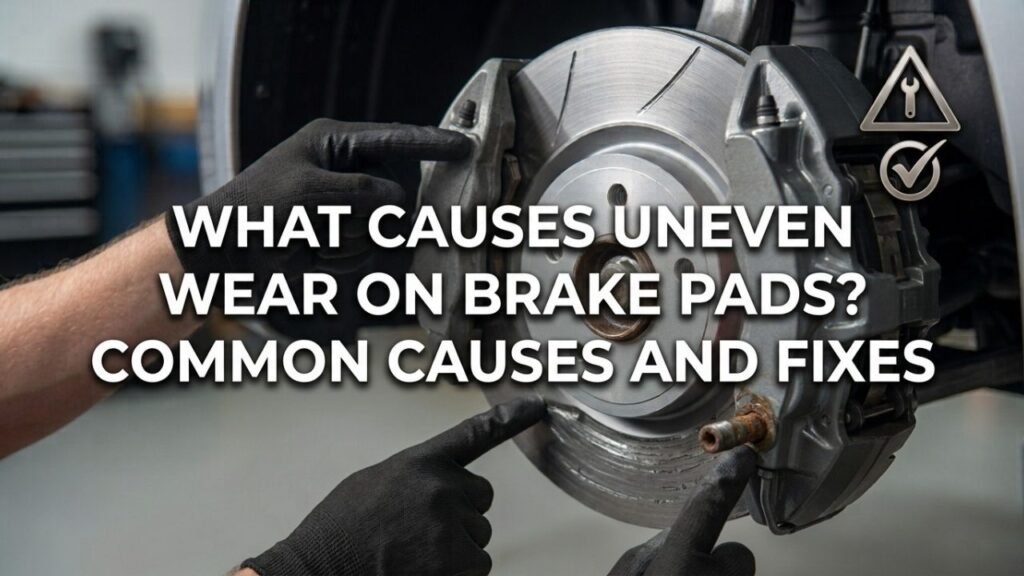
Uneven wear starts when the two pads, the two sides of the caliper, or the two wheels on an axle no longer apply and release braking force in a similar way. Caliper faults are common, but they are not the only explanation.
Sticking Caliper Piston
A caliper piston should move outward when hydraulic pressure is applied and relax enough after pedal release for the pad to stop dragging hard against the rotor.
Rust, damaged seals, contamination, or internal caliper damage can make the piston bind. If the piston stays partly extended, the pad on that side may remain in contact with the rotor and wear rapidly.
On many floating-caliper designs, a piston fault can make the inner pad wear faster because the piston acts directly on that pad. Severe binding may leave both pads at that wheel dragging because the caliper cannot release correctly.
ADVICS specifically identifies a sticking piston as a likely cause of uneven or premature pad wear and recommends checking piston retraction, the seal, and the piston for rust.
Seized or Dry Caliper Slide Pins
A floating caliper must move sideways on its guide pins. That motion lets clamping force reach both the inner and outer pads.
If a slide pin rusts, loses suitable lubricant, bends, or binds inside a damaged boot, the caliper may not center itself over the rotor. One pad can stay loaded harder than the other.
This fault can produce inner-to-outer thickness differences or tapered wear. Raybestos states that corroded guide pins can bind in the slides and prevent proper pad-to-rotor contact, producing uneven wear.
Corroded Abutment Hardware or Pads Binding in the Bracket
The pads must be able to move at their contact points in the caliper bracket. Rust beneath abutment clips, bent hardware, burrs, incorrect clips, or excessive coating buildup on a pad backing plate can restrict that movement.
A pad that cannot release may drag against the rotor after the brake pedal comes up. A pad that cannot move inward correctly may contribute less braking force and show a different wear rate from its partner.
Tapered wear may also appear when hardware does not let the pad sit squarely against the rotor. Bendix lists corroded abutment clips among the possible causes of tapered pad wear.
Brake grease belongs only on the approved sliding and contact points specified for the brake design. Grease must never touch the rotor face or pad friction material.
Restricted Flexible Brake Hose
A flexible brake hose can fail internally even when the outside does not look badly damaged.
A restricted hose may act like a one-way valve: pedal pressure reaches the caliper, but fluid pressure does not release as quickly after the pedal comes up. The affected brake can drag, build heat, and wear its pads faster.
NAPA notes that a worn brake hose can cause a caliper to stick. That is one reason a caliper that seems mechanically free may still drag after driving.
If a wheel releases after a bleeder is opened, trapped hydraulic pressure becomes an important diagnostic clue.
Rotor Runout, Thickness Variation, or Surface Damage
A rotor that does not run true can repeatedly touch the pads as it rotates. Over many miles, that light contact can contribute to uneven rotor and pad wear.
Raybestos explains that excessive lateral runout can lead to disc thickness variation because high spots repeatedly contact the pads. The same technical bulletin ties the condition to uneven wear over time.
Deep grooves, heavy rust, incorrect rotor fit, or an irregular braking surface can also change the way the pad contacts the disc. Brembo notes that partial contact between pad and disc can raise temperature and produce rapid or uneven wear.
Incorrect Pad Installation or Wrong Parts
Pads that are installed in the wrong position, forced into a bracket, paired with incorrect hardware, or mismatched to the brake package may not contact the rotor correctly.
Wrong pad geometry can also create a lip or leave part of the friction material outside the rotor’s working area. Raybestos documented a case in which a pad that did not match the OE geometry failed to contact the rotor correctly.
Heat, Heavy Braking, and Brake-Based Vehicle Systems
Repeated hard stops, long downhill braking, towing, a dragging brake, or track-style use can push friction material beyond its intended temperature range. The pads may glaze, crack, wear quickly, or transfer material unevenly to the rotor.
Brake-based traction control and torque-vectoring systems can also use individual wheel brakes even when the driver is not making a normal stop. That may create different wear rates between wheels on some vehicles.
Driving style alone usually explains fast wear across an axle better than a large inner-to-outer difference at one caliper. If one pad is much thinner than its partner, inspect the hardware and hydraulic operation before blaming the driver.
Key Takeaway: The most common causes are a sticking piston, binding slide pins, restricted pad movement, trapped hydraulic pressure, rotor faults, or incorrect installation.
What Different Brake Pad Wear Patterns Mean
The old pads are diagnostic evidence. Mark their positions before throwing them away: left, right, inner, outer, top, and bottom.
Inner Brake Pad Worn More Than the Outer Pad
A small difference between inner and outer pads can occur on some floating-caliper systems. A large difference points toward a problem.
Common causes include:
- A piston that does not retract freely
- A seized guide pin
- A pad binding in the bracket
- Hydraulic pressure that does not release promptly
Bendix states that inner wear is common on floating calipers, but a larger difference can indicate caliper retraction trouble such as seized guides or slides.
If the inner pad is near its backing plate while the outer pad still has substantial friction material, I would inspect piston and slide movement before ordering pads alone.
Outer Brake Pad Worn More Than the Inner Pad
Excess outer-pad wear on a single-piston floating caliper often points toward a caliper that cannot slide back freely.
The piston may retract, yet the caliper body can remain positioned so the outer pad stays against the rotor. Worn slides, corrosion, poor lubrication, or damaged guide components are common areas to inspect.
Bendix notes that outer pad wear can occur when the outer pad remains against the disc after the caliper retracts.
Tapered Brake Pad Wear
Tapered wear means one end or edge of the friction material is thicker than the other, creating a wedge shape.
Possible causes include:
- Worn guide pins or bushings
- Corroded abutment clips
- Pad installation faults
- Caliper flex or movement problems
- Pad geometry that does not sit square to the rotor
A slight taper can exist in some designs because the rotating rotor loads the leading edge differently. A large taper deserves inspection.
Bendix identifies worn guide pins, bushings, corroded abutment clips, and incorrect installation among the causes of pronounced tapered wear.
Both Pads Worn Fast on One Wheel
If both pads on one wheel are far thinner than the pads on the opposite wheel, suspect that brake is dragging.
Possible causes include a piston that stays extended, trapped pressure from a hose or hydraulic fault, severe corrosion in the bracket, or another caliper-release problem.
A dragging wheel often runs hotter. You may also notice a burning smell, reduced fuel economy, a vehicle that feels reluctant to roll, or pulling after the brakes are released.
Do not touch a wheel, rotor, or caliper immediately after a drive to compare temperatures. A dragging brake can become hot enough to burn skin.
Pads Worn More on One Side of the Vehicle
If both pads on the left wheel are wearing much faster than both pads on the right, the cause may be local to the left brake assembly.
A dragging left brake is one possibility. A right brake that is not applying its share of braking force is another.
NAPA notes that a sticking caliper can cause the vehicle to pull and produce uneven brake application.
Key Takeaway: Inner, outer, tapered, and one-wheel wear patterns point toward different faults, so pad position should be recorded before the old set is discarded.
Can Uneven Brake Pad Wear Be Normal?
A very small thickness difference can be normal on some brake designs, especially between the inner and outer pads of a floating caliper. The piston presses directly on the inner pad, and the caliper body must slide to load the outer pad.
A large difference is not something I would treat as normal. If one pad is close to worn out while its partner still has much more material, the brake assembly needs diagnosis.
Look beyond thickness alone. Taper, glazing, cracks, crumbling friction material, a polished pad edge, uneven rotor contact, and heat discoloration can reveal a fault even when both pads still have usable material.
How to Diagnose Uneven Brake Pad Wear
A good inspection starts by preserving the wear pattern. Do not mix the pads together on the floor and then try to remember their positions.
Compare All Pads on the Axle
Remove and label the pads by wheel and position. Measure the friction material at several points rather than checking only one edge.
Compare:
- Left side with right side
- Inner pad with outer pad
- Leading end with trailing end
- Top edge with bottom edge
The pattern tells you which components deserve the closest inspection.
Check Caliper Piston and Slide Movement
Inspect the dust boot for tears, rust, moisture entry, and debris. The piston should retract using the correct service method for that vehicle.
Then inspect the slide pins. They should move smoothly through their intended travel without binding, severe corrosion, looseness, or torn boots.
If the piston or slides are not moving normally, fix that condition before new pads are installed.
Inspect the Bracket, Hardware, Rotor, and Hose
Clean and inspect the pad contact points in the bracket. Look for rust buildup beneath clips, damaged hardware, grooves where pad ears ride, or pads that must be forced into place.
Inspect the rotor for:
- Deep scoring
- Heavy corrosion in the working area
- Uneven contact
- Heat spots
- Thickness below specification
- Excess runout if measurement is required
If the brake drags even though the mechanical parts move freely, hydraulic pressure should be checked. A restricted flexible hose, master-cylinder issue, or another hydraulic fault may keep pressure at the caliper.
Safety Tip: Brakes are a safety system. If diagnosis requires opening hydraulic lines, measuring runout, dealing with an electronic parking brake, or testing a suspected seized caliper, professional inspection is a sensible choice if you lack the correct tools and service data.
Key Takeaway: Diagnose from the wear pattern, then verify piston movement, slide-pin movement, bracket fit, rotor condition, and hydraulic release before replacing parts.
How to Fix Uneven Brake Pad Wear
The repair should address the cause first. New pads do not fix a sticking caliper, seized slide, damaged rotor, or restricted hose.
Service or Replace the Caliper Parts
If the slide pins are dirty but undamaged, clean them and apply the lubricant specified for that brake system. Replace torn boots, corroded pins, badly worn bushings, or damaged hardware as required.
A piston that is corroded, leaking, or binding may call for caliper rebuilding or replacement. The correct choice depends on caliper condition, parts availability, vehicle requirements, and repair quality.
Never put petroleum grease or an unknown lubricant on rubber brake components. Use products approved for the specific brake application.
Replace Pads as an Axle Set
Disc brake pads should normally be replaced in axle sets so the left and right brakes receive matching friction material.
Do not replace only the single pad that wore out. If one pad failed early, the other pads have already been exposed to a brake system that is not working evenly.
Inspect the rotor before fitting the new set. A deeply scored, undersized, cracked, or badly damaged rotor may need replacement.
Correct Rotor and Hydraulic Faults
If excessive rotor runout is present, inspect the rotor-to-hub mounting surfaces, rotor condition, hub runout, bearing condition, and wheel installation before assuming the new rotor is defective.
If trapped hydraulic pressure is suspected, test the hose and related hydraulic parts. Replacing a caliper will not solve a hose that holds pressure after the pedal is released.
After the mechanical repair, follow the pad and vehicle maker’s break-in procedure if one is specified. Correct bedding helps establish stable contact between the new pads and rotor surface.
Key Takeaway: Repair the sticking, binding, rotor, or hydraulic fault first; then install matching axle-set pads and service the rotor as needed.
Can You Drive With Unevenly Worn Brake Pads?
Minor thickness variation found during routine maintenance does not always mean the vehicle must stop moving immediately. The reason for the variation and the amount of friction material left matter.
Do not keep driving normally if you find a pad worn to the backing plate, a seized or dragging brake, brake-fluid leakage, smoke, a burning odor, severe pulling, grinding, or a wheel that becomes abnormally hot.
A dragging brake can continue generating heat after the pedal is released. That heat can damage pads, rotors, seals, wheel bearings, and nearby components.
A brake that is not applying correctly creates a different problem: another wheel may carry more of the stopping load. If braking behavior changes, the safest response is prompt inspection rather than waiting for the next scheduled pad change.
How to Prevent Uneven Brake Pad Wear
Inspect More Than Pad Thickness During Brake Service
A pad replacement should include inspection of the caliper, slides, boots, hardware, rotor, and pad fit.
If the old pads show a strange pattern, take a photo and mark their positions before disposal. That record can be useful if the new set begins wearing the same way.
Keep Slide Pins and Pad Contact Points Working Freely
Use the lubricant and service procedure specified for the brake design. Too little suitable lubricant can promote binding; the wrong product can damage rubber or contaminate friction surfaces.
Remove rust that prevents clips or pads from seating correctly. Replace hardware that has lost tension, bent, or corroded badly.
Address Pulling, Heat, and Drag Early
A car that pulls during braking, smells hot after a short drive, or develops one wheel that is much hotter than its partner may be giving an early warning of a sticking brake.
My preference is to inspect that symptom before the pads become visibly thin. Catching a binding component early can save the rotor and avoid another pad set.
Key Takeaway: Regular inspection of caliper movement, hardware, rotor condition, and brake drag can catch the cause before uneven wear ruins another set of pads.
Conclusion
What causes uneven wear on brake pads is usually a problem with unequal brake application or release. Sticking caliper pistons, seized slide pins, pad binding, restricted brake hoses, rotor faults, heat, and installation errors are the main areas to check.
The wear pattern narrows the diagnosis. A thin inner pad, thin outer pad, tapered pad, or one-wheel wear pattern each points toward a different set of checks. Replacing pads without tracing that pattern can leave the original fault untouched.
I would keep the old pads in position long enough to compare and label them, then inspect piston movement, slide pins, hardware, rotor condition, and hydraulic release. If the brake is dragging, leaking, grinding, or pulling hard, treat it as a repair issue rather than ordinary pad wear.
FAQs About Uneven Brake Pad Wear
Why is one brake pad worn more than the other?
On a disc brake, one pad may wear faster because the caliper piston is sticking, the slide pins are binding, or one pad cannot move freely in the bracket. A small difference can occur on some floating calipers, but a large thickness difference calls for inspection before another pad set is fitted.
Why is the inside brake pad wearing faster?
The inner pad sits next to the caliper piston on many floating-caliper systems. If the piston does not retract correctly, or the slides do not let the caliper center itself, the inner pad may stay against the rotor and wear faster. Rust, torn boots, contamination, and restricted movement are common areas to inspect.
Why is the outside brake pad wearing faster?
A heavily worn outer pad often points toward a floating caliper that is binding on its slides. The piston may relax after braking while the caliper body fails to move back freely, leaving the outer pad in contact with the rotor. Inspect guide pins, bushings, boots, and bracket condition.
What causes brake pads to wear at an angle?
Angled or tapered wear can come from worn guide pins, corroded abutment hardware, pad installation faults, caliper movement problems, or a pad that is not sitting square to the rotor. A small taper can exist on some designs, but a clear wedge shape deserves closer inspection.
Can a bad rotor cause uneven brake pad wear?
Yes. Excessive rotor runout, thickness variation, deep grooves, heavy rust, or partial pad contact can create irregular contact with the pads. Rotor condition should be measured against the vehicle manufacturer’s specifications rather than judged only by appearance.
Can a bad brake hose cause uneven pad wear?
Yes. An internally restricted flexible hose can let hydraulic pressure apply a caliper and then release that pressure too slowly. The affected brake may drag, run hot, and wear its pads faster than the brake on the opposite wheel.
Should I replace brake pads if they are wearing unevenly?
Replace worn pads when they have reached their service limit, are damaged, contaminated, or show a wear pattern that makes reuse unsuitable. Fix the cause of the uneven wear first. Pads are normally replaced as an axle set, with the rotor, caliper, hardware, and hydraulic system checked during the repair.