
How Long Can You Drive With Worn Brake Pads? Key Warning Signs
Once brake pads are worn close to their service limit, there is no fixed number of safe miles left. Pads that still have usable friction material may give you time to arrange service, but grinding, weak braking, a soft pedal, severe pulling, smoke, or extreme wheel heat are reasons to stop driving and have the brakes inspected.
The danger in estimating remaining life by mileage is that pad wear is not constant. City traffic, towing, steep roads, heavy loads, hard braking, or a sticking caliper can remove the last few millimeters much faster than expected.
Replacing worn pads before the friction material disappears can also prevent extra repair costs. Once the steel backing plate contacts the rotor, the rotor can become deeply scored, heat can rise quickly, and a simple pad replacement may turn into a larger brake repair.
A U.S. National Highway Traffic Safety Administration safety assessment published in 2018 examined 2012 crash data and identified 32,477 police-reported crashes that were at least partly attributed to braking issues. The figure covers braking problems broadly rather than worn pads alone, but it shows why noticeable brake faults deserve prompt attention.
In my research, the clearest answer to how long can you drive with worn brake pads is to judge the brakes by measured pad thickness, the vehicle maker’s service specification, and symptoms rather than a universal mileage number. Some service guidance treats roughly 3–4mm as a replacement-planning range, though exact limits vary.
A mild wear-indicator squeal may leave enough time to schedule a repair. Grinding, reduced braking response, a sinking pedal, severe pulling, or overheating changes the situation. The sections below explain pad thickness, warning signs, damage risks, inspection points, and when driving to a repair shop may still be reasonable.
How Long Can You Drive With Worn Brake Pads?
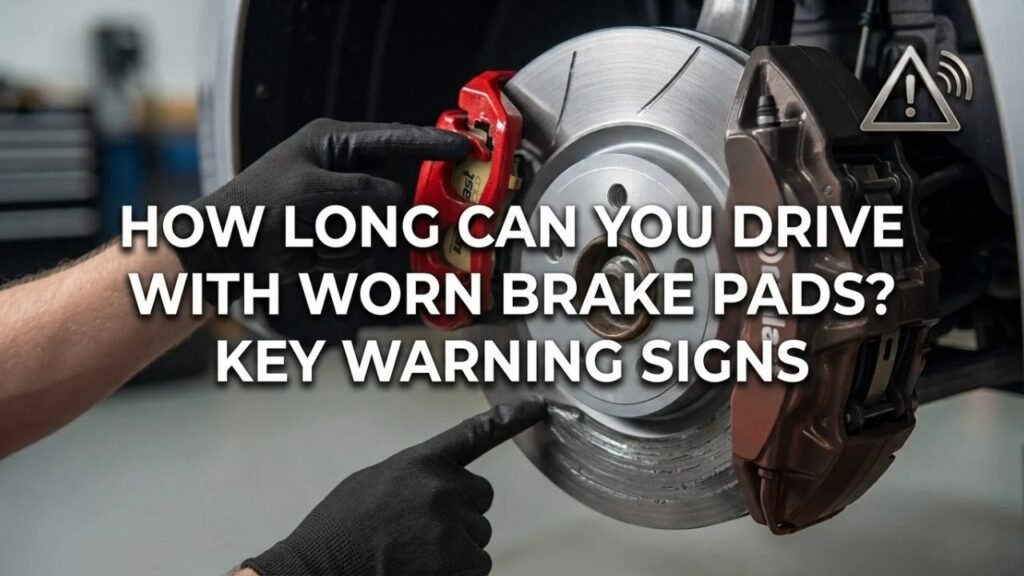
There is no universal number of miles you can safely drive once brake pads are described as worn. One vehicle may still have 4mm or 5mm of even friction material, while another may already have a pad near its minimum thickness.
If the pads remain above the specified service limit and the vehicle brakes normally, you may still have time to schedule replacement. That does not mean a fixed 500, 1,000, or 5,000 miles is guaranteed.
A pad already around 2–3mm has much less margin. If one pad is thinner than the others due to a sticking caliper or slide-pin problem, it may reach metal contact far sooner than a simple mileage estimate suggests.
Brake Pad Thickness and Replacement Urgency
Brake pad thickness refers to the friction material, not the steel backing plate. Many passenger-vehicle pads start somewhere around 10–12mm, though exact new thickness varies by design.
| Brake Pad Thickness | General Meaning |
| 5–6mm | Often still serviceable if wear is even |
| 4mm | Monitor closely and start planning replacement |
| 3mm | Replacement is commonly recommended soon |
| 2mm or less | Very little friction material remains |
| Metal-on-metal contact | Stop relying on remaining pad life and arrange repair |
These figures are general references. The specification for your exact vehicle and brake system should take priority.
Why Mileage Alone Is a Poor Predictor
Brake pads lose material mainly during braking events. Ten thousand highway miles with light braking can create less wear than a few thousand miles of heavy city traffic.
Driving style also matters. Frequent late braking generates more heat and friction than slowing earlier with moderate pedal pressure.
Mechanical faults can change wear even faster. A sticking caliper may keep one pad dragging against the rotor after the pedal is released, causing one wheel to consume pad material much faster than the others.
Key Takeaway: Worn pads do not have a fixed mileage allowance. Measure the thinnest pad, check the specified limit, and use braking symptoms to judge urgency.
When Worn Brake Pads Mean You Should Stop Driving
Some brake symptoms mean the mileage question is no longer useful. If stopping ability has changed or metal components are contacting each other, continuing to drive can increase both safety risk and repair cost.
Grinding or Metal-on-Metal Noise
A harsh grinding or scraping sound during braking can mean the friction material has worn away and the metal backing plate is contacting the rotor.
Metal contact can cut deep grooves into the rotor and create high temperatures. If grinding is persistent and tied to braking, do not continue normal driving just to reach a planned replacement date.
Soft or Sinking Brake Pedal
A soft, unusually low, or sinking pedal can point to a hydraulic problem rather than ordinary pad wear. Possible causes include air in the system, a fluid leak, or a master-cylinder fault.
If the pedal sinks toward the floor or braking response changes sharply, stop driving and have the brake system inspected.
Noticeably Longer Stopping Distance
A vehicle that needs more road to stop than usual may have worn pads, overheated brakes, contaminated friction material, damaged rotors, or another brake fault.
A clear change in stopping response deserves prompt diagnosis. Do not assume worn pads are the only possible cause.
Severe Pulling During Braking
A slight drift may have several causes, but strong pulling while braking can point to uneven brake force between the left and right sides.
A sticking caliper, contaminated pad, hydraulic issue, or severely uneven wear may be responsible. Strong pulling is a reason to stop normal driving and arrange an inspection.
Smoke, Burning Smell, or Extreme Wheel Heat
A dragging pad can keep rubbing the rotor and generate intense heat. You may notice a burning smell, smoke, or one wheel that feels much hotter than the others.
Do not touch the rotor, wheel hub, or caliper to check temperature. Brake parts can become hot enough to cause serious burns.
Key Takeaway: Grinding, weak braking, a sinking pedal, severe pulling, smoke, or extreme heat are stop-driving signs rather than reasons to calculate remaining miles.
Can You Drive to a Repair Shop With Worn Brake Pads?
A short trip to a repair facility may be reasonable if the vehicle still stops normally, the pads retain measurable friction material above the specified limit, and no severe warning signs are present.
Distance alone does not determine risk. A three-mile drive through steep streets and heavy traffic may use the brakes more than a longer drive on a flat road with little stopping.
Check Pedal Feel First
Press the brake pedal before leaving. It should feel consistent with normal operation and should not sink toward the floor.
If the pedal suddenly feels soft, unusually low, or different from normal, arrange towing rather than testing the brakes on the road.
Listen for the Type of Brake Noise
A light squeal can come from a wear indicator, surface rust, pad vibration, or debris. It still deserves inspection if it persists.
Grinding is different. A rough metallic grinding sound raises concern about severe pad wear or metal contact and should not be treated as a routine squeak.
Check for Pulling and Overheating
If the vehicle pulls sharply while braking, smells hot, or one wheel appears to be overheating, do not assume a short trip is harmless.
Those symptoms may point to a dragging caliper or another fault that can worsen rapidly.
Choose Towing When Braking Ability Is Uncertain
If you are unsure that the vehicle can stop normally, towing removes the risk of discovering a serious brake problem in traffic.
My preference is simple: if the question changes from “How worn are the pads?” to “Will the car stop normally?” the vehicle should not be driven until the cause is checked.
Key Takeaway: A short drive to a shop may be reasonable only when braking feels normal and no serious warning signs are present.
What Happens If You Keep Driving With Worn Brake Pads?
Continuing to use severely worn pads can damage more than the pads themselves. The rotor, caliper, brake hardware, and fluid can all be affected when friction material becomes too thin.
Rotor Scoring and Grooves
The friction material is designed to contact the rotor. The steel backing plate is not.
Once the backing plate reaches the rotor, it can carve grooves into the braking surface. Deep scoring may make rotor replacement necessary.
More Expensive Brake Repairs
Replacing pads before they wear through may limit the job to pads and any rotor service already required by specification.
Waiting until metal contact begins can add rotors, damaged hardware, or caliper work to the repair.
Caliper Piston Extension
As the pads become thinner, the caliper piston must extend farther to keep the pads against the rotor.
Normal pad wear is accounted for in brake design, but extreme wear combined with corrosion, damaged seals, or caliper faults can contribute to piston problems.
Higher Brake Temperatures
Very thin pads provide less friction material between the rotor and caliper assembly. Repeated braking can put substantial heat into the system.
A dragging pad creates an even greater heat problem because friction continues after the driver releases the pedal.
Brake Fade During Heavy Use
Excessive brake heat can reduce braking response, especially during repeated hard stops or long downhill driving.
If the brakes begin to smell hot or stopping response fades during a descent, find a safe place to stop and let the system cool. The cause should be checked before resuming demanding driving.
Key Takeaway: Driving pads too far can turn normal pad wear into rotor damage, overheating, caliper trouble, and a more expensive repair.
Why Some Worn Brake Pads Lose Material Faster
Two vehicles with the same measured pad thickness can reach the replacement point at very different times. Driving environment and brake condition make a large difference.
Stop-and-Go Traffic
Urban driving creates frequent braking events. Intersections, traffic lights, congestion, parking maneuvers, and short trips all increase brake use per mile.
A car used mainly in dense city traffic may consume the last few millimeters faster than a vehicle used mostly on open highways.
Hills and Mountain Roads
Long descents require repeated speed control. Heavy brake use raises pad and rotor temperatures.
Using the transmission or vehicle maker’s recommended downhill-driving method can reduce continuous brake use on long grades.
Towing and Heavy Loads
A heavier vehicle carries more energy that the brakes must absorb during a stop.
Towing, cargo, and passenger load can therefore increase brake demand. Trailer brakes, when properly equipped and adjusted, share some of that work.
Aggressive Braking
Repeated hard stops generate more heat than gradual braking. Drivers who brake late and heavily may see faster pad wear.
Leaving more following distance and slowing earlier can reduce repeated high-load braking during ordinary driving.
Sticking Calipers
A caliper piston or slide mechanism that does not release properly can leave a pad dragging on the rotor.
Clues include rapid wear on one pad, one wheel producing more brake dust, a burning smell, reduced fuel economy, or one wheel becoming unusually hot.
Key Takeaway: Traffic, hills, vehicle load, braking style, and caliper faults can shorten remaining pad life enough that another driver’s mileage is a poor comparison.
How to Check Worn Brake Pads Before Driving Further
A basic inspection can tell you more than a mileage guess, though a full brake inspection may require removing the wheel.
Measure the Friction Material
Measure only the remaining friction material, not the steel backing plate.
If the pad is difficult to see through the wheel, do not estimate thickness from an unclear angle. A proper measurement may require wheel removal.
Check Both Inner and Outer Pads
The outer pad may look healthy while the inner pad is much thinner. This can happen when caliper slides, pistons, or hardware do not move correctly.
Check both pads on each side of the axle whenever possible.
Look for Uneven or Tapered Wear
A pad that is thicker at one end than the other may point to caliper or hardware problems.
Large differences between left and right wheels also deserve diagnosis before simply installing new pads.
Inspect Rotor Condition
Look for deep grooves, severe rust, heat discoloration, cracks, or obvious surface damage.
Rotor thickness should be measured against the specification when brake service is performed.
Check the Dashboard
Some vehicles use electronic pad-wear sensors that trigger a warning when the friction material reaches a set point.
A red brake warning light can indicate a different problem, including low fluid or a hydraulic fault. Do not assume every brake light means worn pads.
Key Takeaway: Measure the thinnest inner and outer pad and inspect the rotor, warning lights, and wear pattern before deciding how much farther the vehicle should travel.
How to Make a Better Remaining-Life Estimate
If the pads are still above their service limit, previous measurements can provide a useful estimate of wear rate.
Suppose a front pad measured 6mm at 40,000 miles and now measures 5mm at 47,000 miles. That means it lost about 1mm over 7,000 miles under those driving conditions.
If replacement is planned at 3mm, roughly 2mm of planned material remains.
At the same historical wear rate:
7,000 miles per mm × 2mm = about 14,000 estimated miles
That figure is only a planning estimate. A new commute, towing, mountain driving, caliper drag, or a change in braking habits can alter the rate.
I would use the calculation to decide when to inspect again rather than treating it as permission to drive exactly that many miles.
When Should Worn Brake Pads Be Replaced?
Replacement timing should be based on measured thickness, condition, vehicle specifications, and symptoms.
Pads near 3–4mm are commonly entering the service-planning range. Some vehicle makers or brake manufacturers specify a different minimum, so use the correct information for the exact application.
Do not wait for zero friction material. Pads are meant to be replaced before the steel backing plate reaches the rotor.
If wear is uneven, repair the cause as well as replacing the pads. New pads installed on a sticking caliper may wear unevenly again.
Pads on the same axle are normally replaced together so braking characteristics remain matched from side to side.
Conclusion
There is no fixed answer to how long can you drive with worn brake pads because “worn” can describe anything from partly used pads to friction material that is nearly gone. Measurable pads above the specified limit may give you time to schedule service, while severe symptoms can mean the vehicle should not be driven farther.
Use the thinnest pad measurement, the vehicle maker’s service limit, and changes in braking behavior as your main references. Grinding, reduced stopping ability, a soft or sinking pedal, strong pulling, smoke, or extreme wheel heat should override any mileage estimate.
Replacing pads before they reach metal contact also protects the rotors and reduces the chance of a larger repair. If the brakes still operate normally but the pads are nearing their limit, schedule service rather than trying to use every final mile.
My recommendation is to treat worn pads as a maintenance decision based on measurement, not guesswork. If stopping ability is questionable, arrange an inspection or tow instead of testing how much life remains on the road.
FAQs About Driving With Worn Brake Pads
How Many Miles Can You Drive After Brake Pads Start Squeaking?
There is no dependable mileage number. Squeaking can come from a mechanical wear indicator, surface rust, pad vibration, or other causes.
If a wear indicator is creating the sound, schedule a brake inspection soon. If the noise becomes grinding or braking response changes, stop driving and have the system checked.
Can I Drive 100 Miles With Worn Brake Pads?
A 100-mile trip cannot be judged safely without pad measurements and brake-system condition. Pads that are near their service limit may not have enough margin for a long trip, especially in traffic or hilly terrain.
Grinding, poor pedal feel, overheating, pulling, or reduced braking response are reasons to repair the vehicle before making the trip.
Are 3mm Brake Pads Safe to Drive On?
Three millimeters is near the replacement range used for many brake pads, though exact limits vary.
A car may still brake normally at 3mm, but there is little reason to delay planning replacement. Check the specification for the exact vehicle and inspect for uneven wear before deciding how soon service is needed.
Can Worn Brake Pads Cause Grinding?
Yes. Once friction material becomes extremely thin or wears away, the steel backing plate can contact the rotor and produce a harsh grinding sound.
Metal contact can damage the rotor quickly. Arrange brake service rather than continuing to drive on grinding brakes.
Can Worn Brake Pads Cause a Soft Brake Pedal?
Severe pad wear may affect pedal travel in some situations, but a distinctly soft or sinking pedal can point to a hydraulic problem.
Air in the system, a fluid leak, or a master-cylinder fault may be involved. A major pedal change should be inspected rather than blamed on pad wear alone.
How Do I Know if My Brake Pads Are Too Worn to Drive?
Grinding, poor stopping response, a sinking pedal, severe pulling, smoke, a burning smell, extreme wheel heat, or friction material at or below the specified limit are strong warning signs.
If braking ability has changed, stop thinking in terms of remaining miles and have the system inspected.
Do Worn Brake Pads Damage Rotors?
Yes, especially after the friction material wears through. The steel backing plate can scrape the rotor and create deep grooves.
A dragging caliper can also overheat the rotor before the pad is completely worn out. Replacing pads before that stage lowers the chance of additional rotor damage.
