Can New Brake Pads Make Noise? Causes, Fixes, and Warning Signs
Fresh brake pads can make a light squeaking, squealing, or rubbing sound during their early break-in period. The pads and rotors need to establish even contact and a stable friction layer. Mild noise that fades with use can be normal, but grinding, harsh scraping, clunking, pulling, or reduced braking needs attention.
The tricky part is separating harmless break-in sounds from noise caused by a bad installation or another brake problem. A new set of pads should not be used as a reason to ignore loud or worsening noises, unusual pedal feel, excessive heat, or a vehicle that pulls while braking.
Proper bedding gives the new friction material a chance to work evenly against the rotor. It can reduce squeal, vibration, uneven deposits, and premature wear. Rotor condition, brake hardware, pad compound, caliper movement, and installation quality matter just as much as the age of the pads.
A manufacturer technical bulletin in NHTSA’s U.S. database lists eight common causes of brake noise, and improperly bedded new pads or discs is one of them. The same bulletin also identifies debris, rotor rust, worn components, and other brake-system conditions as possible sources.
So, can new brake pads make noise even when the brake job was done correctly? Yes. A temporary light squeak can occur as new friction surfaces mate, but the sound should generally become less noticeable rather than grow louder or develop into grinding.
What stood out to me during the research was that brake makers and service sources repeatedly separate light bedding noise from harsh mechanical sounds. The sections below explain the common causes, what different sounds may mean, how long new-brake noise may last, what can be checked, and which symptoms call for immediate inspection.
Can New Brake Pads Make Noise After Installation?
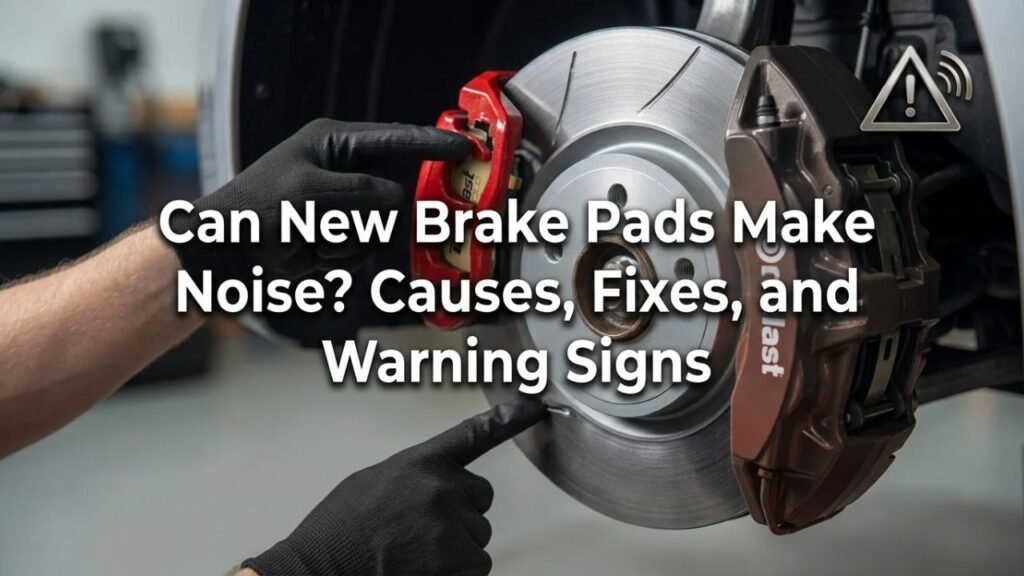
Yes. New pads can make some noise after installation, even with new rotors and properly installed hardware.
Brake squeal comes from vibration within the pad, rotor, caliper, and surrounding hardware. Installing new friction material changes the contact relationship between those parts, so the sound of the brakes may temporarily change.
New Pads Need to Bed Against the Rotors
Bedding, also called break-in or burnishing, is the process that establishes the working relationship between the pad and rotor surfaces.
During bedding, a thin and even layer of friction material develops on the rotor. Tire Rack describes this transfer layer as part of the conditioning process for new disc pads and rotors. An uneven transfer layer can contribute to vibration or brake judder.
Different pad makers specify different bedding procedures. Some replacement pads are meant to settle through normal moderate driving, while performance compounds may have a defined sequence of stops and cooling periods.
Use the instructions supplied with the pads or vehicle rather than applying a universal bedding procedure.
Mild Squeaking Can Be Temporary
A faint squeak during low-speed stops can occur while the new surfaces settle. It may be more noticeable when the brakes are cold, after the vehicle has been parked, or during very light pedal pressure.
The key is the pattern. A mild sound that gradually fades and comes with normal pedal feel and normal stopping behavior is less concerning than a sound that becomes louder, turns into grinding, or appears with vibration.
Firestone also identifies temporary squeaking during pad-and-rotor break-in as a possible condition after replacement, while persistent or worsening noise calls for inspection.
New Pads Should Not Produce Severe Mechanical Noise
Grinding, heavy scraping, repeated clunking, or a loud metallic sound should not be dismissed as normal bedding.
Possible causes include incorrect pad installation, hardware touching the rotor, a loose component, a damaged rotor, a stuck caliper, or another assembly problem.
If braking feels weak, the pedal becomes soft, the vehicle pulls sharply, or a wheel becomes extremely hot, the brake system needs inspection before continued normal driving.
Key Takeaway: Light temporary squeaking can occur while new pads bed in, but grinding, clunking, strong vibration, or poor braking is not a normal break-in symptom.
Common Reasons New Brake Pads Make Noise
New pads themselves are only one part of the brake system. A noise that appears immediately after a pad change may actually come from the rotors, clips, shims, caliper, or installation details.
Incomplete or Incorrect Bedding
Fresh pads have not yet established the same contact pattern that existed between the old pads and rotors.
If the mating surfaces do not develop evenly, small variations in friction can create vibration. That vibration may be heard as squealing or felt as a mild pulsation.
Repeated heavy braking immediately after installation can also overheat some friction materials before an even transfer layer develops.
I would check the pad maker’s bedding instructions first rather than trying an aggressive stop sequence found online. Procedures differ between ordinary street pads and high-temperature performance compounds.
Old, Grooved, or Uneven Rotors
Installing flat new pads against a rotor with deep grooves or an irregular surface can create poor initial contact.
The new pad may touch only the high areas of the rotor at first. That concentrates pressure and heat in smaller zones and can produce squeaking, scraping, or uneven wear.
Rotors should be inspected for:
- Deep scoring or grooves
- Heavy corrosion
- Heat spots
- Cracks
- Excessive thickness variation
- Thickness below the manufacturer’s minimum
- Surface conditions unsuitable for the new pads
A rotor should not automatically be machined or replaced simply because pads are being changed. Its measured condition and the vehicle maker’s service specifications should guide that decision.
Missing or Incorrectly Installed Shims
Many brake pads use anti-noise shims on the backing plate. These parts reduce vibration between the pad, caliper piston, and caliper body.
Brembo notes that shims on its street brake pads are used to reduce noise and vibration.
A missing, damaged, shifted, or incorrectly installed shim can let vibration become audible. Some replacement pads have factory-attached shims, while others use separate pieces.
Adding extra material is not always better. The brake assembly should match the pad and vehicle manufacturer’s instructions.
Dry or Binding Brake Hardware
Brake pads must move correctly within the caliper bracket. Floating calipers also rely on slide pins to move freely.
Rust, dirt, damaged clips, seized pins, or pads that bind tightly in the bracket can prevent clean application and release.
Brake-specific lubricant may be required on specified metal contact points or slide-pin areas. It should never be applied to the pad friction surface or rotor face.
Lubricant compatibility also matters around rubber boots and bushings. Use the type specified for the brake system rather than general-purpose grease.
Pad Compound Can Affect Noise
Brake pads are produced from different friction-material formulas. Ceramic, semi-metallic, low-metallic, organic, and performance-focused compounds can have different noise characteristics.
A pad selected for high-temperature bite or track use may produce more sound during ordinary street operation than a comfort-focused street pad.
This does not mean every semi-metallic pad is loud or every ceramic pad is silent. Rotor design, temperature, caliper stiffness, pad shape, shims, and the individual friction formula all influence noise.
Contamination on the Rotor or Pad
Grease, oil, brake fluid, dirty hands, or some cleaning residues on a friction surface can disturb pad-to-rotor contact.
Contaminated pads may squeal, grab, smoke, smell, or provide inconsistent friction. The severity depends on the material and how deeply it has entered the friction compound.
Brake cleaner should be used according to its label and the component maker’s instructions. Do not spray lubricants onto rotor faces or pad friction surfaces.
Moisture and Light Surface Rust
Brake rotors are usually made from iron and can develop a thin layer of surface rust after rain, washing, or sitting in damp conditions.
The first few brake applications may scrape that thin layer away, creating a temporary scraping or squeaking sound.
Brembo states that rotor corrosion after a vehicle sits can produce squealing, grinding, or crunching for the first few miles while brake contact cleans the surface. Persistent noise calls for further inspection.
Key Takeaway: New-pad noise may come from bedding, rotor condition, shims, hardware, pad material, contamination, or surface rust rather than from defective pads alone.
What Different Noises From New Brake Pads May Mean
The type of sound gives useful clues. It is not a complete diagnosis, but it can separate a mild bedding condition from a problem that deserves faster attention.
| Noise | Possible cause | What to do |
| Light squeak | Bedding, pad vibration, light rust, pad compound | Monitor and follow the specified bedding procedure |
| High-pitched squeal | Pad vibration, shims, hardware, glazing, rotor surface | Inspect if persistent or worsening |
| Soft rubbing | Initial pad/rotor contact or light surface rust | Check that it fades and the wheel is not overheating |
| Grinding | Incorrect assembly, severe contact problem, damaged part | Stop treating it as break-in noise and inspect promptly |
| Metallic scraping | Hardware or another component may contact the rotor | Inspect before extended driving |
| Clicking or clunking | Pad movement, loose hardware, caliper or bracket problem | Check installation and fasteners |
| Repeated thumping | Rotor or assembly irregularity may be present | Inspect rotor and brake assembly |
Squeaking and Squealing
Squeaking is usually a high-frequency vibration. It can occur even when the friction material still has plenty of thickness.
Fresh pads may squeak temporarily because their surfaces have not fully mated with the rotor. Persistent squealing may point toward shims, rotor condition, pad fit, glazing, or friction-material characteristics.
If the sound appears only for the first few stops after rain and then disappears, light rotor rust is a more likely cause than defective new pads.
Grinding or Harsh Scraping
Grinding after a brake job needs more attention than an ordinary squeak.
With brand-new pads, metal-on-metal grinding could mean something was installed incorrectly, a hardware component is contacting the rotor, a caliper is not positioned correctly, or another brake part is damaged.
Do not try to “bed out” a loud grinding noise.
Clicking or Clunking
A single click when the brakes first apply can sometimes come from slight pad movement within the carrier. Some brake systems naturally permit a small amount of pad movement.
Repeated clunking after brake replacement deserves inspection. Pad clips, shims, caliper bolts, carrier bolts, and pad fit should be checked against the vehicle’s service information.
Noise With Vibration
Noise accompanied by steering-wheel shake or pedal pulsation can point toward an uneven rotor surface, thickness variation, uneven friction deposits, or installation issues.
Wheel-hub cleanliness can also matter when a rotor has been replaced. Rust or debris between the hub and rotor can prevent the disc from sitting correctly.
Key Takeaway: A light squeak may fit normal bedding, while grinding, strong scraping, repeated clunking, or noise with major vibration needs diagnosis rather than more driving.
How Long Can New Brake Pads Make Noise?
There is no fixed mileage that applies to every brake pad.
Some street pads become quiet after a small number of normal trips. Other friction materials take longer to establish full contact with the rotor. Rotor condition and the specified bedding procedure also change the time involved.
Brembo advises a gradual break-in period of roughly 200–300 km, or about 125–185 miles, for some new disc-and-pad applications, with hard sudden braking avoided during that period. That figure belongs to Brembo’s stated application guidance and should not replace instructions supplied with a different pad set.
Noise should generally move in the right direction during break-in. A mild squeak that becomes less frequent is different from a squeal that becomes louder each day.
If the sound persists after the manufacturer’s bedding period, return to the installation details and inspect the rotor surface, pad fit, shims, clips, slide pins, and caliper operation.
How to Stop Noise From New Brake Pads
The fix depends on the cause. Replacing another set of pads without checking the rest of the brake assembly may reproduce the same sound.
Follow the Correct Bedding Procedure
Check the instructions from the vehicle or brake-pad manufacturer.
A typical street-pad process may call for controlled brake applications and a period of cooling or moderate driving. Performance compounds can require a very different temperature cycle.
Do not perform repeated hard stops on public roads simply to eliminate a squeak. Use only the specified procedure in a safe setting.
Inspect the Rotor Surface
Look for heavy grooves, rust, glazing, heat marks, and other surface damage.
Rotor thickness should be measured against the manufacturer’s minimum specification. If machining is permitted, the rotor must remain above its discard limit after machining.
A badly worn rotor can make a new pad noisy even if the pad installation is correct.
Check Shims, Clips, and Pad Fit
Make sure all required anti-rattle clips, abutment clips, shims, and retainers are present and positioned correctly.
Pads should move as intended in the carrier without excessive looseness or binding from corrosion.
Do not grind or modify pad backing plates simply to make an incorrect part fit.
Inspect Caliper Slide Pins and Pistons
A floating caliper should move freely on its slide mechanism. A seized pin can change pressure across the pads and create uneven wear or noise.
A piston that does not retract correctly may keep the pad dragging against the rotor. One clue is a wheel that becomes much hotter than the wheel on the opposite side after normal driving.
A dragging brake needs repair rather than additional bedding.
Use Brake Lubricant Only Where Specified
Apply brake lubricant only to points called for by the pad, caliper, or vehicle manufacturer.
Possible locations can include selected pad ears, backing-plate contact points, or slide-pin surfaces.
Never put grease on the rotor face or pad friction material.
That contamination can reduce friction and create a braking problem.
Key Takeaway: Correct bedding, a sound rotor surface, properly fitted hardware, free caliper movement, and correct lubrication are the main checks for persistent noise after a pad replacement.
When New Brake Pad Noise Needs Immediate Attention
A harmless break-in squeak should not change the basic safety or feel of the brake system.
Arrange an inspection promptly if the new noise comes with:
- Loud grinding or heavy metallic scraping
- A soft or sinking brake pedal
- Noticeably longer stopping distance
- Strong pulling during braking
- Smoke or a burning odor
- One wheel becoming unusually hot
- Heavy steering-wheel or pedal vibration
- Fluid leaking near a wheel or under the vehicle
- A brake or ABS warning light
- Repeated clunking after brake installation
A brake job that suddenly produces one of these symptoms should be checked before normal driving resumes.
Safety Tip: Do not assume a severe noise will disappear after the pads “wear in.” Bedding cannot correct a loose caliper, brake-fluid leak, wrong pad, damaged rotor, or major assembly error.
Can Brand-New Brake Pads Squeak With New Rotors?
Yes. Replacing both pads and rotors does not guarantee complete silence from the first stop.
Both surfaces are fresh, and the friction pair still needs to establish its working transfer layer. A short period of mild sound may occur during that process.
Noise with brand-new rotors can also come from installation details. Rotor protective coatings or manufacturing residue must be handled according to the rotor maker’s directions. Hub rust, damaged clips, missing shims, incorrect pad fit, or caliper problems can still create sound even though every friction component is new.
If both pads and rotors were replaced and the brakes grind, pull, overheat, or vibrate heavily, I would have the installation checked rather than wait for normal break-in.
Conclusion
If you are asking can new brake pads make noise, the answer is yes. A mild squeak, squeal, or soft rubbing sound can occur while new pads establish even contact with the rotor and complete their bedding process.
Persistent noise deserves a closer check. Old or uneven rotors, missing shims, binding hardware, incorrect lubrication, contamination, glazing, pad compound, or a sticking caliper can all make recently installed pads noisy.
Pay more attention to the type of sound and the way the brakes behave than to noise alone. A temporary squeak with a firm pedal and normal braking is very different from grinding, pulling, overheating, smoke, or reduced stopping ability.
My preference is to follow the pad maker’s bedding procedure first when the sound is mild, then inspect the installation if it does not improve. Severe mechanical noise should skip the waiting period and go straight to inspection.
FAQs About Noise From New Brake Pads
Is it normal for new brake pads to squeak?
A light squeak can be normal during the early bedding period. Fresh pads and rotors need to establish even contact and a stable friction layer. The noise should generally fade rather than become louder. Persistent squealing may come from hardware, rotor condition, pad fit, glazing, contamination, or the friction compound.
Why are my brand-new brake pads grinding?
Grinding is not a sound I would treat as ordinary break-in noise. With fresh pads, possible causes include incorrect installation, hardware contacting the rotor, a damaged rotor, caliper trouble, or another component rubbing. Have the brake assembly inspected before extended driving, more so if braking feel has changed.
Can new brake pads squeak at low speeds?
Yes. Low-speed braking can make pad vibration easier to hear, so new pads may squeak during gentle stops while bedding. Light surface rust or the pad compound can also contribute. If the squeak remains after the specified break-in period or comes with vibration, pulling, or heat, inspect the brakes.
Do new brake pads and rotors need to be broken in?
Many replacement pad-and-rotor combinations require a bedding or burnishing process. The procedure establishes contact and an even friction-material transfer layer on the rotor. Follow the instructions supplied by the pad or vehicle manufacturer because the required stop sequence and temperature cycle can differ between friction compounds.
Can cheap brake pads make more noise?
Pad formulation and construction influence brake noise, so some products may be more prone to squeal than others. Price alone does not determine noise. Shims, pad shape, friction compound, rotor condition, caliper design, manufacturing quality, and installation all affect how quiet a brake system is.
Can old rotors make new brake pads squeak?
Yes. Grooved, glazed, rusty, or uneven rotors can prevent a new flat pad from contacting the disc evenly. That uneven contact can create vibration and noise. Measure rotor thickness and inspect the surface according to the vehicle manufacturer’s limits before deciding to reuse, machine, or replace the rotor.
Should I drive until new brake pad noise goes away?
Only mild break-in noise should be given time to settle. Do not continue normal driving in hopes that loud grinding, metallic scraping, strong vibration, pulling, smoke, excessive heat, fluid leakage, or weak braking will disappear. Those symptoms call for brake-system inspection rather than additional break-in miles.