Brake Caliper Piston Size Chart: Common Sizes Explained
Brake caliper piston size is more important than it may appear. The piston is the part inside the caliper that moves outward when hydraulic pressure from the brake system is applied. It pushes the brake pad toward the rotor, creating the friction needed to slow or stop the vehicle.
A brake caliper piston size chart can help you understand common piston diameters, compare different caliper designs, estimate piston area, and determine why two visually similar calipers may produce different clamping forces. It can also be useful when rebuilding a caliper, researching replacement parts, or planning a brake-system modification.
There is no single standard piston size for every car or truck. Passenger vehicles may use relatively small pistons, while heavy SUVs, trucks, performance vehicles, and multi-piston brake systems can use very different dimensions. Front and rear calipers on the same vehicle are also commonly different because the front brakes normally handle a larger portion of the braking load.
Piston diameter alone does not determine how powerful a braking system will be. Hydraulic pressure, total piston area, rotor diameter, brake pad friction, caliper design, tire grip, and master-cylinder size all influence braking behavior. On multi-piston calipers, you also have to consider the number and arrangement of pistons rather than looking at one piston diameter by itself.
This guide provides a practical brake caliper piston size chart, explains how piston diameter affects braking force, shows how to calculate piston area, and covers the safest ways to identify the correct piston size for a specific vehicle.
Brake Caliper Piston Size Chart
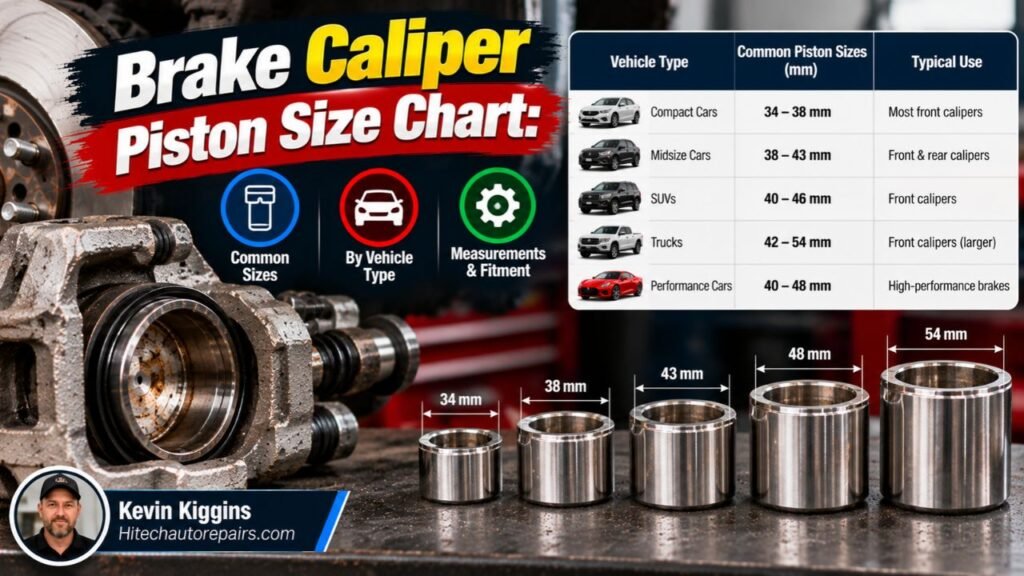
Brake caliper pistons are commonly specified by diameter, usually in millimeters or inches. The following chart shows representative piston sizes you may encounter in automotive brake systems.
These are general reference sizes, not guaranteed specifications for a particular vehicle.
| Piston Diameter | Approx. Diameter in Inches | Area of One Piston | General Use |
| 25 mm | 0.98 in | 491 mm² | Small rear or multi-piston applications |
| 27 mm | 1.06 in | 573 mm² | Rear and compact multi-piston calipers |
| 30 mm | 1.18 in | 707 mm² | Rear or performance multi-piston designs |
| 32 mm | 1.26 in | 804 mm² | Rear and multi-piston applications |
| 34 mm | 1.34 in | 908 mm² | Rear or staggered multi-piston calipers |
| 36 mm | 1.42 in | 1,018 mm² | Performance multi-piston applications |
| 38 mm | 1.50 in | 1,134 mm² | Rear or smaller front pistons |
| 40 mm | 1.57 in | 1,257 mm² | Front/rear and multi-piston applications |
| 42 mm | 1.65 in | 1,385 mm² | Medium-size automotive calipers |
| 44 mm | 1.73 in | 1,521 mm² | Front or larger rear calipers |
| 45 mm | 1.77 in | 1,590 mm² | Medium-duty applications |
| 48 mm | 1.89 in | 1,810 mm² | Common larger single-piston applications |
| 50 mm | 1.97 in | 1,963 mm² | Front brake applications |
| 51 mm | 2.01 in | 2,043 mm² | Front floating calipers |
| 54 mm | 2.13 in | 2,290 mm² | Larger passenger-vehicle front calipers |
| 57 mm | 2.24 in | 2,552 mm² | Large front single-piston calipers |
| 60 mm | 2.36 in | 2,827 mm² | Larger SUV or truck applications |
| 63 mm | 2.48 in | 3,117 mm² | Heavy-duty single-piston applications |
| 66 mm | 2.60 in | 3,421 mm² | Large truck or specialty applications |
Actual piston sizes vary greatly by vehicle and caliper design. A 40 mm piston in one brake system cannot automatically be substituted for a 40 mm piston in another.
What Does Brake Caliper Piston Size Mean?
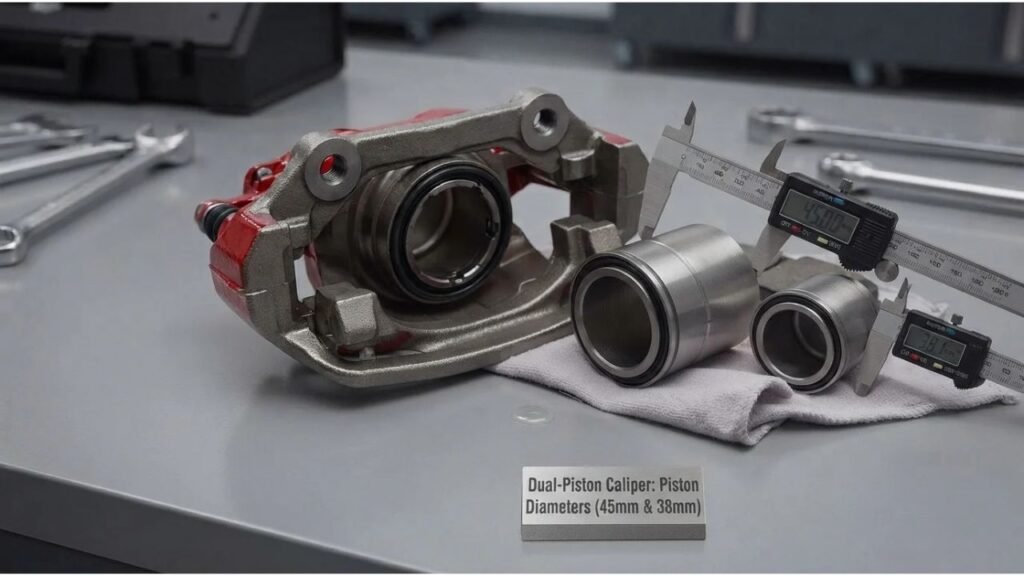
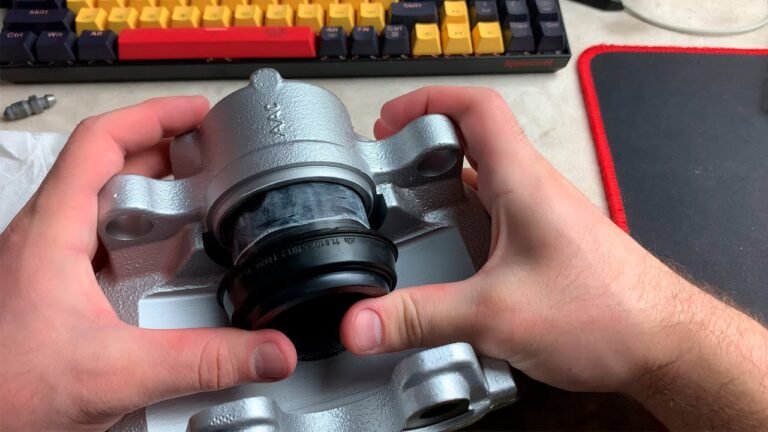
Brake caliper piston size normally refers to the diameter of the piston that moves inside the caliper bore.
For example, a caliper described as having a 54 mm piston contains a piston with a diameter of approximately 54 millimeters.
The diameter matters because it determines the piston’s hydraulic surface area.
When brake fluid pressure acts on a larger piston area, it can produce more force.
The basic relationship is:
Force = Hydraulic Pressure × Piston Area
Therefore, if hydraulic pressure stays the same, increasing piston area increases the force the piston can produce.
This does not mean installing the biggest possible piston will automatically improve the braking system. Changing piston area can also affect pedal travel, brake balance, master-cylinder compatibility, and ABS or stability-control behavior.
Common Brake Caliper Piston Sizes by Application
There is considerable overlap between vehicle categories, but certain size ranges are common.
Small Rear Brake Calipers
Rear calipers often use smaller pistons than front calipers.
Typical piston diameters may fall roughly around:
25–45 mm
Rear brakes generally provide less braking torque than the front brakes because vehicle weight transfers forward during braking.
However, rear piston size depends strongly on:
- Vehicle weight
- Brake balance
- Rotor diameter
- Parking-brake design
- Master cylinder
- ABS calibration
- Caliper type
Do not choose a rear piston based only on a general size range.
Passenger-Car Front Calipers
Single-piston floating front calipers often use considerably larger pistons.
Common diameters can fall roughly in the:
48–60 mm range
Some vehicles fall outside this range.
A floating caliper with one large piston works differently from a fixed caliper with multiple smaller pistons, so piston diameter alone cannot be used for a direct comparison.
Truck and SUV Calipers
Larger trucks and SUVs may use:
- Large single pistons
- Dual-piston floating calipers
- Multi-piston fixed calipers
Individual piston diameters can vary widely.
A truck with dual 45 mm pistons, for example, should not be compared with a single 60 mm piston using diameter alone. You need to compare total effective piston area.
Performance Multi-Piston Calipers
Performance brake systems frequently use several smaller pistons rather than one very large piston.
Common piston diameters can include sizes such as:
- 27 mm
- 30 mm
- 32 mm
- 34 mm
- 36 mm
- 38 mm
- 40 mm
- 42 mm
- 44 mm
Some calipers use equal-sized pistons, while others use staggered piston sizes.
Single-Piston vs. Multi-Piston Caliper Sizes
A larger number of pistons does not necessarily mean every piston will be large.
Consider these simplified examples.
Single-Piston Caliper
A floating caliper might have:
1 × 57 mm piston
That one piston has a relatively large hydraulic area.
Dual-Piston Caliper
Another caliper could have:
2 × 43 mm pistons
Each piston is smaller, but their combined area may be similar to or greater than the area of one larger piston.
Four-Piston Fixed Caliper
A performance caliper may use:
4 × 38 mm pistons
Because fixed calipers normally have pistons on both sides of the rotor, interpreting effective piston area requires understanding how the caliper is arranged.
This is why comparing calipers simply by saying that one has “four pistons” and another has “two pistons” can be misleading.
How to Calculate Brake Caliper Piston Area
The area of a circular piston is calculated using:
Area = π × radius²
Because radius is half the diameter:
Area = π × (diameter ÷ 2)²
Suppose a caliper piston measures 50 mm.
Radius:
50 ÷ 2 = 25 mm
Square the radius:
25 × 25 = 625
Multiply by π:
625 × 3.1416 ≈ 1,963 mm²
A 50 mm piston therefore has an area of approximately 1,963 square millimeters.
Brake Caliper Piston Area Comparison Chart
Diameter changes may appear small, but piston area increases much faster because area is based on the square of the radius.
| Piston Diameter | Approx. Piston Area | Increase vs. 40 mm |
| 40 mm | 1,257 mm² | — |
| 42 mm | 1,385 mm² | 10% |
| 44 mm | 1,521 mm² | 21% |
| 46 mm | 1,662 mm² | 32% |
| 48 mm | 1,810 mm² | 44% |
| 50 mm | 1,963 mm² | 56% |
| 52 mm | 2,124 mm² | 69% |
| 54 mm | 2,290 mm² | 82% |
| 57 mm | 2,552 mm² | 103% |
| 60 mm | 2,827 mm² | 125% |
A 60 mm piston is only 50% larger in diameter than a 40 mm piston, but its piston area is about 125% greater.
That illustrates why relatively small diameter changes can significantly affect hydraulic characteristics.
How Piston Size Affects Braking Force
The brake system creates hydraulic pressure when you press the brake pedal.
That pressure acts on the caliper piston.
If two pistons receive identical hydraulic pressure, the piston with the greater effective area produces more force.
For example, imagine hydraulic pressure of 1,000 psi acting on two different pistons.
A piston with twice the area can theoretically produce approximately twice the force from the same hydraulic pressure.
However, increasing piston area also means the master cylinder must move more brake fluid to move that piston the same distance.
This can affect pedal travel and pedal feel.
Larger Brake Caliper Pistons Are Not Always Better
A larger piston can increase hydraulic force, but brake systems are carefully balanced.
Installing a caliper with significantly different piston area can change:
- Front-to-rear brake balance
- Pedal travel
- Pedal firmness
- Master-cylinder requirements
- ABS behavior
- Stability-control operation
- Lockup characteristics
For a stock vehicle, replacement calipers should generally match the specifications intended for that application.
Brake modifications require system-level calculations rather than simply selecting a larger piston.
How Floating Calipers Affect Piston-Area Calculations
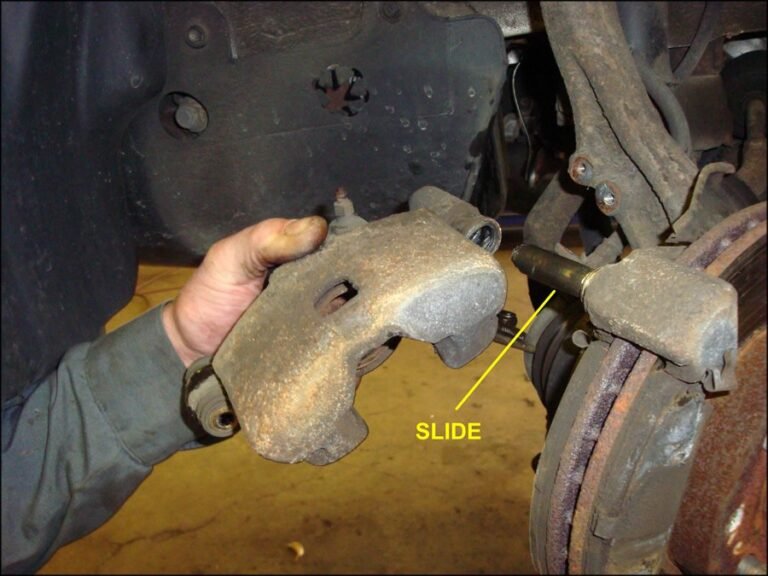
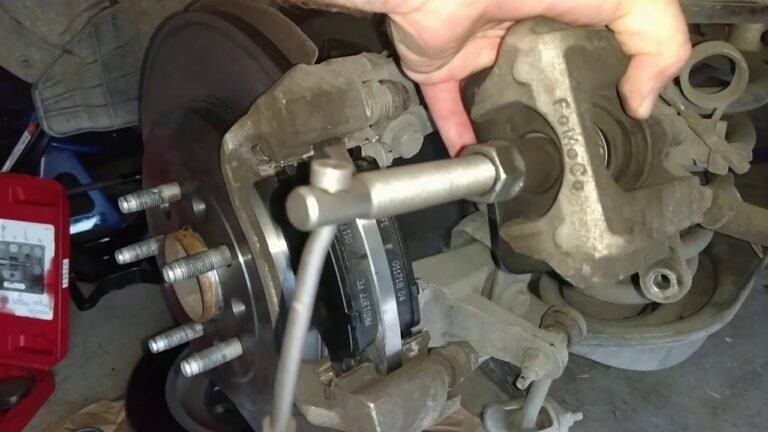
A floating caliper usually has pistons on only the inboard side.
When the piston pushes the inner brake pad into the rotor, the caliper body slides and pulls the outer pad against the opposite side.
The reaction of the sliding caliper effectively creates clamping force on both sides of the rotor.
Because of this mechanical arrangement, floating-caliper comparisons must account for caliper type rather than simply multiplying piston counts without considering how the caliper operates.
How Fixed Calipers Affect Piston-Area Calculations
A fixed brake caliper does not slide laterally like a floating caliper.
Instead, it has pistons positioned on both sides of the rotor.
For example, a four-piston fixed caliper could have:
- Two pistons on the inner side
- Two pistons on the outer side
A six-piston design could have three pistons on each side.
When calculating hydraulic relationships, piston area is commonly compared per side of the fixed caliper rather than blindly adding every piston on both sides.
This distinction is essential when comparing fixed and floating calipers.
Why Multi-Piston Calipers Use Different Piston Sizes
Some performance calipers use staggered piston sizes, meaning not every piston has the same diameter.
For example, one side of a caliper might use progressively sized pistons such as:
- 30 mm
- 34 mm
- 38 mm
The purpose can include controlling pressure distribution across a long brake pad.
As the rotor moves through the caliper, the leading and trailing edges of the brake pad may experience different forces and temperatures.
Properly engineered staggered piston sizes can help control tapered pad wear and improve pressure distribution.
Piston arrangement is therefore part of the overall caliper design and should not be arbitrarily altered.
Metric to Inch Brake Caliper Piston Size Chart
Replacement components may be listed in either millimeters or inches.
The following approximate conversions can help when comparing specifications.
| Millimeters | Inches |
| 25 mm | 0.984 in |
| 30 mm | 1.181 in |
| 32 mm | 1.260 in |
| 34 mm | 1.339 in |
| 36 mm | 1.417 in |
| 38 mm | 1.496 in |
| 40 mm | 1.575 in |
| 42 mm | 1.654 in |
| 44 mm | 1.732 in |
| 45 mm | 1.772 in |
| 48 mm | 1.890 in |
| 50 mm | 1.969 in |
| 51 mm | 2.008 in |
| 54 mm | 2.126 in |
| 57 mm | 2.244 in |
| 60 mm | 2.362 in |
| 63 mm | 2.480 in |
| 66 mm | 2.598 in |
For replacement parts, use the manufacturer’s exact specification rather than relying only on rounded conversions.
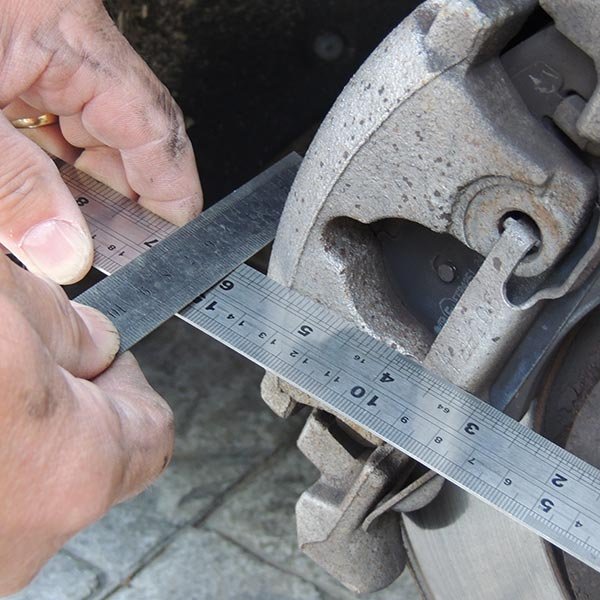
How to Measure a Brake Caliper Piston
A digital caliper or micrometer is the most useful tool for measuring piston diameter accurately.
If the piston has been safely removed from the brake caliper during a proper rebuild:
- Clean the piston surface carefully.
- Measure across the widest outside diameter.
- Keep the measuring tool perpendicular to the piston.
- Take measurements at more than one location.
- Compare your measurement with the replacement-part specification.
A piston measuring about 53.9 or 54.0 mm, for example, would generally be considered a nominal 54 mm piston.
Do Not Measure Only the Visible End
Trying to measure a piston while it is still deeply installed in the caliper can produce an inaccurate result.
The visible face may have:
- Chamfers
- Recesses
- Dust-boot features
- Irregular edges
For replacement purposes, use the actual piston outside diameter or the manufacturer’s listed specification.
How to Find the Correct Piston Size Without Removing It
Removing a caliper piston is not always necessary just to identify its size.
Start with:
- Vehicle year
- Make
- Model
- Engine
- Trim
- Front or rear axle
- Caliper manufacturer
- Caliper casting number
- Original-equipment part number
Some vehicles use more than one brake package during the same model year.
Possible differences may depend on:
- Wheel size
- Engine
- GVWR
- Tow package
- Sport package
- Rotor diameter
- Production date
Using only the vehicle model name can therefore produce the wrong piston specification.
Why Two Calipers for the Same Vehicle May Have Different Piston Sizes
Automakers sometimes install multiple braking systems on vehicles that otherwise look very similar.
For example, a heavier trim level may receive:
- Larger rotors
- Larger calipers
- Different piston dimensions
- Different mounting brackets
Performance versions may also receive entirely different brake systems.
For replacement work, verify the exact brake option rather than assuming every version of the vehicle uses the same caliper.
Front vs. Rear Brake Caliper Piston Size
Front calipers usually have more hydraulic capacity than rear calipers because front brakes normally perform more of the work during deceleration.
When a vehicle slows down, weight transfers toward the front axle.
Consequently, the front tires can generate more braking force before locking than the lightly loaded rear tires.
Brake systems compensate through a combination of:
- Piston sizing
- Rotor sizing
- Pad sizing
- Hydraulic proportioning
- ABS control
- Electronic brake-force distribution
This is why installing front and rear calipers with arbitrary piston sizes can disturb brake balance.
Does Piston Size Affect Brake Pedal Feel?
Yes.
A caliper with more total piston area requires more brake fluid movement for a given amount of piston travel.
If you increase caliper piston area without changing the master cylinder, you may experience:
- Increased pedal travel
- Softer pedal feel
- Different hydraulic leverage
Conversely, changing to significantly less caliper area can reduce pedal travel but may also require greater pedal effort to achieve the desired braking force.
Brake pedal characteristics are determined by the entire hydraulic system.
Brake Caliper Piston Size vs. Master Cylinder Size
The master cylinder bore and caliper piston area work together.
A smaller master-cylinder bore generally produces more hydraulic pressure for the same pedal force but requires greater pedal travel to move a given volume of fluid.
A larger master-cylinder bore moves more fluid per unit of travel but generally requires greater input force to produce the same hydraulic pressure.
This relationship is one reason caliper upgrades sometimes require consideration of the master cylinder.
Replacing calipers with factory-equivalent components normally avoids this problem because the original brake system was designed around those piston dimensions.
Does More Pistons Mean Better Brakes?
Not necessarily.
The number of pistons is only one part of brake-caliper design.
A well-designed two-piston caliper can be entirely appropriate for a vehicle, while a six-piston caliper may be beneficial in another application because of:
- Larger brake pads
- Better pressure distribution
- Greater caliper stiffness
- Larger rotors
- Improved heat management
Adding pistons does not automatically increase total hydraulic force.
Several smaller pistons can have the same total effective area as fewer larger pistons.
Piston Diameter vs. Rotor Size
Caliper piston diameter controls part of the hydraulic force, while rotor size influences brake torque.
Applying the same pad force farther from the rotor center can create more braking torque.
That is why performance brake upgrades commonly combine:
- Larger rotors
- Properly matched calipers
- Suitable piston area
- Appropriate brake pads
Changing only piston size is not the same as installing a complete engineered brake upgrade.
What Material Are Brake Caliper Pistons Made From?
Depending on the caliper design, pistons may be made from materials such as:
- Steel
- Stainless steel
- Aluminum alloys
- Phenolic composite materials
Each has different characteristics involving weight, corrosion resistance, heat transfer, manufacturing cost, and durability.
Replacement piston material should generally match an appropriate specification for the caliper.
Do not substitute piston materials solely because another material appears more durable.
What Happens if the Wrong Piston Size Is Installed?
A piston that does not match the caliper bore is not an acceptable replacement.
If it is too large, it may not fit.
If it is too small, the piston-to-seal relationship can be incorrect and may cause serious hydraulic problems.
Possible consequences include:
- Brake fluid leakage
- Piston binding
- Seal failure
- Uneven braking
- Loss of braking performance
Brake pistons and seals must match the specific caliper design.
When rebuilding a caliper, use components intended for that exact caliper.
Can You Increase Brake Power by Installing Larger Pistons?
Technically, increasing effective piston area can increase caliper force at a given hydraulic pressure.
However, it should not be treated as a simple DIY method of increasing braking performance.
A piston-area change affects the hydraulic ratio of the entire brake system.
A proper brake upgrade may need to account for:
- Front/rear bias
- Master cylinder
- Booster
- Rotor diameter
- Brake pads
- Tire grip
- ABS
- Wheel clearance
- Caliper bracket strength
For a street vehicle, use a properly engineered brake kit or consult a brake-system professional before significantly changing caliper piston area.
Common Mistakes When Comparing Caliper Piston Sizes
Comparing Diameter Instead of Area
A 60 mm piston is not simply 20% more powerful than a 50 mm piston because piston force relates to area, not directly to diameter.
Ignoring Piston Count
Two smaller pistons may provide more total area than one larger piston.
Ignoring Caliper Type
A single-piston floating caliper cannot be compared directly with a multi-piston fixed caliper without accounting for how each design creates clamp force.
Assuming Every Trim Uses the Same Caliper
Vehicle manufacturers frequently offer different brake packages within the same model line.
Choosing the Largest Piston Available
Brake systems must remain balanced. Bigger is not automatically better.
FAQs About Brake Caliper Piston Size Chart
What Is the Most Common Brake Caliper Piston Size?
There is no single most common size across all vehicles.
Passenger-car front floating calipers frequently use pistons somewhere around the 48–60 mm range, while rear and multi-piston calipers often use smaller individual pistons.
Always verify the exact vehicle application.
How Do I Know My Brake Caliper Piston Size?
The safest methods are to look up the caliper specification using its exact part number or carefully measure the removed piston with a digital caliper or micrometer during a proper rebuild.
Vehicle make and model alone may not be enough if several brake packages were offered.
Are Front Brake Caliper Pistons Bigger Than Rear Pistons?
Often, yes, particularly on vehicles using single-piston floating calipers.
The front brakes generally handle more braking load, so front and rear calipers are sized differently.
However, multi-piston designs make simple diameter comparisons less useful.
Does a Bigger Caliper Piston Give More Braking Force?
At the same hydraulic pressure, greater effective piston area produces more piston force.
But changing piston size also changes hydraulic balance and fluid-volume requirements, so a larger piston is not automatically a safe or beneficial upgrade.
What Size Piston Does a Four-Piston Caliper Use?
There is no standard size.
A four-piston caliper may use four identical pistons or two different piston sizes on each side.
Individual piston diameters can range widely depending on the application.
How Do I Calculate Total Piston Area for a Multi-Piston Caliper?
Calculate the area of each piston using:
Area = π × (diameter ÷ 2)²
Then add the relevant piston areas together.
For fixed calipers, comparisons are commonly based on the pistons on one side of the rotor because corresponding pistons act from both sides.
Can I Replace a 54 mm Caliper Piston With a 57 mm Piston?
No.
A replacement piston must match the caliper bore, seal design, dimensions, and application.
A 57 mm piston is substantially larger than a 54 mm piston and is not an interchangeable replacement simply because the dimensions appear close.
Does Brake Caliper Piston Size Affect Pedal Travel?
Yes.
More total caliper piston area generally requires a greater volume of brake fluid for the same piston movement.
If caliper area is changed without matching the rest of the hydraulic system, pedal travel and pedal feel can change.
Conclusion
A brake caliper piston size chart is useful for comparing piston diameters, understanding hydraulic area, and identifying why different calipers behave differently. Common automotive piston diameters can range from around 25 mm for smaller rear or multi-piston applications to more than 60 mm for some large single-piston calipers.
The most important number for hydraulic comparison is not diameter alone but effective piston area. Piston count, fixed versus floating caliper design, master-cylinder size, rotor dimensions, and brake balance all matter as well.
If you are replacing or rebuilding a caliper, use the exact vehicle and caliper specification rather than choosing a piston from a generic size chart. Brake components are safety-critical, and the correct piston must match the caliper bore and sealing system precisely.