Brake Caliper Failure Symptoms: Signs, Causes & Diagnosis
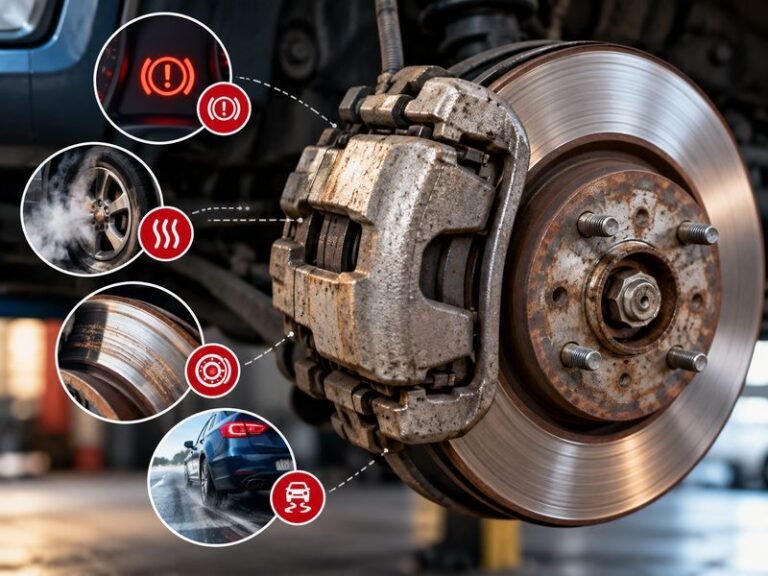
A failing brake caliper can affect how smoothly, evenly, and safely your vehicle stops. Common brake caliper failure symptoms include the vehicle pulling to one side, one wheel becoming unusually hot, uneven brake pad wear, brake fluid leaks, grinding or clunking noises, and a brake that stays partially applied after you release the pedal.
A caliper can fail in several ways. The caliper piston may seize, the slide pins may stick, a piston seal may leak, or the parking-brake mechanism built into some rear calipers may stop releasing correctly. Because these failures behave differently, not every bad caliper produces the same symptoms.
Some caliper problems develop gradually. You might first notice one brake pad wearing faster than the others or a slight pull while driving. A severely seized or leaking caliper can create much more obvious problems, including smoke, a burning smell, poor braking, or a very hot wheel.
This guide explains the main symptoms of brake caliper failure, why they happen, how to distinguish a bad caliper from other brake problems, and when the vehicle should be inspected immediately.
Brake Caliper Failure Symptoms: What Should You Look For?
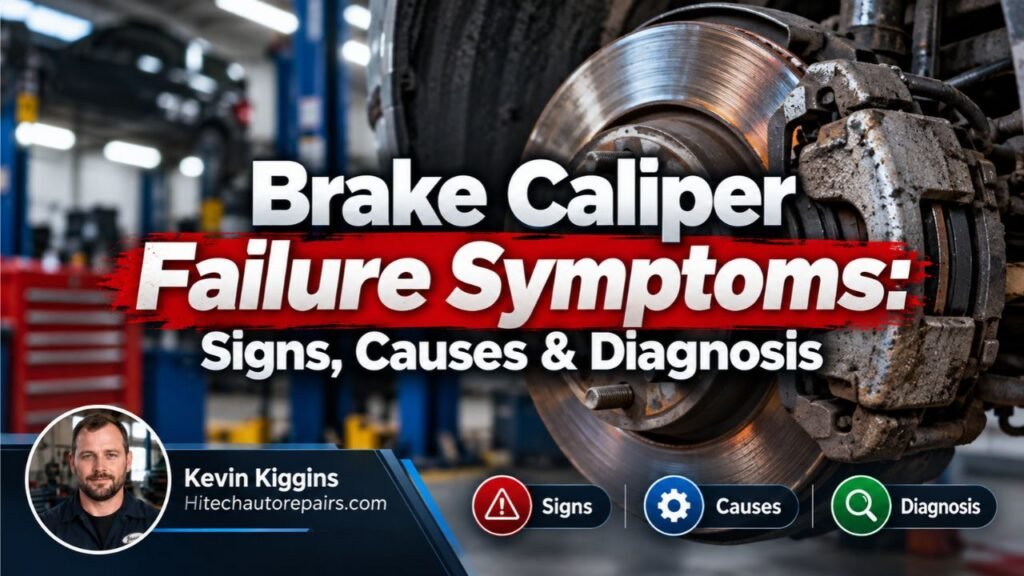
The most common brake caliper failure symptoms are related to abnormal braking force, excessive friction, hydraulic leakage, or restricted caliper movement.
Watch for:
- Vehicle pulling to one side
- One wheel getting hotter than the others
- Burning smell near a wheel
- Smoke from the brake area
- Uneven brake pad wear
- Brake dragging after releasing the pedal
- Reduced acceleration
- Grinding, scraping, or clunking noises
- Brake fluid leaking around the caliper
- Soft or sinking brake pedal
- Reduced braking performance
- Steering-wheel vibration while braking
Some of these symptoms can also be caused by bad brake pads, rotors, brake hoses, wheel bearings, tires, or suspension components. A physical brake inspection is needed before blaming the caliper.
What Is a Brake Caliper?
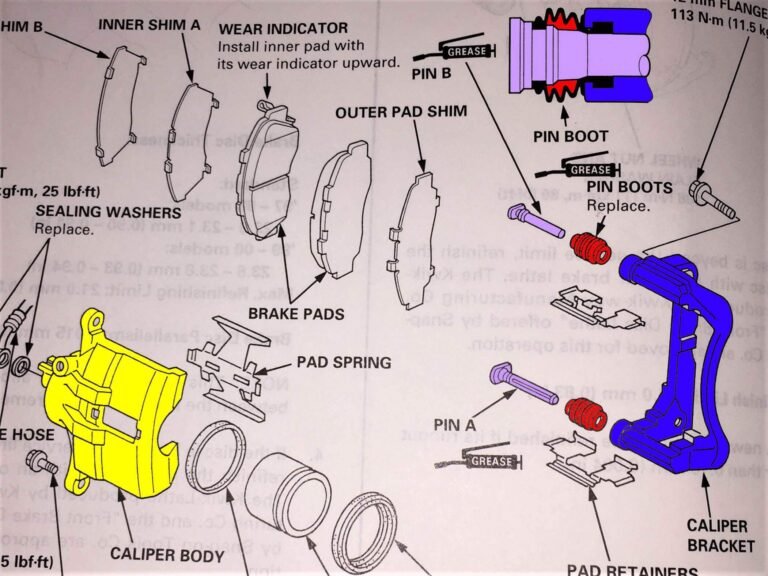
A brake caliper is part of a vehicle’s disc brake system.
It sits over the brake rotor and contains one or more hydraulic pistons.
When you press the brake pedal, brake fluid pressure pushes the piston outward. The piston presses a brake pad against the rotor.
On a typical floating caliper, the caliper then slides so the outer pad contacts the opposite side of the rotor.
The friction between the pads and rotor slows the wheel.
When you release the brake pedal, hydraulic pressure falls and the pads should release enough for the rotor to turn freely.
If the piston or caliper cannot move correctly, the brake may fail to apply properly or may remain partially applied.
Vehicle Pulls to One Side
A vehicle that pulls to one side while braking can have a caliper problem.
If one caliper does not apply as strongly as the caliper on the opposite side, the stronger brake can pull the vehicle toward that side.
A caliper that remains stuck may also create constant drag and make the vehicle pull even when you are not pressing the brake pedal.
Possible caliper-related causes include:
- Seized piston
- Frozen slide pins
- Brake pad binding
- Hydraulic restriction
- Leaking caliper
However, pulling can also come from uneven tire pressure, wheel alignment problems, suspension damage, a collapsed brake hose, or contaminated brake pads.
The direction of the pull alone does not identify the failed part.
One Wheel Gets Very Hot
A wheel that becomes much hotter than the others is one of the stronger signs of a sticking or seized brake caliper.
If the brake pads remain against the rotor, friction continues even when you are not braking.
That creates heat.
You may notice:
- Heat radiating from the wheel
- Burning odor
- Discolored rotor
- Reduced acceleration
- Smoke in severe cases
Do not touch the rotor or caliper immediately after driving. Brake components can become hot enough to cause serious burns.
If one brake is smoking or extremely hot, stop driving as soon as it is safe.
Burning Smell From One Wheel
A dragging brake can create a strong burning smell.
The odor may come from overheated:
- Brake pads
- Rotor
- Caliper
- Nearby grease or rubber components
A burning smell that appears after ordinary driving should not be ignored.
If the smell is strongest near one wheel, compare that brake with the others once the vehicle has safely cooled.
Persistent overheating can damage the pads, rotor, seals, brake fluid, and nearby wheel components.
Smoke Coming From the Brake
Smoke is a more serious sign of brake caliper failure.
A severely seized caliper can keep the pad firmly against the rotor until temperatures become extremely high.
Possible results include:
- Smoking brake pads
- Rotor overheating
- Brake fluid overheating
- Damage to rubber seals
- Severe pad wear
If smoke is coming from a wheel, do not continue normal driving.
Pull over safely and arrange for the brake system to be inspected.
Uneven Brake Pad Wear
Uneven brake pad wear is one of the most useful clues during brake inspection.
A properly operating floating caliper should allow the inner and outer pads to wear reasonably evenly.
If one pad is much thinner than the other, possible causes include:
- Seized caliper piston
- Stuck slide pins
- Brake pad binding in the bracket
- Caliper not centering correctly
For example, a seized piston may keep one pad against the rotor.
A stuck slide pin may prevent the caliper from moving correctly and cause one pad to carry more braking load.
Uneven pad wear does not automatically mean the caliper body itself must be replaced, but the entire caliper assembly should be inspected.
Brake Stays Applied After Releasing the Pedal
A brake should release after you take your foot off the pedal.
If one wheel continues dragging, the caliper may not be retracting properly.
Common causes include:
- Corroded caliper piston
- Seized piston
- Dry or seized slide pins
- Rusted brake pad hardware
- Restricted brake hose
- Stuck parking-brake mechanism
You might notice that the vehicle feels as though something is holding it back.
This condition can also reduce fuel economy because the engine has to overcome constant brake resistance.
Car Feels Sluggish or Hard to Accelerate
A sticking caliper can create enough resistance that the vehicle feels unusually heavy.
You may notice:
- Slower acceleration
- More throttle needed
- Vehicle does not coast normally
- Reduced fuel economy
If the brake drag is severe, the vehicle may feel like the parking brake is partially applied.
This symptom often appears together with excessive heat at one wheel.
Brake Fluid Leaking Around the Caliper
A leaking caliper is a different type of failure from a seized caliper.
Brake fluid can leak from:
- Piston seal
- Bleeder screw
- Brake hose connection
- Damaged caliper body
Brake fluid often looks clear to amber when fresh and becomes darker with age.
A wet area around the caliper should be investigated promptly.
Hydraulic leakage can reduce brake fluid in the system and may eventually reduce braking performance.
Soft or Spongy Brake Pedal
A leaking caliper can contribute to hydraulic problems that make the brake pedal feel:
- Soft
- Spongy
- Lower than normal
Air can enter the brake system when fluid leaks out.
However, a soft pedal can also result from:
- Air in the brake lines
- A failing master cylinder
- Flexible brake hose problems
- Other brake fluid leaks
Do not assume a soft pedal means the caliper is definitely at fault.
Brake Pedal Slowly Sinks
A pedal that continues moving toward the floor while steady pressure is applied may indicate a hydraulic problem.
A severe external caliper leak is one possible cause, but the master cylinder and other hydraulic components must also be considered.
A sinking brake pedal should be inspected promptly because it can indicate loss of hydraulic pressure.
Grinding Noise
A failing caliper can indirectly cause grinding.
If the caliper remains applied, the brake pad can wear out rapidly.
Once the friction material is gone, the metal backing plate may contact the rotor.
That can produce a harsh grinding sound.
Grinding may also be caused by:
- Completely worn brake pads
- Damaged rotor
- Foreign material
- Loose brake hardware
Do not continue driving normally with persistent brake grinding.
Scraping or Rubbing Noise While Driving
A dragging caliper can create a constant rubbing or scraping sound even when the brake pedal is not pressed.
You may notice the sound changing with vehicle speed.
Possible causes include:
- Pad remaining against the rotor
- Caliper piston not retracting
- Pad stuck in the bracket
- Bent or displaced brake hardware
A small amount of light pad contact can be normal, but a loud continuous rubbing sound combined with heat or resistance indicates a problem.
Clunking or Clicking From the Brake Area
Caliper-related problems can sometimes cause clunking or clicking noises.
Possible sources include:
- Loose caliper mounting bolt
- Worn slide pin
- Damaged caliper bracket
- Missing brake hardware
- Excessive brake pad movement
A loose brake caliper is a serious problem because the caliper must remain securely positioned over the rotor.
Any pronounced clunk associated with braking deserves inspection.
Brake Caliper Piston Failure Symptoms
The caliper piston is one of the most important parts inside the caliper.
A piston can fail by:
- Seizing
- Corroding
- Leaking
- Failing to retract properly
Common piston-related symptoms include:
- Brake drag
- Excessive heat
- Uneven pad wear
- Vehicle pulling
- Brake fluid leakage
- Piston difficult to retract during brake service
If a piston is badly corroded or the bore and seals are damaged, caliper replacement or professional rebuilding may be required.
Stuck Caliper Slide Pin Symptoms
On a floating caliper, the slide pins allow the caliper body to move sideways.
If they seize, the caliper cannot apply or release both pads evenly.
Common symptoms include:
- One brake pad wearing faster
- Brake drag
- Uneven braking
- Excessive heat
- Caliper difficult to move during inspection
Sometimes the caliper itself is still usable and only the slide pins, boots, lubricant, or bracket need service.
Front Brake Caliper Failure Symptoms
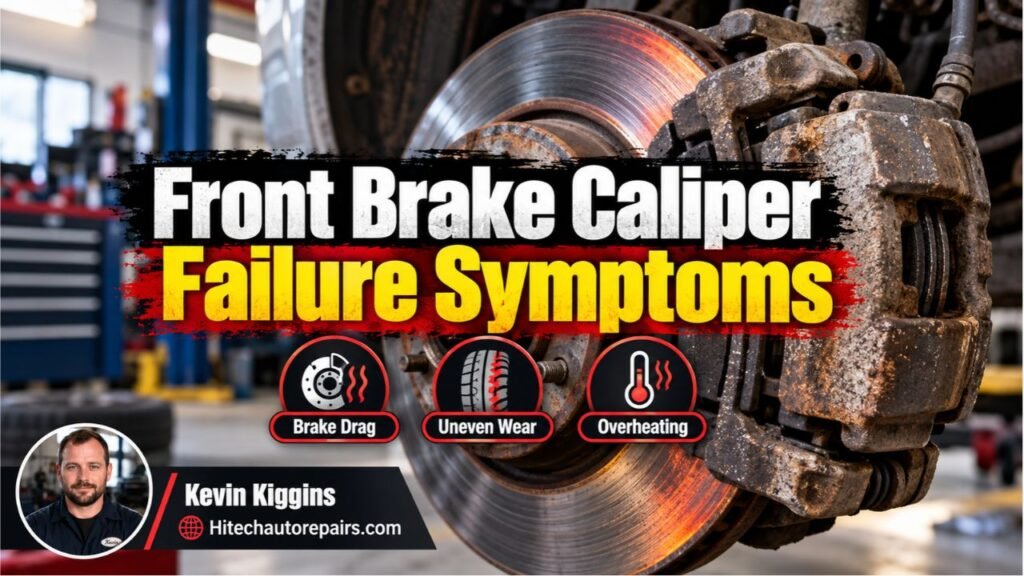
Front caliper problems can be especially noticeable because the front brakes usually handle a large portion of the vehicle’s stopping force.
Possible front caliper symptoms include:
- Steering wheel pulling
- Hot front wheel
- Uneven front brake pad wear
- Burning smell
- Brake vibration
- Reduced braking performance
A severely sticking front caliper can also make steering feel abnormal because one front wheel experiences more resistance than the other.
Rear Brake Caliper Failure Symptoms
Rear caliper problems may sometimes be less obvious.
Common signs include:
- Hot rear wheel
- Burning smell
- Uneven rear pad wear
- Parking brake not releasing
- Vehicle feels sluggish
- Reduced fuel economy
Many rear calipers also incorporate a mechanical or electronic parking brake mechanism.
If that mechanism sticks, the rear brake can remain partially applied even when the hydraulic piston itself is not the main problem.
Bad Brake Caliper vs. Bad Brake Pads
A worn brake pad and a bad caliper can produce overlapping symptoms.
| Symptom | Bad Caliper | Worn Brake Pads |
| Uneven pad wear | Common | Possible |
| Grinding | Possible | Common when pads are worn out |
| One wheel overheating | Common with sticking caliper | Less typical alone |
| Brake fluid leak | Possible | No |
| Vehicle pulling | Possible | Possible |
| Caliper piston stuck | Yes | No |
| Thin friction material | Often a consequence | Main wear condition |
If new pads are installed without fixing a sticking caliper, the new pads may wear out quickly.
Bad Brake Caliper vs. Collapsed Brake Hose
A damaged flexible brake hose can mimic a seized caliper.
Internally, an old brake hose can sometimes restrict brake fluid returning from the caliper.
Pressure reaches the caliper when the brake pedal is pressed, but it does not release normally afterward.
The result can include:
- Brake drag
- Hot wheel
- Vehicle pulling
- Rapid brake pad wear
Replacing the caliper alone will not fix the problem if trapped hydraulic pressure from the hose is the actual cause.
Bad Brake Caliper vs. Bad Caliper Bracket
The caliper and caliper bracket perform different jobs.
A bad caliper commonly involves:
- Piston
- Hydraulic seals
- Caliper body
A bracket problem more commonly involves:
- Slide-pin bores
- Rust under pad hardware
- Damaged mounting threads
- Structural damage
Both can cause uneven pad wear and brake drag.
That is why the entire brake assembly should be inspected.
What Causes Brake Caliper Failure?
Brake calipers operate in a harsh environment.
They are exposed to:
- Heat
- Water
- Road salt
- Dirt
- Brake dust
- Temperature changes
Several problems can eventually cause failure.
Corrosion
Corrosion can damage the piston, bore, slide pins, and hardware.
A torn piston dust boot can allow moisture to reach the piston and increase the chance of seizure.
Damaged Piston Boot
The rubber dust boot helps keep contaminants away from the piston.
If it tears, dirt and moisture can enter.
Over time, corrosion may prevent the piston from moving smoothly.
Old or Contaminated Brake Fluid
Brake fluid absorbs moisture over time.
Excess moisture can contribute to corrosion inside hydraulic brake components.
Follow the vehicle manufacturer’s brake fluid service recommendations.
Seized Slide Pins
Dry or corroded slide pins can prevent a floating caliper from centering properly.
This is one of the more common causes of uneven brake pad wear.
Excessive Heat
A dragging brake generates additional heat, which can further damage seals and lubricant.
This can create a cycle where the brake becomes progressively worse.
Parking Brake Problems
Rear calipers with integrated parking-brake mechanisms can fail if the internal mechanism corrodes or binds.
Can a Brake Caliper Fail Suddenly?
Yes, although many caliper problems develop gradually.
A seal can begin leaking unexpectedly, or a piston that has been sticking intermittently can suddenly seize more severely.
More commonly, there are earlier warning signs such as:
- Uneven brake pad wear
- Occasional pulling
- Brake drag
- Excessive heat
- Intermittent sticking
Regular brake inspections can catch these problems before they become severe.
Can a Bad Brake Caliper Cause Vibration?
Yes, indirectly.
A sticking caliper can overheat the rotor and cause uneven rotor wear.
That may produce vibration through the:
- Brake pedal
- Steering wheel
- Vehicle body
However, vibration during braking is more commonly associated with rotor thickness variation or other rotor problems than with the caliper itself.
Can a Bad Caliper Cause the ABS Light?
A conventional caliper failure does not normally turn on the ABS warning light directly because the anti-lock braking system primarily monitors wheel-speed sensors and related electronic components.
However, severe brake drag can affect wheel-speed behavior in unusual situations.
An ABS warning light should be diagnosed by reading the stored ABS codes rather than assuming the caliper caused it.
Can a Bad Caliper Cause the Check Engine Light?
Usually not directly.
A conventional brake caliper is not part of the engine-management system.
A mechanical caliper problem normally does not illuminate the Check Engine light.
Depending on the vehicle and problem, you may instead see:
- Brake warning light
- ABS warning light
- Electronic parking brake warning
The exact warning depends on the vehicle.
Can a Bad Brake Caliper Cause Poor Gas Mileage?
Yes.
A dragging caliper creates continuous resistance.
The engine must use additional energy to keep the vehicle moving.
A severely dragging brake can noticeably reduce fuel economy.
However, poor gas mileage by itself is not enough to diagnose a bad caliper.
Can a Bad Brake Caliper Damage the Rotor?
Yes.
A sticking caliper can hold the brake pad against the rotor continuously.
The rotor may develop:
- Scoring
- Heat spots
- Discoloration
- Excessive wear
- Surface damage
By the time a severely seized caliper is repaired, the brake pads and rotor may also need replacement.
Can a Bad Caliper Damage the Wheel Bearing?
Severe and prolonged brake overheating can transfer heat into nearby components, including the wheel hub and bearing area.
This does not mean every stuck caliper automatically ruins the wheel bearing, but extreme heat can negatively affect nearby seals and lubricant.
The bearing should be inspected if the brake has experienced severe overheating.
Can You Drive With a Failing Brake Caliper?
You should avoid normal driving if the caliper is clearly sticking, leaking, or causing abnormal braking.
A mildly sticking caliper can worsen quickly as heat builds.
Do not keep driving if you notice:
- Smoke
- Severe burning smell
- Very hot wheel
- Strong pulling
- Major brake fluid leak
- Grinding
- Soft or sinking brake pedal
- Significantly reduced braking
Towing is the safer option when braking performance is questionable.
How Do You Check for Brake Caliper Failure?
A proper inspection may include several checks.
Compare Wheel Temperatures
A substantially hotter wheel can suggest brake drag.
Temperature should be checked safely without touching hot brake components.
Check Brake Pad Wear
Remove the wheel and compare the inner and outer pad thickness.
Severe differences can indicate piston, slide-pin, or pad movement problems.
Inspect for Brake Fluid
Look around the:
- Caliper piston area
- Bleeder screw
- Brake hose fitting
- Caliper body
Any hydraulic leak requires attention.
Check the Slide Pins
Slide pins should move freely where the caliper design requires them to move.
Stuck or corroded pins need service.
Check Piston Movement
During brake service, the piston should retract using the correct procedure for that particular caliper.
Some rear calipers must be rotated while retracting because of the parking-brake mechanism.
Never force a piston without knowing the correct procedure.
Does a Bad Caliper Need to Be Replaced?
Not every caliper-related problem requires replacing the entire caliper.
The problem may only involve:
- Dry slide pins
- Damaged slide-pin boots
- Brake pads binding in the bracket
- Loose or damaged hardware
However, caliper replacement is commonly appropriate when there is:
- Seized piston
- Severe piston corrosion
- Hydraulic leakage
- Damaged caliper body
- Failed internal parking-brake mechanism
- Damaged piston bore
The underlying cause should be identified before installing new parts.
Should You Replace Brake Calipers in Pairs?
Brake calipers do not always have to be replaced in pairs.
If only one caliper has failed and the opposite caliper is in good condition, replacing the failed caliper may be appropriate.
However, the opposite side should still be inspected carefully.
More importantly, brake pads are normally replaced in axle sets, and rotors are generally serviced in pairs when replacement is required. This helps maintain consistent braking from side to side.
Follow vehicle-specific repair information.
What Else Should Be Replaced After a Failed Caliper?
That depends on how severe the failure was.
A severely dragging caliper can damage:
- Brake pads
- Brake rotor
- Brake fluid
- Brake hose
- Brake hardware
If one pad has been badly overheated or worn, replacing only the caliper may not be enough.
The brakes on both sides of the axle should be inspected.
How Much Does Brake Caliper Repair Cost?
Brake caliper repair costs vary considerably by vehicle.
Factors include:
- Front or rear caliper
- Standard or performance braking system
- Electronic parking brake
- New vs. remanufactured caliper
- Local labor rates
- Brake pad condition
- Rotor condition
- Brake fluid service
A simple slide-pin service is usually much less expensive than replacing a caliper, pads, and rotor after severe overheating.
Early diagnosis can prevent a much larger repair.
How Can You Prevent Brake Caliper Failure?
Not every caliper failure can be prevented, but proper brake maintenance can reduce the risk.
Helpful practices include:
- Inspect brakes during tire rotations
- Replace damaged piston or slide-pin boots
- Keep slide pins properly lubricated where specified
- Use the correct brake-compatible lubricant
- Replace brake fluid according to manufacturer recommendations
- Address uneven pad wear early
- Investigate an overheating wheel immediately
Vehicles used in areas where road salt is common may need more frequent brake inspections for corrosion.
FAQs About Brake Caliper Failure Symptoms
What Are the First Symptoms of Brake Caliper Failure?
Early symptoms of brake caliper failure may include slight pulling, uneven brake pad wear, increased temperature at one wheel, intermittent brake drag, or unusual noises from the brake area.
What Does a Failing Brake Caliper Feel Like?
The vehicle may feel as though one brake is dragging, pull to one side, feel sluggish, or brake unevenly. A hydraulic caliper failure can also make the brake pedal feel soft.
Can a Bad Brake Caliper Make a Wheel Hot?
Yes. A seized piston or sticking caliper mechanism can keep the brake pad against the rotor and generate excessive heat.
Can a Bad Brake Caliper Cause Grinding?
Yes, usually indirectly. A sticking caliper can wear the brake pad down until its metal backing plate contacts the rotor.
Can a Failed Brake Caliper Leak Brake Fluid?
Yes. A damaged piston seal, bleeder screw, hose connection, or caliper body can leak hydraulic brake fluid.
Can a Bad Caliper Cause Uneven Brake Pad Wear?
Yes. Uneven brake pad wear is a common sign of a piston, slide-pin, or pad-movement problem within the caliper assembly.
How Do I Know If My Caliper Is Seized?
Common signs include severe brake drag, excessive heat, burning smell, difficulty rotating the wheel, and a piston that will not retract normally during brake service.
Is It Safe to Drive With Brake Caliper Failure Symptoms?
If the vehicle is pulling strongly, leaking brake fluid, smoking, grinding, or experiencing reduced braking performance, it should not be driven normally. Have the brake system inspected and tow the vehicle when necessary.
Conclusion
The most common brake caliper failure symptoms include pulling to one side, uneven brake pad wear, excessive heat from one wheel, burning smells, brake drag, grinding noises, and brake fluid leakage.
A caliper can fail because the piston seizes, slide pins stick, hydraulic seals leak, or a rear parking-brake mechanism fails to release. Because several other brake components can produce similar symptoms, diagnosis should include the caliper, bracket, brake pads, rotor, brake hose, and hydraulic system.
If you notice smoke, severe overheating, a major brake fluid leak, strong pulling, or significant loss of braking performance, stop driving as soon as it is safe. Addressing a caliper problem early can prevent damage to the brake pads and rotors and, more importantly, help maintain reliable braking.