Sticking Brake Caliper Symptoms: Signs, Causes, Tests & Fixes
The most common sticking brake caliper symptoms are a vehicle pulling to one side, one wheel getting much hotter than the others, a burning smell, uneven brake pad wear, reduced fuel economy, poor acceleration, and a wheel that does not spin freely after the brake pedal is released.
A sticking caliper can remain partially applied even when your foot is off the brake pedal. This creates constant friction between the brake pad and rotor. In severe cases, the brake can overheat enough to produce smoke, damage the rotor and pads, and reduce braking performance.
A caliper can stick because of a seized piston, corroded slide pins, damaged guide-pin boots, restricted brake hose, or brake pads binding in the caliper bracket. Identifying the actual cause matters because replacing the complete caliper is not always necessary.
Sticking Brake Caliper Symptoms You Should Watch For
The exact symptoms depend on how badly the caliper is sticking and which part of the brake assembly is causing the problem.
A slightly sticky caliper may only create uneven pad wear or a small temperature difference between wheels. A severely seized caliper may cause strong pulling, extreme heat, smoke, and a vehicle that feels as though the brakes are constantly being applied.
Common signs include:
- Vehicle pulling while driving or braking
- One wheel noticeably hotter than the others
- Burning smell near a wheel
- Uneven or rapid brake pad wear
- Poor acceleration
- Reduced fuel economy
- Brake drag after releasing the pedal
- Excessive brake dust on one wheel
- Smoke in severe cases
- Rotor discoloration or overheating
Not every one of these symptoms automatically means the caliper itself is bad. A collapsed brake hose, parking brake problem, or pad hardware issue can sometimes create similar symptoms.
What Does a Sticking Brake Caliper Mean?
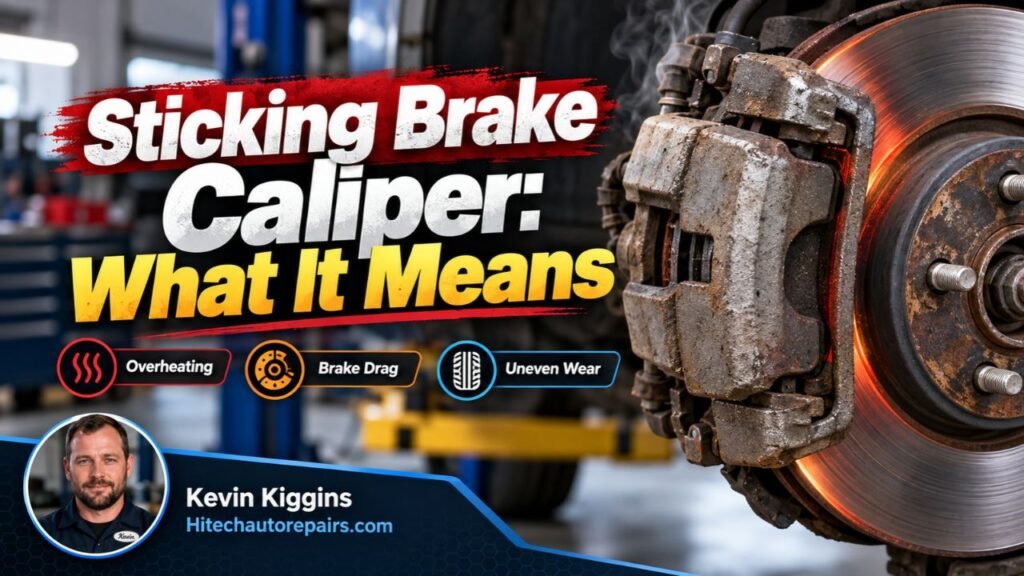
A sticking brake caliper is a caliper that does not apply or release as freely as it should.
In a normal disc brake system, hydraulic pressure pushes the caliper piston outward when you press the brake pedal. The brake pads clamp the rotor and slow the wheel.
When you release the pedal, hydraulic pressure drops and the braking force is released.
A floating caliper also moves on guide pins or slide pins so both pads can contact the rotor evenly.
If the piston, guide pins, brake pads, or hydraulic system cannot release properly, the brake may remain partially applied. This is commonly called brake drag.
Vehicle Pulls to One Side
One of the most noticeable signs of brake caliper sticking is a vehicle that pulls left or right.
If one front brake remains partially applied, that wheel creates more resistance than the wheel on the opposite side.
The vehicle may drift or pull while cruising or braking.
The direction of the pull does not always identify the exact faulty caliper because braking imbalance, tire condition, and suspension alignment can affect how the vehicle behaves.
A useful clue is when the pull becomes stronger after several minutes of driving. As the dragging brake heats up, the resistance can increase.
One Wheel Is Much Hotter Than the Others
A hot wheel is one of the strongest clues of a sticking brake caliper.
Constant contact between the brake pad and rotor creates friction, and friction creates heat.
After a short drive, the affected wheel may become dramatically hotter than the wheel on the opposite side.
Do not touch the rotor or caliper with your bare hand. Brake components can become hot enough to cause serious burns.
An infrared thermometer is a safer way to compare rotor or wheel temperatures.
A major temperature difference between the left and right sides of the same axle strongly suggests that one brake is dragging.
Burning Smell From One Wheel
A burning smell after driving is another common symptom.
The smell may resemble hot metal, burnt friction material, or overheated brakes.
A severely sticking caliper can keep the brake pad pressed against the rotor continuously. The pad and rotor then become extremely hot.
If you notice a strong burning smell from one wheel, stop and investigate the problem rather than continuing to drive normally.
Smoke Coming From the Brake
Smoke is a more serious warning sign.
A caliper that is stuck badly enough can generate enough heat to smoke the brake pads or nearby contaminants.
At this point, the brake system may already be severely overheated.
Continued driving can damage the:
- Brake pads
- Brake rotor
- Caliper seals
- Brake fluid
- Wheel bearing
- Nearby rubber components
If smoke is coming from the wheel area, do not keep driving simply because the vehicle still moves.
Uneven Brake Pad Wear
Uneven pad wear is one of the most common calipers sticking symptoms discovered during brake inspection.
If the piston or slide mechanism does not release correctly, one pad may stay in contact with the rotor.
You may find that one wheel has much thinner brake pads than the wheel on the opposite side.
There may also be a large difference between the inner and outer pad on the same wheel.
The wear pattern can provide useful clues about what is sticking.
Inner Brake Pad Wearing Faster
The caliper piston directly pushes the inner brake pad.
If the piston remains partially extended, the inner pad may continue rubbing against the rotor.
A much thinner inner pad can therefore point toward a piston or caliper-release problem.
However, pad wear patterns vary between brake designs, so this symptom alone does not prove the piston is defective.
Outer Brake Pad Wearing Faster
Excessive outer-pad wear can be associated with seized or poorly moving slide pins.
If a floating caliper cannot slide correctly, the outer pad may fail to release normally.
The slide pins, pad hardware, and caliper bracket should all be inspected.
Brake Drag After Releasing the Pedal
Brake drag means the brake continues creating noticeable resistance after the pedal has been released.
The vehicle may feel as though someone is lightly applying the brake all the time.
You may notice that the vehicle:
- Does not coast normally
- Slows quickly when you release the accelerator
- Feels unusually heavy
- Requires more throttle than normal
When the vehicle is safely raised, a technician may also find that one wheel is much harder to rotate by hand than the opposite wheel.
Brake drag is one of the clearest signs that a caliper or another brake component is not releasing properly.
Poor Acceleration
A dragging brake creates constant resistance.
The engine must work harder to move the vehicle, so acceleration may feel weaker than normal.
The vehicle may feel heavy or sluggish even though the engine itself seems healthy.
If poor acceleration occurs together with a hot wheel or burning brake smell, check for brake drag before assuming there is an engine or transmission problem.
Reduced Fuel Economy
A sticking brake caliper can reduce fuel economy because the engine must continually overcome the resistance from the dragging brake.
A mildly sticking caliper may only create a small MPG change.
A severely stuck caliper can produce much more noticeable resistance.
Fuel economy alone is not enough to diagnose a sticking caliper, but it becomes more meaningful when combined with a hot wheel, poor coasting, uneven pad wear, or pulling.
Excessive Brake Dust on One Wheel
A dragging brake pad wears faster.
That can create more brake dust on the affected wheel.
You may notice one wheel becoming noticeably darker or dirtier than the other wheel on the same axle.
Excessive brake dust does not automatically prove that the caliper is sticking, but it is a useful clue when combined with other symptoms.
Brake Pedal Changes
A sticking caliper does not always change brake pedal feel.
The pedal may feel completely normal even while one brake is dragging.
However, if the caliper also develops a fluid leak or the brake fluid becomes severely overheated, you may notice a softer or less consistent pedal.
A soft brake pedal should be treated as a broader hydraulic brake system problem, not simply as a sticky-caliper symptom.
Brake Rotor Turns Blue or Dark
Excessive brake heat can discolor the rotor.
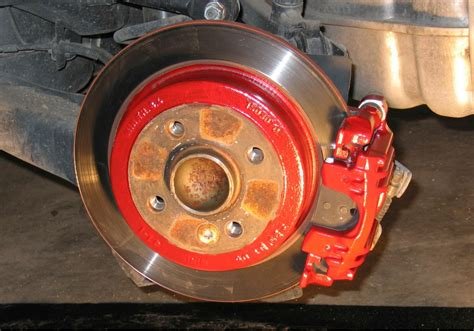
You may see blue areas, dark heat spots, glazing, or even cracking in severe cases.
Rotor discoloration is evidence that the brake has been operating at unusually high temperatures.
A sticking caliper is one possible cause, although aggressive braking and other brake problems can also overheat a rotor.
Steering Wheel or Brake Pedal Vibration
A sticking caliper can indirectly contribute to vibration if the rotor becomes overheated or develops uneven friction characteristics.
You may feel vibration through the steering wheel or brake pedal while braking.
However, vibration is not one of the most specific sticky brake caliper symptoms.
Rotor thickness variation, wheel imbalance, worn suspension parts, and other issues can produce similar symptoms.
Car Pulls After You Release the Brake
If the vehicle continues pulling after braking, one brake may not be releasing properly.
A sticking caliper can remain applied for several seconds or longer after you release the pedal.
Sometimes the pull gradually decreases as hydraulic pressure bleeds away.
This symptom can also occur with a restricted flexible brake hose, so proper diagnosis matters before replacing the caliper.
Why Do Brake Calipers Stick?
Several different problems can cause brake calipers to stick.
The most common involve the piston, guide pins, brake pad hardware, or trapped hydraulic pressure.
Corroded Caliper Piston
A corroded piston is a common cause of brake drag.
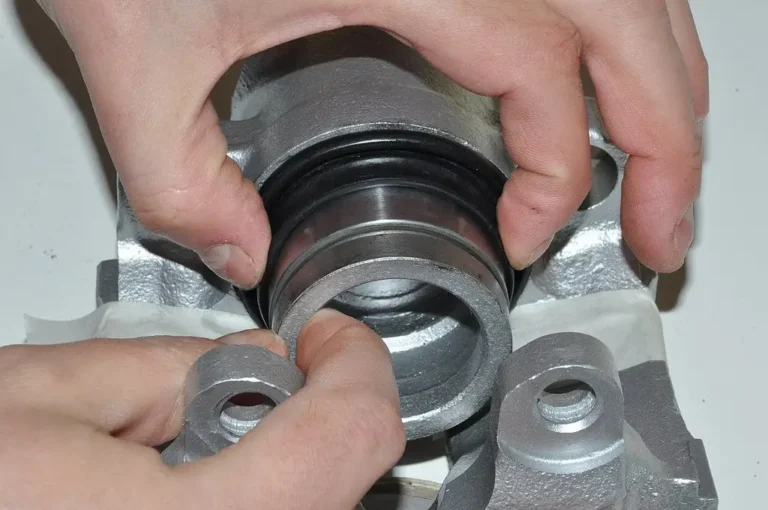
The piston is protected by a rubber dust boot. If the boot tears, moisture, road salt, and dirt can reach the piston surface.
Rust can then develop.
The piston may still move outward when hydraulic pressure is applied but fail to retract properly afterward.
This keeps the brake pad in contact with the rotor.
Torn Caliper Piston Dust Boot
The piston dust boot prevents contamination from reaching the piston.
A small tear may not immediately cause caliper failure, but it allows moisture and debris into an area that should remain protected.
Over time, corrosion can make the piston increasingly difficult to move.
A torn boot combined with rust around the piston is a strong indication that the caliper needs closer inspection.
Seized Caliper Slide Pins
Floating brake calipers rely on slide pins or guide pins.
These pins allow the caliper body to move sideways as the brakes are applied and released.
If a pin becomes dry, rusty, bent, or seized, the caliper cannot move correctly.
This can produce uneven pad wear, brake drag, overheating, and poor brake release.
A seized guide pin does not always mean the entire caliper needs replacement. The pins, boots, or bracket may sometimes be serviceable separately.
Wrong Lubricant on Slide Pins
Using the wrong grease can create caliper problems.
Some petroleum-based lubricants can damage rubber brake components and cause bushings or guide-pin boots to swell.
A swollen rubber bushing may grip the slide pin tightly and prevent free movement.
Use only brake-compatible high-temperature lubricant that is approved for the specific application.
Rust Under Brake Pad Hardware
Brake pads move along contact points in the caliper bracket.
Many vehicles use stainless-steel abutment clips at these locations.
Rust can form underneath the clips.
As corrosion expands, it pushes the clip inward and reduces the clearance available for the pad.
The brake pad may then become wedged tightly in the bracket and fail to release after braking.
This can feel exactly like a sticking caliper even when the piston itself is healthy.
Brake Pads Stuck in the Bracket
Brake pads should move freely enough to release when braking pressure is removed.
They should not be forced tightly into the bracket.
Rust, dirt, damaged hardware, incorrect pads, or corrosion under the clips can make the pads bind.
When the piston pushes a stuck pad against the rotor, the pad may remain there and create constant drag.
Collapsed Brake Hose
A damaged flexible brake hose can mimic a sticking caliper.
The inner lining of an old brake hose can deteriorate and create a restriction.
Hydraulic pressure may travel toward the caliper when you press the pedal but return very slowly when you release it.
The brake then stays applied even though the caliper itself may still be mechanically capable of releasing.
This distinction is important because replacing the caliper alone will not fix a hose that is trapping pressure.
Parking Brake Mechanism Sticking
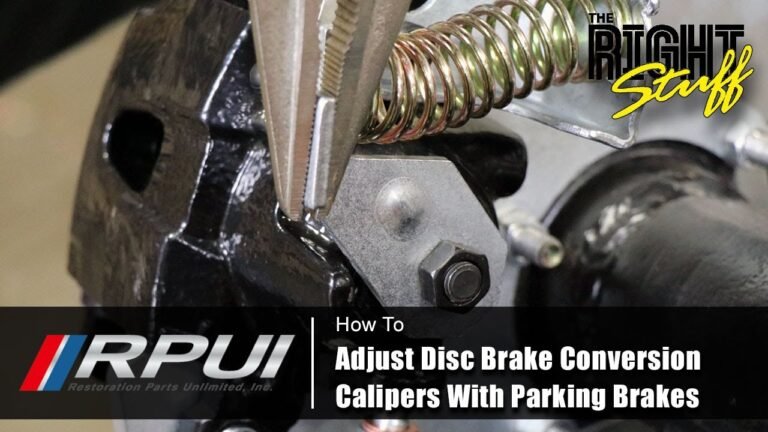
Some rear calipers have the parking brake mechanism built into the caliper.
If the parking brake cable, external lever, or internal mechanism does not return completely, the rear brake may remain partially applied.
This can look like a seized rear caliper piston.
The parking brake system should therefore be inspected before automatically replacing the caliper.
How to Tell if a Brake Caliper Is Sticking
The most reliable diagnosis compares both brakes on the same axle and checks whether the problem is mechanical or hydraulic.
Compare Wheel Temperatures
Drive the vehicle normally for a short distance without excessive hard braking.
Then compare the rotor or wheel temperatures with an infrared thermometer.
If one brake is dramatically hotter than the opposite side, that brake is probably dragging.
Temperature comparison identifies the affected wheel, but it does not tell you whether the cause is the piston, slide pins, pads, parking brake, or brake hose.
Check Whether the Wheel Spins Freely
Safely raise and support the vehicle.
Rotate the suspected wheel by hand.
Some slight contact between the pads and rotor can be normal.
However, one wheel should not feel heavily locked or dramatically harder to rotate than the other side.
Never work under or around a vehicle supported only by a hydraulic jack.
Inspect Brake Pad Wear
Compare the thickness of the inner and outer pads.
Then compare those pads with the brake on the opposite side of the axle.
A large difference in wear can provide clues about whether the piston, guide pins, or pad hardware is sticking.
Check Caliper Slide Pins
Inspect the guide pins according to the vehicle’s service procedure.
They should move smoothly and should not be heavily rusted, bent, or seized.
Check the protective rubber boots as well.
A torn boot allows moisture and dirt to reach the slide pin and can lead to corrosion.
Check Whether the Caliper Piston Retracts
During brake service, the piston normally needs to retract into the caliper so new pads can be installed.
A piston that requires unreasonable force or refuses to move may be seized.
However, many rear calipers with integrated parking brakes require the piston to be rotated while being pushed inward.
Do not force a rear piston until you know the correct procedure for the vehicle.
How to Tell a Sticking Caliper From a Bad Brake Hose
A sticking caliper and a restricted brake hose can produce almost identical symptoms.
Both can leave the brake applied after the pedal is released.
The important difference is whether hydraulic pressure is trapped.
If releasing trapped pressure allows the brake to free immediately, the problem may be upstream, such as a restricted flexible brake hose.
If removing hydraulic pressure does not free the brake, the piston, pads, slide pins, or other mechanical components may be sticking.
Because this diagnosis can involve opening the hydraulic system, it should be performed carefully and followed by proper bleeding when required.
Can a Sticking Caliper Come and Go?
Yes.
A caliper can stick intermittently.
The brake may feel normal when cold but begin dragging after several miles.
As components heat and expand, corrosion or tight clearances can make the sticking worse.
The brake may then release again after the vehicle cools.
This is one reason comparing wheel temperatures immediately after the symptoms occur can be very helpful.
Can a Sticking Caliper Cause a Burning Smell Without Pulling?
Yes.
Not every dragging brake produces an obvious directional pull.
Rear brake drag may be less noticeable through the steering wheel than a front brake problem.
A mild sticking condition can also create significant heat without producing a strong pull.
If one wheel develops a hot smell or excessive brake dust, it deserves inspection even if the vehicle drives straight.
Can a Sticking Caliper Cause Vibration?
Yes, indirectly.
A dragging caliper can overheat the rotor.
Repeated overheating can cause the rotor to develop surface problems or thickness variation, which may produce vibration during braking.
However, vibration by itself does not prove a caliper is sticking.
Check temperature, pad wear, and caliper movement as well.
Can a Sticking Caliper Damage the Rotor?
Yes.
Continuous pad-to-rotor contact generates excessive heat.
The rotor may develop heat discoloration, glazing, cracking, accelerated wear, or thickness variation.
A severely overheated rotor may need replacement even after the sticking-caliper problem is repaired.
Can a Sticking Caliper Ruin New Brake Pads?
Yes.
New brake pads can wear rapidly if the caliper remains partially applied.
If the old pads wore unevenly, do not simply install a new pad set without finding the reason.
Otherwise, the replacement pads can quickly develop the same wear pattern.
Can a Sticking Caliper Damage the Wheel Bearing?
Severe brake heat can transfer through the rotor and hub into nearby components.
A wheel bearing exposed to prolonged excessive heat may experience shortened life.
This does not mean every sticking caliper automatically ruins a wheel bearing.
However, surrounding components should be inspected after severe brake overheating.
Can a Sticking Brake Caliper Cause a Fire?
In extreme cases, yes.
A heavily dragging brake can generate very high temperatures.
Although a mild sticky caliper does not normally result in fire, a wheel that is smoking or extremely hot should be treated seriously.
Stop driving and have the problem diagnosed.
Can You Drive With a Sticking Brake Caliper?
Driving with a sticking brake caliper is not recommended.
A mild problem can become much worse as heat builds.
As the brake temperature rises, it may damage the pads, rotor, caliper seals, brake fluid, and surrounding components.
Brake drag also changes the vehicle’s braking balance.
If the vehicle pulls strongly, produces smoke, smells heavily of burning brakes, or has one wheel that is extremely hot, stop driving.
How Long Can You Drive With a Sticking Caliper?
There is no safe mileage estimate.
A caliper that drags slightly when cold can become nearly locked after several miles.
Trying to determine whether you can safely drive another 10, 20, or 100 miles is unreliable because brake temperatures can increase rapidly.
The problem should be repaired as soon as possible.
How to Fix a Sticking Brake Caliper
The correct repair depends on what is actually sticking.
If the guide pins are dry or lightly corroded but still serviceable, they may be cleaned and lubricated with the proper brake lubricant.
If the guide pins, boots, or bracket bores are damaged, those parts may require replacement.
If rust underneath the pad hardware is making the brake pads bind, the bracket contact surfaces can often be cleaned and new hardware installed if the bracket remains serviceable.
A badly seized, corroded, or leaking caliper piston usually makes complete caliper replacement the more practical repair.
A restricted brake hose needs replacement even if the caliper is also being replaced.
Can You Lubricate a Sticking Caliper?
You can lubricate certain serviceable parts, but not every cause of caliper sticking can be fixed with grease.
Guide pins and specific pad contact areas may use brake-compatible lubricant.
A seized hydraulic piston cannot normally be repaired by spraying lubricant around the outside of the caliper.
Never put grease, penetrating oil, or other lubricant on the brake pad friction material or rotor surface.
Contaminating these surfaces can significantly reduce braking performance.
Should You Rebuild or Replace a Sticking Caliper?
Some brake calipers can be rebuilt using new seals, boots, and sometimes a replacement piston.
However, replacing the complete caliper is often more practical for a typical passenger vehicle.
Replacement becomes especially attractive when the piston is badly corroded, the caliper leaks brake fluid, the bore is damaged, or the entire assembly is heavily rusted.
Rebuilding may make more sense for expensive, unusual, or difficult-to-find calipers when performed correctly.
Do You Need to Replace Both Calipers?
Not automatically.
If one caliper has failed and the other side is functioning correctly, replacing only the bad caliper may be acceptable.
However, both sides should be inspected.
If the vehicle is older and both calipers have similar mileage and corrosion, the opposite side may also be approaching failure.
Brake pads should normally be replaced as an axle set.
Should You Replace Pads and Rotors With a Sticking Caliper?
Inspect them carefully.
A sticking caliper can overheat and damage the pads and rotor.
Brake pads should be replaced if they are glazed, cracked, contaminated, severely overheated, or significantly more worn than the opposite side.
The rotor should be checked for:
- Minimum thickness
- Heat damage
- Cracking
- Severe scoring
- Surface condition
- Thickness variation
Do not assume the existing pads and rotor are reusable simply because they still have visible material remaining.
How to Prevent Brake Calipers From Sticking
Routine brake maintenance can reduce the chance of caliper problems.
During brake service, inspect the slide pins, piston boots, guide-pin boots, flexible brake hoses, pad hardware, and caliper brackets.
Clean corrosion from the correct pad-contact surfaces and use suitable brake lubricant where specified.
Brake fluid maintenance also matters.
Brake fluid absorbs moisture over time, and contaminated fluid can contribute to corrosion inside hydraulic brake components.
Follow the vehicle manufacturer’s brake-fluid service recommendations.
When Should a Mechanic Inspect a Sticking Caliper?
Professional diagnosis is recommended when you cannot determine why a brake is dragging.
It becomes especially important if one wheel is extremely hot, the vehicle pulls strongly, brake fluid is leaking, smoke is visible, the piston will not retract, or the brake remains locked after the pedal is released.
A technician can also determine whether the caliper itself is sticking or whether a brake hose is trapping hydraulic pressure.
Because brakes are a primary safety system, uncertainty is a good reason to have the vehicle inspected.
FAQs About Sticking Brake Caliper Symptoms
What Are the Most Common Sticking Brake Caliper Symptoms?
The most common symptoms are one wheel running much hotter than the others, vehicle pulling, burning smell, uneven brake pad wear, poor acceleration, reduced fuel economy, and brake drag after releasing the pedal.
How Do I Know if My Caliper Is Sticking?
Compare wheel temperatures and brake-pad wear, check whether the wheel rotates freely, and inspect the caliper piston and slide pins.
A wheel that is much hotter and harder to rotate than the opposite side strongly suggests brake drag.
Can a Sticking Caliper Cause the Car to Pull?
Yes.
A dragging brake creates additional resistance on one side of the vehicle and can cause pulling while driving or braking.
Can a Sticking Caliper Cause a Burning Smell?
Yes.
Continuous friction between the pad and rotor creates heat, which can produce a strong burning smell from the affected wheel.
Can a Sticking Caliper Cause Poor Gas Mileage?
Yes.
The engine must work harder to overcome the resistance from the dragging brake, which can reduce fuel economy.
Can a Caliper Stick Only When It Gets Hot?
Yes.
Some sticking problems become more severe as brake components heat and expand.
The brake may seem normal when cold but begin dragging after several miles.
Can a Bad Brake Hose Look Like a Sticking Caliper?
Yes.
An internally restricted brake hose can trap hydraulic pressure in the caliper and keep the brake applied after the pedal is released.
Proper diagnosis is necessary before replacing the caliper.
Can Sticking Brake Calipers Fix Themselves?
No.
Symptoms may temporarily disappear, but corrosion, damaged seals, seized pins, binding pads, or hydraulic restrictions do not permanently repair themselves.
Intermittent sticking should still be inspected.
Conclusion
The most important sticking brake caliper symptoms are excessive heat at one wheel, vehicle pulling, uneven brake pad wear, a burning smell, poor coasting, reduced fuel economy, and a brake that remains partially applied after the pedal is released.
Brake calipers sticking can result from a seized piston, corroded slide pins, brake pads binding in the bracket, damaged boots, parking-brake problems, or a restricted flexible brake hose.
Because several different faults can create similar sticky brake caliper symptoms, proper diagnosis should include temperature comparison, pad inspection, wheel-rotation checks, piston movement, guide-pin condition, and hydraulic pressure evaluation.
If the wheel is extremely hot, smoking, or causing a strong pull, avoid continued driving. A sticking brake can quickly overheat the pads and rotor and turn a relatively simple repair into a much larger brake-system problem.