How to Replace Brake Caliper Slide Pins: A Complete Step-by-Step Guide
Learning how to replace brake caliper slide pins is a useful skill for many vehicle owners in the United States. These small parts play a big role in how disc brakes work. When they stick, your brakes may wear unevenly or make noise.
In my experience working around brake systems, many brake problems start with simple issues like dry grease, rust, or damaged rubber boots. A careful inspection of the slide pins can save money and help keep daily drivers safe on the road.

What Are Brake Caliper Slide Pins and Why Do They Matter?
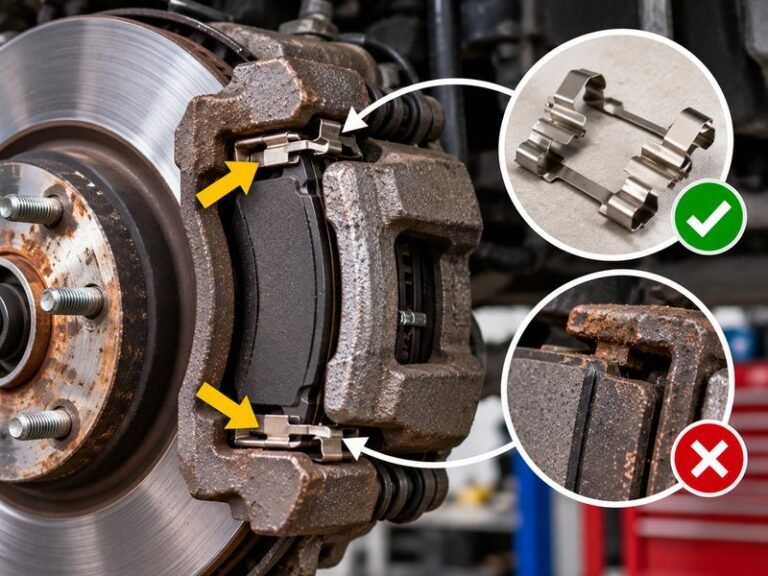
Brake caliper slide pins are metal guide pins that allow a floating brake caliper to move back and forth. This movement lets the brake pads press evenly against the rotor when you push the brake pedal.
When slide pins become rusty or dry, the caliper may not move correctly. This can lead to uneven brake pad wear, pulling during braking, heat buildup, and reduced brake life.

- ✦ Smooth caliper movement
Properly working slide pins help the caliper center itself during braking.
- ✦ Even pad wear
Free-moving pins help both brake pads wear at a similar rate.
Common Signs of Bad Slide Pins
Drivers often notice symptoms before a complete failure occurs. Paying attention to these signs can prevent larger brake repairs.
- ✦ Uneven brake pads
One pad may look much thinner than the other because the caliper cannot move freely.
- ✦ Brake noise
Squealing, grinding, or clunking sounds may appear when parts do not move correctly.
Tools and Materials Needed Before Starting
Before learning how to replace brake caliper slide pins, gather the correct tools. Having everything ready makes the job safer and easier.
Most brake slide pin replacements require basic hand tools. Always check your vehicle repair manual for exact sizes and torque specifications.
- ✦ Basic hand tools
You may need a socket set, wrench set, screwdriver, and torque wrench.
- ✦ Brake-safe supplies
Use brake cleaner, a wire brush, replacement pins, new boots if needed, and high-temperature brake lubricant.
- ✦ Safety equipment
Wear gloves and eye protection, and support the vehicle with jack stands.
Choosing the Right Brake Lubricant
Do not use ordinary grease on brake slide pins. Some greases can damage rubber parts or fail under brake temperatures. Use a lubricant designed for brake components.
How to Replace Brake Caliper Slide Pins Step by Step
The process for how to replace brake caliper slide pins is usually straightforward, but careful work matters. Brake parts protect your safety, so never rush the job.
Always work on one wheel at a time if you are unfamiliar with brake systems. This gives you a reference point if you need to check how parts fit together.
- ✦ Step 1: Lift and secure the vehicle
Park on a flat surface, loosen wheel nuts, lift the vehicle, and place it securely on jack stands.
- ✦ Step 2: Remove the wheel and inspect
Check the caliper, brake pads, boots, and slide pins for damage or corrosion.
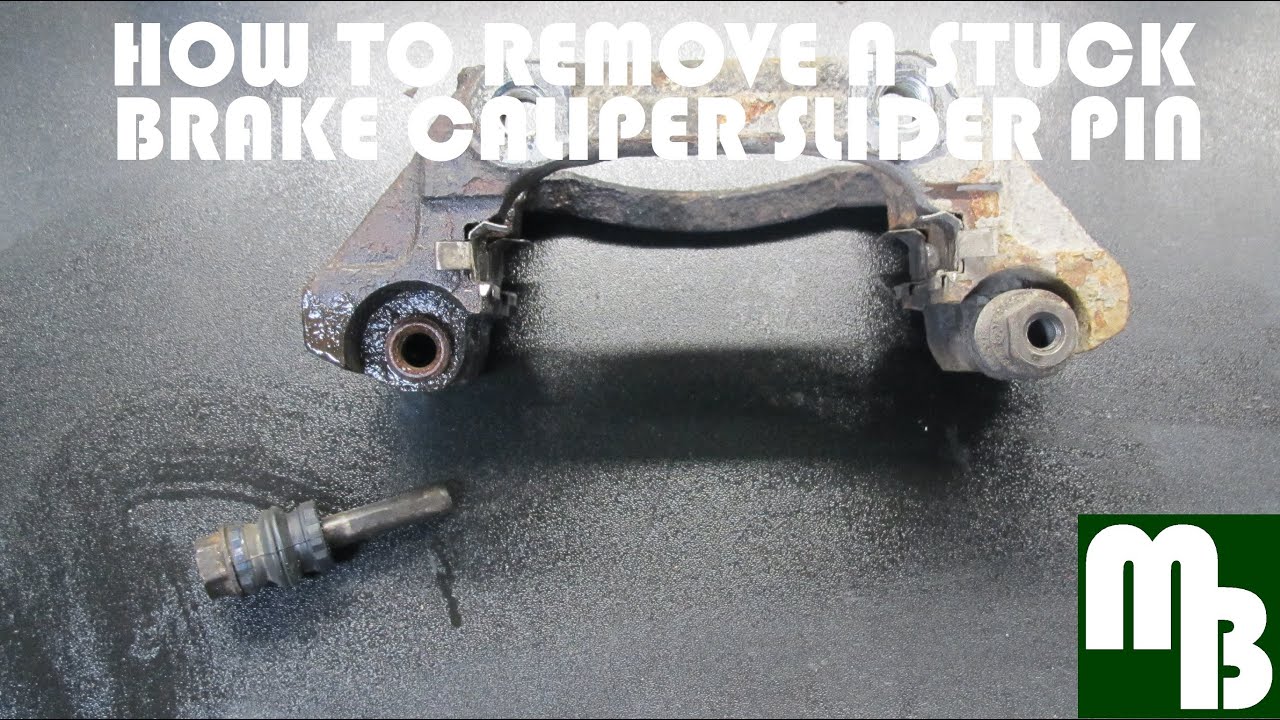
- ✦ Step 3: Remove old slide pins
Remove the caliper bolts or guide bolts and carefully slide out the old pins.
Cleaning and Installing New Slide Pins
Clean the pin holes and remove old grease or rust. Install new pins with the correct lubricant and make sure rubber boots seal properly.
After installation, move the caliper by hand to confirm smooth movement before putting everything back together.
- ✦ Avoid forcing parts
A stuck pin may need extra cleaning or replacement instead of excessive force.
How to Handle Stuck or Rusted Brake Caliper Slide Pins
Some slide pins are difficult to remove because moisture enters through damaged boots. Rust can lock the pin inside the caliper bracket.
When learning how to replace brake caliper slide pins, patience is important. Damaging the caliper bracket can create a more expensive repair.

- ✦ Use penetrating fluid carefully
A suitable penetrating product may help loosen corrosion before removal.
- ✦ Inspect the boot
A torn rubber boot allows water inside and often causes repeat problems.
When Replacement Is Better Than Cleaning
Deep rust, pitting, or damaged threads usually mean the pin should be replaced. Cleaning a badly damaged pin may only provide a temporary fix.
Common Mistakes to Avoid During Brake Slide Pin Replacement
Many DIY brake repairs fail because small details are ignored. Correct lubrication and careful assembly are just as important as removing the old parts.
A good brake repair focuses on long-term reliability, not just getting the vehicle back on the road quickly.

- ✦ Using the wrong grease
General-purpose grease may damage brake rubber components.
- ✦ Skipping torque checks
Loose or over-tightened fasteners can create safety problems.
- ✦ Ignoring related brake wear
Inspect pads, rotors, and boots while servicing the slide pins.
Testing After the Repair
Pump the brake pedal before driving to restore pad contact. Take a slow test drive and listen for unusual sounds.
Benefits of Replacing Brake Caliper Slide Pins Correctly
Knowing how to replace brake caliper slide pins can help maintain reliable braking performance. Properly serviced pins allow the caliper to work as designed.
Regular brake inspections are especially helpful for vehicles exposed to road salt, moisture, or frequent stop-and-go driving.
- ✦ Better braking balance
Smooth caliper movement supports even pressure across the brake pads.
- ✦ Longer brake component life
Correct service can reduce stress on pads and rotors.