Does the Parking Brake Go Up or Down? How to Set and Release It
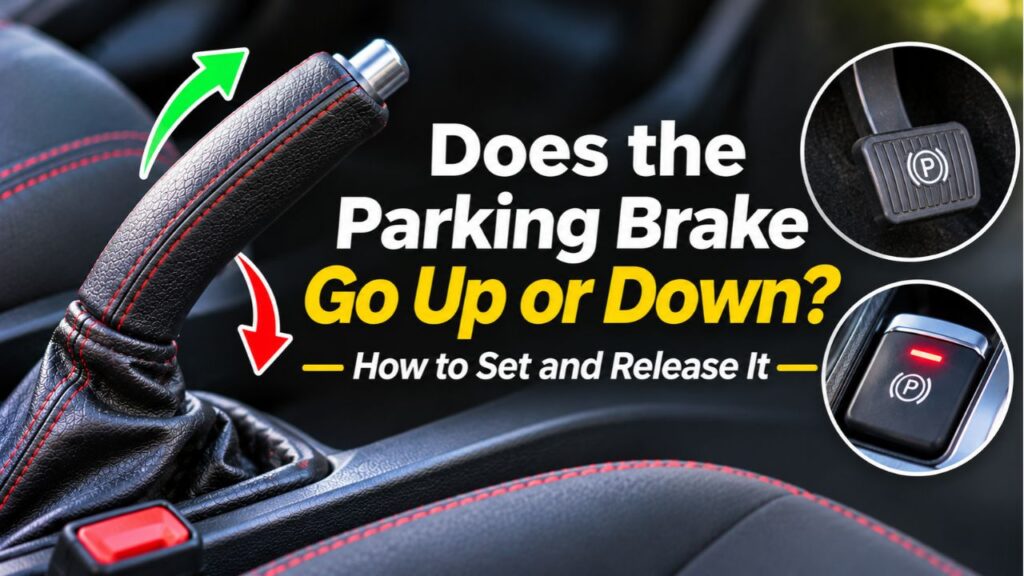
A traditional hand-operated parking brake goes up to engage and down to release. However, a foot-operated parking brake is usually pushed down to engage, while an electronic parking brake commonly uses an upward pull to apply and a downward push to release.
The correct direction depends on the parking brake system installed in your vehicle. Many cars have a hand lever between the front seats, older SUVs and trucks may use a separate foot pedal, and newer vehicles often have an electronic parking brake switch.
Confusing these controls can leave the brake partially engaged or allow the vehicle to move unexpectedly after parking. It may also cause unnecessary wear if you drive without fully releasing the brake.
Understanding the difference is especially useful when driving an unfamiliar vehicle, switching between manual and automatic transmissions, or learning how electronic parking brakes operate.
This guide explains which direction engages and releases each parking brake type, how to recognize whether the brake is on or off, the correct operating steps, and what to check when the mechanism does not move normally.
Does the Parking Brake Go Up or Down? It Depends on the Type
There is no single direction that applies to every parking brake.
For a conventional handbrake lever, up means engaged and down means released. Foot-operated systems work differently because the driver presses a pedal instead of lifting a lever.
Electronic parking brakes typically use a small switch that is pulled upward to engage and pushed downward to release, although the vehicle’s instructions determine the actual operation.
The following table summarizes the most common arrangements.
| Parking Brake Type | To Engage | To Release |
| Hand-operated lever | Pull upward | Press button and lower |
| Push-to-release foot pedal | Press downward | Press downward again; pedal rises |
| Foot pedal with release handle | Press downward | Pull release handle; pedal rises |
| Electronic parking brake | Usually pull switch upward | Usually push switch downward |
| Automatic electronic parking brake | May engage automatically | May release automatically or by switch |
The physical position of the control helps identify its status, but dashboard indicators and manufacturer instructions provide additional confirmation.
Does a Hand Parking Brake Go Up or Down?
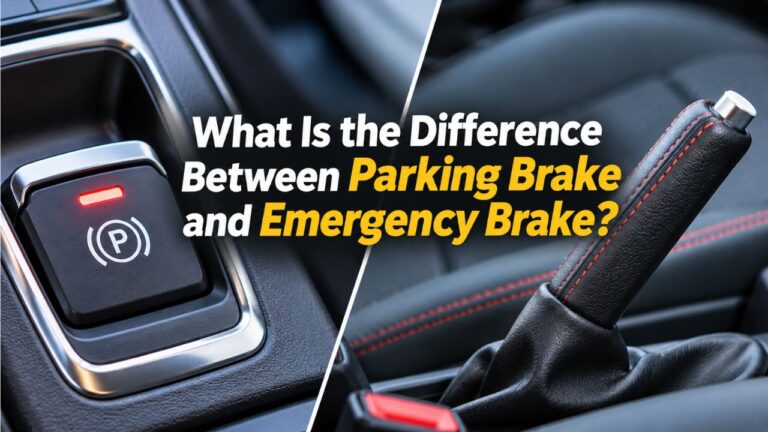
A traditional hand parking brake uses a lever, usually mounted between the driver’s seat and center console.
The driver raises the lever to apply the parking brake and lowers it to release the brake.
Pull the Handbrake Up to Engage It
To engage the parking brake, bring the vehicle to a complete stop and keep your foot on the regular brake pedal.
Grip the handbrake lever and pull it upward until it reaches the appropriate holding position.
On many vehicles, a ratcheting mechanism produces clicking sounds as the lever moves.
These clicks are normal for that design, but they do not establish that a particular number of clicks is correct.
The required lever travel depends on the vehicle and parking brake adjustment.
Avoid pulling with excessive force, especially if the lever suddenly travels much farther than usual.
Push the Handbrake Down to Release It
To release a conventional handbrake, pull the lever slightly upward to relieve pressure on the ratchet.
Press and hold the release button at the end of the lever, then lower it completely.
Release the button after the lever reaches its normal resting position.
Honda’s official parking brake instructions describe this same process: raise the lever to apply the brake, then use the release button and lower the lever completely to disengage it.
Important: A handbrake lever that remains partially raised may leave some braking force applied. Make sure it is fully lowered before driving.
Does a Foot Parking Brake Go Up or Down?
A foot-operated parking brake generally moves downward when the driver engages it.
However, the release method depends on whether the vehicle uses a push-to-release pedal or a separate release handle.
Push-to-Release Foot Parking Brake
Some vehicles have a parking brake pedal located to the far left of the regular brake pedal.
The mechanism works as follows:
- Press the parking brake pedal downward to engage it.
- The pedal remains in its depressed position when the locking mechanism holds.
- Press the pedal downward again to release the lock.
- Allow the pedal to return upward to its normal position.
The Toyota Camry owner’s manual parking brake instructions describe a foot-operated system that engages when the pedal is depressed and releases when the driver presses it again.
This type does not require the driver to pull the pedal upward manually.
Foot Parking Brake With a Separate Release Handle
Other vehicles use a pedal to engage the brake and a separate handle to release it.
To apply the brake, press the parking brake pedal firmly downward.
To release it, keep your foot on the regular brake pedal and pull the designated parking brake release handle.
The parking brake pedal should return upward automatically.
The handle is commonly located underneath the dashboard, although its position varies.
If the pedal does not return after operating the handle, do not force it upward. The mechanism may be binding or require repair.
Does an Electronic Parking Brake Switch Go Up or Down?
For many electronic parking brake systems, pulling the switch upward engages the brake, and pushing it downward releases the brake.
The switch is commonly positioned near the center console, gear selector, or lower dashboard.
It is usually marked with the letter P inside a circle.
Pull the Electronic Parking Brake Switch Up to Engage
With the vehicle stationary, keep your foot on the regular brake pedal.
Pull the electronic parking brake switch upward according to the manufacturer’s instructions.
An electric actuator applies the parking brake mechanism.
You may hear a brief motor sound, especially near the rear wheels.
The dashboard parking brake indicator should illuminate when the brake is successfully applied.
Some vehicles automatically engage their electronic parking brake when the transmission is shifted into Park or when the ignition is switched off.
Push the Electronic Parking Brake Switch Down to Release
To release the electronic parking brake, place the vehicle in the required ignition or power mode.
Keep the regular brake pedal pressed, then push the parking brake switch downward.
The system should release the brake and switch off its engaged indicator.
Ford’s official electronic parking brake guide confirms this operation for the covered vehicles: pull the switch upward to apply the parking brake and push it downward to release it while pressing the regular brake pedal.
Some electronic systems can also release automatically when the driver prepares to move.
Always confirm the parking brake indicator has turned off before driving.
How to Identify Whether Your Parking Brake Is Up or Down
The easiest way to understand parking brake direction is to identify the control installed in the vehicle.
Look for a Lever Between the Front Seats
A long lever with a button near the end usually indicates a mechanical handbrake.
Its normal released position is typically low, near the center console.
When engaged, the lever rises and remains in an elevated position.
This arrangement makes the up-and-down direction relatively easy to recognize.
Check for an Additional Pedal on the Left
A smaller pedal to the far left of the driver’s footwell may be a foot-operated parking brake.
The pedal generally moves downward when engaged.
Depending on the design, it may be released by pressing it again or pulling a separate handle.
Do not confuse this pedal with the regular service brake.
Find the Electronic Parking Brake Symbol
Modern vehicles may use a small switch with a circled P symbol.
Unlike a traditional handbrake, this switch may not remain visibly raised or lowered after the driver operates it.
The switch often returns to its center position.
Therefore, the dashboard indicator is more useful than the switch’s resting position for determining whether the brake is engaged.
How to Engage and Release the Parking Brake Safely
Regardless of control direction, the parking brake should be operated only when the vehicle is properly secured.
Step 01: Stop the Vehicle Completely
Bring the vehicle to a complete stop in a suitable parking location.
Keep your foot firmly on the regular brake pedal.
Do not begin a normal parking brake operation while the vehicle is moving.
For vehicles with an automatic transmission, follow the manufacturer’s instructions for selecting Park and engaging the parking brake.
For manual-transmission vehicles, follow the recommended gear selection and parking procedure.
Step 02: Engage the Parking Brake in the Correct Direction
Identify whether the vehicle has a hand lever, foot pedal, or electronic switch.
For a handbrake, pull the lever upward.
For a foot-operated parking brake, press the pedal downward.
For a common electronic system, pull the switch upward.
Confirm that the parking brake has engaged using the appropriate control position or dashboard indicator.
Do not assume it is engaged if the vehicle displays a malfunction warning.
Step 03: Confirm the Vehicle Is Secure
With the vehicle properly positioned and the transmission secured according to the owner’s manual, verify that it remains stationary.
Release the regular brake pedal gradually only when it is safe to do so.
If the vehicle moves unexpectedly, immediately reapply the service brake.
On hills, use the recommended wheel position and any additional precautions required for the location.
A parking brake that cannot hold the vehicle requires inspection.
Step 04: Release the Parking Brake Before Driving
When preparing to drive, press the regular brake pedal first.
Release the parking brake using its specific control.
For a hand lever, press the release button and lower it.
For a foot pedal, use the correct pedal or release-handle procedure.
For an electronic switch, follow the required ignition and release instructions.
Confirm that the parking brake indicator no longer shows the brake as applied.
Never accelerate against a parking brake that has not fully released.
How Can You Tell if the Parking Brake Is On or Off?
The dashboard parking brake indicator is one of the most useful ways to confirm engagement.
Many vehicles display a red parking brake symbol, often showing the letter P inside a circle.
Some use the word BRAKE or another symbol.
When the parking brake is engaged, the relevant indicator normally illuminates.
When the brake is fully released, the indicator should turn off under normal operating conditions.
However, the same general warning area may also display hydraulic brake system faults.
A red brake warning that remains illuminated after the parking brake is released should not automatically be dismissed as a faulty parking brake switch.
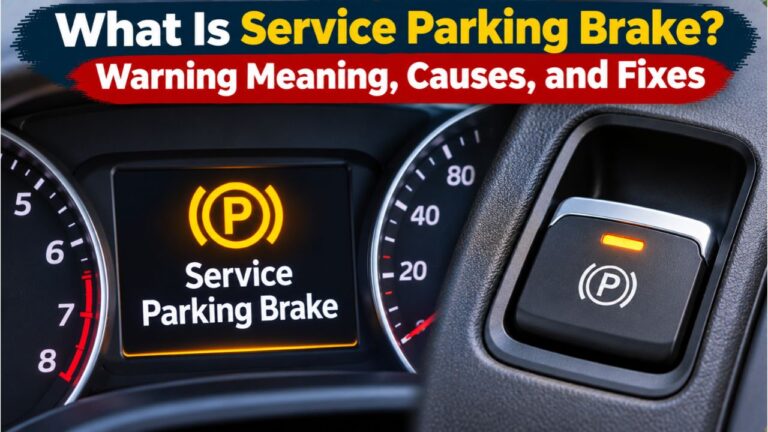
Electronic parking brakes may also display amber service indicators or messages such as “Parking Brake Malfunction.”
If a warning remains active, consult the owner’s manual and arrange diagnosis when required.
Does Parking Brake Direction Change Between Automatic and Manual Cars?
The direction of the parking brake control does not depend directly on whether the car has an automatic or manual transmission.
Instead, it depends on the parking brake mechanism selected by the manufacturer.
An automatic car may have a hand lever, foot pedal, or electronic switch.
A manual-transmission car may also use a hand lever or an electronic parking brake.
The transmission changes how the vehicle should be secured while parked, not necessarily how the parking brake operates.
For an automatic, Park provides a separate holding mechanism in the transmission.
For a manual transmission, an appropriate gear provides additional resistance to movement.
In both cases, a properly functioning parking brake provides an important additional means of securing the vehicle.
What if Your Parking Brake Does Not Move Up or Down?
A parking brake that refuses to move or release may have a mechanical or electrical problem.
Handbrake Lever Stuck in the Up Position
A handbrake lever may become difficult to release because of tension in its ratchet mechanism, cable problems, or internal binding.
Try the normal release procedure while keeping the vehicle secured.
Pull the lever upward slightly, press the button, and attempt to lower it gently.
If the lever remains stuck, do not force it or attempt to drive with the brake applied.
Foot Parking Brake Stuck Down
A foot-operated parking brake may fail to release because of a seized cable, damaged return mechanism, or faulty release linkage.
Make sure you are using the correct release method.
If the vehicle uses a separate release handle, pressing the pedal again may not disengage the mechanism.
A pedal that fails to return normally requires inspection.
Electronic Parking Brake Will Not Release
An electronic parking brake may refuse to release because of insufficient battery power, actuator problems, switch faults, or control-system issues.
Some vehicles require the ignition to be ON and the service brake pedal pressed before accepting the release command.
If the system displays a warning or fails to respond, follow the owner’s manual.
Avoid repeatedly operating the switch or trying to force the car to move.
What Happens if You Drive With the Parking Brake Up?
Driving with a conventional handbrake lever raised may leave the parking brake applied.
The resulting friction can cause abnormal brake wear and overheating.
Possible symptoms include:
- Reduced acceleration
- A burning smell
- Unusual resistance while driving
- Rear brake overheating
- Parking brake warning lights or sounds
- Premature brake pad or shoe wear
The amount of damage depends on how firmly the parking brake was applied and how far the vehicle traveled.
A partially applied brake may produce less obvious symptoms while still generating unnecessary heat.
If you discover that the brake remained engaged during driving, stop safely and allow the components to cool.
Do not touch hot brake parts or continue driving if braking performance feels abnormal.
Have the brakes inspected when overheating or damage is suspected.
Should the Parking Brake Be Up or Down When Parking on a Hill?
For a conventional handbrake lever, it should be up and fully engaged when the vehicle is parked on a hill.
A foot-operated brake should be pressed to its engaged position, while an electronic parking brake should be activated according to its controls.
Parking on a slope creates a greater tendency for the vehicle to roll.
The parking brake should therefore be used together with the manufacturer’s recommended transmission position.
Turn the front wheels in the appropriate direction for uphill or downhill parking, following the relevant driver handbook.
Additional precautions, such as suitable wheel chocks, may be necessary for certain loads or situations.
Never depend on a poorly functioning parking brake to hold a vehicle on a steep slope.
FAQs About Does the Parking Brake Go Up or Down
Does Pulling the Handbrake Up Mean It Is On?
Yes. On a conventional mechanical handbrake, pulling the lever upward engages the parking brake. Lowering the lever completely releases it.
Is the Parking Brake Off When the Lever Is Down?
Usually, yes. A traditional handbrake lever should be in its fully lowered position when released. However, a seized cable or mechanical fault can leave the brakes applied despite the lever being down.
Do You Push an Electronic Parking Brake Up or Down?
On many vehicles, pull the switch upward to engage the electronic parking brake and push it downward to release. Confirm the correct operation in the owner’s manual.
Does a Foot Parking Brake Go Down to Engage?
Yes. Foot-operated parking brakes normally engage when the driver presses the pedal downward. Depending on the design, pressing it again or pulling a separate release handle disengages it.
Can a Parking Brake Release Automatically?
Yes. Some electronic parking brake systems release automatically when the vehicle meets specified drive-away conditions. Mechanical handbrakes normally require manual release.
Is It Safe to Drive With the Parking Brake Lever Slightly Raised?
No. A partially raised lever may leave braking force applied, causing heat and wear. Release the parking brake completely before driving.
Remember the Correct Parking Brake Direction Before Driving
If you’re wondering does the parking brake go up or down, remember the basic rule: a traditional handbrake goes up to engage and down to release. Foot-operated parking brakes are generally pushed downward to engage, while electronic switches commonly use an upward pull to apply and a downward push to release.
The correct direction depends on the vehicle’s parking brake design, so identify the control and check the owner’s manual when operating an unfamiliar car. Dashboard indicators help confirm whether the brake has successfully engaged or released.
Before driving, make sure the parking brake is fully disengaged and the vehicle moves without unusual resistance. When parking, apply the brake correctly and confirm the vehicle is secure. This simple habit helps prevent accidental rolling, unnecessary brake wear, and avoidable parking mistakes.