Can a Bad Brake Booster Cause Misfire? Key Signs and Diagnosis
Yes, a bad brake booster can cause an engine misfire if an internal vacuum leak lets unwanted air enter the intake manifold. This is most relevant to gasoline vehicles whose brake boosters use engine manifold vacuum. The extra air can upset the fuel mixture, causing rough idle, shaking, hesitation, or stalling, especially when the brake pedal is pressed.
The link between braking and combustion seems unusual because the brake booster is not part of the ignition system. However, a vacuum hose connects these systems on many vehicles. If the booster diaphragm, control valve, or its connections leak, the engine may react to air entering through a path it was not supposed to use.
Not every misfire points to a booster problem. Bad spark plugs, ignition coils, fuel delivery, intake leaks, and mechanical engine faults are often more likely explanations. The strongest clue is an engine that runs worse during brake application, particularly when the brake pedal also becomes hard or a hissing sound appears.
This guide covers the vacuum-leak mechanism, warning signs, diagnostic codes, practical checks, related parts, repairs, and when the vehicle should not be driven.
Can a Bad Brake Booster Cause Misfire Through a Vacuum Leak?
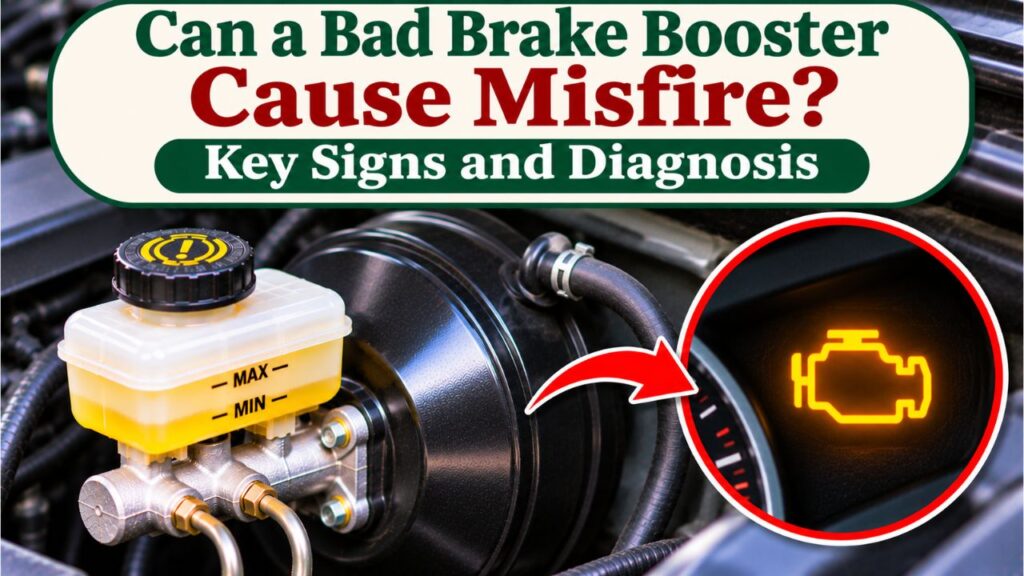
Yes, but the booster must create or contribute to an air leak affecting the engine intake. A booster that loses assistance for an unrelated reason does not automatically cause an engine misfire. Some vehicles use a different assist system.
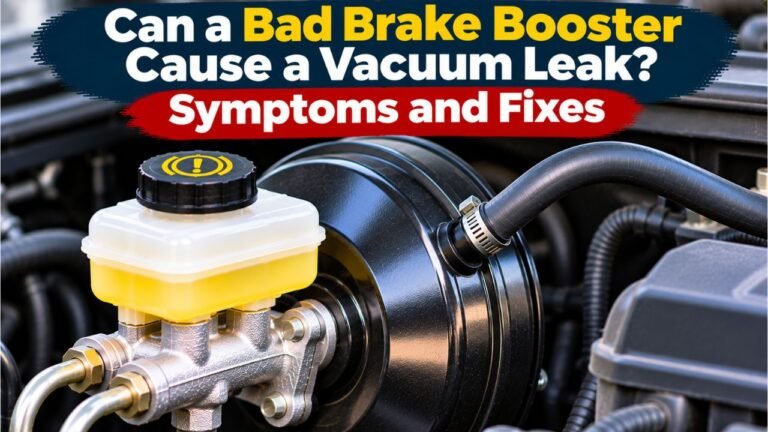
On many gasoline vehicles, the booster draws vacuum from the intake manifold through a large hose. That hose is supposed to be sealed. A rupture inside the booster or leak at its inlet can let atmospheric air pass into the vacuum circuit and reach the engine.
Extra intake air can upset the fuel mixture and cause unstable combustion, particularly at idle.
The AGCO Automotive explanation of vacuum brake boosters specifically identifies a damaged booster diaphragm as a source of lean running and engine misfires when the brake pedal is pressed. This is a possible failure pattern, not proof that every rough-running engine has a defective booster.
How a Leaking Booster Disturbs the Engine’s Air-Fuel Mixture
Unmetered Air Makes the Mixture Too Lean
A gasoline engine needs a controlled amount of fuel relative to the air entering its cylinders. On many fuel-injected vehicles, sensors and the engine control module estimate or measure that airflow before determining fuel delivery.
A leak downstream of the relevant airflow measurement can add air without a matching initial increase in fuel. That creates a lean mixture, meaning the available fuel is insufficient for the amount of air. The engine computer may add fuel, but a substantial leak can still disrupt combustion.
A lean mixture may cause weak or missed combustion without directly affecting the spark plug or ignition coil.
Why the Problem Is Often Worse at Idle
At idle, the throttle is relatively closed and the engine is using much less air than during moderate driving. An additional leak can therefore represent a larger fraction of total airflow. The result may be a shaky idle, fluctuating RPM, or an engine that nearly stalls.
The effect may ease as airflow rises, although intake gaskets and other hoses can produce the same pattern.
Symptoms That Point Toward Brake Booster-Related Misfires
Look for a combination of engine and braking symptoms rather than one isolated clue.
- Rough idle during braking: The engine shakes or RPM drops when the brake pedal is held at a stop.
- Hissing near the pedal or firewall: Air noise appears or changes when the brake is applied.
- Harder brake pedal: Vacuum assistance is weak, intermittent, or missing.
- Stalling or hesitation: The engine struggles at idle after a change in vacuum demand.
- Check engine light: The computer may store lean-mixture or misfire trouble codes.
A small leak may cause engine symptoms before braking assistance noticeably weakens. Other booster failures cause no misfire.
Misfire Only When You Press the Brake Pedal
This is one of the more specific clues. A booster control valve changes chamber pressures as the pedal moves. If an internal seal leaks during that change, the engine may briefly or continuously receive extra air through the booster vacuum hose.
An engine that idles smoothly in Park but stumbles whenever the pedal is pressed warrants a booster-circuit check. Shifting into Drive adds transmission load, however, so those conditions should be compared separately.
Misfire Even With the Brake Pedal Released
A damaged diaphragm, leaking grommet, or disconnected hose can create a constant vacuum leak. In that case, rough idle may occur whether or not anyone touches the brake pedal.
The technician must distinguish a booster leak from another intake leak; the location of a hissing sound alone is inconclusive.
Can a Bad Brake Booster Trigger P0300 or Lean Trouble Codes?
Yes. A substantial vacuum leak may contribute to P0300, which commonly indicates random or multiple-cylinder misfires. A specific-cylinder misfire might appear as P0301, P0302, or another P030-series code, depending on the affected cylinder and vehicle.
It may also contribute to P0171 or P0174, indicating that the engine control system detects a lean condition on bank 1 or bank 2. Those codes do not mean the booster is necessarily at fault. Fuel pressure problems, an intake gasket leak, or incorrect airflow readings can produce similar results.
An engine can also stumble before any code is stored. Code detection depends on severity, operating conditions, and the vehicle’s monitoring strategy. A scan tool that displays live fuel trims and misfire information can be more useful than merely clearing a check engine light.
The CarParts.com technical guide to vacuum leaks explains how unwanted intake air can create rough running, misfires, and positive fuel-trim corrections. It also identifies the brake booster and vacuum hoses among possible leak locations.
Bad Brake Booster Misfire vs. Other Engine Problems
A misfire alone cannot identify a bad booster. Compare accompanying symptoms and what changes when the brake pedal is operated.
| Possible Cause | Typical Clue | What Helps Confirm It |
| Booster or booster-hose vacuum leak | Rough idle may change with pedal use; possible hard pedal | Vacuum and fuel-trim testing of booster circuit |
| Worn spark plug or ignition coil | Repeated misfire in one cylinder | Ignition inspection and cylinder-specific testing |
| Other intake vacuum leak | Lean idle without a clear link to braking | Intake inspection and approved smoke testing |
| Fuel delivery fault | Misfire under several engine loads | Fuel pressure and injector diagnostics |
| Engine mechanical fault | Persistent cylinder-specific symptoms | Compression or other mechanical tests |
If the engine is rough only while a vehicle is held in Drive, transmission load or an existing idle-control problem may explain the symptom. If the engine runs rough in Park whenever the brake is pressed, an engine-vacuum interaction becomes more suspicious. Neither observation proves the booster itself is leaking.
How a Technician Diagnoses a Brake Booster Vacuum Leak
A proper diagnosis separates the source of the engine misfire from the source of reduced brake assistance. Both problems may have one cause, but they also can happen independently.
Step 01: Confirm the Misfire and Check for Brake Symptoms
With the vehicle stationary and secured, a technician identifies when the engine stumbles: at idle, during brake application, or at other loads. They also check whether pedal effort has changed and whether an unusual hiss comes from the booster area.
Misfire codes and freeze-frame data help identify the operating conditions. They should be recorded before codes are cleared.
Step 02: Inspect the Vacuum Supply and Connections
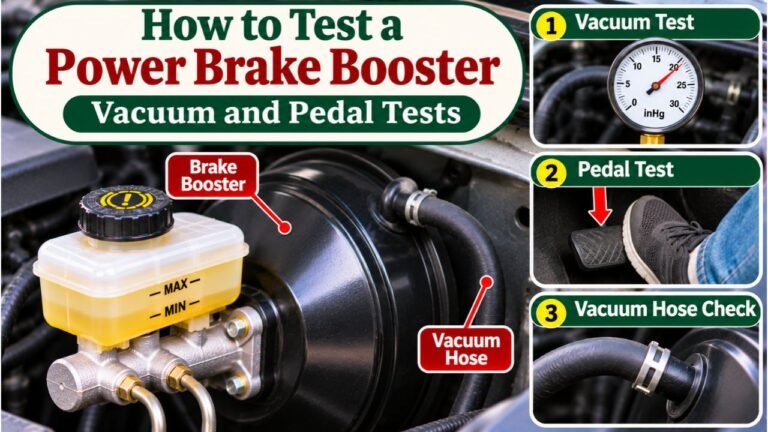
The technician checks the booster supply hose, intake-manifold connection, check valve, and sealing grommet for cracks, loose fittings, or disconnections. An obviously damaged hose may explain both a lean misfire and reduced boost without an internal booster failure.
Low engine vacuum can itself weaken brake assistance, reversing the suspected cause.
Step 03: Compare Live Fuel Trims With Brake Application
On a compatible gasoline-engine system, scan-tool fuel trims help reveal how the computer is correcting the mixture. Positive fuel trims can indicate that extra fuel is being added to compensate for a lean condition.
Comparing readings with the pedal applied and released helps identify patterns. A single reading does not justify booster replacement.
Step 04: Isolate the Booster Circuit Using Approved Equipment
An experienced technician can isolate the booster vacuum supply while monitoring the engine, following the factory procedure. If the engine smooths out when the booster circuit is isolated, the circuit is implicated; the hose, valve, seals, and booster must still be distinguished.
Do not disconnect or cap the booster hose and then drive the car. Isolation removes or changes brake assistance and can create a dangerous stopping problem. Leak checks should be conducted under controlled stationary conditions by someone familiar with the vehicle’s braking system.
Step 05: Verify the Fault Before Replacing Parts
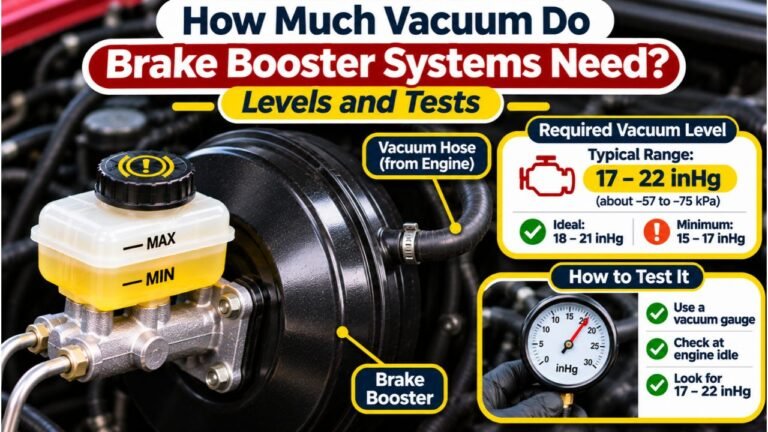
The technician verifies vacuum supply and retention with suitable gauges and approved leak tests.
Both engine operation and braking assistance must be verified after repair.
Can the Vacuum Hose or Check Valve Cause Misfires Instead?
Absolutely. The large hose between the intake vacuum source and booster can crack with age, loosen at a connector, or become damaged during service. A hose leak connected to engine manifold vacuum may admit unwanted air and create the same lean-running symptoms as a ruptured booster diaphragm.
A check valve that leaks backward mainly affects stored assistance, while a cracked housing or grommet can admit outside air.
Another less obvious problem is the seal between the master cylinder and booster on certain designs. A General Motors service bulletin on lean codes after master cylinder replacement describes selected GM trucks and SUVs developing P0171 or P0174 when this seal is missing or damaged. This example applies to specified vehicles and should not be assumed to explain every booster’s leak.
Does This Problem Affect Diesel, Hybrid, or Electric Vehicles?
Not in the same way on every vehicle. Some diesel and gasoline vehicles use dedicated vacuum pumps, avoiding a direct intake-manifold connection.
Hybrids may use electric pumps or electromechanical assist. Battery-electric vehicles have no combustion-engine misfire, although brake-assist faults remain possible.
On vehicles without an intake vacuum connection, a hard pedal and engine misfire may be unrelated.
Is It Safe to Drive With a Booster Leak and Engine Misfire?
A suspected brake booster vacuum leak is a safety concern because it can reduce the force assistance available when stopping. A pronounced misfire can also lead to stalling, poor acceleration, or other hazards.
If the brake pedal becomes abnormally hard, stopping performance changes, or the engine stalls during braking, stop safely and arrange towing. Do not continue driving to see whether the problem improves. A flashing check engine light during a significant misfire is another reason to stop as soon as it is safe, because continued operation can damage the catalytic converter.
If braking feels normal but the engine idles roughly, the fault still deserves prompt diagnosis. Do not assume it is safe to ignore because the car can currently move under its own power.
Will Replacing the Brake Booster Fix the Misfire?
Only if the booster itself is the confirmed source of the intake vacuum leak. Replacing it cannot correct a worn ignition coil, clogged injector, intake gasket leak, or failed hose left in place. A bad hose, seal, or check valve may need repair without replacing the booster assembly.
When an internal diaphragm or control valve is leaking, replacing the complete booster is often the practical repair on a modern passenger vehicle. The technician should also inspect the master cylinder for fluid leakage into the booster and follow the required brake-service procedure.
After repair, the engine should idle properly, relevant fuel-trim readings should return toward normal, and the brake pedal should have normal assistance. Stored diagnostic codes should be addressed and the system retested rather than cleared without verification.
FAQs About Can a Bad Brake Booster Cause Misfire
Can Pressing the Brake Pedal Make an Engine Misfire?
Yes. An internal booster leak can allow extra air into a manifold-vacuum engine when the pedal moves. This may cause shaking, an RPM drop, or an intermittent misfire at idle, but other engine-load effects must also be ruled out.
Can a Bad Booster Cause a P0300 Code?
It can contribute to P0300 if the vacuum leak makes combustion unstable across cylinders. P0300 is not a booster diagnosis; ignition, fuel, intake, and mechanical faults remain possible.
Can a Brake Booster Leak Cause P0171 and P0174?
Yes. A leak that introduces excess intake air may produce lean fuel-trim codes. Whether one or both codes appear depends on engine configuration, where the air enters, and how the control system responds.
Will a Bad Brake Booster Always Cause a Hard Pedal?
No. A small leak may cause rough idle before assistance becomes noticeably weak. Other internal failures may affect braking without creating an engine vacuum leak. Pedal behavior and vacuum tests need to be considered together.
Could a Misfire Cause the Brake Booster to Feel Weak Instead?
Yes, indirectly. An engine that runs poorly may produce inadequate or unstable manifold vacuum, reducing available assistance on some vehicles. That is why the engine vacuum source should be checked before condemning the booster.
Why the Misfire and Brake Symptoms Need One Careful Diagnosis
So, can a bad brake booster cause misfire? Yes, on vehicles where a leaking vacuum booster allows unwanted air into the engine intake. A misfire that appears during brake application, especially alongside hissing or a harder pedal, makes the booster circuit a reasonable place to investigate. It does not establish the diagnosis by itself.
The right repair starts by checking the vacuum hose, check valve, related seals, and actual booster operation while also reviewing engine codes and fuel trims. If either braking assistance or engine operation is seriously affected, keep the vehicle off the road until the fault is found and corrected.