Brake Pad Rubbing on Rotor: Causes, Fixes, and Warning Signs
A faint brushing sound between a disc brake pad and rotor can be normal because the pads sit extremely close to the disc after you release the pedal. Constant heavy rubbing is different. If the wheel resists turning, gets unusually hot, smells burned, pulls the vehicle, or wears one pad rapidly, the brake is probably dragging and needs inspection.
Ignoring true brake drag can damage both the pad and rotor. Continuous friction creates heat even when you are not braking, which can glaze friction material, discolor or damage the rotor, and shorten pad life.
Correcting the cause restores normal wheel movement and prevents a small caliper or hardware problem from turning into a larger brake repair. The key is separating harmless light contact from a pad that is actually being held against the rotor.
A NHTSA hydraulic-braking safety assessment that reviewed 2012 U.S. crash data identified 32,477 police-reported crashes that were at least partly attributed to braking issues. The data covered braking problems broadly rather than pad drag alone, but it gives useful context for treating abnormal brake behavior seriously.
What stood out to me while researching brake pad rubbing on rotor problems was that the noise itself is not the best diagnostic clue. Heat, wheel resistance, uneven pad thickness, pulling, and reduced coasting ability tell you much more about the severity of the problem.
Light contact after a brake job may settle as the pads bed against the rotor. A wheel that becomes difficult to rotate, gets much hotter than the opposite wheel, or continues dragging after several normal stops needs diagnosis rather than more driving.
The sections below explain what contact is normal, common causes of brake drag, checks that separate pad problems from rotor or hydraulic faults, repair options, and the symptoms that mean you should stop driving.
Brake Pad Rubbing on Rotor: Normal Contact or Brake Drag?
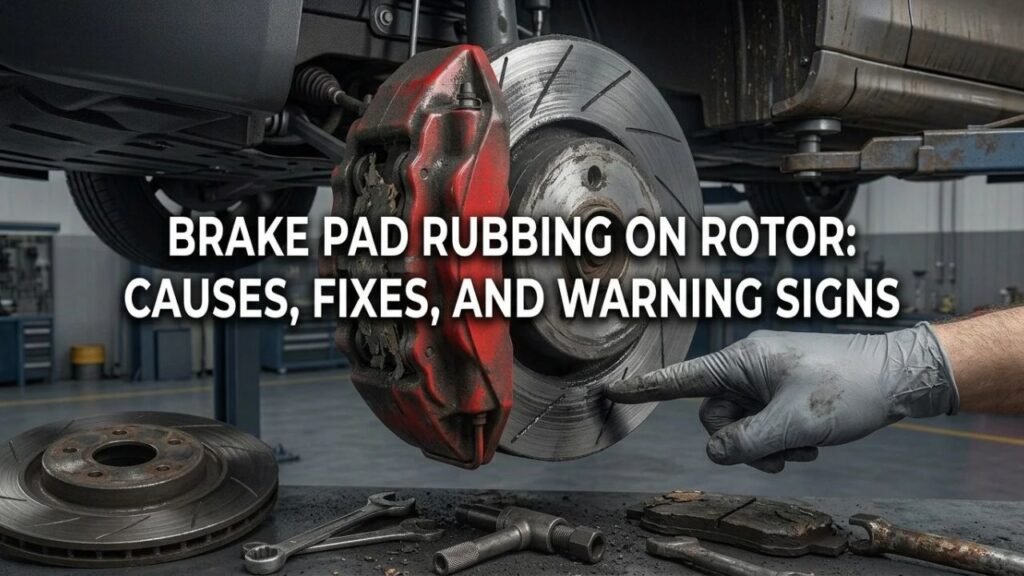
Disc brake pads do not retract far away from the rotor every time you release the pedal. They remain extremely close to the disc, and slight contact can produce a faint brushing or whispering sound as the wheel turns.
That alone does not prove a fault.
True brake drag means the pad remains pressed against the rotor with enough force to create abnormal resistance, heat, or wear.
Signs the Contact May Be Normal
Light contact is less concerning when:
- The wheel still rotates reasonably freely
- There is only a faint brushing sound
- Both wheels on the axle have similar temperatures after driving
- The vehicle coasts normally
- There is no burning smell
- Pad wear is even
- The car does not pull while cruising or braking
Fresh pads can also sit close to new or resurfaced rotors while their surfaces establish full contact.
Signs the Pad Is Actually Dragging
Look more closely if you notice:
- One wheel becoming much hotter than the opposite wheel
- A strong burning-brake smell
- Smoke near a wheel
- The vehicle slowing rapidly when you lift off the accelerator
- Pulling to one side
- One pad wearing much faster than its partner
- Constant scraping or grinding
- Poor fuel economy combined with brake heat
- A wheel that is difficult to rotate when safely raised
NHTSA documented a brake-caliper recall in which incomplete caliper release could create brake drag, overheat pads, rotors, and brake fluid, and reduce braking performance.
How Much Rotor Contact Is Too Much?
There is no universal number of wheel rotations that applies to every vehicle. Drivetrain resistance, wheel bearings, parking-brake design, and brake configuration all affect how easily a raised wheel turns.
The more useful comparison is side to side. If one wheel has much greater resistance or develops far more heat than the matching wheel, investigate that corner.
Key Takeaway: A faint pad-to-rotor brushing sound can be normal; strong resistance, excess heat, pulling, or uneven wear points toward brake drag.
What Causes a Brake Pad to Keep Rubbing the Rotor?
Several faults can prevent a disc brake from releasing normally. Caliper movement and pad movement are the first areas I would investigate.
Sticking Caliper Piston
The caliper piston pushes the brake pad toward the rotor when hydraulic pressure rises.
When you release the brake, the piston should relax enough to remove clamping force. Corrosion, seal problems, contamination, or internal caliper damage can stop the piston from returning correctly.
A sticking piston may cause:
- Constant rotor drag
- One hot wheel
- Rapid inner-pad wear
- Pulling
- Burning odor
- Glazed pads or rotor heat marks
Firestone lists sticking pistons, corrosion, fluid contamination, and damaged caliper components among common sources of caliper drag.
Seized or Dry Caliper Slide Pins
Many passenger vehicles use floating calipers. The caliper body must move freely on guide or slide pins so both pads apply and release correctly.
Rust, torn boots, dried lubricant, or contaminated grease can make a pin bind.
Raybestos technical guidance explains that restricted slide movement can cause the inboard pad to do more braking work and wear prematurely.
If one inner pad is dramatically thinner than the outer pad, slide-pin or piston operation deserves close inspection.
Brake Pads Binding in the Bracket
The pad ears must move freely in the caliper bracket.
Rust can build beneath stainless abutment clips and squeeze the available space. Bent clips, incorrect hardware, excessive coating on replacement pads, or corrosion on the bracket can also hold a pad against the rotor.
This problem often appears soon after a brake job if the bracket contact points were not cleaned properly.
Collapsed or Restricted Brake Hose
A flexible brake hose can fail internally without showing obvious external damage.
Pressure may travel toward the caliper when the pedal is pressed but fail to return freely afterward. Residual hydraulic pressure then keeps the piston applied.
Older manufacturer service information lists an internally restricted hose among possible causes of dragging disc brakes.
A technician can test for trapped hydraulic pressure and separate a hose problem from mechanical caliper binding.
Parking Brake Not Releasing
Many rear disc brake systems incorporate a mechanical or electronic parking-brake mechanism.
A seized cable, damaged actuator, incorrect adjustment, corrosion, or internal parking-brake fault may prevent the rear pad from releasing completely.
Rear brake drag that began after parking-brake service deserves inspection of that system.
Master Cylinder or Hydraulic Pressure Problem
Less common faults can affect more than one brake at once.
A master-cylinder piston that does not return correctly, blocked compensation port, incorrect pushrod adjustment, or another hydraulic restriction may leave residual pressure in the system.
If multiple wheels begin dragging at the same time, I would look beyond a single caliper.
Key Takeaway: Sticking pistons, seized slide pins, binding pads, restricted hoses, parking-brake faults, and trapped hydraulic pressure are common causes of continuous pad-to-rotor contact.
Why Are New Brake Pads Rubbing on the Rotor?
A small amount of brushing after installing pads can be normal. Strong drag after brake service is not.
Several installation issues can cause new pads to remain too tight.
Pads Are Too Tight in the Bracket
New pads should fit the correct caliper bracket without being jammed into place.
Rust underneath the abutment clips can reduce clearance. Incorrect pads or hardware can create the same problem.
The pad should not be loose enough to rattle freely, but it must be able to move as the brake applies and releases.
Slide Pins Were Not Serviced Correctly
A new set of pads does not repair frozen guide pins.
If the caliper slides were already corroded or dry, thicker new pads may make the drag more obvious because there is less available clearance.
Use only the brake-compatible lubricant specified for the application. Do not put grease on the rotor or friction surface of the pad.
Caliper Piston Did Not Retract Properly
Installing thick new pads requires pushing the caliper piston back into its bore.
A piston that resists retraction may be corroded or damaged. Rear calipers with integrated parking brakes may also require a specific retracting procedure.
Forcing an unfamiliar piston design without checking service information can damage the caliper or parking-brake mechanism.
Hardware Is Installed Incorrectly
Misplaced abutment clips, anti-rattle springs, shims, or retaining hardware can hold a pad at an angle or prevent free movement.
Compare the hardware arrangement with the correct service information rather than relying only on the position of the old parts.
New Pads Need Bedding
Fresh pad and rotor surfaces may touch slightly differently until normal braking establishes a consistent contact pattern.
Light noise during early use may disappear. A hot wheel, heavy resistance, or burning smell is not a normal bedding symptom.
Key Takeaway: Slight brushing with fresh pads can be normal, but strong drag after brake work often points to tight pad fit, frozen slides, piston trouble, or incorrect hardware.
How to Check Which Brake Pad Is Rubbing
Basic observation can narrow down the fault before parts are replaced.
Compare Wheel Temperatures
After a short drive with ordinary braking, compare the wheels without touching the rotor or caliper.
An infrared thermometer gives a safer comparison than touching brake parts. One brake running far hotter than the matching wheel can point toward drag.
Do not diagnose solely from temperature after heavy braking because all brakes may be hot.
Check How the Vehicle Coasts
On a level road, a dragging brake can make the vehicle feel as if the parking brake is partly applied.
The car may slow faster than normal once you release the accelerator.
This symptom becomes more useful when it appears together with heat, pulling, or abnormal pad wear.
Compare Inner and Outer Pad Wear
Remove the wheel and inspect both pads if you have the equipment and experience to raise the vehicle safely.
Do not judge the brake by the visible outer pad alone.
A worn inner pad with a much thicker outer pad may point toward piston or slide problems. The opposite pattern can point toward restricted caliper movement or pad binding.
Rotate the Wheel Safely
With the vehicle correctly supported on jack stands, wheel rotation can reveal severe drag.
Some resistance may come from the drivetrain and bearing seals, so compare the suspected wheel with the matching side when possible.
A wheel that barely turns while the opposite side turns normally needs further inspection.
Inspect the Rotor
Look for:
- Blue or dark heat spots
- Heavy scoring
- Cracks
- Deep grooves
- Uneven surface appearance
- A pronounced wear lip
- Signs of severe overheating
Mazda service guidance specifically identifies dragging pads as a source of excessive heat that can damage brake pads and rotors.
Key Takeaway: Compare wheel heat, rotation resistance, pad thickness, and rotor condition rather than diagnosing rubbing from sound alone.
How to Fix Brake Pads Rubbing on the Rotor
The repair should address the reason the pad is staying applied. Replacing pads alone will not solve a caliper, hose, or hardware fault.
Clean and Service the Caliper Bracket
If the pads are binding, the bracket contact areas may need cleaning and corrosion removal.
Replace damaged abutment hardware and confirm the pads move correctly once installed.
Do not grind large amounts from the pad backing plate simply to force an incorrect or poorly fitting pad into the bracket.
Service or Replace the Slide Pins
Remove and inspect guide pins for rust, pitting, dried grease, and damage.
Pins and bores that remain serviceable can be cleaned and lubricated with the correct brake-compatible lubricant. Torn boots should be replaced so water and dirt do not quickly contaminate the repair.
Severely corroded pins or brackets may need replacement.
Repair a Sticking Caliper
A caliper piston that will not operate correctly may require rebuilding or replacement based on the caliper design and condition.
Many replacement decisions favor installing a remanufactured or new caliper rather than trying to restore a heavily corroded piston assembly.
Inspect the pads and rotor for heat damage at the same time.
Replace a Restricted Brake Hose
If trapped hydraulic pressure is caused by an internally damaged flexible hose, replace the hose with the correct part.
Opening the brake hydraulic system requires proper bleeding afterward. Brake fluid specifications and bleeding procedures vary by vehicle.
Correct Parking-Brake Problems
Rear brake drag may require cable service, actuator repair, adjustment, caliper replacement, or servicing of an internal drum-style parking brake.
Electronic parking brakes can require a service mode or scan-tool procedure before the caliper is worked on.
Inspect Heat-Damaged Pads and Rotors
Removing the cause of drag does not automatically make overheated friction parts reusable.
Heat-damaged pads may become glazed or cracked. Rotors may develop discoloration, hard spots, surface damage, excessive runout, or thickness problems.
Measure components against the vehicle maker’s specifications before returning them to service.
Key Takeaway: Fix the cause of the drag first, then inspect pads and rotors for damage rather than assuming they survived the overheating.
Can You Drive With a Brake Pad Rubbing the Rotor?
A faint brushing sound with no abnormal heat, resistance, smell, pulling, or brake warning is different from a brake that is actively dragging.
If a wheel is clearly overheating or resisting rotation, continuing to drive can cause rapid pad wear and rotor damage.
Stop driving and arrange inspection or towing if you notice:
- Smoke from a wheel
- Strong burning-brake odor
- Severe pulling
- A wheel that becomes extremely hot
- Reduced braking response
- A soft or abnormal pedal
- Harsh metal-on-metal grinding
- A wheel that is nearly locked
Haynes warns that a badly binding brake can become extremely hot and damage the disc and nearby components.
My preference is not to test how far a dragging brake will travel. Once excess heat appears, the brake has already moved beyond harmless pad contact.
Can Brake Pad Rubbing Damage the Rotor?
Yes. Continuous rubbing can damage the rotor if the contact creates enough heat or the pad wears down far enough.
A dragging pad may produce:
- Hot spots
- Uneven friction deposits
- Rotor scoring
- Disc thickness variation
- Heat discoloration
- Cracking in severe cases
- Accelerated rotor wear
If the friction material wears completely away, the steel backing plate can grind directly against the rotor.
Rotor condition should be measured rather than judged only by appearance. Minimum thickness and runout specifications vary across vehicles.
How to Prevent Brake Pad Drag After a Brake Job
Careful inspection during brake service reduces the chance of new pads binding immediately afterward.
Clean Rust From the Correct Contact Areas
Corrosion beneath abutment clips can make the pad fit too tightly.
Clean the bracket surfaces before installing new hardware.
Check Slide Movement
Guide pins should move through their intended range without binding.
Inspect boots and replace damaged pieces before moisture reaches the lubricated surfaces.
Use the Correct Lubricant
Use a lubricant approved for the specific brake components and rubber materials.
Never place lubricant on:
- Pad friction surfaces
- Rotor friction surfaces
- Tire tread
- Areas prohibited by the service instructions
Check Both Pads Before Reassembly
Compare inner and outer pads for taper and uneven wear.
Uneven old pads may be evidence of an existing caliper problem that should be corrected before new pads go in.
Test the Brake Before Normal Driving
After assembly, restore normal pedal position before moving the vehicle and verify proper brake operation according to the service procedure.
If a wheel remains heavily restricted after the brake has been released, diagnose the drag before returning the car to normal use.
Key Takeaway: Clean pad contact points, verify slide movement, use correct hardware and lubricant, and address old uneven wear before installing new pads.
Conclusion
A brake pad rubbing on rotor is not automatically a problem because disc pads normally sit very close to the rotor and may make light contact. The concern begins when the rubbing creates strong resistance, excess heat, uneven wear, pulling, or a burning smell.
Sticking caliper pistons, seized slide pins, pads binding in rusty brackets, restricted hoses, parking-brake faults, and installation problems are among the main causes. The wear pattern and temperature difference between wheels often narrow the diagnosis quickly.
A brake that runs hot should not be treated like harmless pad noise. Inspect the cause before new pads or rotors are damaged, and replace any friction parts that have suffered severe heat or metal-to-metal wear.
I would start by comparing both wheels on the axle for heat and pad wear. A large difference tells you far more than the rubbing sound alone and gives a technician a useful starting point for diagnosis.
FAQs About Brake Pads Rubbing on Rotors
Is It Normal for Brake Pads to Touch the Rotor?
Yes. Disc brake pads normally remain extremely close to the rotor and may lightly brush it after the pedal is released.
Light contact is usually acceptable if the wheel rotates normally and there is no excess heat, burning odor, rapid wear, or pulling. Heavy continuous drag is not normal.
Should a Wheel Spin Freely With Disc Brakes?
A raised wheel should usually rotate without severe brake resistance, but it may not spin indefinitely. Pad contact, bearings, axle seals, transmission components, and drivetrain design can all add resistance.
Compare the suspected wheel with the matching wheel on the other side rather than relying on a fixed number of rotations.
Why Are My New Brake Pads Rubbing?
New pads may rub heavily if the pads bind in the bracket, corrosion is trapped beneath the clips, guide pins are seized, the piston is not retracting correctly, or hardware was installed incorrectly.
Mild brushing can occur during bedding, but overheating or strong wheel resistance needs inspection.
Can a Sticking Caliper Cause Brake Pad Rubbing?
Yes. A sticking piston can keep hydraulic clamping force on the pad after you release the brake.
A seized slide pin can also prevent a floating caliper from releasing and centering correctly, creating uneven pad wear and continuous rotor contact.
Can a Bad Brake Hose Make the Pads Drag?
Yes. An internally damaged flexible hose can sometimes restrict fluid returning from the caliper.
The brake applies when pedal pressure forces fluid toward the wheel, but trapped pressure may keep the caliper partly applied afterward. A technician can test for residual hydraulic pressure.
Will Brake Pad Rubbing Go Away by Itself?
Minor contact associated with new-pad bedding may decrease after the friction surfaces settle.
Mechanical drag from corrosion, frozen slide pins, a sticking piston, trapped pressure, or incorrect hardware normally requires repair. Continuing to drive can create more heat and wear.
Why Is One Rotor Hotter Than the Other?
A much hotter rotor may indicate that its brake is dragging. A sticking caliper, seized pad, parking-brake problem, or hydraulic restriction can maintain friction while the vehicle is moving.
Do not touch the rotor directly after driving. Brake components can become hot enough to cause burns.
Can I Drive With a Rubbing Brake Pad?
A faint brushing sound with normal braking and no excess heat may not require the vehicle to be parked.
Do not continue driving if the wheel becomes extremely hot, smells burned, smokes, pulls strongly, grinds, or has reduced braking response. Arrange an inspection or tow instead.