Are Duralast Gold Brake Pads Good? Review, Pros, Cons & Value
Yes. Duralast Gold pads are a solid replacement choice for most daily-driven cars, SUVs, and light trucks. They use vehicle-specific ceramic or semi-metallic friction material, noise-control shims, and OE-style design features. Their main strengths are predictable street braking, relatively low noise, broad vehicle coverage, and a limited-lifetime warranty.
Brake pads can look similar on the shelf yet behave differently once installed. Poor friction material, damaged rotors, sticking calipers, or incorrect installation can cause squealing, uneven wear, excess dust, vibration, or weak braking even when the pads themselves are new.
A well-matched replacement pad should give consistent pedal response, tolerate normal brake temperatures, wear evenly, and avoid creating unnecessary noise. Duralast Gold sits above standard Duralast in AutoZone’s current brake-pad range, so the extra cost mainly buys upgraded friction material, added noise control, and an OE-focused design.
Brake performance has clear safety implications. Under the National Highway Traffic Safety Administration’s FMVSS No. 135 test procedure, applicable light vehicles must meet specified braking tests that include a cold-effectiveness stopping-distance requirement of no more than 70 meters from 100 km/h under the stated test conditions. That federal requirement applies to the complete vehicle braking system rather than replacement pads alone, but it shows why brake condition and correct parts selection deserve close attention.
For anyone asking are Duralast Gold brake pads good, my research points to yes for normal street driving, provided the correct pad set is installed on healthy rotors and calipers. AutoZone currently lists Gold pads in both ceramic and semi-metallic versions, with the formulation varying by vehicle application. Many sets also include multi-layer shims and installation hardware where the original design calls for it.
The sections below cover braking feel, noise, dust, pad life, ceramic versus semi-metallic versions, the difference between Duralast, Gold, and Elite pads, common drawbacks, warranty considerations, and the types of drivers who get the most sense from paying for the Gold line.
Are Duralast Gold Brake Pads Good for Daily Driving?
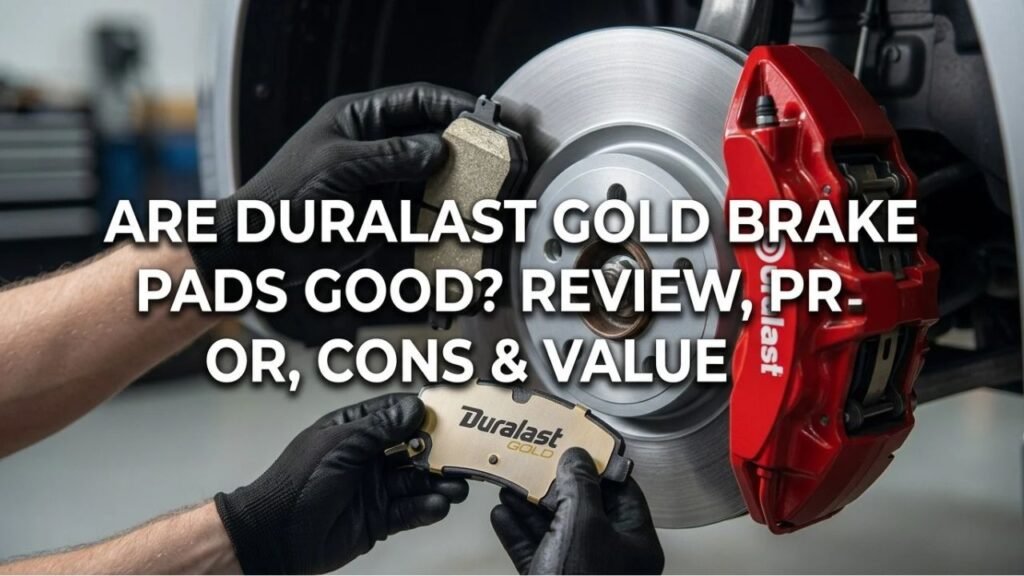
Yes. For normal commuting, highway trips, errands, and ordinary street use, Duralast Gold pads offer the features most drivers actually care about: predictable braking, noise-control hardware, OE-style fit, and readily available replacement parts.
They are not race pads, and I would not choose them simply because a vehicle sees extreme track temperatures. They are primarily street replacement pads aimed at drivers who want an upgrade from a basic economy pad without moving into a specialized motorsport setup.
Their quality also needs to be judged by the exact part number. Duralast Gold is a product family rather than one universal friction compound. A ceramic Gold pad for a sedan may behave differently from a semi-metallic Gold pad fitted to a heavier truck.
That application-specific approach is a positive point. A brake pad should match the vehicle’s original braking design rather than use one compound for every car.
What Makes Duralast Gold Brake Pads Different?
AutoZone positions Duralast Gold between the standard Duralast line and Duralast Elite. Current product information describes Gold friction formulations as meeting OEM-level targets, along with upgraded shim construction and vehicle-specific slots or chamfers.
Vehicle-Specific Friction Material
Duralast Gold pads are offered with ceramic or semi-metallic friction material, based on the application.
Ceramic compounds are common on passenger vehicles because they generally produce less visible wheel dust, run quietly, and provide smooth street braking. Semi-metallic compounds contain a higher metallic content and can provide strong bite and heat handling, though noise and dust characteristics may differ.
I would not pick ceramic merely because ceramic sounds more premium. The better choice is the pad type specified for that particular vehicle and driving pattern.
Multi-Layer Noise-Control Shims
Brake squeal often starts with vibration between the pad, caliper, rotor, and mounting surfaces. Duralast Gold sets commonly use multi-layer shims designed to damp those vibrations.
Current AutoZone listings show multi-layer pad shims, adhesive-backed shim designs on many applications, and OE-style slots or chamfers on applicable pads. Exact construction varies by part number.
A shim cannot compensate for a seized guide pin, rusty bracket, damaged rotor, or poor installation. It is one part of a quiet braking system.
Hardware on Many Applications
Many Gold sets include abutment clips or related installation hardware when required for that vehicle. Other part numbers may not include every piece.
That difference is worth checking before the brake job starts. Reusing badly corroded clips can prevent the pad from sliding freely in the bracket and may lead to tapered wear or dragging.
Key Takeaway: Duralast Gold improves on a basic replacement pad mainly through application-specific friction material, upgraded noise-control features, OE-style pad geometry, and included hardware on many fitments.
How Do Duralast Gold Brake Pads Perform?
A brake pad needs to do more than stop the car once. Street performance includes cold response, pedal feel, noise, dust, heat handling, and consistent behavior across thousands of stops.
Braking Feel and Stopping Response
Duralast Gold pads are intended to reproduce or improve the kind of response drivers expect from an OE-style replacement pad. For normal street use, that means a predictable increase in braking force as pedal pressure rises rather than an abrupt race-pad feel.
Several current AutoZone Gold listings describe the pads as direct replacements using heat-resistant OE-grade friction material. AutoZone also positions Gold above its standard Duralast line in its current comparison chart.
The pad is only one part of braking response. Tire grip, rotor condition, hydraulic pressure, ABS operation, vehicle weight, road surface, brake fluid condition, and caliper movement all affect stopping distance.
Noise
Low noise is one of the better reasons to consider Duralast Gold.
The combination of shims, chamfers, slots, and vehicle-specific friction material is intended to reduce common pad vibration. Many current Gold product pages specifically list noise reduction as a design goal.
No pad can guarantee silence in every car. Rust under the pad clips, uneven rotors, worn caliper hardware, incorrect lubrication, or poor bedding can make a quality pad squeal.
Brake Dust
Ceramic Gold pads are usually the better fit for drivers concerned about dark dust collecting on wheels. Ceramic friction compounds generally produce lighter-colored dust than many semi-metallic compounds.
Semi-metallic Gold pads may create more visible dust, but that tradeoff can accompany strong friction characteristics and heat handling.
If clean wheels are a major priority, check the exact Gold part number and confirm that it uses ceramic material.
Heat and Brake Fade
Repeated braking generates heat in the pads and rotors. As temperatures rise beyond the operating range of a friction material, braking response may fall, a condition commonly called brake fade.
Duralast Gold should handle normal street temperatures without trouble when the braking system is healthy and the pad application is correct. For repeated heavy towing, steep mountain descents, commercial use, or track sessions, a pad specifically made for that workload may be the better fit.
AutoZone currently lists a separate Duralast Severe Duty category for specialized truck and towing applications, which is a useful clue that Gold should not automatically be treated as the company’s strongest option for every heavy-load situation.
Key Takeaway: Duralast Gold is strongest as a street pad: smooth response, good noise control, reasonable dust levels, and enough heat capacity for normal driving when the rest of the brake system is in sound condition.
How Long Do Duralast Gold Brake Pads Last?
There is no reliable universal mileage figure for every Duralast Gold pad.
Brake-pad life can change dramatically with vehicle weight, city traffic, highway use, hills, towing, driving style, rotor condition, caliper operation, and front-to-rear brake balance. Two cars using similar pad material can reach very different replacement intervals.
This is why I would be cautious with any claim that a specific brake-pad line always lasts a fixed number such as 40,000, 60,000, or 80,000 miles.
A better way to judge pad life is by remaining friction-material thickness and wear condition. Uneven wear between the inner and outer pad can point to a caliper or slide-pin issue. One wheel wearing much faster than the opposite side also deserves inspection.
Watch for these signs:
- Friction material approaching the vehicle maker’s replacement limit
- Wear-indicator squeal
- Electronic brake-pad warning
- Grinding caused by exhausted friction material
- Uneven inner and outer pad thickness
- Cracks, contamination, or damaged friction material
- A caliper that keeps one pad in contact with the rotor
Pad life should never be stretched simply to get more mileage from a warranty or delay maintenance.
Duralast Gold Ceramic vs Semi-Metallic Brake Pads
Both versions can be good. Their behavior is different enough that the pad material should match the vehicle rather than personal preference alone.
| Feature | Duralast Gold Ceramic | Duralast Gold Semi-Metallic |
| Street noise | Usually low | May be more noticeable |
| Visible wheel dust | Usually lower | Often higher |
| Cold street manners | Smooth | Strong |
| Heat handling | Good for normal road use | Often suited to higher thermal load |
| Rotor wear | Usually moderate | Can be harder on rotors |
| Common use | Cars, crossovers, street SUVs | Cars, trucks, heavier applications |
| Best reason to choose | Quiet, clean daily driving | Strong bite and heat tolerance |
When Ceramic Makes More Sense
Choose the ceramic version when it is specified for the vehicle and the priorities are quiet operation, smooth street braking, and cleaner wheels.
For a typical commuter sedan or crossover, this is often the version I would look at first.
When Semi-Metallic Makes More Sense
Semi-metallic material can suit heavier vehicles or applications where heat and repeated braking place more demand on the friction material.
It may also feel a little more aggressive in some applications. More brake dust or occasional noise can be part of that tradeoff.
Key Takeaway: Ceramic Gold pads suit drivers focused on low noise and cleaner wheels, while semi-metallic Gold pads can make more sense for applications that place more thermal demand on the brakes.
Duralast vs Duralast Gold vs Duralast Elite
AutoZone currently sells several Duralast pad tiers, so Gold should be judged against the alternatives rather than viewed alone.
| Brake pad line | General position | Friction design | Noise control | Warranty |
| Duralast | Standard replacement | OES-focused | Basic OE-style features | Limited lifetime |
| Duralast Gold | Upgraded replacement | OEM-focused | 3+ layer shim design on the line comparison | Limited lifetime |
| Duralast Elite | Premium street option | Next-generation ceramic on listed applications | Premium noise and dust focus | Limited lifetime |
| Duralast Severe Duty | Specialized use | Truck/towing-focused | Application-specific | Different terms may apply |
AutoZone’s current comparison places Gold above standard Duralast for friction formulation, noise reduction, dust control, and shim construction. Elite moves farther toward low dust and longer service-life claims on supported applications. Severe Duty targets specialized truck and towing work.
Duralast Gold vs Regular Duralast
Regular Duralast is the budget-conscious choice for basic OE-style replacement work.
Gold makes more sense if the extra price is reasonable and you plan to keep the vehicle, drive frequently, or care about better noise-control hardware and application-specific friction material.
Duralast Gold vs Duralast Elite
Elite is positioned above Gold. Current AutoZone information describes Elite as using a next-generation ceramic formulation on supported applications and places it higher for dust control and service life.
That does not make Elite necessary for every car. Gold may offer the better cost-to-feature balance for a normal daily driver.
Duralast Gold vs Severe Duty
For repeated towing, hauling, fleet work, or heavier thermal loads, check Severe Duty availability before assuming Gold is the strongest Duralast option.
A daily-driven pickup that occasionally carries cargo may be perfectly suited to Gold. A truck repeatedly towing near its rated limits presents a different brake workload.
Key Takeaway: Standard Duralast targets basic replacement, Gold adds OE-focused upgrades, Elite targets premium street use, and Severe Duty is aimed at heavier truck and towing demands.
Pros and Cons of Duralast Gold Brake Pads
Duralast Gold has a sensible set of strengths, but it is not the perfect pad for every driver.
Pros
- Ceramic and semi-metallic formulations are available by application
- OE-style slots and chamfers on many sets
- Multi-layer shims aimed at reducing noise
- Hardware included on many fitments
- Protective coatings on current listed pads
- Wide availability through AutoZone
- Limited-lifetime warranty on current Gold listings
- Good fit for normal daily street use
Cons
- Usually costs more than standard Duralast
- Exact hardware and friction material vary by vehicle
- Ceramic versions are not intended to replace dedicated track compounds
- Heavy towing may call for a more specialized pad
- Brake noise can still occur if rotors, calipers, or hardware have faults
- The warranty does not make inspection and maintenance unnecessary
My view is that the Gold line makes the most sense when the price gap from the standard pad is fairly small. The upgraded construction has practical value on a car that will stay in service for several more years.
Is the Duralast Gold Limited-Lifetime Warranty Good?
Current Duralast Gold product pages list a limited-lifetime warranty.
That is a strong ownership feature, but the word “limited” matters. Warranty coverage is governed by AutoZone’s terms, proof-of-purchase records, product eligibility, and the reason the part needs replacement.
Do not treat a lifetime warranty as a reason to ignore abnormal wear. Pads destroyed by a sticking caliper, contaminated by leaking fluid, or worn unevenly because of damaged hardware point to another repair that needs attention.
I would verify the current warranty terms at the time of purchase, since retailer policies can change.
Who Should Buy Duralast Gold Brake Pads?
Duralast Gold is a sensible match for many drivers, especially those replacing factory-style brakes on a street vehicle.
Daily Commuters
A commuter car spends most of its braking time at normal road temperatures. Quiet operation, smooth pedal response, and reasonable dust matter more than track-temperature capability.
Gold ceramic pads fit that type of use well when listed for the vehicle.
Family Cars, Crossovers, and SUVs
These vehicles can benefit from the stronger noise-control construction and application-specific friction material without requiring an aggressive specialty pad.
Inspect the rotor and caliper carefully during installation, since heavier vehicles can expose rotor and hardware problems quickly.
Drivers Planning to Keep the Vehicle
The upgrade makes more sense on a car you expect to drive for years rather than a vehicle being sold soon.
The added cost may be easier to justify when you also care about noise, wheel cleanliness, and warranty coverage.
Key Takeaway: Duralast Gold fits ordinary street vehicles best, especially for drivers who want a step above basic replacement pads without moving into a specialty braking compound.
When Should You Skip Duralast Gold?
A good street pad is not automatically the best pad for every situation.
Skip or reconsider Gold if the vehicle is used mainly for:
- Track days
- Repeated high-speed braking
- Commercial fleet duty
- Frequent heavy towing
- Extreme mountain descents with heavy loads
- Competition driving
For those conditions, choose friction material specifically rated for the expected heat range and workload.
You should also delay buying any new pad until the cause of abnormal wear is found. If one pad is worn to the backing plate while the opposite pad still has substantial material, a sticking caliper, seized slide pin, hose fault, or bracket problem may be present.
Installation Quality Matters as Much as Pad Choice
Even a high-quality brake pad can perform badly if installed against damaged components.
Inspect the Rotors
Check both rotor faces for deep scoring, cracks, severe rust, thickness variation, heat spots, and minimum-thickness limits.
A rough or badly worn rotor can shorten new-pad life and create vibration or noise.
Check Caliper Movement
Guide pins should move correctly according to the vehicle’s service procedure. Pad ears should fit in clean mounting surfaces without binding.
A sticking caliper can overheat a new Gold pad quickly.
Use the Correct Hardware and Lubricant
Replace damaged or heavily corroded pad clips. Apply only the brake lubricant specified for the required contact points.
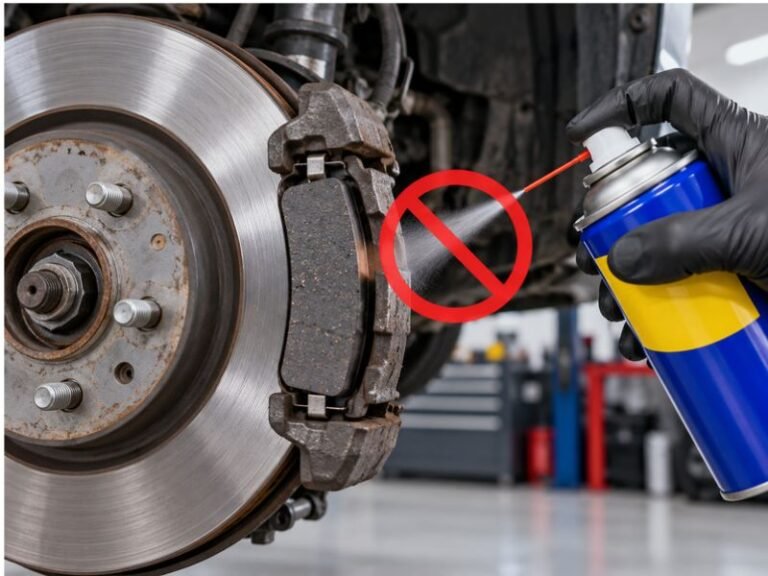
Never put lubricant on the pad friction surface or rotor face.
Follow the Correct Break-In Procedure
Some brake manufacturers specify a bedding procedure after installation. Follow the instructions supplied for the pad and vehicle rather than using a generic aggressive braking routine.
Proper mating between the new pad and rotor surface can reduce noise and produce more consistent braking.
Safety Tip: If you are not comfortable lifting the vehicle, supporting it on rated jack stands, servicing calipers, or confirming rotor condition, have the brake work performed by a qualified repair shop.
Key Takeaway: Pad quality cannot correct damaged rotors, sticking calipers, contaminated friction surfaces, or poor installation. Inspect the complete brake assembly during every pad replacement.
Conclusion
For normal street use, the answer to are Duralast Gold brake pads good is yes. They sit in a sensible middle position between AutoZone’s basic Duralast pads and its higher-tier or specialized options, with application-specific friction material, multi-layer shims, and OE-style design features.
Ceramic Gold pads are a strong fit for drivers who prioritize quiet braking and lower visible dust. Semi-metallic versions can suit applications that place more heat into the brakes. Pad life has no fixed mileage because vehicle weight, traffic, hills, towing, rotors, calipers, and driving habits all change wear rates.
I would choose Duralast Gold for a normal daily driver when the price difference from a basic pad is reasonable. For frequent heavy towing, repeated track use, or unusual thermal loads, I would move to a pad specifically intended for that job.
The final check should always include the rotors, caliper movement, hardware, and exact vehicle fitment. Good pads installed on a faulty brake assembly will still give poor results.
FAQs About Duralast Gold Brake Pads
Are Duralast Gold Brake Pads Better Than Regular Duralast?
Yes, Gold is positioned above the standard Duralast line. Current AutoZone information lists upgraded friction formulation, more extensive shim construction, better noise control, and hardware on supported applications.
Regular Duralast can still suit a budget-focused daily driver. Gold makes more sense for drivers willing to pay extra for added noise control and an OEM-focused friction design.
Are Duralast Gold Brake Pads Ceramic?
Some are ceramic and some are semi-metallic. The correct material varies by vehicle and part number.
Do not assume every Gold box contains the same compound. Check the product specifications for your exact year, make, model, axle position, and brake package before purchasing.
Do Duralast Gold Brake Pads Make a Lot of Dust?
Ceramic Gold pads generally produce less visible dark wheel dust than many semi-metallic formulations. Semi-metallic versions may leave more visible residue.
Rotor condition, driving style, brake temperature, and friction formulation all affect dust output, so two different Gold applications may not produce identical results.
Are Duralast Gold Brake Pads Quiet?
They are designed with noise reduction in mind. Many sets use multi-layer shims plus application-specific slots and chamfers.
Squealing can still come from rusted hardware, glazed rotors, seized caliper parts, contamination, poor bedding, or vibration elsewhere in the brake assembly. A noisy new pad does not automatically mean the friction material is defective.
Are Duralast Gold Brake Pads Good for Towing?
They may work for occasional towing if they are the specified fitment and the vehicle remains within its rated limits. Frequent heavy towing creates more brake heat, so a truck- or towing-specific friction compound may be the smarter choice.
AutoZone currently offers a separate Severe Duty category for specialized truck and towing applications.
Are Duralast Gold Brake Pads Good for Track Use?
They are primarily street replacement pads, not dedicated track compounds. Repeated high-speed stops can generate temperatures far above normal commuting conditions.
For regular track driving, use a pad with a manufacturer-rated temperature range and friction characteristics suited to that type of braking.
Are Duralast Gold Brake Pads Worth the Money?
For many daily drivers, yes. The upgrade can make sense if you want better noise-control construction, vehicle-specific friction material, broad availability, and limited-lifetime warranty coverage.
If the vehicle sees light use and the standard Duralast pad already matches the required specification, paying extra may provide less noticeable benefit. The condition of the rotors, calipers, and hardware still has a major effect on the final result.