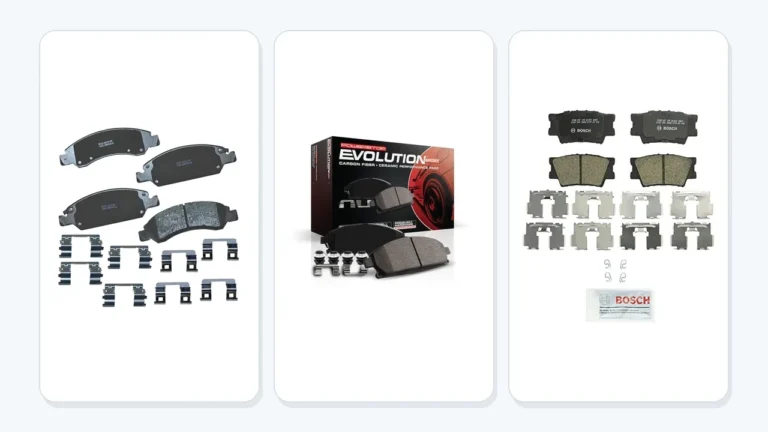
5 Best Bendix Brake Pads: Honest Picks for Cars, SUVs and Trucks
As an Amazon Associate, we earn from qualifying purchases made through links in this post, at no extra cost to you.
Buying the wrong brake pads can leave you with poor fitment, extra noise, or a brake job that has to be taken apart and redone. A pad that looks close in a photo may still have the wrong shape for your caliper, and a missed application note can waste both money and a Saturday in the driveway.
The first thing to check is fitment, not the brand name on the box. Brake pads are shaped for a particular caliper, axle, and vehicle application, while the friction material affects dust, noise, heat handling, and pedal feel.
Here is what this guide will help you sort out:
- Match the pad to your exact vehicle, year, trim, and axle.
- Understand what ceramic material changes during daily driving.
- Know which signs mean the rotors or hardware also need attention.
- Install, bed, clean, and store replacement pads with fewer surprises.
Quick Picks
-
Best For Large GM Vehicles

Bendix Premium SBC1363 Ceramic Front Brake Pads
Ceramic construction and broad GM fitment help deliver consistent braking for Escalade, Silverado, Tahoe, and Yukon drivers.
-
Best For Cleaner Daily Driving

Bendix Premium SBC2173 Ceramic Front Brake Pads
Low-dust ceramic material helps reduce wheel buildup and noise for newer select Chevrolet, GMC, and Cadillac vehicles.
Top 5 Bendix Brake Pads at a Glance
The first two choices focus on front pads for larger GM vehicles, with the main difference being vehicle generation and application range. The remaining choices cover specific rear Nissan and Infiniti fitment, older Honda and Acura cars, and newer Subaru vehicles, so your vehicle details decide the correct starting point more than rank alone.
| Product image | Product name | Check product |
|---|---|---|
| 1 |
Bendix Premium SBC1363 Ceramic Front Brake Pads | Check Price |
| 2 |
Bendix Premium SBC2173 Ceramic Front Brake Pads | Check Price |
3 |
Bendix Premium SBC1415 Ceramic Rear Brake Pads | Check Price |
4 |
Bendix Premium SBC465AK2 Ceramic Front Brake Pads | Check Price |
5 |
Bendix Priority1 CFC2045 Ceramic Front Brake Pads | Check Price |
5 Best Bendix Brake Pads: Detailed Reviews
When I chose the best bendix brake pads, I paid attention to vehicle coverage, front or rear axle position, ceramic friction material, OE-specification fit, and the kind of driving each pad is meant to handle. Those details help prevent the two common brake-buying headaches: ordering the wrong shape and expecting a daily-driver pad to behave like a heavy-duty race part.
The group covers large SUVs and trucks, newer GM vehicles, Nissan and Infiniti rear applications, older Honda and Acura cars, and newer Subaru models. Looking at them side by side makes the important question easier: which exact application matches your vehicle, and which material traits matter for your roads, load, and tolerance for wheel dust?
1. Bendix Premium SBC1363 Ceramic Front Brake Pads
Ceramic construction and broad GM fitment help deliver consistent braking for Escalade, Silverado, Tahoe, and Yukon drivers.
- ColorMetallic
- Size1 Count (Pack of 1)
- Release Date2017-08-07T00:00:01Z
- Number Of Items1
Bendix SBC1363 is a front ceramic brake pad set for drivers of many large Cadillac, Chevrolet, and GMC vehicles who want an OE-style replacement.
Ceramic material for routine braking
Ceramic friction material is a pad compound designed to create stopping force against the rotor while generally keeping dust and noise manageable. Bendix describes the SBC1363 as a ceramic pad designed to reduce brake fade and provide consistent braking performance.
In daily driving, consistent friction means the pedal response should feel more predictable during traffic stops and repeated slowing. That matters in a large Escalade, Silverado, Tahoe, Yukon, or similar vehicle, where vehicle weight can make weak or inconsistent braking feel especially uncomfortable.
The SBC1363 also uses material described as resistant to wear and corrosion. That does not give a guaranteed service interval, since pad life depends on traffic, loads, terrain, and driving habits, but the feature points toward a pad intended for regular road use rather than a short-lived stopgap.
OE-style fit for broad GM coverage
An OE replacement is made to match the fit, form, and function expected from the original equipment application. The SBC1363 lists OEM equivalent part number 22742382 and covers many GM applications across several years.
That broad application list is useful if you own a large GM vehicle, but it also creates a reason to slow down before ordering. Escalade, Silverado, Suburban, Tahoe, Sierra, Yukon, Savana, and related vehicles can have different brake configurations, so the exact year, trim, axle, and fitment notes still matter.
The biggest limitation is that a broad vehicle list is not the same as universal fit. Check the vehicle confirmation result and any qualifier notes before purchase, especially if the vehicle has changed wheels, calipers, or brake hardware.
Pros:
- Ceramic material, supports consistent everyday braking
- OE-specification design, helps match the original application
- Broad GM coverage, suits many large SUVs and trucks
- Wear and corrosion resistance, supports regular road use
- Front application, makes axle position clear before ordering
Cons:
- Broad fitment list requires careful year and trim checking
- Listed as one count, so confirm package quantity for the axle
- Designed for road use, not a promise of specialty track performance
Buy it if: you drive a listed large GM vehicle, because the ceramic material and OE-style application are suited to predictable daily braking.
Skip it if: you need rear pads or drive a vehicle outside the listed GM applications, because a correctly shaped axle-specific pad would suit you better. For another fit, consider Bendix Premium SBC2173 Ceramic Front Brake or Bendix Premium SBC1415 Ceramic Rear Brake.
I’d pick the Bendix SBC1363 first for a large GM vehicle that matches the application notes. The combination of ceramic material, OE-equivalent part information, and wide GM coverage gives a beginner useful starting points instead of a vague universal claim. I would double-check the exact front-axle fit and package quantity before paying.
This Bendix brake pad is best for a compatible Escalade, Silverado, Suburban, Tahoe, Sierra, Savana, or Yukon used mainly on public roads.
2. Bendix Premium SBC2173 Ceramic Front Brake Pads
Low-dust ceramic material helps reduce wheel buildup and noise for newer select Chevrolet, GMC, and Cadillac vehicles.
- ColorMetallic
- Number Of Items1
- WeightNot listed; check details
- DimensionsNot listed; check details
Bendix SBC2173 is a front ceramic brake pad for select newer Cadillac, Chevrolet, and GMC vehicles, especially drivers who care about lower dust and quieter everyday stops.
Low-dust ceramic construction
The SBC2173 uses low-dust ceramic technology, meaning the friction compound is intended to leave less visible residue on the wheels than conventional brake pad materials. The same feature is also described as helping reduce noise while providing smooth braking performance.
Less wheel buildup can make routine cleaning easier, particularly on vehicles with bright alloy wheels. Reduced dust is not the same as zero dust, and noise can also depend on rotor condition, installation, hardware, temperature, and the vehicle itself.
For a daily commuter, the value is simple: smooth stops and cleaner-looking wheels without choosing a pad based only on a catchy label. The pad is also described as helping maintain braking response and reduce fade during ordinary driving.
Fit for select newer GM vehicles
The SBC2173 is engineered to OE specifications, which means the design is intended to match the original application in fit, form, and function. The listed vehicles include select Escalade, Escalade ESV, Silverado 1500, Suburban, Tahoe, Sierra 1500, Yukon, and Yukon XL applications.
The word “select” deserves attention here. A 2019 Silverado may not share the same brake setup as every other 2019 Silverado, so a vehicle confirmation tool and its qualifier notes are more useful than guessing from the year alone.
One trade-off is the narrow need for exact fitment. If the vehicle is an older GM generation or has a different rear application, the SBC2173 may not be the right shape even though the brand and vehicle name look familiar.
Pros:
- Low-dust ceramic formula, helps keep wheels cleaner
- Noise-reduction design, supports quieter daily stops
- OE-specification fit, follows the original application
- Fade-reduction design, supports repeated routine braking
- Select GM coverage, targets newer vehicle applications
Cons:
- Select fitment requires exact vehicle confirmation
- Front pads do not replace rear axle pads
- Lower dust does not mean completely dust-free wheels
Buy it if: you own a matching newer GM vehicle, because the ceramic formula targets lower dust, less noise, and smooth commuter braking.
Skip it if: your vehicle application is older or uncertain, because a pad matched to the exact caliper and axle would suit you better. Bendix Premium SBC1363 Ceramic Front Brake and Bendix Premium SBC1415 Ceramic Rear Brake are worth a closer look instead.
I’d choose the Bendix SBC2173 when clean wheels and quiet everyday operation matter as much as basic replacement fit. The low-dust ceramic description gives this pad a clear purpose, while the OE-specification design keeps the choice grounded in the original application. Check the exact vehicle qualifier notes and front-axle position before ordering.
This Bendix brake pad fits best for a newer compatible GM vehicle used for commuting, errands, and normal highway travel.
3. Bendix Premium SBC1415 Ceramic Rear Brake Pads
The catalog lists DIRECT OE REPLACEMENT – Bendix Premium Ceramic Brake Pads are engineered to OE specifications for precise fit. Compare fit and care needs before choosing.
- ColorMetallic
- SizeSBC1415
- Release Date2017-08-07T00:00:01Z
- Number Of Items1
Bendix SBC1415 is a rear ceramic brake pad for select Nissan and Infiniti vehicles, making the pad a sensible place to look when the rear axle needs service.
Rear-axle fit matters
A rear brake pad works inside the rear caliper and must match the rear brake hardware, so front and rear pads are not interchangeable. The SBC1415 is listed for select Infiniti Q50, Q60, QX50, QX60, QX70, and several Nissan applications, including Altima, LEAF, Maxima, Murano, Pathfinder, Rogue, Sentra, 370Z, and Z.
That range covers very different vehicle types, from compact cars to crossovers and sports-oriented models. The benefit is useful coverage within the listed applications, but the range also makes exact confirmation essential because trim, year, and brake package can change the required shape.
A rear pad replacement can affect the parking brake setup on some vehicles, so a beginner should identify the caliper arrangement and follow the vehicle service procedure rather than treating every rear brake job like a simple front-pad swap.
Ceramic material for smoother road use
The SBC1415 uses ceramic brake pad material, a friction compound intended to provide smooth braking while reducing dust and noise compared with conventional materials. Bendix also describes consistent stopping performance and reduced fade for everyday driving.
That can make the pad appealing for a commuter who wants predictable rear braking and less wheel residue. Ceramic material does not repair a worn rotor, seized caliper, damaged hose, or faulty parking brake mechanism, so related hardware still deserves inspection.
The main watch point is application accuracy. A Nissan Rogue and a Nissan 370Z have different driving roles and brake layouts, so the vehicle confirmation result must match the exact year and configuration.
Pros:
- Rear ceramic application, targets the correct axle position
- Low-dust material, helps reduce visible wheel residue
- Noise-reduction design, supports calmer daily driving
- Broad Nissan and Infiniti coverage, serves many listed applications
- OE-specification engineering, supports original-style fit
Cons:
- Rear installation can involve parking brake hardware
- Wide application range makes exact fitment especially important
- One listed item may not equal a complete vehicle axle set
Buy it if: your listed Nissan or Infiniti needs rear pads, because the ceramic compound and rear-specific application support smooth daily braking.
Skip it if: you are replacing front pads or cannot confirm the exact Nissan or Infiniti application, because an axle-matched pad would suit you better. If those trade-offs rule it out, Bendix Premium SBC1363 Ceramic Front Brake or Bendix Premium SBC2173 Ceramic Front Brake may suit you better.
The Bendix SBC1415 earns its place because the rear application is clearly separated from the front choices, which prevents a common ordering mistake. I also like the practical mix of ceramic material, low-dust intent, and broad Nissan and Infiniti coverage. Check the rear brake design, vehicle year, and package quantity before starting the job.
This Bendix brake pad is a good match for a compatible Nissan or Infiniti used mainly for ordinary road driving.
4. Bendix Premium SBC465AK2 Ceramic Front Brake Pads
The catalog lists OE REPLACEMENT: Designed and engineered to OE specifications for fit, form, and function. Compare fit and care needs before choosing.
- ColorMetallic
- Release Date2017-08-07T00:00:01Z
- Number Of Items1
- DURABLE MATERIALManufactured using high-quality materials, these brake pads are resistant to wear and corrosion, extending their li
Bendix SBC465AK2 is a front ceramic brake pad for select Acura EL, Honda Civic, and Honda Insight vehicles, including many older compact-car applications.
Older vehicle coverage
The SBC465AK2 is listed for Acura EL models from 1997 through 2005, Honda Civic models from 1996 through 2011, and Honda Insight models from 2010 through 2014. That makes the application useful for owners keeping an older compact car on the road.
An older vehicle may have several possible brake configurations after years of repairs or trim changes. Confirm the exact vehicle details before ordering, and compare the shape of the removed pad only as a secondary check, not as a substitute for fitment information.
For a commuter, a correctly fitted ceramic pad can offer smooth braking and a cleaner wheel area than some conventional friction materials. The pad cannot compensate for a deeply scored rotor, a leaking caliper, or frozen slide pins.
Ceramic friction for daily commuting
Friction material is the part of the pad that presses against the rotor to slow the wheel. Bendix describes this pad as ceramic and designed to reduce brake fade while providing consistent braking performance.
In practical terms, consistent friction helps the brake pedal feel more predictable during repeated stops. That is helpful in city traffic, where a small car may brake often and where noise or excessive dust can become annoying quickly.
The limitation is the age range of many listed vehicles. A replacement brake job on an older Civic or Insight may reveal worn shims, rusty clips, uneven rotor wear, or stuck caliper slides, so plan to inspect the surrounding parts instead of changing pads blindly.
Pros:
- Front ceramic application, suits listed compact vehicles
- Wide Civic year range, helps support older commuter cars
- OE-specification design, aims for original-style fit
- Fade-reduction design, supports repeated traffic stops
- Industry-tested reliability claim, suits daily commute use
Cons:
- Older vehicles may need additional hardware inspection
- Exact trim and brake setup still require confirmation
- Ceramic pads do not correct rotor or caliper problems
Buy it if: you own a compatible Acura EL, Honda Civic, or Honda Insight, because the front ceramic design suits routine commuting.
Skip it if: your compact car has a different brake configuration or needs rear pads, because a confirmed axle-specific replacement would suit you better.
I’d consider the Bendix SBC465AK2 a practical choice for keeping a compatible older Honda or Acura moving without overcomplicating the pad decision. The useful part is the clear vehicle-year coverage paired with ceramic material and OE-style fit. Double-check the exact application and inspect the old hardware before assuming the pads are the only needed parts.
This Bendix brake pad suits an older compact commuter whose front fit is confirmed.
5. Bendix Priority1 CFC2045 Ceramic Front Brake Pads
The catalog lists OE REPLACEMENT: Designed and engineered to OE specifications for fit, form, and function. Compare fit and care needs before choosing.
- ColorMetallic
- Size1 Count
- Number Of Items1
- WeightNot listed; check details
Bendix Priority1 CFC2045 is a front ceramic brake pad for select Subaru Crosstrek, Forester, Impreza, Legacy, and Outback vehicles from the listed model years.
Friction material for heat and load
The CFC2045 uses advanced friction materials, which are designed to keep producing stopping force during higher temperatures and heavier loads. The listing connects that material with reduced fade and consistent braking performance.
That can matter for a Subaru used on hills, longer trips, winter roads, or with a full cabin and cargo area. It does not mean every driver will receive the same stopping distance, since tires, rotors, weather, road surface, vehicle weight, and brake condition also affect the result.
For a beginner, the simple takeaway is that the pad is aimed at steady road braking rather than a cosmetic upgrade. The material is a reason to consider the pad for normal commuting and occasional heavier use, provided the fit is correct.
Subaru application range
The CFC2045 is listed for Crosstrek models from 2018 through 2023, Forester from 2019 through 2023, Impreza from 2017 through 2022, Legacy from 2020 through 2023, and Outback from 2020 through 2023. The pad is described as an OE replacement designed for fit, form, and function.
The application list is helpful, but a model name and year still do not guarantee the same brake hardware across every trim. Confirm the vehicle details before ordering, especially if the car has a different wheel package or previous brake work.
One limitation is that the supplied size information only says “1 Count,” so verify the package contents and whether the purchase covers the number of pads needed for the axle.
Pros:
- Advanced friction material, supports braking under higher heat
- Front Subaru coverage, targets several recent applications
- Fade-reduction design, helps during repeated slowing
- OE-specification replacement, supports original-style fit
- Daily-commute focus, suits normal road use
Cons:
- Exact Subaru trim and year still require confirmation
- Listed one-count size needs package-quantity checking
- Friction material cannot overcome worn rotors or tires
Buy it if: you drive a listed Subaru, because the advanced friction material is intended to support consistent braking under heat and load.
Skip it if: you need rear pads or your Subaru trim does not confirm the application, because a matched axle-specific pad would suit you better.
The Bendix Priority1 CFC2045 makes the most sense for a compatible Subaru owner who regularly deals with hills, passengers, cargo, or repeated stops. Its advanced friction description gives the pad a useful role beyond simply being a replacement part. Verify the exact trim and package quantity before buying, then inspect the rotor and caliper during installation.
This Bendix brake pad is best for a confirmed Subaru front application used in everyday driving with occasional heavier loads.
How to Choose the Best Bendix Brake Pads
The best bendix brake pads are the ones that match your exact vehicle, axle, and brake hardware before material preferences enter the discussion. Start with the vehicle confirmation details, then weigh ceramic dust and noise traits, driving conditions, rotor condition, and the number of pads in the package.
Start with the exact vehicle
A brake pad application is tied to the vehicle year, make, model, trim, and brake setup. Enter all of those details into the fitment checker, read every qualifier note, and do not rely on a broad title such as “Silverado” or “Civic.”
A blue information symbol or similar note may point out a brake-package difference. Treat that note as part of the fitment information, not as optional fine print.
The safest sign is a confirmed application that names your exact vehicle details. If the result is uncertain, pause the order and compare the old pad, caliper, and service information with a qualified parts professional.
Check front versus rear
Front and rear brake pads can have different shapes, backing plates, friction areas, and hardware. A front listing cannot be used as a rear replacement simply because both pads carry the same brand name.
Look for “front” or “rear” in the title and product details. If the listing does not make the axle clear, treat that as a reason to verify before purchasing.
This distinction also helps explain why the SBC1415 belongs in a different buying conversation from the front GM, Honda, and Subaru choices. The axle location is a fitment fact, not a ranking preference.
Understand ceramic friction material
Ceramic brake pads use a friction compound intended to provide smooth braking with manageable dust and noise for road use. They can be appealing for commuters who dislike dark wheel residue or squeaking, though no pad guarantees silent or dust-free operation in every vehicle.
Look for a clear statement about ceramic material, fade behavior, and the intended driving conditions. A daily commuter usually needs predictable friction and correct fit more than an aggressive competition compound.
If you tow, carry heavy loads, descend long grades, or drive in severe conditions, ask whether the specific application and the rest of the brake system suit that work. The pad alone does not determine the whole vehicle’s braking ability.
Inspect the rotors and hardware
The rotor is the flat metal disc the pad grips, while caliper hardware holds and guides the pad. New pads cannot produce a good result if the rotor is badly scored, below its service limit, warped, or coated with contamination.
Look for deep grooves, blue heat marks, heavy rust, uneven wear, or a large ridge at the rotor edge. Check slide pins, clips, shims, and the caliper piston for free movement according to the vehicle service procedure.
A pad replacement may be the right repair, but a full brake inspection tells you whether the pads are only part of the job. This is also where best OEM replacement brake pads can help a shopper understand how original-style fit differs from a generic low-cost choice.
Confirm package quantity
A brake job normally involves multiple pads on one axle, while a listing may describe the size as one count or one item. Never assume a single listed item equals a complete front or rear axle set.
Check the package contents and compare the quantity with the number of pads your vehicle requires. If the details are unclear, ask the seller or parts counter before beginning the repair.
This small check prevents the frustrating situation of removing a wheel and finding that another pad is still missing. It also keeps the car from sitting unfinished while you wait for another package.
Match the pad to your driving
Daily commuting, highway travel, hills, towing, stop-and-go traffic, and occasional heavy loads place different demands on brakes. A ceramic road pad can be a sensible choice for normal driving, while severe use deserves closer attention to the entire braking system.
Look for a pad whose stated application and material fit your real driving rather than the most dramatic wording on the package. If your vehicle carries passengers or cargo often, pay attention to heat and fade language without treating those claims as a guarantee of a particular stopping distance.
A budget search can still be sensible if fitment and material are clear. The guide to best budget brake pads is useful for separating a lower purchase price from shortcuts that can create more work later.
How to Use Bendix Brake Pads for the Best Results
Good brake-pad results depend on correct installation, clean contact surfaces, and a gradual bedding process. Use the vehicle service procedure, protect the hydraulic system, and never drive until the pedal feels firm.
- Park on a stable, level surface and secure the vehicle with the correct jack stands.
- Confirm that the replacement pad shape, axle position, and hardware match before removing the old parts.
- Photograph the old hardware if the arrangement is unfamiliar, then keep each clip and shim organized.
- Clean the caliper contact points and remove loose rust without contaminating the friction surfaces.
- Inspect the rotor, caliper slides, piston, brake hose, and parking brake mechanism before fitting the new pads.
- Install the pads and hardware in the correct orientation, following the vehicle procedure rather than guessing from memory.
- Reinstall the wheel, tighten the lug nuts in the correct pattern, and lower the vehicle safely.
- Press the brake pedal several times until the pedal is firm before moving the vehicle.
- Perform a slow private-area check for pedal feel, then follow a gradual bedding procedure suitable for the pad and vehicle.
- Avoid hard stops, long dragging pressure, and unnecessary emergency braking during the early bedding period.
A firm pedal before driving is non-negotiable. If the pedal stays soft, sinks, pulls sharply, or produces a serious warning, stop and have the brake system inspected.
How to Make Your Bendix Brake Pads Last Longer
Brake-pad life improves when the pads make even contact, the caliper moves freely, and the driver avoids unnecessary heat. Inspect the brakes at tire rotations or routine service, and respond to changes before friction material becomes dangerously thin.
Keep the rotor and pad surfaces free from grease, oil, and brake fluid. A small amount of contamination can change friction and create noise, while cleaning the wheel does not fix contamination on the braking surface.
Use the correct brake lubricant only on the approved metal contact points, never on the friction face or rotor. Too much lubricant can migrate where it does not belong and create a serious braking problem.
Watch for grinding, a sharp pull, vibration, burning odor, repeated squealing, or a warning light. Some noise can come from hardware or surface conditions, so do not silence a symptom without finding the cause.
Avoid resting your foot on the brake pedal during long downhill drives. Use the vehicle’s appropriate lower gear or hill-control feature when available, and leave enough space to brake smoothly instead of repeatedly making hard stops.
If the vehicle sits for long periods, inspect for rust and sticking parts before a long trip. Coastal air, winter road salt, standing water, and infrequent driving can affect calipers, clips, rotors, and pad movement.
Common Mistakes to Avoid When Buying and Using Bendix Brake Pads
Most brake-pad problems start with a fitment assumption or an installation shortcut. The fixes are simple: verify the application, inspect the whole brake corner, and follow the vehicle procedure.
- Choosing by vehicle name alone: Different trims can use different brake hardware. Enter the full year, make, model, and configuration.
- Mixing front and rear applications: The axles often use different pad shapes. Buy only the axle-specific part confirmed for your vehicle.
- Assuming one count is a complete axle set: A one-count listing may not supply every pad required. Confirm the package quantity before disassembly.
- Replacing pads on damaged rotors: New friction material cannot correct severe grooves or uneven rotor wear. Measure or inspect the rotor as required.
- Reusing damaged clips and shims: Rusty or distorted hardware can stop the pad from moving correctly. Replace hardware when the service procedure calls for it.
- Skipping the firm-pedal check: The vehicle may not have full hydraulic pressure after the work. Pump the pedal until firm before moving.
- Bedding with repeated hard stops: Excess heat can hurt the early contact surfaces. Use a gradual bedding process and allow cooling between stops.
A lower-cost pad can be reasonable when the fit, material, and package details are clear. A bargain that requires another repair or does not fit the caliper is not a bargain at all.
How to Set Up Bendix Brake Pads
Brake-pad replacement is a mechanical repair, not a simple snap-in accessory. The exact procedure varies by vehicle, but the sequence below highlights the points that commonly trip up beginners.
- Read the vehicle procedure first. Find the correct front or rear process, especially if the rear caliper includes a parking brake mechanism.
- Gather safe support equipment. Use a level surface, wheel chocks, jack stands, eye protection, and the correct hand tools.
- Confirm the new pads before removal. Compare the shape, backing plate, wear feature, and hardware with the old parts.
- Remove the wheel and inspect the brake corner. Look for leaks, damaged hoses, uneven pad wear, loose hardware, and rotor damage.
- Retract the piston correctly. Some rear systems need a special turning or electronic service procedure, so never force the piston straight back without checking.
- Clean and prepare contact points. Remove loose rust from the bracket and keep grease, cleaner, and fingerprints away from the friction surfaces.
- Install pads and clips in the proper direction. The stumbling point is often a misplaced inner or outer pad, so follow the diagram or service instructions.
- Reassemble and check operation. Tighten fasteners and lug nuts correctly, press the pedal until firm, and perform a careful low-speed check before normal driving.
If any step feels uncertain, stop before driving. Brake work is not the place to improvise around a stuck piston, damaged hose, missing clip, or unclear parking brake procedure.
Common Questions About Bendix Brake Pads
Are Bendix brake pads good for daily driving?
Bendix brake pads can suit daily driving when the specific pad matches the vehicle and axle. The listed choices use ceramic material and describe consistent braking, fade reduction, or daily-commute suitability. Actual results also depend on rotor condition, caliper movement, tires, road conditions, vehicle load, and correct installation.
How much do Bendix brake pads cost?
The purchase cost varies by application, axle, vehicle, and package contents, so a single price range would be misleading. Compare the cost of the complete axle quantity, required hardware, and possible rotor service rather than judging one pad listing alone. Confirming fit before buying also helps avoid paying for a return or second order.
Do ceramic brake pads make less dust?
Ceramic brake pads are generally designed to reduce visible dust compared with some conventional friction materials, and several Bendix listings describe lower dust or cleaner wheels. They can still create dust, and rotor condition, driving style, wheel finish, weather, and the vehicle’s brake system affect what you see.
How do I know which Bendix pad fits my vehicle?
Use the full vehicle details in the fitment checker, then read every qualifier note before ordering. Confirm the year, make, model, trim, front or rear axle, and brake configuration. A broad vehicle list is only a starting point, because one name can cover several brake setups.
Do new brake pads need to be bedded?
New brake pads usually benefit from a gradual bedding process that helps the pad and rotor develop even contact. Follow the vehicle or pad instructions, avoid repeated hard stops at the start, and allow cooling between moderate stops. If the pedal feels soft or the vehicle pulls, stop and inspect the system.
Should I replace rotors with Bendix brake pads?
Rotors do not automatically need replacement with every pad change, but they should be inspected for deep grooves, uneven wear, heat damage, corrosion, thickness concerns, and surface problems. A new pad cannot correct a rotor that is outside service limits. Follow the vehicle service requirements or have a qualified brake technician evaluate the parts.
Make the Fitment Check Your Next Brake Step
The practical next step is to enter your exact vehicle details, confirm front or rear application, read the qualifier notes, and check the package quantity before ordering. Once the fit is confirmed, inspect the rotors and caliper hardware so the new Bendix brake pads are replacing worn friction material rather than hiding a larger brake problem.