What Causes a Brake Booster to Go Bad? 8 Common Reasons
A brake booster can start failing without making the brakes completely stop working. The first thing many drivers notice is that the brake pedal suddenly feels much harder than normal, especially when slowing down at low speed or making an emergency stop.
The brake booster reduces the amount of force you need to apply with your foot. When that assist disappears, the hydraulic brakes may still work, but you have to press the pedal much harder to create the same stopping force.
One mistake I often see is a hard pedal being blamed immediately on the master cylinder. In reality, the problem may come from a cracked vacuum hose, failed check valve, damaged booster diaphragm, or weak vacuum pump.
So, what causes a brake booster to go bad? The answer usually comes down to vacuum loss, internal wear, contamination, incorrect adjustment, or physical damage. Understanding the cause helps you avoid replacing an expensive booster when a much smaller component is actually responsible.
How a Brake Booster Works
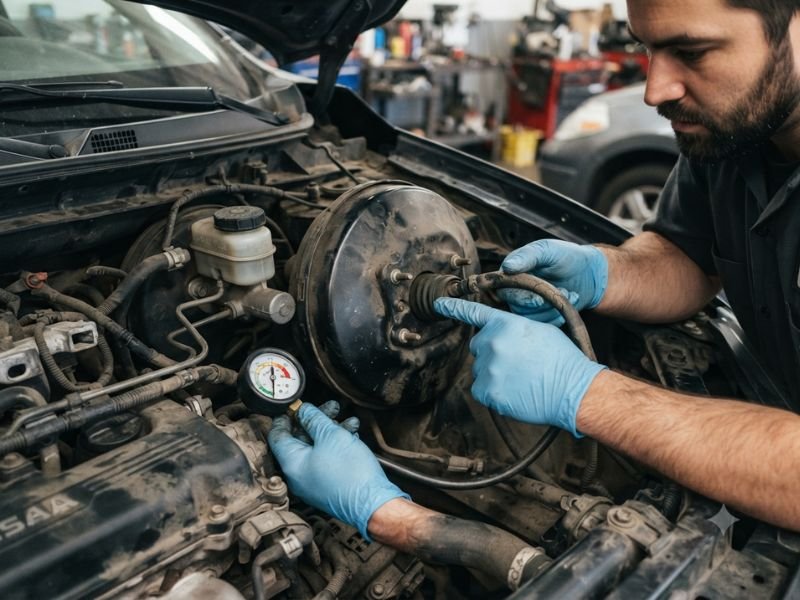
Most conventional passenger vehicles use a vacuum brake booster mounted between the brake pedal linkage and the master cylinder.
When you press the pedal, the booster uses a difference in air pressure across an internal diaphragm to multiply the force from your foot. That extra force pushes the master cylinder piston, which then creates hydraulic pressure in the brake lines.
The main parts involved include:
- brake booster
- vacuum hose
- one-way check valve
- diaphragm
- pushrod
- master cylinder
- engine vacuum source or vacuum pump
The booster does not create hydraulic braking pressure by itself. It simply makes it easier for you to press the master cylinder hard enough.
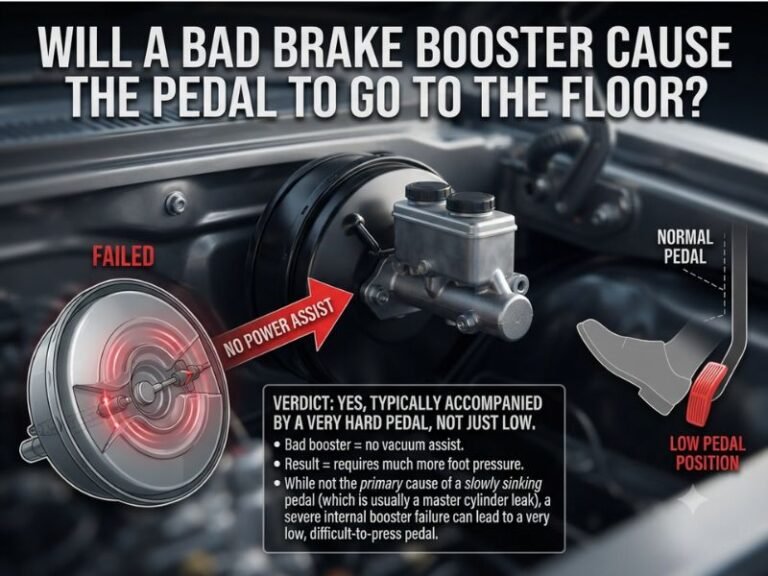
That distinction matters because a failed booster normally causes a hard pedal, while many hydraulic failures cause a soft, sinking, or spongy pedal.
What Causes a Brake Booster to Go Bad?
Several faults can reduce or completely eliminate brake assist.
1. Torn or Leaking Booster Diaphragm
Inside a vacuum brake booster is a large flexible diaphragm.
That diaphragm must hold vacuum on one side while atmospheric pressure is introduced on the other side when you press the brake pedal.
As the vehicle ages, the diaphragm can become brittle, cracked, or torn.
Once it leaks, the booster can no longer maintain the pressure difference needed to provide normal assistance.
You may notice:
- a hard brake pedal
- hissing near the pedal or firewall
- reduced brake assist
- engine idle changes when pressing the brake
An internal diaphragm failure usually means the booster itself needs replacement.
2. Cracked or Loose Vacuum Hose
The booster may be perfectly good while the hose feeding it vacuum is not.
A large vacuum hose normally connects the booster to the intake manifold or another vacuum source. Over time, heat from the engine bay can make the hose hard, brittle, or cracked.
A loose clamp or damaged fitting can also allow air to enter.
If enough vacuum leaks away, the booster may feel weak or completely inactive.
Before replacing a booster, you should inspect the entire vacuum hose from end to end.
Look for:
- splits
- soft or collapsed areas
- brittle rubber
- loose connections
- broken fittings
This is one of the simpler problems to repair compared with replacing the complete booster.
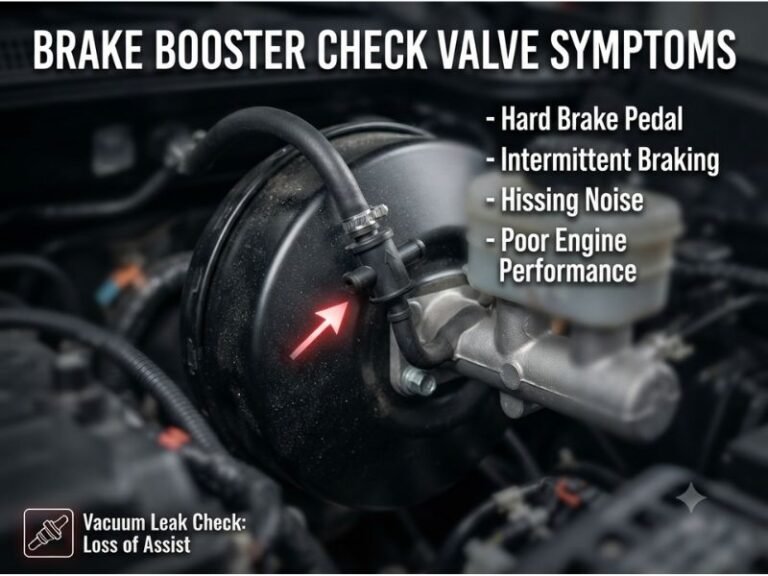
3. Failed Brake Booster Check Valve
The check valve is a small but important part of the vacuum system.
Its job is to let vacuum enter the booster while preventing it from escaping in the opposite direction.
This also allows the booster to retain some reserve assistance after the engine is turned off.
When the valve fails, vacuum may bleed away quickly.
You might notice that the first brake application feels normal, but the pedal becomes hard almost immediately after the engine shuts off.
A failed check valve can also cause inconsistent brake assist while driving.
Because the valve is relatively easy to test and replace on many vehicles, I normally check it before condemning the booster.
4. Vacuum Pump Failure
Not every engine produces enough intake-manifold vacuum to operate a brake booster reliably.
Diesel engines, turbocharged engines, and some modern gasoline engines may use a mechanical or electric vacuum pump.
If that pump becomes weak or fails, the booster may not receive enough vacuum.
The symptoms can look almost identical to a failed booster:
- hard pedal
- reduced assist
- warning messages on some vehicles
- longer stopping effort
This is why you need to verify the vacuum supply before replacing the booster.
If the booster is not receiving enough vacuum in the first place, installing a new booster will not solve the problem.
5. Age and Heat Damage
Brake boosters often last many years, but they are not immune to aging.
The engine compartment regularly experiences heat cycles. Rubber diaphragms, seals, plastic valves, and vacuum hoses gradually harden and deteriorate.
A vehicle driven in very hot conditions may experience faster aging of rubber parts than one kept in a mild climate.
Time matters too.
Even a low-mileage vehicle can develop booster problems if the rubber components are several decades old.
There is no universal mileage where every brake booster fails. Some last the life of the vehicle, while others fail much earlier because of heat, contamination, or vacuum-system problems.
6. Moisture or Brake Fluid Contamination
The inside of a brake booster should not normally contain brake fluid.
However, if the rear seal of the master cylinder fails, brake fluid may leak toward the booster.
This can damage internal booster materials and eventually reduce brake assist.
If the master cylinder is removed and brake fluid is found inside the booster opening, you should not ignore it.
The master cylinder leak must be corrected, and the booster should be inspected for contamination or internal damage.
Moisture can also contribute to corrosion in certain components over time, especially if the booster housing or related vacuum parts are damaged.
A contaminated booster may fail even after the original leak has been repaired.
7. Incorrect Pushrod Adjustment
The brake booster uses a pushrod to transfer force to the master cylinder.
The length and adjustment of that pushrod matter.
If it is too long, it may keep the master cylinder slightly applied even when your foot is off the pedal.
That can contribute to:
- brake drag
- overheated brakes
- wheels that do not release properly
If the pushrod is too short, you may experience excessive pedal travel before the master cylinder begins to move.
Incorrect adjustment most commonly becomes an issue after booster or master cylinder replacement.
I would not adjust the pushrod without the proper manufacturer specification because a small measurement error can create major braking problems.
8. Physical Damage or Poor Installation
A booster can also fail because of physical damage.
Possible causes include:
- collision damage
- bent mounting studs
- damaged pedal linkage
- cracked booster housing
- incorrect replacement part
- improper installation
If the booster is not mounted correctly, the pedal linkage may bind or the pushrod may operate at the wrong angle.
This can create symptoms that resemble internal booster failure.
After replacement, you should always verify that the pedal moves freely and returns normally.
Bad Brake Booster Symptoms You May Notice
A failing booster usually gives you several clues.
Hard Brake Pedal
This is the classic symptom.
The brake pedal may feel unusually solid and require much more leg force than normal.
You may still be able to stop the vehicle, but emergency braking becomes much harder.
Longer Stopping Distance
Because you need more physical force to operate the brakes, stopping distance may increase if you cannot press the pedal hard enough.
The brakes themselves may still be mechanically functional.
The problem is that you have lost the assistance that normally helps you create hydraulic pressure.
Hissing Noise When Pressing the Brake
A hissing sound often points toward a vacuum leak.
You may hear it:
- near the brake pedal
- around the firewall
- under the hood near the booster
A small hiss during certain booster operations may not always mean failure, but continuous or loud hissing deserves inspection.
Engine Idle Changes When You Press the Brake
A leaking booster or vacuum hose can allow unmetered air into the engine.
On some vehicles, the engine may idle roughly or change speed when you press the brake pedal.
That is a strong clue that the booster circuit may be leaking vacuum.
Brake Assist Becomes Intermittent
You may notice normal assist on one stop and a much harder pedal on the next.
This can point toward:
- failing check valve
- weak vacuum pump
- intermittent vacuum leak
Intermittent assist is especially dangerous because pedal effort becomes unpredictable.
Brake Booster Failure vs. Master Cylinder Failure
These two components work together, but their symptoms are often different.
| Symptom | Brake Booster Problem | Master Cylinder Problem |
| Pedal feel | Usually hard | Often soft or sinking |
| Pedal effort | Much higher | May feel normal at first |
| Hissing noise | Possible | Unlikely |
| Engine idle change | Possible | Usually no |
| Fluid leak | Usually no | Possible |
| Pedal slowly sinks | Less typical | Common internal-failure sign |
A hard pedal makes me think about brake assist first.
A pedal that slowly sinks under steady pressure makes me more suspicious of the master cylinder or another hydraulic leak.
You should still diagnose the complete system before replacing either component.
Can a Vacuum Leak Make a Brake Booster Seem Bad?
Absolutely.
A booster cannot work properly without sufficient vacuum.
The problem may be located in:
- vacuum hose
- check valve
- intake manifold connection
- vacuum pump
- fittings
Before condemning a booster, I normally verify that the unit is actually receiving enough vacuum and that it can hold that vacuum.
If the vacuum source is weak, a new booster will behave exactly like the old one.
That is why diagnosis matters more than replacing parts based only on symptoms.
How to Check a Brake Booster at Home
You can perform a simple basic test without special tools.
Step 1: Turn the Engine Off
With the engine off, press the brake pedal several times.
The pedal should gradually become firmer as stored vacuum is used up.
Step 2: Hold the Pedal Down
After the pedal becomes firm, keep steady pressure on it.
Step 3: Start the Engine
When the engine starts and vacuum becomes available, a normally functioning booster should usually allow the pedal to move slightly downward.
If the pedal does not change at all, the booster may not be receiving vacuum or may not be providing assistance.
Step 4: Listen for Hissing
While pressing the pedal, listen for an obvious vacuum leak near the booster.
This test is only a basic screening method.
It cannot tell you whether the problem is the booster, check valve, hose, or vacuum pump.
If the pedal is extremely hard or braking performance is poor, professional diagnosis is safer.
Can a Bad Brake Booster Cause the Brakes to Lock Up?
Loss of brake assist by itself usually causes a hard pedal, not locked brakes.
However, certain booster-related problems can contribute to brake drag.
An incorrectly adjusted pushrod may keep pressure on the master cylinder piston.
Internal mechanical binding could also interfere with pedal return.
More common causes of brakes staying applied include:
- sticking caliper
- restricted brake hose
- master cylinder return-port problem
- parking brake fault
If a wheel remains hot after driving or the vehicle feels like it is being held back, you need to diagnose the brake drag rather than assuming the booster is the only cause.
Can You Drive With a Bad Brake Booster?
I do not recommend normal driving with a confirmed brake booster problem.
The hydraulic brakes may still work, but the pedal effort can become dramatically higher.
That matters most when you need to stop quickly.
A driver who can comfortably stop the vehicle at low speed may not be able to generate enough pedal force during an emergency.
You should avoid driving if:
- the pedal becomes extremely hard
- brake assist disappears suddenly
- stopping effort increases noticeably
- brake assist comes and goes
- a brake or vacuum warning appears
If braking feels significantly different from normal, towing is the safer choice.
Does a Bad Brake Booster Need Replacement?
Not always.
If the actual problem is a cracked hose, bad check valve, or weak vacuum source, you may not need to replace the booster at all.
The booster itself usually needs replacement when there is:
- internal diaphragm failure
- internal vacuum leak
- mechanical binding
- damaged housing
- contamination that has damaged internal parts
Before approving a booster replacement, make sure the vacuum supply and related components have been checked.
Replacing the most expensive part first is not good diagnosis.
How Long Does a Brake Booster Last?
There is no fixed replacement interval.
A brake booster may last for most or all of the vehicle’s life.
Its lifespan depends on factors such as:
- heat exposure
- age
- diaphragm condition
- vacuum hose condition
- master cylinder leaks
- installation quality
- environmental conditions
Instead of replacing a booster based on mileage alone, you should pay attention to how the pedal feels and whether the vacuum system is operating correctly.
When Should You See a Brake Technician?
A hard brake pedal is the main reason to have the brake-assist system checked.
You should also schedule an inspection if you notice:
- hissing when pressing the brake
- changing engine idle during braking
- intermittent brake assist
- unusually high pedal effort
- brake drag after booster or master cylinder work
- warning lights related to brake assist or vacuum
If pedal effort changes suddenly, you need to determine whether the problem is the booster itself or the vacuum system feeding it.
The sooner the cause is identified, the less likely you are to replace unnecessary parts.
FAQs About Brake Booster Failure
Can a brake booster fail suddenly?
Yes. A vacuum hose can split, a check valve can fail, or an internal diaphragm can develop a major leak without much warning.
Can a bad brake booster cause a hard pedal?
Yes. A hard pedal is one of the most common symptoms because the booster is no longer multiplying your pedal force properly.
Can a brake booster leak vacuum?
Yes. Vacuum can leak through the internal diaphragm, check valve, hose, or related fittings.
Can a bad master cylinder damage a brake booster?
It can. If the rear master cylinder seal leaks, brake fluid may enter the booster area and damage internal materials.
Will a bad brake booster make noise?
It can. A leaking booster or vacuum connection may create a noticeable hissing sound, especially when you press the brake pedal.
Can a brake booster be repaired?
External problems such as hoses or check valves can often be repaired separately. Internal booster failure usually means replacing the complete booster assembly.
Conclusion
So, what causes a brake booster to go bad? Common reasons include a leaking diaphragm, cracked vacuum hose, failed check valve, weak vacuum pump, age-related deterioration, contamination, incorrect pushrod adjustment, and physical damage.
A hard pedal does not automatically mean the booster itself needs replacement. A simple vacuum hose or check valve fault can create almost identical symptoms.
Before replacing the booster, I would verify the vacuum supply, check valve, hose condition, and pedal linkage. You should also pay attention to hissing sounds, changing engine idle, intermittent assist, and any sudden increase in pedal effort.
If the brake pedal becomes much harder than normal or the vehicle requires noticeably more force to stop, do not ignore it. Have the brake-assist system diagnosed before continuing regular driving.