Clean vs Dirty Brake Fluid: Signs, Differences & When to Change
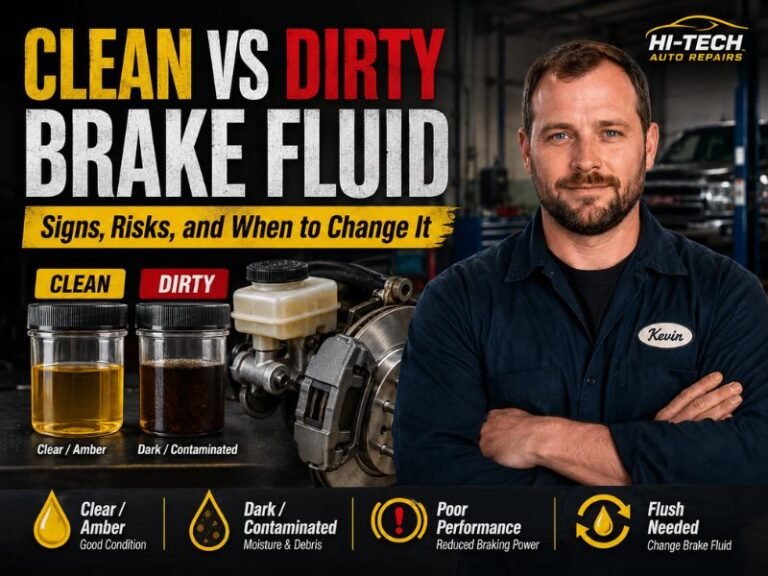
Understanding clean vs dirty brake fluid can help you catch brake maintenance problems before they affect braking performance or damage expensive hydraulic components. Clean brake fluid is usually clear to light amber and free of visible debris, while dirty fluid may look dark, cloudy, murky, or contain sediment.
However, appearance only tells part of the story. Brake fluid can look fairly clean while still containing moisture, and darker fluid does not always mean the entire braking system is failing.
Brake fluid plays a critical role in transferring pressure from the brake pedal to the calipers or wheel cylinders. If the fluid becomes contaminated, its boiling performance may decrease, internal corrosion can develop, and seals or hydraulic components may eventually be affected.
When I inspect brake fluid, I look beyond color. I consider the fluid’s service history, moisture level, pedal feel, visible contamination, and the condition of the complete hydraulic system.
This guide explains how clean and dirty brake fluid differ, what contamination looks like, which symptoms matter, and when you should replace the fluid.
Clean vs Dirty Brake Fluid at a Glance
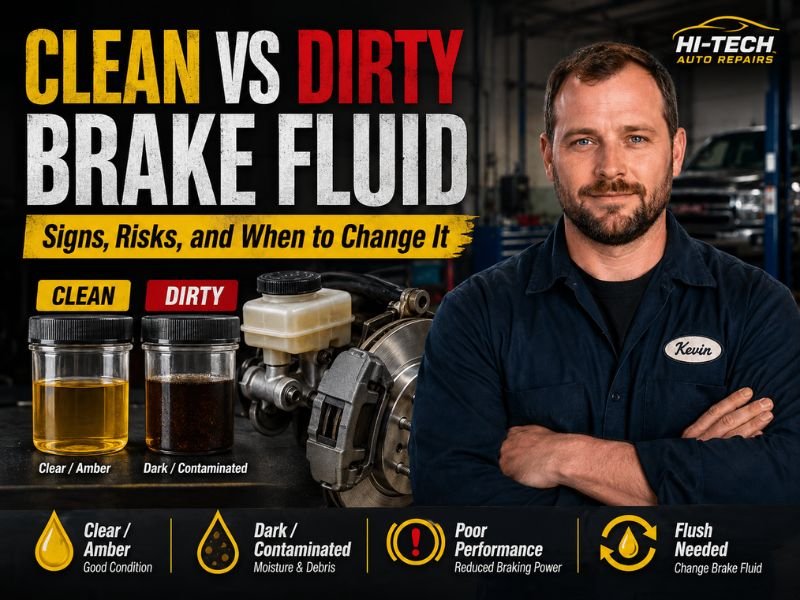
The easiest way to compare brake fluid is to look at its appearance, condition, and service history together.
| Feature | Clean Brake Fluid | Dirty Brake Fluid |
| Appearance | Clear to light amber | Dark, cloudy, or murky |
| Visible particles | Normally none | May contain sediment or debris |
| Moisture level | Ideally low | May be elevated |
| Boiling performance | Better | May be reduced |
| Pedal feel | Usually firm and consistent | May become soft or inconsistent |
| Corrosion risk | Lower | Can increase with moisture |
| Service need | May still be usable | May need testing or replacement |
The important point is that color is not a complete diagnosis.
A clean-looking fluid can still absorb moisture over time. On the other hand, a darker fluid may simply be aged and not necessarily chemically contaminated.
You should use fluid appearance as one clue, not the only reason for deciding whether a brake fluid flush is needed.
What Does Clean Brake Fluid Look Like?
Fresh brake fluid is usually clear, pale yellow, or light amber, depending on the brand and specification.
DOT 3, DOT 4, and DOT 5.1 fluids can have slightly different shades even when they are new. One product may look almost colorless, while another may appear noticeably amber.
The fluid should generally look uniform and free from:
- floating particles
- sediment
- unusual cloudiness
- oily separation
- rust-colored debris
A clean brake fluid reservoir should also not contain sludge or obvious deposits.
If you are comparing the fluid in your vehicle with new fluid, use the same specification and preferably the same product. Comparing two different brands can be misleading because their original colors may not match.
Clean appearance is a good sign, but it does not guarantee the fluid is still in perfect condition.
Brake fluid can absorb moisture without becoming visibly cloudy. This is why I also consider how long the fluid has been in service and whether the manufacturer recommends periodic replacement.
What Does Dirty Brake Fluid Look Like?
Dirty brake fluid can appear in several different ways depending on what caused the contamination.
It may look:
- dark brown
- deep amber
- cloudy
- murky
- almost black
- full of visible particles
- separated or oily
A darker color often develops gradually as brake fluid ages and circulates through the hydraulic system.
That alone is not always an emergency.
Visible sediment or unusual cloudiness is more concerning because it may point to dirt, corrosion, deteriorating rubber components, or another contaminant inside the system.
Naturally Aged Fluid
Brake fluid can slowly darken from heat cycles, age, and contact with internal components.
This does not automatically mean that the master cylinder or ABS unit is damaged.
You still need to consider the service interval and fluid condition.
Moisture-Contaminated Fluid
Moisture contamination is different because the fluid may still look fairly clean.
DOT 3, DOT 4, and DOT 5.1 brake fluids are generally hygroscopic, which means they absorb moisture over time.
The more moisture they contain, the lower their high-temperature boiling performance may become.
Dirt or Rust Contamination
Fluid containing rust-colored particles, black debris, or sediment needs closer attention.
Those materials may come from corrosion, deteriorated seals, hoses, or poor service practices.
Petroleum Contamination
Petroleum contamination is one of the most serious conditions.
If engine oil, transmission fluid, power steering fluid, or grease enters the brake reservoir, the fluid may develop an unusual oily appearance or separation.
Visible contamination is more concerning than dark color alone.
Why Does Brake Fluid Get Dirty?
Brake fluid does not become dirty for only one reason.
Several processes can change its condition over time.
Moisture Absorption
Moisture is one of the most common problems with glycol-based brake fluid.
DOT 3, DOT 4, and DOT 5.1 fluids can absorb water gradually through normal exposure, seals, hoses, and service openings.
As moisture content rises, the fluid’s boiling point can decrease.
This becomes important during repeated hard braking because brake temperatures can rise dramatically.
If the fluid reaches its boiling point, vapor can form inside the hydraulic system and contribute to a softer pedal or brake fade.
Internal Corrosion
Moisture can also promote corrosion inside metal brake components.
Possible locations include:
- steel brake lines
- wheel cylinders
- calipers
- master cylinder
- ABS hydraulic unit
As corrosion develops, small particles may enter the fluid.
That can make the fluid appear brown, rusty, or dirty.
Rubber and Seal Wear
Brake systems contain rubber seals, flexible hoses, and protective components.
As these materials age, small particles may sometimes enter the hydraulic fluid.
If I find black debris in a reservoir, I do not simply remove it and add fresh fluid. I want to know where it came from.
Poor Brake Service
Contamination can also enter during maintenance.
Opening the reservoir in a dusty environment, using a dirty funnel, or inserting an unclean syringe can introduce foreign material.
You should always clean around the reservoir cap before opening it.
Do not use tools that have previously held engine oil, coolant, or other automotive fluids.
Wrong Brake Fluid Added
Using an incorrect or incompatible fluid can create problems.
Different brake fluids have specific chemical properties and boiling-point requirements.
Always use the specification listed in your owner’s manual or on the brake fluid reservoir cap.
Petroleum Contamination
This deserves special attention.
Never put engine oil, power steering fluid, transmission fluid, or grease into the brake fluid reservoir.
Petroleum products can cause brake-system rubber seals to swell, soften, or deform.
Once this happens, a normal brake fluid flush may not be enough to restore the system.
7 Signs Your Brake Fluid May Be Dirty or Contaminated
1. Fluid Is Very Dark or Cloudy
A dramatic change in appearance is one of the first things you may notice.
If the fluid has become very dark, cloudy, or murky, check its maintenance history.
Dark color alone is not a complete diagnosis, but very dirty-looking fluid is a good reason to inspect or test it.
2. Visible Sediment or Floating Debris
Particles in the reservoir are more concerning than simple discoloration.
You may see black specks, rust-colored debris, or sediment settling at the bottom.
That contamination may indicate corrosion or deterioration somewhere inside the hydraulic system.
You should identify the source instead of simply topping off the reservoir.
3. Soft or Spongy Brake Pedal
A soft or spongy brake pedal can occur when the hydraulic system is not transferring pressure properly.
Moisture-contaminated brake fluid can contribute under high temperatures if vapor forms inside the system.
However, you should also consider other common causes, including:
- air in the brake lines
- hydraulic leaks
- a failing master cylinder
- improper bleeding
- damaged brake hoses
If your pedal suddenly feels different, the system needs inspection.
4. Brake Fade Under Heavy Use
Brake fade means the brakes become less effective as temperatures rise.
Moisture-contaminated fluid may contribute because its boiling performance is lower than fresh fluid.
You may notice this during:
- towing
- mountain driving
- repeated hard stops
- heavy city traffic
- performance driving
Mechanical brake fade from overheated pads or rotors can also occur, so fluid condition is only one part of the diagnosis.
5. Inconsistent Brake Pedal Feel
A healthy brake pedal should feel predictable.
If it feels firm during one stop and softer during the next, you need to investigate the hydraulic system.
Contaminated brake fluid may contribute, especially under changing temperatures.
Leaks, trapped air, hose problems, and master cylinder faults can create similar symptoms.
6. Reduced Braking Performance
Dirty or degraded brake fluid may contribute to less predictable hydraulic performance.
You might feel that braking becomes weaker after repeated stops or that the pedal requires more travel.
But do not assume fluid is the only cause.
Worn brake pads, damaged rotors, poor tires, sticking calipers, and leaks can all reduce braking performance.
7. Hydraulic Component Problems
Long-term contamination may eventually affect internal brake parts.
Possible problems include:
- sticking caliper pistons
- internal master cylinder corrosion
- leaking wheel cylinders
- corroded brake lines
- ABS hydraulic valve problems
When I see dirty fluid together with mechanical or hydraulic symptoms, I treat the situation as a system problem rather than just a fluid-color issue.
Does Dark Brake Fluid Always Mean It Is Bad?
No.
This is one of the most common misconceptions about brake fluid.
Brake fluid can darken naturally as it ages and moves through the hydraulic system.
Heat cycles, oxidation, and contact with internal materials can gradually change its appearance.
A dark color becomes more meaningful when it appears together with other warning signs such as:
- visible particles
- unknown service history
- high moisture content
- a soft pedal
- brake fade
- obvious contamination
If I see dark fluid but no visible debris or braking problem, I check the maintenance history before assuming major repairs are necessary.
You should also remember that clear fluid can still contain moisture.
That is why appearance alone cannot determine whether the fluid is still performing correctly.
Can Dirty Brake Fluid Damage Your Brake System?
Yes, depending on the type and severity of contamination.
Lower Boiling Performance
Moisture-contaminated fluid can have a lower boiling point.
During hard braking, that increases the risk of vapor forming inside the hydraulic system.
Internal Corrosion
Water in the fluid can contribute to corrosion inside steel and cast-metal brake parts.
Over time, this may affect brake lines, calipers, wheel cylinders, and the master cylinder.
Seal Damage
Petroleum contamination can attack rubber brake seals.
Once seals swell or distort, hydraulic components may start sticking or leaking.
ABS Hydraulic Problems
ABS units contain small passages and valves.
Rust particles, debris, or deteriorated seal material may interfere with their operation.
However, dirty-looking fluid does not automatically mean the ABS unit is already damaged.
Sticking or Leaking Components
Long-term contamination may contribute to sticking pistons, internal leakage, or restricted fluid movement.
If braking behavior has changed, you should inspect the complete system rather than relying on fluid appearance alone.
Clean Brake Fluid vs Dirty Brake Fluid and Pedal Feel
Brake fluid condition can influence pedal feel, but it is only one part of the system.
With a healthy hydraulic system, the brake pedal should generally feel:
- firm
- predictable
- consistent
A hydraulic problem may make the pedal feel:
- soft
- spongy
- inconsistent
- unusually low
- different after repeated braking
If moisture-contaminated fluid becomes hot enough to form vapor, pedal firmness may decrease.
However, a soft pedal can also indicate trapped air or a hydraulic leak.
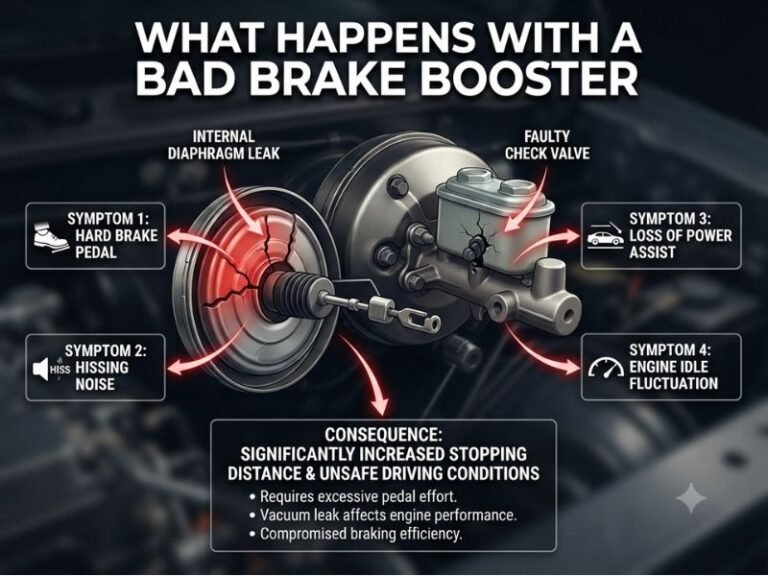
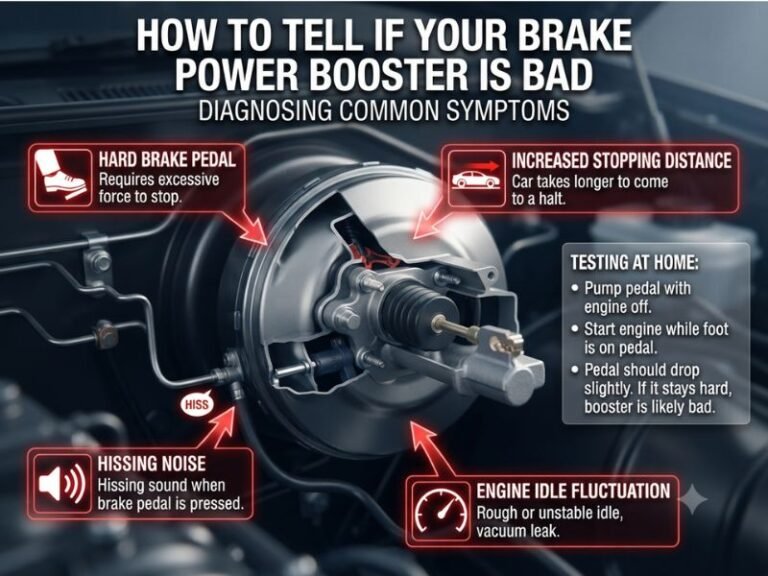
A very hard pedal usually points toward a different problem, such as reduced brake booster assistance.
If your pedal suddenly changes, you need a complete brake inspection rather than assuming a fluid flush is the only solution.
How to Check Brake Fluid at Home
You can perform a basic visual inspection without special equipment.
Step 1: Park Safely
Park on level ground and secure the vehicle.
Follow any specific checking instructions in the owner’s manual.
Step 2: Locate the Reservoir
The brake fluid reservoir is usually located near the master cylinder on the driver’s side of the engine compartment.
Many reservoirs are translucent, so you can inspect the fluid without removing the cap.
Step 3: Check the MIN and MAX Marks
The fluid level should stay within the manufacturer’s recommended range.
A low level may be related to normal pad wear, but it can also indicate a hydraulic leak.
If the level keeps dropping, you need to find the cause.
Step 4: Look at the Fluid
Check for:
- unusual darkness
- cloudiness
- floating debris
- sediment
- separation
Do not open the reservoir unless necessary.
Step 5: Check the Maintenance History
Find out when the fluid was last serviced.
Unknown history is useful information when deciding whether testing or replacement is appropriate.
Step 6: Avoid Contamination
Clean the area around the reservoir cap before opening it.
Do not insert random tools or dirty syringes into the reservoir.
A small amount of foreign material can create a much bigger repair problem.
Can You Test Brake Fluid Instead of Judging by Color?
Yes, and testing is often more useful than simply looking at the fluid.
Brake fluid can be checked for moisture or boiling performance using appropriate testing equipment.
A professional boiling-point test can provide a clearer picture of how the fluid will perform under heat.
Some electronic testers estimate moisture content, though their accuracy can vary depending on the tool and fluid type.
When fluid looks questionable but the condition is not obvious, I prefer testing over guessing.
Testing is especially useful if the vehicle:
- has unknown maintenance history
- regularly tows
- operates in humid conditions
- sees mountain driving
- is used for performance driving
Color is a clue. Testing gives you more information.
When Should You Change Dirty Brake Fluid?
Brake fluid should be replaced when the vehicle manufacturer’s service interval is due or when testing shows the fluid is no longer suitable.
You should also consider replacement when:
- moisture content is excessive
- visible contamination is present
- hydraulic repairs have been performed
- service history is unknown
- sediment or debris appears in the reservoir
Do not assume that adding fresh fluid will solve the problem.
Topping off does not remove dirty fluid already inside the system.
A proper fluid exchange replaces old fluid throughout the hydraulic circuit.
Is a Brake Fluid Flush Enough?
That depends on the type of contamination.
Old or Moisture-Contaminated Fluid
A proper brake fluid exchange may be all that is needed if the system is otherwise healthy.
Dirt or Rust Contamination
You need to identify where the debris came from.
Replacing the fluid without repairing a corroded or deteriorating component may allow contamination to return.
Petroleum Contamination
This is much more serious.
Petroleum products can damage rubber seals throughout the system.
A simple flush may not correct swollen or softened seals.
The master cylinder, brake hoses, calipers, wheel cylinders, or ABS hydraulic components may require replacement depending on the extent of contamination.
If I suspect petroleum contamination, I do not treat the job as routine maintenance.
Can You Mix Clean Brake Fluid With Dirty Brake Fluid?
Adding clean fluid to dirty fluid does not make the old fluid clean.
It only dilutes the contamination.
If your reservoir is low, you should first understand why the level dropped.
Using fresh brake fluid may be necessary temporarily during diagnosis, but topping off is not a substitute for a proper fluid service.
You also need to use the correct specification.
DOT 3, DOT 4, DOT 5, and DOT 5.1 are not automatically interchangeable in every application.
DOT 5 is particularly important because it is silicone-based and should not be confused with DOT 5.1.
Always follow the vehicle manufacturer’s recommendation.
When Should You See a Brake Technician?
You should have the brake system inspected if:
- the pedal becomes soft or sinks
- the reservoir keeps losing fluid
- you see visible brake fluid leaks
- the fluid contains obvious debris
- the brakes drag
- the vehicle pulls strongly while braking
- a warning light appears with braking problems
- petroleum contamination is suspected
If I find dirty fluid together with an abnormal pedal or braking problem, I check the hydraulic and mechanical components instead of assuming a simple flush will fix everything.
Brakes are a safety system, so unexplained changes deserve attention.
FAQs About Clean vs Dirty Brake Fluid
What color should clean brake fluid be?
Clean brake fluid is usually clear to light amber, depending on the brand and specification.
It should be free from visible particles, sediment, or separation.
Is brown brake fluid bad?
Not automatically.
Brake fluid can become brown as it ages. You should also consider moisture level, service history, visible contamination, and braking performance.
Can dirty brake fluid cause a soft pedal?
Yes, contaminated fluid can contribute, particularly if moisture lowers the boiling point and vapor forms under high heat.
Air, leaks, or a failing master cylinder can cause similar symptoms.
Can dirty brake fluid damage the master cylinder?
Long-term moisture contamination may contribute to corrosion, while petroleum contamination can damage rubber seals.
Does clear brake fluid mean it is still good?
No.
Clear-looking brake fluid can still contain moisture, so appearance alone does not confirm its condition.
Can you clean dirty brake fluid?
No.
Brake fluid should be replaced rather than cleaned and reused.
If contamination came from a damaged component, that component also needs attention.
Should I flush dark brake fluid immediately?
Not always based on color alone.
Check the service interval, fluid condition, moisture level, and maintenance history before deciding.
Conclusion
Understanding clean vs dirty brake fluid helps you recognize when your brake fluid needs attention and when a larger hydraulic problem may be developing.
Clean fluid is generally clear to light amber and free from visible debris. Dirty or questionable fluid may appear dark, cloudy, murky, or contain sediment, but color alone does not tell the full story.
When I inspect brake fluid, I consider its appearance, moisture level, service history, pedal feel, and the condition of the hydraulic components.
You should do the same when evaluating your vehicle. If the fluid contains debris, the pedal feels different, or braking performance has changed, do not simply top off the reservoir.
Have the system inspected and replace the fluid according to the vehicle manufacturer’s recommendations.