What Happens If Brake Fluid Is Contaminated? Risks and Fixes
What happens if brake fluid is contaminated? Contaminated brake fluid can reduce braking performance, lower the fluid’s boiling point, damage rubber seals, cause corrosion, and affect hydraulic components such as the master cylinder, calipers, or ABS hydraulic unit.
Brake fluid can become contaminated by moisture, dirt, rust, deteriorating rubber parts, incorrect fluid, or petroleum-based products. The severity of the problem depends on what entered the system and how long the contamination has been present.
You should take brake fluid contamination seriously because not every type can be fixed with a simple fluid change. Moisture-contaminated fluid may only need proper replacement, while petroleum contamination can damage seals throughout the hydraulic system.
Knowing the warning signs can help you decide when the fluid needs service and when the entire brake system should be inspected.
What Happens If Brake Fluid Is Contaminated?
Contaminated brake fluid can interfere with the hydraulic pressure your vehicle needs for safe braking.
When you press the brake pedal, brake fluid transfers force from the master cylinder to the brake calipers or wheel cylinders. For this system to work correctly, the fluid needs to remain clean and chemically compatible with internal seals and components.
If moisture enters the fluid, its boiling point can decrease. Dirt and corrosion particles may also circulate through small hydraulic passages.
Petroleum contamination can cause even more serious problems because it can damage or swell rubber seals.
You may eventually experience brake fade, a soft pedal, leaks, sticking brakes, or inconsistent braking performance.
The correct repair depends on the type of contamination involved.
6 Problems Contaminated Brake Fluid Can Cause
1. Lower Brake Fluid Boiling Point
Moisture is one of the most common forms of brake fluid contamination.
DOT 3, DOT 4, and DOT 5.1 brake fluids are generally hygroscopic, meaning they can absorb moisture over time.
As moisture content increases, the fluid’s boiling point can drop. This becomes more important when you brake repeatedly and the brake system becomes very hot.
If the fluid gets hot enough, moisture can contribute to vapor formation inside the hydraulic system.
Vapor does not transfer hydraulic force as effectively as liquid brake fluid, so braking can become less predictable.
2. Soft or Spongy Brake Pedal
A soft or spongy brake pedal may indicate a hydraulic problem.
Moisture-contaminated brake fluid can contribute to this condition when high temperatures cause vapor to form inside the system.
However, you should not assume contaminated fluid is the only possible cause.
Air in the brake lines, a hydraulic leak, an improperly bled system, a damaged hose, or a failing master cylinder can create similar symptoms.
If your brake pedal suddenly feels soft, you need to have the hydraulic system checked rather than simply replacing the fluid and hoping the problem disappears.
3. Internal Corrosion
Moisture inside brake fluid can promote corrosion over time.
This corrosion may develop inside the master cylinder, brake calipers, wheel cylinders, steel brake lines, or ABS hydraulic unit.
Rust particles can then break loose and circulate through the system, making the contamination worse.
You may eventually experience sticking components, restricted fluid flow, leaking seals, or poor hydraulic operation.
If the brake fluid contains visible rust-colored particles, the source of that contamination needs to be identified before fresh fluid is added.
4. Rubber Seal Damage
Petroleum contamination can seriously damage brake-system seals.
Engine oil, transmission fluid, power steering fluid, or grease should never enter a brake fluid reservoir.
Brake seals are designed for approved brake fluid, not petroleum-based products. Contact with the wrong fluid can cause seals to swell, soften, or lose their proper shape.
This may lead to sticking pistons, leaks, pressure problems, or complete hydraulic component failure.
If you suspect petroleum contamination, do not assume a basic brake fluid flush will fix the system.
5. ABS Hydraulic Problems
Modern ABS systems use small valves and hydraulic passages to control brake pressure during hard braking.
Contaminated fluid can carry dirt, corrosion debris, or damaged seal material into these passages.
Over time, this may interfere with valve movement or hydraulic operation.
However, an ABS warning light does not automatically mean the brake fluid is contaminated.
Wheel-speed sensors, damaged wiring, control modules, or other electrical faults can also trigger the ABS light.
You need a proper diagnosis before replacing expensive ABS components.
6. Reduced or Unpredictable Braking
Contaminated fluid can make braking feel less consistent, especially under high temperatures.
You may notice that the pedal feels different after repeated braking or that stopping performance changes as the brakes heat up.
In severe cases, damaged hydraulic components may also cause brake drag or uneven braking.
You should also check other common causes of poor braking, including worn pads, damaged rotors, sticking calipers, hydraulic leaks, and tire problems.
Do not assume brake fluid is responsible for every braking symptom.
What Can Contaminate Brake Fluid?
Brake fluid can be contaminated in several ways.
Moisture
Moisture is the most common age-related contaminant in DOT 3, DOT 4, and DOT 5.1 fluids.
These fluids can absorb water gradually over time.
Dirt and Debris
Dirt can enter when the reservoir cap is removed, especially if the area around the cap is not cleaned first.
Dirty tools can also introduce contamination during brake service.
Rust and Corrosion Particles
Internal corrosion can release small metal particles into the fluid.
If you see rust-colored sediment, you should have the hydraulic system inspected.
Incorrect Brake Fluid
Adding the wrong fluid can cause compatibility or performance problems.
Always use the specification listed in your vehicle owner’s manual or on the reservoir cap.
Petroleum Products
This is one of the most serious forms of contamination.
Never add engine oil, transmission fluid, power steering fluid, or grease to the brake fluid reservoir.
Symptoms of Contaminated Brake Fluid
Contaminated brake fluid can produce several warning signs.
You may notice:
- a soft or spongy brake pedal
- inconsistent pedal feel
- brake fade during repeated braking
- dark or cloudy brake fluid
- visible particles inside the reservoir
- reduced braking performance
- sticking brakes
- swollen rubber seals
These symptoms do not prove contamination by themselves.
A soft pedal can also be caused by air or leaks, while sticking brakes may come from a seized caliper or restricted hose.
You need to consider the complete condition of the braking system before deciding what repair is necessary.
What Does Contaminated Brake Fluid Look Like?
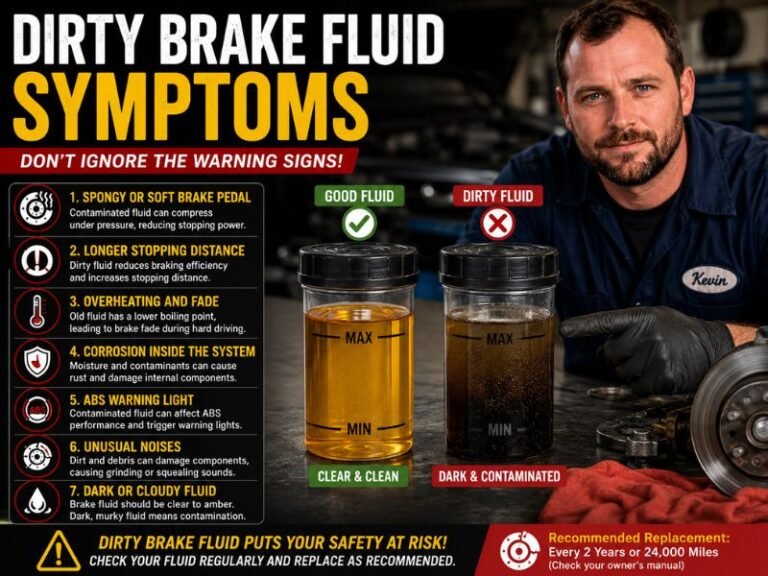
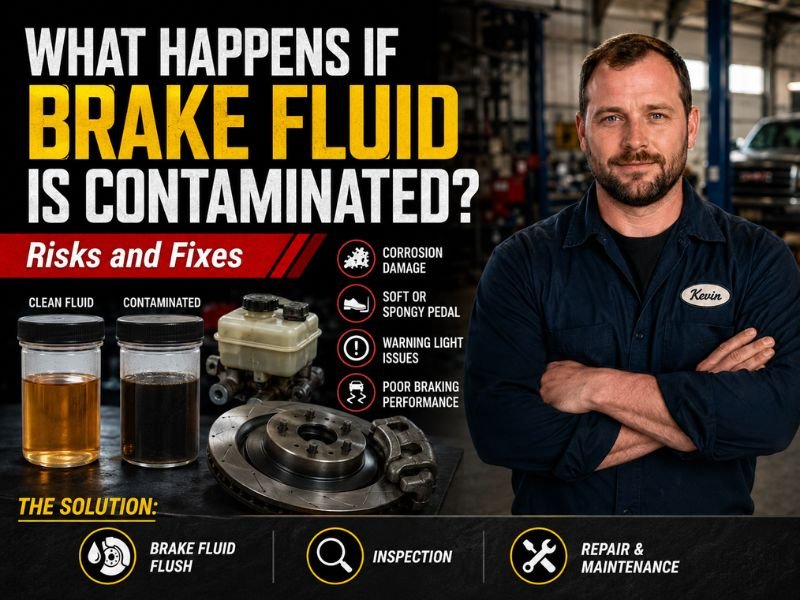
Normal brake fluid is usually clear to light amber, depending on the product.
Contaminated fluid may appear cloudy, murky, dark brown, or filled with visible debris.
You may also notice sediment, floating particles, unusual separation, or an oily-looking film.
However, dark color alone does not prove brake fluid is contaminated.
Brake fluid naturally changes color as it ages.
If the fluid looks questionable, you should also consider its service history, moisture level, pedal feel, and whether the reservoir contains visible foreign material.
Can Contaminated Brake Fluid Damage the Master Cylinder?
Yes.
Moisture contamination can contribute to corrosion inside the master cylinder, while petroleum contamination can damage its rubber seals.
Possible problems include internal fluid bypass, sticking pistons, leaks, or abnormal pedal behavior.
If the brake fluid is simply dark, you should not immediately replace the master cylinder.
The component needs to be inspected and tested first.
If the pedal sinks slowly while pressure is applied, the master cylinder or another hydraulic component may need closer diagnosis.
Can Contaminated Brake Fluid Damage the ABS System?
Yes, severe contamination can affect the ABS hydraulic system.
The ABS hydraulic control unit contains small valves and passages that depend on clean brake fluid.
Dirt, rust particles, or deteriorated seal material can interfere with these components.
Still, an ABS warning light alone is not enough to confirm fluid contamination.
You should have the ABS system scanned and inspected before assuming the hydraulic unit is damaged.
Can You Fix Contaminated Brake Fluid With a Flush?
Sometimes.
If the fluid is simply old or has absorbed moisture, a proper brake fluid exchange may be enough.
If the fluid contains light dirt or debris, you also need to identify where that contamination came from.
Petroleum contamination is much more serious.
Because petroleum products can damage rubber seals throughout the hydraulic system, a simple flush may not restore safe operation.
Depending on the severity, the master cylinder, brake hoses, calipers, wheel cylinders, or ABS hydraulic components may need replacement.
The repair depends on what contaminated the brake fluid.
How to Check for Brake Fluid Contamination
Start by looking at the brake fluid reservoir.
Check for cloudiness, sediment, floating particles, or unusual separation.
You should also look at the service history. If someone recently added the wrong fluid, that information is extremely important.
Check the reservoir level and inspect for leaks around the master cylinder, brake hoses, calipers, and wheel cylinders.
If moisture contamination is suspected, a brake fluid moisture or boiling-point test can provide more useful information than color alone.
If you find swollen seals, severe debris, or suspected petroleum contamination, the hydraulic system needs professional inspection.
When Should You Stop Driving?
You should stop driving if the brake pedal sinks toward the floor, becomes extremely soft, or braking distance increases noticeably.
Visible brake fluid leaks are another reason to stop using the vehicle.
You should also avoid normal driving if the brakes drag badly, the vehicle pulls strongly during braking, or warning lights appear together with reduced braking performance.
Suspected petroleum contamination also requires immediate attention because it can damage seals throughout the system.
Do not continue driving while hoping the problem will improve.
FAQs About Contaminated Brake Fluid
Can water contaminate brake fluid?
Yes. DOT 3, DOT 4, and DOT 5.1 brake fluids can absorb moisture over time.
Can contaminated brake fluid damage calipers?
Yes. Moisture, corrosion debris, or chemical contamination can affect caliper pistons and seals.
Can you mix different brake fluids?
Only use brake fluid specifications approved by your vehicle manufacturer. Do not assume different DOT ratings are automatically interchangeable.
Will adding new brake fluid fix contamination?
No. Adding fresh fluid does not remove contaminants already circulating inside the system.
Can contaminated brake fluid cause brake failure?
Severe contamination can damage hydraulic components and reduce braking reliability, especially when seals, valves, or hydraulic pressure control are affected.
Conclusion
Understanding what happens if brake fluid is contaminated can help you prevent small fluid problems from turning into expensive hydraulic repairs.
Moisture can reduce high-temperature performance, corrosion debris can damage internal components, and petroleum contamination can destroy rubber seals.
If your brake fluid looks cloudy, contains debris, or your brake pedal begins to feel different, you need to inspect the hydraulic system rather than simply topping off the reservoir.
A standard brake fluid exchange may be enough for old or moisture-contaminated fluid. Severe chemical contamination may require component replacement.
If braking performance has changed, the safest step is to have the complete brake system diagnosed before continuing normal driving.