How Long Does Brake Caliper Paint Last: Complete Guide and Tips
Brake caliper paint typically lasts about three to five years, although high-quality products applied to properly prepared calipers can remain attractive longer. Poor surface preparation, extreme brake heat, road salt, moisture, and low-quality paint can reduce that lifespan to one or two years.
If the coating fails early, it can peel, discolor, or expose the caliper to corrosion. Understanding how long does brake caliper paint last helps you choose the right product, prepare the metal correctly, and recognize when refinishing is necessary.
How Long Does Brake Caliper Paint Last?
For most street-driven vehicles, brake caliper paint lasts approximately three to five years when it is designed for high temperatures and applied correctly. The finish may last longer if the vehicle is stored indoors, driven in mild weather, and washed regularly.
In contrast, caliper paint may show fading, peeling, or surface damage within one to two years when it is sprayed over grease, rust, brake dust, or loose factory coating. Paint applied without adequate curing can also fail quickly, even if the product itself is marketed as heat resistant.
Longevity refers primarily to the appearance and adhesion of the coating. Brake caliper paint does not normally protect a neglected or heavily corroded caliper indefinitely. If the underlying metal continues to rust or the caliper has mechanical problems, repainting alone will not solve the issue.
What Determines Brake Caliper Paint Life?
Surface preparation
Preparation is often the biggest factor in paint durability. Brake calipers collect brake dust, oil, road grime, rust, and residue from cleaning products. Paint cannot bond reliably to these contaminants.
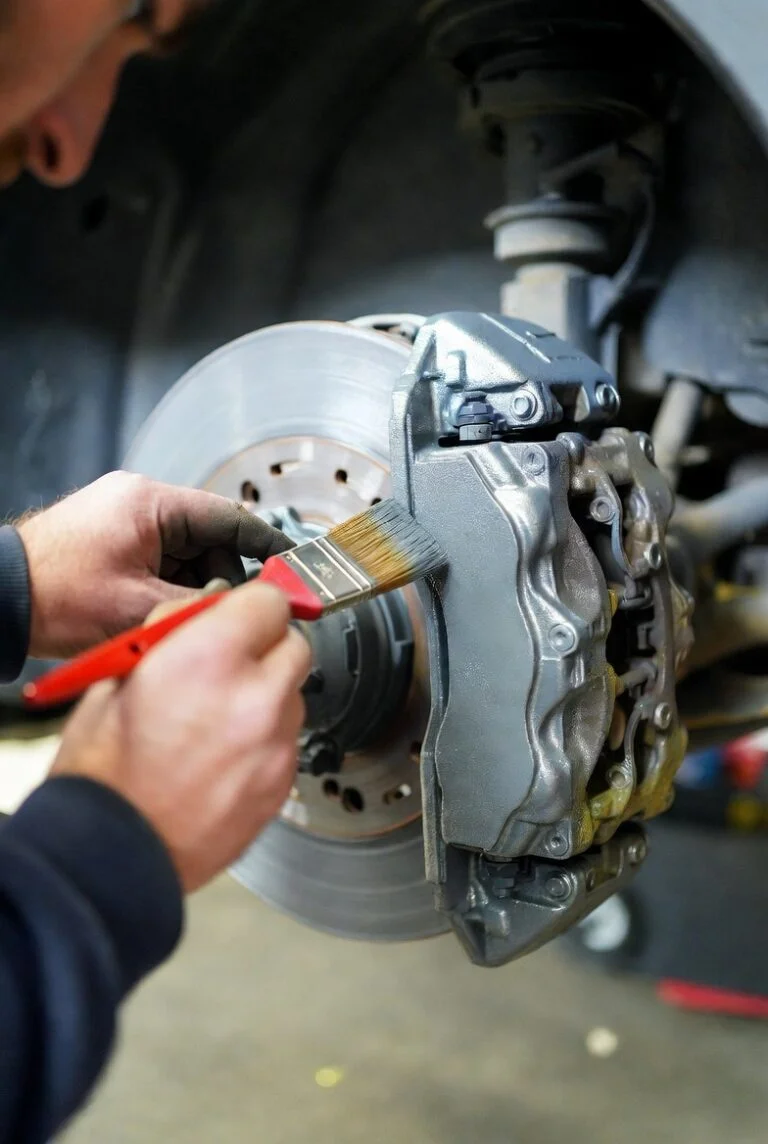
A durable application usually requires removing the wheel, cleaning the caliper thoroughly, removing loose rust and flaking paint, and allowing the surface to dry completely. A wire brush, suitable abrasive tool, or approved brake-cleaning product may help prepare the surface, depending on the caliper’s condition.
The metal does not always need to look perfectly new, but it should be stable, clean, and free of loose material. Painting over active flaking or heavy corrosion traps problems beneath the coating and makes early peeling more likely.
Paint quality and formulation
Brake caliper paint is formulated to tolerate more heat than ordinary automotive or household paint. However, products differ in temperature resistance, application method, chemical resistance, and curing requirements.
A dedicated high-temperature caliper coating is generally a better choice than standard enamel. Two-component coatings may provide stronger chemical and abrasion resistance than some basic aerosol products, but the instructions still control the result. A product rated for high heat can fail if it is applied too thickly, used on a contaminated surface, or exposed to water before curing.
Brake temperature
Caliper temperature depends on vehicle weight, driving style, brake design, terrain, and airflow. Normal commuting usually creates less heat than repeated hard stops, mountain driving, towing, track use, or aggressive performance driving.
Frequent high-temperature cycles can fade the color, weaken the coating, or cause blistering when the paint is not suitable for the application. Heat alone is not always the cause of failure. A coating that was poorly bonded may lift when the caliper repeatedly expands and contracts.
Weather and road conditions
Ultraviolet exposure can fade bright colors, especially red, yellow, and other intense shades. Water, humidity, road salt, and winter chemicals can work into small chips or damaged areas and encourage corrosion underneath the paint.
Vehicles driven in areas with salted roads generally need more frequent cleaning and inspection than vehicles used in dry climates. Parking outdoors can also shorten the cosmetic life of the coating compared with covered or indoor storage.
Application and curing
Even coverage and correct curing are essential. Heavy coats may remain soft beneath the surface, while thin or uneven coats may provide inadequate protection. Applying paint in unsuitable temperatures or high humidity can also affect drying and adhesion.
Many products require a specific drying period between coats and a longer period before normal driving. Some coatings cure through air drying, while others require heat from controlled driving or another method described by the manufacturer. Moving the vehicle too soon can expose the uncured finish to brake dust, moisture, and road debris.
Signs Brake Caliper Paint Is Failing
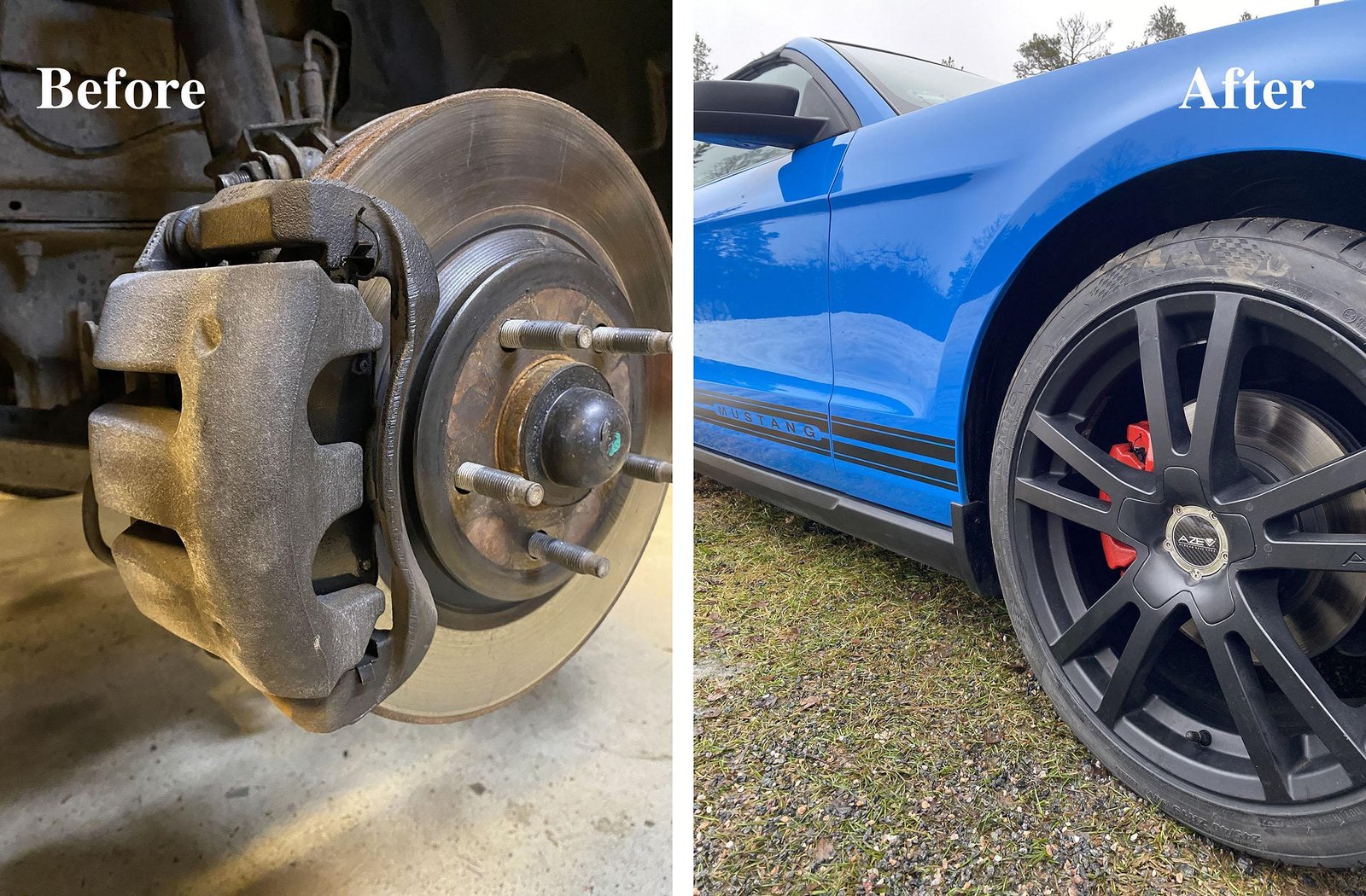
Brake caliper paint may need attention when the finish shows visible deterioration rather than simply normal dirt. Important signs include:
- Peeling or lifting around edges, bolts, or casting seams
- Cracks, bubbles, or blisters in the coating
- Color fading or chalky discoloration
- Rust showing through chips or thin areas
- Paint contamination that cannot be removed with gentle cleaning
- Large sections of coating separating from the caliper
Minor discoloration does not always mean the coating has lost all protective value. Heat and brake dust can make the finish look dull while the paint remains attached. Peeling and exposed corrosion are more serious because moisture can reach the metal.
Inspect the calipers whenever the wheels are removed or during routine brake service. Look for uneven pad wear, fluid leaks, damaged boots, or other mechanical concerns at the same time. Paint condition should never distract from brake-system safety.
How to Make Caliper Paint Last Longer
Clean the calipers carefully
Regular cleaning removes abrasive brake dust and corrosive road residue. Use a method compatible with the paint and avoid harsh tools that can scratch the coating. A soft brush and an appropriate wheel or brake cleaner are generally safer than aggressive scraping on painted surfaces.
Do not clean hot calipers with cold water. Sudden temperature changes can stress components, and hot surfaces can cause cleaners to evaporate unevenly or leave marks. Allow the brakes to cool before washing or detailing them.
Repair the surface before repainting
If the existing coating is peeling, remove all loose paint before applying a new layer. Stable paint may sometimes remain if the new product allows it, but the surface still needs cleaning, scuffing, and inspection.
Rust should be removed as thoroughly as practical. If corrosion is deep, the caliper has pitting, or the casting is damaged, a professional brake inspection is more appropriate than covering the problem with paint.
Mask critical components
Paint must stay off the brake rotor, friction surfaces, pad contact areas, bleeder screw, piston, rubber boots, brake hoses, and hardware that must move or seal. Overspray on the rotor or pads can reduce braking performance and create a safety hazard.
Masking should be deliberate rather than rushed. Removing the caliper may provide better access and a cleaner result, but brake-system work should be performed only by someone who understands proper removal, installation, bleeding, and torque procedures.
Use thin, even coats
Several light coats are usually easier to control than one heavy coat. Light coats reduce runs, help the coating cure evenly, and produce a more consistent finish. Follow the product’s recoat window instead of applying the next layer whenever the surface merely feels dry.
Keep the spray or brush moving and avoid concentrating paint in corners. Thick buildup around casting details may crack or remain soft beneath the outer surface.
Allow complete curing
Drying and curing are not the same. A finish can feel dry while remaining vulnerable to fingerprints, brake dust, water, and heat. Keep the vehicle out of rain and avoid hard braking until the coating has reached the cure level specified by the manufacturer.
Do not assume that a short drive automatically cures every product. Some paints depend on a particular heat cycle, while others require extended air curing. The label and technical instructions should take priority over general advice.
Can Brake Caliper Paint Be Refreshed?
Yes, caliper paint can often be refreshed if the existing coating is firmly attached and the caliper is structurally sound. The process normally involves cleaning, lightly abrading the surface, removing loose sections, treating appropriate rust, and applying compatible paint.
A simple touch-up is suitable only for small chips or isolated damage. If the finish is peeling across a large area, applying paint over it usually creates an uneven layer that fails again. In that situation, the old coating should be removed or stabilized according to the new product’s instructions before refinishing.
Do not apply a new coating over brake fluid, grease, silicone, or an unknown chemical residue. These contaminants can prevent adhesion even when the surface appears visually clean.
Does the Color Affect How Long It Lasts?
The color itself is not usually the main durability factor. Product formulation, surface preparation, curing, and exposure have a greater effect. However, some bright colors show fading more visibly than black, silver, or darker shades.
Red and yellow coatings, for example, may appear less vibrant after prolonged UV exposure or repeated heat cycles even when they remain attached. A clear coat can sometimes improve gloss and color retention, but it must be chemically compatible with the base coating and rated for the operating conditions.
When Should Caliper Paint Be Replaced?
Replace or refinish the coating when peeling exposes metal, corrosion is spreading, or the finish is damaged over a substantial portion of the caliper. Cosmetic fading alone may not require immediate work if the coating remains firmly bonded and the caliper is otherwise healthy.
Refinishing is also reasonable when brake service provides convenient access. With the wheel and related components already removed, proper cleaning and masking may be easier. The brake system must be reassembled correctly, and no paint should interfere with pad movement, seals, fluid connections, or rotor contact.
Have a qualified technician inspect the caliper if it is leaking, sticking, unusually hot, difficult to bleed, or wearing the brake pads unevenly. Paint is a cosmetic and protective coating; it is not a repair for a faulty caliper.
Conclusion
So, how long does brake caliper paint last? Expect about three to five years from a quality coating that is applied to a clean, properly prepared caliper and allowed to cure fully. Careful washing, prompt repair of chips, protection from salt, and avoiding paint on moving or friction components can extend its useful life. When peeling or corrosion appears, refinish the surface correctly rather than covering the damage.