7 Best Brake Pads for ATVs That Hold Up to Mud, Water and Hills
As an Amazon Associate, we earn from qualifying purchases made through links in this post, at no extra cost to you.
Buy the wrong brake pad and your ATV may still feel weak at the lever, squeal during a slow stop, or fail to match the caliper when you start the repair. A poor fit can waste a riding weekend, damage a rotor, or leave you taking the machine apart twice because the holes and pad shape do not line up.
Fit comes first, then pad material and the riding conditions you face. A pad that matches the caliper but suits only light pavement may not be a sensible choice for mud, hills, or long downhill sections.
Here is what this guide covers:
- How to match pad shape, holes, and ATV model before ordering.
- Which listed pads suit Chinese ATVs, Honda machines, Arctic Cat models, and Polaris applications.
- How sintered, semi-organic, and metal-based materials change braking feel and wear.
- How to bed, clean, inspect, and replace ATV brake pads without rushing the job.
Quick Picks
-
Best For Chinese ATV Fit

FVRITO ATV Rear Disc Brake Pads Compatible
Copper and brass alloy pads with 68 mm mounting spacing suit many small Chinese ATVs used in mud or rough conditions.
-
Best For Taotao ATVs
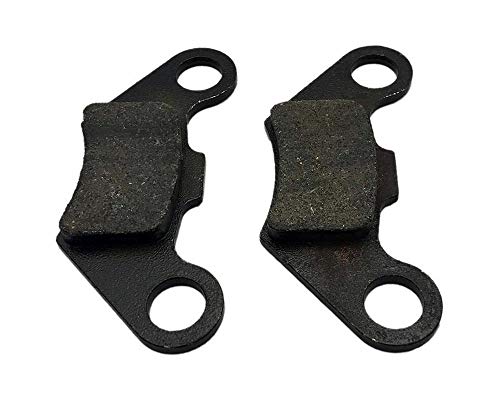
KDSG ATV Disc Brake Pad Set New
87.8 mm by 38.8 mm pads with 70 mm hole spacing fit several Taotao-style ATVs, dirt bikes and go-karts.
Top 7 Brake Pads for Atvs at a Glance
Small Chinese ATV owners should start with FVRITO or HIAORS, while Taotao-style buyers have a more measurement-focused option in KDSG. Honda, Arctic Cat, and Polaris owners need the application-specific choices farther down the list, and the main differences are fit, pad material, included hardware, and coverage of the front or rear brake.
| Product image | Product name | Check product |
|---|---|---|
| 1 |
FVRITO ATV Rear Disc Brake Pads Compatible | Check Price |
| 2 |
KDSG ATV Disc Brake Pad Set New | Check Price |
3 |
M MATI Sintered Brake Pads for for | Check Price |
4 |
PRO BAT ATV Disc Brake Caliper Pads | Check Price |
5 |
MOTOKU Front and Rear Brake Pads for | Check Price |
6 |
HIAORS Rear Disc Brake Pads Replacement for | Check Price |
7 |
Road Passion FA270 Rear Brake Pads for | Check Price |
7 Best Brake Pads for Atvs: Detailed Reviews
When I chose the best brake pads for atvs, I paid attention first to fit details, because a friction material that cannot sit correctly in the caliper is no bargain. I also weighed pad material, mounting-hole spacing, included hardware, and whether the stated fit covered a complete brake position or only a rear replacement.
The group covers several very different buyers rather than pretending one pad fits every quad. Comparing the choices side by side helps you avoid buying a small Chinese-ATV pad for a Honda or Polaris machine, and it shows when a specific measurement matters more than a long compatibility list.
1. FVRITO ATV Rear Disc Brake Pads Compatible
Copper and brass alloy pads with 68 mm mounting spacing suit many small Chinese ATVs used in mud or rough conditions.
- Mounting Hole Distance68 mm / 2.67 inch
- Heat ResistanceUp to 700℃
- Number Of Items2
- DimensionsMounting Hole Distance: 68 mm / 2.67 inch
FVRITO ATV Rear Brake Pads suit owners of many 50cc to 150cc Chinese ATVs, go-karts, and dune buggies who need a rear pad set with a broad stated fit range.
The key measurement is mounting-hole distance, the space from one pad mounting hole to the other. FVRITO lists 68 mm, or 2.67 inches, so you can compare that number with the old pad or caliper before ordering instead of guessing from the vehicle name.
FVRITO uses a copper and brass alloy made from metal powders pressed at high temperature. Copper and brass help conduct heat away from the contact area, which matters when a small ATV works through mud or repeats short, hard stops.
The listing gives a heat-resistance figure of up to 700℃ and describes wet, dry, muddy, racing, and heavy-duty use. That does not promise identical braking on every machine, but the stated range gives rough-trail riders a reason to consider FVRITO over a pad described only for light use.
The package contains two sets of pads. That can be useful if your repair calls for more than one pair, though you should confirm the number of pads required by your caliper before opening the package.
One limitation is the large compatibility list. Broad fit claims are helpful, but they also mean you should verify the 68 mm spacing and pad shape rather than relying on the brand name alone.
Pros:
- 68 mm spacing, gives you a clear fit measurement.
- Copper and brass alloy, helps manage brake heat.
- Two sets included, may cover more than one repair.
- Broad small-ATV range, suits many Chinese quad brands.
- Listed for wet and muddy riding, fits rough-use plans.
Cons:
- Rear application, does not replace a front pad automatically.
- Long fit list, still requires a measurement check.
- Vehicle compatibility centers on many Chinese ATV families.
Buy it if: you own a listed small Chinese ATV and your old pad matches the 68 mm mounting spacing.
Skip it if: you have a Honda, Polaris, or Arctic Cat machine, because the broad Chinese-ATV fit range may not match your caliper and a vehicle-specific pad would suit you better. For another fit, consider Kdsg or M.
I’d pick FVRITO when a small Chinese quad needs a rear replacement and the 68 mm measurement checks out. The copper and brass alloy gives the choice a sensible reason for muddy or demanding rides, while two sets add useful coverage for some repairs. Double-check the exact caliper shape and whether your machine needs one or two sets.
FVRITO fits buyers who want a wide small-ATV compatibility range without ignoring the physical measurement.
2. KDSG ATV Disc Brake Pad Set New
87.8 mm by 38.8 mm pads with 70 mm hole spacing fit several Taotao-style ATVs, dirt bikes and go-karts.
- Overall Length87.8 mm
- Overall Width38.8 mm
- Mounting Hole Distance70 mm center to center
- Number Of Items1
KDSG Taotao Style Brake Pads suit owners of Taotao-style 50cc to 125cc four-stroke ATVs, dirt bikes, go-karts, and scooters who can compare exact pad dimensions.
The pad measures 87.8 mm long and 38.8 mm wide. Length and width tell you how much of the caliper opening the pad occupies, so these numbers are more useful than a general statement that a pad fits many vehicles.
KDSG also lists a 70 mm center-to-center mounting-hole distance. Center-to-center means you measure from the center of one hole to the center of the next, and matching that spacing helps prevent a pad that looks close but will not mount correctly.
The stated fit includes Taotao, Yamoto, Redcat, ATA125D, ATA125G, Cheetah, and TForce applications. That focus makes KDSG easier to consider for a Taotao-style repair than a pad aimed at a much larger group of unrelated machines.
The package is listed as one item, so check whether your caliper needs one pair and whether the package description meets that need. A single listed item count is not the same as a promise that every brake position is covered.
KDSG does not give a material type in the supplied details. That leaves less information for choosing based on heat behavior, so fit should carry most of the decision here.
Pros:
- 87.8 mm length, gives a precise shape reference.
- 38.8 mm width, helps compare the old pad.
- 70 mm hole spacing, supports a careful fit check.
- Taotao-style coverage, suits several named applications.
- 50cc to 125cc range, fits many smaller machines.
Cons:
- Material type is not listed in the available details.
- One listed item, package quantity needs close checking.
- Fit focus is narrow compared with broad universal claims.
Buy it if: you have a named Taotao-style ATV and your old pad measures close to 87.8 by 38.8 mm with 70 mm hole spacing.
Skip it if: your ATV requires a heat-focused material choice, because KDSG does not list a pad compound and a clearly specified material would suit you better. Fvrito and M are worth a closer look instead.
KDSG earns its rank through useful measurements and a focused Taotao-style fit list. A beginner can compare three physical numbers instead of trying to decode a long list of similar quad names. The main hesitation is the missing material information, so inspect the listing and old pad carefully before purchase.
KDSG makes the most sense for a Taotao-family owner who values measurable fit over broad material claims.
3. M MATI Sintered Brake Pads for for
The catalog lists Manufacturer Part# 1436-420 2502-578 2502-466. Compare fit and care needs before choosing.
- MaterialCopper-plated base
- CompoundCopper and tin formula compound
- Number Of Items1
- WeightNot listed; check details
M MATI Sintered Honda Brake Pads suit owners of several older Honda Fourtrax, Rancher, Foreman, Rubicon, and Rincon ATVs who need front or rear pad sets for the listed applications.
The main feature is a sintered compound, a brake material formed by pressing and heating metal-based ingredients. M MATI names a copper and tin formula, which is intended for demanding conditions such as sand and mud where repeated braking can create heat and contamination.
M MATI also lists a copper-plated base. The base is the backing portion behind the friction material, and copper plating can help move heat away from that working surface while supporting the pad structure.
The fit list is more useful than a generic ATV label because it names Honda families and year ranges, including Fourtrax 300 from 1992-2000, Rancher 350 from 2000-2006, and several Foreman, Rubicon, and Rincon applications. Pay attention to exceptions, such as the Fourtrax 300 4×4 note excluding the 2×4 edition.
The package includes two sets of brake pads, four springs, and several O-rings. Springs and O-rings are small pieces, but losing one during a brake job can turn a simple repair into a parts hunt.
The biggest watch point is application detail. Honda names can cover several versions, so confirm year, drive type, and brake position before ordering.
Pros:
- Copper and tin compound, suits listed muddy conditions.
- Copper-plated base, supports heat movement from the pad.
- Honda-specific fit list, narrows the matching job.
- Two pad sets, offers useful replacement coverage.
- Springs and O-rings included, supports related brake work.
Cons:
- Fit excludes a listed Fourtrax 2×4 edition.
- Honda year and trim checks remain necessary.
- Sintered material may not suit every preferred brake feel.
Buy it if: you own a listed Honda ATV and want a copper-based sintered set with springs and O-rings included.
Skip it if: your Honda year or drive type is uncertain, because the detailed fit exceptions could leave you with the wrong pad and a model-specific confirmation would suit you better. If those trade-offs rule it out, Fvrito or Kdsg may suit you better.
M MATI is the strongest choice here for a Honda owner who rides in messy conditions and wants more than bare pads in the package. The copper and tin compound, copper-plated base, and included hardware give the repair a clear purpose. Verify the Honda year, trim, and brake location before paying, especially around the Fourtrax exception.
This choice belongs with a careful Honda owner who wants a specified sintered material.
4. PRO BAT ATV Disc Brake Caliper Pads
The catalog lists These Brake Pads set will fit most imported dirt/quad bikes 50cc to 250cc such as Atomik Apollo Pitpro TaoTao . Compare fit and care needs before choosing.
- Length45mm/1.77″
- Mounting Hole Distance28mm/1.1“
- ColorGolden
- Size1.8”x1.6”
PRO BAT Golden ATV Brake Pads suit owners of many imported 50cc to 250cc ATVs, dirt bikes, go-karts, scooters, and pit bikes who need a compact rear caliper pad.
PRO BAT lists a 45 mm pad length and 28 mm center-to-center mounting-hole distance. Those two measurements help you compare the replacement with the old pad, especially when several imported quad brands use similar-looking calipers.
The listed size is 1.8 by 1.6 inches, and the color is golden. Color is not a braking performance measure, but the size gives another quick reference when the old pad is already removed and the caliper is easy to inspect.
The stated coverage includes many 50cc to 250cc applications, with examples such as Atomik, Apollo, Pitpro, TaoTao, Roketa, SunL, and DHZ. The listing also describes the pad as a rear brake pad and includes one pair.
The simple package can be an advantage for a straightforward replacement, since there are fewer extra pieces to sort. It also means you should not assume the set includes extra springs, pins, or pads for another brake position.
The limitation is the short 28 mm hole spacing. A pad can look close in a photograph while still missing the caliper mounting points, so measure before ordering.
Pros:
- 45 mm length, gives a useful physical comparison.
- 28 mm hole spacing, identifies the compact mounting pattern.
- 1.8 by 1.6 inch size, adds another fit reference.
- Broad imported-bike coverage, suits many small machines.
- One pair included, matches a basic rear replacement.
Cons:
- Rear application, does not cover every brake position.
- Material details are limited in the available information.
- Compact dimensions may not fit larger ATV calipers.
Buy it if: your imported ATV or pit bike uses a 45 mm pad with 28 mm center-to-center hole spacing.
Skip it if: your old pad is much larger or uses a different mounting pattern, because a compact imported-bike pad would not suit your caliper.
PRO BAT is a practical pick when the old pad gives you the same small measurements. The 45 mm length and 28 mm spacing are more helpful than the gold color, and the broad imported-bike list gives those numbers useful context. Check whether your repair needs more than one pair or includes extra hardware.
PRO BAT fits a buyer who has measured a compact rear caliper and wants a simple replacement set.
5. MOTOKU Front and Rear Brake Pads for
The catalog lists Fits for Arctic Cat:250 1999-2004;300 1998-2004; 400 1998-2004;500 1998-2004; 375 2002;Bearcat 454 1996-1998;6. Compare fit and care needs before choosing.
- Number Of Items6
- WeightNot listed; check details
- DimensionsNot listed; check details
- MaterialNot listed; check details
MOTOKU Arctic Cat Brake Pads suit owners of listed Arctic Cat 250, 300, 375, 400, 500, and 650 machines who need front and rear pad coverage for older model years.
The strongest detail is the model-and-year fit list. MOTOKU names Arctic Cat 250 from 1999-2004, 300 from 1998-2004, 400 from 1998-2004, 500 from 1998-2004, 375 from 2002, Bearcat 454 from 1996-1998, and 650 from 2005.
A year range matters because ATV brake hardware can change during a model family. Matching only the engine size can lead you toward a pad that fits a nearby year but not the caliper on your machine.
MOTOKU is described as a front and rear brake pad set. That wording is useful for an owner planning a broader brake service, but the supplied details do not state pad dimensions or compound material.
The listed item count is six. Treat that as a package-count detail, not as proof that every pad required for every front and rear arrangement is included, because ATV brake layouts vary.
The main limitation is the thin physical specification. You have a good model-and-year list but fewer measurements to compare with the old pad.
Pros:
- Front and rear wording, supports broader brake service.
- Arctic Cat coverage, suits several older machines.
- Model-year details, reduce engine-size-only guessing.
- Six listed items, may support a larger repair.
- Includes Bearcat 454 and Arctic Cat 650 applications.
Cons:
- Pad dimensions are not listed in the available details.
- Compound material is not specified.
- Exact brake layout still needs confirmation.
Buy it if: your Arctic Cat or Bearcat matches the named model and year ranges and you need front and rear coverage.
Skip it if: you need exact pad measurements before ordering, because MOTOKU leaves more physical details unlisted and a measured replacement would suit you better.
MOTOKU is appealing for an older Arctic Cat owner because the fit list does the heavy lifting by naming years and engine families. The front-and-rear description and six-item count may also help with a wider service job. I would still look for a matching pad shape or ask for confirmation before ordering because dimensions and material are not supplied here.
This choice suits a buyer whose Arctic Cat information is complete and easy to match.
6. HIAORS Rear Disc Brake Pads Replacement for
The catalog lists Compatible with: The atv brake pads arecompatible with 50cc 70cc 90cc 110cc 125cc Chinese ATV Quad 4 Wheeler G. Compare fit and care needs before choosing.
- Mounting Hole Distance2.67 inches(68mm)
- Number Of Items1
- SizeMounting Hole Distance: 2.67 inches(68mm)
- WeightNot listed; check details
HIAORS Chinese ATV Rear Brake Pads suit owners of 50cc to 125cc Chinese four-stroke ATVs, go-karts, and quad bikes who need a rear replacement with 68 mm mounting spacing.
HIAORS lists 2.67 inches, or 68 mm, between the mounting holes. That measurement gives you a direct check against the old pad and makes the choice useful for common Taotao, Coolster, SunL, Kazuma, Roketa, Lifan, Redcat, SSR, and similar applications.
The compatibility details name several Taotao and Coolster models, including ATA-125D, ATA-110B, ATA-125A, ATA-125F1, and multiple 3050 and 3125 versions. Model codes matter because two machines with similar engine sizes can use different calipers.
HIAORS describes the pads for mud, racing, severe road conditions, and extreme weather. Those are riding-condition claims in the listing, not a guarantee for every machine, so proper fit and correct bedding still matter.
The package contains two sets of Chinese ATV brake pads. That quantity may be useful for a repair involving multiple pad pairs, but confirm the number used by your specific rear caliper.
HIAORS gives less material detail than some other choices. If you are choosing mainly by compound, the available information does not answer that question.
Pros:
- 68 mm spacing, matches a clear physical reference.
- Many Taotao and Coolster codes, helps narrow compatibility.
- 50cc to 125cc coverage, suits common small quads.
- Two sets included, may support more than one pair.
- Rear-pad focus, keeps the repair purpose clear.
Cons:
- Material compound is not identified.
- Rear application, does not automatically cover front brakes.
- Long model list still needs a code check.
Buy it if: your Chinese ATV uses the named model family and the rear pad has 68 mm mounting-hole spacing.
Skip it if: you are buying for a larger or non-Chinese ATV, because HIAORS is aimed at small Chinese applications and a vehicle-specific pad would suit you better.
HIAORS is a sensible alternative to FVRITO when the 68 mm measurement and model code match your quad. The detailed Taotao and Coolster references can help a beginner avoid relying on engine size alone. The missing compound information is the main reason to inspect the listing closely before purchase.
HIAORS fits a small Chinese-ATV owner who wants a clearly stated rear fit and two sets in the package.
7. Road Passion FA270 Rear Brake Pads for
The catalog lists Material:Semi-organic Bio-Metalic Carbon contained ;Quantity: 1 Pair brake pads;Position:Rear ; Size:73.85 x 5. Compare fit and care needs before choosing.
- MaterialSemi-organic Bio-Metalic Carbon contained
- Size73.85 x 52.8 x 6.82mm
- PositionRear
- Number Of Items1
Road Passion FA270 Rear Brake Pads suit owners of listed Polaris Trail Blazer, Trail Boss, and Xplorer ATVs, plus certain Quadzilla and Linhai machines, who need a rear pad with stated dimensions.
Road Passion uses a semi-organic Bio-Metalic Carbon material. Semi-organic means the friction material combines organic ingredients with metal content, while the carbon wording points to the compound described in the listing rather than an independent performance test.
The pad measures 73.85 by 52.8 by 6.82 mm. Three dimensions let you compare length, width, and thickness with the old pad, which is especially helpful for a rear or parking-brake application that may not resemble a standard front pad.
The listing places the pad at the rear and names Polaris Trail Blazer 250, Trail Blazer 400 from 1999-2004, Trail Boss 325 and 330 from 2000-2004, and Xplorer 250 and 400 from 1999-2005. It also lists several Quadzilla and Linhai applications.
Road Passion says high carbon content helps cooling and limits heat transfer to the brake system. The practical takeaway is that the stated compound is aimed at managing heat, but your rotor, caliper condition, and riding style still affect braking behavior.
The package contains one pair. That is clear and useful, though the exact brake layout should be checked before assuming one pair completes the repair.
Pros:
- 73.85 by 52.8 by 6.82 mm, gives three fit checks.
- Semi-organic carbon material, suits buyers seeking a specified compound.
- Polaris fit list, covers several named ATV families.
- Rear position stated, clarifies the intended brake location.
- One pair included, keeps package quantity clear.
Cons:
- Rear-only listing, not a complete front-brake solution.
- Fit includes several year-specific applications.
- Semi-organic material may feel different from sintered pads.
Buy it if: your Polaris, Quadzilla, or Linhai machine matches the named application and the three pad dimensions check out.
Skip it if: your ATV needs a front pad or a sintered compound, because the rear semi-organic application would not suit that repair.
Road Passion earns the final spot because the dimensions, material, and rear position are clearly stated for a useful set of older ATV applications. The carbon-containing semi-organic compound gives buyers more material information than several broad-fit choices. Check the exact year, brake position, and thickness before ordering.
Road Passion fits a Polaris or related-machine owner who wants a measured rear pad with a defined compound.
How to Choose the Best Brake Pads for Atvs
The best brake pads for atvs are the pads that match your caliper shape, mounting points, brake position, and riding conditions. Start with the old pad and vehicle identification, then use material and package details to narrow the choice.
Match the vehicle and year
A fit claim is useful only when the engine size, brand, model, year, and drive type line up. Write down the full model code from the frame, paperwork, or old parts before searching.
A 125cc label does not guarantee a shared caliper. FVRITO and HIAORS cover many small Chinese machines, while M MATI, MOTOKU, and Road Passion focus on named families with year ranges.
Measure the old pad
Measure length, width, thickness, and hole spacing in millimeters if possible. A ruler can help, but calipers give a more reliable reading when the difference between two pad shapes is small.
Use the center-to-center method for mounting holes. KDSG lists 70 mm, FVRITO and HIAORS list 68 mm, PRO BAT lists 28 mm, and Road Passion lists 73.85 by 52.8 by 6.82 mm, so these numbers are not interchangeable.
Choose the material for your rides
Sintered pads use a metal-based friction compound and are often considered for mud, sand, and repeated heat. M MATI lists a copper and tin formula, while Road Passion lists a semi-organic Bio-Metalic Carbon material.
Material does not work alone. A clean rotor, moving caliper, correct fit, and proper bedding matter just as much as the compound name.
For more road-focused two-wheel braking advice, see motorcycle brake pad guidance before assuming ATV and motorcycle pad choices are interchangeable.
Confirm front or rear position
Front and rear pads can have different shapes, sizes, and caliper designs. A rear pad cannot replace a front pad simply because the vehicle brand matches.
Road Passion and several Chinese-ATV choices specify rear use, while MOTOKU describes front and rear coverage. Treat those words as a starting point and compare the old pad before ordering.
Check package quantity and hardware
Package quantity tells you how much arrives, not always how many brake positions the package covers. M MATI lists springs and O-rings, while several other choices list pad sets without the same extra hardware.
Count the old pads and inspect the retaining pins, clips, springs, and O-rings. Replace damaged hardware rather than forcing worn pieces back into service.
Consider the riding conditions
Mud, sand, water, steep hills, and repeated stops place more demand on the brake system than flat dry paths. The pad should match the caliper first, then the compound and heat details can help you choose among fitting options.
For side-by-side owners comparing larger-machine needs, read UTV brake pad advice because a heavy UTV can require a different fit and service plan.
How to Use ATV Brake Pads for the Best Results
Correct installation and gentle bedding help new ATV brake pads contact the rotor evenly. Rushing straight into hard stops can leave uneven friction material on the rotor and produce poor feel.
- Park on level ground, shut off the engine, and secure the ATV.
- Photograph the old pad and hardware before removal, so clips and springs have a reference.
- Remove the caliper or retaining hardware according to the ATV service instructions.
- Compare the new pad with the old pad before fitting, including thickness, holes, and shape.
- Clean the rotor with an appropriate brake cleaner and a clean, lint-free cloth.
- Install the pads and hardware without touching the friction surfaces with greasy fingers.
- Pump the brake lever or pedal slowly until firm before moving the ATV.
- Test at walking speed in a safe area, then make several gentle stops.
- Increase braking pressure gradually over several stops instead of making one panic stop.
- Let the brakes cool between repeated stops, especially after muddy or hilly riding.
If the lever stays soft, the pad drags, the rotor is badly scored, or the ATV pulls to one side, stop riding and inspect the brake system. New pads cannot correct a seized caliper, leaking hydraulic line, bent rotor, or air in the system.
RZR owners should use a separate fit check before applying ATV advice, since a sport side-by-side may use different pad shapes and braking loads. The RZR brake pad guide can help frame that comparison without treating every off-road machine as interchangeable.
How to Make Your ATV Brake Pads Last Longer
Brake pads last longer when the rotor stays clean, the caliper moves freely, and the rider avoids dragging the brake down every hill. A short inspection after dirty rides can prevent small problems from becoming expensive repairs.
Rinse mud from the caliper area with clean water after riding, then let the brakes dry. Do not direct a high-pressure spray into seals, bearings, or electrical parts because pressure can force grit where you do not want it.
Inspect pad thickness regularly and look for uneven wear from one side to the other. Uneven wear can point to a sticking caliper, dirty hardware, misalignment, or a pad that is not seated correctly.
Keep oil, chain lubricant, grease, and tire dressing away from the rotor and friction material. Contamination can reduce braking and may require replacing the pads rather than simply wiping them.
Use engine braking and lower speeds on long descents when the ATV design allows it. Do not ride the brake continuously, since constant light pressure creates heat and wears the pad faster.
Store the ATV dry and covered, but allow wet brakes to dry before long-term storage. Surface rust can form on rotors, and the first few stops after storage should be gentle.
If your machine is a dirt bike rather than a quad, use dirt bike brake pad advice for the different weight balance, controls, and caliper layouts.
Common Mistakes to Avoid When Buying and Using ATV Brake Pads
Most ATV brake-pad problems start with a rushed fit check or poor installation. These mistakes are easy to prevent if you slow down before placing the order.
- Choosing by engine size alone: Two 125cc ATVs can use different pads. Check the model code, year, pad shape, and hole spacing.
- Ignoring the brake position: A rear pad may look similar to a front pad. Confirm front, rear, or parking-brake use before ordering.
- Measuring the wrong points: Measuring outside edge to outside edge can mislead you. Use the listed method, such as center-to-center hole spacing.
- Assuming a broad fit list guarantees fit: Long compatibility lists still have exceptions. Compare the old pad and caliper before purchase.
- Touching friction surfaces with grease: Contamination can reduce braking. Handle pads by the backing plate and keep lubricants away from the rotor.
- Skipping the bedding period: Hard stops on fresh pads can create uneven contact. Begin with gentle stops and build pressure gradually.
- Replacing pads but ignoring the rotor: Deep grooves, cracks, heavy rust, or a badly uneven surface can spoil new pads. Inspect the rotor during the repair.
- Forgetting the hardware: Bent clips and weak springs can let pads move or wear unevenly. Replace damaged retaining parts.
- Riding with a soft lever or pedal: A soft control can signal air, a leak, or another fault. Stop and diagnose the system before trail use.
Motorcycle rotors and ATV pads may share broad ideas about heat and friction, but their fit is not automatically shared. Use motorcycle rotor information only as general brake-care context, not as a substitute for your ATV measurements.
How to Set Up ATV Brake Pads
Brake-pad setup is manageable for a careful beginner, but the exact caliper design differs by ATV. Keep the machine secure, photograph the original arrangement, and stop if the replacement does not match cleanly.
- Secure the ATV: Park on level ground, select park or neutral as appropriate, and support the machine safely.
- Identify the brake: Confirm whether you are working on the front, rear, or parking-brake caliper.
- Clean the area: Remove loose mud around the caliper before opening the brake assembly.
- Record the hardware: Take a clear photo and place pins, clips, springs, and O-rings in a clean tray.
- Compare the pads: Lay the new pad beside the old pad and check length, width, thickness, holes, and friction shape.
- Remove the old pads: Follow the ATV service instructions and do not force a retaining pin or clip.
- Clean the rotor: Use brake cleaner and a clean cloth, keeping oil away from the braking surfaces.
- Install the new pads: Refit the correct hardware and make sure the pads sit flat in the caliper.
- Restore control pressure: Pump the lever or pedal until firm before starting any low-speed test.
- Bed the pads: Make several gentle stops in a clear area, allowing brief cooling time between stops.
A pad that requires force to fit is the wrong pad, a seized caliper, or a hardware problem. Do not file or grind a replacement pad to make an uncertain fit work.
Common Questions About ATV Brake Pads
How much do ATV brake pads cost?
ATV brake-pad cost varies by fit, material, package quantity, and whether hardware is included. A simple small-quad rear set may differ from a vehicle-specific front-and-rear package. Compare the complete package and fit information, not only the lowest price, because a wrong pad creates another repair.
How do I know which brake pads fit my ATV?
The safest match uses the ATV brand, model, year, brake position, old-pad shape, and measurements. Check mounting-hole spacing and pad length, width, and thickness when listed. Engine size alone is not enough because different machines can share a displacement but use different calipers.
Are sintered brake pads good for ATVs?
Sintered pads can suit ATVs used in mud, sand, water, or repeated downhill braking because their metal-based compound is intended for demanding heat and contamination conditions. They may feel different from semi-organic pads, so choose by fit and riding needs rather than assuming one material is best for every rider.
How long do ATV brake pads last?
ATV pad life depends on riding surface, mud, hills, load, braking habits, rotor condition, and caliper movement. There is no dependable mileage number for every quad. Inspect pad thickness and wear regularly, and replace pads when the friction material is too thin, damaged, contaminated, or unevenly worn.
Can I replace only one ATV brake pad?
Brake pads should normally be replaced as a set on the same caliper so both sides have matching friction material and thickness. Replacing only one side can create uneven contact and braking. Check the ATV service instructions, and inspect the opposite pad for contamination or abnormal wear before installing the replacement set.
Do new ATV brake pads need bedding?
New ATV brake pads need a gradual bedding period so the friction material can make even contact with the rotor. After installation, pump the control until firm, test at low speed, and make several gentle stops with cooling time between them. Avoid immediate hard stops unless an emergency requires one.
Make the Next Brake-Pad Choice Carefully
Start with the old pad in your hand, record the ATV model and year, and measure the mounting holes and pad shape before ordering. If the measurements, brake position, and application list do not agree, pause the repair and confirm the fit instead of hoping a nearly matching pad will work.