Why Is My Parking Brake Not Working? Causes, Tests, and Fixes
A parking brake usually stops working because its cable is broken or loose, the rear brake shoes or pads are worn, the mechanism is seized, or an electronic parking brake has an actuator or electrical fault. The specific cause depends on whether the brake fails to hold the car, refuses to engage, or stays stuck after you release it.
A handbrake that pulls up without resistance often points toward a disconnected cable or excessive slack. A lever that feels normal but allows the car to roll can indicate worn friction material or incorrect adjustment. An electronic parking brake may display a warning, make an unusual motor noise, or stop responding to its switch.
These symptoms matter because shifting an automatic transmission into Park can hide a failed parking brake. The transmission may keep the car still even though the parking brake provides little holding force. This guide explains the most likely failures, how to check them without creating a rolling hazard, what different symptoms mean, and which repairs require a brake technician.
Why Is My Parking Brake Not Working? Common Causes
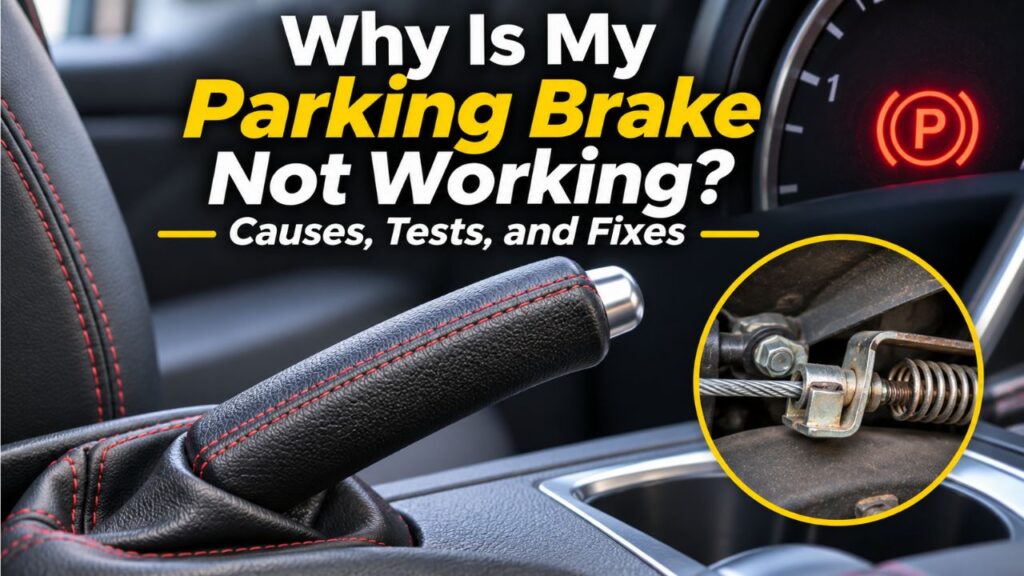
A parking brake must transmit force from its control to a brake mechanism and keep that mechanism engaged. A failure anywhere along that path can reduce holding force. On many cars, the system works at the rear wheels, but its construction varies.
Broken, Disconnected, or Stretched Parking Brake Cable
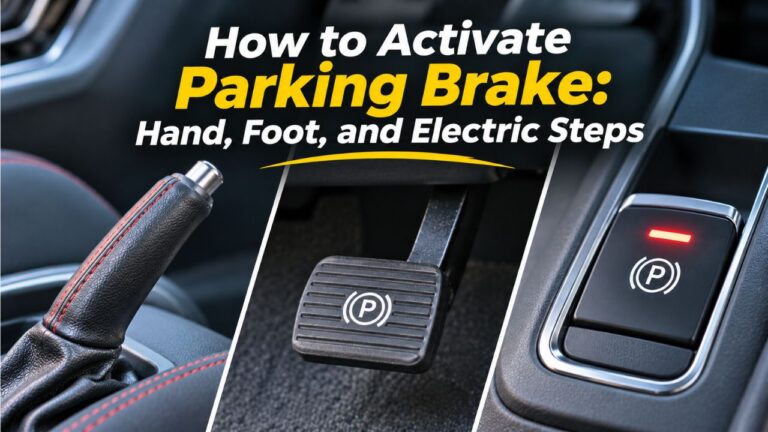
Traditional hand and foot parking brakes use steel cables to pull on rear brake levers or shoes. A cable can fray, break, detach from an equalizer, or develop enough slack that the mechanism cannot apply sufficient force. The lever may travel unusually far or feel almost weightless.
Corrosion creates a different problem: the cable can bind inside its outer sheath. It may fail to move enough to apply the brake or remain partly pulled after the driver releases the control. The Haynes guide to parking brake cables describes how cable damage and corrosion can compromise the connection between the lever and rear brake mechanism.
Worn Brake Shoes, Pads, or Incorrect Adjustment
A cable can move normally while the friction surfaces fail to grip. Drum-style parking brakes use shoes that press against a drum, sometimes hidden inside the center of a rear disc rotor. Other vehicles use a mechanism built into the rear caliper to press the pads against the rotor.
Worn, glazed, or contaminated friction material may not hold the car securely. Excessive clearance between parking brake shoes and their drum can also require more movement than the linkage provides. On systems with an adjuster, a seized or incorrectly set adjuster prevents proper contact. Tightening the cable is not a substitute for inspecting worn shoes or restoring the specified shoe clearance.
Seized Rear Caliper Lever or Damaged Brake Hardware
The parking brake may apply unevenly or fail altogether when a rear caliper’s mechanical lever is seized. Inside a drum assembly, broken springs, displaced hardware, or a stuck actuating lever can prevent the shoes from moving properly.
A damaged return spring may leave the brake dragging after release. If one side works and the other does not, the problem may be limited to one cable branch, caliper mechanism, or set of parking brake shoes. A technician should inspect both sides rather than replacing parts based only on the feel of the cabin lever.
Worn Handbrake Ratchet or Foot-Pedal Latch
The cabin control itself can fail. A hand lever normally stays raised using a ratchet and pawl; some foot-operated mechanisms use a similar locking arrangement. If the latch is damaged, the lever or pedal may spring back instead of remaining engaged.
This differs from a brake that stays latched but cannot hold the vehicle. A control that will not lock requires inspection of its locking mechanism and connections, while a control that holds normally may have a problem farther down the system.
Electronic Parking Brake Motor or Electrical Fault
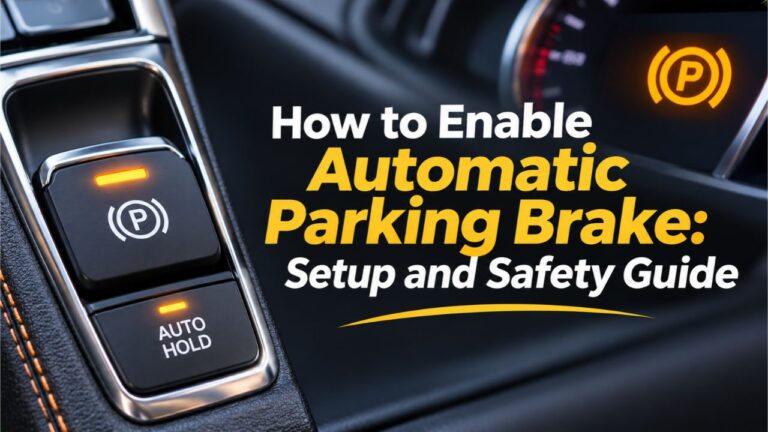
An electronic parking brake (EPB) uses a switch and electrically driven actuators, either at the rear calipers or through another mechanical arrangement. A weak 12-volt battery, damaged wiring, blown fuse, faulty switch, or failed actuator can interrupt operation. Incorrect service procedures after a rear brake repair can also produce faults.
HELLA’s technical guide to electric parking brakes describes inspecting the mechanical components and using diagnostic equipment to read faults and test actuator operation. An EPB warning does not establish which component has failed; the codes and operating conditions must be checked.
What Different Parking Brake Symptoms Mean
| Symptom | Possible Fault | What to Check |
| Lever pulls up too easily | Broken, detached, or slack cable | Cable connections and travel |
| Lever latches but car can roll | Worn shoes, weak adjustment, or seized linkage | Rear brake friction and hardware |
| Parking brake will not release | Bound cable, seized caliper, or frozen mechanism | Mechanical movement and drag |
| Pedal or lever will not stay applied | Worn ratchet or latch | Cabin control assembly |
| EPB motor clicks but brake does not hold | Actuator or rear brake mechanism fault | Scan data and mechanical condition |
| EPB warning or no switch response | Electrical supply, switch, wiring, or actuator fault | Battery voltage and fault codes |
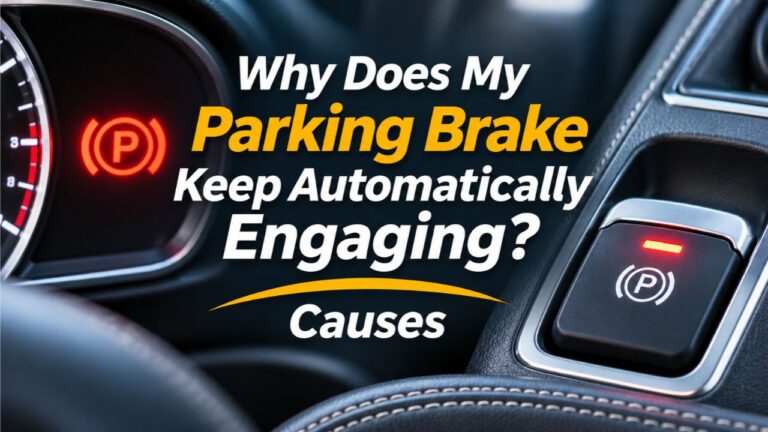
A dashboard parking brake light is not a holding-force test. It commonly indicates that the control is applied or a fault was detected; it does not confirm that the rear wheels are securely braked. Likewise, the car staying still in Park proves little about the separate parking brake system.
How to Diagnose a Parking Brake That Is Not Holding
Step 01: Secure the Vehicle Before Testing Anything
Park on solid, level pavement, apply the normal brake pedal, and place an automatic transmission in Park or a manual transmission in its manufacturer-recommended parking gear. Use suitable wheel chocks if there is any chance of movement. Keep people clear of the vehicle’s path.
If you already know the parking brake cannot hold, do not try a steep-hill test. A professional brake-force tester can measure whether the mechanism applies adequate force. Do not crawl beneath a vehicle unless it is supported with approved equipment.
Step 02: Check How the Parking Brake Control Feels
Apply the hand lever or foot pedal normally while the vehicle stays stationary. Note whether it has familiar resistance, travels farther than before, or fails to remain latched. The exact acceptable travel differs by model; counting clicks without a service specification is unreliable.
For an EPB, follow the owner’s manual to apply it and note any warning messages. Some electronic systems apply automatically when the ignition or gear position changes, so do not assume a silent or unexpected application sequence means the motor has failed.
Step 03: Inspect Visible Cables and Rear Brake Connections
With the engine off, use a flashlight to inspect accessible cables and fittings without going underneath an unsupported vehicle. Look for obvious fraying, a disconnected cable end, damaged outer sheaths, corrosion, or a missing retainer. Do not pull hard on rusty parts.
If a connection is detached, identify why it came loose before reattaching anything. A damaged retainer or seized caliper arm may cause the problem again. Repairs near the wheel assembly require safe lifting, correct hardware, and model-specific service instructions.
Step 04: Separate a Holding Problem From a Release Problem
A brake that will not hold and a brake that will not release can feel similar at the switch but require different repairs. A loose lever suggests insufficient cable movement, while a lever that stays tight after release suggests a binding mechanism.
With the brake released, check for a persistent warning light, scraping, resistance to movement, or burning odor. Do not drive to see whether a stuck brake frees itself. Overheated pads, shoes, and rotors can become damaged quickly.
Step 05: Check Rear Brake Wear and Adjustment Professionally
If control travel is normal but holding force is poor, inspection usually moves to the rear brake assemblies. A technician can check parking brake shoe thickness, drum condition, adjustment hardware, caliper operating levers, and contamination from grease or fluid.
CarParts.com’s guide to brake shoe inspection and replacement covers inspecting friction material and setting drum shoe clearance during service. The correct adjustment depends on the particular rear brake design. Simply turning a cable adjuster tighter can mask a worn or damaged component and cause dragging.
Step 06: Diagnose Electronic Parking Brake Warnings
An EPB that makes no motor sound or reports a malfunction may need battery and circuit checks before actuator replacement. On some vehicles, the warning may appear after low voltage, interrupted brake service, or an unsuccessful system initialization.
A compatible diagnostic tool can retrieve brake-control fault codes, check switch inputs, and perform specified actuator tests. Follow the manufacturer’s maintenance-mode procedure before working on electronic rear calipers. Do not disconnect EPB motors or force pistons backward as a shortcut.
Step 07: Confirm the Repair With a Proper Holding Test
After the suspected fault is corrected, check that the parking brake applies, stays engaged, and releases fully. A technician can use a brake-testing stand or the vehicle manufacturer’s approved holding test to establish whether it meets the required performance standard.
Do not rely on a dashboard light or a level-ground test as proof of adequate holding power. Avoid attempting to make the car move against the brake by accelerating; this can overload components and creates an unnecessary hazard.
Why a Parking Brake May Stay Stuck Instead of Engaging Properly
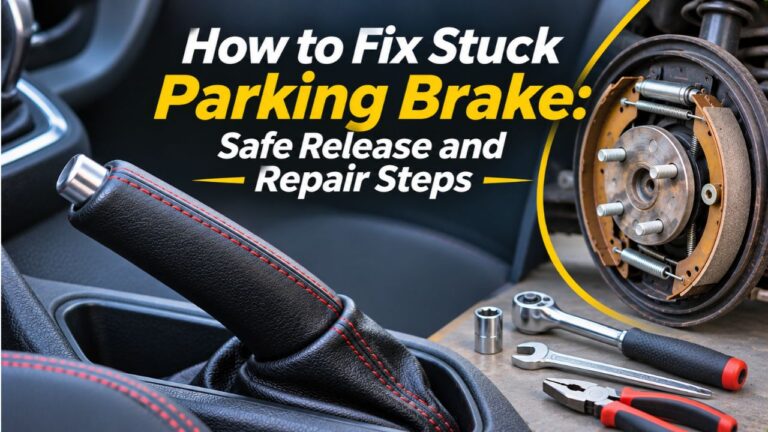
If the brake stays applied after you release the control, corrosion or freezing may have trapped the cable inside its housing. A mechanical lever at the caliper can also seize, while worn springs or misadjusted shoes can prevent the brake from retracting fully.
Freezing conditions can make matters worse when water enters cable sheaths or collects around brake components. A sticking brake may produce a hot smell, dragging sensation, or unusual wheel temperature after use. Do not touch potentially overheated components or try to overpower the brake with the accelerator.
An electronic parking brake may fail to release because of an electrical fault or an actuator that cannot retract. Follow the owner’s manual for a documented emergency release procedure, if one exists. Otherwise, arrange recovery and repair rather than guessing at switch combinations.
How to Fix a Parking Brake That Is Not Working
The correct repair is based on the failed component, not the symptom alone. A broken or heavily corroded cable generally needs replacement with a compatible part. The mechanic should confirm correct routing, connections, and free movement before adjusting tension.
If the rear shoes are worn, damaged, or contaminated, they may need replacement along with correction of the underlying leak or hardware problem. A seized adjuster, missing spring, or worn drum requires its own repair. On rear calipers with integrated parking brakes, a sticking operating lever or internal mechanism may require caliper service or replacement.
Adjustment should follow inspection, not replace it. Excessive cable tension can make the rear brakes drag and overheat, while insufficient tension leaves the vehicle poorly secured. Different systems use different adjustment sequences, and some have automatic cable tensioners that should not be casually altered.
For EPB failures, repair may involve the switch, wiring, actuator, or control electronics. Certain systems require scan-tool initialization or calibration after repairs. Fixing a fault code without restoring actual holding force is not a completed brake repair.
Is It Safe to Park or Drive With a Broken Parking Brake?
A car with an ineffective parking brake may still have working service brakes, but it has lost an important means of securing itself when parked. Do not rely on the automatic transmission’s Park position or a manual gear as a permanent substitute, particularly on an incline.
If you must temporarily secure the vehicle, choose level ground, select the correct transmission position, and use suitable wheel chocks while arranging prompt repair. If the parking brake is stuck applied, the service brakes are also behaving abnormally, or a red brake-system warning indicates another fault, do not drive; arrange safe transport and diagnosis.
FAQs About Why Is My Parking Brake Not Working
Why Does My Handbrake Feel Loose?
A loose handbrake can indicate a broken or disconnected cable, excessive slack, worn brake shoes, or an adjustment problem. Inspect the cable path and rear brake mechanisms before tightening anything.
Why Does My Parking Brake Light Come On but the Car Still Rolls?
The warning light usually detects application at the control or electronic system. It does not verify braking force at the wheels. Worn shoes, a damaged cable, or an actuator problem can still prevent holding.
Can Worn Rear Brake Pads Cause the Parking Brake to Fail?
Yes, on vehicles where the parking brake applies the rear caliper pads. Other designs use separate drum-style parking brake shoes, so worn service pads may not explain the problem. Identify the brake design first.
Does a Parking Brake Need Brake Fluid to Work?
Most conventional cable-operated parking brakes don’t use hydraulic pressure to hold the vehicle. However, a low brake-fluid warning can share dashboard indicators with parking brake warnings. Follow the owner’s manual and inspect the service brake system if fluid is low.
Can I Fix an Electronic Parking Brake by Resetting It?
A reset or initialization may be necessary after approved repairs, but it will not fix a damaged motor, wiring fault, or worn brake hardware. Read the applicable diagnostic codes and follow the manufacturer’s procedure.
Restore Reliable Parking Brake Holding Before You Park on a Hill
If you’re asking why is my parking brake not working, begin with the symptom: excessive lever travel often points toward cables or adjustment, poor holding with normal control movement suggests rear brake hardware, and an EPB warning calls for electrical and mechanical diagnosis. A brake that will not release is a separate problem that may involve binding or frozen parts.
The safest approach is to inspect the system, repair the verified cause, and confirm actual holding and release with an approved test. Until the parking brake is dependable, avoid relying on it on slopes and arrange professional service rather than masking the fault by tightening the control.