How to Disable Automatic Parking Brake: Model-Specific Steps
You can disable automatic parking brake engagement on some vehicles through an electronic parking brake (EPB) switch sequence or a vehicle setting, but there is no universal procedure. Some Toyota models offer a manual mode, certain Honda models let you turn the automatic feature on or off, and some Mazdas permit only a temporary cancellation that resets at the next startup.
This adjustment changes when the parking brake applies by itself; it does not remove the parking brake or make its mechanical components unnecessary. Your vehicle may still engage the brake during certain safety events, even after an optional auto-apply function is turned off.
The correct method depends on the make, model, year, transmission, and software configuration. Using the wrong sequence can leave a parked car unsecured or confuse a parking-brake warning with a setting change. This guide explains how to identify your system, follow documented Toyota, Honda, and Mazda procedures, verify the result, and handle automatic car washes, towing, and unexpected brake engagement without defeating essential safety functions.
What Disabling the Automatic Parking Brake Actually Means
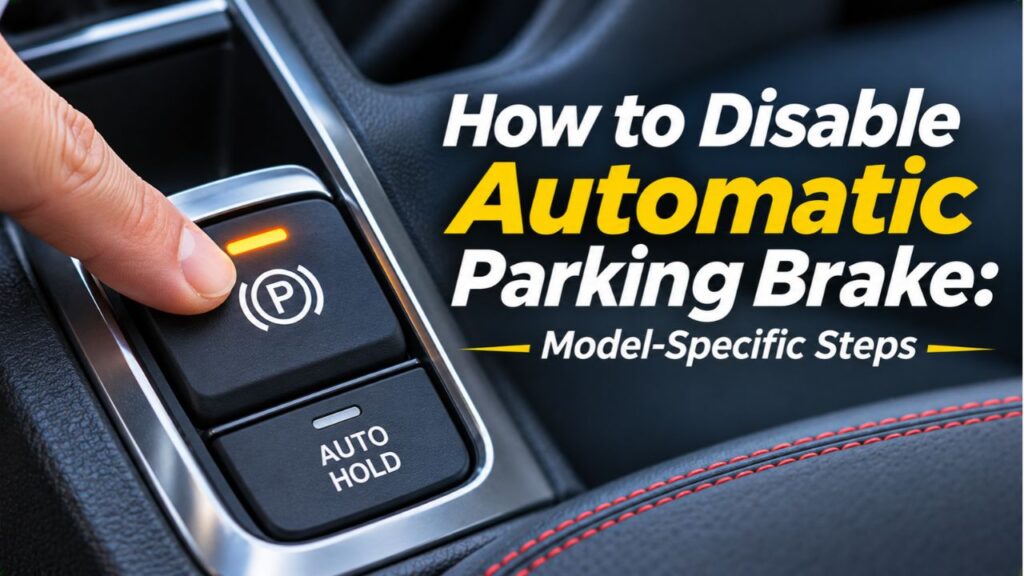
An electronic parking brake uses an electrical command to operate a mechanical holding mechanism, commonly in the rear brakes. Many vehicles apply it automatically when the driver selects Park, switches off the ignition, or meets another condition. Others require the driver to apply it manually unless a safety feature intervenes.
Turning off automatic application generally leaves the EPB switch operational. You can still apply the parking brake before leaving the vehicle and release it under the conditions specified by the manufacturer. This is different from disconnecting the electric motor, removing a fuse, or disabling the braking system itself.
It is also different from Auto Hold, which helps keep the vehicle stopped in traffic after you release the foot brake. Auto Hold can transfer to the parking brake when the engine shuts down or certain conditions arise, but turning off Auto Hold alone does not necessarily turn off automatic parking-brake engagement.
Before Changing the Automatic Parking Brake Setting
First, find the parking brake section of the owner’s manual for your precise model year and trim. Look for terms such as “automatic mode,” “automatic parking brake feature,” “canceling automatic operation,” or “EPB.” Do not assume two cars with the same switch symbol have the same control sequence.
Choose a flat, secure place and keep the regular brake pedal pressed as directed. If disabling auto-apply means the car could roll when parked, use Park or the correct manual-transmission gear and properly positioned wheel chocks. Never rely on a transmission parking lock alone while working beneath or around the vehicle.
If a red brake-system warning, EPB malfunction message, or unusual pedal behavior is present, diagnose that fault instead of attempting to suppress the automatic function.
How to Disable Automatic Parking Brake on Supported Vehicles
Step 01: Identify Which Action Triggers Automatic Engagement
Observe the dashboard indicator while the vehicle is safely stationary. Does the parking brake apply when you shift into Park, when you switch the ignition off, or after Auto Hold has been active? These are different control behaviors and may be governed by separate rules.
Consult the owner’s manual rather than repeatedly shifting or turning the ignition on and off to experiment. The manual should tell you whether an owner-adjustable setting exists and whether it persists after restart. If it does not document an off setting, do not assume one is hidden behind a universal button combination.
Step 02: Secure the Car Before Making a Change
Park on level ground and keep your foot on the regular brake pedal while choosing Park or the manufacturer-recommended manual-transmission gear. Where the procedure requires releasing the parking brake, make certain the vehicle cannot roll; use wheel chocks when appropriate. Avoid performing the adjustment on a hill, inside a moving car wash, or during towing preparation unless you are following that vehicle’s prescribed procedure.
Check that no person is near a wheel and that the EPB switch is unobstructed. Do not perform experiments while driving. Automatic engagement and release systems can behave differently when a door opens or a seat belt is unfastened.
Step 03: Find the EPB Switch and Read Its Indicators
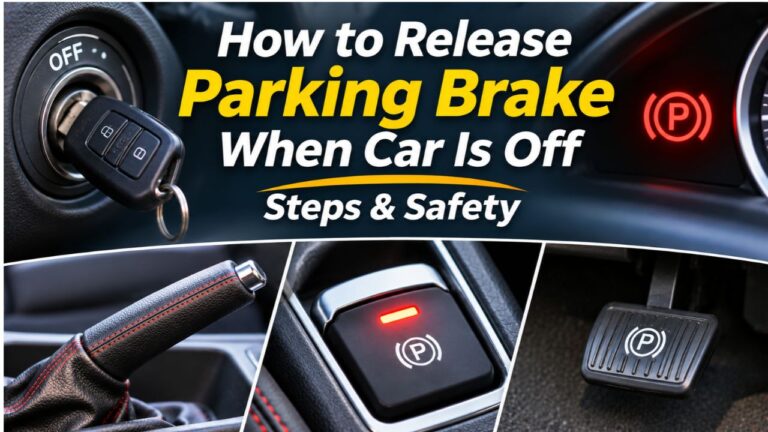
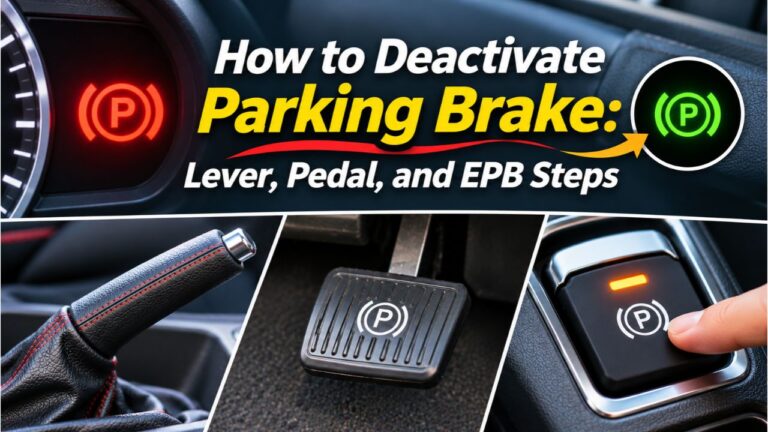
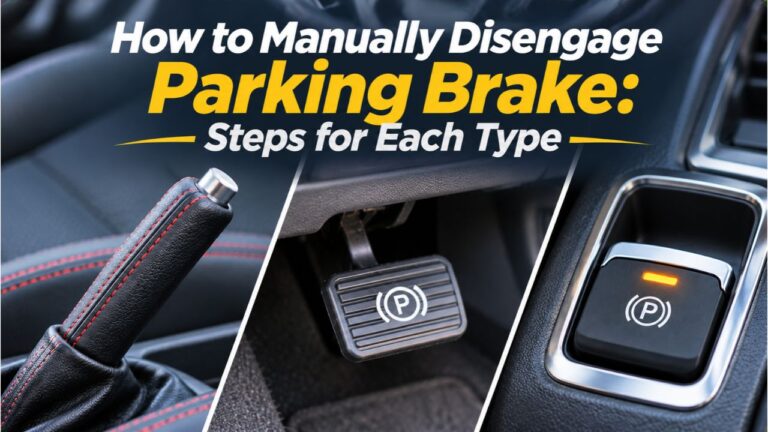
Locate the switch marked with a circled P or the vehicle’s parking brake symbol, usually on the center console or dashboard. On many systems, pulling the switch applies the brake and pressing it releases the brake, but verify the directions before acting.
Identify the parking brake status light separately from an amber malfunction indicator. A light going out after release does not prove that an automatic mode has been disabled; it may only mean the brake is not currently applied. Confirmation of a mode change may require a buzzer, dashboard message, or a documented switch sequence.
Step 04: Turn Off Automatic Mode on Toyota Models That Support It
On Toyota vehicles with the documented switch-controlled automatic mode, stop the vehicle and keep the regular brake pedal depressed. Press and hold the parking brake switch in the release direction until a buzzer sounds and a confirmation message appears on the multi-information display. That changes the supported system from automatic to manual operation.
Toyota’s official parking brake operating instructions describe this procedure and distinguish it from turning automatic mode back on, which uses a pull-and-hold action. The instructions also explain that other automatic safety functions may still intervene. Use this sequence only if your vehicle’s own manual specifies it; older or differently equipped Toyotas may operate another way.
After confirmation, the parking brake can still be applied manually. Turning automatic mode off is not permission to leave the vehicle without securing it.
Step 05: Disable Automatic Application on Supported Honda Models
Certain Honda models have a separate feature that automatically applies the EPB when the power mode is switched off. On a supported vehicle, put the power mode ON, select P, and follow this exact sequence from the applicable manual: without pressing the brake pedal, pull up the EPB switch to apply the parking brake. Then pull up and hold the switch until you hear a beep; release it, and within three seconds pull up and hold it again until the completion sound.
According to the 2026 Honda Accord parking brake instructions, one completion beep means the automatic feature has been deactivated, while two mean it has been activated. The manual also notes that automatic parking-brake application can still occur in certain situations involving adaptive cruise control or brake hold.
These are instructions for the stated Honda system, not every Civic, CR-V, Accord, or Acura model. Do not repeat the sequence if it gives an unfamiliar warning or does not match your owner’s manual.
Step 06: Temporarily Cancel Auto-Apply on a Supported Mazda
Some Mazda systems use a temporary cancellation, not a persistent off setting. For the 2026 Mazda3 procedure, switch vehicle power on, release the parking brake manually, and turn off AUTOHOLD. Press and hold the EPB switch in the release direction until the specified sound occurs, release the switch, and turn the power off immediately as the manual instructs.
Mazda’s 2026 Mazda3 electric parking brake instructions explain that the indicator changes and a confirmation sound occurs. They also say automatic operation returns when the vehicle is powered on again. The manual offers an alternate method for the same temporary cancellation, but both require the exact documented conditions.
This approach may be needed for some car-wash or service situations. Do not expect it to disable automatic engagement permanently, and do not copy the timing to other Mazda years without checking their manuals.
Step 07: Turn Off Auto Hold if It Is Causing the Transition
If the parking brake engages after you have been stopped in traffic, the trigger may be Auto Hold rather than a dedicated automatic parking mode. With the vehicle secured and the regular brake pressed when required, use the Auto Hold button or menu to switch that feature off according to the owner’s manual. Check that its indicator changes as specified.
Auto Hold usually controls temporary stopping assistance. An EPB can still apply automatically when ignition is turned off, a driver exits, or a safety condition is detected. Treat those actions as separate settings rather than assuming one button disables them all.
Step 08: Verify the Change Without Allowing the Vehicle to Roll
Check the confirmation buzzer or display message named in your manual. Then confirm that the switch still applies and releases the parking brake normally while the vehicle remains safely secured. You do not need to let the car move to establish whether the setting was accepted.
If the feature is supposed to stay off, compare its behavior at the next normal startup or shutdown only under the manufacturer’s instructions. If the change was temporary, expect automatic mode to resume at the specified point. Always apply the parking brake manually before leaving a vehicle unless the manufacturer has prescribed a controlled exception.
Automatic Mode Off vs. Releasing an Applied Parking Brake
Disabling auto-apply is a settings change. Releasing the parking brake is a current action. If the brake is applied and you need to depart, most EPB systems require you to press the regular brake pedal and operate the EPB switch in the release direction. Some permit automatic release when the driver is buckled in and starts moving under specified conditions.
Do not use the accelerator to force a vehicle forward if it resists movement. A fault, locked caliper, or failed actuator can prevent release even when the switch is pressed. A warning that says “Parking Brake Unavailable” or “EPB Malfunction” requires troubleshooting, not a hidden deactivation sequence.
Why the Parking Brake Reapplies After Automatic Mode Is Disabled
A parking brake can reengage for reasons unrelated to the ordinary auto-apply preference. Brake Hold may hand control to the EPB during a prolonged stop. Some vehicles apply the brake after a door or seat belt status changes, when the ignition is switched off, or when an electronic system detects a condition requiring parking security.
Another explanation is that the change was temporary. Some Mazda cancellation procedures specifically reset at the next power-on. Other vehicles may have settings that vary by version or need reconfiguration after electrical service. Verify the actual manual rather than assuming a stored preference survived a battery replacement.
Finally, an EPB that applies unexpectedly, fails to release, or shows an amber warning may be malfunctioning. A weak 12-volt supply, damaged wiring, switch problem, or actuator fault can produce inconsistent behavior. A professional scan of the appropriate brake controller may be needed.
Can You Permanently Disable an Automatic Parking Brake?
Only when the manufacturer provides a supported setting that persists. Some vehicles offer an owner-selectable automatic or manual mode. Others allow only a temporary bypass for a car wash or towing, and some provide no owner-accessible option at all. Even a manual setting may not override every built-in safety application.
Do not pull an EPB fuse, unplug rear caliper motors, cut wiring, or use unofficial software changes to defeat parking-brake operation. Those actions can disable normal application, release, or fault monitoring and may leave the vehicle unable to park safely. An EPB malfunction is a repair issue, not a reason to permanently disconnect it.
Disabling Auto-Apply for a Car Wash, Towing, or Brake Service
A conveyor car wash may require the vehicle to remain in Neutral with the parking brake released. Automatic shifting, door-opening behavior, or Auto Hold can interfere, so follow both the car wash’s instructions and the specific vehicle’s car-wash or Neutral mode procedure. If they conflict, do not enter the conveyor.
Towing requires its own instructions for drivetrain position, wheel support, and EPB state. A temporary auto-apply cancellation is not a substitute for proper towing equipment. A vehicle with a parking brake that cannot release may need a flatbed or wheel dollies.
For rear brake pad replacement, EPB maintenance or service mode is different from disabling automatic application. Some calipers need an approved retracting procedure or scan tool before their pistons are moved. Turning off auto-apply does not place the actuator in service mode, and forcing the caliper can damage it.
When Leaving Automatic Parking Brake Enabled Is Safer
Automatic application helps protect against forgetting to set the parking brake, particularly on slopes. If you have no specific need to disable it, leaving the feature on may be more practical. A vehicle may roll after shifting into Park if the transmission lock has not fully engaged, or if a driver exits without securing the car correctly.
If a temporary cancellation is necessary to prevent freezing, prepare a secure level parking location and use suitable chocks in accordance with the owner’s manual. Avoid disabling the feature merely to stop an alert or unusual sound; identify the underlying condition first.
FAQs About How to Disable Automatic Parking Brake
Can I Turn Off an Automatic Parking Brake Through the Dashboard Settings?
Sometimes. Certain vehicles have a menu option, while others require a specific EPB switch sequence. Use the manual for your exact model and software rather than assuming every car has a settings menu.
Will Disabling Auto-Apply Stop the Parking Brake From Working?
No, a supported manual mode generally preserves normal switch-controlled parking brake operation. It changes automatic engagement, although some protective functions may still apply the brake.
Why Does My Electronic Parking Brake Turn On Every Time I Shift Into Park?
That may be the system’s normal shift-linked automatic mode. Auto Hold or a separate safety function can also cause engagement. Check which behavior your vehicle supports before attempting to change it.
Is Disabling Auto Hold the Same as Disabling the Parking Brake?
No. Auto Hold assists with temporary stops; the EPB secures the parked vehicle. Turning Auto Hold off may prevent some transitions but does not necessarily disable automatic EPB application at shutdown.
Can I Disable Automatic Parking Brake for a Car Wash?
Some manufacturers provide a temporary cancellation or a dedicated car-wash procedure. Follow the vehicle’s instructions, confirm the required Neutral setting and brake release, and never enter a conveyor if the vehicle may apply its brakes unexpectedly.
Why Does Automatic Parking Brake Come Back After Restarting?
Your vehicle may support only temporary cancellation, as some Mazda systems do. If the owner’s manual says a setting should persist, a returning function may require checking the procedure or investigating a related warning.
Keep Manual Parking Brake Control Without Losing Safety
Knowing how to disable automatic parking brake starts with identifying whether your vehicle offers a persistent manual mode or only a temporary cancellation. Toyota, Honda, and Mazda use different documented procedures, so the correct switch movement and confirmation signals must come from the exact owner’s manual.
After changing an available setting, confirm that the EPB still engages and releases normally. Use the parking brake whenever you leave the vehicle, and rely on approved temporary exceptions only for controlled situations such as a compatible car wash or service procedure. Never bypass the hardware to solve unwanted automatic engagement.