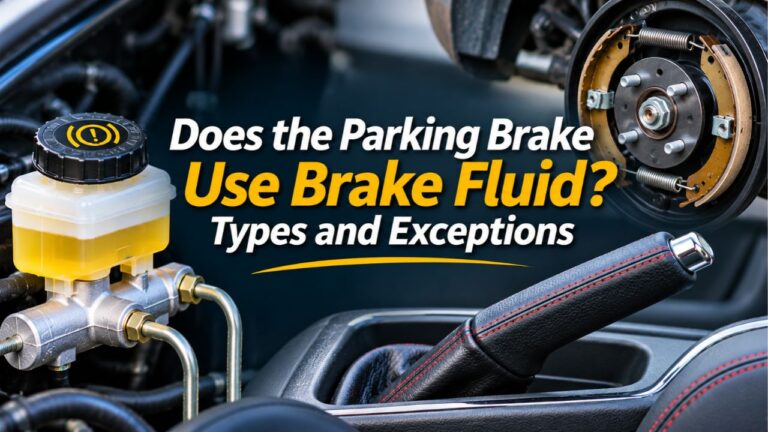
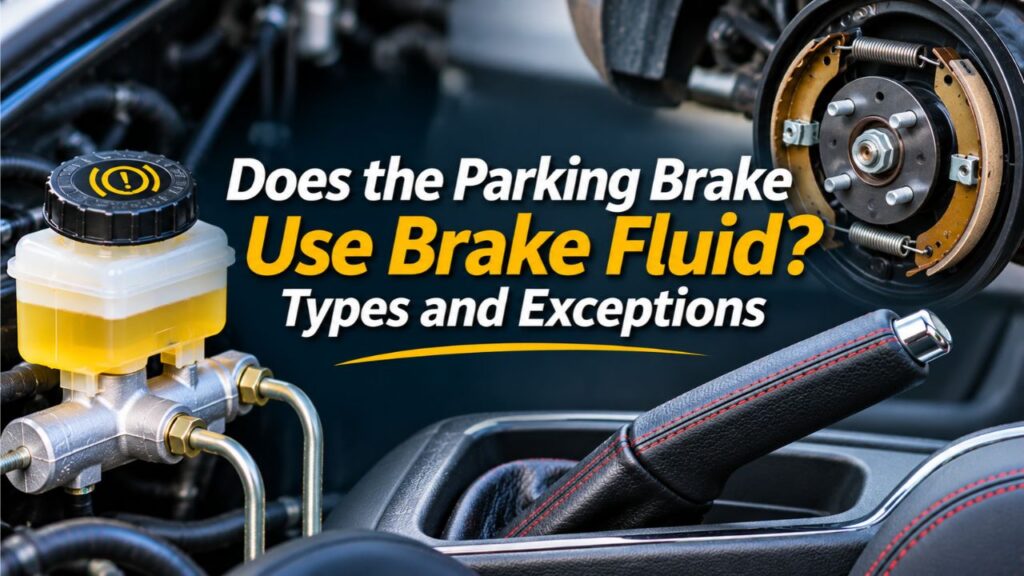
Does the Parking Brake Use Brake Fluid? Types and Exceptions
No, the parking brake in most passenger vehicles does not use brake fluid to stay applied. A traditional parking brake pulls a cable that moves rear brake shoes or a mechanical lever in the caliper. An electronic parking brake usually uses an electric motor and mechanical gearing to hold the brakes. Both are different from the hydraulic brakes operated by the regular brake pedal.
The confusion makes sense because the parking brake often uses the same rear wheels, pads, or calipers as the main brakes. A brake-fluid warning light may also appear on the same dashboard indicator used for the parking brake. Yet sharing components or warning lights does not mean the parking brake depends on hydraulic pressure to hold a parked car.
There are exceptions, especially specialized systems that use hydraulic power during application, but they still need an approved means of retaining the brake. This guide explains what actually moves the parking brake, how manual and electronic systems differ, whether low brake fluid affects it, and what to check when the parking brake will not hold.
Does the Parking Brake Use Brake Fluid in Most Cars?
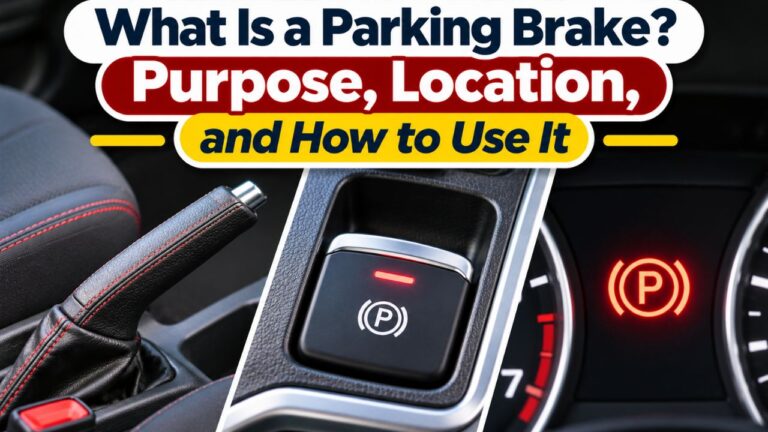
Most factory parking brakes operate independently of the hydraulic pressure used by the foot brake. You might pull a hand lever, press a separate parking-brake pedal, or operate a small switch. Each control activates a mechanism intended to keep the stationary vehicle from rolling.
A conventional cable-operated system transfers physical force directly to the rear brakes. In a common electronic setup, an electric motor turns a mechanism that clamps the rear brake pads or operates a parking-brake cable. It may share the wheel brake hardware with the hydraulic system, but the holding force is retained mechanically.
The regular service brakes have a different purpose: they slow and stop a moving vehicle during ordinary driving. In a typical hydraulic arrangement, pressing the brake pedal moves a master cylinder piston, sending brake-fluid pressure through lines to the wheel brakes. Releasing the pedal relieves the pressure so the brakes can release.
How a Mechanical Parking Brake Works Without Brake Fluid
Hand Lever and Foot Pedal Systems
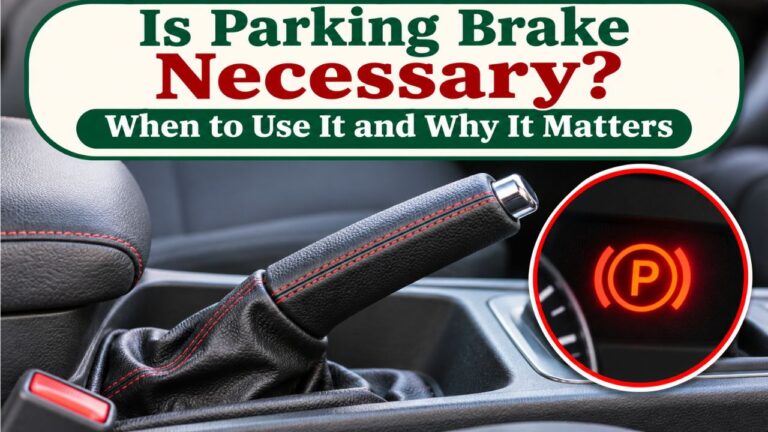
With a traditional handbrake, pulling the lever tensions a steel cable. A floor-mounted parking-brake pedal does much the same job, but the driver’s foot supplies the force. Cables may pass through an equalizer that distributes movement to the left and right rear brakes.
Ford’s explanation of how a handbrake cable works describes this lever-and-cable arrangement and its separation from the primary hydraulic brakes. When the driver releases the control, the cable relaxes and the wheel-brake return mechanism allows the friction parts to move away.
Parking Brakes With Rear Drum Shoes
Some cars use the rear drum brake shoes for both service and parking functions. The ordinary brake pedal pushes the shoes outward hydraulically through a wheel cylinder; the parking-brake cable moves a separate mechanical lever to spread the shoes.
Other vehicles have rear disc service brakes with a small drum-in-hat parking brake inside the center of each rear rotor. These dedicated parking shoes are operated by cables even though the disc caliper beside them works with brake fluid.
Parking Brakes Built Into Rear Disc Calipers
Another common arrangement uses a mechanical lever on the rear brake caliper. Pulling the parking-brake cable operates an internal screw or cam mechanism that presses the regular brake pads against the rotor.
The same caliper can therefore do two jobs: hydraulic braking during driving and mechanical holding when parked. Its service-brake piston contains hydraulic fluid, but the parking-brake action does not depend on maintaining hydraulic pressure in the brake line.
Does an Electronic Parking Brake Need Brake Fluid?
An electronic parking brake (EPB) replaces the familiar lever or pedal with an electrical switch. That does not necessarily make the parking brake hydraulic. On many vehicles, pressing the switch commands an electric motor to apply the brake mechanically.
Motor-on-Caliper Electronic Parking Brakes
In this design, a motor mounted on a rear caliper drives gears and a threaded mechanism to press the brake pads against the rotor. When the commanded clamping force is reached, the mechanism holds the brake without continuous motor operation or constant fluid pressure.
ZF Aftermarket’s electric parking brake overview explains that an integrated caliper combines hydraulic operation for the foot brake with electrical actuation for parking. Those functions share friction parts but have separate ways of applying force.
Electric Motors That Pull Cables
Some electronic systems use a central motorized actuator to pull conventional parking-brake cables rather than mounting a motor on each caliper. The control is electronic, but the final connection to the rear brakes remains mechanical.
Important: Electronic parking brakes may require a scan tool or manufacturer-specified maintenance mode before rear pad or caliper work. Forcing a caliper piston backward can damage the actuator.
Service Brakes vs. Parking Brakes: Where Brake Fluid Fits
The systems can act on the same wheel but have different controls and energy sources.
| Feature | Regular Service Brakes | Typical Parking Brakes |
| Primary job | Slow or stop the vehicle | Keep a parked vehicle stationary |
| Driver control | Main brake pedal | Lever, separate pedal, or switch |
| Common actuation | Hydraulic pressure through brake fluid | Cable, linkage, or electric motor |
| Holding method | Usually requires continued application | Mechanical lock or self-locking mechanism |
| Typical wheel coverage | All four wheels | Usually rear wheels |
| Fluid needed for normal function | Yes, on conventional hydraulic systems | Not for the usual mechanical holding action |
This table describes common passenger-vehicle designs, not every brake arrangement. Modern cars can have regenerative braking, brake-by-wire controls, and specialized actuators. The key question is what retains the parking brake after it has been applied, not whether its pads also participate in hydraulic braking.
Why a Parking Brake Can Work When Brake Fluid Is Low
A mechanical cable can still pull on rear shoes or a caliper lever even if the main hydraulic system loses pressure. An EPB’s motorized screw mechanism may likewise retain its parking position without relying on brake-fluid pressure. This independence is an important part of parking-brake design.
However, a working parking brake does not make a vehicle with low brake fluid safe to drive. Low fluid may indicate worn pads or an active hydraulic leak, and loss of service braking can make stopping difficult or impossible. Parking brakes are intended primarily to hold a stationary vehicle, not to provide an equivalent replacement for the main braking system.
A significant leak may also affect the rear wheel hardware that the two systems share. For instance, brake fluid on a parking-brake friction surface can reduce its grip even when the cable still moves correctly. The reason for low fluid must be identified and repaired rather than assuming the parking brake provides an adequate backup.
Can a Parking Brake Ever Use Hydraulic Pressure?
Some specialized or nonstandard systems use hydraulic force to apply a parking mechanism. Hydraulic assistance during application is different from relying on trapped fluid pressure to hold the vehicle indefinitely. Seals can leak, fluid can change temperature, and pressure can decrease.
For US light vehicles covered by Federal Motor Vehicle Safety Standard No. 135, the parking brake must retain engagement by mechanical means. A National Highway Traffic Safety Administration interpretation of electronic parking brakes explains that electrical or other nonmechanical methods can apply or release a parking brake, but it cannot rely on fluid, air, or electrical energy alone to remain engaged.
An aftermarket hydraulic handbrake sometimes fitted to a drift or motorsport vehicle is a separate case. It typically creates temporary hydraulic pressure for wheel locking during a maneuver; it should not be assumed to satisfy parking-brake requirements or reliably hold an unattended vehicle. A dedicated, properly functioning parking-brake system is still needed where required.
Why the Parking Brake and Foot Brake May Share Components
The parking brake’s independent actuation does not mean every physical component is separate. Many rear disc calipers contain a hydraulic piston for service braking and a mechanical screw assembly for parking. Both mechanisms press the same pads against the same rotor.
On a rear drum brake, service and parking functions may use the same brake shoes, drum surface, and supporting hardware. The wheel cylinder moves the shoes hydraulically during ordinary braking, while a cable-operated lever moves them mechanically when parked.
Does Low Brake Fluid Turn On the Parking Brake Warning Light?
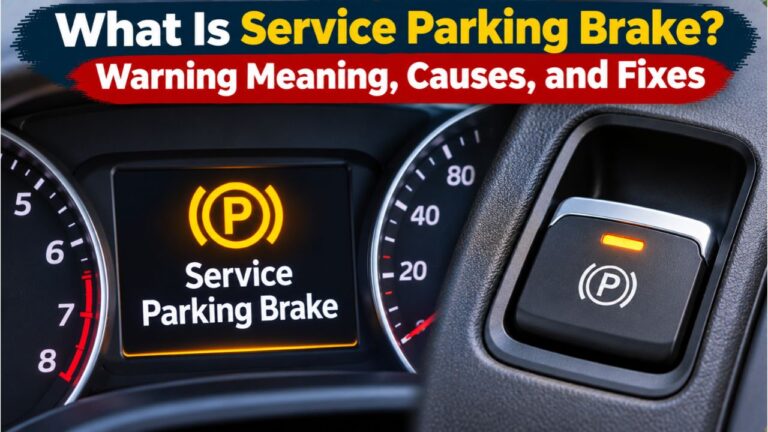
It can turn on a brake warning indicator, but that does not mean the parking brake uses fluid. Many dashboards share a red BRAKE warning light between several conditions, including parking-brake application and certain hydraulic brake faults. Other vehicles display separate parking-brake and brake-fluid messages.
If the warning stays on after you fully release the parking brake, check the owner’s manual for the specific symbol. A low-fluid level, hydraulic pressure problem, parking-brake switch, or electronic fault may be involved.
You can inspect the transparent brake-fluid reservoir without opening it. Compare the level with its markings only under the conditions specified by the manufacturer. Do not repeatedly add fluid to hide an unexplained drop, and never drive with an abnormal pedal or suspected hydraulic leak.
How to Tell Which Parking Brake System Your Car Uses
You can usually identify the general design without taking the brakes apart.
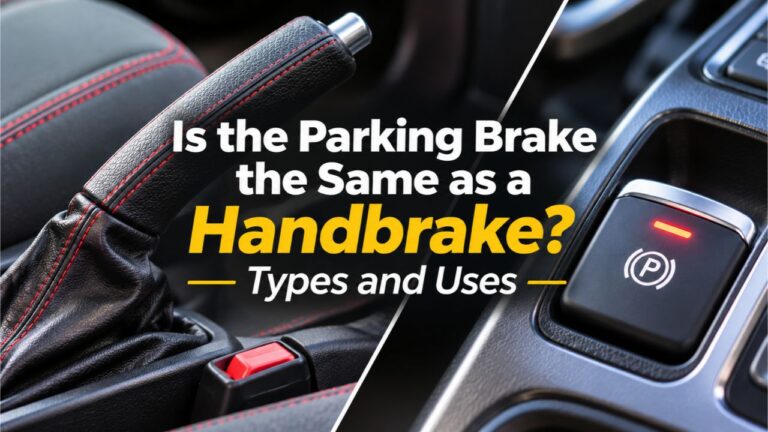
- Check the control: A pull-up hand lever or separate foot pedal generally suggests cable operation. A small parking-brake switch indicates an electronic control.
- Consult the owner’s manual: Look for descriptions such as mechanical parking brake, electric parking brake, or automatic parking-brake release. The manual also explains warning lights and operating conditions.
- Inspect only accessible components: If safely visible, cables leading toward the rear wheels suggest mechanical operation. A motor attached to a rear caliper suggests a motor-on-caliper EPB.
- Confirm repair procedures before servicing: An electronic control can pull cables, and some calipers contain both hydraulic and mechanical parts. The model-specific service instructions provide the reliable identification.
Do not crawl under an unsecured vehicle or remove brake lines to identify the system. The question is how it actuates the rear brakes, not which fluid specification appears on the reservoir cap.
Parking Brake Problems That Adding Brake Fluid Will Not Fix
Loose, Stretched, or Seized Parking-Brake Cable
A cable can corrode inside its housing, break, stretch, or lose adjustment. The lever may travel farther than normal, one wheel may stay engaged, or neither rear wheel may hold adequately. Adding brake fluid does nothing to restore cable tension or release a seized cable.
Worn Shoes, Pads, or Incorrect Adjustment
Parking-brake friction surfaces need adequate material and proper contact with the drum or rotor. Rusted hardware, damaged adjusters, glazed or contaminated linings, and incorrect adjustment may reduce holding force. The correct repair depends on the rear-brake design.
Failed Electronic Motor or Control System
An electronic parking brake may fail because of an actuator motor, wiring problem, switch, module fault, or mechanical jam. Warning messages and diagnostic trouble codes can help locate the cause. A low brake-fluid warning can coexist with an EPB fault, but fluid top-offs do not repair its electrical components.
Brake Fluid Leaks That Need Separate Repair
If fluid is leaking from a caliper or hose, the regular hydraulic brakes require immediate attention. Even if the parking mechanism still holds, a contaminated rotor or pad may compromise friction. Correct the leak, inspect the friction parts, and follow the vehicle’s bleeding procedure whenever hydraulic connections are opened.
Does Parking Brake Repair Require Bleeding the Brakes?
Usually not for purely mechanical repairs. Replacing a parking-brake cable, adjusting an approved drum parking-brake mechanism, or repairing a mechanical lever does not normally open the hydraulic system. No hydraulic air has been introduced, so brake-fluid bleeding is not inherently part of that job.
The situation changes if a repair involves disconnecting a hydraulic brake hose, replacing a rear caliper, or opening a bleeder valve. Those actions can admit air and require the manufacturer’s bleeding instructions. Vehicles with ABS may have additional requirements depending on which parts were opened.
With an EPB, a maintenance or service mode may be necessary even if no fluid is drained. Do not confuse the electronic service-mode step with hydraulic bleeding: they solve different problems. After any brake repair, verify correct parking-brake engagement, release, hydraulic pedal feel, and warning-light operation before driving.
FAQs About Does the Parking Brake Use Brake Fluid
Will the Parking Brake Still Work With No Brake Fluid?
A conventional mechanically operated parking brake may still hold because it does not use hydraulic pressure for its holding action. That does not make the vehicle safe to operate. Complete brake-fluid loss is a serious service-brake failure, and shared wheel components may also be affected.
Does an Electronic Parking Brake Use the Master Cylinder?
Usually not for its ordinary stationary holding function. Motor-on-caliper designs use an electric actuator and mechanical gearing, although the same caliper also contains a hydraulically operated service-brake piston. Some vehicles use different controls during emergency braking while moving.
Does a Handbrake Have Its Own Brake Fluid Reservoir?
A typical cable handbrake does not have a fluid reservoir at all. Its lever or pedal pulls a cable connected to the rear brakes. The reservoir under the hood belongs to the hydraulic service-brake system.
Can Low Brake Fluid Cause the Parking Brake Light to Stay On?
Yes, on vehicles with a shared dashboard brake warning indicator. The light may indicate low fluid, parking-brake engagement, or another brake-system fault. Check the owner’s manual and investigate any warning that remains after the brake is released.
Can You Use the Parking Brake if the Main Brakes Fail?
It may provide limited emergency slowing on some vehicles, but its behavior and effectiveness vary by design. Sudden application can reduce stability, especially on slippery roads. Follow vehicle-specific emergency instructions rather than treating it as an equal substitute for normal braking.
Why Most Parking Brakes Hold Without Brake Fluid
The short answer to does the parking brake use brake fluid is no for most conventional passenger vehicles. A cable-operated parking brake pulls rear brake hardware mechanically, while common electronic systems use motors and locking mechanisms. The service brakes may share pads, rotors, or calipers, but those parts do not make the parking brake depend on sustained hydraulic pressure.
The important exception is that some specialized designs use hydraulic force during application while retaining the brake mechanically. For an everyday car, a weak parking brake is more likely to require inspection of its cables, shoes, adjustment, actuator, or related hardware than a simple fluid top-off.
If the fluid level is low or a brake warning remains illuminated, treat that as a separate safety concern. Identify the actual fault and verify both service-brake and parking-brake operation before returning the vehicle to the road.