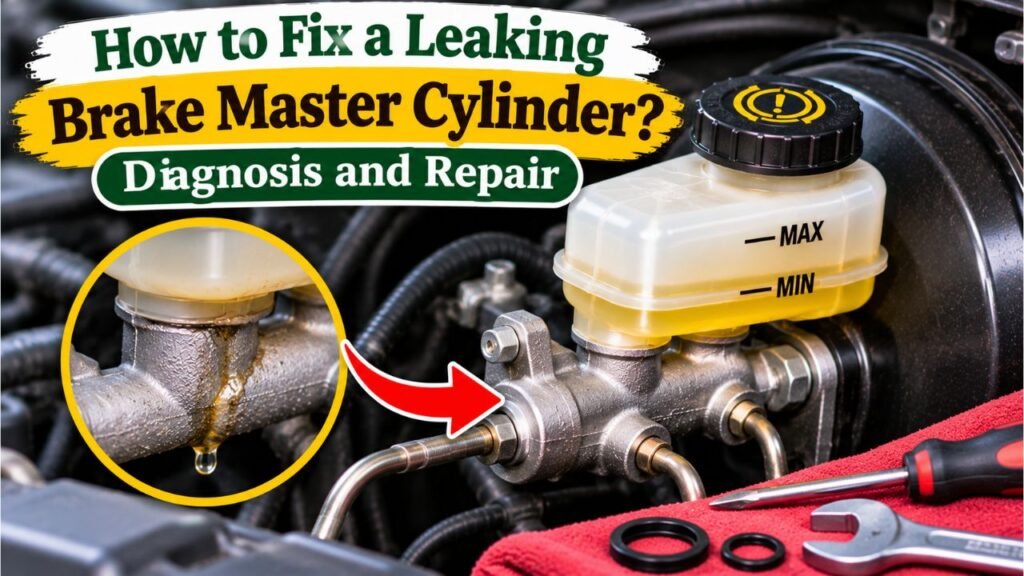
How to Fix a Leaking Brake Master Cylinder: Diagnosis and Repair
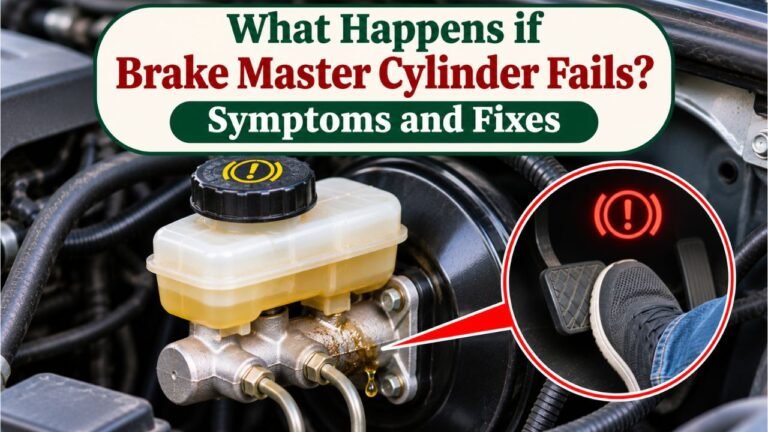
To fix a leaking brake master cylinder, first identify exactly where the brake fluid is escaping. A leak at the reservoir connection may require new rubber grommets, while a leak from the rear piston seal usually requires master cylinder replacement. Leaks around brake-line fittings need separate inspection because the problem may involve the line, flare, or hydraulic outlet rather than the cylinder itself.
A leaking master cylinder is a serious safety concern. The component generates hydraulic pressure when you press the brake pedal, and a loss of fluid or pressure can reduce braking effectiveness. If you suspect an active leak, do not continue driving. Arrange professional inspection or towing.
The correct repair depends on the leak location, cylinder condition, and vehicle design. Some external seals are serviceable, but installing a repair kit is not always a safe or economical alternative to replacing a damaged cylinder.
In this article, I explain how to fix leaking brake master cylinder problems by identifying the source, comparing repair and replacement options, and understanding the correct service process. I also cover brake booster contamination, bleeding procedures, replacement costs, warning signs, and mistakes that can lead to repeat leaks.
How to Fix a Leaking Brake Master Cylinder: Quick Answer
The correct fix depends on where the master cylinder is leaking. There is no single repair that works for every leak.
Some problems involve replaceable external seals. Others indicate internal damage or a failed master cylinder that should be replaced.
Brake Master Cylinder Leak Repair Chart
| Leak Location | Possible Cause | Typical Repair |
| Under brake fluid reservoir | Worn reservoir grommets or seals | Replace correct seals if serviceable |
| Cracked reservoir | Damaged plastic reservoir | Replace reservoir or assembly |
| Brake-line connection | Damaged flare, fitting, or sealing surface | Repair or replace affected component |
| Rear of master cylinder | Failed internal or rear hydraulic seal | Usually replace master cylinder |
| Between master cylinder and booster | Rear seal leak or related fault | Replace master cylinder and inspect booster |
| Master cylinder housing | Cracked or corroded body | Replace master cylinder |
| Pedal sinks with no visible leak | Possible internal hydraulic bypass | Diagnose system; replace faulty component |
| Fluid leaking elsewhere | Hose, caliper, ABS unit, or brake line fault | Repair actual leak source |
The CarParts.com guide to testing a brake master cylinder, reviewed by an ASE-certified master automobile technician, identifies the reservoir connection and the master cylinder-to-booster area as common places to investigate fluid leakage.
It also explains that internal master cylinder failures may occur without an obvious external leak.
Can You Fix a Master Cylinder Leak Without Replacing It?
Sometimes.
A leak caused by an accessible, replaceable reservoir grommet may be repairable without replacing the entire cylinder.
However, a leaking internal piston seal, damaged cylinder bore, cracked housing, or seriously damaged hydraulic outlet often makes complete replacement the better choice.
Do not assume a generic seal kit will solve the problem.
What Should You Do First?
If brake fluid is visibly leaking, the reservoir level is dropping unexpectedly, or the brake pedal feels abnormal, stop using the vehicle.
Have the leak source identified before buying parts.
A proper repair must restore hydraulic integrity and be followed by the required bleeding and safety checks.
Is a Leaking Brake Master Cylinder Dangerous?
Yes.
The brake master cylinder is one of the primary hydraulic components in a conventional vehicle braking system.
It develops hydraulic pressure that travels through brake lines to the wheel brakes.
When the cylinder leaks, the system may lose fluid or fail to maintain pressure.
Possible Consequences of a Leak
A leaking master cylinder can contribute to:
- Reduced hydraulic pressure
- Increased brake pedal travel
- A soft or sinking brake pedal
- Brake warning lights
- Low brake fluid
- Air entering the hydraulic system
- Reduced braking effectiveness
- Partial or substantial brake failure
Not every small leak produces an immediate change in pedal feel.
However, a leak can worsen unexpectedly.
Can You Drive With a Leaking Master Cylinder?
No. If an active master cylinder leak is suspected, do not drive the vehicle until the braking system has been professionally assessed.
Adding fluid is not a dependable temporary fix.
The reservoir may appear full after topping up even though a defective seal or hydraulic connection remains.
What if the Brakes Still Feel Normal?
Normal pedal feel does not prove that a leaking braking system is safe.
An external leak may initially be small enough that the pedal feels unchanged.
However, continued fluid loss can eventually affect braking performance.
Arrange towing or professional roadside assistance rather than attempting to drive the car to a repair shop.
Where Does a Brake Master Cylinder Usually Leak?
A conventional master cylinder has several possible leakage points.
Understanding them helps you distinguish a serviceable external seal from a failure requiring replacement.
1. Reservoir-to-Cylinder Connection
Many vehicles use a translucent plastic brake fluid reservoir connected to the metal master cylinder body.
Rubber grommets or seals prevent brake fluid from escaping at the connection.
Over time, these seals may deteriorate.
2. Brake-Line Outlet Connections
Brake lines connect to hydraulic outlet ports on the master cylinder.
Leaks may occur when a fitting, flare, or sealing surface is damaged.
The master cylinder itself may still be serviceable if the fault is limited to a replaceable brake line or fitting.
3. Rear Master Cylinder Seal
The rear portion of the master cylinder is often attached to the brake booster.
A damaged internal or rear hydraulic seal may allow fluid to escape toward the booster.
Some leaked fluid may collect inside the booster rather than appearing on the ground.
4. Master Cylinder Housing
Corrosion, physical damage, or a manufacturing defect can cause leakage from the housing itself.
A cracked hydraulic housing generally requires replacement.
5. Internal Hydraulic Seals
Internal seals can fail without allowing fluid to escape outside the component.
Hydraulic fluid may bypass the piston seals instead of maintaining the expected pressure.
This is an internal hydraulic failure rather than a visible external leak.
How to Find a Brake Master Cylinder Leak
Identifying the leak source is the most important part of diagnosis.
Fluid can travel along metal surfaces before dripping, so the wettest visible spot is not necessarily where the leak began.
Step 1: Park the Vehicle Safely
Park on level ground and switch off the engine.
Secure the vehicle.
If braking performance is abnormal, do not attempt to move it for testing.
Avoid touching hot engine components.
Step 2: Locate the Master Cylinder
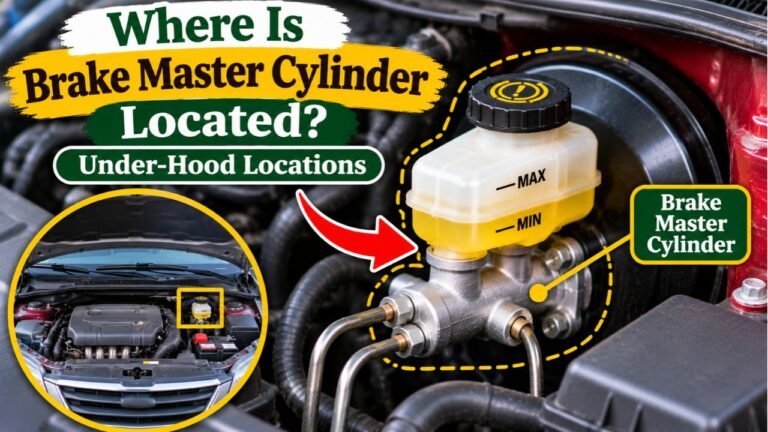
On many conventional cars, the master cylinder is located near the firewall at the rear of the engine compartment.
It is commonly:
- Mounted to the brake booster
- Positioned below the brake fluid reservoir
- Connected to rigid metal brake lines
Some vehicles use an integrated electronically controlled brake assembly instead.
Use the manufacturer’s service information to identify the correct component.
Step 3: Check the Brake Fluid Level
Look through the reservoir wall.
Most vehicles have MIN and MAX markings.
The fluid should normally remain within the specified range.
A level below MIN, a rapid decrease, or repeated fluid loss is a warning.
Do not open the reservoir merely to inspect the level.
Step 4: Inspect the Reservoir Connection
Look at the area where the plastic reservoir joins the metal master cylinder.
Check for:
- Fresh fluid
- Wet sealing grommets
- Fluid trails
- Cracks around the reservoir base
- Damaged mounting areas
A leak directly below the reservoir may indicate failed grommets.
Step 5: Inspect the Brake-Line Connections
Look where the brake lines attach to the master cylinder.
Check for fresh wetness around the fittings.
Do not loosen or tighten these connections as part of a casual inspection.
They are safety-critical hydraulic joints.
Step 6: Inspect the Rear of the Cylinder
Look at the joint between the master cylinder and brake booster.
Fluid appearing here may indicate a rear master cylinder seal failure.
However, fluid spilled during a previous service can also collect in this area.
The diagnosis should distinguish old residue from active leakage.
Step 7: Check for Other Possible Leak Sources
A wet master cylinder does not always mean the cylinder itself has failed.
Nearby problems may include:
- Leaking brake hoses
- Damaged brake lines
- Faulty fittings
- A cracked reservoir
- Brake fluid spilled during maintenance
A technician may clean and inspect the relevant areas before determining the exact source.
Step 8: Have the Leak Confirmed
A qualified technician can inspect the hydraulic connections and test the system according to vehicle-specific procedures.
Avoid opening brake lines or performing improvised pressure tests.
Some electronically controlled brake systems can contain stored hydraulic pressure even when the vehicle is switched off.
How to Fix Brake Fluid Leaking From the Reservoir Grommets
A leak at the reservoir connection may be one of the more straightforward master cylinder repairs.
Many conventional master cylinders have rubber grommets or seals between the plastic reservoir and metal body.
Why Reservoir Grommets Leak
Over time, rubber seals may:
- Harden
- Crack
- Lose elasticity
- Deform
- Become damaged during service
- Lose their ability to seal properly
The reservoir or metal seating surface may also become damaged.
Can You Replace Just the Grommets?
Yes, if the manufacturer provides serviceable replacement grommets and the surrounding components remain in suitable condition.
However, replacing the grommets will not correct a cracked reservoir or damaged master cylinder body.
General Reservoir Seal Repair Process
A qualified repair typically involves:
- Confirming that the leak originates at the reservoir connection.
- Obtaining the correct vehicle-specific seals.
- Removing or transferring fluid as specified by the service procedure.
- Removing the reservoir without damaging its mounting points.
- Inspecting the reservoir and metal sealing surfaces.
- Installing compatible replacement grommets.
- Reinstalling the reservoir correctly.
- Completing required fluid and bleeding procedures.
- Inspecting the connection for renewed leakage.
Not every reservoir can be removed independently.
Some master cylinder assemblies are serviced only as complete units.
Can You Use a Universal Rubber O-Ring?
Not unless the manufacturer specifically approves it.
Brake hydraulic seals require compatible materials, dimensions, and physical characteristics.
An ordinary hardware-store O-ring may not resist brake fluid or seal correctly.
Use the proper replacement part.
What if the Reservoir Is Cracked?
Replace the damaged reservoir or complete assembly as required.
Glue, tape, and general-purpose sealants are not reliable repairs for a brake fluid reservoir.
A leaking reservoir must be restored using approved parts and procedures.
How to Fix a Brake Master Cylinder Leaking at the Brake Line
Brake-line connections are another possible leak source.
A leak around a fitting does not automatically mean the whole master cylinder must be replaced.
The exact repair depends on the condition of the line and hydraulic outlet.
Why Brake-Line Fittings Leak
Possible causes include:
- Damaged brake-line flare
- Incorrect fitting
- Cross-threaded connection
- Corroded sealing surface
- Cracked line
- Improper previous installation
- Damaged master cylinder outlet
Can You Just Tighten the Fitting?
Do not assume that additional tightening will stop the leak.
Overtightening can damage threads or deform sealing surfaces.
A connection that leaks because of a damaged flare may continue leaking even when tightened excessively.
The connection must be inspected and repaired according to the manufacturer’s specification.
Does Brake Line Thread Sealant Work?
For conventional automotive flared brake-line connections, the hydraulic seal is normally formed at the flare and its mating seat, not by sealing the fitting threads.
Do not apply ordinary plumber’s tape, silicone, or general-purpose thread sealant.
Using an inappropriate product can contaminate the system or interfere with correct assembly.
What Is the Correct Repair?
Depending on the diagnosis, the technician may need to:
- Replace a damaged brake line
- Repair the line using the approved flare and fitting specification
- Replace a damaged fitting
- Replace the master cylinder if its outlet is defective
- Bleed the hydraulic system
- Verify that the repaired connection remains leak-free
The correct flare type and hardware must match the vehicle.
Improvised brake-line repairs are unsafe.
How to Fix a Master Cylinder Leaking Into the Brake Booster
Fluid leaking from the rear of the master cylinder is a particularly important problem.
On many conventional power-brake systems, the master cylinder mounts directly to a vacuum brake booster.
A failed rear hydraulic seal may allow fluid to enter the booster area.
Signs of Rear Master Cylinder Leakage
Potential indicators include:
- Wetness between master cylinder and booster
- Fluid marks on the booster housing
- Unexplained reservoir-level decrease
- Fluid collecting inside the booster
- Abnormal brake pedal behavior
However, these symptoms require proper diagnosis.
A previous fluid spill can resemble a leak.
Why Does the Rear Seal Fail?
Possible causes include:
- Worn hydraulic seals
- Corrosion inside the cylinder
- Damaged sealing surfaces
- Internal component wear
- Incorrect pushrod alignment
- Related booster or mounting faults
The ADVICS brake fluid leak troubleshooting guide explains that rear master cylinder leakage can involve damaged seals or improper brake booster pushrod alignment.
The manufacturer advises inspecting the sealing areas and related components before deciding on replacement.
Can You Replace Just the Rear Seal?
Some older or serviceable master cylinder designs can be rebuilt using an approved repair kit.
However, many modern replacement practices favor installing a complete master cylinder.
A new seal may fail again if the internal bore is pitted, scratched, or worn.
The repair must account for the underlying cause.
Does the Brake Booster Also Need Replacement?
Not automatically.
However, it must be inspected if fluid has entered the booster.
Brake fluid contamination can damage the booster or affect its operation.
If significant contamination or booster damage is confirmed, replacing the booster may also be necessary.
What if the New Master Cylinder Leaks Again?
Repeated rear leakage may indicate a problem beyond the cylinder itself.
Possible causes include incorrect installation, unsuitable replacement parts, damaged sealing surfaces, or booster pushrod misalignment.
Do not repeatedly replace the master cylinder without investigating why the leak returns.
Can a Brake Master Cylinder Leak Internally?
Yes.
A master cylinder can fail internally without leaving an obvious puddle beneath the car.
What Is an Internal Master Cylinder Leak?
An internal leak occurs when fluid bypasses the hydraulic piston seals instead of maintaining the expected pressure.
The fluid may remain inside the master cylinder assembly.
The reservoir level may not decrease.
Symptoms of Internal Leakage
Possible symptoms include:
- Brake pedal gradually sinking under steady pressure
- Excessive pedal travel
- Inconsistent braking response
- Failure to maintain hydraulic pressure
- Abnormal pedal feel
However, these symptoms can also occur with other hydraulic faults.
Can You See an Internal Leak?
Usually not through a basic external inspection.
A technician may need to perform manufacturer-approved diagnostic tests to determine whether internal pressure bypass is occurring.
Can You Fix an Internal Leak by Adding Brake Fluid?
No.
If internal piston seals cannot maintain pressure, adding fluid does not repair the defect.
A properly diagnosed internal master cylinder failure generally requires replacement or an approved rebuild.
When Is Complete Replacement Better?
Replacement is generally preferable when:
- Internal seals have failed
- The cylinder bore is damaged
- Corrosion is present
- The housing is cracked
- The manufacturer does not provide an approved rebuild procedure
- Correct repair parts are unavailable
How to Replace a Leaking Brake Master Cylinder
When a master cylinder has a confirmed internal or nonserviceable external leak, complete replacement is often the appropriate repair.
Because brake hydraulics are safety-critical, the following is a general service overview, not a substitute for vehicle-specific repair instructions.
A qualified technician should perform the replacement when the required tools, procedures, or experience are unavailable.
Step 1: Confirm the Diagnosis
Before replacing the master cylinder, confirm that it is the actual source of the problem.
A leak from a brake hose, ABS hydraulic unit, or nearby fitting may be mistaken for a master cylinder leak.
Correct diagnosis prevents unnecessary parts replacement.
Step 2: Identify the Correct Replacement Part
Use the vehicle’s:
- Year
- Make
- Model
- Engine or brake-system configuration
- Production or VIN information where required
The replacement cylinder must match the original hydraulic design.
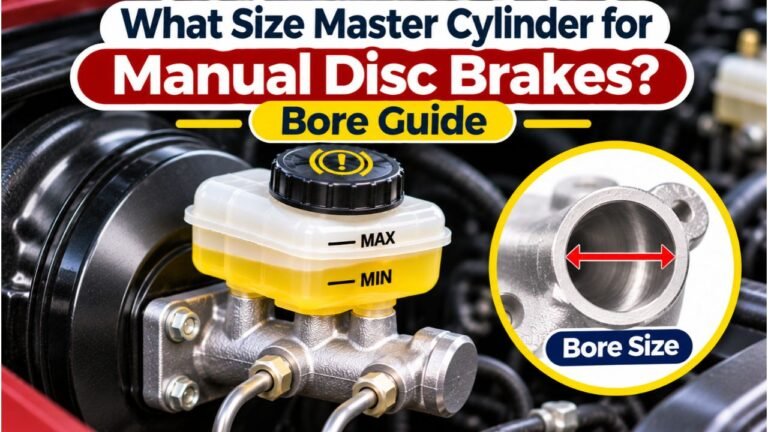
Important characteristics can include bore diameter, outlet configuration, mounting dimensions, and compatibility with the braking system.
Step 3: Prepare the Vehicle
The vehicle is secured according to the service manual.
The technician follows any required battery-disconnection, hydraulic pressure-release, or electronic brake-service procedures.
This is particularly important for hybrids, EVs, and integrated electronically controlled braking systems.
Step 4: Protect the Surrounding Components
Brake fluid can damage painted surfaces.
The work area should be protected, and suitable containers used to collect fluid.
Cleanliness is essential because contamination can damage hydraulic components.
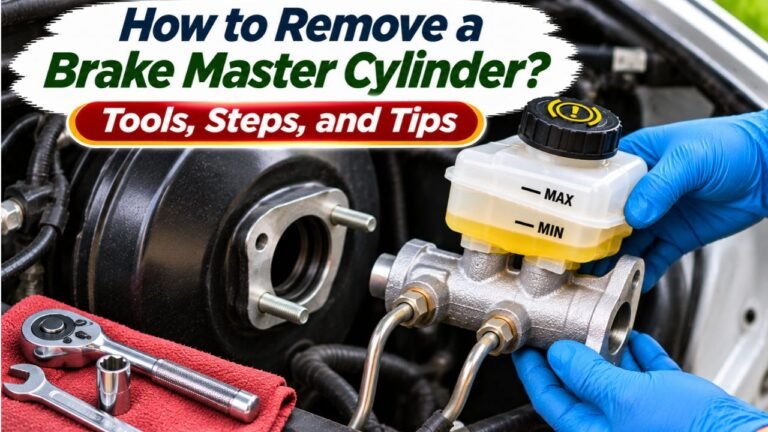
Step 5: Remove the Old Master Cylinder
The technician disconnects the necessary electrical connectors, brake lines, and mounting hardware in the required sequence.
The master cylinder is removed without damaging the surrounding components or brake-line connections.
Step 6: Inspect the Brake Booster
If the rear seal was leaking, the booster is examined for fluid contamination or damage.
Any related booster or pushrod problem must be addressed before installing the replacement cylinder.
Step 7: Prepare the Replacement Cylinder
The new cylinder is inspected and prepared according to the manufacturer’s instructions.
Some designs require bench bleeding before installation.
Others have different priming or service requirements.
Step 8: Install the New Master Cylinder
The replacement is mounted using the specified hardware and tightening requirements.
Hydraulic lines are reconnected correctly.
Threads and sealing surfaces must not be damaged.
Step 9: Bleed the Hydraulic System
Any air introduced during the repair must be removed using the correct bleeding procedure.
Some vehicles require specialized equipment or an ABS service mode.
Step 10: Verify Brake Operation
After installation, the technician checks:
- Reservoir fluid level
- Hydraulic connections
- External leakage
- Pedal feel
- Brake system warning indicators
- Proper operation of the hydraulic circuits
The vehicle should not return to normal road use until the brake system passes the required checks.
The O’Reilly Auto Parts master cylinder replacement guide demonstrates conventional master cylinder replacement, bench bleeding, reinstallation, and the importance of bleeding the system when hydraulic lines have been disconnected.
Its procedure is illustrated on a particular vehicle, so it should not be treated as universal instructions for every brake system.
Do You Have to Bench Bleed a New Brake Master Cylinder?
Many conventional replacement master cylinders require bench bleeding before installation.
However, the manufacturer determines the correct preparation procedure.
What Is Bench Bleeding?
Bench bleeding removes trapped air from the master cylinder before it is installed or connected to the vehicle’s hydraulic circuits.
The procedure uses the appropriate equipment and specified fluid.
Why Is It Important?
Air trapped inside the master cylinder can prevent the hydraulic system from developing the expected pressure.
This may contribute to a soft or excessively long-travel brake pedal.
Can You Skip Bench Bleeding?
Only when the manufacturer’s procedure permits a different method.
Some replacement assemblies may be supplied prefilled or use an alternative bleeding process.
Do not assume every master cylinder requires the same procedure.
Can Bench Bleeding Fix a Leaking Cylinder?
No.
Bleeding removes air.
It does not repair damaged seals, cracked housings, or leaking hydraulic connections.
A defective cylinder must be repaired or replaced first.
Do You Need to Bleed the Brakes After Master Cylinder Replacement?
Yes, when the replacement procedure opens the hydraulic circuits or introduces air, the braking system must be bled according to the manufacturer’s instructions.
The exact procedure differs among vehicles.
Why Bleeding Is Necessary
Brake fluid is intended to transmit hydraulic pressure.
Air trapped inside the system compresses under pedal force.
This can result in:
- Soft pedal feel
- Excessive pedal movement
- Reduced braking response
- Inconsistent hydraulic operation
Proper bleeding removes trapped air from the affected circuits.
Is There a Universal Brake Bleeding Order?
No.
Some conventional procedures begin at the wheel farthest from the master cylinder.
However, that sequence is not correct for every vehicle.
Split hydraulic circuits, ABS units, and electronically controlled brake systems may require different sequences.
Follow the service manual.
Do ABS Brakes Need Special Bleeding?
Sometimes.
Certain ABS hydraulic systems require diagnostic equipment to operate valves and pumps during the bleeding procedure.
Other vehicles may permit conventional bleeding under specific conditions.
The vehicle design determines the requirements.
What if the Brake Pedal Remains Soft?
Do not drive.
The remaining problem could involve:
- Trapped air
- An unresolved hydraulic leak
- Improper bleeding
- An incorrect replacement component
- Another brake-system fault
A qualified technician should complete diagnosis and correction.
What Tools and Parts Are Needed for Master Cylinder Repair?
The required equipment depends on whether the problem is a reservoir seal leak, a damaged brake-line connection, or complete master cylinder failure.
Common Tools and Materials
| Item | Purpose |
| Correct replacement master cylinder | Replaces a failed assembly |
| Vehicle-specific reservoir grommets | Repairs a serviceable reservoir connection |
| Proper brake-line flare wrenches | Services compatible hydraulic connections |
| Socket and wrench set | Removes mounting hardware |
| Torque wrench | Applies specified tightening torque |
| Manufacturer-approved brake fluid | Fills and services the hydraulic system |
| Brake bleeding equipment | Removes trapped air |
| Protective gloves and safety glasses | Reduces exposure risks |
| Fluid collection container | Collects removed brake fluid |
| Clean lint-free materials | Reduces contamination |
| Vehicle service manual | Provides exact procedures and specifications |
| Diagnostic equipment, where required | Supports specialized ABS or electronic brake servicing |
Not every repair requires all of these items.
The important point is to obtain the correct parts and procedures for the actual vehicle.
What Brake Fluid Should Be Used?
Use the exact manufacturer-approved specification.
Common types include:
- DOT 3
- DOT 4
- DOT 4 LV
- DOT 5.1
Silicone-based DOT 5 is different from conventional glycol-based fluids and should not be substituted unless specifically required.
Use fresh fluid from a properly sealed container.
Should You Repair, Rebuild, or Replace the Master Cylinder?
The best option depends on the type of damage and the serviceability of the component.
Repairing an External Seal
Replacing a reservoir grommet can be reasonable when:
- The leak is positively identified
- The seal is serviceable
- The reservoir is undamaged
- The master cylinder body is sound
- Correct replacement seals are available
This may avoid unnecessary complete replacement.
Rebuilding the Master Cylinder
A rebuild can involve replacement of internal hydraulic seals and other serviceable components.
However, rebuilding requires appropriate parts, equipment, inspection procedures, and technical knowledge.
The cylinder bore must meet the manufacturer’s specifications.
Replacing the Complete Cylinder
Complete replacement is generally preferred when:
- Internal sealing surfaces are damaged
- The bore is corroded or scored
- The housing is cracked
- A hydraulic outlet is defective
- A suitable rebuild kit is unavailable
- The manufacturer specifies replacement
- A reliable replacement is more economical than rebuilding
Repair vs. Replace Comparison
| Situation | General Recommendation |
| Replaceable reservoir grommet leaking | Repair may be appropriate |
| Cracked plastic reservoir | Replace damaged component |
| Damaged brake-line flare | Repair or replace line as specified |
| Damaged master cylinder outlet | Replace cylinder if nonserviceable |
| Rear hydraulic seal leak | Usually replace cylinder |
| Internal pressure bypass | Replace or approved professional rebuild |
| Cracked cylinder housing | Replace cylinder |
| Severe internal corrosion | Replace cylinder |
| Repeated leakage after repair | Investigate root cause and associated components |
For most owners, a professionally installed quality replacement cylinder is a more predictable choice than an improvised internal seal repair.
How Much Does It Cost to Fix a Leaking Brake Master Cylinder?
The repair cost depends on the source of the leak.
Replacing reservoir grommets may involve much less work than replacing an entire master cylinder and brake booster.
Factors Affecting Repair Cost
Major factors include:
- Vehicle make and model
- Type of brake system
- Replacement part availability
- Labor rates
- Ease of access
- Required brake bleeding
- ABS diagnostic procedures
- Brake booster contamination
- Damaged hydraulic lines or fittings
- Additional corrosion or component damage
Which Repair Is Usually Least Expensive?
A confirmed leak from serviceable reservoir grommets may be relatively inexpensive to repair.
However, labor and required bleeding can still affect the final cost.
Is Master Cylinder Replacement Expensive?
A conventional master cylinder replacement is often more involved than replacing an external reservoir seal.
Integrated electronic brake systems can be considerably more complex and expensive.
Exact pricing requires the specific vehicle and repair diagnosis.
Will Insurance Cover a Leaking Master Cylinder?
Routine wear and mechanical breakdown are generally not covered under ordinary auto insurance.
However, coverage can depend on the policy and cause of damage.
A manufacturer warranty or relevant service campaign may apply in some cases.
Check the vehicle’s warranty and recall information.
Should You Request a Repair Estimate Before Replacing Parts?
Yes.
Ask the technician to explain:
- Where the leak originates
- Which component failed
- Whether the booster is affected
- Why repair or replacement is recommended
- What bleeding procedure is required
- Which additional parts are necessary
A clear diagnosis helps avoid unnecessary repairs.
What Causes a Brake Master Cylinder to Leak?
Several conditions can lead to leakage.
Worn Hydraulic Seals
Internal rubber seals can deteriorate over time.
Loss of sealing ability may allow fluid to escape or bypass the piston.
Corrosion
Moisture contamination and other factors can contribute to internal corrosion.
A corroded cylinder bore may damage seals or prevent them from sealing correctly.
Damaged Reservoir Grommets
Rubber reservoir seals may harden or crack.
This can allow fluid to seep from the connection.
Incorrect Brake Fluid
Using incompatible brake fluid can damage seals or other components.
Never substitute engine oil, transmission fluid, or petroleum-based hydraulic oil into a conventional glycol-based braking system.
Installation Problems
Improperly installed hydraulic connections or mounting hardware can contribute to leaks.
Pushrod misalignment may also be involved in certain rear-seal failures.
Damaged Brake Lines
Corrosion or mechanical damage can cause fluid leakage near the master cylinder.
The source may be the brake line rather than the cylinder.
Cracked Housing
Physical damage or severe corrosion can compromise the master cylinder body.
A cracked hydraulic housing generally requires replacement.
Signs Your Brake Master Cylinder Is Leaking
Some symptoms are visible, while others involve changes in braking performance.
Common Symptoms
| Symptom | Possible Explanation | Recommended Response |
| Fluid around reservoir base | Reservoir seal leak | Inspect seal and reservoir |
| Fluid between cylinder and booster | Possible rear seal failure | Inspect cylinder and booster |
| Wet brake-line fitting | Damaged connection or sealing surface | Diagnose line and port |
| Reservoir level keeps dropping | External hydraulic leak | Inspect entire system |
| Brake pedal slowly sinks | Internal or external hydraulic fault | Do not drive |
| Soft or spongy pedal | Air or hydraulic malfunction | Professional diagnosis |
| Brake warning light | Low fluid or another system fault | Stop safely and investigate |
| Fluid on painted surfaces | Possible hydraulic leakage | Locate source and prevent further damage |
Can a Master Cylinder Leak Without Leaving a Puddle?
Yes.
Fluid can collect inside the brake booster or travel along components rather than dripping directly onto the ground.
A small leak may also leave only wet residue near the master cylinder.
Can a Master Cylinder Fail Without Losing Fluid?
Yes.
Internal hydraulic bypass can cause pressure loss without an external leak.
A sinking brake pedal is one possible symptom.
However, professional diagnosis is needed to identify the actual cause.
Can a Bad Master Cylinder Cause Brakes to Stick?
Some master-cylinder or hydraulic-control faults can interfere with pressure release.
However, sticking brakes can also result from other problems, including caliper hardware, flexible hoses, or booster linkage faults.
Do not replace the master cylinder without confirming the cause.
Why a Replaced Master Cylinder May Still Leak
If the replacement cylinder leaks, the original diagnosis or installation should be reviewed.
Incorrect Replacement Part
A cylinder may physically fit but have different hydraulic specifications.
Verify compatibility using the correct vehicle information.
Damaged Brake-Line Fitting
A damaged flare or fitting can continue leaking after the cylinder is replaced.
The line connection must be inspected.
Incorrect Reservoir Grommets
Transferring an old reservoir with worn seals can result in leakage at the new master cylinder.
Replace required seals according to the service procedure.
Pushrod Misalignment
Incorrect alignment or an underlying booster problem can contribute to repeated rear-seal leakage in certain designs.
Damaged Master Cylinder Outlet
Cross-threading or overtightening can damage outlet connections.
Do not assume that more torque will stop leakage.
Installation Contamination
Dirt or incompatible fluids can damage hydraulic components.
Maintain proper cleanliness during service.
Defective Replacement Part
A faulty replacement component is possible.
However, associated hydraulic components and installation conditions should be checked before concluding that another replacement cylinder is defective.
Common Mistakes When Fixing a Leaking Master Cylinder
Avoiding these mistakes can prevent repeat problems.
Using Stop-Leak Products
Do not add radiator stop-leak, power steering stop-leak, or other sealing additives to brake fluid.
These products are not approved repairs for hydraulic braking systems and can damage components.
Applying Silicone Around a Leak
Exterior sealant does not restore a damaged internal hydraulic seal.
Do not attempt to seal the master cylinder with household silicone or glue.
Tightening Hydraulic Fittings Excessively
Overtightening can damage threads and sealing surfaces.
Use the manufacturer’s specifications.
Replacing the Cylinder Without Checking the Booster
A rear seal leak may contaminate the booster.
Failing to inspect it can leave an additional fault unresolved.
Reusing Damaged Seals
Damaged reservoir seals should not be reused merely because they appear to fit.
Installing the Wrong Master Cylinder
The replacement must match the original hydraulic design and vehicle specification.
Skipping Required Bleeding
Air introduced during hydraulic service can reduce braking effectiveness.
Complete the required bleeding procedure.
Guessing the Bleeding Order
Different vehicles can require different brake bleeding sequences.
Use the manufacturer’s instructions.
Using Incorrect Brake Fluid
An incompatible fluid can damage hydraulic components.
Confirm the exact specification.
Driving Before the Repair Is Verified
A normal-looking reservoir does not prove that the braking system is safe.
All required checks must be completed before the vehicle returns to service.
How to Prevent Brake Master Cylinder Leaks
Not every component failure can be prevented, but appropriate maintenance helps reduce avoidable problems.
Follow the Brake Fluid Replacement Schedule
Conventional glycol-based brake fluid can absorb moisture over time.
Moisture contamination can contribute to corrosion and reduced high-temperature performance.
Replace the fluid according to the manufacturer’s schedule.
Use Only Approved Fluid
Check the vehicle’s exact specification.
Do not assume all DOT brake fluids are interchangeable.
Keep the Reservoir Clean
Avoid opening the reservoir unnecessarily.
When hydraulic service is required, prevent dirt and moisture from entering the system.
Inspect Fluid Levels
Check the reservoir periodically.
A gradual decrease can occur as brake pads wear, but repeated or sudden fluid loss may indicate leakage.
Investigate Brake Warning Lights
Do not ignore brake-system warnings.
A warning may indicate low fluid or another hydraulic fault.
Address Small Leaks Promptly
A minor leak can worsen.
Repairing the correct component early may prevent additional hydraulic problems.
Use Proper Replacement Parts
Use seals, grommets, lines, and master cylinder assemblies that meet the vehicle manufacturer’s specifications.
Avoid Improvised Repairs
Brake hydraulic systems are not suitable for general-purpose sealants, makeshift fittings, or unapproved fluid additives.
How to Know if the Master Cylinder Repair Was Successful
A completed repair requires more than the visible leak disappearing.
The hydraulic braking system must operate correctly.
What a Technician Should Verify
After repair, the technician should confirm:
- The correct replacement parts were used.
- All hydraulic connections are properly secured.
- The system contains the correct brake fluid.
- Required bleeding procedures are complete.
- The reservoir level is within the specified range.
- No hydraulic connections are leaking.
- The brake pedal responds correctly.
- The system maintains hydraulic pressure as specified.
- No relevant brake-system warnings remain.
- The vehicle passes the manufacturer’s required functional checks.
What if Fluid Still Appears?
The vehicle should not return to normal use.
The source must be rechecked.
Fluid may be escaping from a different connection, the reservoir, or the replacement component.
What if the Pedal Still Feels Spongy?
Air may remain in the system, or another hydraulic fault may be present.
Do not assume the repair is complete.
What if the Brake Warning Light Remains On?
Have the warning diagnosed.
A warning may involve fluid level, hydraulic pressure, ABS, electronic control, or another issue.
Is a Driveway Brake Test Enough?
No.
A stationary pedal check or slow movement in a driveway does not establish that a vehicle with a repaired hydraulic brake system is safe under all operating conditions.
The manufacturer-specified inspection and functional testing should be completed by a qualified technician before the vehicle returns to normal road use.
Conclusion
Learning how to fix a leaking brake master cylinder begins with identifying the exact source of the brake fluid leak.
A leak around the reservoir connection may require replacement grommets or seals.
A leak at the brake-line outlet may involve a damaged fitting, flare, or hydraulic port.
However, leakage from the rear master cylinder seal or an internal hydraulic failure often makes complete cylinder replacement the appropriate solution.
I recommend having the entire affected brake assembly inspected before purchasing parts. A leaking master cylinder can also contaminate the brake booster, and replacing only the visible component may not correct every underlying problem.
When replacement is necessary, the service must follow the vehicle manufacturer’s specifications, including correct parts, hydraulic connections, required bleeding procedures, and final safety checks.
Do not attempt to stop leaks using additives, household sealants, or repeated brake fluid top-ups.
Most importantly, do not continue driving a vehicle with a suspected hydraulic brake leak.
The safest and most reliable repair fixes the actual leaking component, restores hydraulic integrity, and verifies that the braking system operates correctly before the vehicle returns to the road.
FAQs About Fixing a Leaking Brake Master Cylinder
Can You Fix a Leaking Brake Master Cylinder Without Replacing It?
Sometimes. A leak caused by replaceable reservoir grommets or another serviceable external seal may be repairable. However, damaged internal seals, a corroded cylinder bore, cracked housing, or serious rear-seal failure often make complete replacement the better choice. The correct repair depends on a confirmed diagnosis.
Can You Seal a Leaking Brake Master Cylinder?
Not with ordinary silicone, glue, tape, or stop-leak additives. These products cannot reliably repair a hydraulic brake master cylinder and may contaminate the braking system. Use manufacturer-approved replacement seals or replace the defective component.
Why Is Brake Fluid Leaking Between the Master Cylinder and Booster?
A failed rear hydraulic seal can allow brake fluid to escape toward the booster. In some cases, booster pushrod alignment or related component problems may contribute. The master cylinder and booster should be inspected, and any contaminated or defective components repaired or replaced according to the manufacturer’s instructions.
Can You Drive With a Leaking Brake Master Cylinder?
No. An active brake master cylinder leak can reduce hydraulic pressure and braking performance. Even a small leak may worsen unexpectedly. Do not rely on topping up the reservoir. Arrange professional inspection or towing before operating the vehicle again.
Do You Have to Bleed Brakes After Replacing the Master Cylinder?
Yes, if the replacement procedure opens the hydraulic system or introduces air, bleeding is required according to the vehicle manufacturer’s instructions. Some ABS and electronically controlled brake systems require specialized equipment or procedures. Improper bleeding can leave the brake pedal soft and reduce braking effectiveness.
How Much Does It Cost to Fix a Leaking Master Cylinder?
The cost depends on the leak source, vehicle, labor rates, and required repairs. Replacing serviceable reservoir grommets may be less involved than replacing the complete master cylinder. If brake fluid has contaminated the booster or additional hydraulic parts are damaged, the repair may cost significantly more.
Can a Master Cylinder Leak Internally Without Losing Fluid?
Yes. Worn internal piston seals can allow hydraulic fluid to bypass the sealing surfaces without escaping from the assembly. A sinking brake pedal may be one symptom. However, other hydraulic faults can produce similar symptoms, so proper diagnosis is necessary.
Can You Replace Only the Brake Master Cylinder Seals?
Some master cylinders can be professionally rebuilt using an approved seal kit when the cylinder bore and other components remain within specification. However, many modern master cylinder assemblies are not intended for routine internal rebuilding. Complete replacement is often a more reliable option.
Will a New Master Cylinder Fix a Soft Brake Pedal?
Only if the master cylinder is the actual cause. A soft pedal may also result from trapped air, hydraulic leaks, improper bleeding, or other brake-system problems. Replacing the cylinder without diagnosing the cause may not solve the issue.
How Do You Know if the Brake Master Cylinder Is Still Leaking?
A technician can inspect the reservoir seals, hydraulic fittings, and rear master cylinder area for fresh leakage, then perform the required hydraulic-system checks. Repeated fluid loss, wet connections, or abnormal pedal behavior indicate that the problem may remain unresolved. The vehicle should not return to normal use until it passes the required safety checks.