What Type of Brake Fluid for 2004 Ford F150? DOT 3 Specs Guide
The 2004 Ford F-150 uses Motorcraft High Performance DOT 3 brake fluid, or an equivalent DOT 3 product that meets Ford specification ESA-M6C25-A. Ford lists the original fluid under part number PM-1. This recommendation applies to both the redesigned 2004 F-150 and the older-body-style 2004 F-150 Heritage, although they have separate owner’s manuals.
The correct fluid is important because the truck’s hydraulic brake system relies on compatible fluid for pressure transfer, seal protection, and reliable braking. Ordinary DOT 3 is glycol-based; silicone DOT 5 is not an acceptable substitute. DOT 4 is sometimes mentioned in Ford service procedures as a conditional alternative, but the factory owner’s-manual recommendation remains DOT 3.
If you’re topping up the brake reservoir, don’t automatically fill it to the MAX line. Ford notes that a gradual drop may occur as brake pads wear, and a significantly low level can indicate a problem requiring inspection.
In this article, I cover the original Ford specification, which DOT grades to avoid, and how regular and Heritage models compare. I also explain where to find the reservoir, safe fluid-level checks, flushing and bleeding concerns, and common brake-fluid maintenance mistakes.
What Type of Brake Fluid for 2004 Ford F150? Factory Specification
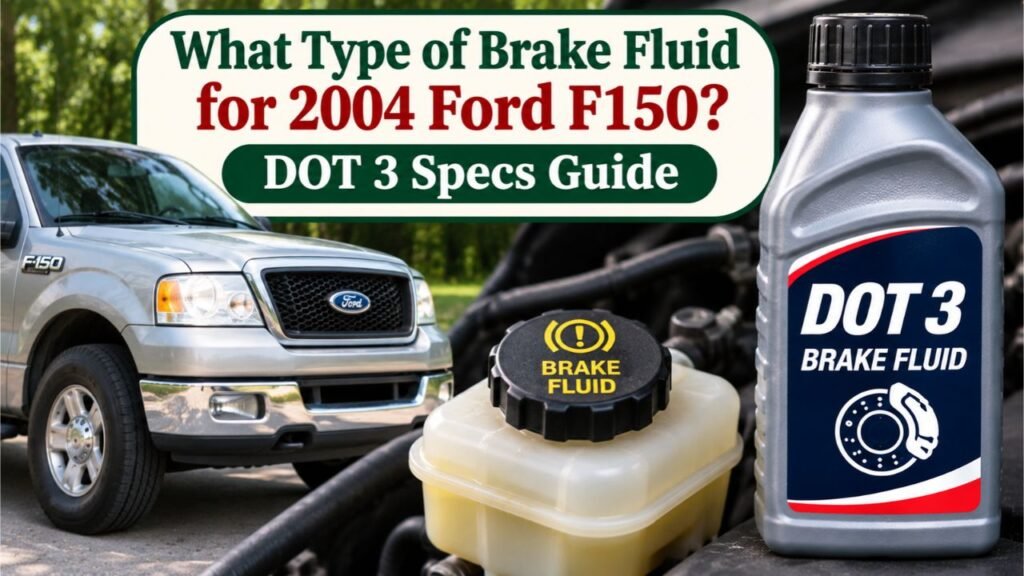
Ford specifies High Performance DOT 3 Motor Vehicle Brake Fluid meeting Ford specification ESA-M6C25-A for the 2004 F-150.
This is the original factory recommendation, not a general estimate based on the truck’s age.
2004 Ford F-150 Brake Fluid Specifications
| Specification | Factory requirement |
| Vehicle | 2004 Ford F-150 |
| Recommended brake fluid | Motorcraft High Performance DOT 3 |
| DOT classification | DOT 3 |
| Ford specification | ESA-M6C25-A |
| Original Motorcraft part number | PM-1 |
| Brake fluid chemistry | Glycol-based |
| Silicone DOT 5 compatible? | No |
| 2WD and 4WD | Same recommended brake fluid |
| 4.6L and 5.4L V8 engines | Same recommended brake fluid |
| Reservoir capacity | Fill to the specified reservoir level |
The official 2004 Ford F-150 Owner’s Guide, page 280, lists Motorcraft High Performance DOT 3 Motor Vehicle Brake Fluid, part number PM-1, meeting ESA-M6C25-A and DOT 3.
This specification is found in the Maintenance and Specifications chapter under Lubricant Specifications.
Does the Engine Size Affect the Brake Fluid Type?
No.
For the redesigned 2004 F-150, the original owner’s guide specifies DOT 3 brake fluid for both the 4.6L and 5.4L V8 models.
The brake-fluid requirement does not change simply because the truck has a different engine size.
Does a 4WD F-150 Need Different Brake Fluid?
No.
The factory DOT 3 specification applies to both two-wheel-drive and four-wheel-drive versions.
The drivetrain configuration does not determine the brake-fluid chemistry.
What About ABS Brakes?
The original factory DOT 3 recommendation also applies to the vehicle’s specified hydraulic brake system, including applicable anti-lock brake configurations.
Do not switch to silicone DOT 5 because the truck has ABS.
Key Takeaway: For a stock 2004 Ford F-150, choose fresh DOT 3 brake fluid that satisfies Ford’s original requirements.
2004 Ford F-150 vs F-150 Heritage: Do They Use the Same Brake Fluid?
Yes. Both the redesigned 2004 Ford F-150 and the 2004 F-150 Heritage specify Motorcraft High Performance DOT 3 brake fluid.
However, distinguishing the two models is important when searching for parts, manuals, and service procedures.
What Is the 2004 F-150 Heritage?
The 2004 model year was a transition period for Ford’s F-150.
Ford offered:
- The redesigned 2004 F-150
- The previous-generation body style, sold as the 2004 F-150 Heritage
These trucks have different body designs and some different mechanical systems.
However, their original brake-fluid specifications are the same.
Brake Fluid Comparison
| Model | Engine options | Brake fluid |
| 2004 F-150 redesigned model | 4.6L V8 | DOT 3 |
| 2004 F-150 redesigned model | 5.4L V8 | DOT 3 |
| 2004 F-150 Heritage | 4.2L V6 | DOT 3 |
| 2004 F-150 Heritage | 4.6L V8 | DOT 3 |
| 2004 F-150 Heritage | 5.4L V8 | DOT 3 |
The official 2004 Ford F-150 Heritage Owner’s Guide, page 231, identifies the same original Motorcraft PM-1 fluid and Ford specification ESA-M6C25-A.
The Heritage manual may identify the vehicle as the F-150 Classic in certain sections.
Does the Heritage Manual Have Different Reservoir Instructions?
Yes, some details differ.
The redesigned F-150 manual describes fluid levels between MIN and MAX markings as normal.
The Heritage manual explains that a fluid level below MAX may be normal when the brake warning lamp is not illuminated.
Both manuals warn against ignoring fluid levels outside the normal operating range.
What About the Manual Transmission Clutch?
Some 2004 F-150 Heritage trucks were equipped with manual transmissions.
The Heritage owner’s guide also specifies DOT 3 fluid meeting ESA-M6C25-A for the applicable hydraulic clutch system.
However, the clutch reservoir and brake reservoir may be separate.
Use the correct fluid and follow the appropriate reservoir instructions.
What Is Motorcraft High Performance DOT 3 Brake Fluid?
Motorcraft High Performance DOT 3 is the brake fluid named in Ford’s original service specifications.
It is a glycol-based hydraulic fluid designed for compatible automotive braking systems.
What Does DOT 3 Mean?
DOT 3 identifies a brake-fluid performance classification under U.S. Department of Transportation requirements.
To meet the classification, a fluid must satisfy specified performance criteria involving properties such as:
- Boiling point
- Viscosity
- Corrosion protection
- Chemical stability
- Compatibility with specified brake-system materials
DOT 3 is not a brand name.
Different manufacturers produce fluids that meet DOT 3 requirements.
What Does Ford Specification ESA-M6C25-A Mean?
ESA-M6C25-A is the original Ford material specification listed in the 2004 F-150 owner’s manuals.
It provides a more vehicle-specific reference than the DOT number alone.
For this truck, the best approach is to choose a product confirmed to meet Ford’s original specification or an officially recognized replacement specification.
Is Motorcraft PM-1 Still the Current Part Number?
PM-1 is the historical part number shown in the 2004 owner’s guide.
Motorcraft product numbers and material specifications can change over time.
Some newer Motorcraft DOT 3 products use different part-number suffixes and updated Ford specifications.
Do not assume every modern product is identical to the original PM-1 simply because it carries the Motorcraft name.
Verify the current replacement with an authorized Ford parts department or the applicable product documentation.
Can You Use a Different Brand?
Yes, an equivalent brake fluid can be appropriate when it meets the vehicle’s required specification.
When choosing an aftermarket product:
- Confirm it is DOT 3.
- Check the manufacturer’s compatibility information.
- Verify Ford specification compatibility.
- Choose a fresh, factory-sealed container.
- Avoid products with unclear labeling or unknown storage history.
You do not need to select fluid based only on price or brand recognition.
The correct specification matters more than the label’s marketing claims.
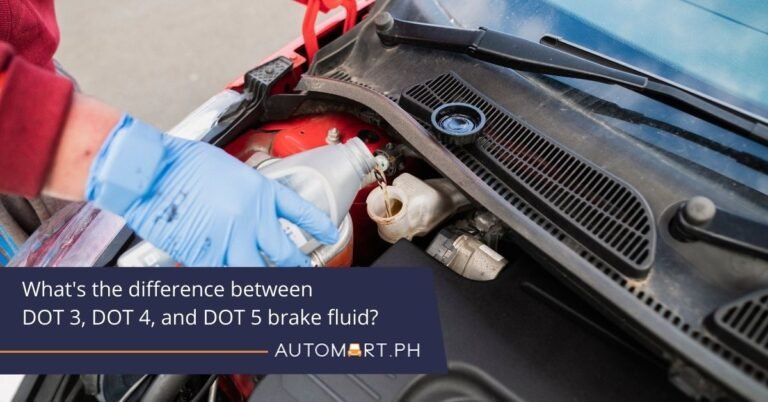
DOT 3 vs DOT 4 vs DOT 5 for the 2004 Ford F-150
There are several common brake-fluid classifications, but they are not all interchangeable.
Brake Fluid Comparison Chart
| Brake fluid | Chemical base | Recommended for 2004 F-150? |
| DOT 3 | Glycol-based | Yes, factory specification |
| DOT 4 | Glycol-based | Conditional service-manual alternative in certain procedures |
| DOT 5 | Silicone-based | No |
| DOT 5.1 | Glycol-based | Not the original factory specification |
| Mineral hydraulic oil | Mineral oil | No |
| Power steering fluid | Varies by product | No |
| Automatic transmission fluid | Transmission-fluid formulation | No |
Can You Use DOT 4 Instead of DOT 3?
The answer requires some care.
The 2004 F-150 owner’s manuals specify DOT 3.
However, certain archived Ford service instructions for the 2004 F-150 Heritage allow a qualifying DOT 4 fluid if DOT 3 is unavailable.
For example, the 2004 F-150 Heritage brake-bleeding service procedure includes a conditional allowance for DOT 4 meeting SAE J1704.
That does not mean every DOT 4 product is automatically the correct replacement for every 2004 F-150.
For routine maintenance, DOT 3 meeting the original Ford specification remains the straightforward choice.
If considering DOT 4, verify the exact vehicle and service requirements rather than relying on a general claim that DOT 4 is always better.
Can You Use DOT 5?
No. Do not use silicone-based DOT 5 brake fluid in a standard 2004 Ford F-150 braking system.
DOT 5 has a different chemical base from DOT 3.
It is not an appropriate direct replacement.
Using incompatible fluid can cause serious brake-system problems.
Can You Use DOT 5.1?
DOT 5.1 is glycol-based, unlike silicone DOT 5.
However, it is not the original factory-specified fluid for the 2004 F-150.
Chemical similarity alone does not establish manufacturer approval.
Use the specified DOT 3 fluid unless Ford-approved service information supports a different formulation.
Is Higher DOT Number Always Better?
No.
Brake-fluid selection depends on more than boiling-point performance.
The correct product must also satisfy the system’s viscosity, material compatibility, and operating requirements.
A fluid with a higher classification number is not automatically the best choice.
Why Does the 2004 Ford F-150 Require the Correct Brake Fluid?
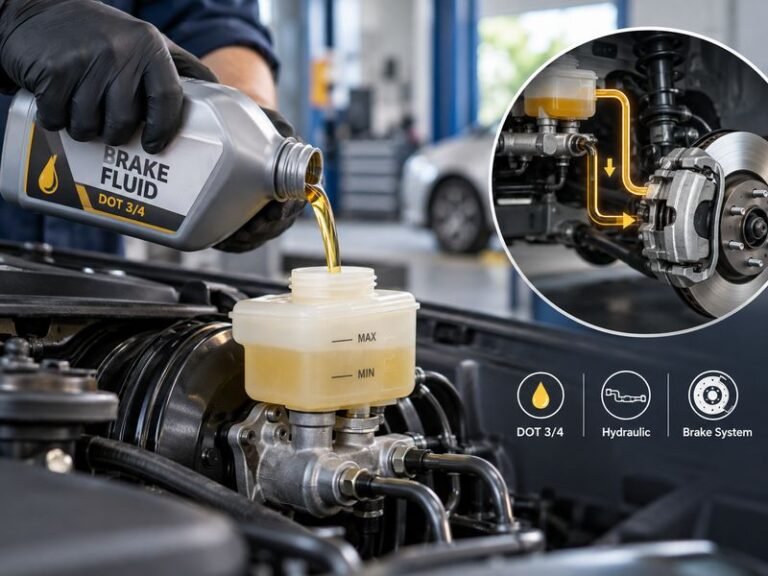
The hydraulic brake system transfers force from the brake pedal to the braking components using pressurized fluid.
When the driver presses the pedal, the master cylinder creates hydraulic pressure.
That pressure travels through brake lines and hoses toward the calipers or wheel cylinders.
Hydraulic Pressure Transfer
Brake fluid is designed to resist compression under normal operating conditions.
This allows pedal force to be transferred effectively.
However, air or vapor inside the system is compressible.
That can produce additional pedal movement and reduced braking response.
Seal Compatibility
The braking system contains rubber and other components designed for particular brake-fluid chemistry.
Using incompatible fluid can damage seals or other hydraulic components.
This is one reason Ford specifies a particular brake-fluid type.
Temperature Performance
Brakes convert vehicle motion into heat.
Under heavy braking, temperatures can increase substantially.
Brake fluid needs adequate boiling-point protection.
Moisture-contaminated fluid may lose some of that protection.
ABS Operation
ABS uses hydraulic control components to regulate braking pressure when wheel lockup is detected.
Contamination or incorrect fluid can interfere with the hydraulic system.
Maintaining clean, correctly specified fluid is important.
What Is the Boiling Point of DOT 3 Brake Fluid?
DOT 3 fluid must satisfy minimum standardized boiling-point requirements.
| DOT 3 property | Minimum requirement |
| Dry boiling point | 401°F (205°C) |
| Wet boiling point | 284°F (140°C) |
These figures represent minimum classification requirements.
An individual DOT 3 product may have higher boiling points.
What Is Dry Boiling Point?
The dry boiling point represents fluid performance before the prescribed moisture-conditioning process.
It is particularly relevant to fresh brake fluid.
What Is Wet Boiling Point?
The wet boiling point is measured after standardized humidification.
It indicates how the fluid performs after exposure to moisture under the specified test conditions.
Why Does This Matter for an Older Truck?
DOT 3 brake fluid is hygroscopic, meaning it absorbs moisture over time.
As water content increases, boiling-point protection can decrease.
Under demanding braking conditions, fluid vaporization may contribute to a soft pedal or reduced braking performance.
A 2004 truck with unknown maintenance history should have its hydraulic system inspected rather than assuming the existing fluid remains in good condition.
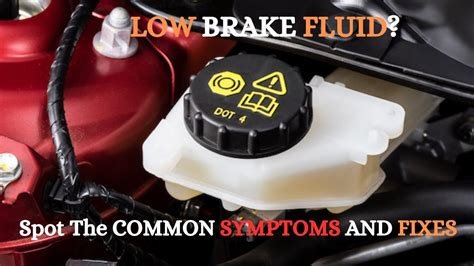
Where Is the Brake Fluid Reservoir on a 2004 Ford F-150?
The brake-fluid reservoir is located in the engine compartment near the firewall, attached to the brake master cylinder.
The exact appearance and position differ somewhat between the redesigned F-150 and the Heritage model.
How to Identify the Reservoir
Look for:
- A translucent or light-colored plastic reservoir
- A cap associated with brake-fluid identification
- A location near the brake master cylinder
- Fluid-level markings on the reservoir
- A position toward the rear of the engine compartment
Do not confuse it with the power steering or coolant reservoir.
Redesigned 2004 F-150
Ford’s original owner’s guide shows the brake-fluid reservoir in the engine-compartment diagrams for both the 4.6L and 5.4L engines.
The reservoir has MIN and MAX level markings.
2004 F-150 Heritage
The Heritage engine-compartment layout differs from the redesigned truck.
Some Heritage configurations also have a separate clutch-fluid reservoir.
Use the correct engine-compartment diagram for your model.
Should You Remove the Reservoir Cap to Check the Fluid?
Not necessarily.
Many translucent reservoirs allow the level to be checked visually.
Avoid opening the reservoir unnecessarily because moisture and contaminants can enter.
Check the reservoir’s exterior and markings first.
How to Check Brake Fluid on a 2004 Ford F-150
Checking the fluid level is a useful maintenance task.
However, a low reading should not automatically result in adding more fluid.
Step 1: Park Safely
Park on a level surface.
Turn off the engine.
Engage the parking brake.
Allow hot engine components to cool when necessary.
Step 2: Open the Hood
Locate the brake master cylinder and its reservoir.
Use the appropriate engine-compartment diagram if the reservoir is difficult to identify.
Step 3: Inspect the Fluid Level
Check the level against the reservoir markings.
For the redesigned 2004 F-150, Ford states that fluid between MIN and MAX is within the normal operating range.
There is no need to add fluid simply because the level is below MAX.
Step 4: Check for Warning Signs
Look for:
- Brake-system warning light
- Fluid below the normal operating range
- Wetness around hydraulic components
- Visible brake-fluid leakage
- Unusual brake-pedal travel
- Soft or spongy braking
Any of these may indicate a condition requiring attention.
Step 5: Inspect Brake Wear
As brake pads wear, the caliper pistons extend farther.
This can cause the reservoir’s fluid level to decrease gradually.
Ford specifically describes this as normal behavior.
Therefore, adding fluid without checking brake wear may hide a maintenance issue.
Step 6: Get the System Inspected if Necessary
If the fluid is outside the normal range or braking performance is abnormal, arrange an inspection.
A hydraulic leak or another brake-system fault may need repair.
Important: Do not drive a truck with a sinking brake pedal, serious fluid leak, or significantly reduced braking ability. Arrange safe transport and professional diagnosis.
How to Add DOT 3 Brake Fluid to a 2004 Ford F-150
Adding brake fluid should only be done when appropriate and after identifying the reason for the low fluid level.
A professional inspection is recommended when the level is unexpectedly low.
Step 1: Confirm the Correct Fluid
Use fresh, compatible DOT 3 fluid meeting Ford’s requirements.
Do not use:
- DOT 5 silicone fluid
- Power steering fluid
- Transmission fluid
- Engine oil
- Unidentified hydraulic fluid
Step 2: Inspect the Reservoir
Check the fluid level and look for contamination or leaks.
Do not assume topping off will correct a warning light.
Step 3: Clean Around the Cap
If servicing is appropriate, clean the outside of the reservoir and surrounding cap area before opening it.
This reduces the risk of dirt entering the hydraulic system.
Step 4: Use Fresh Fluid
Open a new, properly sealed bottle of suitable brake fluid.
Do not use fluid that has been sitting in an open container.
DOT 3 absorbs moisture from the air.
Step 5: Add Only the Required Amount
Add the fluid carefully, following the correct reservoir-level instructions.
Do not overfill.
For the redesigned F-150, the normal operating range lies between MIN and MAX.
For the Heritage model, consult its specific reservoir instructions.
Step 6: Secure the Cap
Reinstall the reservoir cap correctly.
Ensure the sealing components are properly positioned.
Do not allow dirt or moisture into the fluid.
Step 7: Check the Brakes
Before driving, verify that the brake pedal feels normal and no warning condition remains.
If the pedal is soft, sinks unusually, or the system leaks, stop and obtain professional assistance.
Why You Should Not Automatically Fill to MAX
Fluid levels may rise when worn brake pads are replaced and caliper pistons are pushed back.
If the reservoir has been unnecessarily filled to MAX, this can contribute to overflow during service.
Ford’s original instructions emphasize recognizing normal fluid-level changes rather than topping off whenever the level drops slightly.
How Much Brake Fluid Does a 2004 Ford F-150 Need?
The original owner’s guide does not provide one fixed total brake-fluid refill quantity in quarts for all brake-system service operations.
Instead, Ford lists the appropriate reservoir fill level.
The amount needed depends on what work is being performed.
Brake Fluid Quantity by Service Type
| Service | Quantity consideration |
| Checking level | No additional fluid needed if within normal range |
| Correcting a verified low level | Depends on actual reservoir level and repair |
| Replacing a hydraulic component | Depends on fluid lost and bleeding requirements |
| Bleeding one affected circuit | Depends on air and fluid removed |
| Complete brake-fluid replacement | Requires enough fresh fluid to exchange the system contents |
| ABS hydraulic service | Depends on the required manufacturer procedure |
How Much Should You Buy for a Brake Flush?
A complete fluid exchange may require substantially more fluid than the reservoir alone holds.
One quart is a common purchase size for brake service, but it should not be treated as the guaranteed quantity for every 2004 F-150 procedure.
The actual requirement depends on:
- Hydraulic system configuration
- Amount of fluid exchanged
- Bleeding equipment
- Fluid lost during service
- Whether ABS components require additional bleeding
A repair shop or service manual can help determine an appropriate supply.
Can You Use Leftover Brake Fluid?
Avoid using old fluid from a previously opened bottle when its quality or storage history is uncertain.
Fresh, sealed brake fluid reduces contamination risk.
Never return fluid collected during brake bleeding to the vehicle.
How Often Should You Change Brake Fluid in a 2004 Ford F-150?
Brake fluid gradually deteriorates through moisture exposure and contamination.
A 2004 F-150 should not be assumed to have acceptable fluid simply because the reservoir is full.
Is There a Fixed Ford Replacement Interval?
The original owner’s guide refers owners to the relevant scheduled maintenance information for service requirements.
Do not assign a universal Ford interval based only on the truck’s model year.
Maintenance recommendations may vary with the service publication, operating conditions, and repair history.
Is Every Two Years a Good Rule?
Some maintenance programs recommend brake-fluid replacement at approximately two- or three-year intervals.
However, this is general maintenance guidance, not a confirmed factory interval for every 2004 F-150 configuration.
Follow the applicable Ford schedule and service recommendations.
What if You Don’t Know When It Was Last Changed?
For a truck of this age with unknown service history, having the brake fluid and hydraulic system professionally inspected is sensible.
A technician may evaluate:
- Fluid contamination
- Moisture or boiling-point condition
- Brake lines and hoses
- Calipers and wheel cylinders
- Master cylinder
- Brake-pedal behavior
- ABS-related faults
A fluid change may be appropriate based on the inspection and maintenance history.
Can Brake Fluid Look Clean but Be Old?
Yes.
Clear fluid does not necessarily mean the moisture content is acceptable.
Color alone cannot reliably establish fluid quality.
A proper assessment considers maintenance history and appropriate testing.
Can You Mix Old and New DOT 3 Brake Fluid?
Fresh DOT 3 fluid can be chemically compatible with existing suitable DOT 3 fluid.
However, adding new fluid does not restore the condition of old contaminated fluid.
What Happens When You Top Off Old Fluid?
The new fluid mixes with the existing fluid.
If the old fluid contains moisture, adding a small quantity of fresh fluid does not remove it.
The system may still need a proper fluid replacement.
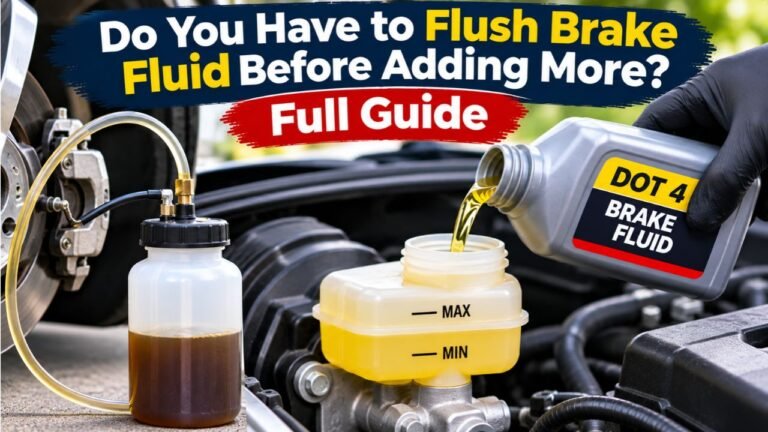
Is It Better to Flush the System?
If the fluid is overdue for service or contaminated, a full fluid exchange may be preferable to simple topping off.
However, the procedure must be completed correctly.
Introducing air into the hydraulic system can create serious braking problems.
Can You Mix DOT 3 Brands?
Different DOT 3 products can be chemically compatible when they meet the applicable requirements.
However, the safest practice is to use a product confirmed suitable for the truck’s Ford specification.
Do not mix in an unknown or incompatible fluid.
Does the 2004 Ford F-150 Need a Special ABS Brake Bleeding Procedure?
It depends on the braking system and the service being performed.
Some brake maintenance can be performed using ordinary approved bleeding procedures.
However, certain ABS hydraulic operations require a scan tool or specialized procedure.
Why ABS Bleeding Can Be Different
ABS components contain valves and hydraulic passages.
Air may become trapped within certain components after:
- Hydraulic control unit replacement
- Significant fluid loss
- Opening specific brake lines
- Other hydraulic-system repairs
Depending on the system, conventional bleeding may not remove all trapped air.
Can You Bleed the Brakes at Home?
Routine bleeding may be possible for an experienced DIY owner with the correct tools and service information.
However, improper bleeding can leave the pedal soft or reduce braking performance.
A person unfamiliar with brake hydraulics should have the procedure performed by a qualified technician.
What Happens if the Reservoir Runs Dry?
If the reservoir empties during service, air can enter the hydraulic system.
Additional bleeding or specialized priming may be required.
Do not continue driving until the brakes have been properly restored and checked.
Is DOT 3 Safe for the Original ABS System?
Yes.
DOT 3 meeting Ford’s specification is the original recommended fluid for the 2004 F-150.
Do not choose DOT 5 or another unapproved fluid simply because the vehicle has ABS.
Common Brake Fluid Problems in a 2004 Ford F-150
Older trucks can develop brake-system issues that are not caused solely by fluid age.
Understanding the symptoms helps prevent unnecessary or incomplete repairs.
Brake Fluid Level Keeps Dropping
Possible causes include:
- Brake-pad wear
- Hydraulic line leaks
- Damaged hoses
- Leaking caliper seals
- Wheel-cylinder leaks
- Master-cylinder problems
A small gradual change may be normal as friction materials wear.
A rapid or unexplained decrease requires inspection.
Brake Pedal Feels Spongy
Possible causes include:
- Air in the hydraulic system
- Internal or external fluid leakage
- Incorrect bleeding
- Certain hydraulic component problems
Moisture-contaminated fluid may also contribute to vapor-related problems during high-temperature braking.
Do not assume a simple top-off will correct a soft pedal.
Brake Warning Light Comes On
A brake warning light may indicate:
- Parking brake engagement
- Low brake fluid
- Another braking-system warning condition
Check the vehicle’s instructions and do not ignore a warning that remains illuminated.
Brake Fluid Is Very Dark
Dark fluid may indicate aging, contamination, or materials circulating through the system.
However, dark color alone does not identify the exact fault.
A technician can assess whether service or repair is needed.
Brakes Feel Weak After a Flush
Possible problems include:
- Remaining air
- Improper bleeding
- Hydraulic leakage
- Incorrect fluid
- Other brake-system faults
Do not drive until normal braking operation has been verified.
Common Mistakes When Choosing Brake Fluid for a 2004 Ford F-150
| Mistake | Why it causes problems | Better approach |
| Buying fluid without checking the DOT grade | May introduce incorrect chemistry | Use approved DOT 3 |
| Assuming DOT 5 is a better upgrade | Silicone DOT 5 is incompatible | Follow Ford’s specification |
| Selecting DOT 4 solely for its higher rating | May not match the specific service requirements | Verify Ford-approved use |
| Ignoring the Heritage model difference | Some service procedures differ | Use the correct manual |
| Filling the reservoir to MAX unnecessarily | May contribute to overflow during pad replacement | Follow Ford’s normal fluid-level guidance |
| Using brake fluid from an old open bottle | Moisture contamination is possible | Use fresh, sealed fluid |
| Reusing fluid drained during bleeding | May introduce contamination | Discard used fluid properly |
| Ignoring a rapidly falling level | Could conceal a leak | Inspect the hydraulic system |
| Confusing brake and power steering reservoirs | Incorrect fluid can damage components | Identify the correct reservoir |
| Bleeding the ABS system without proper guidance | Air may remain trapped | Follow the correct service procedure |
| Assuming clear fluid is automatically good | Moisture may be present | Consider condition and service history |
Is It Safe to Use Universal Brake Fluid?
Only if the actual product meets the vehicle’s requirements.
A bottle labeled universal should still clearly identify its DOT classification and applicable specifications.
Do not rely on marketing language alone.
Can You Use Synthetic DOT 3?
DOT 3 fluid is commonly formulated with synthetic glycol-based chemicals.
The word synthetic does not mean the fluid is silicone-based.
A suitable synthetic DOT 3 product may be appropriate if it meets Ford’s requirements.
Is Racing Brake Fluid Better?
Not automatically.
Racing brake fluids may have specialized boiling-point or viscosity characteristics.
Some are not appropriate for ordinary road-service intervals or specific vehicle systems.
The 2004 F-150’s original factory fluid specification remains the best starting point.
How to Choose the Right Brake Fluid for a 2004 Ford F-150
When comparing products, use the following checklist.
| Check | What to verify |
| Vehicle | 2004 Ford F-150 or F-150 Heritage |
| DOT grade | DOT 3 |
| Original Ford specification | ESA-M6C25-A |
| Original Ford product | Motorcraft High Performance DOT 3, PM-1 |
| Equivalent product | Confirmed compatible with Ford’s specification |
| Bottle condition | New and factory sealed |
| Expiration or shelf life | Within manufacturer guidance |
| Fluid chemistry | Glycol-based, not silicone DOT 5 |
| Manufacturer directions | Suitable for automotive hydraulic brakes |
Should You Buy Motorcraft or an Aftermarket Brand?
Motorcraft is the original named product.
An appropriate aftermarket alternative can also work when it meets the required specification.
Choose based on verified compatibility, product condition, and availability.
Should You Buy DOT 3 or DOT 4?
For routine maintenance, choose the original specified DOT 3.
Certain Ford service procedures provide conditional DOT 4 allowances, but this does not change the owner’s-manual recommendation.
Should You Buy a Large Bottle?
Buy enough fresh fluid for the planned service.
If you only need a small amount for an approved top-off, a smaller sealed bottle can reduce waste.
For a complete fluid exchange, confirm the estimated service quantity first.
Conclusion
The correct brake fluid for a 2004 Ford F-150 is Motorcraft High Performance DOT 3 or a suitable equivalent meeting Ford specification ESA-M6C25-A.
Ford’s original part number was PM-1.
This requirement applies to both the redesigned 2004 F-150 and the 2004 F-150 Heritage, including their original engine and drivetrain configurations.
Although some archived Ford service procedures conditionally allow DOT 4, DOT 3 remains the straightforward factory-recommended choice.
Do not use silicone DOT 5, power steering fluid, or another incompatible hydraulic fluid.
I recommend checking the brake-fluid reservoir against the normal operating range before adding anything. A gradual decrease may be associated with brake-pad wear, while an unusually low level can indicate a problem requiring inspection.
For a truck with unknown brake-fluid service history, consider a professional fluid and hydraulic-system inspection.
Finally, always use fresh, appropriately specified brake fluid and follow the correct bleeding procedure when the hydraulic system is serviced.
The right fluid helps maintain safe and consistent braking performance, but it cannot substitute for repairing worn or leaking brake components.
FAQs About Brake Fluid for a 2004 Ford F-150
What Brake Fluid Does a 2004 Ford F-150 Take?
The 2004 Ford F-150 takes Motorcraft High Performance DOT 3 brake fluid or an equivalent that meets Ford specification ESA-M6C25-A.
The original Motorcraft part number listed in the owner’s manual is PM-1.
Does the 2004 Ford F-150 Use DOT 3 or DOT 4?
Ford’s original owner’s manual specifies DOT 3.
Some archived service procedures conditionally permit approved DOT 4 when DOT 3 is unavailable.
For routine service, DOT 3 meeting Ford’s specification is the preferred straightforward choice.
What Brake Fluid Does a 2004 Ford F-150 Heritage Use?
The 2004 F-150 Heritage also specifies Motorcraft High Performance DOT 3 brake fluid meeting ESA-M6C25-A.
The recommendation applies across the original Heritage engine configurations.
Can I Put DOT 4 in My 2004 Ford F-150?
Certain Ford service procedures for the Heritage model permit an approved DOT 4 fluid under specified conditions.
However, the original owner’s manuals specify DOT 3.
Do not switch fluids casually. Confirm the service requirements for the exact truck.
Can I Use DOT 5 in My 2004 Ford F-150?
No.
Silicone-based DOT 5 is not an approved direct substitute for the original DOT 3 brake fluid.
Using incompatible fluid can cause serious hydraulic-system problems.
Is DOT 3 Brake Fluid Synthetic?
Many DOT 3 brake fluids are formulated using synthetic glycol-based chemicals.
However, the synthetic label alone does not determine compatibility.
Choose a product that meets the required DOT and Ford specifications.
Does a 2004 F-150 4WD Use Different Brake Fluid?
No.
The original DOT 3 recommendation applies to both 2WD and 4WD models.
The drivetrain does not change the brake-fluid classification.
Does the 2004 Ford F-150 With ABS Need Special Brake Fluid?
The original system specifies DOT 3.
ABS does not automatically require a different fluid grade.
However, some ABS-related repair and bleeding procedures may require specialized equipment.
How Much Brake Fluid Does a 2004 Ford F-150 Hold?
Ford’s original owner’s manual specifies filling to the appropriate reservoir markings rather than providing one fixed total system volume.
The amount required for bleeding or flushing depends on the service procedure.
Where Is the Brake Fluid Reservoir on a 2004 Ford F-150?
It is located in the engine compartment near the firewall, attached to the brake master cylinder.
Its exact location and appearance differ between the redesigned F-150 and the Heritage model.
Can I Top Off the Brake Fluid Without Bleeding the Brakes?
Adding suitable fluid to a properly functioning, sealed hydraulic system does not automatically require bleeding.
However, an unexpectedly low fluid level may indicate leakage or brake wear.
Find the cause before topping off.
If air has entered the system, proper bleeding is necessary.
Why Is My 2004 Ford F-150 Losing Brake Fluid?
Possible causes include normal pad wear, leaking brake lines, damaged hoses, caliper leaks, wheel-cylinder leaks, or master-cylinder problems.
A rapidly decreasing level or soft brake pedal requires prompt inspection.
How Often Should I Change Brake Fluid in a 2004 Ford F-150?
Follow the applicable Ford maintenance guidance and consider the truck’s service history and fluid condition.
There is no single universal replacement interval that should be assumed for every configuration.
If the fluid history is unknown, have the system inspected.
Can I Mix Two Brands of DOT 3 Brake Fluid?
Different DOT 3 products can be chemically compatible, but both should meet the applicable vehicle specifications.
Use fresh, clean fluid from a suitable sealed bottle.
Do not mix in unknown, contaminated, or incompatible fluids.
What Happens if I Use the Wrong Brake Fluid?
Incorrect brake fluid can affect seals, hydraulic components, and braking performance.
If an incompatible fluid has been added, stop using the vehicle and arrange a qualified inspection.
Do not assume that simply removing fluid from the reservoir will correct contamination throughout the system.