Does Brake Fluid Get Hot? Heat, Boiling Points, and Brake Fade
Yes, brake fluid gets hot when you use your brakes because heat generated by friction travels from the brake pads and rotors into the calipers and hydraulic system. This heating is normal, and brake fluid is specifically designed to withstand high temperatures without boiling. However, excessive heat can become dangerous if the fluid reaches its boiling point.
During ordinary driving, brake fluid temperatures are generally much lower than the temperatures reached by brake rotors. But repeated hard braking, long downhill drives, heavy towing, and dragging brakes can transfer substantial heat into the fluid near the wheel cylinders or calipers.
When brake fluid boils, it creates vapor bubbles that compress when you press the brake pedal. This can make the pedal feel soft or spongy and reduce braking performance.
Old brake fluid is especially vulnerable because most automotive brake fluids absorb moisture over time, lowering their boiling points.
In this article, I explain why brake fluid gets hot, how heat reaches the hydraulic system, and the boiling temperatures of DOT 3, DOT 4, and DOT 5.1 fluids. I also cover the dangers of overheating, warning signs, differences between brake fade and fluid boiling, and how to protect your braking system.
Does Brake Fluid Get Hot During Normal Driving?
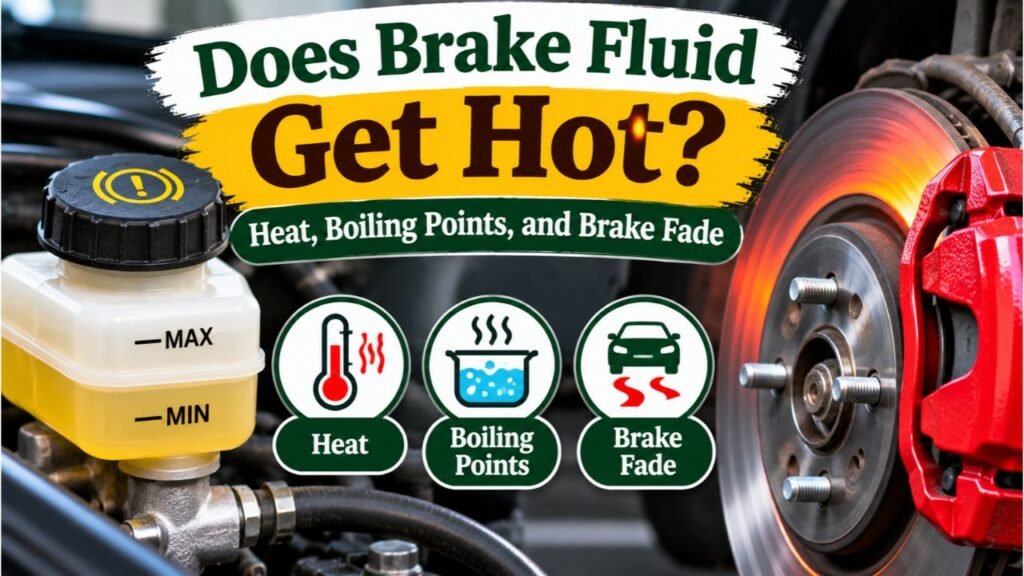
Yes. Brake fluid can become warm or hot during normal driving, especially inside brake calipers near the pads and rotors.
However, the temperature depends on how often the brakes are applied, how hard the vehicle is braking, and how effectively heat escapes from the braking components.
Brake fluid doesn’t need to reach its boiling point to perform normally.
In fact, the hydraulic braking system is designed to operate with liquid fluid over a broad temperature range.
How Brake Fluid Gets Hot
Most conventional vehicles use friction brakes to slow their wheels.
When the driver presses the brake pedal, the hydraulic system transfers pressure to the calipers or wheel cylinders.
The brake pads press against the rotating brake discs, or the brake shoes press against the drums.
Friction converts much of the vehicle’s kinetic energy into heat.
That heat spreads through the braking components.
Some eventually reaches the hydraulic fluid.
Where Is Brake Fluid Hottest?
The brake fluid closest to the caliper pistons or wheel-cylinder components is often exposed to the most intense braking-related heat.
The fluid inside the master cylinder reservoir is generally much farther from the hottest braking components.
As a result, the entire hydraulic system doesn’t necessarily reach the same temperature.
For example:
- Brake rotors may become extremely hot.
- Brake pads and caliper components absorb or conduct heat.
- Fluid near the caliper pistons may heat significantly.
- Fluid farther away may remain considerably cooler.
This temperature difference explains why checking the reservoir doesn’t necessarily reveal whether the fluid near a heavily used caliper has overheated.
Does Brake Fluid Heat Up Every Time You Brake?
Some heat is generated whenever friction brakes slow the vehicle.
However, the amount varies.
A gentle stop from a low speed produces far less braking energy than repeatedly slowing a heavy vehicle from highway speeds.
Also, some electric and hybrid vehicles use regenerative braking to recover part of the vehicle’s kinetic energy, reducing the amount handled by the friction brakes.
Key Takeaway: Brake fluid heating is normal. The safety concern is excessive heat that approaches the fluid’s boiling point, particularly when the fluid contains moisture.
Why Does Brake Fluid Get Hot?
Brake fluid heats primarily because braking converts vehicle motion into thermal energy.
Several conditions can make this heating more severe.
1. Repeated Hard Braking
Frequent hard stops generate substantial heat.
If the brakes are applied repeatedly without sufficient cooling time, heat can accumulate.
This is common during aggressive driving or repeated high-speed stops.
As brake components become hotter, more heat may transfer into the nearby fluid.
2. Driving Down Long Hills
Long downhill drives can place sustained demands on the brakes.
When a driver repeatedly uses the brake pedal to control speed, the braking system must dissipate substantial energy.
If the brakes don’t have enough time to cool, fluid temperatures may rise.
Using appropriate engine braking or regenerative braking can reduce the workload on the friction brakes.
3. Towing a Heavy Trailer
A vehicle towing a trailer has more mass to control.
Stopping or descending hills may therefore require additional braking energy.
Properly functioning trailer brakes can share the braking workload when the trailer is equipped with them.
However, the towing vehicle’s brakes still need to handle their intended portion safely.
4. Carrying Heavy Loads
Additional vehicle weight increases the energy that must be removed during braking at a given speed.
Repeated stops while carrying a heavy load may cause brake components to heat more quickly.
Never exceed the vehicle’s weight ratings.
5. Dragging Brake Calipers
A sticking caliper piston, binding slide pin, or another mechanical defect may prevent a brake pad from releasing properly.
The pad can remain in contact with the rotor.
This creates friction even when the driver isn’t pressing the brake pedal.
Possible symptoms include:
- One wheel becoming unusually hot.
- Burning odors.
- Reduced fuel efficiency.
- Pulling to one side.
- Uneven brake pad wear.
A dragging brake requires prompt inspection because overheating can damage multiple components.
6. Track Driving
Track use involves repeated high-energy braking.
Brakes may operate at substantially higher temperatures than during ordinary road driving.
Performance braking systems and suitable brake fluids are selected to handle these conditions.
However, specialized brake fluid doesn’t eliminate the need for inspection, correct maintenance, or proper cooling.
How Hot Does Brake Fluid Get?
There is no single normal operating temperature for all brake fluids.
The temperature depends on the vehicle, brake design, driving conditions, and measurement location.
Brake fluid near the calipers can become substantially hotter than fluid in the reservoir.
Normal Street Driving
During ordinary commuting, the fluid may experience moderate temperature increases.
Brake components generally have opportunities to cool between stops.
A properly functioning system with suitable fluid should remain within its intended operating range.
However, no universal temperature describes every vehicle during city driving.
Heavy Braking
Repeated high-speed stops can significantly increase caliper temperatures.
The fluid near the pistons is exposed to the heat transferred through surrounding components.
If the fluid is old or contaminated, its reduced boiling point can become a concern.
Mountain Driving
Long downhill driving can create sustained thermal loading.
Even relatively gentle braking can cause problems if applied continuously over an extended descent.
Following the vehicle manufacturer’s downhill-driving guidance helps reduce the risk.
Racing and Track Use
Track conditions can produce extremely high braking-system temperatures.
Performance brake fluids are designed with high boiling points to provide additional thermal resistance.
However, a fluid’s advertised boiling point is a laboratory measurement, not a normal operating-temperature target.
Important: A brake rotor temperature of 600°F does not automatically mean the brake fluid has reached 600°F. Different components have different temperatures because heat transfer and cooling occur throughout the system.
At What Temperature Does Brake Fluid Boil?
Brake fluid boiling temperatures depend on the fluid’s DOT classification and moisture condition.
In the United States, Federal Motor Vehicle Safety Standard No. 116 establishes minimum boiling-point requirements.
DOT Brake Fluid Boiling Point Chart
| Brake fluid | Minimum dry boiling point | Minimum wet boiling point |
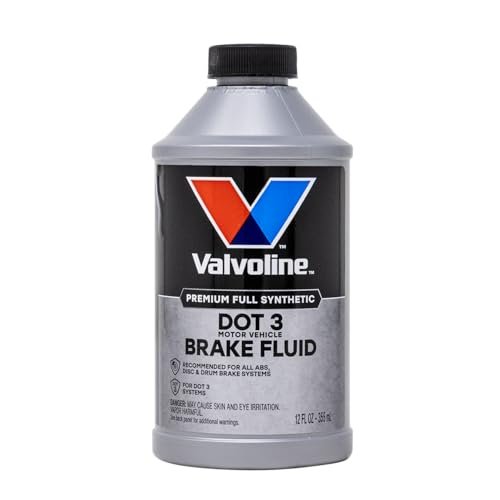
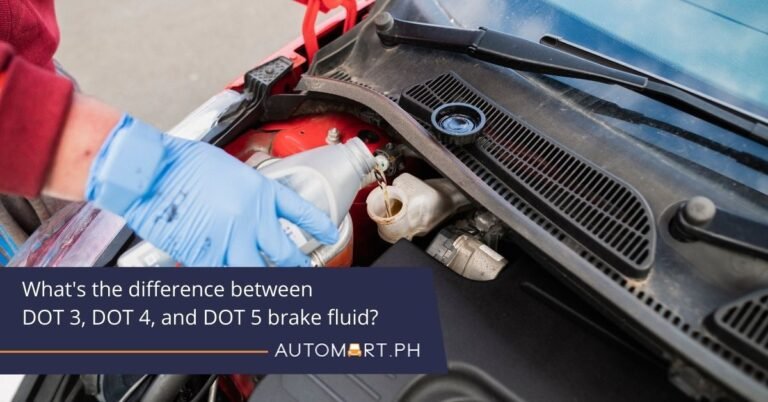
| DOT 3 | 401°F (205°C) | 284°F (140°C) |
| DOT 4 | 446°F (230°C) | 311°F (155°C) |
| DOT 5.1 | 500°F (260°C) | 356°F (180°C) |
These values are minimum specification requirements, not the exact boiling points of every commercial product.
Some premium DOT 4 fluids exceed the minimum requirements by a substantial margin.
The values are explained in HELLA’s technical guide to brake fluid classification, boiling points, and maintenance.
What Is the Dry Boiling Point?
The dry boiling point describes the boiling resistance of new brake fluid under specified test conditions.
It is an important measure of the fluid’s initial resistance to high temperatures.
For example, DOT 4 must meet a minimum dry boiling point of 446°F.
However, a bottle of high-performance DOT 4 may have a considerably higher rating.
What Is the Wet Boiling Point?
The wet boiling point measures the fluid’s boiling resistance after it has been conditioned with a defined amount of moisture using a standardized test.
It helps represent the reduced thermal resistance of moisture-contaminated brake fluid.
For DOT 4, the minimum wet boiling point is 311°F.
That is 135°F lower than the minimum dry boiling-point requirement.
This comparison demonstrates why moisture contamination matters.
Does Brake Fluid Boil at 212°F?
Not normally.
Pure water boils at approximately 212°F at standard atmospheric pressure, but automotive brake fluid isn’t pure water.
Fresh DOT 3, DOT 4, and DOT 5.1 fluids have much higher specified boiling points.
However, as glycol-based fluid absorbs moisture, its boiling resistance decreases.
The exact boiling behavior depends on the fluid composition and degree of contamination.
What About DOT 5 Brake Fluid?
DOT 5 silicone-based brake fluid is different from DOT 5.1 glycol-based fluid.
Despite their similar names, they are not interchangeable.
DOT 5 is used in certain applications that specifically require silicone brake fluid.
Do not add DOT 5 to a system specified for DOT 3, DOT 4, or DOT 5.1 unless the vehicle manufacturer explicitly approves the conversion.
Always use the brake fluid specification required by the vehicle.
What Happens When Brake Fluid Gets Too Hot?
When brake fluid becomes hot enough to boil, vapor bubbles can develop inside the hydraulic system.
This is dangerous because vapor compresses much more readily than liquid.
How Hydraulic Brakes Normally Work
Brake fluid transfers pressure from the master cylinder to the wheel brakes.
When the driver presses the pedal, pressure moves through the hydraulic lines.
The caliper pistons or wheel cylinders apply force to the braking components.
Under normal conditions, the liquid brake fluid is only slightly compressible.
This helps provide a firm and predictable pedal response.
What Happens When Vapor Forms?
Boiling produces vapor bubbles.
When the driver presses the brake pedal, some pedal movement compresses those bubbles rather than immediately transmitting the expected pressure.
This can result in:
- A soft brake pedal.
- A spongy feeling.
- Increased pedal travel.
- Reduced braking response.
- In severe cases, a pedal that travels close to the floor.
This condition is commonly called vapor lock or hydraulic brake fade caused by fluid boiling.
According to Brembo’s explanation of brake fluid and vapor lock, vapor bubbles formed by boiling brake fluid can compromise hydraulic pressure transmission and significantly reduce braking effectiveness.
Can Hot Brake Fluid Cause Brake Failure?
Yes.
Severe brake fluid boiling can cause a major reduction in braking effectiveness.
The risk is especially serious when a vehicle is descending a steep hill or traveling at high speed.
A driver may suddenly discover that the brake pedal requires much more travel without producing the expected stopping force.
This is a safety-critical condition.
Does Brake Fluid Have to Boil to Cause Problems?
No.
Brake system problems can occur without fluid boiling.
For example:
- Hydraulic leaks can reduce fluid pressure.
- Air entering the system can create a spongy pedal.
- Corrosion can damage internal components.
- Incorrect fluid can affect seals or system operation.
- A dragging brake can overheat mechanical components.
These problems require diagnosis rather than assuming fluid temperature is the only cause.
Why Does Moisture Make Brake Fluid Overheat More Easily?
Most commonly used automotive brake fluids—DOT 3, DOT 4, and DOT 5.1—are glycol-based and hygroscopic.
Hygroscopic means they can absorb moisture from their surroundings.
Over time, moisture can enter the hydraulic system through components such as hoses, seals, and reservoir interfaces.
How Moisture Affects Boiling Point
Moisture contamination lowers the fluid’s boiling resistance.
This means the fluid can develop vapor at lower temperatures than when it was new.
For example, DOT 3 has:
- Minimum dry boiling point: 401°F.
- Minimum wet boiling point: 284°F.
These are standardized test values.
They don’t mean every fluid reaches its wet boiling point after a particular number of months.
The actual condition depends on the system and environment.
Why Old Brake Fluid Is More Vulnerable
Over time, brake fluid may absorb moisture and collect contamination.
If the brakes become extremely hot, the fluid may boil sooner than fresh fluid of the same specification.
That is why a car may brake normally during everyday commuting but develop a soft pedal during a long mountain descent.
Does High Humidity Matter?
Humidity can influence moisture exposure, particularly over long periods.
However, brake fluid condition also depends on the design and condition of the hydraulic system.
Living in a humid region doesn’t automatically mean the fluid is unsafe.
Follow the vehicle’s specified replacement schedule and have the fluid tested when necessary.
Can Moisture Cause Other Problems?
Yes.
Moisture can contribute to internal corrosion in brake lines, calipers, cylinders, and ABS-related hydraulic components.
The consequences may develop gradually.
This is another reason brake fluid maintenance matters even when the pedal feels normal.
Does Hot Brake Fluid Cause Brake Fade?
It can.
However, brake fade is a broad term describing reduced braking effectiveness under demanding conditions, and not every case is caused by boiling brake fluid.
Hydraulic Brake Fade
Hydraulic fade can occur when brake fluid boils and vapor bubbles form.
Typical characteristics include:
- Soft or spongy pedal.
- Excessive pedal movement.
- Reduced braking pressure.
- Braking performance worsening as the system heats up.
This condition can be extremely dangerous.
Brake Pad Fade
Brake pad fade is different.
Brake friction materials can become less effective when exposed to excessive temperatures.
In this situation, the brake pedal may remain relatively firm, but the vehicle doesn’t slow as effectively.
The exact behavior depends on the pads and braking system.
Comparison: Fluid Boiling vs Brake Pad Fade
| Feature | Brake fluid boiling | Brake pad fade |
| Primary cause | Vapor forming in hydraulic fluid | Reduced pad friction at excessive temperature |
| Pedal feel | Often soft or spongy | May remain relatively firm |
| Pedal travel | May increase significantly | May remain near normal |
| Braking effectiveness | Can decrease severely | Can decrease significantly |
| Common trigger | Extreme heat and low fluid boiling resistance | Excessive pad or rotor temperatures |
| Main corrective action | Diagnose system, replace degraded fluid, bleed correctly | Diagnose and address overheated friction components |
This comparison describes common patterns, not a definitive diagnostic test.
Both problems can occur together.
Other failures, including leaks, may produce similar symptoms.
Can Brake Fade Disappear After Cooling?
Sometimes braking performance appears to improve after components cool.
However, that doesn’t mean the vehicle is safe to continue driving.
Overheating may damage components or leave unresolved problems in the hydraulic system.
A qualified technician should inspect the brakes before the vehicle returns to service.
Warning Signs That Brake Fluid May Be Overheating
Brake fluid temperature cannot reliably be judged from the dashboard or the reservoir’s appearance.
However, certain symptoms may suggest excessive brake heat or another dangerous braking problem.
1. Spongy Brake Pedal
A brake pedal that suddenly becomes soft during heavy braking may indicate vapor formation.
However, air in the hydraulic system or a leak can produce similar symptoms.
Treat an unexplained change in pedal feel as a warning.
2. Brake Pedal Travels Toward the Floor
Excessive pedal travel can indicate a serious hydraulic issue.
Fluid boiling is one possible cause.
Other causes include leaks or internal hydraulic component failure.
Do not assume the problem will resolve safely on its own.
3. Reduced Braking Performance
If the vehicle requires substantially more distance to slow down, something may be wrong.
Possible causes include fluid boiling, pad fade, contamination, or mechanical defects.
4. Burning Smell
A burning odor after heavy braking may indicate overheated friction components.
It does not prove that the brake fluid is boiling.
However, an unusual strong odor warrants attention.
5. Smoke Near a Wheel
Smoke can indicate severe brake overheating.
A dragging caliper or parking brake problem may be responsible.
Stop safely and arrange an inspection.
6. One Wheel Becomes Unusually Hot
A wheel that is much hotter than the others after ordinary driving may indicate dragging brakes.
Don’t touch the rotor, caliper, or wheel components to test their temperature.
They can cause burns.
7. Braking Problems Appear on Long Descents
If the brake pedal becomes soft after repeated braking downhill, excessive heat may be involved.
This is a particularly concerning situation because the vehicle may still need significant braking force to reach a safe stopping area.
Important: These symptoms can have several causes. A vehicle with compromised braking should not be driven until the problem has been properly diagnosed and repaired.
Can Brake Fluid Get Too Hot From a Sticking Caliper?
Yes.
A sticking caliper can generate heat even when the driver isn’t intentionally braking.
How a Sticking Caliper Produces Heat
Normally, brake pads release enough pressure from the rotor to avoid significant continuous friction.
A defective caliper piston, binding slide mechanism, or related component may prevent normal release.
This can cause the brake pad to drag against the rotating disc.
The friction generates heat continuously.
What Happens to the Brake Fluid?
The caliper body and piston absorb some of the heat.
That heat may transfer to the hydraulic fluid.
If the condition becomes severe enough, the fluid near the caliper may reach a dangerous temperature.
The surrounding components may also become damaged.
Common Symptoms
A dragging brake may cause:
- A vehicle pulling to one side.
- Uneven pad wear.
- Strong brake odors.
- Excessive wheel heat.
- Reduced fuel economy.
- Unusual braking noises.
However, these symptoms aren’t exclusive to a sticking caliper.
A technician must inspect the system to identify the cause.
Will Changing Brake Fluid Fix a Sticking Caliper?
Not necessarily.
A fluid replacement cannot correct a seized piston, damaged slide pins, or another mechanical fault.
The defective component must be diagnosed and repaired.
Brake fluid service may also be necessary if the system overheated or the fluid is degraded.
Does Brake Fluid Expand When It Gets Hot?
Yes.
Like many liquids, brake fluid expands as its temperature increases.
However, a properly functioning hydraulic brake system is designed to accommodate normal temperature changes.
Is Thermal Expansion Normal?
Yes.
Moderate thermal expansion is a normal physical property.
It doesn’t mean that the fluid is boiling or that the system is failing.
Can Overfilled Brake Fluid Cause Problems?
An excessively filled reservoir can create problems as fluid level changes.
Brake system components also move as pads wear and during maintenance.
Follow the manufacturer’s specified fluid-level procedure.
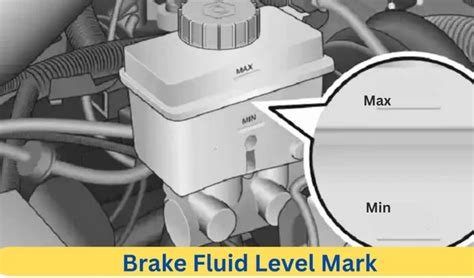
Avoid filling above the MAX marking.
Can Heat Make Brakes Drag?
Excessive brake drag can result from several faults, including blocked pressure-release paths, hydraulic restrictions, or mechanical binding.
Thermal expansion may worsen certain existing problems.
However, hot brake fluid alone doesn’t mean the brakes should remain applied.
If a wheel continues to drag, the braking system needs inspection.
Does Brake Fluid Get Hot in the Reservoir?
It can become warm, but the reservoir is generally not exposed to the same heat as fluid inside a heavily used caliper.
Why the Reservoir Is Usually Cooler
The reservoir is located near the master cylinder, away from the friction surfaces at the wheels.
Heat must travel through components and the hydraulic system to affect it.
The reservoir may also experience engine-compartment temperatures.
Therefore, the fluid in the reservoir can be warmer than ambient air without approaching its boiling point.
Can You Check Brake Fluid Temperature by Touching the Reservoir?
No.
Touching the reservoir isn’t a reliable way to determine fluid temperature inside the calipers.
The material and location of the reservoir affect how warm its surface feels.
Opening the reservoir also introduces a contamination risk.
Should You Open the Brake Fluid Cap After Driving?
Avoid opening the reservoir unnecessarily.
If inspection is required, follow the owner’s manual and allow hot components to cool.
Keep dirt and moisture away from the opening.
Checking the fluid level through the translucent reservoir wall is generally preferable when possible.
Don’t use the reservoir as a way to investigate suspected brake-fluid boiling.
A workshop can perform appropriate testing.
Does Brake Fluid Get Hotter Than Engine Coolant?
Brake fluid near the calipers can become hotter than engine coolant under demanding braking conditions.
However, these fluids operate in different systems and have different temperature requirements.
Engine Coolant
Engine coolant circulates through the engine cooling system.
Its job is to transfer engine heat to the radiator and other cooling components.
In a typical modern vehicle, engine coolant operates around the temperatures established by the thermostat and cooling controls.
Brake Fluid
Brake fluid transfers hydraulic pressure.
It doesn’t circulate through a radiator as part of an ordinary automotive hydraulic brake system.
Its temperature rises primarily because of heat reaching the wheel-brake hydraulic components.
Why the Comparison Matters
The brake-fluid boiling point must be high enough to withstand demanding braking conditions.
This is particularly important because vapor formation can impair pressure transmission.
The fact that brake fluid has a high boiling point doesn’t mean it normally operates at that temperature.
Can New Brake Fluid Overheat?
Yes.
Even fresh brake fluid can overheat if the braking system experiences sufficiently extreme temperatures.
However, new fluid meeting the correct specification generally provides greater boiling resistance than moisture-contaminated fluid of the same type.
Does Higher DOT Number Mean Better Brake Fluid?
Not necessarily for every vehicle.
DOT classifications identify different performance requirements.
Boiling point is important, but viscosity and compatibility also matter.
For example, some vehicles with advanced ABS or electronic stability-control systems require particular low-viscosity brake fluids.
Always follow the vehicle manufacturer’s specifications.
Is DOT 4 Better Than DOT 3 for Heat?
DOT 4 has higher minimum dry and wet boiling-point requirements than DOT 3.
However, the correct choice depends on vehicle requirements.
Don’t change fluid specifications solely because one product has a higher published boiling point.
Is DOT 5.1 Suitable for Every Vehicle?
No.
Although DOT 5.1 has high boiling-point requirements, not every vehicle requires or permits it.
Compatibility and viscosity specifications still matter.
Also, DOT 5.1 is glycol-based, while DOT 5 is silicone-based.
The similar names can create confusion.
How Often Should You Change Brake Fluid to Prevent Overheating?
Brake fluid should be replaced according to the vehicle manufacturer’s specified maintenance interval, even if the brakes appear to work normally.
The correct interval depends on the vehicle and fluid specification.
Many manufacturers recommend replacement around every two years, while others use different schedules.
Why Replacement Is Necessary
Over time, glycol-based brake fluid absorbs moisture.
This can lower its boiling point and increase corrosion risk.
Replacing the fluid helps restore the intended thermal performance when the correct fresh specification is used.
Does Low Mileage Mean Brake Fluid Is Still Good?
Not necessarily.
Moisture absorption can occur with time, even when a vehicle is driven infrequently.
A low-mileage car may still require brake fluid replacement according to its service schedule.
Should You Change Fluid After Severe Overheating?
If the brakes have experienced suspected fluid boiling or significant hydraulic fade, the braking system needs professional inspection before further driving.
A technician may need to:
- Inspect the hydraulic system.
- Check brake fluid condition.
- Replace degraded fluid.
- Bleed the system using the specified procedure.
- Inspect calipers, hoses, pads, and rotors.
- Diagnose any underlying mechanical problem.
Simply replacing fluid without identifying the cause may not prevent the problem from returning.
Can You Tell Whether Fluid Is Good by Its Color?
No.
Brake fluid appearance can provide clues, but color alone doesn’t establish its boiling point or moisture content.
Fluid may appear relatively clear while still containing significant moisture.
According to Bosch Car Service’s brake fluid maintenance guide, professional assessment is necessary to evaluate fluid condition reliably, and routine replacement should follow the manufacturer’s requirements.
How to Prevent Brake Fluid From Overheating
Preventing dangerous brake-fluid temperatures involves both fluid maintenance and proper driving habits.
1. Replace Brake Fluid on Schedule
Follow the manufacturer’s maintenance instructions.
Don’t wait until the brake pedal becomes soft.
2. Use the Correct Brake Fluid
Check the owner’s manual or manufacturer-approved specifications.
Avoid substituting an incompatible fluid.
Do not mix silicone DOT 5 with glycol-based brake fluids.
3. Maintain the Calipers and Brake Hardware
Sticking pistons, seized slide pins, and other defects can create excessive friction.
Have unusual noises, pulling, or wheel heat investigated.
4. Maintain Brake Pads and Rotors
Worn or damaged components can affect braking performance.
Use parts appropriate for the vehicle.
5. Use Engine Braking on Long Descents
Select an appropriate lower gear or manufacturer-recommended downhill mode.
This can reduce sustained use of the friction brakes.
Maintain control of vehicle speed and follow road conditions.
6. Respect Towing and Load Ratings
Avoid overloading the vehicle or trailer.
Use properly functioning trailer brakes when required.
7. Avoid Repeated Unnecessary Hard Braking
Smooth driving can reduce brake heating.
However, always brake as firmly as necessary for safety.
Avoiding heat should never take priority over stopping the vehicle.
8. Allow Cooling During Demanding Use
If the braking system has been heavily loaded, allow appropriate cooling when safe.
For track use, follow the vehicle and brake-component manufacturers’ cooldown procedures.
9. Investigate Changes in Pedal Feel
A suddenly soft or spongy pedal may indicate a serious problem.
Don’t continue normal driving while assuming the condition is temporary.
10. Have the Fluid Tested When Appropriate
A professional can assess moisture content or boiling resistance.
The results should be interpreted alongside the vehicle’s service history and manufacturer requirements.
Key Takeaway: Fresh, compatible brake fluid and a properly maintained braking system are the best protection against fluid-related overheating problems.
What Should You Do if Your Brakes Overheat While Driving?
If you notice a soft pedal, fading braking response, smoke, or another serious brake problem, treat the situation as urgent.
Step 1: Reduce Speed Safely
Release the accelerator.
Maintain control of the steering wheel.
Avoid sudden maneuvers that could cause loss of control.
Step 2: Use Appropriate Engine Braking
If conditions permit, shift to a suitable lower gear or use the manufacturer’s recommended downhill braking mode.
This may help reduce vehicle speed without relying entirely on the overheated friction brakes.
Step 3: Move Toward a Safe Stopping Area
Use an appropriate shoulder, turnout, or other safe area when possible.
Turn on hazard lights when appropriate.
If the hydraulic brakes have failed severely, follow the vehicle owner’s manual for emergency stopping procedures.
Do not abruptly apply the parking brake in a way that could cause wheel lockup or loss of control.
Step 4: Stop and Secure the Vehicle
Once safely stopped, secure the vehicle according to the owner’s manual.
Keep passengers away from traffic and potentially overheated components.
Step 5: Do Not Touch Hot Brake Components
Rotors, calipers, wheels, and nearby components can cause serious burns.
Do not pour cold water onto overheated brakes.
Rapid cooling may damage hot components.
Step 6: Arrange Professional Inspection
If braking performance changed or overheating was severe, do not resume driving merely because the brakes seem better after cooling.
Arrange recovery or towing when the vehicle’s braking safety is uncertain.
A professional must identify and repair the cause.
Common Mistakes About Hot Brake Fluid
Assuming Brake Fluid Should Always Stay Cool
Brake fluid is designed to tolerate heat.
Some warming during braking is normal.
Thinking Hot Brake Rotors Mean the Fluid Is Boiling
Rotor temperatures and fluid temperatures are different.
A hot rotor doesn’t prove vapor has formed in the hydraulic system.
Assuming a Soft Pedal Always Means Boiling Fluid
Air, leaks, or hydraulic defects can cause similar symptoms.
The system needs proper diagnosis.
Using the Wrong DOT Fluid
A higher boiling point doesn’t automatically make a fluid compatible with a particular vehicle.
Use the required specification.
Ignoring Brake Fluid Replacement
Fluid can absorb moisture with time.
Low mileage doesn’t eliminate the need for maintenance.
Judging Fluid Condition Only by Color
Appearance alone cannot reliably determine moisture content or boiling resistance.
Ignoring a Sticking Caliper
A dragging brake may generate excessive heat even without pedal application.
Repair the mechanical fault.
Continuing to Drive After Brake Fade
Brakes may appear to recover after cooling.
However, unresolved defects can make the vehicle unsafe.
Overfilling the Reservoir
Follow the manufacturer’s specified fluid level.
Do not exceed the MAX line.
Assuming Racing Brake Fluid Never Needs Replacement
High-performance brake fluid still requires appropriate maintenance.
Its suitability depends on the vehicle, application, and manufacturer instructions.
Conclusion
Yes, brake fluid gets hot because heat from the braking process travels into the hydraulic system. This is normal, and automotive brake fluids are designed to withstand temperatures substantially higher than those encountered in many ordinary driving situations.
However, excessive heat can cause brake fluid to boil.
When vapor bubbles form, they can compress under brake pedal pressure, creating a soft pedal and potentially reducing braking effectiveness.
Moisture-contaminated brake fluid is especially vulnerable because its boiling point decreases over time.
DOT 3, DOT 4, and DOT 5.1 fluids have different minimum boiling-point requirements, but the correct fluid must always match the vehicle manufacturer’s specifications.
I recommend following the prescribed brake fluid replacement schedule, inspecting the braking system when symptoms appear, and using appropriate driving techniques on long descents.
If the pedal suddenly becomes soft or braking performance deteriorates, stop safely and have the system inspected before returning to the road.
Hot brake fluid isn’t automatically a problem. Brake fluid that boils or loses its ability to transmit hydraulic pressure is a serious safety hazard.
FAQs About Does Brake Fluid Get Hot
Does Brake Fluid Get Hot When You Brake?
Yes.
Friction between the brake pads and rotors generates heat.
Some of this heat travels through the calipers into the hydraulic fluid.
The amount depends on braking intensity, duration, and system design.
How Hot Can Brake Fluid Get Before It Boils?
The boiling temperature depends on the fluid specification and condition.
DOT 3 has a minimum dry boiling point of 401°F, DOT 4 of 446°F, and DOT 5.1 of 500°F.
Moisture contamination reduces boiling resistance.
Can Brake Fluid Boil During Normal Driving?
It is possible under unusually demanding conditions or when the fluid is severely degraded.
However, a properly maintained braking system should resist boiling during ordinary intended use.
Repeated hard braking, long descents, and mechanical faults increase the risk.
Does Brake Fluid Get Hot in the Reservoir?
It can become warm, particularly from engine-compartment heat.
However, the reservoir is generally much cooler than the fluid near heavily used brake calipers.
Reservoir temperature doesn’t reliably indicate the maximum temperature within the brake system.
Can Hot Brake Fluid Make the Pedal Spongy?
Heat alone doesn’t necessarily make the pedal spongy.
However, if the fluid boils and vapor bubbles form, the bubbles can compress under pressure and cause excessive pedal travel.
Other hydraulic problems can produce similar symptoms.
Does Old Brake Fluid Overheat Faster?
Old glycol-based brake fluid may boil at a lower temperature because it absorbs moisture over time.
That makes it more vulnerable during severe braking.
Follow the vehicle manufacturer’s replacement schedule.
Can Overheated Brake Fluid Cause Brake Failure?
Yes.
Severe boiling can create vapor bubbles that interfere with hydraulic pressure transmission.
This can significantly reduce braking effectiveness.
If suspected brake fluid overheating changes pedal feel or braking performance, stop safely and arrange professional inspection before driving again.