How to Know If Your Brake Fluid Is Low: Signs, Checks, and Fixes
The simplest way to check brake fluid is to look at the reservoir under the hood and compare the fluid level with its MIN and MAX marks. A level at or below MIN is too low. A red brake warning light, longer pedal travel, visible fluid leaks, or an unusually soft pedal can also signal a brake-system problem.
Brake fluid normally sits in a translucent reservoir attached to or near the brake master cylinder. On most vehicles, you can read the level through the reservoir without taking off the cap.
A small drop over a long period can occur as brake pads wear and caliper pistons move farther outward. A sudden or substantial drop is more concerning because the brake hydraulic system is sealed and should not consume fluid like engine oil.
For how to know if your brake fluid is low, check the reservoir first. The fluid should normally sit between its marked minimum and maximum levels. Honda states that fluid at or below the MIN mark should prompt an inspection for worn brake pads or leaks.
Do not simply keep topping off a low reservoir without finding the reason. Ford notes that normal brake-lining wear and hydraulic leakage are the main reasons reservoir level decreases and warns that topping up fluid does not repair a leak.
A low level becomes especially serious when it is accompanied by a soft pedal, brake warning light, wet hydraulic components, or a rapid change in pedal travel. Those conditions should be diagnosed before the vehicle is driven normally.
How to Check if Your Brake Fluid Is Low
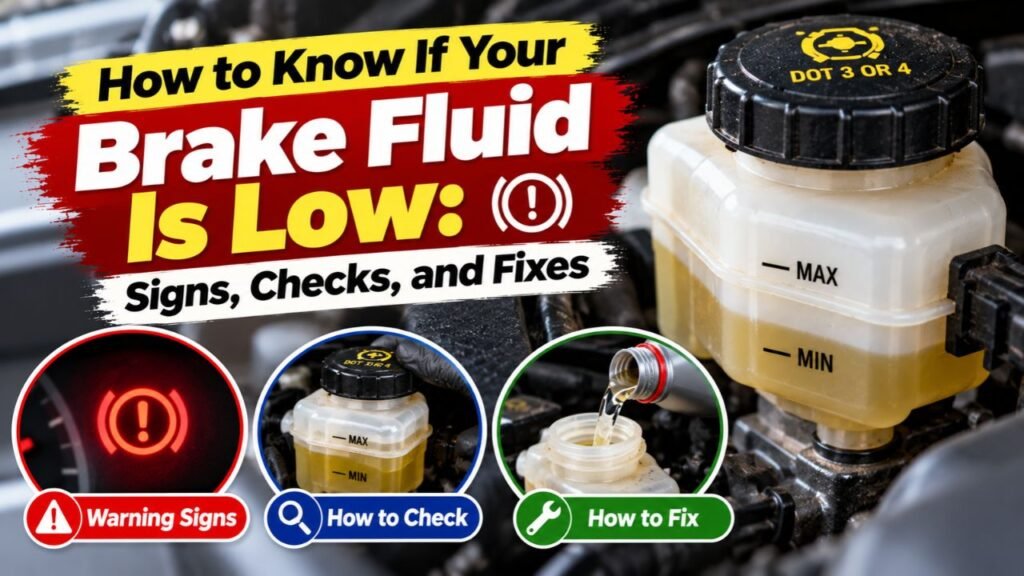
Checking the reservoir takes only a few minutes on most vehicles.
1. Park on a Level Surface
Park the vehicle on flat ground.
Place the transmission in Park or in gear as appropriate and secure the vehicle.
A level surface gives you a more accurate reservoir reading.
Ford specifies checking brake fluid with the vehicle in Park on a level surface.
2. Open the Hood
Locate the brake-fluid reservoir.
It is generally mounted near the rear of the engine compartment on top of the brake master cylinder, close to the firewall.
The cap may be labeled with wording such as:
- Brake Fluid
- DOT 3
- DOT 4
- Use Only Specified Brake Fluid
Vehicle layouts differ, so use the owner’s manual if the reservoir is not obvious.
3. Find the MIN and MAX Marks
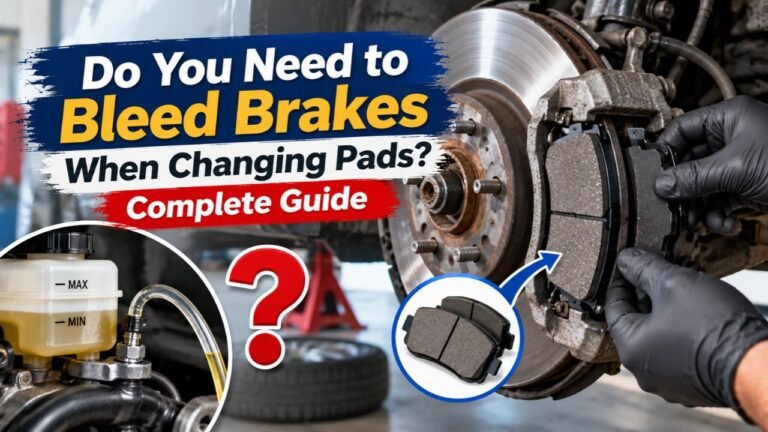
Most brake-fluid reservoirs are made from translucent plastic.
Look on the side for markings such as:
- MIN and MAX
- LOW and FULL
- Minimum and Maximum
The fluid should normally sit somewhere between these lines.
Honda’s current owner guidance states that the level should remain between MIN and MAX.
4. Look Through the Reservoir
You generally do not need to remove the cap just to check the level.
Look through the plastic reservoir from the side.
A flashlight held behind or beside the reservoir may make the fluid line easier to see.
If the outside is dusty, wipe the exterior first so you do not mistake dirt for the fluid level.
5. Compare the Level With the Marks
Use this general interpretation:
| Reservoir level | What it means |
| Near MAX | Normal if the system is healthy |
| Between MIN and MAX | Usually normal |
| Near MIN | Needs closer inspection |
| At MIN | Treat as low and check the braking system |
| Below MIN | Brake system needs prompt inspection |
| Reservoir nearly empty | Do not drive until the cause is found |
Some variation occurs as brake pads wear, but the level should not suddenly disappear.
6. Check for Changes Over Time
A level that has gradually fallen as pads wear is different from one that dropped rapidly in a few days.
If you have previously checked the reservoir, compare the current level with the old reading.
A rapid drop strongly suggests that brake fluid is escaping somewhere.
Key Takeaway: Park on level ground, locate the brake-fluid reservoir, and read the fluid against the MIN and MAX marks. Fluid at or below MIN calls for inspection rather than automatic topping off.
Signs Your Brake Fluid May Be Low
The reservoir gives the most direct answer, but the vehicle may also provide warnings.
Red Brake Warning Light
A red brake-system warning light can illuminate when brake fluid becomes low.
Honda states that its red brake-system indicator can come on because the fluid level is low or because the braking system has another malfunction.
The same light may also illuminate when the parking brake is applied, depending on the vehicle.
If the light remains on after the parking brake is fully released, check the owner’s manual and brake-fluid level.
Do not assume that adding fluid will automatically turn the warning light off or repair the underlying problem.
Soft or Spongy Brake Pedal
A brake pedal that feels unusually soft deserves immediate attention.
Low reservoir level by itself does not always make a pedal feel spongy, but a leak that allows fluid to escape can eventually let air enter the system.
Air compresses more than brake fluid, creating a softer pedal feel.
If the pedal suddenly feels abnormal, braking response may be reduced.
Honda warns that driving with low brake fluid can be dangerous and calls for immediate action if pedal pressure is abnormal.
Brake Pedal Travels Farther Than Normal
You may notice the pedal moves closer to the floor before the brakes respond.
Possible causes include:
- Hydraulic leak
- Air in the system
- Brake adjustment problem
- Master-cylinder problem
- Other hydraulic faults
Do not diagnose low fluid from pedal travel alone.
Check the reservoir and inspect the complete brake system.
Visible Brake Fluid Leak
Brake fluid may appear around:
- Calipers
- Wheel cylinders
- Flexible brake hoses
- Steel brake lines
- Master cylinder
- ABS hydraulic components
- Brake-line fittings
Fresh brake fluid is generally clear to amber, though used fluid may become darker.
A wet area around a hydraulic brake component should be inspected.
Brake Warning Light Comes On During Cornering
In some vehicles, a reservoir that is just barely above the sensor threshold may trigger the brake warning light intermittently as fluid moves in the reservoir during:
- Turns
- Hard acceleration
- Braking
- Driving on slopes
An intermittent warning still deserves a level check.
Brake Pads Are Heavily Worn
As disc brake pads become thinner, the caliper pistons remain farther out of their bores.
That leaves more brake fluid inside the calipers and less in the reservoir.
Honda documentation notes that a low reservoir level can indicate brake-pad wear as well as leakage.
Key Takeaway: A red brake warning light, abnormal pedal feel, visible hydraulic leakage, and heavily worn pads can accompany low brake fluid, but the reservoir level should always be checked directly.
Why Does Brake Fluid Get Low?
Brake fluid is part of a sealed hydraulic system.
It should not need frequent topping up.
Normal Brake Pad Wear
This is one of the less alarming reasons for a gradual drop.
As pads wear:
- Friction material becomes thinner.
- Caliper pistons travel farther outward.
- More brake fluid remains behind the pistons.
- Reservoir level gradually falls.
When new brake pads are installed and the pistons are pushed back, fluid returns toward the reservoir and the level rises again.
Ford specifically explains this behavior and warns that fluid added while pads are worn can leave the reservoir overfilled when new pads are installed.
Brake Fluid Leak
A leak is the more serious explanation.
Fluid may escape through:
- Rusted brake lines
- Damaged hoses
- Leaking caliper seals
- Leaking wheel cylinders
- Loose fittings
- Master-cylinder seals
- Damaged hydraulic components
A leak should be repaired rather than compensated for by repeatedly adding fluid.
Recent Brake Service
Brake-fluid level may change after:
- Brake-pad replacement
- Caliper replacement
- Brake bleeding
- Hydraulic repairs
After a pad replacement, the reservoir may sit higher because the pistons have been retracted for thicker new pads.
Improper Previous Filling
Someone may have previously added too little or too much fluid.
If the reservoir is low, do not assume maintenance history is the only cause.
Inspect for wear and leakage.
Key Takeaway: Brake fluid usually becomes lower because brake pads wear or because fluid is leaking. A sudden drop deserves much more concern than slow movement associated with normal pad wear.
Is Low Brake Fluid Always Caused by a Leak?
No.
Gradually worn brake pads can lower reservoir level without any external leak.
That distinction matters because topping the reservoir to MAX every time the level drops slightly can cause another problem.
Worn Pads Displace More Fluid Into the Calipers
As the pistons move outward, they occupy less space inside the caliper bore.
Brake fluid fills the additional space.
The reservoir therefore contains less fluid.
New Pads Push Fluid Back
During pad replacement, the pistons are pushed inward.
Fluid then travels back toward the master-cylinder reservoir.
If the reservoir was topped completely while the pads were worn, it may overflow during piston compression.
Brake fluid can damage automotive paint.
Rapid Loss Is Different
Normal pad wear should not empty a reservoir rapidly.
If the fluid goes from a normal level to below MIN within a short period, look for a hydraulic fault.
Key Takeaway: A slow reduction can accompany brake-pad wear, but rapid loss, an empty reservoir, or wet hydraulic parts points toward leakage rather than normal wear.
Should You Add Brake Fluid if It Is Low?
Do not automatically fill the reservoir before finding out why it is low.
Check the Brake Pads First
If the level is just above or near MIN and the pads are badly worn, the lower reading may reflect piston position.
Replacing the pads may bring the fluid level back up.
Ford specifically says not to top off brake fluid merely because normal lining wear lowered the reservoir level.
Look for a Leak
Inspect the braking system before adding enough fluid to hide a problem.
If a leak is present, repairing it is the priority.
Add Fluid Only When Appropriate
If the manufacturer’s procedure calls for fluid to be added, use exactly the specification listed on:
- Reservoir cap
- Owner’s manual
- Service information
Common automotive fluids include DOT 3 and DOT 4, but the required type varies.
Honda, for example, specifies DOT 3 for current HR-V models and warns that DOT 5 is incompatible with that system.
Use Fluid From a Sealed Container
Brake fluid absorbs moisture from the atmosphere.
Use fresh fluid from a properly sealed container rather than an old open bottle that has been sitting in the garage for years.
Do Not Overfill
Stay within the specified range.
An overfilled reservoir can spill when brake pistons are retracted during future pad service.
Key Takeaway: Diagnose the reason for the low level before topping off. If fluid must be added, use the exact specified type from a sealed container and do not exceed the MAX mark.
What Happens if Brake Fluid Gets Too Low?
The effects depend on how low the system gets and why the fluid disappeared.
Warning Light May Come On
Many vehicles monitor reservoir fluid level.
Low fluid can trigger the red brake-system warning indicator.
Air May Enter the Hydraulic Circuit
If the reservoir becomes low enough, air may enter the master cylinder and brake lines.
That can result in:
- Spongy pedal
- Longer pedal travel
- Reduced braking response
- Need for brake bleeding
On vehicles with ABS, air entering the hydraulic control unit may make bleeding more involved.
Braking May Become Unsafe
If fluid loss comes from a leak, available hydraulic pressure can decline.
Honda states that low brake fluid is dangerous and advises immediate action when the brake pedal does not feel normal.
The Underlying Fault Can Get Worse
A corroded brake line, failing hose, or leaking caliper may continue losing fluid.
Adding more fluid does not stop that failure.
Can You Drive With Low Brake Fluid?
A vehicle should not be driven normally with brake fluid at or below MIN until the cause has been identified.
The safest decision depends on pedal feel and the severity of the problem.
Do Not Drive if the Pedal Feels Abnormal
Do not continue driving if the brake pedal:
- Goes close to the floor
- Has little resistance
- Feels suddenly soft
- Requires pumping to create pressure
Honda advises immediate action when the red brake-system light is on and brake pedal pressure is abnormal.
Do Not Drive With an Active Leak
If you can see fluid leaking from a brake line, hose, caliper, or master cylinder, arrange repair or towing.
A hydraulic leak can worsen without warning.
Treat an Empty Reservoir as a Serious Fault
An almost empty reservoir is not normal brake-pad wear.
The brake system needs inspection.
Air may already have entered the hydraulic circuit.
Key Takeaway: Low brake fluid combined with a soft pedal, active leak, or nearly empty reservoir is a reason to stop driving and have the brake system repaired.
How to Tell Brake Fluid From Other Automotive Fluids
A puddle near a wheel or under the engine bay is not automatically brake fluid.
Brake Fluid
Brake fluid is typically:
- Clear to amber when fresh
- Darker as it ages
- Thin and slippery
It may damage painted automotive surfaces.
Engine Oil
Engine oil is usually:
- Brown to black when used
- More oily and viscous
Coolant
Coolant may be:
- Green
- Orange
- Yellow
- Pink
- Blue
depending on the vehicle.
Transmission Fluid
Some transmission fluids are red or reddish brown, though colors vary.
Do not rely on color alone to identify an unknown leak.
Trace the wet area back to its source.
Does Brake Fluid Color Tell You if the Level Is Low?
No.
Color and level are separate checks.
A reservoir can contain:
- Dark fluid at the correct level
- Clean fluid at a low level
Look at the fluid line against MIN and MAX to determine quantity.
Fluid color may provide information about age or contamination, but it does not tell you how much is present.
How Often Should You Check Brake Fluid?
Check it periodically and whenever there is a reason to suspect a braking problem.
Good times include:
- Routine vehicle inspections
- Oil-service intervals
- Before a long road trip
- After brake work
- When the brake warning light appears
- When pedal feel changes
- After discovering fluid under the vehicle
Some vehicles make the reservoir easy to inspect without opening it.
Checking visually takes only a few moments.
What if Brake Fluid Is Below MIN but the Brakes Feel Normal?
Do not ignore it simply because the pedal still feels firm.
A dual-circuit braking system may continue to provide normal-feeling braking in the early stages of a problem.
The reservoir still needs inspection.
Check for Pad Wear
Look at remaining friction material on the pads where visible.
If the pads are near their service limit, their wear may explain part of the level change.
Check for Leaks
Inspect:
- Master cylinder
- Brake hoses
- Calipers
- Wheel cylinders on drum brakes
- Brake-line connections
- Steel lines
Have the System Inspected
Honda’s current guidance says fluid at or below MIN should prompt inspection for leaks or worn brake pads.
Do not wait for a soft pedal before taking the low level seriously.
What if the Brake Fluid Reservoir Is Empty?
An empty or nearly empty reservoir calls for immediate diagnosis.
Possible causes include:
- Major hydraulic leak
- Recent incorrect brake service
- Severely neglected system
- Master-cylinder leak
- Ruptured brake hose
- Failed wheel cylinder
- Damaged steel brake line
Do not simply fill the reservoir and continue driving.
Once air enters the hydraulic system, the brakes may need to be bled after the fault is repaired.
ABS-equipped vehicles can sometimes require a vehicle-specific bleed procedure if air reaches the hydraulic control unit.
Common Mistakes When Checking Brake Fluid
Checking on a Steep Surface
An angled vehicle can make the fluid line harder to judge.
Use level ground.
Opening the Reservoir Unnecessarily
Most translucent reservoirs can be checked from outside.
Leaving the cap closed helps keep moisture and contamination out.
Adding Fluid Without Checking Pad Wear
Low fluid can accompany worn pads.
Adding fluid first can lead to an overfilled reservoir after pad replacement.
Ignoring a Brake Warning Light
The red brake light may indicate more than the parking brake.
If it remains on after the parking brake is released, check the owner’s manual and braking system.
Using the Wrong Brake Fluid
Do not buy fluid based only on what another vehicle uses.
Read the reservoir cap and owner’s manual.
Mixing Incompatible Fluid
DOT 5 silicone fluid, for example, is not interchangeable with conventional DOT 3 or DOT 4 systems unless the vehicle specifically calls for it.
Honda explicitly warns that DOT 5 is incompatible with the brake system in its current HR-V.
Ignoring a Soft Pedal
A low reservoir plus abnormal pedal feel is not a minor maintenance issue.
Have the hydraulic system repaired before normal driving.
Key Takeaway: Check the level on level ground, avoid opening the reservoir unnecessarily, use only the specified fluid, and never hide a leak or worn-brake problem by blindly topping off the reservoir.
Conclusion
How to know if your brake fluid is low starts with a visual reservoir check. Park on level ground and make sure the fluid sits between the MIN and MAX marks. At or below MIN means the braking system deserves closer inspection.
A gradual level reduction can occur as brake pads wear, while a rapid drop can indicate a leak. Look for a red brake warning light, changing pedal feel, wet brake components, worn pads, and fluid loss over time.
Do not keep topping up the reservoir without identifying the cause. If the reservoir is nearly empty, fluid is visibly leaking, or the brake pedal becomes soft or travels much farther than normal, stop driving and have the hydraulic brake system inspected and repaired.
FAQs About Low Brake Fluid
What Is the Easiest Way to Tell if Brake Fluid Is Low?
Look at the translucent brake-fluid reservoir and compare the fluid line with the MIN and MAX marks. Fluid at or below MIN should be investigated for brake-pad wear, leakage, or another hydraulic issue.
Will a Warning Light Come On if Brake Fluid Is Low?
Many vehicles use a red brake-system indicator that can illuminate when reservoir fluid is low. The same light may also indicate that the parking brake is applied or that another brake-system fault exists, so check the owner’s manual.
Can Worn Brake Pads Cause Low Brake Fluid?
Yes. As pads wear, caliper pistons extend farther and more fluid moves from the reservoir into the calipers. The reservoir level can gradually decline even without a leak.
Can Low Brake Fluid Make the Pedal Soft?
It can if fluid loss becomes severe enough for air to enter the hydraulic system. A soft or spongy pedal can also have other causes, so the brake system needs diagnosis rather than fluid addition alone.
Should Brake Fluid Always Be at the MAX Line?
No. A level between MIN and MAX is generally acceptable unless the vehicle manufacturer specifies otherwise. Fluid may gradually move lower as the brake pads wear.
Can I Just Add Brake Fluid if the Level Is Low?
Do not top it off blindly. First check for worn brake pads and hydraulic leaks. If fluid needs to be added, use only the specification listed by the vehicle manufacturer and never exceed the MAX mark.
Why Did My Brake Fluid Suddenly Get Low?
A rapid decrease is more consistent with a hydraulic leak or recent service issue than normal pad wear. Inspect brake lines, hoses, calipers, wheel cylinders, master cylinder, and related connections before driving normally.
Is It Safe to Drive if Brake Fluid Is Below MIN?
It should be inspected before normal driving. If the brake warning light is on, fluid is leaking, the reservoir is nearly empty, or the pedal feels soft or unusually low, do not continue driving the vehicle until the brake fault has been repaired.