Will a Bad Brake Booster Cause the Pedal to Go to the Floor?
A brake pedal that goes to the floor is a serious warning sign, but it does not usually mean the brake booster has failed. A brake booster primarily helps reduce the effort needed to press the pedal. When it fails, the pedal typically becomes very hard rather than traveling all the way to the floor.
A pedal that sinks excessively or reaches the floor is more commonly associated with a hydraulic brake problem, such as a failing master cylinder, low brake fluid, air in the brake lines, or a brake fluid leak.
Understanding the difference between these problems can help you avoid replacing the wrong component and, more importantly, recognize when the vehicle may be unsafe to drive.
Will a Bad Brake Booster Cause the Pedal to Go to the Floor?
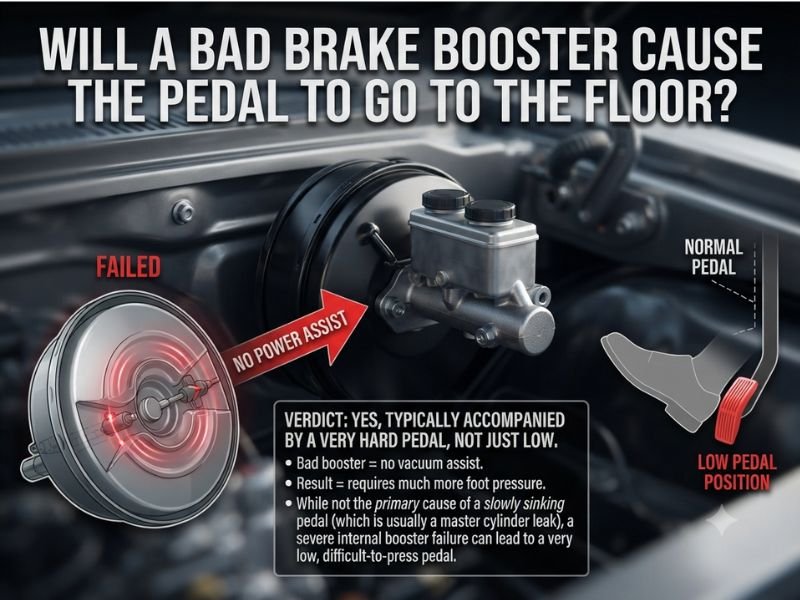
Usually, no. A bad brake booster typically causes a hard brake pedal, increased pedal effort, or loss of power assistance rather than a pedal that sinks to the floor.
The booster and hydraulic braking system perform different functions.
The booster uses vacuum or another form of power assistance to make the brake pedal easier to press. The master cylinder, brake fluid, brake lines, calipers, and wheel cylinders create and transmit hydraulic pressure to apply the brakes.
When the booster fails, you may have to press much harder to stop the vehicle. The pedal can feel extremely firm.
When the pedal goes to the floor or slowly sinks while you hold pressure, the problem is more likely to involve the hydraulic side of the braking system.
What Does a Bad Brake Booster Usually Feel Like?
A failed booster tends to produce symptoms that are almost the opposite of a floor-reaching pedal.
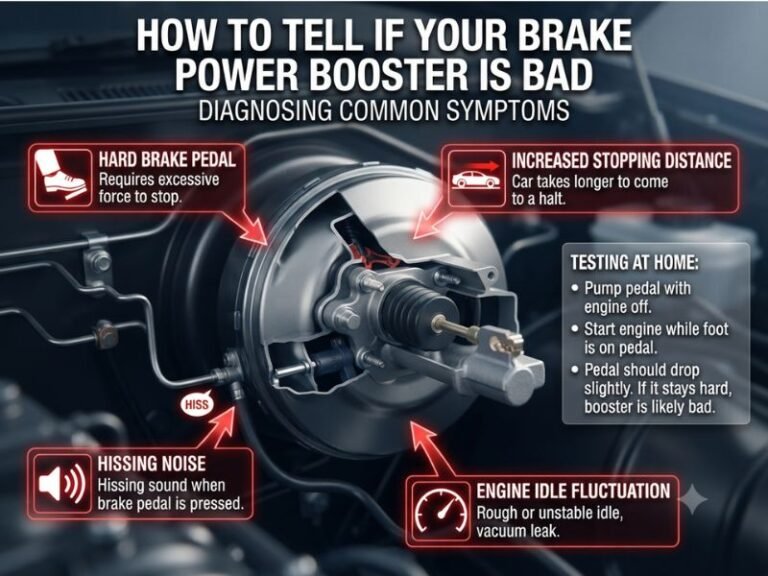
Hard Brake Pedal
The most common symptom is a hard brake pedal.
Without power assistance, the booster no longer multiplies the force from your foot. You may need to press much harder than normal to slow the vehicle.
The brakes may still work, but braking becomes considerably more difficult.
Loss of Power Brake Assistance
A failed booster can cause a noticeable loss of power brake assist.
You may notice that the vehicle requires much more pedal pressure than before, particularly during sudden stops.
The hydraulic system can remain functional even when the booster is not.
Hissing Noise
A persistent hissing sound near the brake pedal or booster can indicate a vacuum leak.
The leak could come from:
- Brake booster
- Vacuum hose
- Check valve
- Another vacuum connection
Hissing combined with a hard pedal is a stronger indication of a booster or vacuum-system problem.
Rough Idle or Engine Stalling
On vehicles that use engine vacuum for brake assistance, a significant booster leak can affect engine operation.
Possible symptoms include:
- Rough idle
- Unstable RPM
- Engine hesitation
- Engine stalling when braking
These symptoms occur because a substantial vacuum leak can affect the engine’s air-fuel mixture.
What Causes the Brake Pedal to Go to the Floor?
A pedal that reaches the floor is usually more closely related to the hydraulic brake system.
Failed Master Cylinder
A failing master cylinder is one of the most important causes of a sinking brake pedal.
The master cylinder generates hydraulic pressure when you press the brake pedal. If its internal seals fail, brake fluid can bypass the piston internally instead of maintaining proper pressure.
You may notice that the pedal:
- Slowly sinks while you hold it
- Feels unusually soft
- Travels farther than normal
- Becomes difficult to use for reliable braking
A sinking pedal while maintaining steady pressure is an important clue that the master cylinder may have an internal problem.
Brake Fluid Leak
A brake fluid leak can cause the pedal to travel excessively or reach the floor.
Fluid can potentially leak from:
- Brake lines
- Flexible brake hoses
- Calipers
- Wheel cylinders
- Master cylinder
- Other hydraulic connections
As fluid is lost, the braking system may be unable to maintain proper hydraulic pressure.
If you suspect a brake fluid leak, do not continue driving the vehicle until the problem has been properly inspected and repaired.
Air in the Brake Lines
Air inside the hydraulic brake system can cause a soft or spongy pedal.
Unlike brake fluid, air can compress significantly when the pedal is pressed.
As a result, some of your pedal movement is used to compress the air rather than directly transmitting hydraulic pressure to the brakes.
Air can enter the system after certain repairs, through a leak, or when the brake fluid level becomes dangerously low.
The appropriate repair may involve identifying the cause and properly bleeding the brake system.
Severely Worn Brake Components
Excessively worn brake components can sometimes increase pedal travel.
For example, if a brake caliper or related component has excessive movement, more hydraulic fluid displacement may be required before the brake pads can properly contact the braking surface.
However, normal brake-pad wear alone does not usually cause the pedal to suddenly go completely to the floor.
A floor-reaching pedal should always be investigated rather than dismissed as ordinary brake wear.
Other Hydraulic Brake Problems
Other problems can also affect pedal travel and hydraulic pressure.
Depending on the vehicle, possible causes may include:
- Damaged brake hoses
- ABS hydraulic unit problems
- Contaminated brake fluid
- Hydraulic component failure
- Improper brake-system repairs
Because several faults can produce similar symptoms, a complete inspection may be necessary.
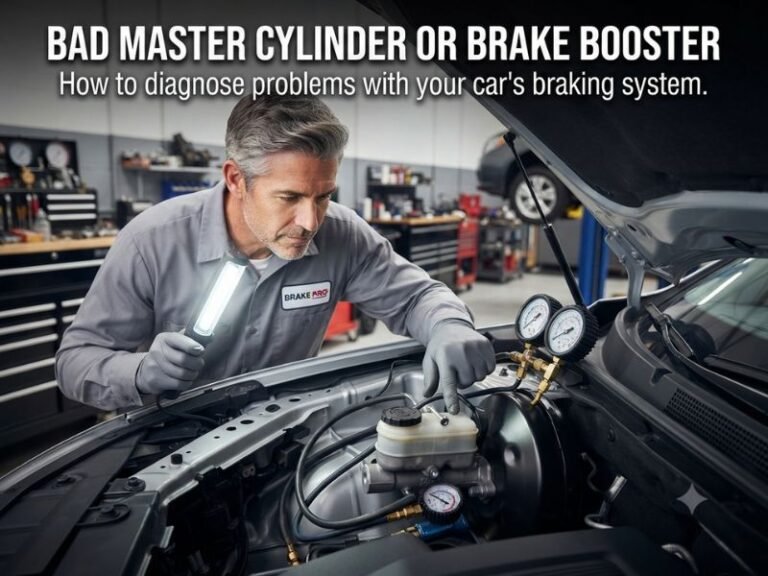
Bad Brake Booster vs. Bad Master Cylinder
The symptoms of a booster failure and master-cylinder failure can look very different.
| Symptom | Bad Brake Booster | Bad Master Cylinder |
| Hard pedal | Common | Less typical |
| Pedal goes to floor | Uncommon | Common |
| Sinking pedal | Uncommon | Common |
| Hissing | Possible | Uncommon |
| Increased pedal effort | Common | Possible |
| Soft/spongy pedal | Less typical | Common |
| Brake fluid leak | No | Possible |
| Rough idle | Possible | No |
As a general rule, a hard pedal points more toward the booster or its vacuum system, while a soft, sinking, or floor-reaching pedal points more toward a hydraulic problem.
These symptoms are useful clues but should not be treated as a final diagnosis.
How to Tell If the Booster or Master Cylinder Is the Problem
A few basic observations can help narrow down the problem.
Check the Brake Pedal With the Engine Off
With the engine off, press the brake pedal several times.
The pedal should become progressively firmer as the stored vacuum in the booster is used.
If the pedal becomes very hard, that is expected during this basic test.
If the pedal remains unusually soft or travels excessively, a hydraulic problem may need further investigation.
Perform the Engine-Start Pedal Test
Press the brake pedal firmly with the engine off.
Keep steady pressure on the pedal and start the engine.
With a functioning vacuum-assisted booster, the pedal will normally move slightly downward when power assistance becomes available.
If it does not move, the booster or vacuum supply may have a problem.
This test is useful for checking booster operation, but it does not diagnose every cause of a sinking pedal.
Hold Steady Pressure on the Brake Pedal
With the vehicle stationary and in a safe environment, apply steady pressure to the brake pedal.
If the pedal gradually continues moving downward while pressure remains constant, this can indicate a hydraulic pressure problem.
A master cylinder with internal seal failure is one possible cause.
Because brake-system faults can be dangerous, a sinking pedal should be professionally diagnosed rather than repeatedly tested on the road.
Check Brake Fluid and Look for Leaks
Check the brake-fluid reservoir according to the vehicle manufacturer’s instructions.
A low fluid level may indicate:
- Fluid leakage
- Brake-system wear
- Another hydraulic problem
Look around accessible brake components for signs of fluid leakage.
If the fluid level is very low or you see an active leak, the vehicle should not be driven until the braking system has been inspected and repaired.
Can a Bad Brake Booster Make the Pedal Feel Soft?
Usually, a bad brake booster makes the pedal feel hard, not soft.
This is an important distinction.
A booster failure means you lose the assistance that normally makes the pedal easier to press. Therefore, your foot must apply more force and the pedal often feels unusually firm.
A soft, spongy, sinking, or floor-reaching pedal is more commonly associated with hydraulic problems.
Possible causes include:
- Bad master cylinder
- Air in brake lines
- Brake fluid leak
- Hydraulic component failure
If the pedal feels soft and hard at different times, the system should be inspected rather than assuming the booster is responsible.
Is It Safe to Drive if the Brake Pedal Goes to the Floor?
No. A brake pedal that goes to the floor should be treated as a serious safety problem.
Even if the vehicle still appears to stop, the braking system may not be able to generate consistent hydraulic pressure.
Potential causes such as a master-cylinder failure, fluid leak, or air in the brake lines can worsen and lead to reduced braking ability.
Avoid normal driving if:
- The pedal reaches the floor
- The pedal is sinking while held
- Braking requires pumping the pedal
- The vehicle takes significantly longer to stop
- Brake fluid is leaking
- The brake warning light is on
- You are unsure whether the brakes can stop the vehicle safely
If the problem is severe, having the vehicle towed to a qualified repair facility is safer than driving it.
Frequently Asked Questions
Can a bad brake booster cause the brake pedal to go to the floor?
Usually not. A failed booster typically causes a hard pedal and increased pedal effort. A pedal that goes to the floor is more commonly caused by a hydraulic brake problem.
What causes a brake pedal to sink to the floor?
Common causes include a failing master cylinder, brake fluid leak, air in the brake lines, or another hydraulic brake-system problem.
Does a bad master cylinder cause the pedal to go to the floor?
Yes. An internally failing master cylinder can allow brake fluid to bypass its internal seals, causing the pedal to sink while pressure is maintained.
Can low brake fluid cause the pedal to go to the floor?
Yes. If brake fluid becomes dangerously low, air can enter the hydraulic system and braking pressure can be significantly reduced.
How do I know if my brake booster or master cylinder is bad?
A hard pedal, hissing, and loss of power assistance generally point toward a booster or vacuum problem. A soft, sinking, or floor-reaching pedal is more suggestive of a master-cylinder or other hydraulic problem.
Is a brake pedal going to the floor dangerous?
Yes. A brake pedal that reaches the floor can indicate a serious loss of hydraulic braking capability. The vehicle should be inspected before normal driving continues.
Final Thoughts on Will a Bad Brake Booster Cause the Pedal to Go to the Floor?
So, will a bad brake booster cause the pedal to go to the floor? In most cases, no. A failed booster usually produces a hard brake pedal, increased pedal effort, hissing, and loss of power assistance.
A pedal that sinks toward or reaches the floor is more likely to indicate a master cylinder problem, brake fluid leak, air in the brake lines, or another hydraulic fault.
Because a floor-reaching brake pedal can indicate a serious braking problem, do not continue driving simply because the vehicle still stops. Have the brake system properly inspected to identify the actual cause before returning to normal driving.