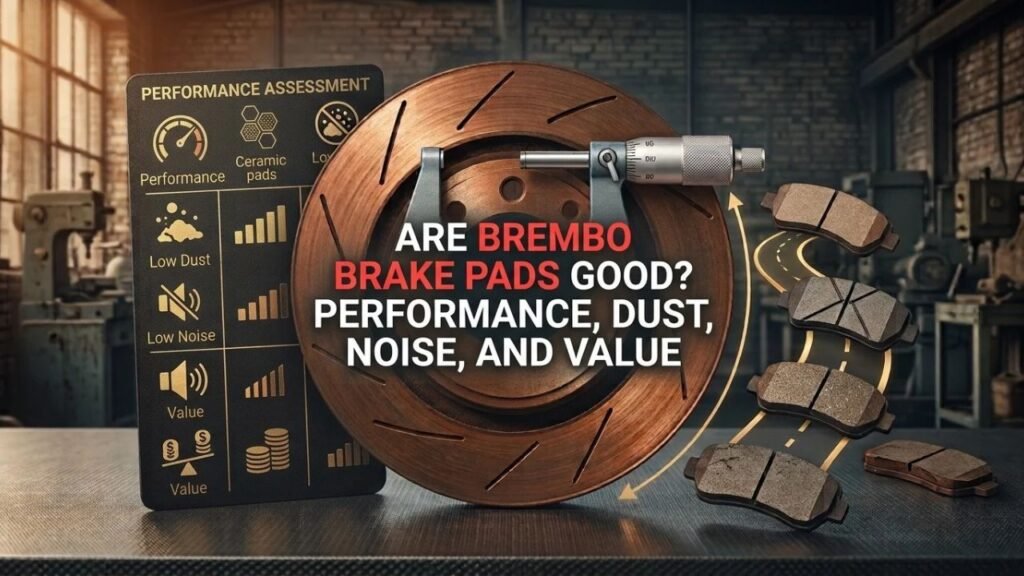
Are Brembo Brake Pads Good? Performance, Dust, Noise, and Value
Yes, genuine Brembo brake pads are generally a strong choice for daily driving and many performance-oriented street cars. Brembo offers OE-style, ceramic, and sport-focused compounds, so braking feel, dust, noise, and heat tolerance vary by pad line. The best result comes from choosing the compound made for your vehicle and driving style rather than buying by brand name alone.
The main mistake is assuming every pad carrying the Brembo name behaves the same. A low-metallic Prime or Xtra pad can provide a sharper initial response than a ceramic pad, while a ceramic version may trade some of that bite for lower dust and quieter everyday operation.
That difference matters because brake-pad quality is not measured only by stopping distance. Pedal feel, cold response, fade resistance, rotor wear, noise control, dust output, fitment, and consistency all affect how satisfied you will be after installation.
Brembo’s current North American Prime range lists more than 2,000 brake-pad part numbers, and the company describes Prime pads as OE-equivalent replacements. Its current product range also separates Prime, ceramic, sport-oriented Xtra, EV, and other compounds rather than using one friction material for every application.
My research found that are Brembo brake pads good is best answered with a qualified yes. The brand has a strong original-equipment background, but the exact pad line matters more than the logo printed on the box. Brembo also supplies original-equipment braking systems for U.S.-market performance models such as the Acura Integra Type S and Subaru WRX tS.
Real owner feedback follows the same pattern. Recent verified Tire Rack reviews of Brembo NAO Ceramic pads include reports of good fit, strong stopping, and little or no noise, while other owner discussions report softer initial bite or more dust than expected on certain vehicles. That variation is normal for friction materials because pad behavior changes with the rotor, vehicle, brake system, temperature, and driving conditions.
The sections below separate Brembo’s main pad types, explain braking feel, dust, noise, pad life, rotor wear, street-performance use, common complaints, and the situations where Brembo makes more sense than an OEM or budget replacement.
Are Brembo Brake Pads Good for Daily Driving?
Strong Fit for Normal Road Use
For normal commuting, highway driving, family vehicles, and mixed city use, Brembo Prime and ceramic replacement pads are generally good choices when the correct part number is installed.
Brembo describes its Prime pads as OE-equivalent, meaning they are intended to restore braking characteristics close to the requirements of the factory brake system. The Prime range uses vehicle-specific friction materials, shims, chamfers, slots, and accessory hardware where the application calls for them.
That vehicle-specific approach is more reassuring than a generic friction compound sold across unrelated brake systems.
For a normal street car, I would place proper fitment and compound selection above brand reputation alone. A highly rated pad intended for another brake setup is still the wrong pad.
They Are Not Automatically the Best Pad for Every Driver
A driver focused on clean wheels may prefer Brembo’s ceramic line. Someone who wants a firmer initial response may prefer a low-metallic Prime or Xtra compound.
A driver who repeatedly uses the brakes at track temperatures needs another category of pad entirely. Brembo states that its Xtra pads are intended for sporty road use and are not designed for track racing.
That distinction is important. A pad can be very good within its intended operating range and still be a poor choice outside it.
Key Takeaway: Genuine Brembo pads are a solid street choice, but selecting the correct Brembo compound for the car and driving style matters more than buying the brand alone.
Which Brembo Brake Pads Should You Choose?
Brembo Prime
Brembo Prime is the closest starting point for drivers seeking factory-style replacement behavior.
Brembo positions Prime pads around braking response, comfort, low vibration, and OE-matched characteristics. The range uses shims and other design features aimed at controlling noise and maintaining consistent road behavior.
Prime makes the most sense when you are satisfied with the basic personality of the factory braking system and want a known aftermarket replacement without moving toward a more specialized sport compound.
Brembo Prime Ceramic or NAO Ceramic
Brembo ceramic pads focus more heavily on low dust, smooth operation, and comfort.
Tire Rack describes Brembo NAO Ceramic pads as using ceramic friction material and multilayer shims intended to control vibration and noise. The product description also notes lower metallic content and reduced brake dust compared with more metal-heavy compounds.
Ceramic pads can feel different from the factory low-metallic pad on some European or performance cars. Initial bite may feel softer even if full braking capability remains adequate for street use.
If clean wheels and quiet commuting matter more to me than an aggressive first touch of the pedal, this is the Brembo line I would examine first.
Brembo Xtra
Brembo Xtra pads are aimed at sporty road driving.
Brembo uses a copper-free low-metallic compound in the current Xtra range and promotes stronger pedal response, friction stability, and fade resistance for demanding street use. The company pairs Xtra pads with its Max, Xtra, and Sport rotors.
This line makes more sense for drivers who value braking response during harder road use and are prepared to accept possible tradeoffs in dust compared with a comfort-focused ceramic compound.
Brembo Xtra Ceramic
Xtra Ceramic sits between the clean-wheel character of ceramic pads and the more responsive character expected by drivers of higher-output street cars.
Brembo currently positions Xtra Ceramic for higher-end vehicles where comfort, cleaner wheels, and stronger street braking are priorities. Availability depends on application.
Key Takeaway: Prime suits factory-style replacement, ceramic versions favor cleaner and quieter road use, and Xtra targets drivers who want a sportier street brake feel.
How Do Brembo Brake Pads Perform?
Stopping Feel and Initial Bite
Brembo’s low-metallic pads generally suit drivers who like a more immediate pedal response. Their metal content aids heat transfer and can support a firmer initial feel.
Ceramic pads often feel smoother and less aggressive during the first part of pedal travel. That does not automatically mean poor braking. Friction-material behavior simply changes.
One owner discussion involving Brembo NAO Ceramic pads reported weaker initial feel immediately after installation, followed by much better behavior after more driving and bedding. That is an anecdotal example rather than a universal result, but it shows why initial impressions should be separated from a fully bedded brake system.
If the pedal suddenly feels abnormally long, soft, or unsafe after a brake job, do not assume the compound explains it. Installation errors, air in the hydraulic system, sticking hardware, rotor condition, or another fault needs to be ruled out.
Brake Dust
Dust output depends heavily on the compound.
Brembo ceramic pads are the better starting point for drivers who want cleaner wheels. Brembo’s current product comparison specifically positions Prime Ceramic and Xtra Ceramic around clean rims, while low-metallic Prime and Xtra pads place more emphasis on response and heat behavior.
Do not expect zero dust. No friction brake pad can operate without wear debris.
Owner reports also vary. Some drivers report little visible dust from Brembo NAO Ceramic pads, while others say they produce more dust than expected. Rotor condition, driving style, wheel design, and the exact pad application can change what appears on the wheel.
Noise
Brembo uses multilayer shims, chamfers, slots, and other pad-specific features to limit vibration and squeal.
Recent verified owner reviews of NAO Ceramic pads include reports of quiet operation, yet some owners have reported squeaks or groaning in specific installations.
No quality brake pad guarantees silence. Rusted hardware, worn rotors, poor bedding, missing lubrication at approved contact points, seized slides, incorrect installation, or rotor lips can make a good pad noisy.
Pad Life
There is no honest universal mileage figure for Brembo pads.
Pad life changes with vehicle mass, city traffic, highway use, hills, towing, wheel size, brake-system design, pad material, and driving style.
A ceramic street pad may wear slowly in normal commuting, while an aggressive compound used repeatedly at high temperature follows a different wear pattern.
Instead of judging Brembo pads by a claimed mileage number, I would inspect remaining friction material and compare wear at all pads on the axle.
Rotor Wear
Friction material also affects the rotor.
Ceramic compounds are often chosen for lower dust and gentler everyday operation. Low-metallic compounds can provide stronger bite and heat behavior but may create more visible dust or rotor wear in some applications.
Rotor material, surface condition, pad compound, temperature, and brake use all interact, so brand alone cannot predict rotor life.
Key Takeaway: Brembo performs well across braking response, noise control, and street use, but ceramic and low-metallic versions produce noticeably different pedal feel and dust behavior.
Are Brembo Brake Pads Better Than OEM Pads?
Brembo Can Be an OE-Level Replacement
Brembo is not simply an aftermarket logo. The company supplies complete braking systems and components for original-equipment applications, including performance vehicles sold in the United States.
Its Prime aftermarket range is specifically described as OE-equivalent.
That makes Brembo a credible alternative when the correct pad is listed for the vehicle and the driver wants braking characteristics close to the original setup.
OEM Pads Can Still Be the Better Match
An OEM pad has one major advantage: it was chosen around that exact factory brake package.
If you love the original pedal feel, noise level, dust behavior, and wear rate, buying the factory pad again removes much of the guesswork.
Switching to Brembo becomes more attractive when you want a particular change, such as:
- Less dust
- A different pedal response
- A sport-oriented road compound
- A lower-cost alternative to dealer pads
- A Brembo pad matched with Brembo replacement rotors
Do not assume aftermarket always means upgrade. A different compound may improve one trait while changing another.
Key Takeaway: Brembo can match or suit some drivers better than OEM, but the factory pad remains a strong option when you want the car to feel exactly as it did before.
Are Brembo Brake Pads Good for Performance Driving?
Spirited Street Driving
Brembo Xtra is the clearest choice in the company’s standard road range for drivers who brake harder than typical commuters.
The Xtra compound is built around firmer response, friction stability, and resistance to fade during demanding street use. Brembo recommends pairing these pads with its sport-oriented road discs.
For canyon roads, fast street driving, or repeated highway braking, that type of compound makes more sense than choosing a comfort-focused ceramic pad solely because the box says Brembo.
Track Driving
Street Brembo pads should not automatically be treated as track pads.
Brembo explicitly states that Xtra pads are not intended for track racing.
Track use can create brake temperatures far beyond normal road conditions. Pads intended for commuting may lose friction, overheat, wear rapidly, or transfer material poorly under those conditions.
If the vehicle will see repeated track sessions, choose a pad specifically rated for that temperature range and braking workload.
Key Takeaway: Brembo Xtra is suited to harder road use, but a dedicated motorsport pad is the correct category for repeated track temperatures.
Common Complaints About Brembo Brake Pads
Softer Bite From Ceramic Pads
Drivers moving from a dusty low-metallic factory pad to a ceramic compound sometimes notice a softer initial response.
That can be normal. Ceramic friction material is often selected for comfort and lower dust rather than the sharpest possible first pedal touch.
Give properly installed new pads and rotors the bedding process specified for the parts. If braking remains unusually weak, inspect the system instead of assuming weak bite is acceptable.
More Dust Than Expected
The word ceramic can create unrealistic expectations.
Brembo ceramic pads are intended to reduce dust, but reduced does not mean dust-free. Some owner reports show very clean wheels; others report more residue than expected.
If minimum dust is your top priority, compare pad compounds rather than relying only on brand.
Squeaking After Installation
Brake squeal can come from pads, but the cause may also be old rotors, rusted clips, incorrect hardware, dry contact points, glazed surfaces, or caliper movement.
Replacing pads on a heavily grooved rotor can also make it harder for the new friction surface to contact evenly.
A proper brake job includes inspection of the complete corner, not just sliding new pads into the bracket.
Counterfeit Brembo Parts
Brand popularity attracts counterfeit products.
Brembo warns that fake braking components exist and says its testing of counterfeit examples has found braking, noise, vibration, and structural problems. The company recommends checking authenticity and buying through trusted channels.
For a safety-related part, an unusually cheap listing from an unknown seller is not worth the risk.
Key Takeaway: Most Brembo complaints involve compound expectations, bedding, installation, rotor condition, or questionable parts rather than proof that the brand’s entire pad range is poor.
How to Get Good Results From Brembo Brake Pads
Confirm the Exact Part Number
Brake packages can change within the same year and model.
Caliper type, rotor diameter, engine, trim, performance package, and production date can affect pad fitment.
Use the vehicle identification details and a trustworthy catalog rather than choosing a pad from appearance alone.
Inspect the Rotors
Check rotor thickness, scoring, cracking, corrosion, heat spots, and surface condition before installing new pads.
A badly worn rotor can cause noise, vibration, poor bedding, and uneven pad contact.
If the rotor is below its service limit, replace it.
Service the Caliper Hardware
New pads cannot correct seized slide pins, torn boots, corroded abutment surfaces, or a sticking piston.
Make sure pads can move correctly in the bracket and use the lubricant specified by the brake manufacturer only at approved contact points.
Never put lubricant on the friction face or rotor.
Follow the Correct Bedding Procedure
Fresh pads need good contact with the rotor surface.
Follow the bedding or break-in instructions supplied for the exact Brembo product or vehicle. Avoid improvising repeated extreme stops unless the instructions specifically call for that procedure.
Key Takeaway: Correct fitment, sound rotors, free-moving calipers, clean installation, and proper bedding have a major influence on how any Brembo pad feels after installation.
Are Brembo Brake Pads Worth the Money?
For many drivers, yes.
Brembo sits above unknown bargain pads because buyers are getting a recognized brake manufacturer, vehicle-specific engineering, several compound choices, noise-control hardware, and extensive original-equipment experience.
That does not mean you should automatically pay more for Brembo if another reputable OE supplier offers the exact characteristics you want for less money.
My preference would be Brembo when the correct pad is available at a reasonable price and its compound matches the goal. Prime is attractive for factory-style road use, ceramic for lower dust and comfort, and Xtra for a sharper street-oriented setup.
Conclusion
Are Brembo brake pads good? Yes, genuine Brembo pads are generally a good choice for daily driving, OE-style replacement, and sport-oriented road use when the correct compound is selected for the vehicle.
Prime pads are aimed at OE-like behavior, ceramic versions favor cleaner wheels and smooth operation, and Xtra pads move toward stronger response and heat resistance for sporty street driving. Noise, dust, bite, and wear can still vary by vehicle, rotor condition, installation, and pad type.
I would not buy Brembo solely because of the brand name. Match the specific pad line to the way the car is driven, confirm the part number, inspect the rotors and calipers, and buy from a trusted seller. That approach gives the product a much fairer chance to perform as intended.
FAQs About Brembo Brake Pads
Are Brembo Brake Pads Better Than Regular Brake Pads?
They are generally a stronger choice than unknown low-cost pads because Brembo has extensive brake-system engineering and OE experience. Against reputable brands such as Akebono, Bosch, TRW, Ferodo, Advics, or genuine factory pads, the comparison depends on friction compound, vehicle application, dust, noise, pedal feel, and intended use.
Are Brembo Ceramic Brake Pads Good?
Yes. Brembo ceramic pads are a good match for drivers who prioritize quieter road use and reduced wheel dust. Some drivers may notice less aggressive initial bite compared with a low-metallic pad, so ceramic should be chosen for its operating characteristics rather than treated as an automatic upgrade.
Do Brembo Brake Pads Make a Lot of Dust?
It depends on the pad line. Brembo ceramic compounds are aimed at lower dust, while low-metallic Prime or Xtra pads may create more visible residue. Driving style, rotor material, brake temperature, and vehicle weight also influence how quickly wheel dust appears.
Are Brembo Brake Pads Noisy?
They should not automatically be noisy. Brembo uses shims, slots, chamfers, and other features to limit vibration on many applications. Brake squeal can still occur from rotor condition, hardware, bedding, contamination, caliper faults, or the friction compound itself.
How Long Do Brembo Brake Pads Last?
There is no fixed mileage that applies across Brembo’s range. Stop-and-go traffic, vehicle weight, hills, towing, pad compound, braking style, rotor condition, and caliper operation all affect wear. Measure the remaining friction material during service instead of relying on a generic mileage claim.
Are Brembo Pads Good With Brembo Rotors?
Yes. Brembo develops pad and rotor combinations within its product lines, and pairing compatible Brembo components is a sensible setup. Prime pads are associated with Prime rotors, while Xtra pads are intended to work with Brembo’s Xtra, Max, and Sport road rotors.
Are Brembo Brake Pads Good for Track Use?
Standard Prime and ceramic road pads are not track pads. Brembo also states that Xtra pads are designed for sporty road driving rather than track racing. Repeated track use calls for a motorsport friction material rated for the temperatures and braking loads the vehicle will encounter.
How Can I Tell if Brembo Brake Pads Are Genuine?
Buy from a recognized dealer or trusted parts supplier, confirm the part number against Brembo’s catalog, inspect the packaging and markings, and use any authenticity features supplied with the product. Be cautious with listings priced far below normal market levels or sellers that cannot establish where the parts came from.