How to Fix Green Brake Fluid: Causes, Risks, and Repair Steps
If the fluid in a conventional brake-fluid reservoir has unexpectedly turned green, do not simply top it off. First confirm which fluid the vehicle requires, determine if the green color is normal for that system, and check for wrong-fluid contamination. If incompatible fluid may have entered the brakes, stop driving and have the system inspected before relying on a simple flush.
Green fluid is not automatically bad. Some hydraulic mineral oils are intentionally green, and selected vehicle systems are designed specifically for them. In contrast, U.S. DOT 3 and DOT 4 brake fluids are normally colorless to amber, while hydraulic-system mineral oil has historically been color-coded green under federal standards.
That distinction matters because adding mineral oil, power-steering fluid, engine oil, or another petroleum-based fluid to a brake system designed for glycol-based brake fluid can damage rubber seals. Mitsubishi has documented swollen or damaged master-cylinder rubber cups after mineral-based oil contamination.
For how to fix green brake fluid, start by reading the reservoir cap and owner’s manual. The correct response is very different if the car was designed for green mineral hydraulic fluid versus a normal DOT 3 or DOT 4 system that suddenly contains green liquid.
Dark, cloudy, dirty brake fluid can also indicate age or contamination even when the color is not obviously green. Brake fluid absorbs moisture over time, which lowers its boiling point and can contribute to corrosion and poor braking under heat.
Do not diagnose the brake system from color alone. Fluid type, pedal feel, contamination history, reservoir condition, seal condition, and the manufacturer’s service information all need to agree before the vehicle is returned to normal use.
How to Fix Green Brake Fluid Safely
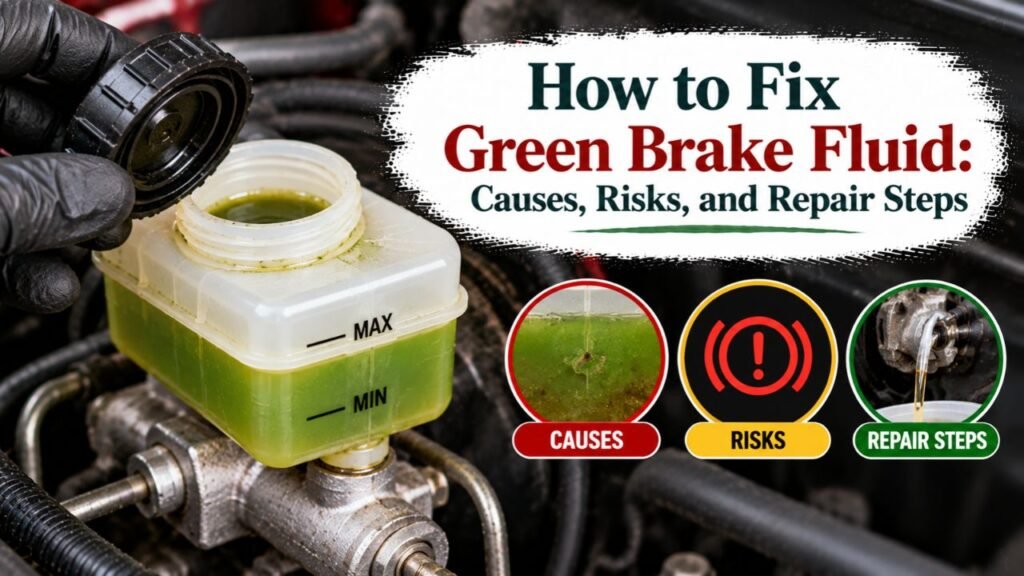
The repair depends on why the fluid is green.
1. Do Not Add More Fluid Yet
Do not top off the reservoir until you identify the fluid already inside.
Adding fresh DOT fluid to an unknown green fluid can make contamination harder to diagnose and may spread incompatible fluid farther through the system.
Check the reservoir level, but leave the fluid alone until you confirm its specification.
2. Read the Brake Fluid Reservoir Cap
Look for wording such as:
- DOT 3
- DOT 4
- DOT 5
- DOT 5.1
- Mineral hydraulic fluid
- Manufacturer-specific hydraulic fluid specification
The reservoir cap or nearby label should tell you which fluid belongs in the system.
Do not choose fluid based only on color.
3. Check the Owner’s Manual
Confirm the factory specification in the owner’s manual or service information.
This is especially necessary on European vehicles or vehicles with unusual hydraulic systems.
If the vehicle specifically calls for a green mineral hydraulic fluid, the color may be completely normal.
If the vehicle calls for DOT 3 or DOT 4 and the reservoir contains distinctly green oily fluid, contamination needs to be considered.
4. Find Out What Was Added Previously
If the color changed after recent service, ask what fluid was used.
Common accidental additions include:
- Power-steering fluid
- Automatic transmission fluid
- Hydraulic mineral oil
- Engine oil
- Wrong brake-fluid type
- Unknown fluid from an unmarked container
If you personally added fluid from a bottle, check the exact product label.
Do not rely on memory if the container is still available.
5. Do Not Drive if Wrong Fluid Is Suspected
If petroleum-based or mineral oil was added to a DOT brake system, avoid driving the vehicle.
Brake-system rubber parts are designed for specific fluid chemistry.
Wrong fluid can damage:
- Master-cylinder seals
- Caliper piston seals
- Wheel-cylinder seals
- Flexible hoses
- ABS hydraulic components
A flush may not repair rubber that has already swollen or softened.
6. Have the Brake System Inspected
A technician should inspect the reservoir, master cylinder, hoses, calipers or wheel cylinders, and ABS hydraulic unit as required by the contamination level.
Signs of seal damage may include:
- Swollen rubber
- Sticky piston movement
- Brake drag
- Fluid leaks
- Abnormal pedal feel
- Restricted fluid passages
If incompatible fluid has reached the hydraulic components, replacement of affected rubber-containing parts may be required.
7. Flush Only With the Correct Fluid
If the service procedure determines that flushing is suitable, use only the brake fluid specified by the vehicle manufacturer.
A brake-fluid flush replaces old or contaminated fluid through the hydraulic circuits until clean fluid reaches each bleeder.
Keep the reservoir from running dry during the process.
Air entering the system creates another braking problem that then requires proper bleeding.
8. Bleed the System Correctly
The bleeding sequence varies by vehicle.
Some ABS-equipped vehicles also require a scan tool to cycle the ABS hydraulic unit during service.
Follow the factory sequence rather than assuming the traditional farthest-wheel-first method applies to every vehicle.
9. Confirm Brake Operation Before Driving
After service, verify:
- Firm pedal
- No leaks
- Correct reservoir level
- No brake warning lights
- Normal caliper release
- Correct ABS operation where applicable
If the pedal remains soft, sinks, or feels abnormal, do not drive the vehicle.
Key Takeaway: Identify the factory fluid first. If green fluid is normal for that hydraulic system, no color-related repair may be needed. If a DOT brake system has been contaminated with mineral or petroleum fluid, inspection and possible component replacement may be required before flushing alone is considered sufficient.
Why Is My Brake Fluid Green?
Green color can have several explanations.
The Vehicle Uses Green Mineral Hydraulic Fluid
Some hydraulic systems are designed for mineral-based fluid rather than conventional DOT brake fluid.
Green may be the intended color.
Federal U.S. brake-fluid color coding historically distinguished green hydraulic mineral oil from clear-to-amber DOT 3 and DOT 4 fluid.
Never replace a specified mineral hydraulic fluid with ordinary DOT brake fluid unless the vehicle manufacturer explicitly calls for that conversion.
The Wrong Fluid Was Added
This is the most serious possibility on a normal DOT brake system.
Mineral or petroleum products may appear:
- Green
- Red
- Amber
- Clear
- Brown
Color alone cannot identify the chemical type.
If the fluid became green immediately after topping off or servicing, wrong-fluid contamination deserves close attention.
Old Fluid Has Changed Appearance
Brake fluid can darken as it ages and picks up moisture and contaminants.
A greenish tint under certain lighting may not mean a green fluid was added.
Compare a sample in a clean transparent container rather than judging only through a stained reservoir.
Reservoir Plastic Changes the Color
Some reservoirs become yellowed or discolored with age.
Lighting through old plastic can make normal amber fluid appear greenish, brown, or gray.
Inspect the actual fluid before deciding that its chemistry has changed.
Mixed Fluids Changed the Appearance
Two compatible or incompatible fluids may produce an unusual color after mixing.
This is another reason not to use color as the only diagnostic test.
Key Takeaway: Green may be normal mineral hydraulic fluid, wrong-fluid contamination, aged fluid, reservoir discoloration, or a mixed-fluid appearance. Confirm the specification before choosing a repair.
Is Green Brake Fluid Normal?
It depends entirely on the vehicle.
Green Is Not Normal for Many DOT 3 and DOT 4 Systems
DOT 3 and DOT 4 brake fluids are expected to appear clear to amber when new under U.S. standards.
If one of these systems suddenly contains bright green fluid, investigate what was added.
Green Can Be Normal in Mineral-Oil Hydraulic Systems
Some cars use mineral hydraulic fluid for systems that may include braking, suspension, steering, or central hydraulics.
Those fluids can be intentionally green.
Using DOT fluid in such a system can be just as damaging as putting mineral oil into a DOT brake system.
The Cap Specification Matters More Than Color
Use the wording on the reservoir cap and service information.
That label tells you what the system was designed to use.
Key Takeaway: Green color alone is neither normal nor abnormal. It must match the fluid specification of the exact vehicle.
Can You Flush Green Brake Fluid Out?
Sometimes, but not every contamination problem can be solved by flushing.
When a Flush May Be Enough
A flush may be suitable when:
- Fluid is simply old
- Moisture level is high
- Dirt is present
- Compatible fluid was mixed
- No seal damage exists
- Manufacturer service guidance allows flushing
Fresh fluid should be added from a sealed container.
When a Flush May Not Be Enough
A simple flush is risky if petroleum or mineral oil entered a system designed for glycol-based brake fluid.
Rubber components may swell or deteriorate after contact with incompatible fluid.
Mitsubishi specifically warns that mineral-based oil contamination can damage or swell master-cylinder rubber cups.
Once rubber is physically damaged, replacing the liquid does not restore the seal.
Severe Contamination Can Require Parts
Depending on the vehicle and how far the wrong fluid traveled, repair may involve inspection or replacement of:
- Master cylinder
- Brake hoses
- Caliper seals
- Wheel cylinders
- ABS hydraulic unit
- Reservoir seals
- Other rubber-containing hydraulic parts
The required repair should follow factory service procedures.
Key Takeaway: Flushing works for many normal fluid-service problems, but incompatible petroleum or mineral contamination may damage seals and require component replacement as well.
What Happens if Power Steering Fluid Gets Into Brake Fluid?
Power-steering fluid is commonly petroleum-based or synthetic hydraulic oil, depending on the system.
It does not belong in a conventional glycol-based brake system unless the vehicle manufacturer explicitly specifies that fluid.
Rubber Seals Can Swell
Brake-system rubber compounds are selected for the specified brake fluid.
Wrong oil can alter the rubber and cause swelling.
That can interfere with master-cylinder and caliper operation.
Brakes May Drag
Swollen seals or blocked return passages can prevent hydraulic pressure from releasing normally.
Possible symptoms include:
- Hot wheel
- Burning smell
- Vehicle pulling
- Brake drag
- Rapid pad wear
The Pedal May Feel Wrong
Seal damage may also cause:
- Soft pedal
- Hard pedal
- Slow pedal return
- Pedal sinking
- Inconsistent braking
Any abnormal pedal after suspected fluid contamination needs immediate inspection.
What Happens if Engine Oil Gets Into Brake Fluid?
Engine oil should never be placed in a normal brake-fluid reservoir.
Even a small amount is cause for concern because the fluid can spread through the hydraulic system as the brakes are used.
Do not try to correct the mistake by adding a large amount of brake fluid on top.
Dilution is not a dependable repair.
Stop using the vehicle and have the contamination assessed.
The sooner the mistake is caught before the pedal is repeatedly pressed, the less distance the wrong fluid may travel.
Can Water Make Brake Fluid Turn Green?
Water normally does not turn brake fluid bright green by itself.
Brake fluid absorbs moisture naturally over time.
Moisture can contribute to:
- Lower boiling point
- Internal corrosion
- Cloudy appearance
- Darker fluid
- Reduced high-temperature braking margin
A strange color may appear alongside moisture contamination, but visual color is not a reliable moisture test.
Electronic brake-fluid testers and boiling-point testing are better inspection methods when used correctly.
Does Green Brake Fluid Mean Copper Contamination?
Not necessarily.
Brake lines and internal components can release corrosion products into old fluid, and some test strips measure copper concentration as an indicator of fluid condition.
A green appearance alone does not prove copper contamination.
Do not diagnose copper level by color.
Use an approved test method if copper concentration is part of the service decision.
How to Tell if Brake Fluid Is Contaminated
Look beyond color.
Check for Cloudiness
Fresh brake fluid is normally clear.
Cloudy fluid may contain moisture, debris, or another contaminant.
Look for Separation
Two visible layers are a serious warning sign.
Different hydraulic fluids may not remain uniformly mixed.
Check for Oily Appearance
A petroleum contaminant may create an unusual oily feel or appearance.
Do not touch brake fluid with bare skin simply to test it.
Inspect Rubber Components
Swollen reservoir seals or rubber parts can point toward incompatible fluid.
Check Pedal Feel
A braking-system problem may show up as:
- Soft pedal
- Pedal sinking
- Brake drag
- Slow release
- Pulling while braking
Do not continue driving to see if the condition gets worse.
Review Service History
Recent brake, steering, or hydraulic work can reveal where contamination occurred.
A wrong bottle used during service is often easier to identify from service records than from fluid color.
Key Takeaway: Cloudiness, separation, seal swelling, abnormal pedal feel, and recent service history are stronger contamination clues than color alone.
How to Flush Old Green-Looking Brake Fluid
This section applies only after you confirm that the system contains the correct compatible fluid and no incompatible petroleum contamination is present.
Use the Exact Required Fluid
Check the reservoir cap and service manual.
Use fresh fluid from a sealed container.
Brake fluid absorbs moisture after opening, so old partially used bottles are not ideal for major service.
Protect Painted Surfaces
Brake fluid can damage automotive paint.
Cover nearby painted areas and clean spills immediately according to the fluid manufacturer’s instructions.
Remove Old Reservoir Fluid Carefully
A brake-fluid extractor or clean syringe-style tool may be used to remove old fluid from the reservoir where the service method permits.
Do not empty the master cylinder completely if that would introduce air into areas that are difficult to bleed.
Add Fresh Fluid
Fill with the specified fluid.
Keep the level between the recommended marks.
Bleed Each Circuit
Open each bleeder according to the factory sequence.
Continue until clean fluid free of air bubbles reaches the bleeder.
Bosch service guidance describes continuing the process until fresh light-colored fluid exits free of bubbles.
Maintain Reservoir Level
Never let the reservoir run dry while bleeding.
Refill it as fluid moves through the system.
Service ABS if Required
Selected ABS systems need an electronic service procedure to cycle internal valves or pumps.
Use the specified scan-tool function when required.
Key Takeaway: A normal brake-fluid flush uses the correct fresh fluid, keeps the reservoir full, moves clean fluid through every circuit, and follows the vehicle’s specified bleeding and ABS procedure.
When Should You Tow the Vehicle Instead of Driving?
Do not drive if the fluid type is unknown and braking performance may be affected.
Towing is the safer choice when you notice:
- Wrong fluid definitely added
- Brake pedal sinking
- Very soft pedal
- Brake drag
- One wheel overheating
- Major fluid leak
- Brake warning light with abnormal braking
- Swollen reservoir seal
- Unknown oily contamination
- Brakes failing to release
Brake-system contamination can change after the vehicle heats up, so a short driveway test does not prove the system is safe.
How to Prevent Brake Fluid Contamination
A few simple habits reduce the chance of fluid mistakes.
Store brake fluid separately from:
- Power-steering fluid
- Engine oil
- Transmission fluid
- Hydraulic oil
- Coolant
Keep every container clearly labeled.
Clean the reservoir cap before opening it.
Use only fluid from a clean sealed container.
Do not pour unused fluid from a drain pan or bleeding bottle back into the original bottle.
Avoid leaving the reservoir cap open longer than needed because brake fluid absorbs moisture from the surrounding air.
Conclusion
For how to fix green brake fluid, first determine what the green color actually represents. Some hydraulic systems are designed for green mineral fluid, while many conventional DOT brake systems should contain clear-to-amber brake fluid.
If the vehicle specifies DOT 3 or DOT 4 and mineral oil, power-steering fluid, or another incompatible product was added, do not assume a flush alone will fix it. Wrong hydraulic oil can swell brake-system rubber seals and may require replacement of affected components.
If the fluid is simply old, dirty, or moisture-contaminated but still chemically correct for the system, a complete brake-fluid exchange using the factory-specified fluid may restore the system’s fluid condition.
When the fluid history is unknown or the brake pedal feels abnormal, have the vehicle inspected before driving. Brake-fluid chemistry is not a good area for trial-and-error repairs.
FAQs About Green Brake Fluid
Why Did My Brake Fluid Turn Green?
Possible causes include the correct use of green mineral hydraulic fluid, an incompatible fluid added by mistake, old contaminated fluid, mixed fluids, or discoloration from the reservoir.
Check the factory fluid specification before making a diagnosis.
Is Green Brake Fluid Bad?
Not automatically.
Green can be normal in a hydraulic system designed for mineral oil. In a vehicle that specifies conventional DOT brake fluid, unexpected green fluid deserves investigation.
Can I Just Flush Green Brake Fluid?
Only after identifying the fluid.
If it is simply aged compatible brake fluid, flushing may be appropriate. If petroleum or mineral oil contaminated a glycol-based brake system, rubber parts may already be damaged.
What Color Should DOT 3 Brake Fluid Be?
New DOT 3 brake fluid is normally colorless to amber under U.S. standards.
Fluid becomes darker as it ages and accumulates contamination.
What Color Should DOT 4 Brake Fluid Be?
DOT 4 is also normally colorless to amber when new under U.S. standards.
An unexpected bright green appearance should be checked against the vehicle’s fluid specification and service history.
Will Power Steering Fluid Ruin a Brake System?
It can damage a conventional brake system designed for glycol-based brake fluid.
Petroleum or mineral-based hydraulic oil may cause rubber seals to swell or deteriorate. Have the system inspected rather than relying only on a fluid change.
Should I Drive With Green Brake Fluid?
Only if you have confirmed that green fluid is the correct specified fluid for that vehicle and the brake system operates normally.
If the color is unexplained, wrong-fluid contamination is suspected, or pedal feel has changed, do not drive until the brake system is inspected.