Can You Use Any Brake Fluid in a Car? Types and Safety Guide
No, you cannot use just any brake fluid in a car. You must use brake fluid that meets the specifications required by your vehicle’s manufacturer. Most modern cars use DOT 3, DOT 4, or DOT 5.1 glycol-based brake fluid, but these grades have different performance characteristics. DOT 5 is silicone-based and should never be mixed with conventional glycol-based brake fluids.
Although certain brake fluid types are chemically compatible, that does not mean they can replace each other in every vehicle. Using the wrong fluid may affect braking performance, damage hydraulic seals, or interfere with components in the anti-lock braking system (ABS).
Choosing brake fluid also involves more than looking at the DOT number. Boiling point, low-temperature viscosity, fluid chemistry, and manufacturer approval all matter.
The correct specification is normally printed on the brake fluid reservoir cap or listed in the owner’s manual. You should confirm it before adding or replacing fluid.
In this article, I explain whether you can use any brake fluid in a car, the differences between DOT 3, DOT 4, DOT 5, and DOT 5.1, and which fluids can be mixed. I also cover how to identify the correct specification, what happens when you use the wrong fluid, and how to maintain your braking system safely.
Can You Use Any Brake Fluid in a Car? Quick Answer

No. The brake fluid must be compatible with the vehicle’s hydraulic braking system and meet the manufacturer’s required specifications.
Different brake fluids have different chemical compositions and performance characteristics.
Even when two fluids can physically mix without separating, their combined properties may not meet the requirements of a particular vehicle.
Brake Fluid Compatibility Chart
| Brake Fluid Type | Main Chemistry | Can Mix With | Main Restriction |
| DOT 3 | Glycol-based | DOT 3, DOT 4, DOT 5.1 | Must meet vehicle requirements |
| DOT 4 | Glycol-based | DOT 3, DOT 4, DOT 5.1 | Standard DOT 4 may not meet special low-viscosity requirements |
| DOT 4 LV | Low-viscosity glycol-based | Certain compatible glycol-based fluids | Must meet required viscosity specification |
| DOT 5 | Silicone-based | DOT 5 only | Do not mix with DOT 3, 4, or 5.1 |
| DOT 5.1 | Glycol-based | DOT 3, DOT 4, DOT 5.1 | Not the same as DOT 5 |
| Mineral hydraulic fluid | Mineral-oil-based | Only approved compatible mineral fluids | Not compatible with conventional DOT brake fluids |
The mixing information describes general chemical compatibility, not blanket permission to use one fluid in place of another.
According to Brembo’s official guide to choosing the correct brake fluid, brake systems are designed around specific fluid properties, and the vehicle manufacturer’s recommendation should be the starting point.
What Is the Safest Choice?
Use the exact specification listed in your owner’s manual.
If the manual requires DOT 3, select an approved DOT 3 fluid or another product explicitly permitted by the manufacturer.
If it requires DOT 4 LV or a particular manufacturer specification, choose a product meeting those requirements.
Key Takeaway: Brake fluids are not universally interchangeable. Chemical compatibility is only one part of selecting the correct product.
Why Does the Type of Brake Fluid Matter?
Brake fluid is essential to the operation of hydraulic brakes.
When you press the brake pedal, the master cylinder generates hydraulic pressure.
The brake fluid transfers that pressure through the brake lines to the calipers or wheel cylinders.
These components then apply the brake pads or shoes to slow the vehicle.
What Properties Does Brake Fluid Need?
A suitable brake fluid must provide:
- Reliable hydraulic pressure transmission.
- Adequate boiling-point performance.
- Appropriate viscosity.
- Protection against corrosion.
- Compatibility with hydraulic seals.
- Acceptable low-temperature performance.
- Stable operation under high pressure.
- Suitable performance with ABS and stability-control components.
A fluid that performs well in one brake system may not be appropriate for another.
Why Is Boiling Point Important?
Brakes generate heat through friction.
Some heat reaches the hydraulic components and brake fluid.
If the fluid becomes hot enough to boil, vapor bubbles may form.
Unlike liquid brake fluid, vapor compresses easily.
This can cause:
- A spongy brake pedal.
- Longer pedal travel.
- Reduced braking force.
- Brake fade.
- Potential loss of effective braking.
Brake fluids are therefore classified partly according to their minimum boiling-point performance.
Why Does Viscosity Matter?
Viscosity describes a fluid’s resistance to flow.
Modern braking systems may contain narrow hydraulic passages and rapidly operating electronic control valves.
These components need fluid with appropriate flow characteristics, particularly in cold weather.
A product may have an adequate boiling point but still fail to meet a vehicle’s low-temperature viscosity requirements.
Key Takeaway: Choosing the right brake fluid protects both hydraulic braking performance and the components designed to operate with that fluid.
Understanding Different Types of Brake Fluid
Most passenger vehicles use brake fluids classified under standards established by the U.S. Department of Transportation.
The commonly encountered grades are DOT 3, DOT 4, DOT 5, and DOT 5.1.
However, the higher number does not automatically mean the fluid is a suitable upgrade.
DOT Brake Fluid Comparison
| Fluid | Minimum Dry Boiling Point | Minimum Wet Boiling Point | Chemistry |
| DOT 3 | 401°F / 205°C | 284°F / 140°C | Glycol-based |
| DOT 4 | 446°F / 230°C | 311°F / 155°C | Glycol-based |
| DOT 5 | 500°F / 260°C | 356°F / 180°C | Silicone-based |
| DOT 5.1 | 500°F / 260°C | 356°F / 180°C | Glycol-based |
These are minimum standard requirements, not the exact performance of every commercial product.
Manufacturers may offer fluids with higher boiling points than the minimum.
The U.S. federal brake fluid standard, FMVSS 116, establishes the requirements for brake fluid performance, packaging, and labeling.
What Does Dry Boiling Point Mean?
The dry boiling point describes the performance of fresh brake fluid under standardized testing conditions.
It is especially relevant when the fluid is new and has not absorbed substantial moisture.
What Does Wet Boiling Point Mean?
The wet boiling point describes fluid performance after controlled moisture exposure.
This is important because conventional glycol-based brake fluids absorb moisture over time.
As moisture content increases, boiling-point performance generally decreases.
A fluid with an inadequate wet boiling point may become more susceptible to vapor formation under severe braking conditions.
Key Takeaway: DOT grades establish minimum performance requirements, but they do not override the vehicle manufacturer’s fluid specification.
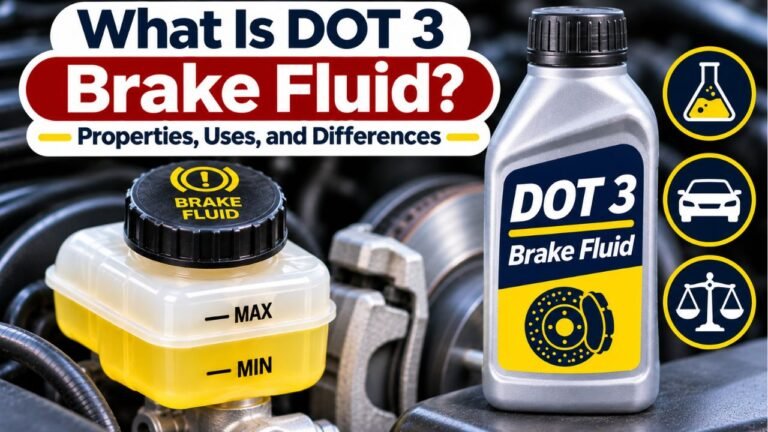
What Is DOT 3 Brake Fluid?
DOT 3 is a glycol-based hydraulic brake fluid used in many passenger vehicles.
It meets a minimum dry boiling point of 401°F and a minimum wet boiling point of 284°F.
What Cars Use DOT 3?
DOT 3 has been specified for numerous vehicles, including many older passenger cars and some more recent models.
The specific requirement depends on the manufacturer and model year.
Do not assume every older car requires DOT 3 or every newer car requires DOT 4.
Advantages of DOT 3
DOT 3 provides:
- Established performance in compatible systems.
- Broad availability.
- Compatibility with systems designed for its specifications.
- Common availability from major automotive fluid manufacturers.
Limitations of DOT 3
DOT 3 generally has lower minimum boiling-point requirements than DOT 4 and DOT 5.1.
It may also be unsuitable for vehicles requiring specific higher-performance or low-viscosity brake fluids.
Can You Use DOT 3 in Any Car?
No.
If your vehicle requires DOT 4, DOT 4 LV, or DOT 5.1, ordinary DOT 3 may not meet the required performance characteristics.
Never downgrade to DOT 3 simply because it is available or inexpensive.
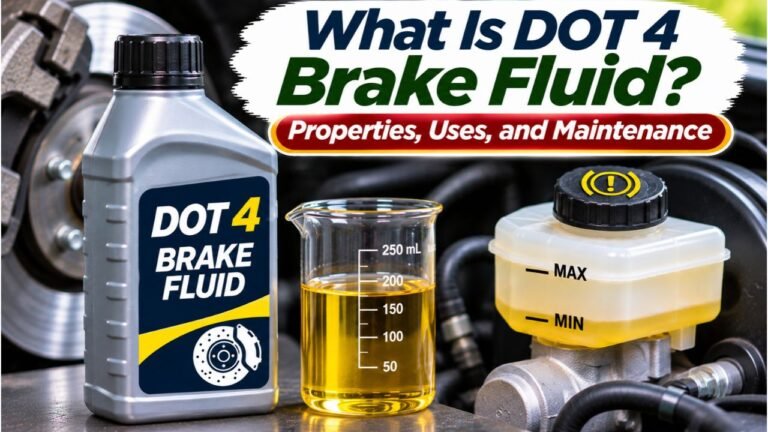
What Is DOT 4 Brake Fluid?
DOT 4 is another glycol-based brake fluid.
It has higher minimum dry and wet boiling-point requirements than DOT 3.
DOT 4 is commonly specified in modern passenger vehicles, including many vehicles equipped with advanced braking systems.
Is DOT 4 Better Than DOT 3?
DOT 4 has higher minimum boiling-point requirements.
However, that does not automatically make it the correct product for every DOT 3 system.
The manufacturer may require particular viscosity, material compatibility, or maintenance characteristics.
Can DOT 4 Replace DOT 3?
Sometimes.
Many DOT 4 products are chemically compatible with DOT 3 systems and may meet the vehicle’s necessary performance requirements.
However, a universal replacement recommendation would be inappropriate.
Check the owner’s manual or manufacturer approval.
What Is DOT 4 LV?
DOT 4 LV stands for DOT 4 Low Viscosity.
It is formulated to maintain suitable flow characteristics at low temperatures.
Some products meet ISO 4925 Class 6 or another relevant low-viscosity specification.
This can be important for ABS and electronic stability-control systems.
Can Regular DOT 4 Replace DOT 4 LV?
Not automatically.
Standard DOT 4 fluid may meet the basic boiling-point requirements but fail a manufacturer’s specified low-temperature viscosity requirement.
If your vehicle requires DOT 4 LV, choose fluid meeting the required classification and any additional manufacturer specification.
Key Takeaway: DOT 4 and DOT 4 LV are not automatically interchangeable. Check the full technical specification rather than the DOT number alone.
What Is DOT 5 Brake Fluid?
DOT 5 is a silicone-based brake fluid.
It differs chemically from the conventional glycol-based fluids used in most passenger cars.
Does DOT 5 Absorb Moisture?
Silicone-based DOT 5 does not absorb moisture in the same way as glycol-based brake fluids.
However, any water that enters the hydraulic system can remain separate from the fluid.
This can create its own concerns, including localized corrosion and moisture-related braking problems.
Can DOT 5 Be Used in Modern Cars?
Only when the braking system is designed or explicitly approved for that fluid.
DOT 5 is not a general-purpose replacement for DOT 3 or DOT 4.
It is also not a recommended automatic upgrade for vehicles equipped with ABS.
Can DOT 5 Be Mixed With DOT 3 or DOT 4?
No. Silicone-based DOT 5 must not be mixed with conventional glycol-based DOT 3, DOT 4, or DOT 5.1 brake fluids.
These fluid families have different chemical properties.
Mixing incompatible types can interfere with hydraulic-system operation.
Why Is DOT 5 Confusing?
Because DOT 5 has a higher number than DOT 4, some drivers assume it must be an upgraded version.
That assumption is incorrect.
DOT 5 belongs to a different chemical family.
Key Takeaway: DOT 5 is not a universal high-performance replacement for DOT 3 or DOT 4. Use it only in a system designed for silicone-based fluid.
What Is DOT 5.1 Brake Fluid?
DOT 5.1 is a glycol-based brake fluid with higher minimum boiling-point requirements than DOT 3 and DOT 4.
Its minimum dry boiling point is 500°F, and its minimum wet boiling point is 356°F.
It is designed to provide high thermal performance and appropriate flow characteristics.
Is DOT 5.1 the Same as DOT 5?
No.
This is one of the most important distinctions.
DOT 5 is silicone-based. DOT 5.1 is glycol-based.
Despite their similar names, the two fluids should not be mixed.
Can DOT 5.1 Mix With DOT 3 and DOT 4?
Generally, yes, from a chemical compatibility standpoint.
However, mixing may change the final fluid’s properties.
The mixture should not be assumed to retain the highest boiling-point or viscosity performance of its individual ingredients.
Manufacturer requirements still apply.
Is DOT 5.1 Better for Every Car?
No.
Its higher minimum boiling point does not make it universally appropriate.
A vehicle requiring a specialized low-viscosity or manufacturer-approved product may have additional requirements that a generic DOT 5.1 fluid does not meet.
Use DOT 5.1 only when appropriate for the vehicle.
Can You Mix DOT 3, DOT 4, and DOT 5.1 Brake Fluid?
DOT 3, DOT 4, and DOT 5.1 brake fluids are generally chemically compatible, but mixing them is not always the correct maintenance choice.
Chemical compatibility means the fluids can generally be combined without the severe incompatibility associated with mixing silicone DOT 5 and glycol-based fluid.
It does not guarantee that the resulting mixture meets your vehicle’s specified performance requirements.
Why Mixing Can Reduce Performance
Consider a brake fluid designed to meet a higher boiling-point standard.
Adding fluid with lower performance characteristics can reduce the overall mixture’s thermal performance.
Similarly, mixing a specially formulated low-viscosity fluid with an ordinary product may affect low-temperature behavior.
Brake Fluid Mixing Guide
| Combination | Chemical Compatibility | Should You Use It? |
| DOT 3 + DOT 3 | Generally compatible | Yes, when both meet vehicle requirements |
| DOT 3 + DOT 4 | Generally compatible | Only when permitted by vehicle specifications |
| DOT 3 + DOT 5.1 | Generally compatible | Only when permitted by vehicle specifications |
| DOT 4 + DOT 4 | Generally compatible | Yes, when both meet required specifications |
| DOT 4 + DOT 5.1 | Generally compatible | Only when permitted by vehicle specifications |
| DOT 4 LV + ordinary DOT 4 | Generally mixable | May not preserve the required low-viscosity performance |
| DOT 5 + DOT 3 | Incompatible | No |
| DOT 5 + DOT 4 | Incompatible | No |
| DOT 5 + DOT 5.1 | Incompatible | No |
| DOT fluid + mineral hydraulic fluid | Incompatible | No |
The Valeo technical guide to automotive brake fluids confirms the general compatibility of DOT 3, DOT 4, and DOT 5.1 while warning against mixing them with mineral-based hydraulic fluids.
Can You Mix Different Brake Fluid Brands?
Usually, products from different manufacturers that meet the same required specification are chemically compatible.
For example, two properly certified DOT 4 brake fluids should generally be compatible.
However, check whether your vehicle requires additional manufacturer approval.
Some vehicles specify more than a basic DOT classification.
Is It Better to Use One Brake Fluid Type?
Yes.
Following the manufacturer’s specified fluid and using a suitable, uncontaminated product simplifies maintenance.
Mixing different types without a reason may make it harder to verify the final fluid’s characteristics.
Key Takeaway: Glycol-based brake fluids can often mix chemically, but the correct fluid for your vehicle is still the one meeting its complete specification.
How to Find the Correct Brake Fluid for Your Car
You do not need to guess which brake fluid your car uses.
The correct information is generally available from the manufacturer.
Step 1: Check the Owner’s Manual
The owner’s manual is the best starting point.
Look for sections titled:
- Brake Fluid.
- Recommended Fluids.
- Maintenance Specifications.
- Capacities and Specifications.
- Brake System Maintenance.
The manual may specify DOT 3, DOT 4, DOT 4 LV, DOT 5.1, or an additional manufacturer standard.
Step 2: Inspect the Brake Fluid Reservoir Cap
Open the hood and locate the brake fluid reservoir.
On many cars, it is mounted near the master cylinder at the rear of the engine compartment.
The cap may display wording such as:
- Use Only DOT 3 Brake Fluid.
- DOT 4.
- DOT 4 LV.
- Use Fluid Meeting a Specified Manufacturer Standard.
Read the exact wording.
Step 3: Check the Fluid Container
Make sure the bottle lists the required DOT grade and any additional specifications.
Do not rely exclusively on phrases such as:
- Universal brake fluid.
- High-performance fluid.
- Racing brake fluid.
- Premium hydraulic fluid.
These marketing descriptions do not establish suitability for your car.
Step 4: Verify Manufacturer Approval
Some vehicles require a particular low-viscosity fluid or manufacturer standard.
The required product may need to satisfy both a DOT grade and a separate technical specification.
Step 5: Ask an Authorized Service Department
If the owner’s manual is missing or the reservoir label is unreadable, contact the vehicle manufacturer’s service department or a qualified technician.
Provide the year, make, model, engine or trim information, and vehicle identification number when needed.
Brake Fluid Selection Checklist
| What to Check | Why It Matters |
| Owner’s manual | Identifies manufacturer requirement |
| Reservoir cap | May display the specified fluid |
| DOT grade | Establishes minimum performance classification |
| Manufacturer approval | Confirms additional requirements |
| Low-temperature viscosity | Important for certain modern hydraulic controls |
| Fluid chemistry | Prevents mixing incompatible fluid families |
| Container condition | Helps avoid moisture and contamination |
Key Takeaway: Use the owner’s manual and complete fluid specifications. Do not select brake fluid based only on vehicle age or brand.
Does Every Car Use DOT Brake Fluid?
No.
Although most conventional passenger cars use DOT-classified glycol-based brake fluid, certain vehicles use specialized mineral-oil hydraulic systems.
What Is Mineral Hydraulic Fluid?
Mineral hydraulic fluid is chemically different from ordinary DOT brake fluid.
Certain older Citroën vehicles and other specialized hydraulic systems use mineral-based fluids.
One example is LHM, which has been used in specific hydraulic brake and suspension systems.
Can You Put DOT 4 Into an LHM System?
No.
DOT brake fluids are not compatible with systems designed for certain mineral hydraulic fluids.
Using an incorrect fluid can damage seals and other hydraulic components.
Can You Put LHM Into a DOT Brake System?
No.
Mineral oil contamination may cause serious damage to seals designed for glycol-based brake fluid.
What About Modern Electric Cars?
Electric vehicles still commonly use hydraulic brake systems, even when they also use regenerative braking.
They require the brake fluid specified by their manufacturer.
Do not assume an electric car can use any fluid because regenerative braking reduces friction-brake use.
Key Takeaway: Most cars use conventional DOT brake fluids, but exceptions exist. Never substitute DOT fluid for mineral hydraulic fluid or vice versa.
What Happens if You Use the Wrong Brake Fluid in a Car?
Using an incorrect brake fluid can cause several different problems.
The consequences depend on which product was used and whether it is chemically compatible with the existing fluid and hydraulic components.
1. Brake Seal Damage
Brake master cylinders, calipers, wheel cylinders, and other hydraulic components contain seals.
These seals are designed to work with specific fluid chemistries.
An incompatible fluid can cause certain seals to swell, soften, deteriorate, or lose their ability to maintain hydraulic pressure.
2. Hydraulic Leaks
Damaged seals may allow brake fluid to escape.
This can reduce the reservoir level and interfere with braking performance.
A serious hydraulic leak can cause brake failure.
3. Reduced Boiling-Point Performance
Using a lower-specification fluid may reduce thermal protection.
If the fluid boils under severe braking conditions, vapor formation can cause a soft pedal and diminished braking effectiveness.
4. ABS and Stability-Control Problems
Some braking systems require specific fluid viscosity.
A fluid with unsuitable flow characteristics may affect hydraulic control operation, particularly at low temperatures.
5. Corrosion
Incorrect or contaminated fluid may provide inadequate corrosion protection.
This can damage components over time.
6. Contamination and Expensive Repairs
Introducing petroleum-based fluids, incompatible mineral oils, or other contaminants can damage multiple hydraulic components.
A simple fluid flush may not be sufficient.
Some repairs may require replacing affected seals, hoses, or other parts.
Can the Wrong Brake Fluid Cause Complete Brake Failure?
Yes, under severe circumstances.
Hydraulic damage, leaks, vapor formation, or component failures can reduce braking pressure enough to create dangerous stopping conditions.
However, not every instance of using a different DOT grade causes immediate failure.
For example, adding a small amount of chemically compatible DOT 4 to a DOT 3 system is a different situation from introducing petroleum-based power steering fluid into the brake reservoir.
The correct response depends on the exact fluids involved.
Key Takeaway: The wrong fluid may reduce performance or damage hydraulic components. Chemical incompatibility is especially serious.
What Should You Do if You Accidentally Add the Wrong Brake Fluid?
If you realize that an incorrect product was added, do not assume it is safe to drive.
The appropriate response depends on the type and amount of fluid added.
Step 1: Stop Adding Fluid
Do not add more fluid to dilute the mistake.
Mixing additional products can make contamination more difficult to address.
Step 2: Identify Both Fluids
Record:
- The fluid required by the car.
- The product accidentally added.
- The approximate amount.
- Whether the brake pedal was operated afterward.
- Whether the vehicle has been driven.
Keep the product container so a technician can identify its composition.
Step 3: Do Not Drive the Vehicle
If an incompatible fluid was introduced, do not drive the vehicle.
Avoid operating the brake pedal unnecessarily while the contamination remains unresolved.
Step 4: Contact a Qualified Technician
Explain exactly what was added.
The mechanic can determine whether the system needs fluid removal, flushing, inspection, or replacement of contaminated components.
Step 5: Follow the Proper Repair Procedure
A minor mismatch between approved glycol-based products may require a different response from contamination involving silicone fluid, mineral oil, or petroleum products.
Do not attempt a universal home remedy.
Is a Brake Fluid Flush Always Enough?
No.
If incompatible fluid has damaged hydraulic seals or other components, replacing the fluid alone may not restore the system.
The affected parts must be inspected and repaired or replaced as necessary.
Important: Never try to correct brake fluid contamination by repeatedly topping off the reservoir with another fluid.
Can You Use a Higher DOT Brake Fluid Than Recommended?
Sometimes, but a higher DOT number does not automatically mean a better choice.
DOT 4 Instead of DOT 3
Many DOT 4 products can work in DOT 3 systems, provided the complete vehicle requirements are met.
However, the owner’s manual or manufacturer approval should determine whether the substitution is appropriate.
DOT 5.1 Instead of DOT 4
DOT 5.1 has higher minimum boiling-point requirements than ordinary DOT 4.
It is also glycol-based.
However, the vehicle may require a special fluid formulation or low-viscosity classification.
Do not assume every DOT 5.1 product meets those additional requirements.
DOT 5 Instead of DOT 4
No.
DOT 5 is silicone-based.
It should not be used as a routine upgrade for a system designed for glycol-based DOT 4.
DOT 3 Instead of DOT 4
Generally avoid this substitution.
DOT 3 has lower minimum boiling-point requirements.
It may fail to meet the vehicle’s required performance characteristics.
What About Racing Brake Fluid?
Some racing fluids have extremely high boiling points.
However, they may differ in viscosity, service requirements, or intended use.
A racing designation does not guarantee suitability for ordinary street vehicles.
Choose fluid meeting the manufacturer’s complete specifications.
Can You Use Any Brake Fluid for Topping Up?
No.
Topping up the reservoir requires the same attention to fluid compatibility as a complete replacement.
Why Does Brake Fluid Become Low?
Common explanations include:
- Normal brake pad wear.
- Leaking brake lines.
- Damaged brake hoses.
- Leaking brake calipers.
- Wheel cylinder leaks.
- Master cylinder leaks.
- Problems after brake repairs.
Brake fluid is not normally consumed during braking.
Should You Top Off a Low Reservoir?
Not automatically.
As brake pads wear, caliper pistons extend farther, causing additional fluid to move from the reservoir into the calipers.
This can lower the reservoir level without a leak.
Adding fluid without checking pad wear may cause overflow when the pistons are retracted during brake service.
When Is Low Fluid Dangerous?
An unexpectedly low or rapidly falling fluid level can indicate a hydraulic leak.
If the level is below MIN, the pedal feels abnormal, or a brake warning light is illuminated, do not continue driving until the cause has been assessed.
Does Adding Brake Fluid Repair a Leak?
No.
Even correctly specified fluid cannot repair a damaged hydraulic component.
The leak must be diagnosed and repaired.
Key Takeaway: Use only approved fluid when servicing the reservoir, and investigate the reason for a low level before simply adding more.
Does Brake Fluid Brand Matter?
The DOT grade and manufacturer requirements matter more than choosing a particular brand.
However, product quality and correct certification are important.
Can You Switch Brake Fluid Brands?
Usually, yes, when both products meet the required specifications.
For example, switching between reputable DOT 4 products may be acceptable if both satisfy the vehicle’s complete fluid requirements.
However, do not assume every DOT 4 product has identical viscosity or additional approvals.
Is Expensive Brake Fluid Always Better?
Not necessarily.
A higher-priced product may offer performance beyond the minimum requirements.
However, that additional capability may be unnecessary for your vehicle.
A correctly specified product from a reliable manufacturer is generally a better choice than selecting fluid based on price or marketing claims.
What About Universal Brake Fluid?
Some products are advertised for use with multiple DOT grades.
For example, certain high-performance glycol-based fluids may meet several specifications.
However, universal does not mean compatible with silicone DOT 5 or specialized mineral-oil systems.
Always verify the product’s documented applications.
Can You Use Brake Fluid From an Open Bottle?
Brake fluid condition matters in addition to fluid type.
Most conventional glycol-based brake fluids absorb moisture from the atmosphere.
This is known as hygroscopic behavior.
Why Is Moisture a Problem?
As moisture accumulates, the fluid’s boiling-point performance generally decreases.
This can increase the risk of vapor formation during severe braking.
Moisture can also contribute to internal corrosion.
Can an Opened Bottle Go Bad?
Yes.
An improperly sealed bottle may absorb moisture or become contaminated.
However, there is no universal safe storage period for every opened product.
The condition depends on:
- How tightly the container was closed.
- Storage humidity.
- Temperature.
- Exposure to dirt or water.
- Product formulation.
- Manufacturer guidance.
Should You Use an Old Opened Bottle?
For safety-critical brake maintenance, fresh fluid from a properly sealed container is generally preferable.
Avoid using an old bottle when its condition is uncertain.
Can You Store Brake Fluid in Another Container?
Avoid transferring brake fluid into unapproved or unmarked containers.
Use the original container and keep it tightly closed.
This reduces the risk of contamination and accidental fluid substitution.
How Often Should Brake Fluid Be Changed?
The replacement interval depends on the vehicle manufacturer, fluid type, and operating conditions.
Some manufacturers recommend replacement every two years.
Others specify different time intervals or inspection-based procedures.
Why Does Brake Fluid Need Replacement?
Over time, brake fluid may experience:
- Moisture contamination.
- Reduced boiling-point performance.
- Corrosion-inhibitor deterioration.
- Contamination from hydraulic-system components.
- Other changes affecting performance.
Does Dark Brake Fluid Mean It Is Bad?
Dark or cloudy fluid may indicate contamination or deterioration.
However, color alone is not a reliable measure of moisture content or boiling-point performance.
A fluid may look reasonably clear while containing excess moisture.
Follow the manufacturer’s maintenance schedule and appropriate testing procedures.
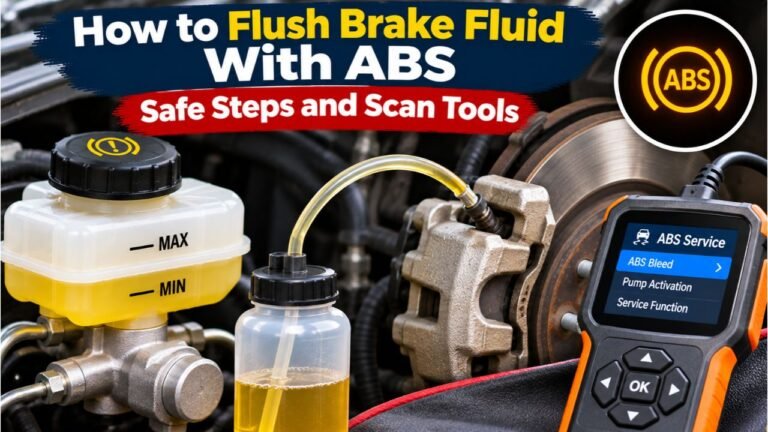
Can You Replace Brake Fluid Yourself?
Brake fluid replacement involves hydraulic-system bleeding.
Incorrect procedures can leave air trapped in the brake lines or ABS hydraulic components.
Some vehicles require specific diagnostic equipment.
For inexperienced owners, professional servicing is the safer choice.
Common Mistakes When Choosing Brake Fluid
1. Assuming All Brake Fluids Are the Same
Brake fluids vary in chemistry, boiling point, viscosity, and intended application.
Always check the vehicle’s requirements.
2. Thinking DOT 5 Is Better Than DOT 4
DOT 5 is silicone-based and is not a general-purpose upgrade for glycol-based systems.
3. Confusing DOT 5 With DOT 5.1
Despite the similar names, the fluids have different chemical bases.
DOT 5.1 is glycol-based; DOT 5 is silicone-based.
4. Using DOT 3 in a DOT 4 System
The lower minimum boiling-point requirements may make DOT 3 unsuitable.
Use the manufacturer-specified fluid.
5. Ignoring Low-Viscosity Requirements
Some modern vehicles require DOT 4 LV or another specific fluid standard.
Ordinary DOT 4 may not meet these requirements.
6. Mixing Brake Fluid With Mineral Oil
Specialized mineral hydraulic fluids and conventional DOT brake fluids are not interchangeable.
7. Using Power Steering Fluid Instead of Brake Fluid
Power steering fluid is not a suitable substitute for conventional DOT brake fluid.
It can damage hydraulic seals and other components.
8. Choosing Fluid by Color
Brake fluid color is not a reliable way to establish its exact specification.
Read the label and use manufacturer documentation.
9. Using Old, Contaminated Brake Fluid
Moisture and dirt can reduce fluid performance.
Use clean fluid from a suitable container.
10. Topping Up Without Checking for Leaks
Low fluid may indicate worn brake pads or a hydraulic leak.
Simply adding fluid can conceal the underlying problem.
11. Assuming Mixing Compatible Fluids Preserves Performance
Even chemically compatible fluids may form a mixture that does not meet the original high-performance specification.
12. Ignoring Manufacturer Recommendations
The vehicle’s hydraulic system is designed and tested around specific performance requirements.
Following those requirements is more important than choosing a fluid with the highest advertised DOT number.
Conclusion
So, can you use any brake fluid in a car? No. You must use brake fluid that meets the vehicle manufacturer’s complete specification.
DOT 3, DOT 4, and DOT 5.1 are generally glycol-based and chemically compatible, but that does not mean they should be mixed or substituted without checking the vehicle’s requirements.
DOT 5 is silicone-based and must not be mixed with conventional glycol-based brake fluids.
Some vehicles also require specialized low-viscosity fluid or mineral-based hydraulic fluid, making correct identification particularly important.
Before buying brake fluid, check the owner’s manual, inspect the reservoir cap, and verify the product’s specifications.
If you accidentally add an incompatible fluid, do not continue driving or attempt to dilute it. Have a qualified technician inspect the system and determine the necessary repairs.
Finally, remember that a low reservoir may indicate worn brake pads or a hydraulic leak. Adding the correct fluid does not solve an unresolved braking problem.
The safest choice is always a clean, properly specified brake fluid that meets your car manufacturer’s requirements—not simply any bottle marked brake fluid.
FAQs About Can You Use Any Brake Fluid in a Car
Can You Put Any Type of Brake Fluid in Your Car?
No.
Your vehicle requires fluid meeting specific chemical and performance requirements.
Use the owner’s manual or brake fluid reservoir label to identify the correct specification.
Does It Matter Whether You Use DOT 3 or DOT 4?
Yes.
DOT 4 has higher minimum boiling-point requirements than DOT 3.
Although the fluids are generally chemically compatible, they are not universally interchangeable in every vehicle.
Follow the manufacturer’s specification.
Can I Use DOT 4 Instead of DOT 3?
Sometimes.
Many DOT 4 fluids are compatible with DOT 3 systems, but the complete vehicle requirements still apply.
Confirm the substitution through the owner’s manual or manufacturer before using it.
Can I Use DOT 3 Instead of DOT 4?
Generally, no.
DOT 3 has lower minimum boiling-point requirements and may not meet the performance specified for a DOT 4 system.
Use the required fluid.
Can I Mix DOT 3 and DOT 4 Brake Fluid?
They are generally chemically compatible.
However, mixing may change the final fluid’s performance.
Only mix them when the resulting fluid meets the manufacturer’s specifications.
Can I Mix DOT 4 and DOT 5.1 Brake Fluid?
They are generally chemically compatible because both are glycol-based.
However, the resulting mixture may not retain the desired high-temperature or low-viscosity performance.
Follow the vehicle’s specifications.
Can I Mix DOT 5 and DOT 5.1?
No.
DOT 5 is silicone-based, while DOT 5.1 is glycol-based.
They should not be mixed.
The similar names do not indicate chemical compatibility.
Can I Use DOT 5 Instead of DOT 4?
No, not as an ordinary replacement.
DOT 5 uses different chemistry and is not appropriate for a conventional glycol-based braking system unless the system has been specifically designed or approved for it.
Is DOT 5.1 Brake Fluid Better Than DOT 4?
DOT 5.1 has higher minimum boiling-point requirements than standard DOT 4.
However, it is not automatically suitable for every vehicle requiring DOT 4.
Additional viscosity and manufacturer specifications must be considered.
Can I Use a Different Brand of Brake Fluid?
Usually, yes, if the replacement product meets all the required specifications.
However, do not assume every product with the same basic DOT number has identical properties.
Check additional manufacturer approvals when required.
What Happens if I Put the Wrong Brake Fluid in My Car?
Depending on the fluid, it may reduce braking performance, damage hydraulic seals, cause leaks, or contaminate braking components.
If an incompatible fluid was added, do not drive the vehicle. Arrange professional inspection.
Can I Use Power Steering Fluid as Brake Fluid?
No.
Power steering fluid is not compatible with conventional DOT brake systems.
Petroleum-based contamination can damage seals and cause serious hydraulic problems.
Never use it as a substitute.
Can I Use Mineral Oil Instead of DOT Brake Fluid?
No, unless your vehicle specifically requires that type of mineral hydraulic fluid.
Conventional DOT brake fluids and specialized mineral hydraulic fluids are not interchangeable.
Can I Use Any Brake Fluid in a Car With ABS?
No.
ABS-equipped vehicles may require specific boiling-point and low-temperature viscosity characteristics.
Use the fluid specified for your vehicle rather than assuming every DOT 4 or DOT 5.1 product is suitable.
How Do I Know Which Brake Fluid My Car Uses?
Check the owner’s manual and the brake fluid reservoir cap.
Look for the exact DOT grade and any additional manufacturer specifications.
If the information is unclear, consult a qualified technician or authorized service department.
Can You Mix Old and New Brake Fluid?
Fresh, compatible fluid may be added during an appropriate service procedure.
However, topping up does not replace a scheduled brake fluid change or solve a leak.
Old fluid may contain moisture or contaminants, and the complete hydraulic system may require proper flushing and bleeding.
Is It Safe to Drive After Adding the Wrong Brake Fluid?
Do not drive if you added an incompatible fluid or are unsure whether the hydraulic system remains safe.
Identify the product used and arrange professional assessment.
The repair may involve flushing, bleeding, or replacing contaminated components.