Brake Caliper Seals by Size: How to Measure and Match Them
Finding the right brake caliper seals by size can be confusing because brake caliper seals are not usually sold according to one universal measurement. Two calipers may use pistons with similar diameters but require different seal profiles, thicknesses, dust boots, or groove dimensions.
The short answer: match a brake caliper seal by the caliper or piston diameter, seal groove dimensions, seal cross-section, and original seal design—not by outside diameter alone. The safest choice is usually a rebuild kit listed specifically for your vehicle and caliper model.
The square-cut hydraulic seal inside a disc brake caliper has two important jobs. It keeps pressurized brake fluid inside the caliper and helps the piston retract slightly when you release the brake pedal. The outer dust boot protects the piston and bore from water, dirt, and road debris.
If the original part number or vehicle application is unavailable, careful measurement can sometimes help identify a replacement. However, measuring a used rubber seal by itself is not always reliable because age, heat, brake fluid, swelling, and deformation can change its dimensions.
This guide explains how brake caliper seals are sized, which measurements matter, how piston size relates to seal size, and how to avoid selecting a rebuild seal that looks correct but does not fit or seal properly.
How Do You Identify Brake Caliper Seals by Size?
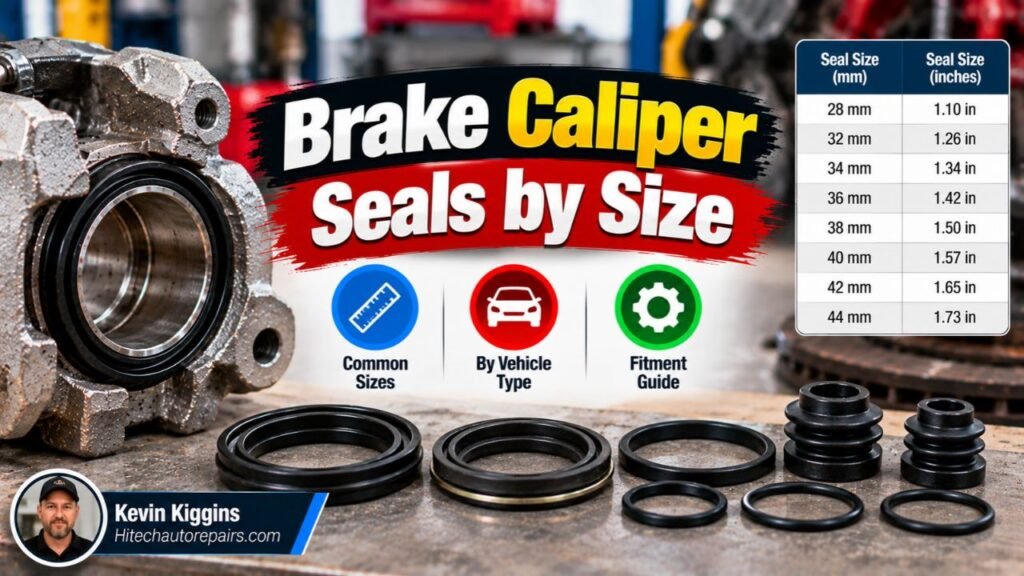
To identify brake caliper seals by size, first determine the caliper piston diameter, then measure the seal groove and compare the dimensions and shape of the original hydraulic seal. The replacement must also be made from material compatible with brake fluid.
Important dimensions can include:
- Caliper piston diameter
- Seal inside diameter
- Seal outside diameter
- Seal cross-section or thickness
- Seal groove width
- Seal groove depth
- Dust boot dimensions
- Number of pistons in the caliper
For an ordinary passenger vehicle, the most reliable method is still to find a caliper rebuild kit using the vehicle’s year, make, model, brake option, and caliper manufacturer or casting information.
Sizing by measurement becomes more useful with older, uncommon, racing, industrial, or unidentified calipers.
What Is a Brake Caliper Piston Seal?
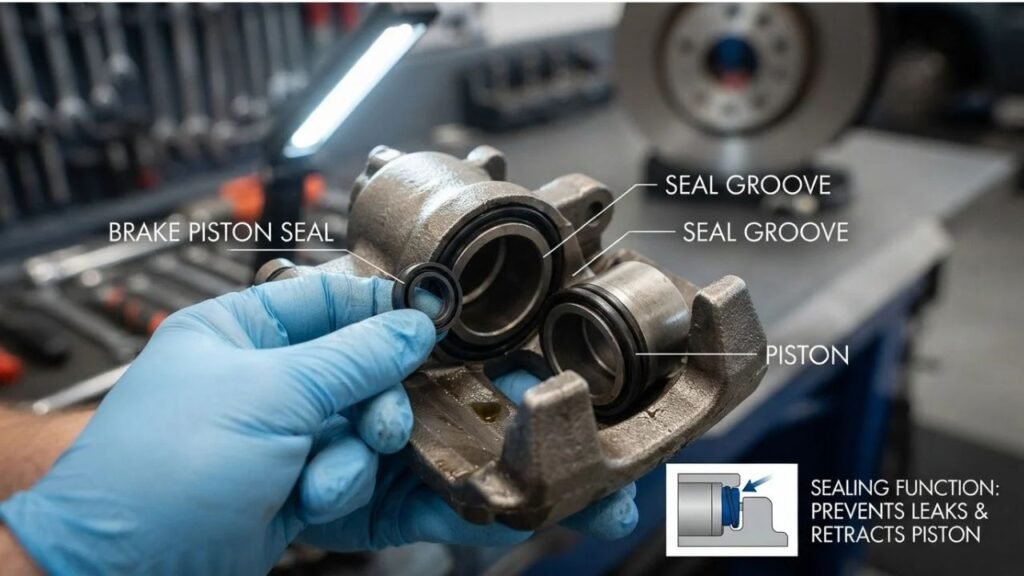
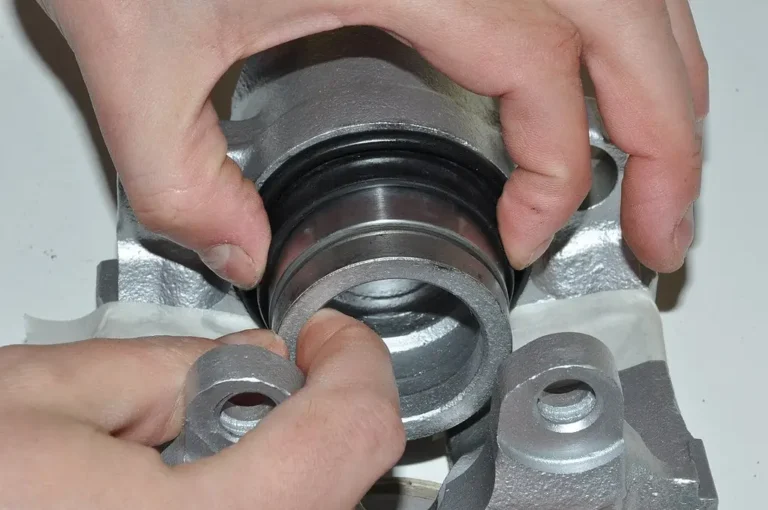
Inside a hydraulic disc brake caliper is a rubber seal positioned in a groove in the caliper bore.
It is commonly called the:
- Piston seal
- Caliper piston seal
- Pressure seal
- Square-cut seal
- Square seal
Despite the name, the cross-section is not always visually perfect or identical across every caliper design.
When you press the brake pedal, hydraulic pressure pushes the piston outward. The seal flexes slightly as the piston moves.
When hydraulic pressure is released, the seal’s elastic behavior helps pull the piston back a very small amount, allowing the brake pads to stop applying significant pressure to the rotor.
Because the seal is part of the hydraulic braking system, correct fit and material are critical.
Brake Caliper Seal Size vs. Piston Size
The most commonly referenced dimension is the brake caliper piston diameter.
For example, a replacement listing may describe a caliper seal kit for a:
- 38 mm piston
- 42 mm piston
- 45 mm piston
- 48 mm piston
- 54 mm piston
- 57 mm piston
- 60 mm piston
These are only examples. Brake calipers are manufactured in many other sizes.
A seal described as being for a 54 mm piston does not necessarily mean the seal itself measures exactly 54 mm across in every condition.
The seal is designed around the dimensions of the:
- Piston
- Caliper bore
- Seal groove
That is why buying purely from the loose seal’s measured diameter can be unreliable.
Common Brake Caliper Piston Sizes
There is no single standardized set of brake caliper piston sizes used across all vehicles.
Passenger vehicles may use piston diameters ranging from relatively small rear-caliper pistons to much larger front-caliper pistons.
Performance calipers can use multiple pistons of different sizes within the same caliper.
For example, a multi-piston caliper might use smaller leading pistons and larger trailing pistons to help control pad wear.
Because of these differences, do not assume that a seal from one 2-inch or 50 mm-class caliper will fit another simply because the piston diameters appear similar.
Seal groove dimensions and seal profiles can differ.
How to Measure a Brake Caliper Piston
If you cannot identify the caliper from a part number, piston diameter is one of the first measurements to take.
A digital or dial caliper is much more accurate than a ruler or tape measure.
Measure the Piston Outside Diameter
Clean the accessible piston surface carefully.
Measure across the widest outside diameter of the piston.
Take measurements in more than one location to confirm the piston is round and that corrosion is not affecting the reading.
Record the measurement in:
- Millimeters
- Inches, if needed
Metric measurements are particularly common in brake component catalogs.
Do Not Measure Across Heavy Corrosion
Rust, plating damage, dirt, or deposits can distort the result.
If the piston is badly corroded, replacement may already be necessary.
Do not aggressively remove material from a piston just to obtain a smaller measurement because changing the piston diameter can compromise sealing.
Converting Inches to Millimeters
Some older calipers and aftermarket components may be described in inches.
The conversion is:
1 inch = 25.4 mm
For example:
| Inch Measurement | Approximate Metric Equivalent |
| 1.50 in | 38.10 mm |
| 1.625 in | 41.28 mm |
| 1.75 in | 44.45 mm |
| 1.875 in | 47.63 mm |
| 2.00 in | 50.80 mm |
| 2.125 in | 53.98 mm |
| 2.25 in | 57.15 mm |
| 2.375 in | 60.33 mm |
These conversions can help when comparing an older inch-based piston specification with a metric catalog.
Do not assume a nearby metric value is interchangeable without verifying the actual application.
How to Measure the Caliper Seal
If no vehicle-specific replacement information is available, the original seal can provide useful clues.
However, use the old seal as a reference rather than assuming its dimensions remain perfectly accurate.
Rubber can change after years of exposure to:
- Brake fluid
- Heat
- Compression
- Moisture
- Age
Measurements that may be useful include:
Seal Inside Diameter
Measure the inside opening of the relaxed seal.
Because the seal may intentionally stretch or compress during installation, this number does not necessarily equal piston diameter.
Seal Outside Diameter
Measure the maximum outside diameter.
Again, this measurement can change after years in service.
Seal Cross-Section
The cross-section is the thickness of the seal material when viewed from the side.
A seal that is only slightly too thick or thin may not operate correctly in the original groove.
This measurement is particularly important when trying to identify an unknown seal.
Why Measuring the Seal Groove Is Important
The caliper’s seal groove often provides more useful information than an old rubber seal.
The groove determines how the seal is supported and compressed.
Relevant dimensions include:
- Groove diameter
- Groove width
- Groove depth
- Groove shape
Accurate measurement usually requires the caliper to be fully disassembled and cleaned.
Do not scratch or damage the seal groove while removing corrosion or old deposits.
Even small damage in a hydraulic sealing area can lead to brake-fluid leakage.
Hydraulic Seal vs. Dust Boot
A caliper rebuild commonly involves two different rubber components.
Piston Pressure Seal
The hydraulic piston seal sits inside the caliper bore.
Its primary purposes are to:
- Prevent brake-fluid leakage
- Seal hydraulic pressure
- Assist slight piston retraction
This is the component for which precise groove and piston compatibility is especially important.
Piston Dust Boot
The dust boot sits around the exposed portion of the piston.
Its job is to help prevent:
- Dirt
- Moisture
- Road salt
- Sand
- Brake dust
from reaching the piston and bore.
A dust boot does not normally contain the primary hydraulic pressure.
The hydraulic seal and dust boot therefore cannot be selected interchangeably simply because their diameters appear similar.
Why Seal Material Matters
A brake caliper seal needs more than the correct physical dimensions.
It must also be chemically compatible with the brake fluid used in the vehicle.
Many automotive hydraulic brake systems using glycol-based DOT brake fluids use EPDM rubber components.
EPDM is selected because of its compatibility with these brake fluids and brake-system temperatures.
Do not substitute an ordinary rubber O-ring from a general hardware assortment.
A seal may appear to fit physically while being made from material that swells, softens, shrinks, or deteriorates after contact with brake fluid.
Brake sealing components should be designed specifically for the intended braking system.
Can You Use a Regular O-Ring as a Caliper Seal?
Usually, no.
A normal round O-ring is not automatically an acceptable replacement for a caliper’s purpose-designed piston seal.
Brake caliper seals may have a specific:
- Cross-sectional profile
- Material
- Hardness
- Dimensional tolerance
- Groove relationship
The piston seal also contributes to controlled piston movement.
Installing an arbitrary O-ring because it fits into the groove can cause:
- Brake-fluid leakage
- Excessive piston retraction
- Insufficient piston retraction
- Brake drag
- Seal damage
- Brake failure
Use a seal designed for the specific caliper.
Why an Old Seal May Measure Larger Than a New One
It is normal to find differences between a used seal and its replacement.
The old seal may have:
- Swollen
- Stretched
- Flattened
- Hardened
- Permanently deformed
after years inside the caliper.
A new seal may therefore look slightly smaller or differently shaped even when it is correct for the application.
This is one reason vehicle or caliper identification is preferable to reverse-engineering a replacement exclusively from the old seal.
How to Identify an Unknown Brake Caliper
If you have a loose caliper and do not know what vehicle it came from, look for identifying information before relying on measurements.
Check for:
- Manufacturer name
- Casting number
- Stamped number
- Logo
- Piston count
- Piston diameter
- Mounting bolt spacing
- Caliper type
- Bleeder location
- Brake hose thread
- Bracket number
A casting number may help identify the caliper family, although casting numbers do not always correspond directly to retail part numbers.
Photographs and dimensional comparisons can also help when dealing with restoration or custom applications.
Single-Piston Caliper Seal Sizing
A common floating caliper uses one large piston.
Identifying its seal is relatively straightforward because there is only one hydraulic piston size to match.
Useful information includes:
- Piston diameter
- Bore diameter
- Caliper manufacturer
- Caliper casting
- Vehicle application
A complete rebuild kit will commonly include the piston seal and dust boot together.
Multi-Piston Caliper Seal Sizing
Fixed performance calipers may use:
- Two pistons
- Four pistons
- Six pistons
- Eight or more pistons
Not all pistons necessarily have the same diameter.
A caliper may use staggered piston sizes, meaning one pair is smaller than another.
For example, a rebuild kit might contain several seal sizes specifically matched to different piston bores.
Before ordering individual seals, record the diameter and location of every piston.
Mixing different seal sizes during assembly can create serious problems.
Front vs. Rear Caliper Seal Sizes
Front and rear calipers frequently use different piston sizes.
Front brakes generally handle a larger portion of the vehicle’s braking load, so their calipers may use larger pistons or larger total piston area.
Rear calipers may use smaller pistons and can also incorporate:
- Mechanical parking brake mechanisms
- Electric parking brake motors
- Screw-type piston mechanisms
That additional complexity means a rear-caliper rebuild may require more than simply replacing a piston seal.
Never assume the front and rear seals are the same.
How to Choose the Correct Caliper Rebuild Kit
The safest buying sequence is usually:
- Identify the vehicle year.
- Identify the make and model.
- Confirm engine or trim if brake packages differ.
- Determine front or rear axle.
- Determine left or right if required.
- Identify the caliper manufacturer or casting.
- Verify piston diameter when possible.
- Compare the original seals and boots.
- Confirm the rebuild kit is designed for that exact caliper.
Some vehicles were equipped with different brake systems during the same model year.
Checking piston size or casting information can help prevent ordering the wrong rebuild kit.
Signs the Wrong Caliper Seal Was Installed
A replacement seal that is dimensionally or chemically incorrect may cause problems immediately or after the brakes have been used.
Warning signs include:
- Brake fluid leaking around the piston
- Piston difficult to install
- Piston moves unusually tightly
- Piston moves too loosely
- Dust boot will not seat
- Brake drag
- Uneven braking
- Seal becomes twisted or damaged
- Fluid level drops
A leaking caliper should not be ignored.
Brake fluid leakage can reduce hydraulic pressure and compromise braking performance.
Can You Trim a Brake Caliper Seal to Fit?
No.
Do not cut, shave, stretch excessively, or otherwise modify a hydraulic caliper seal to make it fit.
A very small dimensional change can affect how the seal contacts the piston and groove.
Use the correct replacement seal instead.
Should You Rebuild or Replace the Entire Caliper?
Replacing seals makes sense only if the reusable parts remain in serviceable condition.
A rebuild may be practical when:
- Caliper bore is in good condition
- Piston is smooth
- Seal groove is undamaged
- Caliper body is structurally sound
- Proper rebuild parts are available
Replacement may be a better choice when there is:
- Deep piston corrosion
- Heavy bore damage
- Severe seal-groove corrosion
- Cracked caliper casting
- Broken bleeder screw that cannot be repaired properly
- Extensive internal corrosion
- Unavailable rebuild components
Brake-system reliability matters more than saving a damaged caliper.
Inspect the Piston Before Installing New Seals
New seals cannot compensate for a badly damaged piston.
Inspect the piston surface that travels through the hydraulic seal.
Look for:
- Pitting
- Rust
- Scoring
- Flaking plating
- Deep scratches
- Deformation
A damaged piston can tear a new seal or allow fluid to leak past it.
Replace questionable pistons rather than depending on new rubber to compensate for surface damage.
Clean the Seal Groove Carefully
Corrosion often accumulates behind or around the old seal.
This can push the seal inward and cause the piston to bind.
The groove must be clean before assembly, but it must also remain dimensionally intact.
Avoid aggressive grinding or cutting that removes base metal.
If corrosion has significantly damaged the groove, replacing the caliper is generally safer than trying to reshape the sealing surface.
Brake Fluid and Seal Installation
Use only fluids and assembly products that are compatible with the specific braking system.
Brake seals are commonly lubricated during assembly with compatible brake fluid or an approved brake assembly lubricant.
Do not use petroleum grease, engine oil, penetrating oil, or random lubricants on hydraulic brake seals.
Contaminating EPDM brake components with incompatible petroleum products can damage the rubber.
Common Mistakes When Matching Brake Caliper Seals by Size
Measuring Only the Old Seal
An aged seal may have changed shape.
Use the piston, groove, caliper identification, and application information whenever possible.
Matching Only the Piston Diameter
Piston diameter is important but may not uniquely identify the correct seal.
Different calipers can use similar piston diameters with different seal designs.
Ignoring Seal Material
Correct dimensions do not make an incompatible rubber compound safe.
Brake-fluid compatibility is essential.
Confusing Dust Boots With Pressure Seals
These components serve different purposes and may use completely different sizing systems.
Assuming Similar Measurements Are Close Enough
Hydraulic brake seals require precise fit.
A seal that is slightly too large or too small is not an acceptable substitute.
Rebuilding a Severely Corroded Caliper
A fresh seal kit cannot repair damaged metal sealing surfaces.
Evaluate the piston, bore, and groove before investing time in rebuilding.
FAQs About Brake Caliper Seals by Size
Are brake caliper seals sized by piston diameter?
Piston diameter is one of the main identifiers, but it is not the only measurement that matters.
Seal groove dimensions, cross-section, caliper design, and rubber material must also match.
How do I know what size brake caliper seal I need?
Start by identifying the vehicle and caliper.
If identification is unavailable, measure the piston diameter and inspect the seal groove, original seal, caliper markings, and piston count.
Can two calipers with the same piston size use different seals?
Yes.
Two calipers can have similar piston diameters but use different groove dimensions, seal profiles, or dust boot arrangements.
That is why application-specific identification is preferable.
What size seal fits a 54 mm brake caliper piston?
You need a seal specifically designed for the particular 54 mm-piston caliper.
Do not assume every seal advertised around 54 mm will fit every 54 mm piston because groove dimensions and seal designs can differ.
Are caliper piston seals square or round?
Many are commonly referred to as square-cut seals because their cross-section differs from an ordinary round O-ring.
Exact profiles vary by caliper design, so the original specification should be followed.
Can I measure the caliper seal with digital calipers?
Yes, digital calipers can provide useful reference measurements.
However, a used rubber seal may be distorted or swollen, so do not rely on that measurement alone when selecting a safety-critical replacement.
What material are brake caliper seals made from?
Many automotive brake systems using glycol-based brake fluid use EPDM rubber for hydraulic seals.
Always use seals specified for the brake fluid and caliper involved rather than substituting generic rubber.
Should I replace the dust boot when rebuilding a caliper?
Usually, yes.
A rebuild kit commonly includes both the hydraulic piston seal and dust boot. Replacing an aged or damaged dust boot helps protect the rebuilt caliper from dirt and moisture.
Conclusion
Choosing brake caliper seals by size requires more than measuring the outside diameter of an old rubber seal. The most useful starting measurement is usually the caliper piston diameter, but the seal groove, cross-section, profile, material, dust boot design, and exact caliper application also need to match.
Whenever possible, identify the vehicle, caliper manufacturer, casting, and piston size and purchase a rebuild kit specifically listed for that caliper. Measuring individual components is most useful when working with an unidentified, vintage, custom, or uncommon brake caliper.
Because the piston seal is part of the vehicle’s hydraulic braking system, a seal that is merely “close” in size is not good enough. Correct dimensions, correct material, undamaged sealing surfaces, and proper installation are essential for safe and reliable brake operation.