Can I Paint My Brake Calipers Red? What You Need to Know
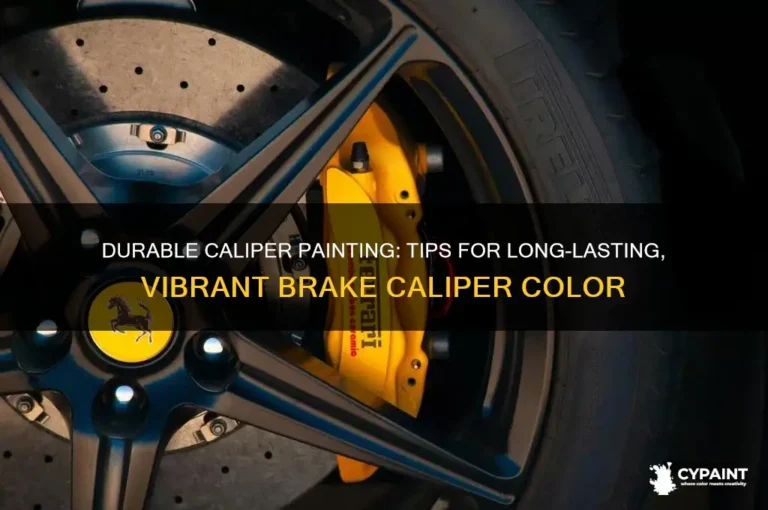
If you want to give your wheels a sportier, cleaner look, changing the color of the brake calipers is one of the most noticeable cosmetic upgrades you can make without replacing major brake components. Red is especially popular because it stands out behind alloy wheels and is commonly associated with performance braking systems.
Yes, you can paint your brake calipers red as long as you use paint designed for high-temperature automotive or brake-caliper applications and prepare the surface properly.
The most important part is not the color itself. Proper cleaning, masking, paint selection, and curing determine whether the finish looks good and lasts. You also need to keep paint away from brake pads, rotors, piston surfaces, rubber seals, bleeder screws, and other parts that must move or seal correctly.
If you are asking can I paint my brake calipers red, the answer is generally yes for both new and used calipers, provided they are in safe working condition and the paint is applied correctly. Painting will not improve braking performance, but it can protect the outer metal surface from light corrosion while improving appearance.
This guide explains what type of paint to use, how to prepare the calipers, how to paint them without damaging the braking system, and what common mistakes to avoid.
Can I Paint My Brake Calipers Red Safely?
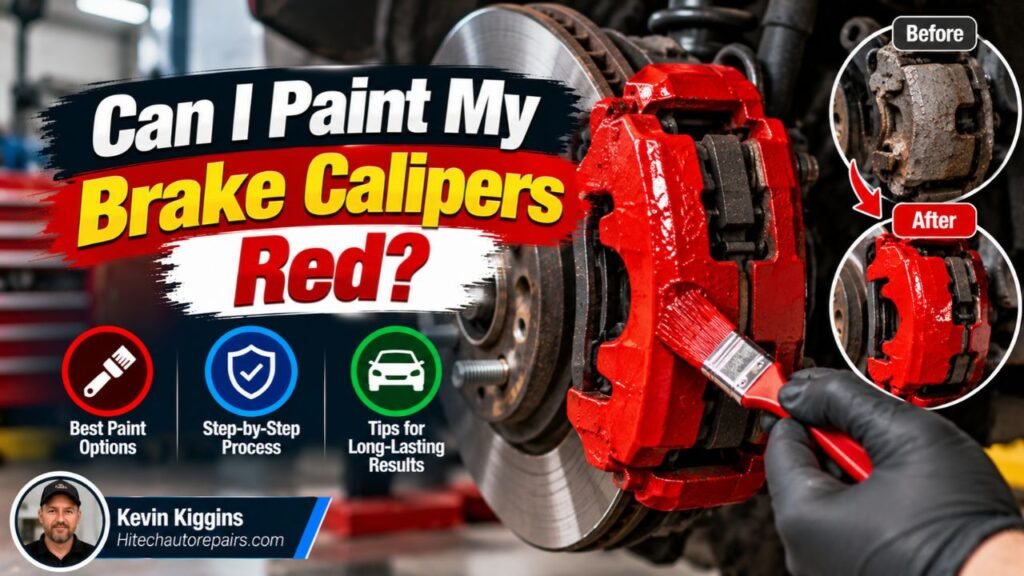
Yes, you can paint your brake calipers red safely if the calipers are mechanically sound and you use an appropriate high-temperature coating.
Brake calipers can become very hot during braking, so ordinary household spray paint is not the best choice. Use a product specifically labeled for:
- Brake calipers
- High-temperature automotive components
- High-heat metal surfaces compatible with brake applications
The paint should resist heat, brake dust, road grime, moisture, and occasional exposure to automotive chemicals.
The safest approach is to paint only the exterior surfaces of the caliper housing and bracket.
Do not paint surfaces that affect braking operation.
Why Are Red Brake Calipers So Popular?
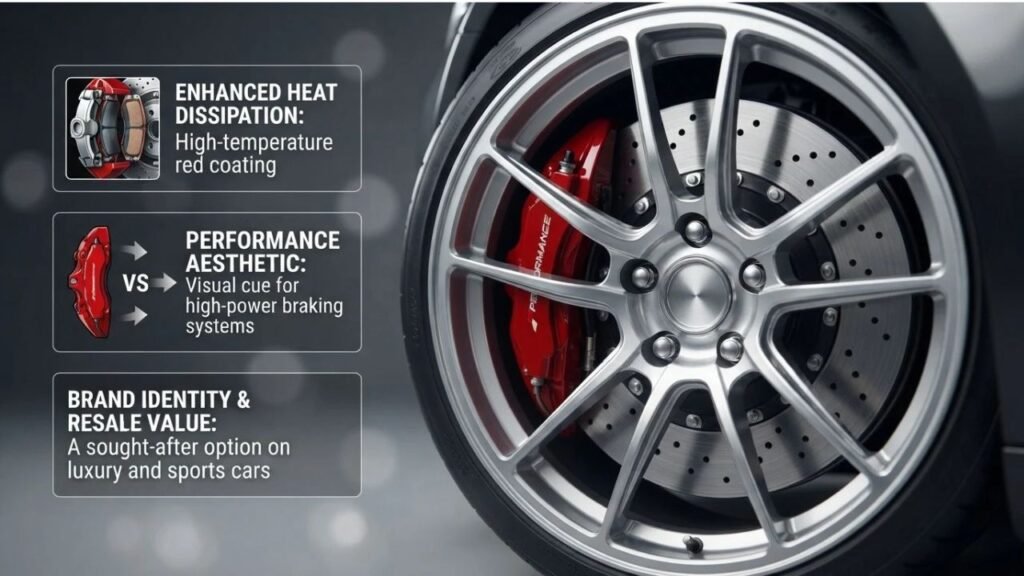
Red calipers are popular largely because of appearance.
Bright red creates strong contrast behind wheels, especially with:
- Black wheels
- Silver wheels
- Gunmetal wheels
- White vehicles
- Black vehicles
- Gray vehicles
Red brake calipers are also visually associated with sports cars and performance brake packages.
However, the color does not change braking power.
A red-painted standard caliper performs exactly like the same caliper without paint, assuming nothing else has been changed.
Does Painting Brake Calipers Improve Performance?
No.
Painting a brake caliper is primarily a cosmetic modification.
It does not increase:
- Clamping force
- Brake torque
- Stopping distance performance
- Heat capacity
- Brake-pad friction
- Rotor size
A quality caliper coating can provide some surface protection against moisture and light corrosion, but this should not be confused with a performance upgrade.
If you want better braking performance, components such as tires, brake pads, rotors, brake fluid, and the overall brake-system design matter much more.
What Paint Should You Use on Brake Calipers?
Use a high-temperature brake-caliper paint or another coating specifically approved for this type of application.
Common forms include:
- Spray-on caliper paint
- Brush-on caliper paint
- Two-part coating kits
- High-temperature automotive enamel
Each type has advantages.
Spray-On Caliper Paint
Spray paint can create a smooth, even finish when preparation and masking are done carefully.
It works best when the caliper is removed or when surrounding components are thoroughly protected.
Brush-On Caliper Paint
Brush-on paint is easier to control when the caliper remains installed on the vehicle.
It also reduces overspray.
A good-quality brush-on coating can level out as it dries, leaving a clean finish.
Two-Part Caliper Coatings
Some systems combine paint with a hardener.
These coatings can provide a durable finish but require careful mixing and application within the product’s specified working time.
Always follow the manufacturer’s directions.
Can I Use Regular Spray Paint on Brake Calipers?
It is better to use a coating designed for high-temperature automotive applications.
Ordinary spray paint may:
- Discolor
- Soften
- Peel
- Crack
- Lose gloss
Brake components experience heat cycles that ordinary decorative paint may not tolerate well.
A dedicated caliper coating is also more likely to resist brake dust, road debris, moisture, and cleaning chemicals.
What Temperature Paint Do Brake Calipers Need?
Rather than choosing paint based only on the highest temperature number printed on the can, select a product specifically labeled for brake-caliper use.
Caliper temperatures vary greatly depending on:
- Vehicle weight
- Driving style
- Road conditions
- Repeated braking
- Towing
- Track driving
- Rotor and pad design
A coating designed for calipers is formulated for the heat cycles and environment commonly experienced around automotive brakes.
Should You Remove the Calipers Before Painting?
You can paint calipers either on or off the vehicle.
Both methods can work.
Painting Calipers While Installed
This is easier and faster.
You remove the wheel, clean the caliper, mask surrounding components carefully, and apply paint to visible exterior areas.
This approach works well for a simple cosmetic job.
Removing the Caliper
Removing the caliper can provide better access and a more complete finish.
However, disconnecting the brake hose opens the hydraulic system and usually requires proper brake bleeding afterward.
For a cosmetic paint job, completely disconnecting the hydraulic line is often unnecessary.
If you remove the caliper from its bracket but keep the brake hose attached, support it securely with a suitable hanger.
Never let a caliper hang by the brake hose.
What Parts of the Brake Caliper Should Not Be Painted?
This is one of the most important parts of the job.
Do not apply paint to:
- Brake pad friction material
- Brake rotor friction surfaces
- Piston surfaces
- Rubber piston boots
- Slide pins
- Slide-pin boots
- Bleeder screw opening
- Brake hose connection surfaces
- Threads
- Machined mounting surfaces
- Pad contact or sliding surfaces where paint could cause binding
Paint should stay on the external non-moving metal surfaces.
A coating on the wrong area can interfere with pad movement, sealing, fastener torque, or braking performance.
Can You Paint Over Rust on Brake Calipers?
You should remove loose rust before painting.
Paint applied directly over flaky rust will usually fail quickly because the rust underneath continues to separate from the metal.
For light surface rust:
- Clean the caliper.
- Remove loose corrosion with a wire brush or suitable abrasive.
- Clean away dust and grease.
- Let the surface dry completely.
- Apply the caliper coating according to the product instructions.
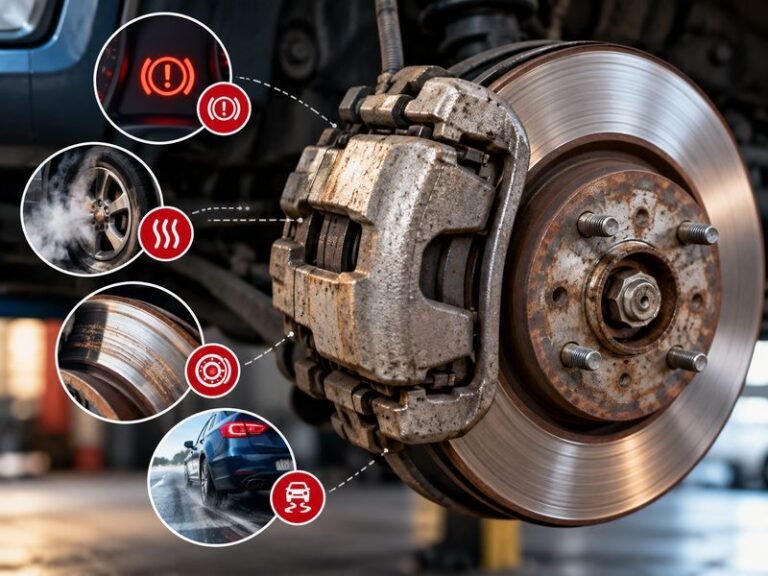
If the caliper has severe corrosion, fluid leakage, seized pistons, or damaged hardware, fix the mechanical problem before painting.
Paint should never be used to hide a failing brake component.
How to Prepare Brake Calipers for Red Paint
Surface preparation has a major effect on durability.
Clean Off Brake Dust
Brake dust contains fine particles that can prevent paint from bonding properly.
Use an appropriate brake cleaner or cleaning product that is safe for the components involved.
Allow the cleaner to evaporate fully.
Remove Loose Rust and Old Paint
Use a wire brush, abrasive pad, or suitable hand tool to remove:
- Loose rust
- Flaking paint
- Heavy dirt
- Surface contamination
You do not necessarily need to strip every trace of the original factory finish if it is solid and compatible with the new coating.
Degrease the Surface
Oil and grease can cause fisheyes, peeling, and poor adhesion.
Make sure the caliper surface is clean and dry before painting.
Mask Carefully
Mask every component that should remain unpainted.
This may include:
- Rotor
- Brake pads
- Rubber boots
- Brake hose
- Bleeder screw
- Wheel hub
- Suspension parts
Good masking often makes the difference between a professional-looking job and a messy one.
How to Paint Brake Calipers Red
The exact process depends on the product, but the general steps are straightforward.
- Park the vehicle on a level, stable surface.
- Allow the brakes to cool completely.
- Loosen the wheel fasteners as required.
- Raise the vehicle correctly.
- Support it securely with appropriate jack stands.
- Remove the wheel.
- Clean the caliper thoroughly.
- Remove loose rust and damaged coating.
- Mask the rotor, pads, rubber parts, and surrounding components.
- Apply the first thin coat of red caliper paint.
- Allow the recommended flash or drying time.
- Apply additional thin coats as directed.
- Allow the coating to cure.
- Remove masking carefully.
- Reinstall the wheel.
- Tighten wheel fasteners to the vehicle manufacturer’s specification.
Follow the paint manufacturer’s instructions for the number of coats, drying time, and curing procedure.
Should You Use Primer Before Caliper Paint?
It depends on the coating system.
Some brake-caliper paints are designed to bond directly to clean, prepared metal.
Others may recommend or require a compatible high-temperature primer.
Do not automatically apply a general-purpose primer underneath a high-temperature coating.
Using incompatible products can reduce adhesion and heat resistance.
Check the instructions supplied with your chosen caliper paint.
How Many Coats of Paint Should You Apply?
Several thin coats generally produce a better finish than one heavy coat.
A heavy coat is more likely to:
- Run
- Sag
- Dry unevenly
- Trap solvents
- Take longer to cure
The exact number of coats depends on the product.
Follow the manufacturer’s recommended coating thickness and drying interval.
How Long Does Brake Caliper Paint Take to Dry?
Drying and curing times vary among products.
Some paints become touch-dry relatively quickly but need considerably longer before they reach full hardness and heat resistance.
Pay attention to the difference between:
- Touch dry
- Recoat time
- Handling time
- Full cure time
Do not reinstall parts or drive the vehicle earlier than the coating manufacturer recommends.
Premature use can damage the finish.
Can You Drive Immediately After Painting Brake Calipers?
Usually, you should wait until the coating has reached the manufacturer’s required curing stage.
Driving too early can expose soft paint to:
- Heat
- Brake dust
- Water
- Road debris
This can ruin the finish.
Some products use heat generated during normal brake operation as part of the final curing process, while others require a specific drying period first.
Follow the instructions on the exact product you use.
Do You Need Clear Coat Over Red Caliper Paint?
Not always.
Some caliper paints are designed to provide their own durable glossy or satin finish.
A clear coat may be used if the manufacturer specifically recommends a compatible high-temperature clear.
Do not apply an ordinary automotive or household clear coat unless it is suitable for the heat and compatible with the base paint.
An incompatible clear coat can yellow, peel, or react with the color coat.
Can You Paint Brand-New Brake Calipers Red?
Yes.
New calipers can be painted as long as you clean and prepare them according to the coating instructions.
New does not necessarily mean the surface is ready for paint.
Calipers may contain:
- Manufacturing oils
- Protective coatings
- Residue from handling
- Packaging contaminants
Cleaning and proper preparation are still necessary.
Can You Paint Old Brake Calipers Red?
Yes, provided the calipers are mechanically safe and in serviceable condition.
Older calipers may require more preparation because of:
- Rust
- Brake dust
- Old coatings
- Grease
- Road salt
- Surface oxidation
Do not paint an old caliper merely to make it look new if it has leaks, damaged seals, seized pistons, or severe corrosion.
Repair or replace it first.
Can You Paint Brake Calipers Without Removing Brake Pads?
Yes, but you must mask the pads extremely carefully.
Paint should never get onto the brake-pad friction material.
If you are comfortable performing brake service, removing the pads may provide cleaner access.
However, make sure they are reinstalled correctly and follow all manufacturer procedures.
What Happens If Paint Gets on the Brake Rotor?
Paint should not be applied to the rotor’s friction surface.
The brake pads need direct contact with clean rotor surfaces.
If accidental overspray reaches the rotor, do not simply assume normal braking will remove it safely.
Clean the affected surface using an appropriate brake-cleaning procedure before driving.
If you are unsure whether the rotor or pads have been contaminated, have the braking system inspected.
Does Red Caliper Paint Fade?
It can.
Caliper paint is exposed to:
- Heat cycles
- Brake dust
- Road salt
- Water
- UV exposure
- Cleaning chemicals
High-quality coatings generally resist these conditions better than ordinary paint.
Proper surface preparation also makes a major difference.
A poorly prepared caliper may begin peeling long before the color itself fades.
How Do You Keep Red Calipers Clean?
Brake dust can quickly dull bright red paint.
To keep the finish looking good:
- Wash the calipers periodically.
- Avoid harsh chemicals unless the coating manufacturer approves them.
- Remove brake dust before it becomes heavily baked onto the surface.
- Use soft brushes rather than aggressive metal tools.
- Inspect the coating occasionally for chips or peeling.
Keeping the wheels clean also reduces the amount of grime sitting around the calipers.
Can Painted Brake Calipers Cause Problems?
Painting itself generally does not cause problems if the coating stays only on appropriate exterior surfaces.
Problems usually result from poor application.
Examples include:
- Paint on pad sliding surfaces
- Paint on rotor surfaces
- Painted slide pins
- Painted rubber boots
- Paint inside bolt threads
- Excessively thick coating around moving parts
Careful preparation and masking prevent most of these issues.
Red Calipers vs. Caliper Covers
Caliper paint and caliper covers create a similar visual effect but work differently.
| Feature | Red Caliper Paint | Caliper Covers |
| Changes color | Yes | Yes |
| Adds separate component | No | Yes |
| Surface preparation needed | Yes | Usually less |
| Risk of chipping | Possible | Different wear concerns |
| Works with existing caliper shape | Yes | Must fit correctly |
| Appearance | Follows original caliper | Can create larger visual profile |
If using caliper covers, make sure they are specifically designed for the vehicle and provide adequate clearance from the wheel and other brake components.
Should You Paint a Rusty or Failing Caliper?
No cosmetic finish should replace necessary mechanical repair.
A caliper should be inspected or replaced first if it has:
- Brake fluid leakage
- Seized piston
- Torn piston boot
- Severe corrosion
- Sticking slide pins
- Cracked housing
- Abnormal pad wear
Once the braking system is confirmed to be safe and functional, painting can be considered.
Common Mistakes When Painting Brake Calipers Red
Painting Over Grease
Paint does not bond well to oily surfaces.
Thorough cleaning is essential.
Skipping Rust Removal
Loose corrosion under the paint will cause peeling.
Remove unstable rust before coating.
Applying One Heavy Coat
Heavy coats are more likely to run and cure poorly.
Use controlled thin coats.
Painting Moving Parts
Paint on slide surfaces or rubber components can interfere with operation.
Mask these areas carefully.
Reinstalling Wheels Too Soon
Soft paint can be damaged during wheel installation.
Allow the coating to cure according to instructions.
Using Ordinary Paint
A normal decorative coating may not tolerate brake heat.
Use a product suitable for calipers or high-temperature automotive applications.
Is Painting Brake Calipers Worth It?
For many vehicle owners, yes.
Painting brake calipers is relatively inexpensive compared with replacing them purely for appearance.
It can provide:
- Cleaner appearance
- Better visibility behind wheels
- Some protection for exterior metal surfaces
- A customized look
However, the result depends heavily on preparation.
A carefully cleaned and coated factory caliper can look much better than a rushed paint job over rust and dirt.
Brake Safety Before and After Painting
Brake work should always be treated carefully.
Before starting:
- Make sure the vehicle is securely supported.
- Never rely only on a hydraulic jack.
- Let the brakes cool.
- Keep paint and cleaner away from friction surfaces.
After the job:
- Check that all components are reinstalled correctly.
- Make sure the brake hose is not twisted.
- Confirm the caliper and pads move correctly.
- Torque wheel fasteners to specification.
- Check the brake pedal before driving.
If any brake component was removed beyond simple cosmetic access and you are unsure about correct reassembly, have the vehicle inspected by a qualified technician.
FAQs About Can I Paint My Brake Calipers Red
Can I paint my brake calipers red without removing them?
Yes.
You can paint the exterior of installed calipers after removing the wheels and carefully masking the rotors, brake pads, rubber parts, hoses, and surrounding areas.
Do red brake calipers improve braking?
No.
Red paint changes appearance only. It does not increase braking force, improve stopping distance, or add pistons.
What kind of paint should I use on brake calipers?
Use paint specifically designed for brake calipers or high-temperature automotive applications.
It should tolerate heat cycles, brake dust, road grime, and moisture.
Can I paint over existing caliper paint?
Yes, if the existing coating is firmly attached and compatible with the new paint.
Remove loose or peeling material, clean the surface thoroughly, and follow the new coating manufacturer’s preparation instructions.
Can I paint rusty brake calipers red?
You can paint calipers with light surface rust after removing loose corrosion and preparing the metal.
Do not paint over severe corrosion or use paint to hide a mechanically damaged caliper.
Should I paint the caliper bracket too?
You can paint visible exterior portions of the bracket.
Do not coat pad sliding surfaces, threads, guide pins, or other areas where paint could interfere with movement or proper assembly.
How long will red brake caliper paint last?
There is no single lifespan.
Durability depends on surface preparation, coating quality, driving conditions, heat exposure, road salt, cleaning chemicals, and maintenance.
Can I use engine paint on brake calipers?
Some high-temperature automotive coatings may tolerate the heat, but a dedicated brake-caliper coating is usually the better choice because it is designed for the specific environment around brakes.
Conclusion
If you are wondering can I paint my brake calipers red, the answer is yes. Red caliper paint can give a vehicle a cleaner and sportier appearance as long as you use a suitable high-temperature coating and apply it only to the correct exterior surfaces.
Good preparation matters more than applying a thick layer of paint. Clean the caliper thoroughly, remove loose rust, mask brake pads and rotors, keep paint away from seals and moving components, and allow the coating to cure fully.
Painting brake calipers will not increase braking performance, but when done carefully, it can provide an attractive and durable cosmetic upgrade without changing the function of the braking system.