5 Best EBC Brake Pads: Which Color Stuff Suits Your Car and Driving
As an Amazon Associate, we earn from qualifying purchases made through links in this post, at no extra cost to you.
Buying the wrong brake pad can turn a simple maintenance job into a frustrating return, a second teardown, or a motorcycle that does not stop the way you expected. A pad that does not match the caliper may not fit at all, while the wrong friction material can make noise, wear unevenly, or feel disappointing on the road.
The first thing to check is fitment, meaning the exact motorcycle, year, wheel position, and caliper shape the pad was made for. Material matters next because sintered pads and bonded linings can feel different, while the pad shape and included hardware decide whether installation is straightforward or a frustrating puzzle.
Here is what the guide covers:
- How to match a pad to your motorcycle and brake position.
- What sintered material, chamfers, radius grinding, and springs do.
- How to bed new pads safely without wasting the first ride.
- Which care habits help pads and rotors last longer.
Quick Picks
-
Best For Complete Harley Pad Change

EBC Brakes EBPCK1027 Complete Double-H Sintered Brake
Double-H sintered pads cover front and rear braking, helping Harley riders replace the full brake setup in one purchase.
-
Best For Rear Pad Replacement

EBC Brakes FA409HH Disc Brake Pad Set
A rear-specific pad set uses chamfers and bonded linings to support a clean replacement for compatible motorcycle brakes.
Top 5 Ebc Brake Pads at a Glance
The EBC Double-H kit deserves the first look from Harley Street Glide riders who need front and rear coverage in one package. The other four choices are individual pad sets, and the biggest differences are fitment, front or rear position, lining details, and color rather than a proven performance ranking between them.
| Product image | Product name | Check product |
|---|---|---|
| 1 |
EBC Brakes EBPCK1027 Complete Double-H Sintered Brake | Check Price |
| 2 |
EBC Brakes FA409HH Disc Brake Pad Set | Check Price |
3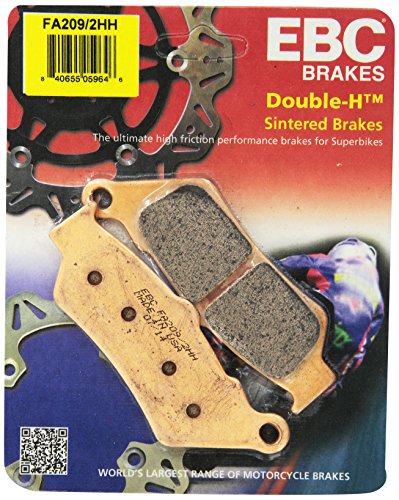 |
EBC Brakes FA209/2HH Disc Brake Pad Set | Check Price |
4 |
EBC Brakes FA400HH Disc Brake Pad Set | Check Price |
5 |
EBC Brakes FA181HH Disc Brake Pad Set, | Check Price |
5 Best Ebc Brake Pads: Detailed Reviews
When I chose the best ebc brake pads, I focused on exact vehicle fit, brake position, friction material, pad construction, and included hardware. Those details matter because a strong-sounding pad name cannot rescue a pad that does not match your caliper or leaves you searching for a missing spring during installation.
The group covers one complete Harley kit and four individual sets with similar construction details. Reading them side by side helps you separate a front replacement from a rear replacement and keeps a color choice from being mistaken for a performance rating.
1. EBC Brakes EBPCK1027 Complete Double-H Sintered Brake
Double-H sintered pads cover front and rear braking, helping Harley riders replace the full brake setup in one purchase.
- Release Date2015-07-08T00:00:01Z
- Number Of Items1
- WeightNot listed; check details
- DimensionsNot listed; check details
The EBC Double-H Kit is a complete front-and-rear sintered pad package for specific Harley-Davidson Street Glide applications from the listed years.
Sintered friction material
Sintered pads are made by bonding metal-based material under heat and pressure rather than using a simple organic lining. The catalog describes the Double-H material as EBC’s high-performance sintered pad, with an HH friction rating and use in dry or wet conditions.
That construction is aimed at riders who want a firm, performance-focused brake pad rather than a basic replacement. The benefit for a compatible Street Glide is a matched set across both ends of the motorcycle, so you are not piecing together front and rear pads from separate packages.
The important catch is that friction material does not override fitment. The Double-H Kit lists specific FLHX Street Glide and FLHXS Street Glide Special applications, so check the exact motorcycle year and model before ordering.
Complete front and rear coverage
The kit includes two EBC FA409HH front brake pads and one EBC FA409HH rear brake pad. That makes the package useful when the front and rear pads are due at the same service rather than when only one axle needs attention.
A complete kit can save time because the pad family is matched across the listed application. It also reduces the chance of ordering a rear set and forgetting the front, which is an easy mistake when brake listings use similar part numbers.
The kit is not a universal Harley brake package. A Street Glide outside the listed years, a different Harley model, or a motorcycle with a different caliper may need another pad shape.
Approval and manufacturing details
The listing states that the pads are ECE R 90 brake safety approved and TUV tested, and that they are manufactured in Ohio. Those are product claims in the catalog, not a reason to skip the fit check or assume every motorcycle application is covered.
For a rider who wants documented construction details, the information is more useful than a vague phrase such as performance pad. For a beginner, the practical takeaway is simple: the kit has a defined material, defined contents, and defined vehicle applications.
Pros:
- Double-H sintered material, performance-focused friction construction.
- Two front pads and one rear pad, complete listed kit.
- Fits listed Harley Street Glide applications from specific years.
- Designed for use in dry or wet conditions.
- Manufactured in Ohio, according to the catalog.
Cons:
- Fitment is limited to the listed Harley applications.
- The package is unnecessary if only one axle needs pads.
- The catalog does not provide a pad weight or dimensions.
Buy it if: you have a listed Harley Street Glide application and need front and rear pads, because the Double-H kit includes both axles in one package.
Skip it if: you need only a rear pad or ride a different motorcycle, because a complete application-specific kit would suit you better. For another fit, consider EBC Brakes FA409HH Disc Brake Pad or EBC Brakes FA209/2HH Disc Brake Pad.
I’d pick the EBC Double-H Kit when the motorcycle matches the listed Street Glide fitment and both axles are due for service. The strongest reason for its rank is the complete front-and-rear package, not a guess about stopping distance. Double-H sintered material gives the kit a clear purpose for riders seeking a performance-oriented pad, but the exact year, model, and caliper still need checking before purchase.
2. EBC Brakes FA409HH Disc Brake Pad Set
A rear-specific pad set uses chamfers and bonded linings to support a clean replacement for compatible motorcycle brakes.
- ColorBlack
- SizeRear
- Release Date2011-12-20T00:00:01Z
- Number Of Items1
The EBC FA409HH is a rear-specific disc brake pad set for a rider replacing compatible rear pads rather than buying a full front-and-rear package.
Bonded lining and aluminum platform
A bonded lining is the friction material attached directly to the pad platform instead of being held by separate rivets. The listing says the FA409HH uses a high-pressure die-cast aluminum platform with bonded brake linings.
That construction gives the pad a defined base and lining arrangement for the compatible brake assembly. For you, the main benefit is knowing what the pad is built from instead of choosing by color alone.
The listing uses the word rear for size, so this set should not be treated as a front replacement. Match the rear pad shape and motorcycle application before removing the old pad.
Radius ground and edge trimmed
Radius grinding shapes the pad surface to follow the curve of the brake rotor, while edge trimming removes sharp lining edges. The listing also describes lead-in and lead-out chamfers at the lining ends, which are angled edges that help the lining meet the rotor gradually.
Those details can make the pad edges easier to position against the rotor and may help reduce the awkward first-contact feel that comes from a completely square lining edge. They do not make a wrong-size pad fit, and they do not replace proper bedding after installation.
For a beginner, the useful distinction is that these are finishing details on the pad shape. They are not the same thing as a guarantee of quiet operation, a specific stopping distance, or a certain service life.
Included springs
Original-equipment-style brake shoe springs are included according to the listing. Springs help hold brake hardware in the intended position, so having the specified hardware in the package can make a rear brake service less dependent on reusing tired pieces.
Check the old assembly before starting because brake hardware can vary by motorcycle. The included springs do not prove that every rear caliper uses the same arrangement.
Pros:
- Rear size, suited to a compatible rear brake position.
- Bonded lining, attached to a die-cast aluminum platform.
- Radius-ground surface, shaped to follow the rotor curve.
- Chamfered lining ends, with lead-in and lead-out edges.
- Original-equipment-style springs included with the set.
Cons:
- Rear-only set does not replace front pads.
- Vehicle fit remains specific, even with familiar construction.
- The catalog does not list pad dimensions or friction measurements.
Buy it if: you need a compatible rear pad replacement, because the FA409HH set is marked Rear and includes shaped lining details plus springs.
Skip it if: your service calls for front pads or a complete axle-to-axle change, because a rear-only set would leave part of the job unfinished. EBC Brakes EBPCK1027 Complete Double-H Sintered and EBC Brakes FA209/2HH Disc Brake Pad are worth a closer look instead.
What I like about the EBC FA409HH is its clear role as a rear replacement with useful construction information. The bonded lining, chamfers, and included springs give a beginner more to check than a bare part number. The hesitation is fitment, since the catalog information here does not name every compatible motorcycle, so verify the rear caliper application before ordering.
3. EBC Brakes FA209/2HH Disc Brake Pad Set
The catalog lists Made using high pressure die cast alluminium platforms with bonded brake linings. Compare fit and care needs before choosing.
- Colorblack
- SizeRear
- Release Date2011-12-20T00:00:01Z
- Number Of Items1
The EBC FA209/2HH is a rear disc brake pad set with an aluminum platform, bonded lining, edge finishing, and original-equipment-style springs.
Platform and lining construction
The aluminum platform is the supporting base behind the friction lining. The listing describes a high-pressure die-cast platform with the lining bonded to it, which tells you how the friction material is attached.
That matters during selection because pad construction can vary between part families. A clear platform and lining description helps you match the replacement style to the brake assembly instead of assuming every black or red pad uses the same base.
The FA209/2HH is marked Rear in the supplied specifications. Treat that position as a starting point for fitment, not as proof that the pad fits every motorcycle with rear disc brakes.
Chamfers and edge trimming
The lining ends have lead-in and lead-out chamfers, meaning the ends are angled instead of left as square corners. The listing also says the shoes are radius ground and edge trimmed, which describes shaping and finishing around the pad surface.
Those features can help the lining meet the rotor in a more controlled way during the early part of contact. They are small details, but brake pads are full of small details, and a few millimeters in the wrong place can matter more than a dramatic name on the box.
A chamfer cannot correct a damaged rotor, a sticking caliper, or incorrect pad fit. Inspect the brake assembly before installing new pads if the old set wore unevenly.
Included hardware
The FA209/2HH includes original-equipment-style brake shoe springs. Hardware is easy to overlook because the pad itself gets most of the attention, yet a missing or incorrectly positioned spring can create installation trouble.
Use the supplied hardware only where it matches the motorcycle’s brake arrangement. If the old assembly has clips, pins, or springs that look different, pause and confirm the correct service procedure rather than forcing parts into place.
Pros:
- Rear size, aimed at a compatible rear brake position.
- Die-cast aluminum platform, with bonded lining attachment.
- Radius-ground surface, shaped around the rotor profile.
- Edge-trimmed lining, with lead-in and lead-out chamfers.
- Original-equipment-style springs included.
Cons:
- The listing does not identify every compatible vehicle.
- Rear-only coverage may not match a front brake service.
- No supplied pad dimensions or friction coefficient are listed.
Buy it if: the part number matches your rear caliper, because the FA209/2HH combines a rear fit with shaped lining edges and included springs.
Skip it if: you cannot confirm the motorcycle application, because an unverified rear pad shape is not worth gambling on for a safety-critical repair. If those trade-offs rule it out, EBC Brakes EBPCK1027 Complete Double-H Sintered or EBC Brakes FA409HH Disc Brake Pad may suit you better.
I’d choose the EBC FA209/2HH for a rider who has already confirmed the part number and rear position. The construction details are similar to several other sets here, so the reason to choose FA209/2HH is correct fitment rather than an invented performance gap. Double-check the vehicle application and compare the old pad shape before placing the order.
4. EBC Brakes FA400HH Disc Brake Pad Set
The catalog lists Made using high pressure die cast alluminium platforms with bonded brake linings. Compare fit and care needs before choosing.
- Colorred
- Release Date2011-12-20T00:00:01Z
- Number Of Items1
- WeightNot listed; check details
The EBC FA400HH is an individual disc brake pad set with a red platform, bonded lining, shaped edges, and original-equipment-style springs.
Red platform and bonded lining
The catalog lists the color as red and describes a high-pressure die-cast aluminum platform with bonded brake linings. Color can help you identify a pad family during storage or installation, but color alone does not tell you whether the pad is front or rear or which motorcycle it fits.
The bonded lining gives the pad a stated attachment method, while the aluminum platform provides the supporting structure behind the friction surface. Those details help you compare construction, but they do not remove the need to match the FA400HH number to the caliper.
The supplied specifications do not identify a front or rear size for this set. That missing detail is a reason to use the vehicle application and old pad shape as your final check.
Radius grinding and edge trimming
The FA400HH is described as radius ground and edge trimmed. Radius grinding follows the curved contact area, while edge trimming cleans the outer edges of the lining.
Lead-in and lead-out chamfers are also listed. These angled ends can help the lining approach the rotor with less of a sharp square edge, which is useful during the early contact period after installation.
Those features are finishing details, not permission to skip bedding. A new pad needs controlled contact with the rotor, and a rider should follow the motorcycle maker’s service guidance for bedding and inspection.
Included springs
The FA400HH includes original-equipment-style brake shoe springs. That can be useful when the original hardware is worn or when the installation calls for replacement springs.
Still, the springs must match the brake assembly. Do not assume that a spring included with one pad set belongs in every caliper that accepts an EBC pad.
Pros:
- Red color, easy to distinguish during parts organization.
- Bonded lining, attached to a die-cast aluminum platform.
- Radius-ground surface, shaped for rotor contact.
- Lead-in and lead-out chamfers, angled at lining ends.
- Original-equipment-style springs included.
Cons:
- Front or rear position is not stated in the supplied specifications.
- Color does not confirm motorcycle fitment or friction behavior.
- The catalog does not provide dimensions or pad weight.
Buy it if: your vehicle application calls for FA400HH, because the set provides the stated lining construction, shaped edges, and included springs.
Skip it if: you are choosing by color without a part-number match, because a color-based guess is not enough for brake hardware.
To me, the useful part of the EBC FA400HH is the construction information, not the red color. The bonded lining, chamfers, radius grinding, and springs give you concrete details to inspect. I would hesitate to buy this set without confirming its axle position and application, so this choice suits a careful buyer with the exact part number in hand.
5. EBC Brakes FA181HH Disc Brake Pad Set,
The catalog lists Made using high pressure die cast aluminum platforms with bonded brake linings. Compare fit and care needs before choosing.
- Colorblack
- SizeFront
- Release Date2011-12-20T00:00:01Z
- Number Of Items1
The EBC FA181HH is a vehicle-specific disc brake pad set listed in black with a Front size and construction details aimed at a compatible front brake assembly.
Front position and vehicle-specific fit
The supplied specifications mark FA181HH as Front, and the fit type is Vehicle Specific. That means the first question is not whether the pad looks similar to your old pad, but whether the FA181HH number matches your motorcycle and front caliper.
Front pads often receive more attention because the front brake contributes heavily to controlled stopping on many motorcycles. Even so, the listing does not supply a stopping-distance test or a motorcycle list here, so the practical choice is to verify the exact application before ordering.
A front label also prevents a common mistake: buying a rear set because the shape or brand name looks familiar. Keep the axle position in your notes while comparing part numbers.
Aluminum platform and bonded lining
FA181HH uses the described high-pressure die-cast aluminum platform with bonded brake linings. The platform supports the friction material, and the bonded attachment keeps the lining connected to that base.
The catalog also describes radius grinding and edge trimming. In plain terms, the contact surface and outside edges receive shaping before the pad is fitted to the brake assembly.
Lead-in and lead-out chamfers are listed at the lining ends. These angled edges can make the first contact with the rotor more gradual than a square edge, though the result still depends on correct fit, rotor condition, and bedding.
Included springs
Original-equipment-style brake shoe springs come with the set according to the listing. The included hardware may simplify a compatible installation when the brake design calls for those springs.
Do not treat included springs as universal hardware. Compare the old assembly, check the service instructions for your motorcycle, and confirm that the pad and spring arrangement match before riding.
Pros:
- Front size, clearly marked for a front brake position.
- Vehicle-specific fit type, not a universal pad claim.
- Bonded lining, attached to a die-cast aluminum platform.
- Radius-ground and edge-trimmed construction.
- Original-equipment-style springs included.
Cons:
- Exact motorcycle fitment still needs confirmation.
- Front-only set does not cover a rear brake service.
- The catalog does not list pad dimensions or friction data.
Buy it if: your motorcycle calls for FA181HH front pads, because the set is marked Front and includes shaped lining details plus springs.
Skip it if: you need rear pads or cannot verify the vehicle-specific application, because a front-labeled set would not solve either need.
I’d pick the EBC FA181HH when the front fitment is confirmed and the old pads show that the axle needs service. The clear Front designation makes this set easier to sort than an unlabeled option, while the platform and lining details explain what you are buying. Check the exact motorcycle application and the included hardware arrangement before installation, especially if the old pads wore unevenly.
How to Choose the Best Ebc Brake Pads
The best ebc brake pads are the ones that match your motorcycle, axle position, caliper, rotor, and intended riding conditions. Material and pad shape matter after fitment, not before it.
Start with the motorcycle and year
Fitment is the process of matching a replacement part to the exact vehicle and brake assembly. Begin with the motorcycle make, model, year, and front or rear position, then compare that information with the pad number.
A part number that looks close is not close enough for a brake component. The Double-H kit lists specific Harley-Davidson Street Glide applications, while several individual sets in this guide do not show a full vehicle list in the available details.
Write down the motorcycle year, model, axle, and old pad number before shopping. If the listing does not clearly match those facts, treat the pad as unconfirmed rather than hoping the shape will work.
Match front and rear position
Front and rear pads can have different shapes, sizes, and hardware even on the same motorcycle. FA409HH, FA209/2HH, and FA181HH are supplied with rear or front position details, while FA400HH needs an extra fitment check from the available information.
The easiest sign is the old pad position and the part number stamped or printed on the package. Never move a rear set to the front because the brand and friction family look similar.
If you are changing both axles, decide whether a complete kit is useful. The Double-H package includes two front pads and one rear pad for listed Street Glide applications, while the individual sets address narrower replacement needs.
Understand pad material
Sintered material contains metal-based friction material formed under heat and pressure. The Double-H kit is identified as sintered, while the other sets are described through bonded lining and platform construction rather than the same complete material wording.
Sintered pads can appeal to riders who want a performance-oriented friction material and regular all-weather use. They may not be the right choice for every rotor, riding style, or manufacturer recommendation, so confirm compatibility with the motorcycle’s service information.
Do not assume that the word HH alone tells you everything about feel, noise, dust, rotor wear, or service life. Those results depend on the whole brake system and how the motorcycle is ridden.
Look at the pad shape and edge details
A chamfer is an angled edge on the friction lining, while radius grinding shapes the lining to follow the rotor’s curve. Edge trimming removes excess material around the pad perimeter.
These details can help a pad meet the rotor in a more controlled way. They also give you something useful to compare when two part numbers appear similar.
Use the old pad as a visual guide, but do not rely on appearance alone. A pad can look close and still have a different locating tab, spring groove, thickness, or backing-plate shape.
Check hardware and package contents
Brake hardware includes springs, clips, pins, and other pieces that keep the pad positioned correctly. The individual EBC sets here describe original-equipment-style springs, while the Double-H kit states its pad count rather than listing every piece of installation hardware.
Count the pads before starting. The Double-H kit has two front pads and one rear pad, while the individual sets are described as one item in the supplied specifications.
Keep old hardware until the new setup is confirmed. That simple habit prevents a box on the garage floor from turning into a hunt for one small spring.
Consider your riding use
Street commuting, touring, mountain roads, wet weather, and occasional spirited riding place different demands on brake pads. A rider who spends long days on a Harley touring motorcycle may value the complete Double-H package, while a person doing one rear repair needs a correctly matched individual set.
Use the catalog’s stated material and construction as guideposts, not as promises of a specific stopping distance. For broader performance comparisons, a guide to performance brake pads can help explain how pad material and heat handling affect the way a brake system behaves.
The right choice is the one that fits the application and matches your use. Avoid choosing from color, a dramatic name, or a single friction label without checking the rest of the brake system.
How to Use EBC Brake Pads for the Best Results
New brake pads need correct installation, clean contact surfaces, and a controlled bedding period. Careful preparation matters more than trying to make the first stop feel dramatic.
- Confirm the part number, motorcycle, axle, and pad count before removing the old pads.
- Photograph the brake hardware before disassembly so springs, clips, and pins have a reference.
- Inspect the rotor for deep grooves, cracks, heavy scoring, or a surface that looks badly uneven.
- Clean the caliper area with the proper brake-cleaning method and keep oil away from the friction lining.
- Install each pad in the correct orientation, making sure clips and springs sit where the brake design expects them.
- Pump the brake lever or pedal while the motorcycle is stationary until the pad contacts the rotor.
- Test the brake at walking speed in a safe area before entering traffic.
- Bed the pads with repeated moderate stops, allowing time for cooling between stops and following the motorcycle maker’s guidance.
Bedding transfers a controlled layer of friction material to the rotor. Hard panic stops from the first mile can overheat fresh pads before the contact surfaces have settled.
A motorcycle with a spongy lever, a dragging wheel, severe pulling, or unusual scraping needs attention before normal riding. Do not treat a concerning brake feel as a normal bedding stage.
Motorcycle riders who want more vehicle-specific comparisons can also review motorcycle brake pads before deciding whether the selected EBC set matches the way the bike is used.
How to Make Your EBC Brake Pads Last Longer
Brake pads last longer when the caliper moves freely, the rotor stays in good condition, and the rider avoids unnecessary heat. The goal is even contact, not simply squeezing more miles from thin friction material.
Check pad thickness during routine maintenance rather than waiting for a scraping sound. Measure or inspect according to the motorcycle service instructions, and replace pads before the friction material reaches an unsafe level.
Keep the rotor free of oil, chain lubricant, tire dressing, and cleaning residue. A tiny amount of greasy contamination can affect contact, and washing a motorcycle is not a substitute for a proper brake inspection.
Watch for uneven wear between the pads on one axle. One pad wearing much faster than the other can point to a caliper, slide, spring, or alignment problem that a new pad alone will not fix.
Avoid holding the brake lever hard at a long stop immediately after heavy braking when conditions allow a safe alternative. Heat that sits in one area can affect the rotor and pad contact pattern.
Use the correct brake cleaner and a clean, lint-free cloth where the service procedure allows it. Do not sand, soak, paint, or lubricate the friction lining unless the motorcycle maker specifically directs that action.
Store replacement pads in a dry, clean place inside their packaging. Keep the friction surface away from loose tools, oily rags, and open containers in a garage.
Replace pads as an axle set when the service guidance calls for it. Mixing a heavily worn pad with a fresh pad on the same axle can create uneven contact and confusing brake feel.
Common Mistakes to Avoid When Buying and Using EBC Brake Pads
Most brake pad mistakes begin with a fitment shortcut or an installation detail that seems too small to matter. Slow down at those points and the job becomes much easier to manage.
Choosing by color
Red, black, or another color does not prove front or rear position, material, or motorcycle fit. Use color only as an identification aid after the part number and application match.
Ignoring the axle position
A rear pad cannot replace a front pad simply because both are sold under the same brand. Record Front or Rear beside the part number before ordering.
Treating a complete kit as universal
The Double-H kit names specific Harley-Davidson Street Glide applications. Check the motorcycle year and model because a complete package can still be wrong for your caliper.
Reusing contaminated pads
Oil or lubricant on a friction lining can change contact and reduce predictable braking. Replace contaminated material and clean the rotor using the approved service method.
Skipping the rotor inspection
A new pad cannot repair a deeply scored, cracked, badly warped, or unevenly worn rotor. Look at the rotor before installing pads and address a visible problem first.
Forgetting the springs and clips
Small hardware keeps pads in the intended position and can be easy to lose during disassembly. Photograph the old arrangement and confirm every clip, pin, and spring before riding.
Making hard stops immediately
Fresh pads need controlled bedding so the lining and rotor contact settle evenly. Use moderate stops in a safe area and allow cooling time instead of forcing maximum braking on the first ride.
Assuming similar part numbers are interchangeable
FA409HH, FA209/2HH, FA400HH, and FA181HH are different part numbers. Compare the exact number, vehicle application, and axle position rather than relying on the shared EBC name.
Ignoring unusual brake feel
A soft lever, severe drag, pulling, or scraping is not a normal reason to keep riding. Stop, inspect the work, and seek qualified service if the cause is not clear.
How to Set Up EBC Brake Pads
Brake pad setup is a mechanical job that needs a clean work area, the right tools, and a safe way to support the motorcycle. If the caliper, spring arrangement, or piston movement is unfamiliar, professional installation is the sensible choice.
- Park the motorcycle securely on a stable surface and prevent movement before removing any brake parts.
- Confirm the new pad number and axle position against the old pad before opening the brake assembly.
- Photograph the spring, clip, pin, and pad arrangement so the original layout is easy to reference.
- Remove the old pads without letting the caliper hang from the brake hose.
- Inspect the rotor and caliper, watching for contamination, damage, uneven wear, or a piston that does not move as expected.
- Clean the approved contact areas and keep all grease and oil away from the friction surfaces.
- Install the new pads and hardware in the same orientation, checking that the pad edges sit fully in their guides.
- Reassemble the brake, pump the lever or pedal until firm, and perform a slow-speed brake check before riding in traffic.
The common stumbling point is confusing a spring or clip with a decorative part. Hardware that looks small may control pad position, so do not leave anything out because the brake seems to hold together without it.
Another stumbling point is starting the motorcycle before confirming lever pressure. A brake lever that comes back to the handlebar or a pedal that feels unusually soft needs inspection before the first road test.
Common Questions About EBC Brake Pads
Are EBC brake pads good for motorcycles?
EBC makes pad sets for motorcycle applications, and the listed products include motorcycle-specific fitment or Front and Rear position details. Suitability still depends on the exact motorcycle, caliper, rotor, and riding use. The Double-H kit specifically lists certain Harley-Davidson Street Glide applications, so it is not a universal motorcycle set.
What does HH mean on EBC brake pads?
HH is a friction rating used in the product naming and listing for certain EBC pads. The Double-H kit describes the pads as high-friction sintered pads. The rating does not tell you the exact fit, noise level, rotor wear, or stopping distance, so confirm the application and follow proper bedding steps.
Are sintered brake pads better than bonded brake pads?
Neither material is automatically better for every motorcycle. Sintered pads use a metal-based friction construction, while a bonded lining describes how friction material is attached to the backing platform. Choose the material recommended for your rotor and riding conditions, then verify the exact pad number and caliper fit.
How do I know if EBC FA409HH fits my motorcycle?
Start by matching the FA409HH part number to the motorcycle make, model, year, rear or front position, and caliper. The supplied information identifies FA409HH as Rear and describes its construction, but it does not list every compatible motorcycle here. Do not order from the part number alone if the application is unclear.
Do new brake pads need to be bedded in?
Yes, new pads generally need a controlled bedding period so the friction material and rotor establish even contact. Use moderate stops in a safe area, allow cooling time, and follow the motorcycle maker’s service guidance. Avoid panic stops or long hard braking on the first ride unless an emergency requires it.
Should I replace the rotor with EBC brake pads?
Not automatically, because a usable rotor may not need replacement when pads are changed. Inspect for cracks, severe scoring, heavy grooves, uneven wear, contamination, and measurements outside the motorcycle maker’s limits. A damaged or badly worn rotor can prevent new pads from working evenly and should be assessed before installation.
Make the Fitment Check Before You Order
The safest next step is to write down your motorcycle year, model, brake position, current pad number, and the exact EBC number you are considering. If all five details agree, check the package contents and plan the bedding ride before placing the order, rather than choosing a pad because its color or name sounds right.