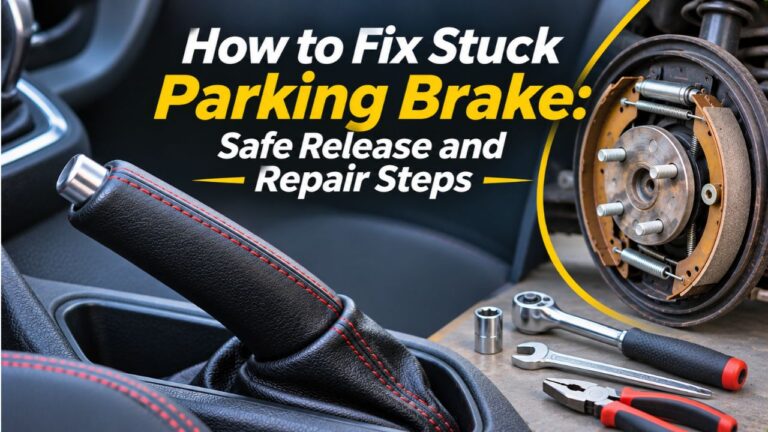
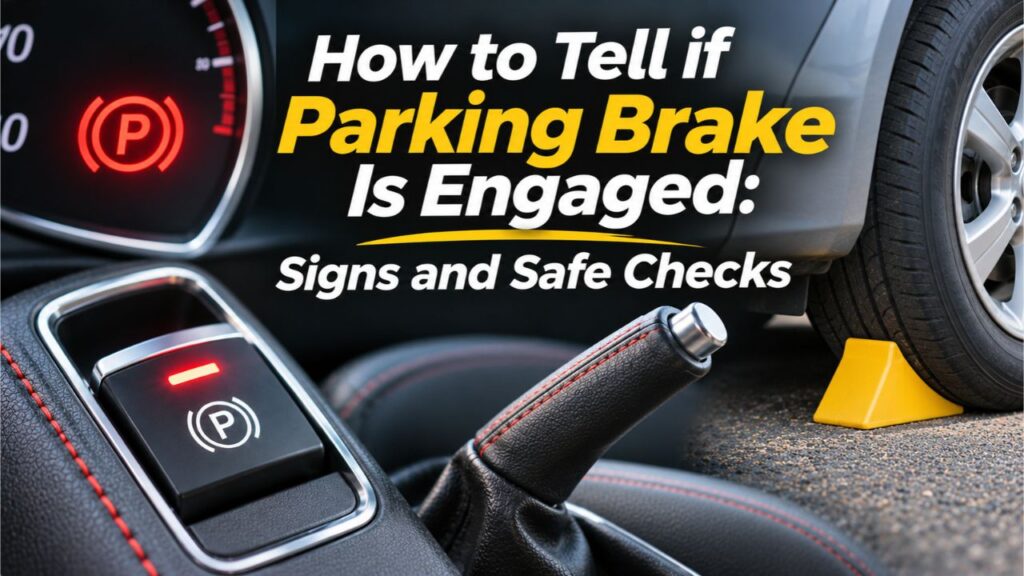
How to Tell if Parking Brake Is Engaged: Signs and Safe Checks
You can usually tell the parking brake is engaged by checking for an illuminated red parking-brake symbol and confirming that the hand lever, foot pedal, or electronic parking-brake control is in its applied state. On many vehicles, the dashboard shows a circled P or the word BRAKE. However, a warning light alone does not prove the brake is holding firmly, and some displays turn off after the ignition is switched off.
That difference matters when you’re preparing to leave a parked car or wondering why the vehicle feels resistant when you try to move. Traditional parking brakes have visible mechanical positions, while electronic parking brakes may use a switch that returns to the same resting position after every command. An electronic actuator can also develop a fault even when a control appears to respond.
This guide explains how to recognize an engaged parking brake on all three common systems, interpret warning lights and Auto Hold messages, and make safe stationary checks. It also covers signs of a stuck brake and what to do when the indicator disagrees with the actual control.
Quick Signs That Your Parking Brake Is On
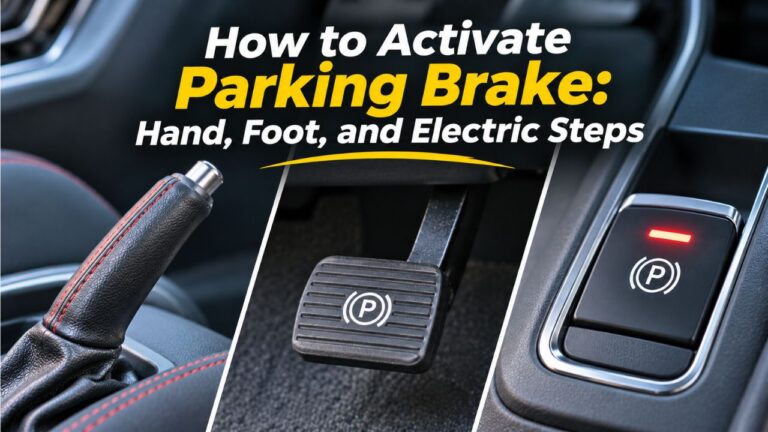
The easiest clue depends on the type of parking brake your vehicle has. Most conventional designs act on the rear brakes, but the dashboard indication and the control location vary.
| Parking Brake Type | Likely Sign It Is Engaged | What May Be Misleading |
| Hand lever | Lever stays raised and the brake indicator illuminates | A loose cable can let the lever lock without holding properly |
| Foot pedal | Dedicated pedal stays down or in its latched position | Some models release with another press, others with a handle |
| Electronic parking brake (EPB) | Red indicator or “Parking Brake Applied” message appears | Switch position may look unchanged after application |
| Automatic EPB | Brake applies when selecting Park or switching off the vehicle | Dashboard may go dark after shutdown while brake remains on |
The most reliable everyday check combines the control’s applied state with the correct instrument-panel indication. If you are unsure the brake can actually hold the vehicle, have its operation tested rather than trying to make the car roll.
How to Tell if Parking Brake Is Engaged Step by Step
Follow these steps with the vehicle stationary. The sequence is meant to identify brake status without deliberately moving against an applied brake or depending on a warning light as a holding-force test.
Step 01: Stop Completely and Secure the Vehicle
Park on a level surface, keep your foot on the regular brake pedal, and select Park in an automatic-transmission vehicle. On a manual-transmission vehicle, follow the owner’s manual for selecting a suitable parking gear. Keep the car secure while you identify the parking-brake control.
Do not check engagement by applying the accelerator or trying to drive forward. That can overheat the rear brakes if the parking brake is applied. If the vehicle is on a hill, secure it using the manufacturer’s parking procedure before doing anything else.
Step 02: Read the Parking-Brake Symbol on the Dashboard
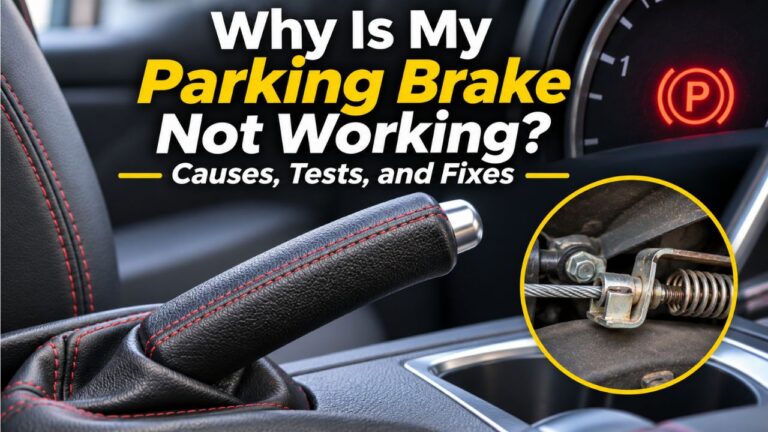
With the ignition or vehicle power mode on, look for a red circled P, a red BRAKE label, or a model-specific parking-brake message. On most vehicles, an illuminated parking-brake indicator means the system reports that the parking brake is applied.
A red indicator can also have other meanings. Honda’s 2025 Accord indicator guide explains that its shared red brake indicator lights when the parking brake is applied, but it can also come on for low brake fluid or a braking-system problem. Use the other checks below before assuming the light proves the parking brake is on.
Step 03: Check a Handbrake Lever’s Physical Position
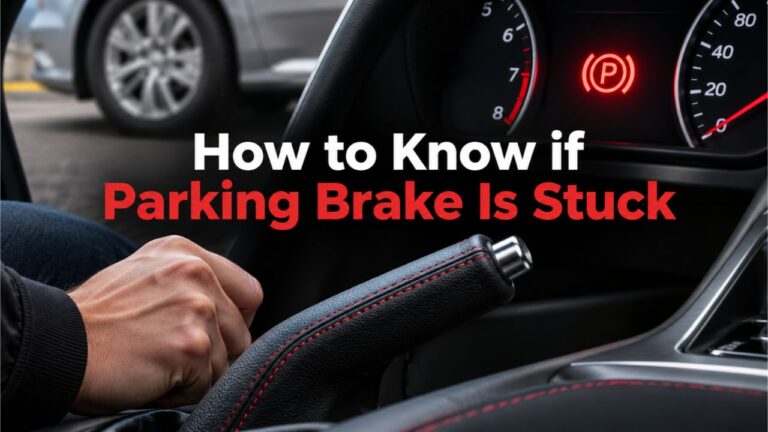
If your car has a hand-operated parking brake, locate the lever beside the driver’s seat or near the center console. A raised lever that remains locked in place normally indicates that the driver has engaged the parking brake. A fully lowered lever usually indicates release.
Do not rely only on the number of ratchet clicks. The amount of travel varies by vehicle and adjustment. If the lever rises unusually far, moves freely, or drops without locking, its cables or mechanism may need inspection.
Step 04: Identify Whether a Foot Parking-Brake Pedal Is Latched
For a foot-operated system, look for the separate parking-brake pedal at the far left of the driver’s footwell. On many designs, it stays in a lower, latched position after application. A release handle or second pedal press returns it to its released position, depending on the vehicle.
Ford’s manual parking-brake instructions distinguish a foot pedal that is pressed down to apply the brake from a hand lever that is pulled upward. The same guidance notes that a warning lamp can indicate a brake-system fault if the parking brake is released. Check which release mechanism your specific car uses.
Step 05: Confirm the Electronic Parking Brake Has Finished Applying
On vehicles with an electronic parking brake, find the switch marked with a circled P or a parking-brake symbol. A pull-up action applies many systems, but the switch may spring back to its original physical position. A switch that looks neutral does not necessarily mean the EPB is off.
Instead, watch for the red indicator, an “Applied” message, or an illuminated light on the switch, if fitted. You may hear a brief electric motor sound near the rear brakes. Wait for the system to finish rather than rapidly operating the switch several times.
Step 06: Separate Auto Hold From the Parking Brake
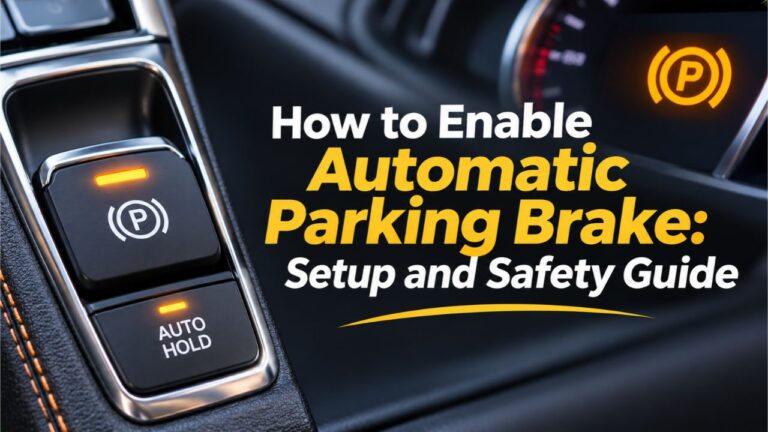
Check whether the dashboard says AUTO HOLD, BRAKE HOLD, or displays a separate hold indicator. Auto Hold usually keeps the car stationary during a temporary stop through the service brakes, while the parking brake is intended to secure a parked vehicle.
Some vehicles automatically transfer from Auto Hold to the EPB after a certain time or under specific conditions. A green hold indicator does not automatically prove the parking brake is engaged. Look for the actual EPB status message and consult the owner’s manual if the indicators are unfamiliar.
Step 07: Check That the Vehicle Is Secure Without Forcing Movement
Once the parking brake is applied and the transmission is secured, slowly ease pressure off the regular brake pedal while ready to press it again. The vehicle should remain stationary. If it starts to move unexpectedly, press the service brake immediately and secure it again.
A vehicle that stays still in Park does not prove the parking brake alone can hold it. The transmission’s parking mechanism may be doing the work. Do not shift into Neutral on a slope or conduct an improvised rolling test. If holding strength is uncertain, arrange a controlled inspection by a qualified technician.
Step 08: Verify Release Before You Drive
When preparing to leave, keep your foot on the regular brake and use the manufacturer-approved release method. Lower the hand lever, operate the foot-pedal release, or release the EPB with its switch as directed. Check that the parking-brake indicator turns off while the ignition is on.
Do not accelerate against unusual resistance. If the light stays on, the car drags, or a warning message appears, stop and investigate. A brake that does not fully release can overheat friction material even if the control seems to be off.
What the Parking-Brake Dashboard Light Actually Means
The standard parking-brake symbol is often a red P inside a circle, sometimes surrounded by curved brackets. Other instrument clusters display the word BRAKE. The light normally illuminates during application when the ignition is on, then goes out after release if no other warning condition exists.
The National Highway Traffic Safety Administration’s parking-brake indicator interpretation explains that US light-vehicle brake regulations require an indicator when the parking brake is applied and the ignition is in its on position. The indicator communicates application status; it is not a measurement of cable tension or braking force.
An amber EPB symbol, flashing red indicator, or message such as “Parking Brake Malfunction” often requires different attention from a steady red applied light. Exact meanings are model-specific. A short lamp check when switching on the ignition is also normal on many vehicles, so a briefly illuminated symbol during startup does not necessarily mean the brake is applied.
How Manual and Electronic Parking Brakes Show Engagement Differently
A mechanical handbrake gives you tactile feedback: the lever rises, a ratchet holds its position, and cable tension increases. A foot-operated brake often locks its pedal below the released position. You can inspect those controls without opening the braking system.
An EPB provides feedback mainly through electronics. Its motor, gear mechanism, and caliper or cable actuator may be out of sight. The same switch can command both application and release, so it may not remain physically raised or depressed as a mechanical lever would.
Some EPB systems activate automatically when you shift into Park or turn off the vehicle. In those cars, the driver might not touch the switch at all. Check the indicator before switching off and understand the owner’s manual instructions for confirming parked status after the display goes dark.
Why the Parking-Brake Light May Stay On After Release
A lit BRAKE indicator after you release the parking brake is not proof that the parking brake remains engaged. It can indicate a separate brake-system warning, especially on vehicles using one red light for parking-brake and hydraulic-brake conditions.
The Lever or Pedal Is Not Fully Released
A mechanical control may remain one click above its resting position, or a foot pedal may not release completely. With the vehicle stationary and the service brake held, follow the correct release procedure and check that the control returns as intended. Do not force a jammed lever or cable.
Low Brake Fluid or a Hydraulic Brake Fault
A shared warning light may remain on because the brake fluid is low, an electrical sensor reports a fault, or another part of the service-brake system needs attention. Inspect any accessible reservoir level as directed by the owner manual, but do not assume adding fluid fixes the underlying cause. A fluid leak or abnormal pedal feel warrants immediate professional inspection.
Electronic Parking Brake Malfunction
An EPB motor, switch, wiring circuit, actuator, or control module may fail to apply or release normally. A flashing indicator, amber warning, or message such as “Parking Brake Unavailable” can provide a more useful clue than the steady red parking symbol. Diagnostic trouble codes and manufacturer procedures are often necessary to determine whether the brake is actually clamped.
What If the Parking Brake Is Engaged While Driving?
A red parking-brake light and warning chime while moving may mean the brake was left partly applied. You could also notice sluggish acceleration, a dragging sensation, unusual rear-wheel noise, or a hot smell. The symptoms depend on how strongly the brake is engaged and how long the vehicle has been moving.
If you notice these signs, reduce speed and pull over safely. Keep your foot on the service brake and check the control only after stopping. Do not keep driving to see whether the warning disappears. Dragging brakes can overheat pads, shoes, rotors, or drums.
If the indicator remains on after release, or the brakes feel different from normal, have the vehicle checked before returning to traffic. Some electronic parking-brake systems release automatically under certain driving conditions, but that behavior is not universal and should never be assumed.
How Parking on a Hill Affects Your Engagement Check
A slope increases the importance of proper parking-brake engagement. Apply the brake fully while keeping the regular brake depressed, select the correct transmission position, and orient the front wheels as the owner’s manual directs. On a typical curbside hill, point the wheels toward the curb when facing downhill and away when facing uphill.
Do not attempt a standalone holding test in Neutral on an incline. If the car is in Park, it may stay still because of the transmission rather than the parking brake. If the control feels weak or you doubt its holding ability, use appropriate additional precautions and arrange inspection before leaving the car in a risky position.
Remember that an electronic parking brake can engage automatically when selecting Park on some vehicles, while others require a deliberate switch command. Verify the status rather than relying on what a different make or model does.
FAQs About How to Tell if Parking Brake Is Engaged
Does the Parking Brake Light Mean the Brake Is Fully On?
Not necessarily. It normally indicates the brake has been applied or commanded on, but it does not measure the force holding the vehicle. Cable adjustment and mechanical condition still matter.
Is the Parking Brake On When the Lever Is Up or Down?
On a typical hand-lever system, up means engaged and down means released. Some vehicles use different controls, so check the owner’s manual if the mechanism is unfamiliar.
How Can I Tell if an Electronic Parking Brake Is Engaged With the Car Off?
Check its indicator or applied message before turning the vehicle off. Some displays illuminate only briefly after shutdown even though the EPB remains engaged. Confirm the exact behavior in your model’s manual.
Does a Green Auto Hold Light Mean the Parking Brake Is On?
Usually not. It commonly indicates that the service brakes are holding the stopped vehicle. Some systems later transfer that job to the electronic parking brake and show a different indicator.
Can a Parking Brake Be Engaged Without a Warning Light?
Yes. A faulty indicator, switch, or dashboard circuit may fail to report the status correctly. The light may also be off after ignition shutdown. Use the control’s physical state and the manufacturer’s instructions, and investigate inconsistent indications.
How Do I Know if My Parking Brake Is Stuck?
The brake may be stuck if its control will not release, an EPB fault remains, or the vehicle continues dragging after an approved release. Do not force movement; the brakes could overheat or be damaged.
Confirm Parking Brake Engagement Before Leaving the Vehicle
Knowing how to tell if parking brake is engaged means using more than one clue. Check the red parking-brake indicator while the ignition is on, then confirm the applied position of a hand lever or foot pedal, or the electronic system’s status message. Remember that Auto Hold and shared brake warning lights can be misleading.
A secure parking routine keeps the service brake applied while you engage the parking brake and select the proper gear. The vehicle should remain stationary after you release your foot brake, but that alone cannot prove the parking brake has full holding strength when the transmission is in Park.
If the brake warning and the physical control disagree, or you notice dragging, a weak holding mechanism, or a malfunction message, have the system inspected before relying on it. Confirm release before driving away.