Do Parking Brakes Wear Out? Signs, Causes, and Repair Options
Yes, parking brakes can wear out, but normal use while the vehicle is stopped usually produces very little friction wear. Parking-brake shoes or pads can become thin, cables can corrode or seize, and electronic parking-brake motors or mechanisms can fail. Driving with the parking brake partly engaged is much more damaging than applying it correctly every time you park.
Many drivers expect the parking brake to last forever because it is used mainly to hold a stationary car. Others worry that setting it daily will wear out the rear brakes. Neither assumption tells the whole story. The answer depends on whether your vehicle uses separate parking-brake shoes, the regular rear brake pads, a cable-operated lever, or an electronic actuator.
A parking brake that no longer holds properly is more than an inconvenience, especially on a driveway or hill. This guide explains which components wear, what shortens their service life, how to recognize weak or dragging brakes, and when adjustment, cleaning, or replacement makes sense.
Do Parking Brakes Wear Out From Regular Use?
Parking brakes are designed to be used regularly. Holding a car still does not produce the same friction wear as slowing a moving wheel. When you set the brake after stopping, the friction surfaces clamp against a drum or rotor without continuously sliding. The brake stays engaged, but little material is normally removed while the vehicle is stationary.
Some mechanical movement still occurs whenever you pull a lever, press a pedal, or operate an electronic switch. Over many years, cables, pivots, springs, adjusters, and actuators can deteriorate. Road salt, water, dirt, and long periods of inactivity may cause trouble before the friction lining becomes thin.
Why Parking Brake Wear Differs From Regular Braking
The service brakes work repeatedly as you drive. Their pads and shoes press against moving parts, generating friction and heat every time the car slows down. A parking brake normally applies after the wheels have stopped, so it does not experience that same repeated sliding contact.
There is one important distinction: some vehicles use the same rear pads or shoes for both service braking and parking. On those vehicles, the friction material wears during ordinary driving even when you rarely touch the parking-brake control. The parking-brake mechanism itself can also develop faults independently of pad thickness.
Which Parking Brake Parts Actually Wear Out?
Not every car has separate parking-brake shoes. Understanding the design helps explain both the symptoms and the repair bill.
Separate Parking Brake Shoes in Rear Rotors
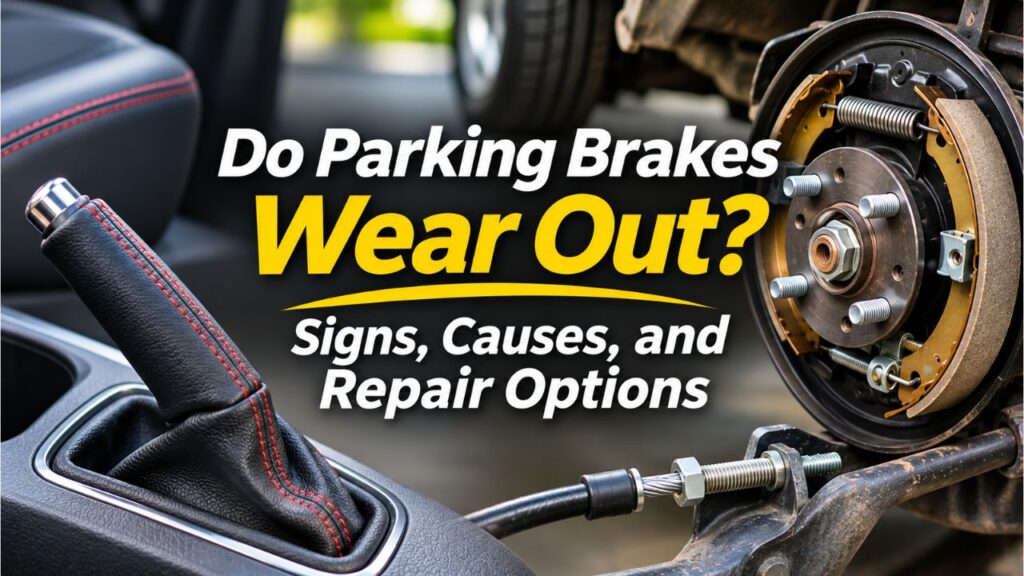
Some four-wheel-disc vehicles have a small drum-style parking brake hidden inside the hat-shaped center of each rear rotor. Its shoes press outward against the drum surface to hold the car. Because they are not used for normal stopping, these linings can last a long time when operated correctly.
However, they can overheat and wear rapidly if the car moves with the brake applied. The NAPA guide to repairing parking brakes explains that correct use may allow years of shoe life, while driving with the parking brake engaged can cause substantial wear. Inspect the shoes and inner drum surface if the brake no longer holds.
Shared Rear Pads or Drum Brake Shoes
Other cars apply the parking brake through the rear calipers or the main rear drum-brake shoes. In this arrangement, the parking function uses friction material that also wears whenever you use the foot brake. A worn rear pad or shoe can therefore affect the parking brake even if you always release it before driving.
Adjustment problems and sticking caliper mechanisms can further reduce holding force. Replacing pads alone may not fix a seized lever or failed adjuster, so the complete mechanism needs inspection.
Cables, Levers, Springs, and Adjusters
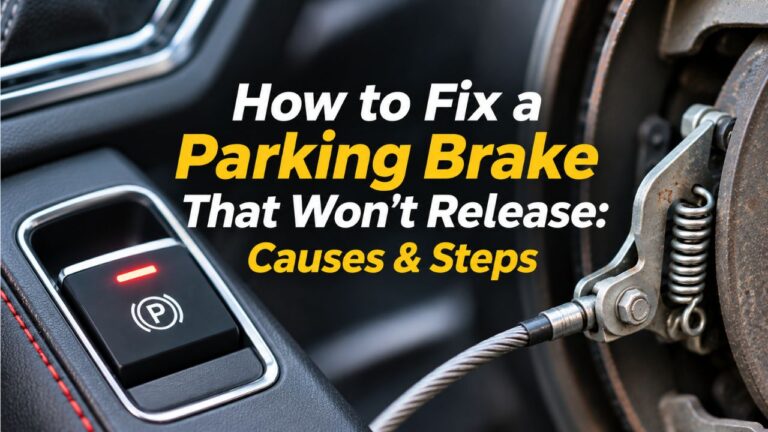
A mechanical parking brake transfers force from a hand lever or foot pedal through steel cables and linkages. The cable may fray, rust inside its sleeve, bind, or lose effective travel. Springs can weaken, and an adjuster can seize or become incorrectly set. A loose-feeling lever does not always mean the friction lining is worn.
Haynes’ parking-brake cable replacement guide identifies corrosion, fraying, damaged sleeves, excessive control travel, and stiff operation as reasons to inspect or replace a cable. Cables do not have a universal mileage-based replacement schedule; condition matters more than age alone.
Electric Parking Brake Motors and Gears
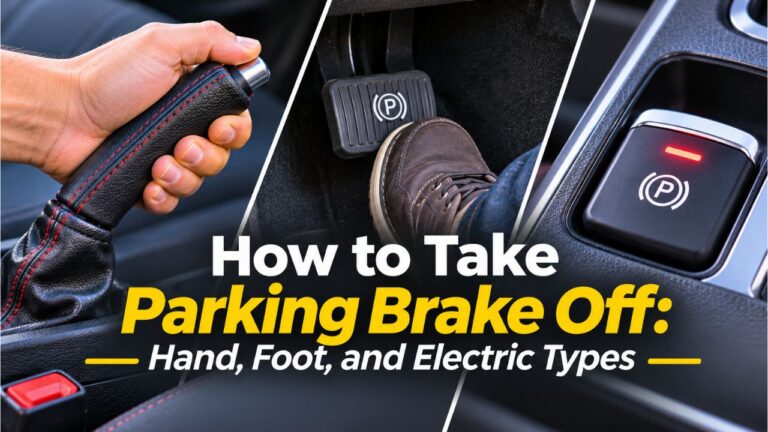
An electronic parking brake (EPB) uses a switch and electric actuation rather than the traditional hand lever. Many systems have motors at the rear calipers, but others use an electric actuator connected to mechanical cables. Electrical faults, damaged gears, seized mechanisms, and weak power supply can prevent correct operation.
HELLA’s technical guide to electric parking brakes describes both caliper-mounted and cable-driven arrangements, along with the importance of model-specific diagnostic and service procedures. A failed EPB does not necessarily mean its brake pads have worn out.
Signs Your Parking Brake Is Wearing Out or Failing
A parking brake should engage predictably, hold the stopped vehicle under its specified conditions, and release fully before you drive. Symptoms vary by design, but the following changes deserve attention.
- Vehicle moves after the brake is set: Weak holding force can come from worn linings, poor adjustment, oil contamination, or a seized mechanism.
- Lever or pedal travels farther than before: Excess free play may indicate a cable or adjustment issue, although the required travel varies by vehicle.
- The control feels unusually stiff: Corroded cables, seized pivots, or binding brake hardware may resist movement.
- Rear brakes drag after release: A stuck cable, frozen shoe, faulty caliper mechanism, or EPB problem may leave friction material in contact with the wheel.
- Grinding, scraping, heat, or a burning smell: These can follow unintended brake drag and need prompt inspection.
- EPB warning or repeated motor noises: A flashing warning, error message, or failure to complete engagement can point to an actuator or electrical fault.
A parking-brake indicator that stays on may simply mean the brake is applied, but other warning states can indicate a malfunction. Consult the owner’s manual to distinguish normal status from a fault. Do not leave a vehicle unattended on a slope if its parking brake cannot be trusted to hold.
How Long Do Parking Brakes Usually Last?
There is no dependable universal mileage or year limit for an entire parking-brake system. A dedicated set of parking shoes may last many years because it experiences little friction when used correctly. Rear pads used for both stopping and parking follow the normal service-brake wear pattern instead.
Cables, levers, springs, and electronic actuators also have different lifespans. Corrosion can make a cable unusable long before the brake shoes are worn. An electric actuator may fail while its pads remain serviceable, or the rear pads may need replacement while the actuator works normally.
A better maintenance standard is regular inspection and prompt attention to symptoms. Have the parking-brake operation checked during scheduled brake service, particularly if you live where roads are salted, drive in heavy rain, or park the vehicle outdoors for long periods. The service manual provides any applicable wear limits and adjustment measurements; do not substitute a generic mileage estimate.
What Causes Parking Brakes to Wear Out Faster?
Driving With the Parking Brake Partially Applied
This is among the most damaging situations. If the wheels rotate against engaged shoes or pads, friction creates heat and removes lining material. Continued driving can glaze the friction surface, damage a drum or rotor, and overheat neighboring brake components. The resulting loss of holding power may remain even after the brake cools.
If you notice a parking-brake warning while moving, stop safely. Do not assume everything is fine simply because the warning later disappears. A burning odor, unusual noise, rear-wheel heat, or reduced braking performance calls for inspection before further driving.
Corrosion, Moisture, and Long Storage
Cables can corrode inside their protective sleeves, while shoes and pads can stick to damp metal surfaces. A car left parked for weeks in humid conditions may develop a seized parking brake without significant lining wear. Road salt and damaged cable boots accelerate that process.
In very cold weather, moisture can freeze around brake components. Follow your vehicle’s winter-parking instructions rather than forcing a stuck mechanism or automatically leaving an unsecured vehicle on a hill.
Incorrect Adjustment or Poor Repair Work
A parking brake adjusted too loosely may fail to hold. One adjusted too tightly may keep the shoes or pads rubbing after release, causing heat and wear. Replacing a cable without correcting shoe clearance, seized linkages, or damaged hardware can leave the original complaint unresolved.
On some electric systems, rear brake service requires an approved maintenance mode or scan tool. Forcing a piston backward against an active actuator can damage expensive components. Use the manufacturer-specific procedure and specified tightening values.
How Can You Tell Whether the Parking Brake Needs Repair?
You can make several useful observations without dismantling the brakes or deliberately testing them on a dangerous incline.
- Park securely on level ground. Stop completely, hold the service brake, select the proper transmission position, and chock the wheels if there is any chance of rolling.
- Apply the parking brake normally. Notice unexpected looseness, excessive lever movement, unusual resistance, or an EPB warning message. Compare the feel with its usual operation rather than an arbitrary click count.
- Confirm the engagement indicator. On vehicles with a dashboard lamp or electronic status message, check that it matches the owner’s manual. A light alone cannot prove actual holding force.
- Release it fully before driving. Confirm that the warning goes out and that the mechanism operates without abnormal noises. Do not use extra accelerator force to overcome resistance.
- Arrange a controlled inspection if anything seems wrong. A technician can safely check holding force, lining thickness, cable operation, adjustment, and actuator faults with suitable equipment.
Do not use a throttle-against-the-brakes test or let the car roll on a hill to see whether the brake catches. Such tests can cause sudden movement or damage. If you already know the parking brake slips, have it repaired before depending on it for parking.
Should You Adjust or Replace a Worn Parking Brake?
The repair depends on the failed component. Adjustment cannot restore worn-out friction material or repair a seized cable. Likewise, replacing parking shoes will not fix a broken electronic actuator.
| Problem Found | Typical Repair Direction |
| Serviceable shoes with excessive clearance | Adjust to the manufacturer specification |
| Thin, glazed, cracked, or contaminated lining | Replace affected friction components and inspect mating surfaces |
| Frayed, seized, or damaged cable | Replace specified cable components and verify equal operation |
| Sticking lever or corroded hardware | Repair or replace damaged linkage and hardware |
| EPB fault or incomplete motor travel | Diagnose power supply, wiring, actuator, and fault codes |
| Rear brakes remain applied after release | Stop driving and diagnose dragging components |
A complete brake inspection should confirm both holding and full release. If the rear pads are shared with the service brakes, their condition can affect stopping as well as parking. Repairs may involve replacement in matched sets where required by the vehicle manufacturer.
Does Using the Parking Brake Every Day Shorten Its Life?
Using a healthy parking brake correctly every day is not normally a reason to expect rapid wear. Regular application at a full stop is what the system was built to do. Avoiding it does not necessarily protect the cables or hardware from corrosion, and it removes an important safeguard when parking.
Apply the brake after bringing the vehicle to a complete stop, then secure the transmission as directed. Before moving off, verify that the brake has released. On vehicles with automatic application or release, confirm the status indicator instead of assuming the feature worked. Auto Hold at traffic lights is not automatically equivalent to a parking brake set for unattended parking.
Keep rear brake inspections on the regular maintenance schedule and investigate any change in operation promptly. A small adjustment problem may be straightforward to correct; ignoring it until the brake drags or stops holding can make repairs more extensive.
FAQs About Do Parking Brakes Wear Out
Do Parking Brake Shoes Wear Out if You Never Drive With the Brake On?
They can deteriorate or eventually require replacement, but dedicated parking shoes often experience little friction wear during correct stationary use. Corrosion, contamination, and hardware condition may become problems first.
Can a Parking Brake Cable Stretch or Break?
Yes. Cables can develop excess travel, fray, corrode, seize, or break over time. A loose lever can also result from an adjustment or rear-brake problem, so the cable should be inspected before replacement.
Do Electronic Parking Brakes Wear Out?
Yes. Electric motors, gears, and related mechanisms can fail, and the rear pads or shoes still wear according to their design and use. An EPB warning does not automatically mean the friction material is worn.
Is It Safe to Drive if the Parking Brake Does Not Hold?
A parking brake that cannot secure the car needs repair. Even if the service brakes appear normal, do not rely on the defective system for parking, especially on slopes. Arrange a safe repair and use appropriate chocks while the vehicle is stationary.
Will Replacing Rear Brake Pads Fix a Weak Parking Brake?
Only if worn rear pads are actually causing the problem on a design that uses them for parking. Separate parking shoes, cable adjustment, damaged hardware, or an actuator fault may require different repairs.
A Long-Lasting Parking Brake Still Needs Regular Attention
So, do parking brakes wear out? Yes, but normal parking use usually creates little friction wear. Shoes, shared rear pads, cables, and electronic actuators fail for different reasons, and driving with a dragging brake or allowing corrosion to develop can shorten their service life significantly.
Use the parking brake whenever you park under ordinary conditions, confirm it releases completely before driving, and have the system checked when holding force or control feel changes. Replacing the part that actually failed—not simply tightening the lever or fitting new pads without diagnosis—is the best way to restore dependable parking protection.