Does the Parking Brake Use Battery? Electric vs. Manual Brakes
A traditional hand-operated or foot-operated parking brake does not need battery power, but an electronic parking brake (EPB) uses electricity to apply and release. Most EPB systems use the vehicle’s 12-volt electrical supply to drive an actuator, then keep the brake engaged mechanically. A battery that goes dead afterward does not normally release an already applied parking brake.
The type of control in your car determines what happens when the electrical system has a problem. A manual lever pulls a cable even with the ignition off. An EPB switch sends a command to electronic controls and motors, which may not respond if voltage is too low. This matters most when a vehicle is parked on a slope or the battery dies while the brake is engaged.
Drivers also wonder whether leaving the parking brake on overnight drains the battery, whether the switch works with the engine off, and how to release a brake that will not respond. Understanding the different designs helps you avoid forcing components, misdiagnosing a weak battery, or leaving a vehicle unsecured. The following sections explain power use, dead-battery behavior, safe recovery, and the warning signs that call for service.
Does the Parking Brake Use Battery Power? It Depends on the Type
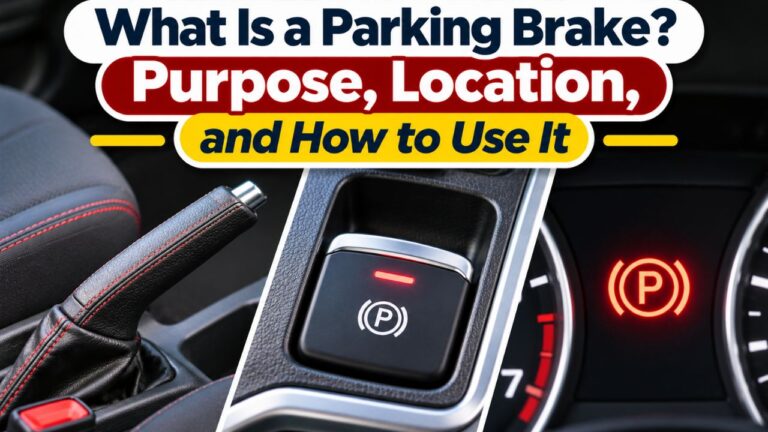
A parking brake holds a parked vehicle in place. How it receives the force needed to clamp the rear brakes depends on its design. The control can be electrical even though the holding force is mechanical.
| Parking System | Needs Battery to Apply or Release? | What Holds the Vehicle? |
| Hand lever with cable | No | Cable-operated mechanical brake hardware |
| Foot-operated parking pedal | Usually no, for conventional cable systems | Mechanical linkage and brake hardware |
| Electronic parking brake (EPB) | Yes, normally uses the low-voltage electrical system | Mechanically retained force at the rear brakes |
| Transmission Park (P) | Not a parking brake; selection may use electronics | Transmission parking mechanism |
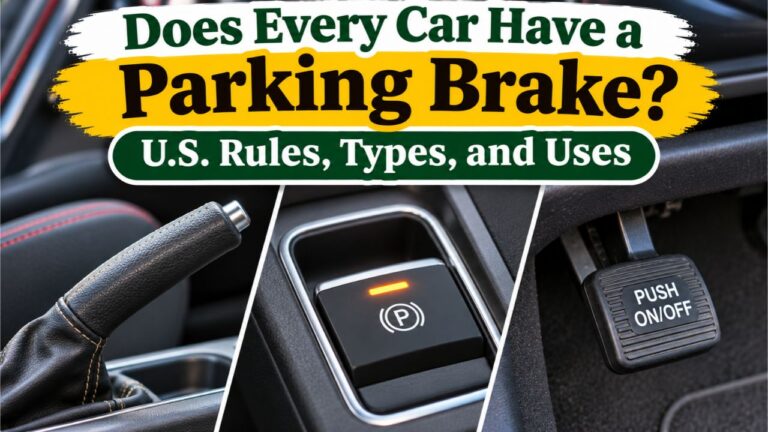
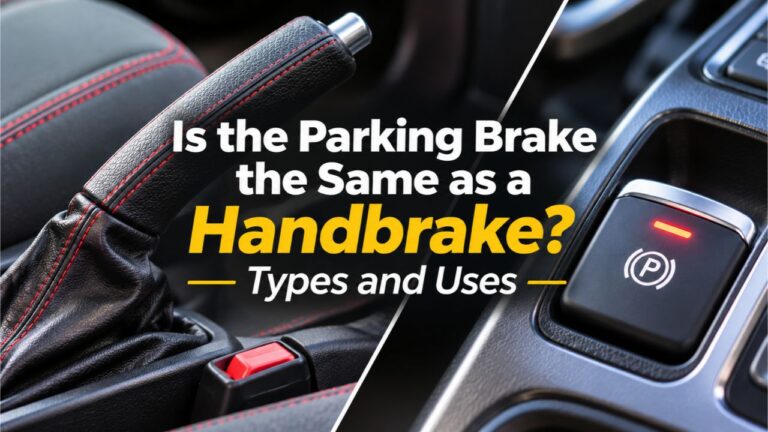
A hand lever does not automatically mean the design is entirely mechanical in every vehicle, and a small button is a strong clue that an electronic actuator is involved. Check the owner’s manual if the layout is unfamiliar. Automatic transmission Park (P) is a separate means of preventing vehicle movement, not a replacement name for the parking brake.
How an Electronic Parking Brake Uses the Car Battery
An EPB replaces much of the driver’s mechanical pulling effort with an electric motor. Pulling or pressing the parking brake switch sends a signal to a control module. The module checks relevant conditions and powers an actuator to apply the brake. Releasing it normally commands the motor to reverse or move the mechanism to its released position.
Why the 12-Volt Electrical System Matters
The actuator and its controls commonly operate from the car’s 12-volt electrical system. That remains true for many electric and hybrid vehicles: their large traction battery is not necessarily what powers the small parking brake motor directly. A separate low-voltage battery and electrical supply support vehicle controls, sometimes with help from a DC-DC converter when the vehicle is operating.
onsemi’s electric parking brake block diagram identifies a 12-volt battery input, electronic control, motor driver, and actuator. It shows why a seemingly simple switch depends on multiple electrical components rather than pulling a cable directly.
Motors, Cables, and Caliper Actuators
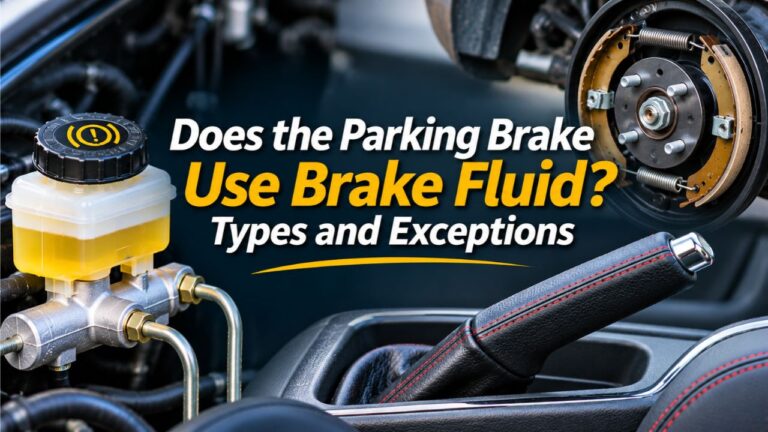
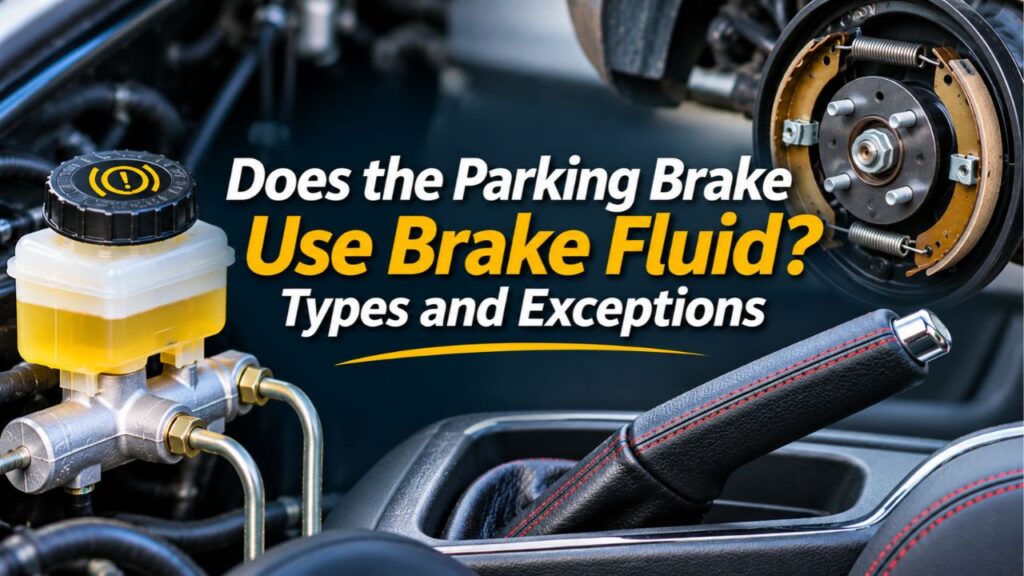
One common arrangement mounts a small motor on each rear brake caliper. Turning gears and a screw mechanism produces the clamping force that holds the brake pads against the rotor. Other designs use a central electric actuator to pull parking brake cables. Some vehicles use separate parking brake shoes instead of relying only on the service brake pads.
You may hear a short motor whir when applying or releasing an EPB. That can be normal. A long grinding noise, repeated unsuccessful motor operation, or a warning message is not something to ignore.
Does an Applied Electric Parking Brake Keep Draining the Battery?
Normally, no. A properly functioning electric parking brake does not need its motor to run continuously to keep the vehicle parked. Electrical energy is used mainly while the actuator is moving, with small amounts potentially used by control electronics for monitoring or other vehicle functions. The parking force is retained by a mechanical arrangement.
The National Highway Traffic Safety Administration’s interpretation of electric parking brake requirements explains that a parking brake may be applied electrically while its engagement must be held mechanically under the cited U.S. light-vehicle standard. This distinction helps explain why the brake should remain applied after the ignition is switched off and even if battery power is later lost.
Parking with the EPB on overnight is not, by itself, a normal reason for finding a dead battery in the morning. A weak aging battery, other electrical loads, an electrical fault, or a control module that fails to sleep may be responsible. Some systems can briefly reapply or adjust clamping force in particular conditions, so a perfectly flat, zero-current claim would be too broad.
Repeatedly operating the EPB with the engine off uses energy, especially on an already weak 12-volt battery. But there is usually no need to avoid using the parking brake to save power. Its job is keeping the vehicle secured.
What Happens to the Parking Brake When the Battery Dies?
A dead battery affects the ability to change the brake’s state more than the ability of a properly engaged EPB to keep holding. The outcome depends on when power is lost, the vehicle’s design, and whether the mechanical brake hardware is working correctly.
If the Electric Parking Brake Is Already Applied
The brake generally stays clamped after the 12-volt battery runs flat. Turning the EPB switch may do nothing because the motor cannot receive enough power to release it. This can leave the vehicle safely held in place but unable to move until electrical power is restored or an approved service release is performed.
Never assume a stuck parking brake can be overcome by giving the car more throttle. Trying to drive against the engaged brake can damage components and may cause a sudden movement if it releases.
If the Brake Is Released When Power Is Lost
An EPB that has not been applied cannot be relied on to engage after electrical power disappears. Some vehicles automatically engage their parking brakes under certain shutdown or shift conditions, but that feature depends on their design and functioning controls. Do not assume a dead battery will trigger a safety application.
If the car cannot confirm that the parking brake applied, treat it as unsecured. Use Park where equipped, choose a safe location, and chock the wheels if needed. A manual-transmission vehicle should be left in the appropriate gear as directed by its owner manual.
If the Battery Is Weak but Not Completely Dead
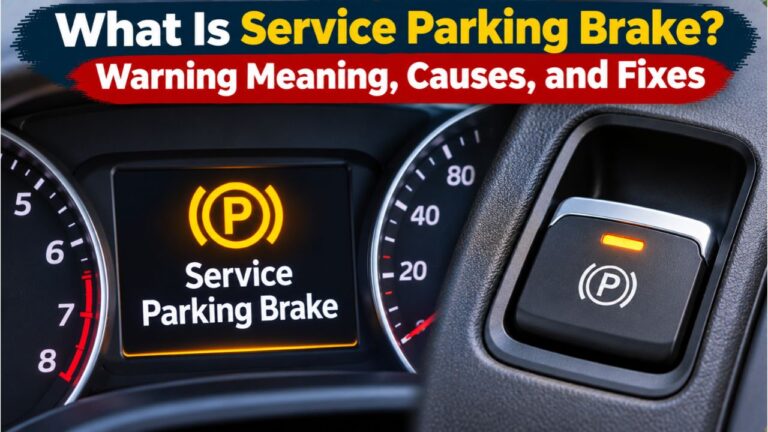
Low voltage may produce an EPB warning, a stalled actuator, or incomplete application or release. The dashboard may also show unrelated low-voltage errors. Some vehicles inhibit parking brake movement until battery voltage recovers. The exact threshold is model-specific, and repeatedly toggling the switch will not reliably solve it.
Can You Use the Parking Brake With the Engine Turned Off?
A conventional cable-operated parking brake works regardless of engine state. The hand lever or parking pedal directly applies mechanical force, and a latch keeps it engaged until it is released.
Many electronic parking brakes can also be applied with the ignition off, provided sufficient battery power is available. Releasing them often requires turning the ignition or vehicle power on and pressing the service brake pedal. The requirement can vary with seatbelt status, door position, transmission selection, and vehicle software.
Some vehicles automatically apply the EPB when the driver shuts down the vehicle or shifts into Park; others rely on the driver to operate the switch. Even if automatic application is available, confirm the indicator and follow the owner’s manual. A dashboard symbol by itself is not proof that a mechanically damaged brake can hold on a steep hill.
What to Do if an Electric Parking Brake Will Not Release With a Dead Battery
A dead 12-volt battery is a common reason an EPB switch stops responding, but it is not the only possible cause. Follow the manufacturer’s instructions rather than trying to force a caliper or disconnect an actuator. These steps are intended for a stationary vehicle, not for a car in traffic.
Step 01: Secure the Vehicle Against Rolling
Make sure the transmission is in Park, if equipped, and keep the wheels properly chocked before working around a vehicle on a slope. Do not put yourself downhill of a vehicle that might move unexpectedly. If the parking brake is holding, leave it engaged rather than trying to defeat it just to reposition the car.
Step 02: Check the Warning Messages and Owner’s Manual
Look for a low-battery indication, an EPB malfunction message, or a flashing parking-brake warning. Verify the vehicle’s release conditions, which may include switching vehicle power on and holding the foot brake. Do not assume every EPB has a mechanical emergency-release lever.
Step 03: Restore the Correct Low-Voltage Power Supply
If the 12-volt battery is discharged, use the model-specific jump-starting or battery-charging procedure. On an EV or hybrid, refer to its dedicated 12-volt recovery instructions and avoid high-voltage components. Do not attach jumper cables to random electrical terminals.
Ford’s owner-manual instructions for a discharged battery and electric parking brake specifically direct owners of the covered vehicle to connect a booster battery when the EPB cannot operate with a discharged battery. That is an example of a manufacturer-approved recovery method, not permission to assume the same connection procedure for every car.
Step 04: Release the Brake Using the Correct Controls
After suitable power has been restored, follow the normal release sequence in the manual. On many cars that means turning the vehicle on, pressing the service brake firmly, and operating the EPB switch. Listen for the actuator and confirm that the parking brake indicator shows release before attempting to move.
If the system reports a malfunction or the brakes remain locked, stop trying. The fault could involve an actuator, wiring, seized brake parts, or a control module rather than the battery alone.
Step 05: Arrange Service or Suitable Towing if It Stays Locked
If the brake cannot be released as specified, contact roadside assistance or a qualified technician. Tell the towing provider that an electronic parking brake may be engaged so the correct lifting or loading method can be chosen. Dragging locked wheels can damage tires and brake parts.
Avoid dismantling caliper motors, cutting cables, or attempting an improvised release. Some emergency-release methods are highly model-specific and can allow the vehicle to roll unexpectedly.
How to Tell a Weak Battery From an EPB System Fault
When the parking brake switch fails, start by looking at the whole electrical system rather than immediately buying a new actuator. Dim interior lights, slow starting, multiple low-voltage warnings, or an otherwise unresponsive vehicle support checking the battery and its connections. A technician can perform a suitable voltage and battery-load test and inspect the charging system where applicable.
If other electrical functions work normally but one rear actuator grinds, a brake remains stuck, or an EPB fault persists after the low-voltage supply is restored, the problem may involve wiring, a switch, sensors, a seized caliper, or an electronic control module. Fault codes from a suitable diagnostic tool can narrow the search.
A working dashboard lamp does not guarantee adequate power reaches an actuator under load. Conversely, an EPB warning after a jump-start may be a stored low-voltage event or an active malfunction. Verify the actual condition before clearing codes or assuming the problem has disappeared.
Parking Safely With Either Type of Parking Brake
The parking brake should be used as part of the vehicle’s normal parking procedure, not avoided because it might use electricity. For an automatic transmission, follow the manufacturer’s guidance for setting the brake and selecting Park. On a manual transmission, use the specified gear and parking brake. On an incline, position the wheels as directed in the manual and consider wheel chocks when appropriate.
Keep the rear brake hardware maintained. Corroded cables on manual systems and damaged actuators on electronic systems can both prevent proper engagement. For vehicles with EPBs, brake pad service may require a specific maintenance mode or scan-tool procedure; forcing the piston back can damage the actuator.
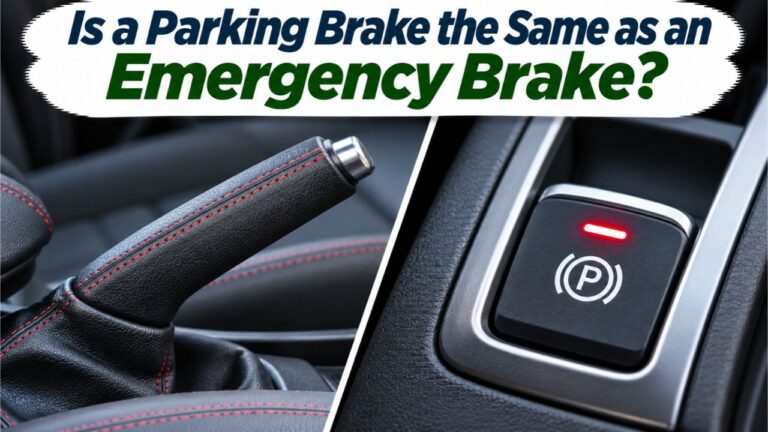
Do not treat the transmission’s Park mechanism or an electronic Auto Hold feature as an identical substitute for the parking brake. Auto Hold generally manages brief stops while driving; its transfer to the parking brake, if any, follows model-specific logic.
FAQs About Does the Parking Brake Use Battery
Will a Dead Car Battery Release an Electric Parking Brake?
Usually not. A properly applied EPB normally stays engaged mechanically after electrical power is lost. The problem is often that the motor cannot release it until suitable power is restored.
Can a Manual Handbrake Work With No Battery?
Yes. A conventional hand lever or foot-operated cable parking brake does not require electricity to apply or release. Its mechanical condition still matters, so damaged cables or worn brake parts can prevent it from holding.
Does an Electronic Parking Brake Use the Main EV Battery?
Common EPB designs rely on a vehicle’s low-voltage electrical system, often supplied by a 12-volt auxiliary battery. An EV’s high-voltage traction battery may support that system through a converter, but it does not mean the EPB motor operates directly on traction-battery voltage.
Does Leaving the Electronic Parking Brake On Drain the Battery Overnight?
Not in normal operation. The actuator uses power to move, but the applied brake is retained mechanically. A separate electrical fault, control module, or deteriorating battery may cause abnormal battery drain.
Can You Release an Electric Parking Brake Without Power?
Some models have a manufacturer-approved emergency release or service procedure, but many require restored 12-volt power. Never force the brake apart or improvise an override; consult the exact owner’s or service manual.
Battery Power Matters for Operating the Parking Brake, Not Holding It
So, does the parking brake use battery power? A conventional mechanical parking brake does not, while an electronic parking brake normally needs electricity to apply or release its actuator. Once engaged, the EPB generally holds with a mechanical locking arrangement rather than constant motor power.
That distinction explains why a dead battery may leave an electronic brake stuck on without making it release unexpectedly. It also explains why leaving a healthy EPB engaged is not normally a significant overnight battery drain.
If your electronic parking brake stops responding, secure the vehicle, check the manufacturer’s release requirements, and restore low-voltage power using the approved method. Persistent warnings or a brake that will not move call for proper diagnosis before driving.