Can a Bad Brake Booster Cause Stalling? Symptoms and Diagnosis
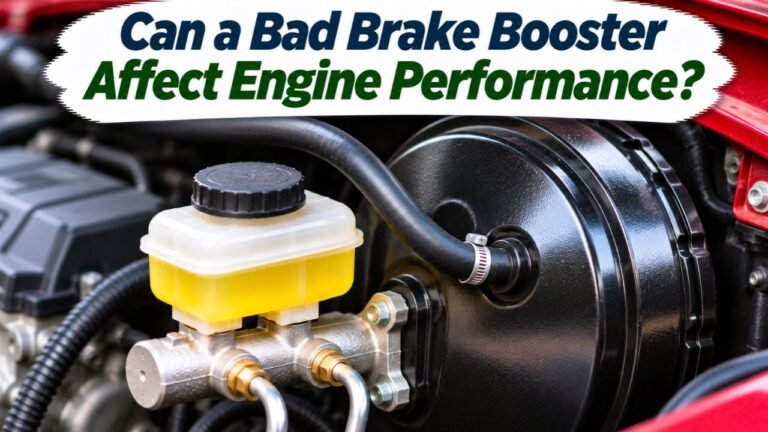
Yes, a bad vacuum brake booster can cause an engine to stall, especially when you press the brake pedal or come to a stop. A torn booster diaphragm or leaking control valve may let extra air enter the engine’s intake through the vacuum connection. That air can disturb the fuel mixture, make the idle rough, and sometimes shut the engine off.
Stalling does not automatically mean the booster is faulty. A cracked vacuum hose, weak idle control, or transmission problem can produce a similar complaint. The timing matters: an engine that stumbles the moment you apply the brakes offers a different diagnostic clue from one that dies as the vehicle slows, regardless of pedal movement.
A booster leak can also reduce brake assistance, leaving the pedal unusually hard to press. That combination makes the problem more serious than an ordinary rough idle. This guide explains the connection between booster vacuum and engine operation, the warning signs that help narrow the cause, safe stationary observations, other faults worth ruling out, and what repairs usually involve.
Can a Bad Brake Booster Cause Stalling? How the Vacuum Leak Develops
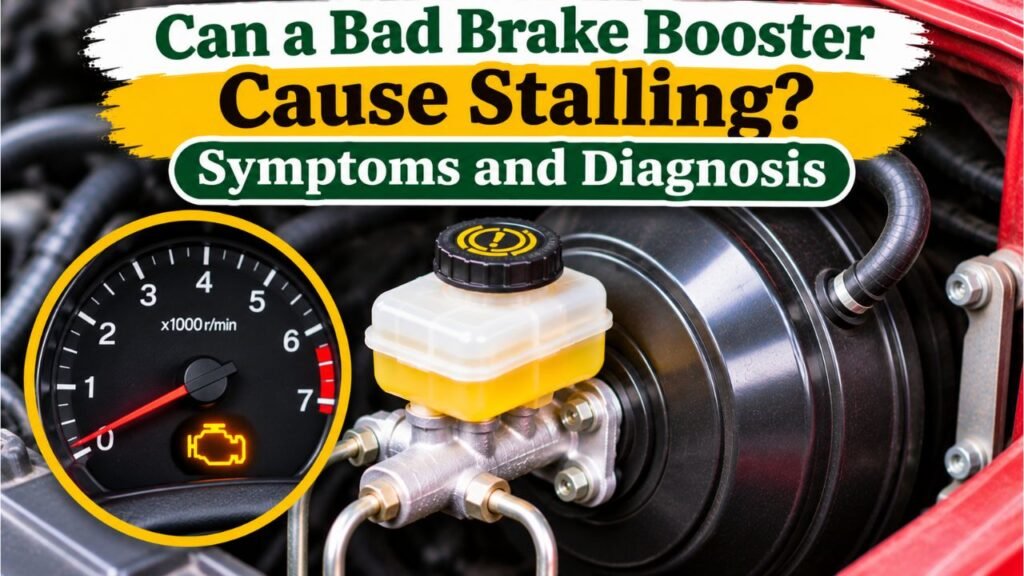
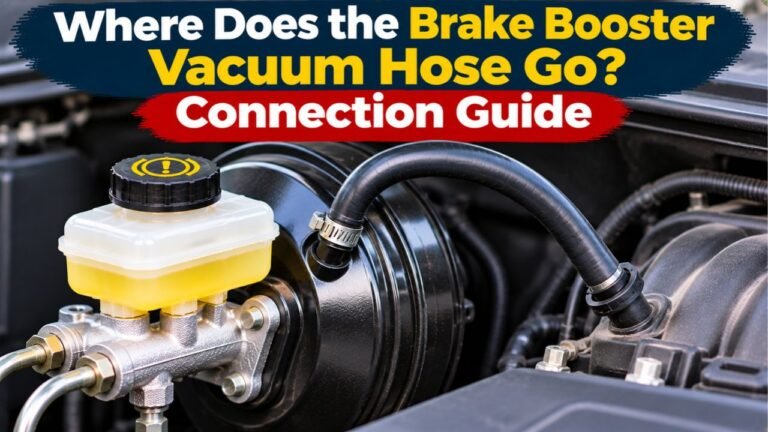
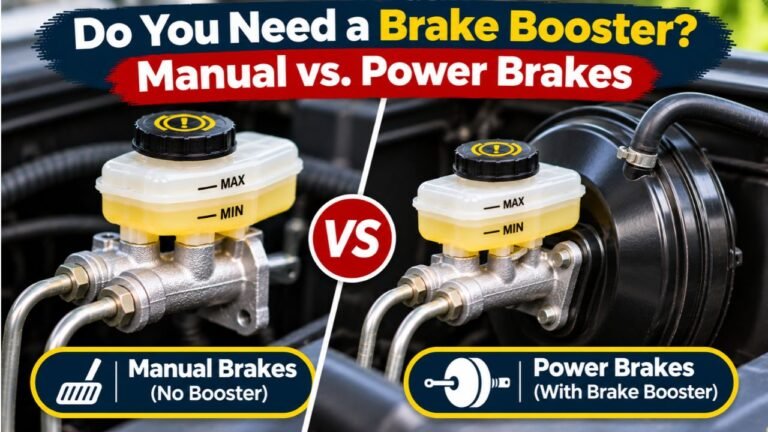
Most conventional vacuum boosters sit between the brake pedal and the master cylinder. Inside, a diaphragm and control valve use the difference between vacuum and atmospheric pressure to add force when you brake. On many gasoline vehicles, a hose connects the booster to the engine intake manifold, supplying the necessary vacuum.
The intake manifold normally operates at relatively low pressure during idle. If a booster diaphragm or internal valve leaks, air may enter that vacuum path when it should not. This additional air can upset the air-fuel mixture and idle speed.
AGCO Automotive’s explanation of vacuum brake boosters describes how a ruptured diaphragm can admit atmospheric air through the intake vacuum connection and contribute to misfiring when the brake pedal is depressed. It also explains why a cracked supply hose or faulty check valve should be checked before replacing the booster.
Why the Engine May Stall When You Press the Brake
At idle, the engine is producing just enough torque to stay running while powering accessories and maintaining its set speed. A substantial vacuum leak can introduce unmetered air, meaning air that the engine’s normal control strategy may not account for correctly. The computer may try to compensate by adjusting fueling and throttle or idle control, but a large or sudden leak can overwhelm that correction.
The result may be a drop in RPM, shaking, an occasional misfire, or a complete stall. Symptoms may appear when the pedal moves or continue even with your foot off the brake.
Why Not Every Bad Booster Stalls the Engine
A failed booster does not always create a path for outside air into the intake. A restricted vacuum hose or a check valve that fails to retain reserve vacuum might cause a hard brake pedal without producing enough unmetered air to stall the engine. An independent electric vacuum pump can fail without creating a direct intake-manifold leak.
Diesel engines, hydraulic Hydro-Boost systems, and electrically assisted brakes can behave differently. Identify the actual brake-assist design rather than assuming every engine and booster share the same vacuum connection.
Signs That Brake Booster Trouble Is Behind the Stalling
Engine RPM Drops as the Brake Pedal Moves
A strong clue is a repeatable stumble or sharp RPM drop when the brake pedal is depressed while the engine is already idling. The engine may recover when you release the pedal. This timing suggests a component linked to pedal movement, but it does not prove which part has failed.
A brief idle adjustment is different from severe stumbling or repeated near-stalls.
Hissing Near the Pedal or Firewall
A damaged booster diaphragm or control valve may create a sustained hiss as air moves through an unwanted opening. The noise can seem to come from beneath the dashboard or from the engine-bay side of the firewall. A split supply hose or a leaking check-valve grommet may produce a similar sound farther forward.
A short air movement sound during normal pedal operation is not definitive evidence of failure. Persistent hissing accompanied by rough idle or reduced braking assistance is more concerning.
Hard Brake Pedal and Longer Stopping Effort
If the booster cannot maintain the pressure difference needed for assistance, the brake pedal can become high and unusually hard. The wheel brakes may still operate hydraulically, but much greater foot force may be needed to slow the car.
AutoZone’s guide to bad brake booster symptoms lists engine stumbling or stalling, hissing, a hard pedal, and increased stopping effort among possible warning signs. These symptoms become more persuasive when they occur together rather than separately.
Check Engine Light or Lean-Running Codes
Depending on the vehicle and severity of the leak, the engine computer may record a lean-mixture code such as P0171 or P0174, or a misfire-related fault. These codes indicate conditions to investigate, not a confirmed booster failure. Some booster leaks cause noticeable stalling without storing any code.
A scan tool can help a technician compare fuel corrections and idle behavior while checking for intake air leaks elsewhere.
Brake Booster Leak Versus Other Causes of Stalling When Braking
The difference between pressing the brake and slowing to a stop is important. Sometimes the brake pedal is blamed simply because the driver is using it when another fault makes the engine quit.
| What Happens | Possible Cause | Helpful Distinction |
| RPM drops as the brake pedal moves at idle | Booster diaphragm, vacuum hose, or related leak | May include hissing or a hard pedal |
| Engine stalls near a stop, even with light brake use | Torque converter clutch not releasing | Often tied to vehicle speed and transmission load |
| Rough idle occurs with or without braking | Throttle or idle control, PCV leak, other intake leak | Symptoms are not consistently linked to pedal movement |
| Engine dies mainly with several accessories operating | Idle compensation or electrical charging problem | Headlights, A/C, or steering load may change the symptom |
| Brake pedal becomes hard but idle stays normal | Booster supply, check valve, or separate vacuum pump | Lost assist does not necessarily mean an engine intake leak |
A Torque Converter Clutch That Stays Engaged
On some automatic transmissions, the torque converter clutch can fail to release as the vehicle slows. The engine may shudder and stall as if a manual-transmission car were stopped without disengaging the clutch. This usually correlates with deceleration and near-stop vehicle speed, not pressing the brake pedal while parked in Park or Neutral.
Throttle, Idle Control, and Other Vacuum Leaks
A dirty throttle body, idle-control fault on older designs, malfunctioning PCV connection, or leaking intake gasket can make an engine unable to recover from normal changes in load. Those problems may become obvious when slowing down, but they can also appear with the air conditioning or other accessories running.
Diagnosis should examine the whole intake and idle-control system if no consistent relationship to pedal movement exists.
Why a Brake Fluid Leak Is a Separate Issue
Brake fluid leaking from the rear of the master cylinder can enter the adjacent vacuum booster and potentially damage its diaphragm. A hydraulic leak can therefore precede booster trouble, but fluid loss itself is not an intake-air leak.
A low brake fluid level, wet master-cylinder mounting area, or sinking pedal needs urgent hydraulic inspection regardless of whether the engine is stalling.
How to Check for Signs of a Brake Booster Vacuum Leak Safely
These are preliminary stationary checks for a conventional vacuum-assisted vehicle, not a substitute for professional testing. If the engine has already stalled while braking or the pedal is abnormally hard, avoid repeating risky engine-running tests and arrange towing instead.
Step 01: Park Securely and Record the Symptom Pattern
Choose level ground, shift into Park or an appropriate gear, apply the parking brake, and secure the vehicle against rolling. Record whether the stall occurred as you first touched the brake pedal, held it down at a light, or approached a complete stop. Also note whether the check engine light appeared and whether the pedal felt harder than normal.
This distinction helps separate a vacuum leak from a transmission fault. Never reproduce a stall on public roads.
Step 02: Identify the Booster and Look for Hose Damage
With the engine off, find the brake master cylinder and the booster directly behind it on vehicles that use the familiar round housing. Inspect the visible vacuum hose, elbow, check valve, and rubber grommet for cracks, loose fittings, collapsed sections, or disconnected ends.
Do not loosen brake-fluid connections or approach hot or moving parts.
Step 03: Check Whether the Pedal Has Stored Vacuum Assist
On a conventional vacuum system, a properly functioning booster often retains limited assistance briefly after shutdown. With the engine off, carefully compare successive pedal presses: the first may feel assisted while later presses become firmer as stored vacuum is depleted.
If the pedal is immediately rock-hard, the system may not be storing vacuum, although this does not isolate the cause. A leaking check valve, damaged booster, or poor vacuum supply can produce similar results.
Step 04: Observe Only Safe, Existing Idle Symptoms
If the vehicle can idle reliably and there is no brake warning or severe pedal problem, note whether engine speed changes during ordinary stationary brake use. A clear hiss or pronounced stumble linked to pedal movement supports investigating the booster vacuum circuit.
Do not continue pressing the pedal if the engine begins dying. Avoid removing or plugging the live booster vacuum hose to experiment: doing so disables braking assistance and can create additional engine-running hazards.
Step 05: Have the Vacuum Supply and Booster Tested
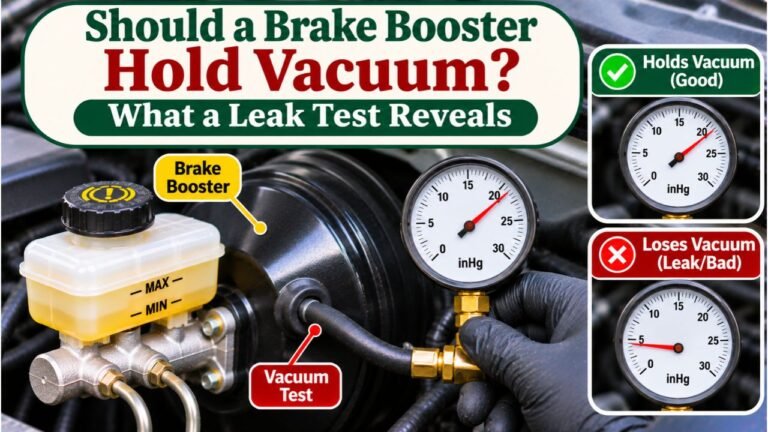
A qualified technician can use the correct service procedure to measure vacuum supply, inspect the one-way valve, and perform booster leakage checks. Scan-tool readings and a controlled smoke or isolation test can help locate unwanted air entry without misidentifying a healthy booster as defective.
The technician should also check for intake leaks and transmission or idle-control faults if the evidence does not point clearly to the booster.
How Mechanics Confirm and Repair a Stalling-Related Booster Fault
A repair begins with confirming whether the engine is actually receiving unintended air through the booster circuit. A technician can compare vacuum at the supply hose with service specifications, test check-valve direction and sealing, and assess whether the booster holds vacuum. Vehicle-specific thresholds matter; one vacuum reading is not universal for all engines.
If the hose, grommet, or check valve is defective, replacement of that component may restore normal operation without a new booster. A ruptured internal diaphragm or failed control valve usually means replacing the booster assembly, because internal repairs are not practical for most modern passenger cars.
RepairPal’s brake booster fault guide explains that vacuum-style failures can cause rough running or stalling and distinguishes them from hydraulic booster problems, which involve power steering fluid and assist pressure rather than the engine’s intake vacuum.
After the repair, the brake pedal, vacuum integrity, and engine idle need to be checked. If the master cylinder was disconnected hydraulically, bleeding and any required ABS procedures must follow the manufacturer instructions. Correct pushrod fit and pedal operation also matter when the booster is replaced.
Replacing the booster before testing its hose and vacuum source can waste money and leave the original fault untouched.
Is It Safe to Drive if the Engine Stalls When You Brake?
No. A vehicle that stalls during braking may lose brake assist as stored vacuum is depleted. Steering assistance can also be affected on vehicles whose steering assist depends on the running engine. The car may remain mechanically steerable and brakeable, but driver effort can rise suddenly at the worst possible moment.
If the engine stalls while moving, apply firm, steady brake pressure, steer toward a safe stopping place, and avoid repeatedly pumping the pedal because that can consume remaining vacuum assistance. Do not switch the ignition off while moving. Follow the vehicle’s emergency stopping instructions and obtain roadside assistance once stopped.
Do not drive to a repair shop to see whether the problem returns. Towing is the safer option when the engine or brake assist is unreliable.
FAQs About Can a Bad Brake Booster Cause Stalling
Can a Brake Booster Make the Engine Stall Only When I Press the Pedal?
Yes. A leaking diaphragm or valve can change the amount of unwanted air entering an intake-connected vacuum line when the pedal moves. But an identical symptom can come from a hose or another engine problem, so diagnosis is necessary.
Can a Bad Brake Booster Cause Rough Idle Without Stalling?
Yes. A smaller vacuum leak may create shaking, surging, or occasional hesitation without completely shutting down the engine. The symptoms often worsen at idle, when extra air has a greater effect on engine operation.
Will a Bad Brake Booster Always Trigger a Check Engine Light?
No. A severe leak may set a lean or misfire code, but some vehicles stall without recording a diagnostic trouble code. A clear warning light does not rule out a mechanical vacuum leak.
Can a Bad Brake Booster Cause Stalling on a Diesel Vehicle?
Not usually through an intake-manifold vacuum leak if its booster uses a separate vacuum pump. Diesel and hydraulic-assist designs vary, so the specific system must be identified before linking a stall to the booster.
Can Replacing the Brake Booster Fix Engine Stalling?
Yes, if testing confirms an internal booster leak as the actual cause. Replacing the booster will not correct a cracked external hose, a malfunctioning throttle system, or a torque converter clutch that fails to release.
When Stalling and Brake Pedal Changes Point to the Booster
So, can a bad brake booster cause stalling? Yes, particularly when a vacuum-operated booster develops a leak connected to the engine intake. A pronounced RPM drop when the brake pedal moves, hissing near the firewall, and a harder-than-normal pedal together make that possibility more likely.
The right response is to check the booster vacuum circuit while also ruling out unrelated idle or transmission problems. A proper diagnosis identifies whether the damaged part is the hose, check valve, or booster itself, rather than treating every stall as a reason to replace the whole assembly.
Because stalling and reduced brake assistance can occur together, keep the vehicle off the road until the fault is repaired and braking operation has been verified.