Can a Bad Brake Booster Cause a Vacuum Leak? Symptoms and Fixes
Yes, a bad vacuum brake booster can cause a vacuum leak when its diaphragm, internal control valve, or seals allow air to enter a system that should hold vacuum. On vehicles that draw booster vacuum from the intake manifold, that leak may also upset engine idle and trigger a Check Engine light. It can also make the brake pedal unusually hard.
However, a hard brake pedal or rough idle does not automatically mean the booster itself has failed. A cracked supply hose, loose fitting, leaking rubber grommet, or defective one-way check valve can produce similar symptoms. Some vehicles also use a separate vacuum pump, so a leak will not necessarily change engine speed.
The repairs differ: external hoses and valves may be replaceable, while an internal leak often requires a new booster. The following guide explains where vacuum escapes, how to recognize related engine and brake symptoms, which stationary checks help narrow the cause, and when the vehicle should remain off the road.
Can a Bad Brake Booster Cause a Vacuum Leak? The Main Failure Points
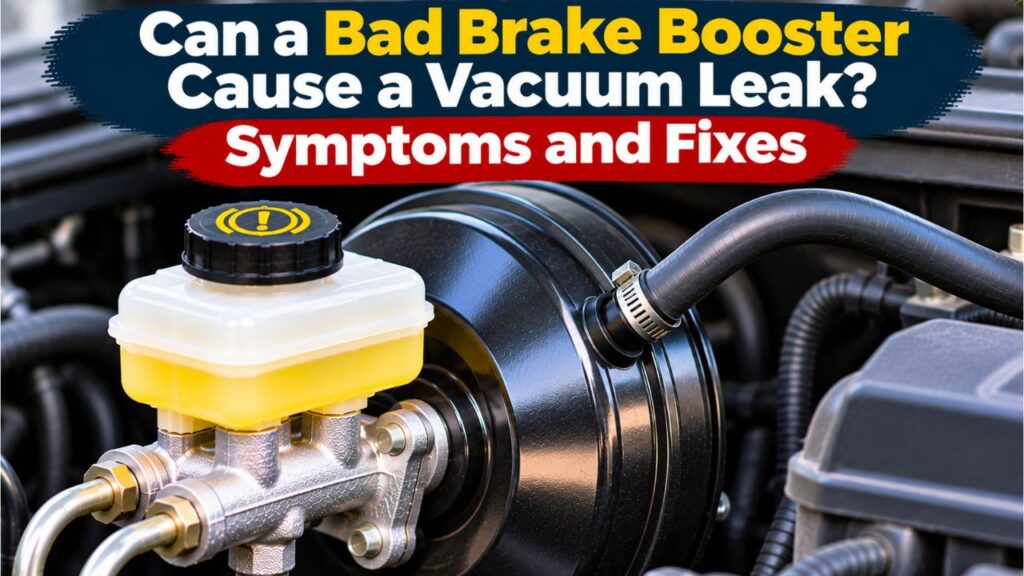
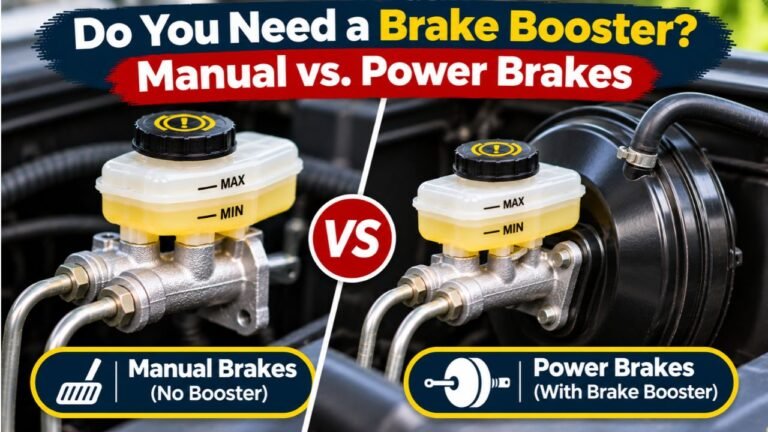
A conventional vacuum booster contains chambers separated by a flexible diaphragm. The driver-operated control valve changes pressure across that diaphragm, allowing atmospheric pressure to add force to the master cylinder. Its vacuum chamber must remain sealed.
Bosch Mobility’s explanation of the vacuum brake booster describes how a pressure difference across the diaphragm assists pedal force. A damaged seal can defeat that pressure difference and create a path for unwanted air to enter.
Torn or Leaking Booster Diaphragm
The diaphragm moves every time the driver applies or releases the brakes. Age, damage, or deterioration can allow air to pass between areas that should remain separated. That leak can burden the vacuum source.
An internal diaphragm problem may show up as reduced assistance even though the outside of the booster and its hose appear undamaged. An internal diaphragm cannot be fixed with external sealant.
Failed Pedal-Side Seal or Internal Control Valve
The control valve admits atmospheric air during normal braking. A brief change in airflow as the pedal moves is therefore not proof of failure. A damaged valve or input-rod seal can instead allow continuous unwanted airflow, sometimes producing a sustained hiss near the pedal or firewall.
Changes while pressing or holding the pedal provide clues but cannot identify the defective part alone.
Leaking Booster Grommet or Housing Joint
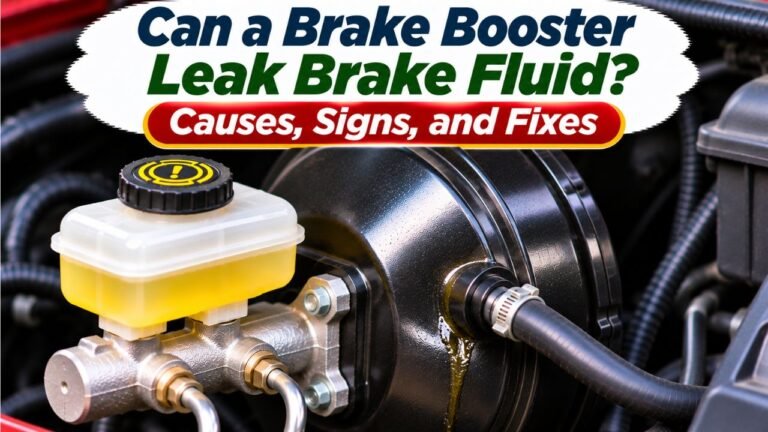
A rubber grommet usually seals the vacuum check valve where it enters the metal booster shell. Hardened rubber, a cracked plastic elbow, or corrosion at the connection can create an external leak. Damage at a housing seam can also be a concern.
Unlike a failed diaphragm, some external sealing parts can be serviced separately. Confirm where air escapes before replacing the booster.
How a Booster Vacuum Leak Affects the Engine and Brake Pedal
The effects depend on where the vehicle gets vacuum and whether the leak is large enough to overcome the available supply.
Rough Idle From Unmetered Intake Air
On many gasoline engines, a hose connects the booster to an intake-manifold port downstream of the throttle. A leak lets air into that manifold through a route the engine’s normal air-measurement strategy may not expect. Fuel control can compensate for small leaks, but larger leaks may cause an unstable idle, hesitation, or stalling.
The engine might react most noticeably when the brake pedal is pressed because an internal control-valve leak changes with pedal position. Other engines may idle high, and unrelated intake leaks can mimic either problem.
Hard Pedal From Lost Vacuum Assistance
Vacuum is what lets a conventional booster amplify pedal effort. If it cannot maintain the required pressure difference, the driver must press harder to generate comparable hydraulic pressure in the master cylinder.
Stored vacuum may provide initial assistance before repeated presses harden the pedal. This is a loss of assistance, not necessarily a loss of brake fluid. The hydraulic brakes may still function, but the extra effort can make emergency stopping unsafe.
Symptoms That Suggest a Brake Booster Vacuum Leak
Look for a combination of braking and engine symptoms rather than making a decision from one sign:
- Hard or high-feeling brake pedal: More force is needed than usual to slow the vehicle.
- Persistent hissing: Air can be heard near the pedal, firewall, booster, or hose connection.
- Rough idle when braking: Engine speed fluctuates or the engine stumbles as the pedal moves.
- Stalling at a stop: A substantial intake-connected leak may upset engine operation at idle.
- Loss of reserve assistance: The pedal becomes hard unusually quickly after the engine is shut off.
- Check Engine light: Some vehicles may detect mixture changes or a vacuum-related fault; the light alone does not confirm a booster problem.
AutoZone’s guide to signs of a bad brake booster discusses hard pedal effort, hissing, and engine stumbling or stalling as possible warning signs. A hose, valve, or unrelated engine problem can cause similar symptoms.
A short airflow sound when first pressing the pedal can be normal on some designs. A hiss that continues while the pedal is held steady, particularly alongside a hard pedal or rough idle, deserves investigation.
Bad Brake Booster or Vacuum Hose: How to Tell the Difference
A booster can lose assistance even when its internal diaphragm is healthy. Diagnose the supply path before choosing a replacement part.
| Possible Fault | Typical Clue | What Needs Checking |
| Internal booster diaphragm or valve | Persistent hiss and reduced assist | Booster vacuum retention and control-valve operation |
| Cracked supply hose | Damaged rubber or obvious leak along hose | Hose condition, routing, and connections |
| Leaking check valve or grommet | Vacuum reserve disappears quickly | One-way valve function and rubber seal |
| Weak engine vacuum or failed pump | Little vacuum reaches an otherwise sealed booster | Supply vacuum and pump operation |
| Hydraulic brake problem | Soft or sinking pedal, fluid loss | Master cylinder, lines, and wheel brakes |
A check valve lets the vacuum source remove air from the booster while helping prevent vacuum reserve from escaping when source vacuum drops. If it leaks backward or blocks flow, assistance can be affected without an internal booster failure.
For example, the 2008 Ford Escape brake-booster check-valve service procedure checks vacuum supply and stored assistance before deciding whether the valve or booster is at fault. Its sequence applies to that vehicle configuration; other models require their own procedures.
How to Check for a Brake Booster Vacuum Leak Safely
These checks can help you describe the problem and identify visible damage. They do not replace the vehicle manufacturer’s full booster test. Keep the vehicle parked, with the transmission in Park or the appropriate secured position and the parking brake set. If braking is already abnormal, arrange professional diagnosis rather than driving to test it.
Step 01: Identify the Brake Booster and Vacuum Supply
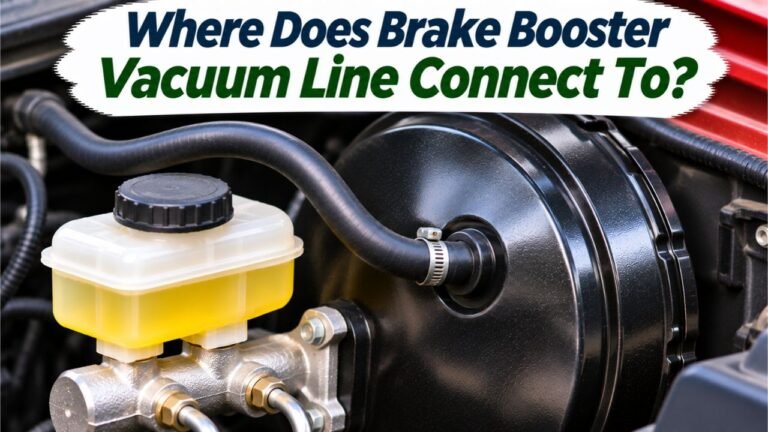
With the ignition off, locate the master cylinder and the round booster behind it, if your vehicle has a conventional vacuum booster. Find the larger vacuum hose and check valve, usually attached at the booster housing. Follow the hose toward the intake manifold or vacuum pump.
If the vehicle uses hydro-boost or integrated electronic braking, do not assume these vacuum-based checks apply. Consult its service diagram first.
Step 02: Inspect the Hose, Check Valve, and Grommet
Look for split rubber, loose clamps, collapsed sections, broken plastic elbows, and a valve that no longer fits securely. Also check where the grommet enters the booster. Move fragile tubing as little as possible; pulling a brittle valve out can create another leak.
A visible crack is a clue, not proof of the booster’s internal condition.
Step 03: Observe the Pedal With the Engine Off
On a conventional vacuum-assisted system, press the brake pedal several times after the engine has stopped. Stored vacuum assistance is typically used up, and the pedal becomes firmer. That is expected, not proof of failure.
If the pedal feels unusually soft, sinks, or approaches the floor, suspect a possible hydraulic problem instead. Stop testing and have the brakes inspected.
Step 04: Check for the Expected Pedal Movement at Startup
Only when the vehicle’s instructions permit it, hold steady pressure on the firm pedal and start the engine while parked. A small downward pedal movement can indicate that vacuum assistance has become available.
If the pedal does not move, the problem could involve insufficient source vacuum, the hose, check valve, or booster. This test cannot isolate the fault or establish roadworthiness.
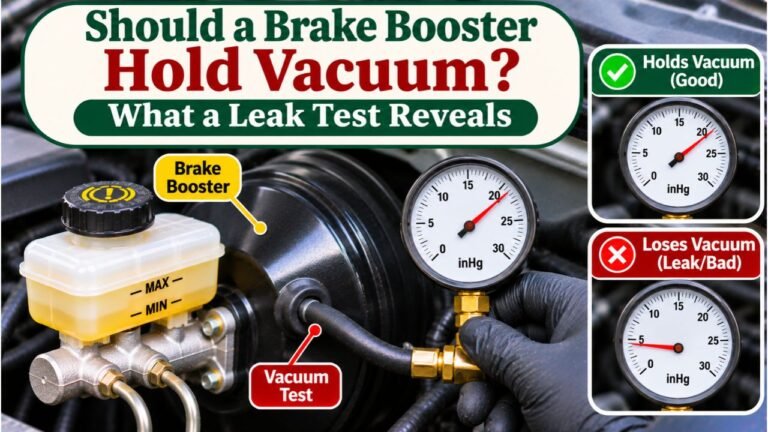
Step 05: Request a Proper Vacuum-Retention Test
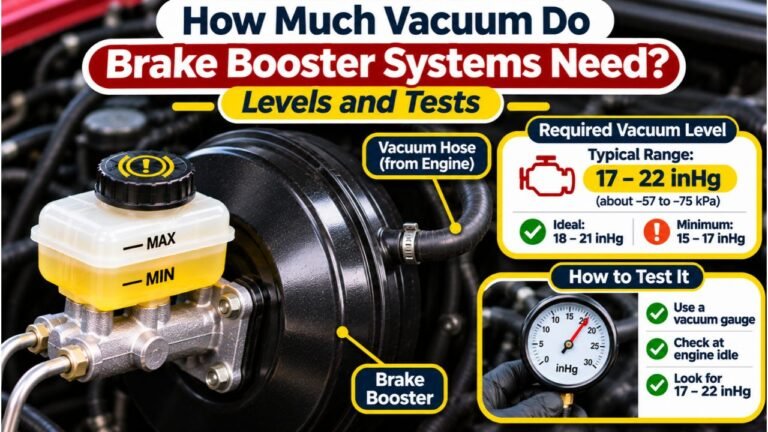
A technician can measure the vacuum arriving at the booster, test the one-way valve, and assess whether the booster holds vacuum with the pedal released and applied. The required connections, acceptable vacuum loss, and test conditions are vehicle-specific.
Avoid spraying flammable cleaners around a running engine, pinching reinforced hoses with ordinary pliers, or deliberately driving with the booster disconnected. These shortcuts can introduce additional hazards or misleading results.
Does a Booster Vacuum Leak Always Cause Rough Idle?
No. A vacuum leak inside a booster can reduce brake assistance without producing an obvious change in engine speed. A small leak may be partly compensated by engine controls. Symptoms can also be intermittent, appearing only while the pedal is moved or held in a particular position.
On vehicles with an electric or engine-driven vacuum pump, the booster may not connect directly to the intake manifold. A leak can make the pump run more often or leave inadequate stored assistance without causing an intake-related rough idle. Diagnosis depends on the assist design.
Conversely, rough idle alone does not prove a brake fault. Intake gaskets, PCV connections, and other vacuum plumbing can leak. The strongest clue is a reproducible relationship between engine behavior and brake-pedal operation, supported by actual vacuum testing.
Can a Leaking Brake Booster Trigger a Check Engine Light?
Yes, on some gasoline vehicles with manifold-supplied vacuum. Extra intake air can upset the measured air-fuel mixture enough to produce fuel-trim or lean-condition faults. The vehicle may illuminate its Check Engine light if the engine-control system detects a problem.
However, not every leak turns on a warning light, and a lean fault code does not identify the booster as the source. A scan tool provides clues that must be compared with vacuum supply, hose condition, and engine behavior.
Some vehicles monitor brake vacuum separately and may show a brake warning.
How to Fix a Brake Booster Vacuum Leak
The repair depends on the verified leak location. A cracked external hose or defective check valve does not automatically require a complete booster. Replace damaged external components with parts designed for the specific vehicle, including the correct valve orientation, connections, and hose rating.
If testing confirms a failed internal diaphragm, control valve, or sealed housing, the normal repair is replacement of the booster assembly. Do not attempt to seal an internal failure using silicone, adhesive, or other improvised products. The replacement must restore reliable assistance.
Installation may require inspecting the master-cylinder rear seal, pushrod adjustment, pedal linkage, and mounting hardware. Brake bleeding is generally unnecessary when only an external vacuum hose is replaced and the hydraulic brake lines remain closed. If brake-fluid connections are opened, follow the manufacturer’s bleeding instructions, including any ABS-specific procedure.
Before the vehicle returns to service, the technician should verify vacuum supply, retained assistance, secure fittings, normal pedal operation, and no remaining hydraulic or vacuum leaks.
Is It Safe to Drive With a Leaking Brake Booster?
No. A suspected leak that affects pedal effort or stopping performance should be treated as a brake safety problem. Although a conventional system can retain a mechanical link between pedal and master cylinder, losing power assistance may demand much more force than a driver can reliably provide during a sudden stop.
If the pedal becomes unexpectedly hard while driving, maintain control, slow down carefully, and pull over where it is safe. Arrange professional assessment and towing rather than relying on repeated test drives. Engine stalling caused by a major intake-connected leak adds another reason to stop using the vehicle.
FAQs About Can a Bad Brake Booster Cause a Vacuum Leak
Can a Bad Brake Booster Make the Engine Stall When Braking?
Yes. On a manifold-vacuum system, a substantial internal leak can admit enough unwanted air to disrupt idle when the pedal is applied. Stalling also has other possible causes, so the booster must be tested before replacement.
Can a Bad Brake Booster Cause a Vacuum Leak Without Hissing?
Yes. Some leaks are too small or too remote to hear over normal engine noise. Vacuum retention and supply testing can reveal a fault even when there is no obvious hiss.
Does a Bad Brake Booster Cause a Soft Brake Pedal?
Loss of vacuum assistance usually produces a hard pedal, not a soft one. A soft or sinking pedal more strongly suggests a hydraulic problem, although more than one fault can exist at the same time.
Can a Check Valve Leak Even if the Booster Is Good?
Yes. A faulty check valve or its grommet can release stored vacuum while the booster itself remains serviceable. Confirm the problem with the correct model-specific check before replacing the larger assembly.
Will Replacing the Vacuum Hose Fix a Bad Brake Booster?
Only if the hose or its connection is the cause. A torn diaphragm or damaged internal control valve will not be repaired by a new hose. Diagnose the entire vacuum path first.
Fix the Vacuum Loss Before Trusting the Brakes Again
If you’re asking can a bad brake booster cause a vacuum leak, the answer is yes. Internal diaphragm or valve damage can let air enter the booster, while a bad grommet, check valve, or supply hose can create similar symptoms without the booster itself being defective. Hard pedal effort and a persistent hiss are especially important warning signs.
An intake-connected leak may also cause rough idle, stumbling, or a Check Engine light, but those engine symptoms are not guaranteed. Check external fittings before replacing the booster.
Because the fault can reduce brake assistance, the practical choice is to stop driving and have the vacuum system and braking performance verified. Repair the confirmed source of the leak, then confirm safe pedal operation before putting the vehicle back on the road.